Veteran NHRA racer Kenny Koretsky and his family, including his sons Kenny Jr. and current Pro Stock driver Kyle, have purchased Maple Grove Raceway, located near Reading, Pennsylvania.
The track has hosted NHRA Camping World Drag Racing Series events for nearly four decades and will host the opener to the NHRA Countdown to the Championship, the Pep Boys NHRA Nationals, on September 15–18. Maple Grove also hosts regional racing throughout the season, including the upcoming NHRA Lucas Oil Drag Racing Series regional race on May 27–29.
“It’s still kind of a surreal feeling,” Kyle Koretsky said in a release. “Our family bought a facility we’ve been going to our entire lives and doing what we love to do. We see this as a huge business opportunity, and we’re looking to grow the business and give the racers a great experience. We’ve got a lot of great ideas, and we’re looking forward to this.”
Koretsky, who won his first Pro Stock race in 2021 after making his class debut in 2020, discussed plans for several renovations to the facility, including general cleanup, landscaping, paving, and upgrading the bathrooms, among more upgrades.
Race Winning Brands (RWB), a portfolio company of MiddleGround Capital, has announced the acquisition of RevMax, TransGo, and Transmission Specialties, Inc. (TSI). The trio of transmission performance business acquisitions represents the tenth, eleventh, and twelfth add-ons for RWB.
“The addition of these three legendary brands to our family, we believe, is a natural next step, adding outside-of-the-engine performance,” said RWB CEO Bob Bruegging.
Headquartered in Charlotte, North Carolina, RevMax specializes in performance aftermarket transmission products from standard street vehicles to high-performance diesel cars.
A 62-year veteran in the transmission industry, TransGo in El Monte, California, offers advanced automatic transmission solutions, proprietary valve body repair kits, valve body performance kits, and other specialty components, including its “Shift Kit.”
Based in Aston, Pennsylvania, TSI offers US-manufactured products for the high-performance transmission and converter industry, including race-focused torque converters, valve bodies, and complete transmissions.
Frank Kuperman will remain the president of RevMax, TransGo, and TSI, and the businesses will continue to operate from their respective locations.
The 600cc micro-sprint class is exploding nationwide. Packing a high-energy blend of innovative engineering, first-class customer support, and a bold drive to “push to the very edge,” this trailblazing Pennsylvania-based shop is growing right along with it.
It would be tempting to write that Hyper Racing is happily riding the monster wave that’s currently buoying 600cc micro sprints to new heights, but that wouldn’t tell the whole story. Certainly, Hyper Racing owners Mike and Christy Dicely are enjoying the view from the crest: The Lewisberry, Pennsylvania, firm reported 39% growth from 2020 to 2021, and projects an additional 15–20% increase in 2022.
“The 600cc sprint class is booming across the whole country,” Mike Dicely noted. “As one of the biggest players in that market, we are able to capitalize on that growth.”
Yes, it’s a big and growing market. But a company doesn’t get to be one of the biggest players without doing many things right.
600s Ascendant
Dicely attributes the 600 wave to “a combination of factors. With the online streaming that is available now, more people can watch the incredible racing that 600cc sprints provide, through platforms such as FloRacing, Fast Four Media, DIRTVision, The Cushion, and others. On a track that’s the right size and properly prepared, 600s offer the most intense racing a driver can experience. As more people see this, they want that experience. The class also offers many $10K-to-win races, and the massive Tulsa Shootout. That’s also a big draw.”
Additionally, NASCAR Cup, Xfinity, and Camping World drivers “are using 600 sprints and other dirt-track, open wheel cars to stay sharp and continue to develop.” As examples, he cited Brett Moffitt and Sheldon Creed, among others. “It is well-known how much Kyle Larson races open wheel on dirt. Chris Bell grew up racing in the 600 class. And plenty of other drivers have made it big after getting their base experience in 600s.”
Hyper Racing is well-positioned to ride the current wave of popularity micro sprints are enjoying. “On a track that’s the right size and properly prepared, 600s offer the most intense racing a driver can experience,” said Mike Dicely.
In fact, “Everyone is trying to race as much as they can, and 600cc sprints offer a compelling and affordable way to get that extra track time,” Dicely continued. “We heard that first-hand from Hailie Deegan, who bought a Hyper Racing chassis last year to gain more experience, racing at Millbridge Speedway in North Carolina.” Additionally, “Parents see 600s as the best driver development class,” or at least a logical step between a quarter midget and a full-size midget or sprint car.
Even the pandemic has played a positive role, “encouraging outdoor activities, while limiting eating out, vacations, and travel. Racing in general got a big boost from the new mindset.”
But that wouldn’t have helped Hyper if the company wasn’t already “very well positioned before the pandemic, with a very strong e-commerce arm, cloud-based ERP, and a VoIP phone system,” Dicely continued. “Now, after being cooped up for months at home, customers are comfortable ordering parts online, or at least surfing the net to get more educated. Also, being able to run the business from the cloud enables us to work from anywhere. That helped a lot during lockdown, and when an employee was quarantined.”
At the same time, Hyper Racing seems to have completely sidestepped the “Great Resignation,” hiring four new employees during 2021, and confidently expecting to add another two or three this year. “We have no problem finding employees,” Dicely told us. “I always keep my eye out at the tracks looking for prospects. I look for racers with a good personality, who everyone likes, and who are team players with mechanical skills and intelligence.”
Technical Innovation
Another “right thing” Hyper has done—since 2017—is to sponsor the Hyper Racing 600 Speedweek: six races on six consecutive July nights, ranging over the eastern third of Pennsylvania, from south of Philadelphia to north of I-80 and just past Lebanon to the west. “We see it as our way of giving back and sharing the awesome Pennsylvania dirt track culture with the world,” Dicely said proudly. “Big races like this get all the best drivers together,” so fans “see the best racing. Our name recognition in Pennsylvania is already huge, but it helps when fans come to watch ‘the Hyper Racing 600s’ and they see an awesome show. Then they want to get a 600 of their own.”
Unlike midgets and full-size sprint cars, 600cc micro sprint chassis designs differ considerably between manufacturers. Hyper Racing’s chassis is unique in its longer wheelbase, front-axle-mounted steering box, and wishbone instead of Z-link rear suspension, noted Mike Dicely.
When they do, Hyper is ready with some of the most technically innovative 600s on the market. “600cc sprints are unique in that there are a lot of different chassis designs out there. They are not like midgets or full-size sprints where all the parts fit all the chassis. For the most part, the components on our 600 chassis do not fit on other brands. Instead of the Z-link that most other manufacturers offer, our chassis use a wishbone rear, because of the high anti-squat it provides. 600s have a low center of gravity, and for longitudinal traction, you need to keep the CG up. Also, our wheelbase is a bit longer, and we mount the steering rack to the front axle. And because our drivers range from 8 to 70 years old, and from 60 to 300 pounds, we make the car very adjustable and configurable. We offer an adjustable pedal assembly of our own design in addition to an adjustable steering-wheel mounting system, a movable shifter assembly, and a seat that adjusts for height. So our chassis easily fits pretty much anyone.”
Hyper applies the same technology to its 270 micro and Lightning sprint/midget chassis. The company also makes chassis for quarter midgets and parts for Sharp Mini Late Models. “We provide high-quality parts that are in stock, although the popularity of the 600 class and the pandemic have made this a real challenge,” Dicely added.
Web Presence
Digital technology has also contributed directly to Hyper’s success, much as it has driven the 600 wave in general. Dicely mentioned “online advertising through Google and Bing, as well as keeping our organic search results at the top. Maintaining a good presence on all social media platforms is a must. We also advertise on FloRacing and other streaming services. Our robust website (hyperracing.com) is open 24/7. We update it constantly to provide detailed part descriptions and photography. We’ve added the capability to provide live rate quotes from the major shippers at the time of sale, so customers know the delivery times they can expect. Then we follow up with email confirmation at many phases throughout the ordering process.”
Hyper Racing grew 39% from 2020 to 2021. Business co-owner Mike Dicely attributes much of that success to his employees, many of whom are racers.
That said, Dicely still believes in the power of paper. “Our print catalog is sought after for technical guidance, as well as parts photography and descriptions.” He credits the catalog to his wife and business partner Christy, who had worked as a graphic designer before co-founding Hyper Racing. “We always wonder when the day will come, when we will stop producing a catalog and go completely online,” he added. “So far that hasn’t happened.”
Paper or digital, the catalog will likely remain vital to the business. While complete chassis account for 18% of Hyper’s sales, parts make up the rest. Some are manufactured by Hyper: “Our unique products, like our left front brake caliper, adjustable pedal assembly, bearing carriers, spindles—they are all proprietary. They are designed in-house and manufactured in our own machine shop. Or, if we don’t have the capacity, we sub them out to a few trusted local shops. But the products that already exist—rear brake calipers, seats, seat belts, wheels, etc.—we purchase.” Dicely sees no point in literally reinventing the racing wheel.
Customer Service
Additionally, Dicely clearly understands that “having a well-designed chassis that wins big races all across the country is where it starts. But that’s irrelevant in an entry-level class if you don’t offer support to go along with it. It’s not enough just to offer parts and keep them in stock. Our customers need their questions answered. We need to answer the phone every time it rings, to guide the customer who many times isn’t even purchasing a part—they just have a tech question. Having knowledgeable employees is a huge part of this, and we have the most awesome employees. They really account for all of our success.”
Certainly, Hyper Racing’s reputation for advanced engineering helps attract new customers. When Steven Snyder Jr. turned 14 three years ago, his father/crew chief/team owner Steven Sr. decided it was time to move up from quarter midgets to 600s. “We reached out to several people”—including former 600, and now midget racer Andrew Layser—“and they led us to Hyper. Hyper has a very good chassis,” the elder Snyder explained. “We won a tremendous number of races last year against the best in the nation.” In fact, Steven Jr. aced the 2021 KKM Giveback Classic at Port City Raceway in Tulsa in October and won the Keith Kunz midget ride at the Chili Bowl in January. “My son has friends who race other chassis, and they say, ‘Man, ours just doesn’t come out of the corners the way yours does. We can’t get it to do what you’re doing.’”
Service figured into the equation as well. “Mike will help you out if you ever have any trouble,” Snyder continued. “He answers the phone if it’s morning, afternoon, or even if you are calling from the track. If you have a question about gearing, or stagger, or something that’s throwing your car into a fit,” Mike can help, “because he raced himself for many, many years. And if he can’t diagnose it over the phone, he’s willing to have you bring the car to his shop,” a mere 90-minute drive for the Maryland-based Snyders.
Mike Dicely said his business depends on supporting customers as much as it does on chassis design. His annual “Prepare to Win” setup seminar, seen here, teaches techniques for getting the most out of a micro sprint chassis.
Fuel-injection issues can be particularly vexing. “There are a lot of electronics involved with it. But we don’t have to ship the injection to him.” Instead, “he’ll say, ‘Just come up here, we’ll see what’s going on,’ and he will fix it. He supports all of his customers. If you want to race, he wants to see you race.”
Caleb Martin of Angelton, Texas, runs 305 and 360 winged sprints, as well as 600cc micros. “I’ve been doing it for more than 20 years,” he told us. “But when I was a little kid, the Hyper catalog was always the coolest, and they had the cool-looking cars.”
Martin began racing micros when he was 14, and he continued to compete after college. “I was winning a bunch of races with other chassis,” Martin said. “Mike saw that, and we struck up a deal.” That was in 2010, when Martin finished fourth in the I-30 600 Outlaw Nationals in Little Rock, running on Hyper’s then-new Jacob’s ladder-and-wishbone suspension. “Nobody had ever used that design before. And we had a lot of success. We won 12 races in 2011,” and eight more in 2012.
“Mike never gets complacent,” added Martin, “and that’s a big deal for me. Whether it’s the chassis or the injection, he’s always looking for another competitive edge. I like having that on my side. If I have a problem, they take care of it quickly. Most of the people who work there can answer your questions. Their service, their shop, their website—their whole business is second-to-none.”
Getting Started, Moving Ahead
Longtime PRI readers may recall that we first profiled Hyper Racing back in October 2006. Author Bill Sessa noted then how, like so many other successful racing entrepreneurs, Dicely was practically born into the sport. As a preschooler in the early 1970s, he watched his father and uncle run a mini-sprint at the sixth-mile Lanco Speedway in Newmanstown. As a high-schooler, Dicely was already driving—and winning—in the team’s number-one car. He graduated from Millersville University and for seven years worked as a mechanical engineer while continuing to race and to work out the design of a new and better race car.
In 1994, with encouragement from his new bride Christy, they both quit their day jobs to launch Hyper Racing. Dicely explained the name he chose for his company: “I’ve always been a hyper person, a go-getter.”
Hyper sold three chassis that first year. Between then and the end of 2021, they sold more than 1,600. Since that 2006 report, their facility has nearly doubled in size, from 8,000 to 15,000 square feet.
From the beginning, Dicely believed that the role of technology was not to make a car faster regardless of cost, but to maximize performance-per-dollar for racers on a budget. Hyper has always devoted significant floor space to design and development, and currently boasts a Roehrig shock dyno and an ASNU injector nozzle cleaning and diagnostic machine, as well as engine and chassis dynamometers. One recent acquisition is a CAD workstation featuring SOLIDWORKS 3D modeling software with FEA stress analysis.
When we asked Dicely about the challenges Hyper has faced along the way, he recalled 2003 as a particularly difficult time. Hyper was just beginning to spread out nationwide, but “most of our sales were to Pennsylvania racers, who bought from our parts trailer at Pennsylvania tracks. That year we had massive rainouts. Sales plummeted. We had to cut spending and survive off our inventory stockpile. Christy and I went without a paycheck. It was a very tough year.”
Then, in 2017, Dicely saw the need to change Hyper Racing’s Enterprise Resource Planning (ERP) software. The change should have upgraded Hyper’s IT capabilities, but instead, “the implementation was not well done, and we could barely function for about three weeks during our busiest season. We had to work countless hours to get everything fixed. I thank my dedicated employees for helping the business get through that. If you see your business starting to slide, you need to work harder and smarter.”
Then Dicely added something we really did not expect. “In the beginning [a major challenge] was my own personality,” he admitted. “I was first a passionate race car driver who loved the competition, the adrenaline rush, the risk of racing. I didn’t know a lot about running a business.” He still takes “calculated risks. I push the business to the very edge, find that adrenaline rush, and it makes me feel very alive. This, of course, makes for some scary times, but I am not going out knowing I left something on the table. You have to take risks and not be afraid of failure to reach your maximum potential.”
Speedway Motorsports has announced that, for the first time in over a decade, racing will return to North Wilkesboro Speedway, the .625-mile short oval in Wilkes County, North Carolina.
Called “Racetrack Revival,” a multi-week grassroots racing event will be produced by XR Events and feature several classes on the asphalt track in August. Officials will then convert the surface to dirt for a stretch of racing in October, followed by a re-pavement in 2023.
“As we begin the process of bringing North Wilkesboro Speedway back to life, this is a great opportunity for the historic short track to host grassroots racing and allow our team to learn more about what needs to be done before a grand reopening in the future,” said Speedway Motorsports President and CEO Marcus Smith.
Super late models, street stocks, pro late models, limited late models, open wheel modifieds, late model stocks, and Hornets are expected to participate in the asphalt swing of events, while super late models, 410 sprints, big block modifieds, street stocks, open wheel modifieds, 602 crate late models, 604 crate late models, stock cars, and Hornets are expected for the dirt portion.
In addition, Speedway Motorsports is working with state and county officials to utilize an $18 million American Rescue Plan budget allocation earmarked for infrastructure improvements at the nearly 75-year-old facility.
New midget & sprint car series are taking flight in the Midwest. Here’s a closer look at how organizers are working to ensure their short- and long-term success.
Belleville, Illinois’ Performance Open-Wheel Racing Inc. (POWRi) and Concord, North Carolina-based World Racing Group (WRG) have both launched new open wheel series for 2022. Designed around feedback from racers, tracks, and fans, these new series promise strong car counts and plenty of action. But it takes more than tight racing to keep interest high. Here’s what organizers are doing to make sure that POWRi’s 410-Wing Outlaw Sprint League and World Racing Group’s Xtreme Outlaw Midget Series and Xtreme Outlaw Sprint Car Series hit the ground running.
POWRi 410-Wing Outlaw Sprint League
POWRi’s 410-Wing Outlaw Sprint League is a Missouri Valley-based series that calls Lake Ozark Speedway in Eldon, Missouri, its home track. The new series closely follows the World of Outlaws and All-Star rulebooks to keep things simple for competitors who are currently racing with existing touring sanctioning bodies. With nearly 30 events scheduled for the 2022 season, it’s clear that organizers have high expectations for the series.
“In the Missouri Valley, where we’re trying to continue to expand and grow, we’ve noticed that it was getting tougher and tougher to keep the 360 sprints on that path over the past few years,” explained POWRi’s Kenny Brown. “But there was a clear opportunity with the 410s. The 410s seemed to be coming on a lot stronger in part because you can buy a motor for roughly the same cost as a 360 and race for more money.”
Brown told us that the value proposition offered by these engines is just one of several factors that has contributed to the growth of 410-class racing. “It’s also the purses and the notoriety that they’ve been getting. The numbers seem to be heading in the right direction every year. We’ve co-partnered with the Outlaws on a lot of races—when the Outlaws and the All-Stars come to our area, I actually have them run at our race track. One of the things we’re trying to do is continue to grow the count so that, when they’re in the area, our guys can participate with them. But the main reason that this was put together is because we simply didn’t have a 410-wing series in the region.”
Organizers believe now is the perfect time to introduce POWRi’s all-new 410-Wing Outlaw Sprint League, which has some 30 events scheduled for its inaugural season. “The fans have been telling me what they want: sheer speed and good racing,” said our series contact. “They want to see a show. They want to see the best of the best….”
With appeal of sizable purses and a history of solid attendance numbers for 410-winged sprint car races, Brown said that this was the perfect time to create the new series. “The fans have been telling me what they want: sheer speed and good racing. They want to see a show. They want to see the best of the best, and the elite of open wheel dirt car racing tend to gravitate toward the 410-wing cars. Interest in 410 is just expanding all the time. It’s not a niche here and a small pocket there. If you have a 410-winged sprint car, you can pretty much run anywhere.”
The new series adopts an event program that includes a pill-draw for entry that sets the time-trial qualifying lineup. Qualifying times advance drivers into heat races that are followed by semi-feature races where applicable, a trophy dash, and a feature event. “So we’re not running it like the traditional pill-draw for a heat race,” said Brown. “With a 410 wing, I think you have to qualify to set the field because the competition is so close. Being a few tenths behind someone else doesn’t necessarily mean that one driver is slower than another, so it tends to promote the passing aspect of it. I think the fans really like the dashes as well.”
He also explained that POWRi has been working closely with teams and tracks to make sure the series came together in a way that appealed to all parties involved. “The drivers were the ones who expressed to us that they wanted to start the new 410 series, so we’ve been in close contact with them as this developed. The tracks clearly wanted the series, too. They were calling and asking for these events because they know that this is something that their fanbase is interested in.”
Engine and chassis builders that have worked with POWRi in their other series have come on board to support the 410-Wing Outlaw Sprint League. “We’re getting support from all of them to do this, so that’s been great,” said Brown. “A lot of these relationships were already in place because of our non-wing 410 series, but there are also a few new builders that we’re working with. This is a great opportunity for them to expand their product offerings and grow as well.”
Many of POWRi’s existing corporate sponsors were eager to get involved with the new series, but organizers also continue to seek out other potential opportunities. “Sponsorship is important,” he emphasized. “And we have picked up a few new sponsors for the series. I think it has helped immensely to have the continued support of Lucas Oil and all of the others that we currently have.”
POWRi’s marketing strategy includes newspaper coverage and a strong social media presence across the major platforms. But with an existing fanbase that’s already eager to check out the new series, Brown said that the race schedule is perhaps even more vital to its popularity.
“In order to grow the car counts initially, we’ve purposely chosen Lake Ozark Speedway as our home track. We have eight to ten races there this season, and that gives the drivers some assurance that if they invest in their car, they have a place to go racing. We’re not going to take them further than four to six hours away from our home track because we don’t want them to spend huge amounts of time on the road just to get to the next race. The idea is to drive once, race twice.”
The POWRi team has also taken steps to make sure that their schedule doesn’t force would-be competitors to choose one series over another on a given weekend. “When it comes to the 410s, obviously the biggest series are with the Outlaws and the All-Stars, and we’re working with both of them,” said Brown. “If the Outlaws come into town, for example, we’ll take that weekend off so our drivers can run and aren’t forced to chase points.”
Looking into next year, Brown expects the race calendar to keep competitors just as busy as its inaugural season, if not more so. “I think we’ll stay in the range of 30 to 40 events—that’s our goal. We’ll probably lose a few events to rain-outs, so that means at least 25 good races. That number of events should allow a racer to run the entire season with two motors; I think you can get a dozen or so races out of a motor before it’s ready for a rebuild. A lot of it depends on the size of the tracks that you’re running, and the good thing here is that we’re running on three-eighth and quarter-mile tracks rather than half-mile ones, so that should improve longevity.”
World Racing Group Xtreme Outlaw Midget Series AND Xtreme Outlaw Sprint Car Series
With the introduction of its new midget and sprint car series, World Racing Group is looking to inject some new life into open wheel racing in the Midwest and Eastern regions. Xtreme Outlaw Series Director Casey Shuman told us that while car counts are generally growing as new teams continue to enter the fray, some aspects of the sport seemed to be stuck in the past and were ripe for a revamp.
“Part of it was about bringing some of the aspects of what we’re doing with our national series like World of Outlaws Late Models to open wheel. Format-wise, some of the series haven’t really evolved very much over the years, and that’s something we want to address with these new series. It’s a mixture of the traditional format and some newer elements—it’s something unique. Any time you can do something new and different, I think that piques some interest and gets people excited about checking it out.”
The Xtreme Outlaw Midget Series presented by Toyota will leverage existing relationships with engine and chassis builders from other series within World Racing Group, organizers told us; sponsor support, too, is already in midseason form, they added.
Shuman said that the level of competition is fiercer than ever, and that’s led to some creative solutions that are designed to promote good racing on a level playing field. “If you do straight-up, single-car qualifying and line up with the fast cars up front, I think the racing isn’t as good as it could be. So we’re qualifying within our heat race: You draw for a heat, qualify within that heat, and you get points for that. Then when we go line up for a heat race, we invert the field a bit and put the fast driver fourth,
but you also earn passing points in that heat race. So if you’re fast and you’re passing race cars, you’re still going to end up where you need to be. We want to give all of these drivers opportunities to gather points and move forward every time they get on the race track.”
Several different factors contributed to WRG’s desire to bring both series into the fold this year, but perhaps the biggest push came from the drivers. “I grew up with non-wing sprint cars and midgets—I raced them for 20 years, so my heart is very much in that type of racing,” Shuman explained. “As a racer, there were so many things that I wanted to see improved or handled in a different way. Teams have talked to us about how they wanted to have another option aside from USAC and POWRi, and this was an opportunity to bring that to them, especially on the sprint car side. I think the competition is going to raise the bar for everybody.”
WRG has looked to various incentives to help bolster interest in the new Xtreme Outlaw series as well. “With our payouts, purses, and tow money, we’re elevating things beyond what these teams are used to getting,” Shuman said. “We’re offering tow money to our top 10 in points, and that encourages them to follow the series. But we also concentrated on elevating the purses for third through tenth finishers. That’s one place where I felt like other series were kind of lacking.”
WRG has also paired roughly half of the events scheduled for 2022 with World of Outlaws Late Models races to bring more attention to the new series. “That will get this in front of some folks who might not normally see it,” Shuman said. “When we ran the non-wing sprint cars with Late Models for the season opener at Volusia, I had a ton of Late Model guys come up to me and say, ‘Man, I’ve never really watched these things before—these are awesome.’ A big part of the idea here was to get this in front of some new eyes and bring it to some new regions. And, of course, it adds to DIRTVision’s content as well. If we can add more forms of racing and more dates throughout the year to our broadcasts, that adds value and improves the experience for our viewers.”
World Racing Group has looked to various incentives to help bolster interest in the new Xtreme Outlaw Sprint Car Series. “With our payouts, purses, and tow money, we’re elevating things beyond what these teams are used to getting,” said a series source.
Both the Xtreme Outlaw Midget Series presented by Toyota and the Xtreme Outlaw Sprint Car Series will leverage existing relationships with engine and chassis builders from other series within the group, and sponsor support is already in full swing. “Low-E Insulation has been involved with us for the past few years, and they jumped on board with the sprint car program immediately after we announced it, which was awesome,” said Shuman. “We’ve also secured a similar agreement with another partner on the midget side. Having two partners step up like that during our first year is very cool. There are also a lot of contingency sponsors that were excited to get involved right out of the gate. I think part of it goes back to the idea of offering something new and unique.”
Alongside promotion on DIRTVision, World Racing Group’s marketing team is getting the word out to local markets through radio, billboard ads, social media, and other platforms.
Shuman noted that waiting until December of last year to announce their schedule allowed them to plan the dates more strategically. “We wanted to make sure we weren’t stepping on any toes. We want to give all of these teams the opportunity to come try these new series without having to sacrifice what they might be doing in other series. Scheduling on top of another race splits the field, and that doesn’t do anyone any good.”
The 2022 race calendar brings 12 midget races and 14 sprint car races among the two new series, and how things shake out this year will largely determine the number of dates for next season. “We just need to see where it goes. It may be that these work well with 16 to 18 events that are kind of spread out, or it could very well end up being 30 events next year. I believe there’s a ton of interest out there, but we still need to figure out what’s best for the series—and best for the sport in general.”
Three things I think prior to this month’s grand opening of PRI Membership headquarters in Speedway, Indiana:
1) I think writer Drew Hardin’s report on how motorsports companies are supplying parts and services to the US military will open some eyes to a potentially lucrative new revenue stream. For this month’s Ask the Experts piece, Hardin spoke with manufacturers TW Metals and Calico Coatings—as well as a representative from the US Army DEVCOM Ground Vehicle Systems Center—to offer a closer look at the opportunities available to racing and performance industry members. The numbers alone are pretty staggering: According to our source at TW, the government is required to spend nearly $350 billion a year on small business contracts, with defense agencies accounting for a sizable portion of that bank. And though there certainly are more hoops to jump through when dealing with the military versus your typical supply partner, the potential rewards could be exceptionally worthwhile, as you’ll discover in Hardin’s story beginning on page 14.
2) I think adversity can bring out the very best in people, and this month’s Special Report on motorsports retailers’ top business decisions of the last 12 months proves that theory. In our piece, which begins on page 36, writers Steve Statham and Jim Koscs interviewed 11 entrepreneurs—including speed shop owners, engine builders, fabricators, performance tuners, and others—to learn more about those great ideas that helped them weather the economic tumult of the last two-plus years. One Colorado-based karting specialist re-examined his approach to staffing, which “helped me identify where help was most needed and start to put systems in place to make things more efficient and actionable.” Another—a parts supplier out of Wisconsin—built a new car in a class that was underserved in order to better grasp and ultimately service the market. Other insights touch on time management, inventory controls, social networking, travel decisions, and more. Give it a read, and feel free to share your own best business decisions with us at editorial@performanceracing.com.
3) While we’ve written extensively on the Recognizing the Protection of Motorsports (RPM) Act through the years and its importance to the racing community, I think our coverage in this month’s issue spells out in some of the clearest language yet the steps required to push this vital legislation through the halls of Congress and onto the President’s desk for approval. It’s an extremely bipartisan bill, as more than 120 members of the House, from both parties, have already signed on as co-sponsors; Democrats and Republicans are represented on the Senate version, too. But what’s evident in writer Jim Donnelly’s report, which begins on page 46, is that our work is far from done. And as PRI’s Director of Congressional Affairs Eric Snyder points out, “Ultimately, this is about education, lawmakers understanding how race tracks positively impact communities in their districts, and the people that they represent.” For more information on how you can help support the RPM Act, visit saveourracecars.com.
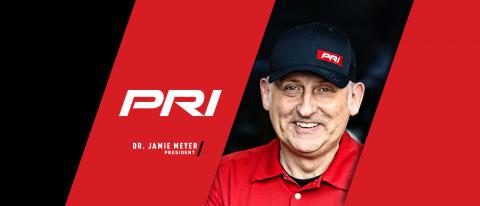
May 26, 2022, will mark a historic day for the racing industry with the grand opening of the new PRI Membership headquarters. Our new HQ is located in the Indianapolis suburb of Speedway. Yes, the facility is located on Main Street, Speedway, USA. How cool is that?!
I so badly wanted to share this news with you during the Grand Opening Breakfast at the 2021 PRI Trade Show in December, but the deal hadn’t quite come together at that point. As it turned out, we closed on the 42,500-square-foot facility at the end of 2021, and we immediately went to work making it our own.
This new building delivers on a promise that James Lawrence and the SEMA Board of Directors have made to the racing industry. Sworn to build, promote, and protect our industry, past SEMA Board Chairman Wade Kawasaki first pushed for the “PRI Initiative” over three years ago, and it’s been a team effort ever since to make all these changes happen. And we are just getting started! So, what does it mean to you? Glad you asked.
What It Means For the Racing Industry
The racing industry is life to all of us. It’s more than a job, or a career, or a family business. It’s what drives us to get up and push ourselves to incredible levels every day. That passion is what makes these bold moves by PRI so important. We have been asked to do more for you—a better Show, a better media company, more educational programs, and more business opportunities.
This building is a clear indication to you, the racer, that PRI is here to stay for a long, long time. Located in the heart of the racing industry, within a few hours’ drive of hundreds of thousands of racers and race businesses, the new PRI HQ will help all of us grow our industry together. Our new Indy HQ will allow us to bring the industry together every day of the week—not just for those three special days in December.
We are already working on monthly programs, educational classes, and meetings with key leaders in our industry. Above all, PRI will focus on growing our business and individual Membership programs. Together, united under the PRI brand, we will have a collective voice to not only protect racing, but to grow the racing industry for years to come.
What It Means For PRI Members
We are very grateful for the incredible start to our PRI Membership program. Less than a year old, we already have close to 500 business members and over 35,000 individual members. This unity will allow us to build an incredible benefits suite for you, serving you throughout your racing career as well as helping you build your racing industry business quickly and profitably.
Above all, we realize more and more how important it is to unite the racing industry in order to protect our interests against governmental overreach and legislation that will negatively impact you. Our new HQ will allow us to focus on protecting you non-stop by growing our numbers and improving the proficiency with which we’re able to voice your concerns. Soon you will read and hear all about the talented Membership team we are building at PRI. More skilled marketing, benefits, and customer care experts will be joining us soon. And with that, we will offer more services for PRI Members.
How You Can Get Involved
We want you involved with PRI. Once we’re past the PRI Membership HQ grand opening, we will immediately open this facility to our Members. With that, we are looking to you for suggestions on how you can help us grow our Membership. If you have a race in the Indy area, let’s talk about PRI hosting it for you. Maybe you’d like to participate in our monthly “Race Cars & Coffee” events. Or maybe you’d just like to take a tour and discuss the race cars on display in our atrium. Shoot a note to our superstar Membership Sales Manager Julie Freier (JulieF@performanceracing.com) and she’ll take good care of you.
PRI is coming to Indy. Those words mean more to you now than ever before. We’ll see you soon!
Seven-time Indy 500 driver and Automotive Hall of Fame inductee Lyn St. James and current IndyCar team owner Beth Paretta have announced the launch of the Women in Motorsports North America (WIMNA) organization.
WIMNA is a 501 (c)(3) nonprofit charity “that looks to foster mentorship, advocacy, education, and growth to help ensure a successful and effective future for women in professional motorsports roles.”
“Our strength is in our members and the breadth of their perspectives across many disciplines, including engineers, drivers, team management, PR/marketing, track operations, sponsor relations, and event promotions,” said Paretta.
Resources include best practices at the race track, job listings, and a recommended reading list. The WIMNA Mentorship Matters Program, meantime, is a monthly, fireside chat-style virtual discussion for industry members to interact with mentors and moderators. More details of the program and overall organization will be announced in the coming weeks.
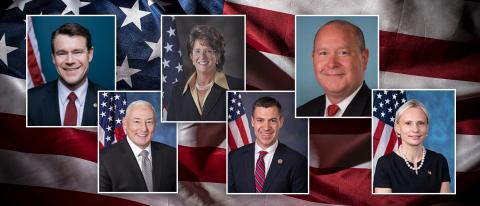
Indiana lawmakers (left to right) Sen. Todd Young (R-IN) and Reps. Greg Pence (R-IN), Jackie Walorski (R-IN), Jim Banks (R-IN), Larry Bucshon (R-IN), and Victoria Spartz (R-IN).
Indiana and Ohio will hold their 2022 primary elections on Tuesday, May 3, and it’s important to know which candidates support racing when going to the polls or voting early. For information on voting in the primary (including absentee and early voting), registering to vote, and identifying your lawmakers and the candidates running in 2022, please visit PRI’s vote racing page.
The Recognizing the Protection of Motorsports Act (RPM Act), H.R. 3281 and S. 2736, enjoys strong support from Indiana and Ohio members of Congress. The bipartisan RPM Act guarantees the right to modify street cars, trucks, and motorcycles into dedicated race vehicles and safeguards the industry’s right to offer parts that enable racers to compete. For more information on the RPM Act, click here.
Ohio lawmakers (top row) Reps. Bill Johnson (R-OH), Bob Latta (R-OH), David Joyce (R-OH), and Jim Jordan (R-OH). (Bottom row) Tim Ryan (D-OH), Troy Balderson (R-OH), and Warren Davidson (R-OH).
Below is a list of federal lawmakers who have co-sponsored the RPM Act in the 2021–2022 session of Congress and are running for re-election or other federal offices in 2022.
With racing that straddles the local scene and top-league national series, regional sprint car and midget series thrive by offering racers a unique, best-of-both-worlds experience. But it’s not always an easy ride for the owners of these sanctions.
Every pond has its big fish and little fish. In the sprint car and midget ecosystem, regional series are the in-between fish. While big-league national series grab headlines and pack online streaming channels, midsize regional groups offer racing that’s typically a cut above the local-track level, without the dauntingly high-cost or brutal competition of top series.
Although the value of these mid-level racing organizations is clear, what isn’t so obvious is just how challenging it can be to keep them going year after year. Most regional series face stiff competition from other similar series, along with indirect competition from national series and unrelated entertainment options. Even high-school football games threaten fan turnout in some venues.
To survive, owners of regional open wheel series have to be nimble and aggressive. They need to sense the shifting moods, preferences, and dollars of their audience, and map that against the opportunities they see.
As a result, most of these series have evolved and morphed considerably over their history.
For some, that history spans more than eight decades. One of the series discussed here originated in the mid-1930s, amid the struggles of the Great Depression. Others are far newer, with ages barely in the double digits. But all have twisted and turned with the tides and fortunes of the people they serve, to bring the thrill of racing to those who appreciate it.
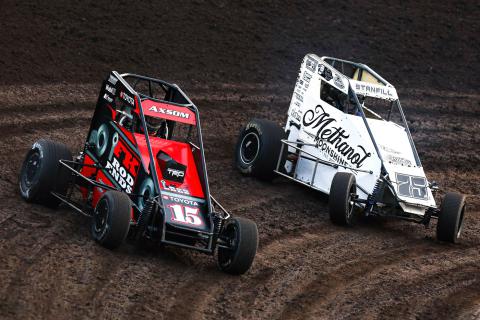
Regional open wheel series like the Michigan-based Auto Value Bumper to Bumper Super Sprint Series provide opportunities for racers to compete beyond the local level, but without the difficulty or expense of a national series.
Choosing Boundaries
The core of any regional series is its geographic territory, often defined by the particular states they stake out as their own. Yet that isn’t always as straightforward or static as it might appear and can be affected by a number of different factors.
Foremost among those are the expectations and needs of racers. Most regional open wheel series look at where their racers are coming from and then build a roster of events that are within about an afternoon’s drive from that core group. But, like many things in racing, the question of money can take precedence in deciding the geographic boundaries of a regional series.
“Auto Value Bumper to Bumper auto parts stores is our title sponsor,” explained Tom Hartsell of the Cassopolis, Michigan-based 410 pavement sprint car series that bears the chain’s name. “It has stores in Michigan, Indiana, Ohio, Wisconsin, and Illinois, and we try to stay within the parameters of its territory. We have to be cognizant of our sponsor and the awareness of what their customers are getting out of it.”
While the pandemic appears to be slowly fading into history as this is written, its lingering influence still shapes where some series will compete this year. For instance, the New-York based winged 360 sprint car series Lucas Oil Empire Super Sprints is confining its schedule strictly to its home state to avoid complications that could arise from neighboring states reinstating harsh COVID-19 restrictions. In past years, the series had ventured freely into surrounding states, and even into Canada.
Ultimately, however, the decision of where a regional open wheel series will race is largely a matter of trying to strike an effective balance for fans and racers. “We’re trying not to oversaturate things,” said Chuck Miller, who runs the Lucas Oil Empire Super Sprints. “The most we’ll do is something like Fulton Speedway four times a year. The guys like to limit it to a couple times a season per track, so that it’s really special. It’s not just another class added on.”
Rivals and Partners
Perhaps more than any other factor, regional open wheel series are shaped by competition and territorial claims from rival series. In addition to the obvious need to respond to what other series are doing, the relationships between different open wheel series are often complicated. Things can change from cordial and cooperative to bitter and embattled practically overnight.
While struggles do occur, many regional open wheel series continue to cooperate with other tracks and series owners to find synergies that benefit both groups. When such relationships work, they can be an important part of grappling with the challenges that regional open wheel racing faces throughout the country.
“There are only so many cars and so many people,” said Rick Salem of the United Rebel Sprint Series, a winged 305 series based in Oberlin, Kansas. “It gets to be a zoo come scheduling time. We just don’t have enough cars to pass back and forth between tracks, so it’s just best that we work together.”
While regional open wheel series slug it out with other similar series for race dates, fans’ attention, and racers to put on tracks, there’s still the influence of big national series to consider. In some markets, national series aren’t a major factor. They don’t come through the area much, so regional series owners don’t feel any direct effects from them. At the same time, regional series often see themselves as offering a more accessible alternative to large national series.
Car counts vary among regional open wheel series, but typically range between 10 and 30 these days. To cut costs and attract racers, the United Rebel Sprint Series was created around the relatively inexpensive 305 Chevy spec engine.
“I don’t worry about the World of Outlaws,” explained Aaron Fry of the Buckeye Outlaw Sprint Series (BOSS) and FAST on Dirt series, based in Chillicothe, Ohio. “That’s such a bigger scale. We offer the working man, a guy who has a regular Monday-through-Friday job, a place to go racing that’s affordable, and it’s obtainable. They can do it without having to call too many days off work or pull the kids out of school too much.”
Regardless of their exact relationship to national open wheel series, most regional series pay attention to what the big-leagues are doing and shape their series to take advantage of gaps in their racing, coverage, or geography.
“USAC and the All-Stars can do what they want to do,” said Fry. “I fill their niche where it becomes available. The All-Stars have moved out of our area. Half of their schedule this year is in eastern Pennsylvania or the New York/New Jersey area. They run fewer races in Ohio now than they ever have. That’s fine by me. The tracks that used to get All-Star dates, now they call me instead.”
At the same time, some series have a built-in relationship with a national series. Such is the case with the Rapid Tire USAC East Coast Sprint Car Series, one of several regional series operated under the USAC banner. While it’s part of the USAC brand, there are significant differences that keep them out of direct competition. “We don’t compete directly with USAC because we’re in Pennsylvania, and they’re in Indiana,” said Curt Michael, who runs the regional series. “We’re also a 360 series compared to them being 410. But we do take off the week they come into Central Pennsylvania for the Eastern Storm.”
Car Counts and Fan Figures
A racing series can’t exist without cars on the track. For some regional open wheel series, that’s relatively easy. They can reliably put 30 or more cars on track all season. Others struggle with single-digit car counts.
“Honestly, our car counts were down a little bit last year just because of the way everything is going on in the world,” noted Salem. “But we should be fine. We still pull in enough cars to put on a good show—20, 25 cars usually.”
“It’s been a real struggle the last couple years with car counts—I mean, astronomically a nightmare,” said Hartsell. “We would start calling on Sunday and finish on Friday, and sometimes only nine cars would show up. That’s hard to deal with. We can’t sell a top-notch program for premium dollars when we’re only getting nine or 10 cars there.”
Fans in the stands are the other essential ingredient in the health of a regional open wheel series. The sources we spoke to generally reported solid fan attendance at most races. But at the same time, they also noted that they’re battling with each other for the attention of a finite audience.
“Unfortunately, with open wheel competition, it seems that everybody’s fighting right now as far as drawing a broad fan base to their tracks,” observed Hartsell. “The crowd that really was into open wheel is an older crowd now, and none of the younger adults seem to be catching on.”
The Wisconsin-based Badger Midget Auto Racing Association was struggling with reduced car counts until a controversial move to less exotic engines in 2015 turned the series around. “Last year, we averaged 27–28 cars a race,” said our source at Badger Midgets.
Regional sanctioning bodies work hard to get the word out and bring their message to fans. To do that, all the sources we spoke to have essentially abandoned traditional advertising methods. “Years ago, we used to do a coupon ad in a local newspaper—bring in your ad to get five bucks off or whatever,” recounted Hartsell. “We didn’t get one single coupon back. So we quit wasting money doing that.”
Instead, Hartsell and all of the other series owners we spoke to said they’re channeling their efforts into social-media platforms such as Twitter, Facebook, and Instagram, coupled with regular email blasts. Besides the flexibility and speed of these platforms, their low cost makes them well-suited to changing conditions and limited resources. “We do as much social media as we can,” explained Quinn McCabe of the Badger Midget Auto Racing Association, Sun Prairie, Wisconsin. “We’re always trying to promote and draw people to it.”
Unfortunately, this form of promotion does have a significant shortcoming built into it: The aging demographic that regional open wheel racing relies on generally isn’t attuned to social media. With traditional advertising being ineffective in most markets, this can leave gaps in the promotion of races. “That older generation is hard to reach,” said Fry. “It’s another problem we fight.”
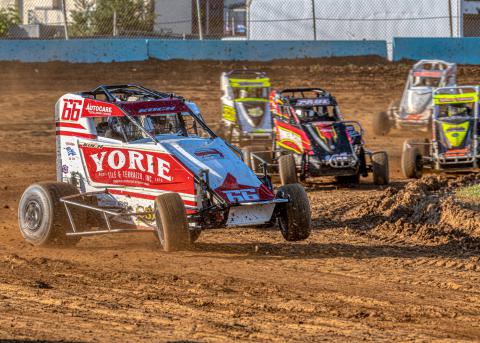
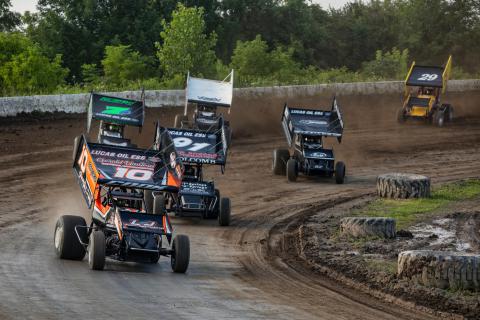
Some regional series have ties to larger national ones, such as the Rapid Tire USAC East Coast Sprint Car Series, seen here, and USAC’s national sprint car series. The two organizations run considerably different cars and engines, limiting direct competition between them.
Along with social media, streaming on such platforms as DIRTVision, FloRacing, and The Cushion has become increasingly important for series owners as a means of bringing their series to a wider fan base and keeping them engaged. Many regional open wheel series don’t have the reach to command the attention of bigger streaming platforms. Instead, they often have to depend on the tracks where they race to get their races streamed online.
“We don’t have anybody streaming our races full-time,” said Michael. “But most of our races are streamed. We’re on Flo and DIRTVision a lot because we go to tracks that already have deals with them.”
Dollars and Sense
The cost required to go racing is without question one of the biggest concerns for owners of regional series. Out-of-control expenses can limit car counts, reduce competition, and endanger a series altogether.
One of the most effective means of limiting costs is by using a cheaper engine package. While that can ultimately keep a series viable and healthy for racers, the move isn’t always welcomed initially. For example, Salem faced considerable resistance when launching his United Rebel Sprint Series around the low-cost 305 Chevy spec engine.
“When I started this series 17 years ago, everybody laughed at me,” he recalled. “But I could see that the cost was getting out of hand, not only for racers, but for the tracks out here in rural Kansas. They just can’t afford some of the big purses that the 360 and 410 cars are charging. I just wanted to keep sprint car racing going around here—give the racers and race tracks a break.”
For the Wisconsin-based Badger Midgets, the move to a less expensive engine shook the local midget community to its core. The series began in 1936, and it had a long tradition of midget racing in the Midwest. But this legacy also made many local competitors highly resistant to moving to cheaper, less exotic engine platforms.
“In 2015, we decided to shake the tree up a little bit,” said McCabe. “We were running the Fontana and the Esslinger, along with Chevys, Fords, and Toyotas. We were down to six cars in some races. We were begging everybody to come up here and race. So we went to a 2.4-liter production-based engine to cut costs. Now, most guys are running Honda, Mazda, and Chevy. And all three win.
“We had a lot of naysayers in the group when we did that,” McCabe continued. “Everybody laughed at me and called me everything they could think of. Now, starting our seventh year, it’s still getting bigger and bigger. Last year, we averaged 27–28 cars a race.”
Winged dirt cars, like those of the Lucas Oil Empire Super Sprints, are the dominant flavor of open wheel competition right now. This can skew car counts and fan turnout toward one series over another, according to our sources.
One way to limit engine costs is to simply go wingless. Without barn-door-size aerodynamic devices on the roof, sprint cars can’t handle a lot of power, making wingless cars essentially free of costly engine-development escalation. That said, the question of wing versus non-wing is usually more a matter of racer and fan preference than cost control. Nonetheless, it brings powerful savings that are hard to ignore.
“In the 12 years we’ve been doing this, we’ve never checked motors,” explained Fry, who owns the non-wing BOSS sprint series. “Nobody does in the non-wing world. If a guy wants to build 1,000 horsepower to run wingless with, he’s more than welcome to. It’s often a detriment to have more horsepower. Most guys are looking for ways to detune the motor to slow the wheel spin down.”
Some series are taking a close look at the length of races. They’ve found that by carefully reducing the number of laps in some races, they can significantly cut costs while still providing fans and racers with good, on-track action.
“We did a little study into the length of races,” said Fry. “In 10-lap heat races, we found that most of the passing happens in the very first lap. The next most passing comes on lap two. By laps nine and 10, there’s usually no passing at all. So we cut our heat races to eight laps instead of 10. Shortening all the heat races by two laps over a whole season means another night of racing on an engine before a rebuild. It also helps save that right rear tire for later in the night.”
Pennywise Passion
Though they’re well-intentioned, specific cost-cutting methods that are applied by regional open wheel series can have unintended consequences. In many cases, what appears to be a sound move to reduce expenses for racers ends up costing more in the long run. And even when cost-cutting measures do work, racers are always going to be racers. Any extra money they end up with will probably only go back into making their car faster anyway. This is true even in budget-oriented 305 series.
“It’s never going to be cheap,” observed Salem. “Some of these injection systems they’re making strictly for the 305 now are $7,000, $8,000, $9,000. I teched a motor here a while back in Dodge City, Texas. It had carbon-fiber injectors. I asked the guy, ‘What is this?’ He just looked at me and said, ‘It’s expensive is what it is.’”
Prize money is the other big part of the expense equation, and it’s something that most regional open wheel series wrestle with. Most of the sources we spoke with expressed the need for bigger and better sponsors to boost purses. “The toughest thing right now is sponsorship—raising money,” noted Miller. “We’ve been at the same purse point for about 10 or 12 years. We really need to go up a little bit to help the racers more if we can. But by the same token, we don’t want to price ourselves out of racing.”
Unfortunately, most regional series find it difficult to make a compelling business case for potential sponsors based solely on numbers. It’s really something that has to connect on an emotional level as well.
“To get sponsors, you pretty much have to know someone,” observed Michael. “That’s how we got hooked up with Rapid Tire Service. A racer knew them and brought them to us. And we’re happy to have them. It’s hard to get sponsors like that if they don’t know anything about racing.”
These cost issues are playing out in an economy that’s less than ideal. Most of the country is facing widespread inflation, shortages of goods, and a general uncertainty from the pandemic, the Ukraine war, and other global catastrophes. The most obvious barometer for this unease is what people pay at the gas pump.
“What I’m really worried about this year is the price of fuel to get to the track,” said McCabe. “I don’t see it going away. That makes me nervous right now. Hopefully, the diehard race fans will get out there anyway.”
Despite the many challenges that regional open wheel series face nowadays, they continue on undaunted, with passion and perseverance that drives them to overcome obstacles and bring their sport to people who deeply care, week after week, year after year.
Just like any segment in motorsports, it’s a labor of love. And that’s not necessarily a bad thing.
“As far as our little series, we’re getting by,” said Fry. “We’re putting on good shows. The fans who know us, love us. We’ve got some hardcore fans who follow us in just about every race we go to. If they can’t make it, they’re watching live on The Cushion. We’re a great little regional series.”
 MEMBERSHIP LOGIN