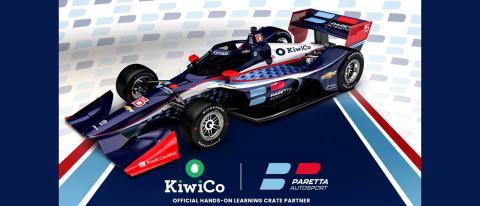
Paretta Autosport has announced its return to the NTT IndyCar Series and a new technical partnership with Ed Carpenter Racing (ECR).
The team plans to compete with its No. 16 Chevrolet-powered entry with driver Simona De Silvestro at the Sonsio Grand Prix at Road America (Elkhart Lake, Wisconsin) on June 12, the Honda Indy 200 at Mid-Ohio Sports Car Course (Lexington, Ohio) on July 3, and the Big Machine Music City Grand Prix on August 7 on the streets of Nashville, Tennessee, Team Principal Beth Paretta said. Additional races may be added.
In addition, team owner Ed Carpenter—a three-time Indianapolis 500 pole sitter—will supply a car and crew members to augment the returning members of last year’s Indy 500 Paretta Autosport team.
“This new technical alliance with Ed Carpenter Racing... will allow us to continue to grow and compete in multiple races this season,” Paretta said.
“ECR is very excited to be a part of the growth of Paretta Autosport,” Carpenter said. “We watched closely what they accomplished at last year’s Indy 500 and look forward to helping their progression toward the goal of being a full-season entrant. I have a lot of respect for Beth and Simona and look forward to success with them later this season.”
There has been plenty of talk about the turmoil visited upon the racing industry these last couple of years as pandemic-related shutdowns around the world left race cars in the garage, grandstands empty, and supply chains crippled.
But the thing about hard times is, they present opportunities.
Setting aside the outside influences that interrupted the normal racing calendar, every enterprise goes through cycles of growth when a decision to take the plunge in a new direction can yield big benefits.
In other words, the news isn’t all bad.
To view the full results of PRI’s annual Motorsports Retail Business Survey, which tracks the latest market trends in sales, marketing, online operations, employee relations, product sourcing, communications, and more, visit performanceracing.com/2022survey.
As part of PRI’s annual Motorsports Retail Business Survey, conducted late last year, we wanted to examine more positive aspects of the business environment. So, we reached out to speed shops, engine builders, fabricators, machinists, prep shops, tuners, and others, and among our questions was: What is the best business decision you made over the last 12 months?
In this month’s Special Report we’re sharing some of the best responses from these retailers, in their own words, in order to better understand why they did what they did, how long it took to implement, what specific steps were required, and why their actions turned out to be a great decision. In our conversations with these companies, we encountered decisions that touched on almost all aspects of business, including employee relations, time management, inventory control, adoption of technology, travel, and more. The motorsports industry has had to deal with its share of storms these last two seasons, but there were still rays of sunshine breaking through, as you’ll discover in the following pages.
Decision #1: hirE MORE employees and REstructure work HOURS
Eric Gunderson Point Karting
I made an intentional choice to scale up our workforce at Point Karting and structure my hours more strictly. I focused on putting people in place to start doing parts of my job that I could no longer do if we wished to continue to grow. I also made a decision to attempt to leave work more at work, and “be okay” with walking away at 5 o’clock to return the next day ready to dive in again. We could not continue on as we were, with me doing everything as a single-person business. Instead, investing in people and putting them in a place where they can be empowered to handle some of the workload and specialize in sections of the business was a clear path forward for us in 2021 and 2022.
When Point Karting owner Eric Gunderson, pictured at left, decided to scale up his workforce, he began by adding employees to work track events on weekends. Some of those employees were then integrated into the shop on a full-time basis.
I started with several employees working on weekends for at-track events, then brought some into the shop for more regular work, scaling part-time help to essentially a full-time role. This helped me identify where help was most needed and start to put systems in place to make things more efficient and actionable. I also took this time to hire a bookkeeper to give me a more comprehensive understanding of my business and what we could afford to take on. This decision turned out to be the best choice because it has allowed me to take Point Karting from a regional kart shop to a nationwide retailer in the online realm. I am able to continue to focus on areas of growth for our business while also maintaining the same level of service within our region that helped us get to this point. The result is that we are more profitable, process our orders in a more efficient manner, and are able to get more done for more customers within the same time frame.
Decision #2: build new imca stock car to help expand customer base
Edward Bertram K&E Sales
You go to the race track as a vendor, and there’s 150 cars at the track, but you’re only selling to 15 or 20 of them regularly. Where are the rest of them going? It dawned on me that I needed to pick a class that I was uncomfortable with, that I didn’t know enough about. So I picked stock cars. They always have a good field, and they always have good competitors. Now I had to literally put a car together in order to understand what they’re doing. Once I understood the car after I put one together, it was a lot easier to start putting parts in place so that when I did have the ability to sell to one of the stock car guys, I knew what was going on the cars.
At the race track they could talk to my driver, Kyle Frederick, about what works for him. For instance, everybody runs aluminum radiators. I decided to put plastic ones in because I could buy them really right and make a good profit on them, and they work great. So we put plastic radiators in our car, and consequently, I stock a half-dozen or more plastic radiators. I’m getting customers to come to the store to not only look at the car, they see what we’re doing because of the driver I put in it, a very well-liked driver. He shares information with them. So it worked out quite well.
Decision #3: limit quantity of work we take in so quality doesn’t suffer
Win Smith Win Smith Racing Ent.
We were involved in leasing race cars and rent-a-rides for various people. When COVID-19 hit, some things changed, and we just felt like we needed to pull things back a bit and limit how involved we were with that. We were going to change the model of how we did it.
The year before we made the change, we had seven different drivers in our cars. It got overwhelming in some respects getting used to what each person wanted to experience when they got a car. We were in it in both oval and road course stock cars—we were renting to two different groups of people. Also, the insurance companies started to make changes in how they did liability for people who were in businesses like this. Basically, if you used or said you were renting a ride to somebody, it made it difficult to get liability insurance, even for my shop.
So we took a couple of guys that had worked with us before and said, “Would you be interested in contracting with us for an entire year, and we would concentrate on just the races you want to do?” And that’s what we did. It’s worked out real well.
What they do when they sign a contract for us, they become literally a part-owner of the car. It is its own little corporation. It has relieved so much pressure for us. Our income has actually risen because we’re not having to make so many changes, have so many different people at the track.
What we do now, we set a schedule for the entire year and stick with it so it’s easier to plan. Instead of somebody calling up two weeks before a race and saying, “I’d like to rent a car for this event,” we’re not scrambling to get stuff ready to go.
Win Smith Racing pared its rent-a-ride program down to just a few select racers and a limited event schedule. “Our income has actually risen because we’re not having to make so many changes,” said Smith.
Decision #4: expand our online store
Kerry Kissinger Ken’s Kustom Chassis
We have a lot of distributors that we use to sell parts. But the hardest part was integrating the inventory with the online store. It was a lot of manual work. We had 150 different brands with something like 200,000 SKU numbers. It was a daunting task, and it just was holding me back to only putting maybe 20 or 30 of the most popular items in our store. But then we came across Data Here-to-There at the PRI Show. They call it an app, but it works with BigCommerce and Shopify and some of the popular e-commerce platforms. They hook you directly with the major warehouses. As inventory levels changed in the warehouses, they would now automatically change on your website. It made the decision to put a large-scale e-commerce sale together much easier.
They started out working with Turn 14 Distribution, and we were one of their beta testers for Meyer Distributing and Transamerican. They’re like a data network where they connect you with the data. You can see every brand that a particular warehouse has. Just with the click of a button you put a checkmark next to the brand that you want to sell, and then it automatically loads it up onto your website. They have different pricing strategies, too. It really helps us little guys. We were probably selling $3,000 to $4,000 a month online in parts, which isn’t much. Now, in a year’s time, we’re selling $10,000 to $15,000 a week, some weeks we’re doing $20,000 in parts sales. We’re expanding our market, too, from drag racing into diesel performance.
Decision #5: bring manufacturing in-house to eliminate the middleman
Wade McGowan Race Parts Solutions
Ever since we started, we had some machine shop guys who were friends of ours make our product line. As the business grew, we needed more help, so we invested in some CNC machines and started making our product line here in-house.
During the pandemic, with material supplies and the middlemen, there are so many hands that have to touch everything before a product actually gets produced and sold. We wanted to eliminate that for, number one, quality control. And number two, if something did happen to where we run out, or there are back orders, we’re not relying on other people and their excuses. We decided to take the step and expand and bring more manufacturing and more parts produced in-house.
We actually bought out a machine shop from a guy who was retiring and closing. We pretty much make everything now all our own. We do a lot of fuel system stuff, and we’re real big in the forced induction world—ProCharger stuff, various turbo flanges, turbo kit parts, custom exhaust stuff. Now, we’re starting to expand more as far as production of that stuff goes, like billet intake parts, billet merges for turbo inlets and outlets. We’re coming out with new products almost weekly.
Bringing more equipment in-house meant more employees. We went from two guys on the machine shop side to five guys now. Sales did increase, but the biggest thing was our profit margins because we eliminated middlemen, we eliminated markups. We’re making more off of our product. Plus, we can control it better. No matter what, when you outsource stuff like that, there’s always some tolerances or variances. Now, doing it in-house, we can watch that closer and control it better. And made in America, that’s a big thing for us.
Decision #6: travel to events in new areas during slower months
Kevin Nouse
KNDsafety.com/Kevin Nouse Designs
I sell racing safety equipment. Specifically, custom racing suits is the biggest part of my business. Slow times are typically June through September, when we’re sitting around waiting for the phone to ring. We decided last year we were going to do a little bit of traveling and promote our custom suits and also our website.
I go to a lot of trade shows starting in November all the way through March. We do seven or eight trade shows or racing events and car shows, but I never tried traveling during the summer months. We took about a three-week trip.
I sponsor a race track and two racing series in the Midwest. We went to seven or eight events in those three weeks. We went to the race tracks, and we set up in the pit area with the racers. We met the drivers and the teams, and it was a wonderful trip. We took measurements while we were out there if someone wanted to get measured for a custom suit.
The results weren’t apparent when we went, because that time of year most people have their equipment. But starting into the offseason, when it is custom suit-buying season, we sold many custom suits and all kinds of safety equipment to people that we met out there. It’s still paying off. I get phone calls pretty consistently every week from someone who met us or saw us out there. They have done a phenomenal job of supporting us as a result of the trip.
It was kind of scary because it was a lot of money. To go for three weeks is a lot of travel, fuel, meals, and hotels. But it has paid off big-time, and we are planning to do that same trip again this year, and some different areas, too.
KND Safety’s sales were lagging in slow seasons, so they tried traveling to summer races. “It’s still paying off,” said company owner Kevin Nouse. “I get phone calls every week from someone who met us or saw us out there.”
Decision #7: diversify into other types of motorsports
Jason Franikowski SV Motori
Historically we’ve been involved in the motorsport community here in Colorado. We deal mostly with the folks who like to go to our three main tracks, mostly the club sports, and that was pretty much our focus at that time. We were looking at our customer base and looking at what venues they were running and trying to see how we could diversify and have more visibility.
We started doing some networking through the local BMW car club chapter. We told them, “We can be here and provide these services for your group.” That, in turn, helped us get more stage time with the folks who were teaching those individuals for their first time on the track with the BMW clubs. And these individuals turned out to be involved with other organizations outside the state.
That’s when we started meeting people who had involvement with IMSA. It was through that networking that we began supplying products for IMSA teams. That really helped us with sales and getting more knowledge in both directions from those team players.
It was kind of surprising to find out that some of the folks involved with IMSA are also involved with other teams. The connections broke out from there. Chassis builders started to get involved. And the next thing you know, we’re starting to get involved with some dirt track individuals. It really is amazing what word-of-mouth relations can do in areas you never thought would have an impact on you. Getting involved in some of the professional series and then additional amateur series really woke everything up.
Decision #8: focus more on service/labor and less on parts sales
Jim Helbing Motorvations Motorsports
The last two years have been my best in the 25 years of performance-tuning Hondas and Acuras. I estimate a 6–7% increase, and perhaps more importantly, I now only do the installs I want to do. I have jobs booked out for months.
I attribute the improvement to my decision to stop stocking major performance parts for inventory. Instead, I offer customers a choice to supply their own parts or have me order only what is needed for a particular job.
Many choose to have me handle the whole project, including ordering parts, and they pay a package price. Those who bring their own parts pay my hourly labor rate. I keep certain parts in inventory for customers who might not have thought to source certain ancillary items for their projects.
My trick is to have only A-mover parts, not stuff that sits. So, I don’t get into a price-matching mess on parts. Profit margins are up, stress is down, and inventory is trim.
Decision #9: build a new chassis jig
David Macan Custom Fab Works
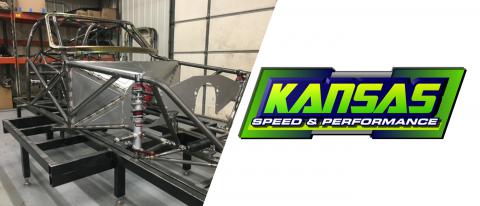
Business has been very good for me lately. As a fabricator, with a partner of 35 years, I had been handling street-and-strip chassis builds with one jig. That was causing a bottleneck, as we had to spend time converting the jig from handling sheet steel or rectangular-type tubing for street cars to round tubing for drag cars.
Increasing demand for no-prep car builds spurred my decision to finally build a separate jig for drag cars. I spent about four days on and off last summer doing that and put it into service in September. The table, which is over 15 feet long, is flat within ten thousandths of an inch, giving incredible tolerance control for higher-precision builds.
The net result has been getting more cars built. The first three drag cars built on the new jig have been successful from the start. In February, we were working on the fifth car, a 1941 Willys Pro Gas car. We had a 1967 Pro Touring Camaro on the street car jig, and seven more jobs were waiting to start.
Decision #10: expand our social media presence
Andrew Jackson LSX Swap Solutions
In early 2021, I decided to expand my shop’s social media presence as a tool to increase business. It turned out to be one of my best business decisions. Using my phone, I record and post car-related content on Instagram and Facebook.
I post mostly our builds and the process from start to finish. Those videos get the most views. With 6,500 followers on Instagram, that platform has been my best for growth. My content gets shared often, including by YouTube celebrities.
I started posting four to eight times per day on social media to get noticed beyond my northern New Jersey base. Now, customers are contacting me from North Carolina, Georgia, and even Europe.
My social media efforts have paid off. Pre-pandemic in 2019, I may have done seven major builds. Most of my business in 2021 came through social media, and I did 22 to 25 Pontiac G8 GTs alone. We’ve quadrupled our workload, and I’m scheduled three months out.
Chris Morris Morris’ Mopars
I didn’t set out to become a social media star, least of all on TikTok, which was mostly dance videos. I was already on Facebook and Instagram, and my young son got me started on TikTok in 2021. There weren’t any TikTokers out there covering cars and what I was doing, so I saw that as a good opportunity. It really took off. It has been a benefit to my business.
I post my smartphone videos every few days. Many are 15 seconds or less. A video of me explaining why I started my Mopar-exclusive shop got 37,000 views in just two days.
As a result of the videos, I’ve received customer inquiries for parts, and I work on cars directly through TikTok messaging. People recognize me at the larger Mopar events and at trade shows. I handle social media myself. I credit the concentrated efforts with growing the business.
I was mainly a one-man shop before, but I’ve added two part-time helpers since, and will be going to two full-time staff members by summer.
Lubrication companies are expanding the envelope to develop specialized products for targeted applications, all while helping release untapped horsepower.
Rules can hamstring engine builders who want to make more power. Sanctioning bodies limit airflow, cam specs, compression ratio, and more in an effort to manage costs for the car owner while keeping an eye on potentially unsafe speeds.
When engine builders can’t use modern techniques to actually increase horsepower, they’re often limited to finding lost or missing horsepower. One of the best ways to free up those ponies is friction reduction in the engine and drivetrain.
On the other hand, in classes where rules are much more flexible, racers have been cranking up the boost and creating high-stress conditions that can damage expensive components.
That’s where companies that specialize in lubricants have been developing and testing very specialized formulas to meet specific needs of the racer, whether in a rules-restricted or open class.
“In the past few years, I’ve seen more attention to application-specific products,” said Kyle Fischer of Lubrication Specialties, Mt. Gilead, Ohio. “Some of the modifications that guys are putting to these cars are really pushing the limit. When you find new problems, you find new solutions.”
There are also relatively untouched territories, such as within diesel and powersports, where lubrication issues can be different than in traditional motorsports.
“We do a lot of R&D with our diesel race teams because they take these components further than they’ve ever been,” added Fischer. “But as a manufacturer, I wish we talked more within the industry.”
Fischer told the story of meeting a shock absorber specialist in one of his racer’s pits. He learned of a consistent failure issue but also discovered that there was no hardcore science behind the selection of the oil in the shock absorber. Fischer visited the shock company’s trailer to see the problem up close, and after conferring with his engineer back home, they agreed on a potential solution.
“We’ve known how to fix this problem for years, but we’ve never talked to a shock absorber company to know that a problem existed,” said Fischer. “The shock company has great test equipment, and we’ll do a lot of testing with them and hopefully formulate a great solution.”
In another example, Fischer was talking with a racer who ran a blown alcohol engine and bemoaned that he was changing the self-contained oil in the supercharger after every run. After further discussion, Fischer learned that the constant oil changes weren’t because the oil was breaking down, but because the racer feared worn metals were being deposited in the oil.
Manufacturers that specialize in high-performance fluids and lubricants have been developing very specialized formulas to meet specific needs of the racer, whether in a rules-restricted or open class.
“So, let’s try to fix the problem and use an oil to reduce the wear and extend the life of the oil in the supercharger,” said Fischer. “You know, we stay in our lane. We’re a lubricant company. We’re in the lab and at the track, and we want to know what kind of problems racers are having that a lubricant can fix.”
With all the choices in the market, racers need to be aware of the technologies behind a product and its intended use. They should know what the manufacturers have learned: the application will dictate the chemistry. The very best gear oil, for instance, makes a lousy engine oil.
That attitude is well represented throughout the lubrication industry. What follows is a sampling of companies that have developed unique products to address specific problems.
Tri-Ex2 Grease & Gear Oil TriboDyn Lubricants
One NASCAR team was experiencing drive-plate failures, especially on high-banked tracks where the load is brutal on the right side. The team was replacing the plates as often as every other race.
“With our ceramic technology, we made them a grease that would solve the problem,” said Mark Wheatley of TriboDyn Lubricants, Mooresville, North Carolina. “We haven’t had a failure since, and at least 16 Cup teams are using it.”
The Tri-Ex2 extreme temperature and pressure grease is also good for wheel bearings and other components under high-stress conditions. It leverages the same ceramic coating technology used in TriboDyn’s engine and gear oils.
“We heard from racers running quick-change rearends, and they complained that they couldn’t change gears without wearing gloves,” continued Wheatley. “Our Tri-Ex2 full synthetic gear oil works so well, it can lower the operating temperature up to 80 degrees.”
The gear oil is offered in 75W-90 and 75W-140 viscosities and is suited for differentials, manual transmissions, transfer cases, and other gear boxes that require a lubricant. The patented ceramic lubricant features a complex mixture of gear lubricants, combined with synthetic base stocks, and a sulfur-phosphorus extreme pressure additive package with friction modifier. Wheatley explained this formula provides thermal and oxidative stability, as well as anti-foam, anti-rust, and anti-corrosion protection.
DBR & HVL Driven Racing Oil
While Driven Racing Oil’s High-Viscosity Lubricant (HVL) has been around for about 12 years and is popular as an engine-assembly lubricant, the company recently gave the product a freshening.
“HVL is a legacy product that we recently updated with the Pennsylvania base oil that’s in our GP-1 high-performance oils,” said David Chamberlain of the Memphis, Tennessee-based company. “It makes for a phenomenal assembly lube because it has a natural cling and tack. It’s going to stay where you put it.”
The upgraded assembly lube is a non-foaming product and blends well with the break-in oil, extending the oil film thickness during that critical period. HVL is also a perfect segue into Driven’s latest product, a 15W-40 break-in oil for diesel engines.
Driven Racing Oil’s High-Viscosity Lubricant (HVL) has a new revised formula. It now uses the same Pennsylvania base oil as the company’s GP-1 high-performance oils, improving its effectiveness as an assembly lube, said a company source.
“Driven pioneered specific break-in oils for gas engines,” said Chamberlain. “This DBR formula piggybacks much of the same chemistry, but it has a much more robust dispersant package.”
Diesel engines are notorious for producing soot, which are micro-sized pieces of hard carbon. Soot-related wear can be found throughout a diesel, especially in places like the timing chain or other areas with tight metal-to-metal tolerances.
“With a diesel, the soot has to be managed,” explained Chamberlain. “We want to keep the soot suspended in the break-in oil. It shouldn’t fall out into the component.”
According to Driven Racing Oil, diesel engines can run the break-in oil longer than what is recommended for a gas engine. That’s because of the lower rpm levels, and diesel engines have larger sumps for greater oil capacity.
“However, we suggest changing the filter after about 60 miles to pull any metallic particles out of circulation. Then you can go about 800 miles before draining the break-in oil, changing the filter, and switching to a conventional oil,” concluded Chamberlain.
Supreme 7000 Synthetic Plus 20W-50 Schaeffer Manufacturing
The Supreme 7000 Synthetic Plus 20W-50 race oil is a high-zinc formula designed as a general-purpose racing lubricant and can be used in select four-stroke motorcycle and ATV engines. The foundation is a high-quality, para-synthetic base stock that is mixed with an additive package and shear stability viscosity index improver.
“Supreme 7000 Racing Oil 20W-50 is fortified with Micron Moly and Penetro, our proprietary friction modifiers we use in all our engine oils,” said Dawn Cross of Schaeffer Manufacturing, St. Louis, Missouri. “Those friction modifiers are key to protecting race engines operating in extreme driving conditions. In addition to the friction modifiers, Supreme 7000 Racing Oil 20W-50 is blended with extra zinc to further protect flat-tappet cam engines and other components.
“Each season we hear from racers who tell us how impressed they are with the condition of their engine at the end of the season,” said Cross. “The results are the same: Engines are clean with little to no wear. Some racers report their oil temperatures are consistently 10 to 15 degrees cooler than with other lubricants.”
OxyCrate Racing Fuel Klotz Synthetic Lubricants
A number of Late Model racers on both dirt and asphalt were encountering exhaust valve recession on their aluminum heads. To combat this problem, Klotz Synthetic Lubricants in Fort Wayne, Indiana, partnered with Hendren Racing Engines in Rutherfordton, North Carolina, to develop OxyCrate racing fuel, which is optimized for the 525, 602, 603, and 604 crate engines from GM Performance.
“Severe valve recession can impact valve lash and restrict exhaust flow,” said Jeff Streby of Klotz Synthetic Lubricants. “This reduces engine performance and increases maintenance costs over time.”
Streby said Klotz’s fuels offer measurable increases in horsepower and torque but were never designed for the unique durability requirements of modern crate engines. The company leveraged knowledge working with the Indy Racing League in the 1990s to develop a new race fuel.
Using a chassis dyno to validate the formulas, the new fuel showed an increase of 8 horsepower at 6,000 rpm over comparable fuels.
“We achieved horsepower and torque objectives early in the fuel’s development,” noted Streby. “However, several iterations were needed to achieve the desired hardware protection.”
Klotz engineers discovered a blend of its current products delivered the performance goals. Those products included its base high-octane fuel, a proprietary oxygenating additive, and Uplon, a Klotz product sold separately as a fuel lubricant that adds surface-active, anti-wear chemistry to the formula.
Supercool Red Line Synthetic Oil
With power adders becoming more popular on both factory production cars and race cars, managing heat is always a concern. The Supercool performance coolant from Red Line Synthetic Oil was developed to serve a wide band of performance applications.
“As OEM manufacturers were offering more factory models with power adders, our customers were looking for ways to keep their engines cool and protect their investment,” said Mark Beatty of the Benicia, California-based company. “We launched Supercool to fit all makes and all models versus OEM fluids that only fit a narrow range of vehicles.”
Supercool is designed with better heat-transfer properties compared to glycol-based antifreeze. It comes as a 50/50 ready-to-use premix and is compatible with gas or diesel engines found in tow vehicles.
“When used with supercharger heat exchangers, it helps keep the system cooler and takes longer to heat soak a water-to-air intercooler,” added Beatty. “Our formula enhances the fluid’s ability to transfer heat, reducing operating temperatures by up to 20 degrees F.”
Beatty also said Supercool will clean and lubricate water pump seals and can be used in systems with aluminum, cast iron, copper, brass, and bronze components. A formula is also available for the powersports industry.
“We are in the business of helping people protect their passion, no matter if they show it, cruise it, race it, or push it to the limit,” added Beatty.
Pro ATF 10, 20 & 30 HPL Oil
Fine tuning an automatic transmission and torque converter is a little easier with HPL Pro ATF transmission fluid that’s available in SAE 10, 20, and 30 weights.
“We designed them so you can mix them,” explained Erik Brock of HPL, Hebron, Indiana. “You can add a little 30 if you want to tighten up the converter, or you can mix them to achieve the reaction that you want for track conditions.”
Engineered for racers who were experiencing problems due to high-heat or high-stress conditions from boosted engines, the formulas are designed to reduce clutch slippage and provide more consistent fluid behavior with temperature swings.
HPL Pro ATF transmission fluid is engineered to handle high-heat and high-stress applications. It’s available in SAE 10, 20, and 30 weights that can be mixed to alter transmission and converter characteristics.
“We built our Pro ATF from scratch for extremely high temperatures,” explained Brock. “Racers with turbo cars trying to spool up on the brake can build 100 degrees a second, and that can kill the trans oil. We designed the Pro ATF so it wouldn’t be such an issue.”
Formulating a new ATF often leads to compromises or tradeoffs in different areas of performance. “We knew the limitations of current chemistry and experimented with chemistries and technologies,” said Brock. “When building an oil, any oil, a change to the chemistry a tenth of a percent can affect another part of the oil. For example, a change in chemistry to improve anti-wear properties can completely wreck anti-foam or corrosion resistance. Our main goal was to build an oil that wouldn’t fall apart in a race vehicle with high temperatures.”
LX4 Lubricity Extreme Hot Shot’s Secret
When engineers notice problems in company-sponsored race vehicles, work on solutions tends to begin right away.
“We developed it after we found problems on our diesel race trucks,” said Fischer of Lubrication Specialties, the manufacturer of Hot Shot’s Secret’s LX4 Lubricity Extreme.
The problem was sourced to the Bosch CP4 fuel pump, which replaced the CP3 in many diesel applications, including GM, Ford, Ram, and Jeep.
Hot Shot’s Secret LX4 Lubricity Extreme is formulated to boost the lubricity of diesel fuel, making fuel pumps last longer, according to a company source.
“But the CP4 was developed based on Euro-spec diesel fuel, which has higher standards than our ULSD [ultra-low sulfur diesel] domestic fuel,” said Fischer. “We have a much looser standard, which allows for a drier fuel. Where this really showed its face was at the track in the diesel series. Racers were asking why they were burning up fuel pumps so fast.”
Hot Shot’s Secret reached out to industry insiders and conducted tests with a lubricity agent on both the CP3 and CP4. Basically, the process of removing sulfur also removes nitrogen and oxygen, both of which helped improve the lubricity in diesel fuel. Part of Hot Shot’s Secret’s secret was to return oxygen to the fuel, which has no effect on the environment.
“We really needed to get the lubricity levels in the fuel up. The fuel is the only thing lubricating the pump,” noted Fischer. “The trick is to bring up the lubricity without affecting the cetane. Racers still need to make power with the fuel but also protect the components in the fuel system at the same time.”
Pro Max ATF LAT Racing Oils
There’s no doubt automatic transmissions are bearing the full brunt of tremendous horsepower gains of the past few years, and that has sent lubrication engineers to the lab to find better ways to protect those parts.
“An ATF can fail because of high horsepower and high heat,” explained Danny Vaca of LAT Racing Oils, Orange, California. “With our Pro Max ATF synthetic, we built it from the ground up to be robust to fight heat issues and help the transmission live through the tortures of the turbo and supercharger cars.”
LAT Racing Oils’ line of synthetic ATFs is available in Pro Lite, Pro ATF, and Pro Max ATF, engineered for different transmission and converter setups.
LAT offers three blends of ATF. The Pro ATF is the base formula with a viscosity index of 210, while the Pro Lite recipe has a viscosity index of 165 and is designed for reduced drag and loose torque converters. The Pro Max ATF is built for high-stress conditions that require higher shear resistance, faster lockups, and smoother shifts.
“When I tell them how much it costs, they say that’s triple what they normally pay for ATF,” said Vaca. “Then I ask how often they change transmission fluid. Sometimes the answer is after every race because the fluid has gone bad. Basically, I got them to answer their own question because our formulas will live much longer.”
Speed Sauce and Speed Sauce Plus VP Racing Fuels
World War II piston aircraft used to inject a mixture of water and alcohol into the intake manifold to help control knock, and that same trick is still being used today with high-boost turbocharged engines.
“This ‘charge cooling’ fluid not only cools the hot compressed air coming into the engine but also acts as octane on demand due to the high-octane rating of alcohol,” explained Mark Walls of VP Racing Fuels, San Antonio, Texas, which markets two versions of a water-injection formula. “Over time, the racing world adopted this technology, followed by a few production cars, such as the BMW M4 GTS.”
VP Racing Fuels’ water-injection formulas are available in two types: Speed Sauce, with a 50:50 methanol/water blend, and Speed Sauce Plus, with 80:20 ethanol/water.
Today’s typical mixture is a 50:50 blend of water and either ethanol or methanol. The formula in VP’s Speed Sauce is one part water, one part methanol.
“Methanol is used due to its high octane and latent heat of vaporization,” explained Walls. “VP Racing started looking at other alcohols that potentially could maintain or improve upon the benefits of the water/methanol blends without some of the downfalls, such as toxicity, corrosiveness, and lower energy content.”
VP then settled on an 80:20 ethanol/water blend for its Speed Sauce Plus, using ethanol for its increased energy content, higher octane, safer handling from a toxicity standpoint, lower corrosion, and offering up to 100% renewable content.
“While choosing blends of alcohol and water, a balance of charge cooling and octane tradeoff will be realized,” added Walls. “Testing at VP resulted in a mixture that gives ‘enough’ charge cooling and the right amount of octane on demand to deliver up to 5% more power than the water/methanol blend while using up to 30% less product. While looking at stock performance vs. alcohol injection performance, we were able to increase horsepower from 425 to 522 (turbo limited) and torque from 406 to 621 lb.-ft.”
Blud Lubricants
100% Synthetic Racing Engine Oil
• Superior anti-wear formula reduces damaging wear and increases engine life.
• Protection at startup and low oil temperatures.
• Film strength that maintains stability at high temperatures and with fuel dilution.
• Low friction co-efficient reduce parasitic loss and increase performance.
• Increase alkalinity prevents rust and corrosion.
• Promotes cleanliness and sludge prevention/removal.
Champion Brands
Full Synthetic Racing Power Steering Fluid
• Formulated to meet the specific performance demands of today’s high-performance racing power steering systems.
• Purpose built with higher viscosity than conventional power steering fluids, helping provide superior protection and performance.
• Exceptional anti-wear properties that help protect the system, anti-foam agents help prevent pump cavitation, and anti-oxidant properties help
stop the formation of sludge.
• Stable viscosity under high-speed/high-temperature operation.
• Reduces temperature and delivers consistent steering response.
• High-performance transmission lubricant specific for race car transmissions.
• The product represents the result of a long-term study, design, and development focused to obtain an innovative chemistry suitable for extreme racing conditions.
• Provides exceptional resistance to wear and extreme pressures; great anti-oxidative, anti-rust, and anti-foam properties; absolute shear stability.
• Maintains its starting viscosity during service even when undergoing extreme mechanical stress; effective LS (limited slip) properties.
• Film thickness greater than an SAE 75W-250, yet low-fluid friction like 75W-90.
• For heavily loaded racing differentials and transmissions, problem gearboxes.
• Most popular ShockProof product, many racing and specialty applications.
• Many performance racing applications like sprints, midgets, dirt late models, and quick-change differentials, Detroit lockers and spools, NHRA Top Fuel and Funny Car
rearends.
Royal Purple
XPR Extreme Performance Racing Motor Oil
• Fortified with a high level of zinc/phosphorous anti-wear additive and a generous dose of Synerlec.
• Synerlec is Royal Purple’s proprietary additive chemistry that greatly increases the protective film strength of the oil, reducing metal to metal contact, friction, wear.
• Protection against engine wear, superior lubricity and low coefficient of friction for less parasitic loss and more power to the wheels.
• Premium synthetic base oils and Synerlec technology resist thermal degradation.
• Prevents the sludge and dilution by exotic fuels (alcohol and nitromethane).
VP Racing Fuels
Pro Grade Full Synthetic Racing Oil
• Designed for high-horsepower, high-rpm, big and small block engines.
• Formulated with technologically advanced chemistry.
• Pro Grade contains multiple anti-wear chemistries, including high levels of zinc and phosphorous (ZDDP).
• Features a balance of friction and viscosity modifiers that significantly reduce fluid-to-fluid and metal-to-fluid friction, increase horsepower, and lower operating
temperature.
• Available in SAE 0W-20, 5W-30, 10W-40, and 15W-50.
Playing a critical role in the success of any race car, driveline technology is under constant development, with incremental improvements steadily adding up over time to produce spectacular results.
In the shadows of glory lies the stuff of success. While everyone dreams and drools at the sight of wicked V8s bristling with shiny turbos, snaky headers, and sparkly chrome, driveline components generally don’t inspire that kind of lusty admiration.
They just do their job. If they do it right, no one thinks much about them. Races are won, champagne corks pop, and cars are loaded onto trailers without so much as a nod to the transmission, driveshaft, and rearend.
But on the way to the winner’s circle, these unsung heroes get countless hours of attention, with some of the brightest minds in the business ruminating endlessly on how to improve them. More efficiency. Lighter weight. Lower cost. The list goes on and on.
To keep up with these developments, we called on leading driveline experts to find out what they’re working on, what they see racers using, and what they predict for the future. Their input yielded 14 thought-provoking trends to watch in the year ahead.
Universal joints have long been a weak link in drivelines.“It’s been more than 20 years since anyone’s done anything different,” said our source at Dynamic Drivelines, which has teamed with Neapco to develop a stronger design.
1. Torque Converter Tuning
With the increasing sophistication of modern drag cars, racers are now seeing a greater need to quickly and freely tailor torque converters for different tracks, operating conditions, and car setups. Bolt-together torque converters allow them to access the inner workings of the converter and switch out components without having to send it to the manufacturer or bring it to a specialist’s shop.
Although bolt-together torque converters aren’t new—they were introduced more than three decades ago—most racers have so far been reluctant to delve into the complexities of tuning them. Manufacturers are now responding to this need with improved bolt-together torque converters, along with increased tech support to help racers grapple with the finer points of choosing stators, turbines, and other pieces.
“Torque converters are like black magic,” said Krista Baldwin of Wharton Automotive Group, Anaheim, California, which includes McLeod Racing, FTI Performance, and Silver Sport Transmissions. “They’re a little bit more difficult than some other systems in a car. But a racer should be able to tune the converter for specific conditions. With our new Gen 3 XPM torque converter, a racer can say, ‘Hey, I need my torque converter like this, because I have this engine combination this weekend.’ And we’re able to help change it on the fly. Our techs are racers. They’ve seen different conditions themselves, so they’re able to accurately say, ‘Okay, this is the baseline where you need to start.’”
2. Better Universal Joints
Universal joints have always been one of the most vulnerable parts in drivelines, particularly as horsepower climbs to stratospheric levels in many racing series. To combat the problem, manufacturers are working on improvements in universal-joint design and materials.
“It’s crazy, because it’s been more than 20 years since anyone’s done anything different with U-joints,” observed Mike Bennett of Dynamic Drivelines, Des Moines, Iowa. “And that’s always been the weak link. So we’ve definitely stepped up the game on universal joints. Within the last year, we’ve worked with Neapco as our supplier. We have a new U-joint coming out that’s one of the best I’ve ever seen. We changed the material in it, and we did some different stuff with the way the body was designed.”
3. Constant-Velocity (CV) Joints for Sprint Cars
Sprint cars are somewhat unique in that they use a torque-tube setup instead of an open driveline. They also endure levels of punishment that many other cars don’t. In response, AL Driveline in East Berlin, Pennsylvania, has taken the bold step of introducing constant-velocity joints that replace universal joints on sprint cars.
“You cannot fake the science as to how a U-joint functions,” explained Aaron Long of AL Driveline. “As soon as it sees any articulation, the output speed is varying from the input speed, so it’s really beating itself to death from the first time it’s used. That’s why there are no universal joints in front-wheel-drive vehicles. But CV joints don’t care what angle they’re at.
“I feel you’re looking at the future of sprint car drivetrain technology,” continued Long. “For sure there’s never been a smoother system ever created for sprint cars. I gave the first one to a customer to try in 2018, and that original CV joint is still going. It’ll run this year with a 410 team here in central Pennsylvania. It’s approaching 150 races.”
Sprint cars use a torque-tube setup that puts unique stresses on components. AL Driveline’s constant-velocity joints are designed to run smoother and last longer than universal joints in this configuration.
4. Carbon-Fiber Driveshafts
Steel and other materials will probably always have a place in driveshaft construction, but carbon fiber is steadily gaining popularity. Carbon-fiber driveshafts offer the advantage of light weight, along with greater safety because of their tendency to splinter into relatively harmless fragments if they fail.
For this reason, some sources say more rule makers should make carbon-fiber driveshafts mandatory. “I keep beating on this, but I’d like to see the industry do more carbon fiber, just because of the safety factor,” said Dynamic Drivelines’ Bennett. “I think we’re getting closer. A lot of the sanctioning bodies are figuring it out. The cost has always been an issue, too. If we can keep the cost down on them, we’ll have a better shot of getting them into everything.”
5. Big-Diameter Titanium Sprint Car Driveshafts
Titanium driveshafts are a popular way to save weight on sprint cars, and they’re certainly nothing new. But now, AL Driveline has introduced a larger diameter version, which Long said reduces wear on universal joints and other components.
“The problem with titanium is that it’s so flexible,” he explained. “Using a small-diameter titanium driveshaft with the way these 410 engines run these days produces a significant amount of whipping effect. There have been times where we can actually see rub marks where a traditional standard-diameter driveshaft will rub the inside of the torque tube.
“When the driveshaft whips like a jump rope, it induces fatigue into not only the base flange that holds the U-joint to the engine, but also to the female drive yoke,” added Long. “This is especially true at bigger race tracks, where you have a lot of chassis flex. Our driveshaft design increases the longevity of traditional universal joints by minimizing the amount of driveshaft whipping effects.”
6. Aluminum Sprint Car Driveshafts
Alongside more established titanium options, aluminum driveshafts appear to also be gaining popularity in sprint cars and open wheel cars in general, by offering similarly light weight at a much lower cost than titanium.
“A lot of the industry at this point has gravitated toward fabricated titanium driveshafts,” explained Dave Ely of Diversified Machine, Lancaster, Pennsylvania. “But those are in the neighborhood of $1,500 each. An aluminum driveshaft from us with the same diameter is only $450 to $500, and they hold up great.
“In lower horsepower cars we’re able to run standard-diameter driveshafts similar to what a steel driveshaft would be, with no issues whatsoever,” continued Ely. “They are half the weight, and they can be run for a long time. We tell people to swap out after 30 races because they’re relatively inexpensive. But people will run them in excess of 60 races, and they still look brand new. I could literally put them back in the wrapper and on the shelf.”
7. Bolt-On-Tube Quick-Change Rear Ends
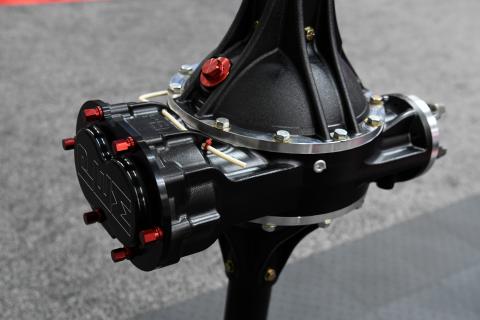
Quick-change rearends typically have press-fit axle tubes that are difficult and time-consuming to remove. But Diversified Machine somewhat recently introduced a quick-change rearend assembly that uses bolt-on axle tubes instead. The design is said to be stronger, more precisely aligned, and far easier to work on.
“The design is about 70% stronger than a conventional style quick-change rear,” explained Ely. “That’s a huge benefit. The way it’s designed, it has perfect alignment. Plus, the side bells are stronger, and the tubes can be changed out much quicker. Before, even for a skilled guy to replace a tube was a six- or eight-hour project. Now, that’s become a one-hour project. It’s a dry process, so there’s no need to drain the oil out of the rear.”
As an added benefit, the components of these bolt-together units can be packed in separate boxes that can be shipped via parcel delivery services such as UPS instead of slower, more expensive, and far less convenient truck freight shipping.
Diversified Machine’s bolt-on-tube quick-change rearends are designed for faster, easier servicing than those with traditional press-fit axle tubes. These units are also stronger and more precisely aligned, according to a company source.
8. Overdrive
With the popularity of Drag Week and other combination street and race events, many racers are now adding overdrive capability to their cars to handle long trips at highway speeds with gear ratios that are optimized for competition.
One of the most popular ways to add overdrive is with a Gear Vendors unit, a separate gearbox that mounts behind the existing transmission. They’re robust enough to handle thousands of horsepower, and they can be fitted to practically any combination of car, engine, and transmission.
But our sources note that while this approach has proven effective, many racers are looking for lighter, more compact, self-contained solutions for adding overdrive to a drag car. “Incorporating the overdrive right in the transmission makes it a lot simpler,” said Rusty Sampsel of TCI Automotive, Ashland, Mississippi.
For this, many racers are starting to look at the General Motors 4L80E transmission, which is essentially a GM Turbo 400 with overdrive and electronic control. While at this point the 4L80E isn’t capable of handling the massive power that a race-prepped Turbo 400 or Powerglide can, the 4L80E nonetheless can be fortified to take more than 1,000 horsepower, which is adequate for many dual-purpose machines.
In addition, the 4L80E has a torque-converter clutch, which allows lockup at higher speeds. “Racers want a higher-stall-speed converter to get the motor up into its power range to launch better,” noted Sampsel. “But in older transmission designs, they’re stuck with that loose converter at the top end of the track. Electronic transmissions like the 4L80E have a clutch built into them that can actually lock up the converter like a manual transmission.”
External overdrive units have become popular for dual-purpose drag cars, but many racers are now instead preferring to have overdrive capability in the transmission itself, noted our source at TCI Automotive.
9. Transaxles in Stock Cars
To see one of the biggest changes in race-car drivelines of late, simply turn on the TV on Sunday afternoon and watch the 40-car NASCAR pack slug it out. This year, the top stock-car sanctioning body has done away with the traditional four-speed, H-shift-pattern transmission and separate rear differential configuration it has used for ages.
Now, all NASCAR Cup cars use a five-speed, sequential-shift transaxle design built by Xtrac. It’s a radical move that, along with other changes introduced this year, will significantly alter how these cars are set up and raced.
It also raises an interesting question: Will NASCAR’s introduction of a transaxle have any effect on other stock car series? It’s hard to say for sure. While we can assume that most stock car series aren’t eager for such a drastic change, the stock car community as a whole has always kept a close eye on the decisions that flow forth from Daytona.
10. Manual Transmissions
Although automatic transmissions are still the unrivaled standard for most all-out drag cars, manual transmissions are rapidly gaining popularity with the rise of autocross, track day, pro-touring, and dual-purpose drag events. Accordingly, manufacturers are introducing a wide range of new manual transmissions and the necessary parts to swap them into various cars.
Wharton Automotive Group’s Silver Sport Transmission brand specializes in building complete installation kits around the popular Tremec line of manual transmissions. “I definitely think there’s a trend back to manual transmission,” said Baldwin. “We’ve had some of our best years lately, which is a true testament that people really want to experience that feeling again. It’s what people are craving.”
Among the most popular manual transmissions being swapped into older vehicles now is Tremec’s new TKX 5-speed. It can handle up to 600 lb.-ft. of torque and features a compact, rounded case that makes it easier to fit into existing transmission tunnels.
Manual transmissions are gaining in popularity, especially for autocross, track day, pro-touring, and dual-purpose drag events. Silver Sport specializes in kits for installing Tremec transmissions, like the new TKX 5-speed shown here.
11. Dual-Disc Clutches
High-horsepower manual transmission cars traditionally have required clutches with massive spring pressure to prevent slippage. But that usually translates to herculean pedal force, making them a chore to drive on the street. Dual-disc clutches, by contrast, are designed to handle big horsepower and yet still have a relatively light pedal feel, making them increasingly popular for high-horsepower, dual-purpose cars.
“Having a 2,000-horsepower car now isn’t uncommon,” observed Baldwin. “But if you’re going to drive it on the street, you don’t want to have to push down on a super hard clutch. So we always recommend a twin-disc unit for that kind of power. When they move from single-disc to twin-disc, a lot of people say, ‘There’s no way this is the right clutch. It’s way lighter than what my single-disc clutch was.’”
12. Late-Model Muscle Cars
Although the popularity of Camaros, Challengers, Mustangs, and other late-model muscle cars certainly isn’t anything new at this point, one of our sources predicts that this market is going to get even hotter. Used examples of these cars are now dropping into a price range that’s affordable to average working-class racers. Many of those buyers will probably be more willing than the original owners to heavily modify them and drive them hard.
“These cars are getting to the age now where they’re in the hands of their second and third owner,” said TCI’s Sampsel. “This brings challenges for us. They’re kind of stuck with whatever drivetrain is in there—they can’t retrofit much. So we have to step up and try to accommodate those types of guys. They’re pushing the envelope from the engine standpoint. You have to start looking at the rest of the driveline because they’ll start finding the weak spots.”
13. EVs
Love ’em or hate ’em, EVs are here, and they’re probably only going to get more popular in motorsports. Their smooth, silent operation leaves some racers feeling as cold as a popsicle on Pluto, but no one can dispute the huge performance potential of EVs. Easily capable of topping 1,000 horsepower, an EV’s burly output is comparable to that of V8s with power adders. And, just like internal-combustion race cars, such brutal force punishes driveline components.
Many aftermarket manufacturers see exciting possibilities in the EV market for stronger components, as well as for ways to add greater satisfaction to the overall driving experience. “Last year at SEMA we sponsored an electric vehicle chassis,” said Baldwin. “We mated it with a Tremec transmission and a McLeod clutch. We want to showcase that you can still have that third-pedal fun in an electric vehicle.”
14. Gradual Evolution
While we always like to report big, dramatic breakthroughs, our sources for the most part emphasized the evolutionary nature of driveline development. The current state of driveline technology is largely the result of endless tiny improvements, one built on the other, which over time can yield radical transformations.
“Racers are always hoping there’s something out there that’s going to rotate the earth,” observed Ely of Diversified Machine. “At this point, though, it’s a lot of very minor improvements. I’m not saying there isn’t anything new out there—we’re always looking. But it’s a full-circle game. Most times, racers come right back to normal stuff.”
Now offered in a variety of lengths, the Striker series coil-overs from Aldan American in Signal Hill, California, gives chassis builders and tuners a wide range of independent settings for both rebound and compression.
“It could be used for autocross or a drag racing setup,” said Garrett Harmola. “Or even a street car looking for greater performance through adjustability.”
There are six compression settings and 11 rebound settings, providing a total of 66 points of adjustability.
“You can independently control the rebound and compression, and all of our coil-overs are ride-height adjustable,” added Harmola. “You can raise or lower the car to get the stance you want.”
The 2.0-inch shocks are designed to work with 2.5-inch coil springs. The shock bodies are constructed from billet aluminum, and bearings are used for the mounting.
These shocks are designed with universal applications in mind and come with all the necessary hardware for installation. Aldan also has the RCX line, which offers similar features but are application specific for the fitment. Contact Aldan for more information on the lengths available to match the suspension setup. —Mike Magda
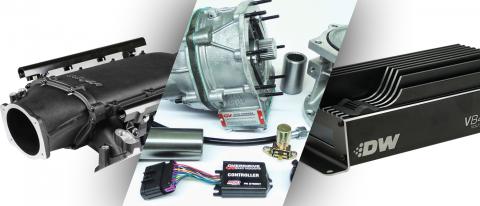
Available in multiple configurations, the Ultra Lo-Ram multi-piece intake manifold for GM LS3/L92 engines works well with boosted or naturally aspirated applications.
“A lot of people think this intake is designed for forced induction,” said Mark Gearhart of Holley Performance Products, Bowling Green, Kentucky. “And it is. But it’s a beast and makes awesome horsepower naturally aspirated.”
Another driving factor in the design is hood clearance. It will fit under stock or slightly modified C6 Corvette factory hoods. The manifold base can accept either the Ultra-Low top or the Hi-Ram top if more plenum volume is needed.
“Because it’s the same bolt pattern, an air-to-water intercooler can be put between the base and the top,” said Gearhart. “It will have the overall height of a Hi-Ram intake with the function of an intercooler.”
The Ultra Lo-Ram can also be fitted with either 16 or eight fuel injectors (either long or short style), and there is a burst-panel provision.
“For less than $900 you can have 16 injectors and a burst panel,” continued Gearhart. “Those features would run more than $3,500 with a billet intake.”
The intake is available in satin or black powder-coat finish. The front plenum flange has a 105-mm opening. —Mike Magda
Voltage boosters are useful tools to increase fuel delivery when the factory electrical system is not capable of getting optimum efficiency out of the fuel pump. DeatschWerks (DW) in Oklahoma City, Oklahoma, now offers a pair of 40-amp voltage boosters that will help ensure sufficient fuel delivery, even in high-horsepower applications.
The VB40Ax1 is designed to work with a single fuel pump, and the VB40Ax2 is capable of operating two fuel pumps.
“The VB40A increases voltage to the fuel pump so it will flow more,” said Krista Lamb. “You don’t have to replace the fuel pump with a bigger pump to increase the flow.”
The booster uses digital amplification technology and is rated for continuous use at 40 amps and 22 volts. There’s also a brushless mode for continuous use at four amps and 26 volts. Unique to the VB40A is an all-digital display and roller-wheel switch, which is good news for those tuners who are frustrated with DIP switches that sometimes accidentally change the voltage settings.
“There’s a very robust digital menu with access to all the settings,” said Lamb.
More racers are switching to brushless pumps due to their capacity for higher voltage and more efficient operation. The VB40A has special settings for those pumps. Other features include password-protected lockout function and plug-and-play compatibility with DW brushless controllers. —Mike Magda
Designed for drag and pulling competition as well as racers who tow their vehicles with diesel pickups, the 6373 and 6473 Torque Master turbos from Turbonetics in Hebron, Indiana, are direct replacements for many popular applications.
“It’s a super budget-friendly turbo,” said Reggie Wynn.
Model 6373 sports a 63-mm compressor wheel and a 73-mm turbine wheel, while the 6473 has a 64-mm and 75-mm wheel, respectively. Both have a T4 V-band outlet. The A/R is .91 on the smaller turbo and 1.00 on the larger model.
“These are primarily for diesel applications, but there are some gas guys who will use them,” said Wynn. “These are competitive with the Borg Warner S300/400 users.”
The turbos feature a new billet compressor wheel with advanced aerodynamic design and a robust journal-bearing design. There’s also an O-ring between the compressor housing and the compressor backing plate to eliminate any possible leaks.
“These turbos are a partnership of three companies: Turbonetics, Precision Turbo, and Melett, which builds OEM replacement parts. Those three engineering groups got together to design these turbos,” added Wynn. —Mike Magda
The drag-and-drive scene is now so popular that the aftermarket is developing unique products to serve those racers. The new single-channel MSD Pro 600 ignition is such a product, with the capability of running low- and high-energy levels for driving on the street or competing at the track.
“It just makes sense to develop the Pro 600 around these guys. Some were trying to run magnetos on the street,” said Evan Perkins of the Bowling Green, Kentucky-based company. “When the boost or nitrous comes in, or they switch over to race fuel, it can maximize the spark energy. Then they can go on the street without having three amps across the plug.”
The Pro 600 offers adjustable output energy up to 680 millijoules and can provide more than three amps peak spark current when used with the recommended MSD coil. The ignition box is designed to work with the MSD Power Grid controller, which allows a single-wire toggle option to change energy levels.
“Some cars get only 10 passes out of the spark-plug wires,” noted Perkins. “This allows them to get a little more mileage out of wear components and still have the spark energy to make 3,500 horsepower.” —Mike Magda
A few years ago, Gear Vendors’ customers were driving cars with 1,000 to 2,000 horsepower. Now the power levels for street-legal vehicles are exceeding 4,000. Events like Drag Week and Rocky Mountain Race Week have definitely blurred the lines between street and strip.
“The problem is, everything we do to make the car go faster at the strip also makes it a pain to drive on the street,” said Rick Johnson of the El Cajon, California-based company.
Gear Vendors called on the expertise and quality products of suppliers like Raybestos, SKF Racing, and Holley/MSD to develop a ProModified version of its popular overdrive.
“We do virtually all the machining in-house, but without the relationships of great suppliers it would be impossible to meet the challenges of 3,500- to 4,000-pound muscle cars running sixes in the quarter mile,” said Johnson.
The overdrive features the same .778:1 overdrive ratio as the standard model. The differences are in the details. It’s hand-built and carefully spec’d to exact tolerances.
“We roll in and crimp the oil thrower, and we stake the tail-case bushing because these cars go over 200 mph,” added Johnson. “The roller clutch cam is given a tighter specification to handle the abuse and tire shake.”
Tire shake can often knock the sprags out of the transmission. The overdrive is designed to help protect the transmission and live through the tire shake. But its main chore is to split the gears, giving the driver complete control over the engine rpm and load on the street.
“With Gear Vendors, you have the right gear all the time,” said Johnson. —Mike Magda
Enhancing performance and gathering performance data on the motorcycle engines used in the small, open wheel classes are now possible with the PE3-IG2 ECU from Performance Electronics in Cincinnati, Ohio.
The stand-alone kit comes with a custom harness that can be tailored for the project, and it works with all types of engine swaps utilizing carburetor or mechanical fuel injection. It’s also compatible with engines from one to eight cylinders and either two- or four-stroke.
“It’s used in micro sprints, Lightning sprints, and we’re getting into the midget market,” said Tim Michaliszyn. Some of the most popular motorcycle engines include Suzuki, Kawasaki, and Yamaha, he noted.
The kit uses PC-based tuning software and features extensive failsafe functions. It features four coil drivers with built-in igniters.
“The benefit is that it’s a very simple, easy-to-use system. With the internal igniters, it needs no ignition box,” said Michaliszyn. “There’s also no need for aftermarket sensors. It can use the factory sensors and coils, which helps with the overall costs.”
The system includes on-board data logging for rpm, throttle position, water temperatures, oil pressure, fuel pressure, and numerous other data points.
“We advise customers to also use a wideband sensor to monitor air-fuel ratio,” added Michaliszyn. “It also has a relay controller for switching on the cooling fan or electric pumps when needed.” —Mike Magda
With an aim to increase the participation of women and girls in all aspects of motorsports competition, the SCCA Women on Track initiative has announced its 2022 SCCA Women on Track Road Racing School Scholarship.
Two recipients of this year’s SCCA Women on Track Road Racing School Scholarship will receive $1,000 each, with the scholarship helping fund their entry into the sport of road racing. Applicants need to be a member of the SCCA and must be interested in participating in road racing upon graduation from a road racing school.
“Our ongoing goal is to increase the active participation of women and girls in road racing,” said Cherie Storms, Chair of SCCA Women on Track’s Road Racing Committee. “We do this by promoting opportunities designed to encourage new enthusiasts to enter the sport and enabling their interest with straightforward information required to compete on track or volunteer at events.”
The SCCA Women on Track Road Racing School Scholarship application deadline is May 15, 2022.
To submit an application, visit here. For more information, visit scca.com.
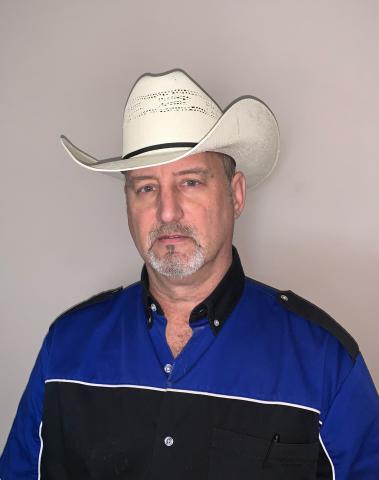
Gas City I-69 Speedway, the 1/4-mile clay oval in Gas City, Indiana, has announced Larry Boos as the new track promoter. He takes over for Jerry Gappens, who has accepted the position of general manager for Eldora Speedway in Rossburg, Ohio.
“It’s not unusual for good people to be offered new opportunities, and although the timing was not ideal for us, we cannot thank Jerry enough for the tremendous job he has done at Gas City over the last four years,” said Jack Himelick, owner of Gas City I-69 Speedway. “We feel extremely lucky to have someone with Larry’s experience agree to take over.”
Boos is also the promoter of Winchester Speedway (Winchester, Indiana), Montpelier Motor Speedway (Montpelier, Indiana), and the Rumble in Fort Wayne event.
The Gas City I-69 Speedway season opens with a Test and Tune event on Wednesday, April 27, and with its season opener race on Friday, May 6.
As EV drag racing charges to increasing levels of acceptance, this Texas-based metals engineer and pioneer of the movement discusses why this segment is so appealing, as well as the obstacles that still must be overcome before electric drags can enter the mainstream.
John Metric never set out to become one of the leaders of the electric racing movement. The Houston, Texas-based metals engineer used to work on the Northern Alberta oil sands, which is where he first saw a battery-electric drag racing snowmobile. The launch capability of that racer intrigued his engineer’s mind, so Metric decided to apply electric power to a drag racing car.
That quest led him to NEDRA, the National Electric Drag Racing Association. Metric found quick success in electric drags, and eventually he served as president of that organization for 10 years.
To feed his racing projects, Metric founded Lonestar EV Performance in Lake Jackson, Texas, just south of Houston. Lonestar provides specialized lithium-ion batteries for racing and other uses and high-performance EV parts, and he consults on all kinds of racing and general-use electric vehicles.
We caught up with Metric as he was on the road to Wisconsin to pick up some new electric racing motors for a project.
John Metric has become one of the leading pioneers in electric motorsports. He was president of the National Electric Drag Racing Association for 10 years and founded Lonestar EV Performance.
PRI: How did you get involved with electric racing? Was it always an interest, or did you see something that brought you to the game?
Metric: I spent a couple of winters up in Alberta, and there’s not much to do in the winter up there. The only sporting thing they had was snowmobile drag racing. I saw a guy there who had a little starter motor and a couple lead batteries, and he was doing phenomenally well with electric drag racing. I said, “Man, how could that be? That tiny little motor’s outperforming all these 600-horsepower snowmobiles.” So I decided to study it and, sure enough: When electric motors are turned on, they pull a lot of power trying to get up to speed. If they stay in that startup mode, they’re generating hundreds and hundreds of horsepower.
PRI: So the next obvious step was to build an electric drag car?
Metric: I was working on a Lamborghini Diablo kit car in about 2009. I decided to abandon that project and build an electric drag car. I found these guys in NEDRA on the Internet, and the president was a guy named Mike Willmon in Alaska. I followed the Willmon model, using his design. He was in a Ford Pinto, and he was lifting the front wheels off the ground! I couldn’t get over the torque that was available, so the first car I built was a 1984 Pontiac Fiero. I called it DC Plasma, and that car had 1,350 lb.-ft. of torque.
PRI: After more than a decade, where is electric drag racing today?
Metric: NEDRA was founded about 25 years ago, and then over a period of 15 years or so, it created a set of rules, including safety rules, for drag racing. NEDRA lobbied NHRA and IHRA, and about 11 years ago, they adopted the NEDRA rules package for a class called ET bracket racing, electric vehicle, seven and half second and slower, and a motorcycle class as well.
Three years ago, the IHRA allowed ET bracket EVs into its Summit SuperSeries points, competing for track champion. We started to see one or two electric cars entering. Then this last year was the first year that the NHRA publicly said, “Yes, we’re going to allow electrics into the Summit Racing Series.” There were six electric vehicles from different classes in the Summit SuperSeries finals this past year at Memphis.
PRI: If you could go back, is there anything you’d do differently with respect to IHRA and NHRA?
Metric: I think maybe advertise a little more. It was almost like an afterthought there. For example, to enter the Summit SuperSeries, a racer has to win their local track championship. Depending how the points were done for that track, a racer could go out and race one time, and if they got one point, they could be declared the electric track champion. But they had to race against somebody else, not go out and just do a bye-run. That’s against the rules. So people didn’t understand the rules about how to declare an electric track champion.
PRI: What are the unique success factors in electric drag racing? Is it just about a big motor and battery?
Metric: Being competitive means, number one, having very consistent reaction times. So you have got to practice. The other thing is the whole launch off the line. About all you can do is stomp the pedal down. There’s really not a lot of tuning there, but there is battery temperature, and motor temperature, and getting to the line, and knowing what condition your car’s in so that when you do react, you end up with a consistent time.
PRI: What do you think is the biggest obstacle to racers around the country adopting EVs? Not just in drag racing, but sports cars, endurance racing, sprint cars, or whatever.
Metric: I would put [those obstacles] into three categories. One category I discovered when I was supplying parts, motors, and things to different racers, is that people will take on a project, and then the project turns into a three-year operation. As they get into it, there’s a lot of computer programming, and wiring, and data communication, CAN BUS and these different things. They find that they bit off more than they expected, and the project languishes, and then it gets abandoned.
Then there’s another type where they’re dealing with electric batteries at 400 volts, 600 volts, 800 volts, and the person just says, “Man, I didn’t know this, but I don’t like electricity.” So they drop the project for that reason.
Then I’d say there’s a person who comes to a budget issue. They get into a project, and I tell them the basic parts are going to cost five grand for this, and six grand for that, so it’s going to be about 20 grand. But by the time they fully get lined out, the car’s probably 60 grand to convert. So they hit the budget wall, if you will.
John Metric’s company Lonestar EV Performance specializes in lithium-ion batteries and high-performance electric race car components such as this 1,500 horsepower motor inverter-rear axle combination.
PRI: Why do people come to electric racing?
Metric: A lot of people get into it just because it’s unique, and they’re going to be the talk of the town when they bring their electric car to the slalom race, or the track, or whatever they’re going to do. I know a guy doing Late Model circle track. Everybody’s over in his pits just like they’re at mine, leaning over, looking at the car, can’t believe that he’s competitive. “Wow! How’d you do that?” You’re the talk of the town, but you have to get there, and you’ve got to make that commitment and do it. So I say in general, you need resources and commitment, and you have to want to do it at all costs.
PRI: We’re seeing some tracks and facilities starting to say, “Hey, we can’t handle EVs, because we don’t think we can fight a fire, or we don’t know how we can do a driver extraction without exposing our E-crew to getting shocked.” What do you think needs to happen on the facility side to get things up to date and confident?
Metric: That is truly an issue. You never want to tell a safety guy or a first responder that, “Oh, no, no, no. It’s safe.” It has to be respected. To earn that respect you have to work around it and have a practice fire incident to get some experience. And there are very, very few people with actual electric car crash experience. There’s no network of people who can do classroom training and say, “Well, listen. I fought three of these fires, at different venues, and this is how we did it, so please feel safe getting the driver out. And this is how you potentially fight a fire, or extract the battery from the car,” or something like that. There’s just not a big enough network of people.
PRI: Another issue that a lot of tracks are going to have is charging capacity. Many tracks are out in the country, and they may not have enough grid power coming to the facility. How are you seeing tracks addressing charging capability?
Metric: I study this pretty intensely. My car does a, say, seven-second quarter mile, and I consume about one-and-a-half-kilowatt hours in a run. That doesn’t sound like very much, but it’s a huge amount of power. That’s more than a thousand horsepower, like a megawatt of power for four, five, six seconds. However, one kilowatt hour can be recharged on an RV power outlet in about 15 minutes. Imagine a Tesla-type car, with an 80-kilowatt-hour battery. Say it consumes a kilowatt hour of power per run. If he starts full, he has 80 runs in his car.
Now, going around a circle track or road course is a different animal. That will be a big consideration, I would guess. I think EV endurance racing could be a big deal. I was just having a conversation last night about having some quick pop-in, pop-out batteries. Boom, you’re recharged, ready to go. But that battery has to be recharged, too. If you’re out there consuming it at, say, 300 kilowatts, you better have a recharge rate that’s equivalent to your consumption rate, or you’ll have to carry enough spare batteries, all pre-charged, to meet the goal of the run. For a 24-hour kind of race, I don’t know that anybody has enough spare batteries to do that. So if you’re out there going around the track at 300-kilowatts, your net charge rate still has to be 300-kilowatts to keep even, times how many cars that are going around the track, I can’t do the math that quick, but it’s a huge power source.
Electric drag cars emphasize driver reaction time more than internal combustion cars do, according to John Metric, pictured here at left. “About all you can do is stomp the pedal down. There’s really not a lot of tuning there,” he claimed.
PRI: Getting back to drag racing, the first electric dragster to hit 200 miles per hour happened in 2020. Do people have another goal above 200 now in mind for EV drag racing?
Metric: Oh yeah. I’m right there. I’m planning to do that right now with my car. I’ve got a motor, and I’m actually driving right now to pick it up in Wisconsin. It’s a 2,000-horsepower motor. We’re shooting for 250 mph. But miles per hour is one thing, and ET is another. My car’s still quicker than that 200-mile-per-hour car, so I crossed the line several car lengths ahead of him. I’m not trying take anything away from him! He did a great job, and he has some Lonestar batteries in that car.
But when the 200-mile-an-hour quest came along, that took a lot of attention away from the ET race. I’m building a Ford GT40 that’ll be powered by these new 2,000-horsepower motors, and we’re shooting for 300 miles an hour in the Texas Mile. It’s a standing mile speed test. Standing start and you got one mile. What’s the highest speed you get to?
PRI: Formula E has had a lot of support in open wheel racing. Do you have any thoughts about how that series is going and the future of EVs in open wheel pro racing?
Metric: I have much less comment about that. I haven’t circled into that, mainly because the way they’re doing it is there’s only one manufacturer for the various components, and they preselect that ahead of time. There’s no open competition for car development.
John Metric is actively involved in a number of electric race car projects. He noted that the most common EV conversion obstacles are complexity, high cost, and fear of powerful electrical systems.
PRI: PRI is committed to getting younger people involved in racing. What do you think EVs can do to engage the next generation in racing?
Metric: I sell a lot of JEGS Junior battery packs and other electric junior dragster battery packs out of Lonestar EV Performance. Everybody who gets one of these junior cars absolutely loves it. They can roll it off the trailer, do a little bit of checking the wind direction and that kind of thing, recharge it, watch the battery cells to make sure that everything’s healthy, and go racing. They’re very competitive.
We’re selling more and more each year. In electric there’s a little less tuning involved, and it makes the sport a little more competitive. It’s much more about the driver, and the reaction time, and setting up the car. So I’ve had a really good experience with the younger generation and Electric Juniors.
PRI: As a guy whose business is in EV racing, providing the parts and the expertise, what do you think that traditional motorsports businesses are not understanding about EV performance and the developing opportunities that are available to them?
Metric: I walk up and down the aisles of the PRI Show, and there are so many parts there that are all related to the internal combustion engine. And the internal combustion engine has had a great run. But now the quickest stock vehicle is a Tesla, except for maybe the Dodge Demon. But a four-door sedan is now quicker than 99% of all gas cars out there. I think that’s maybe what they’re missing. Tesla doesn’t do any racing program. It’s just silently—pun intended—sneaking up on the internal combustion engine here and just putting them to sleep.
Open up an engine bay, and there’s a blower or a turbo, and all the belts, and the pistons, and all these things. There’s 1,000 moving parts in an internal combustion engine. The electric motor I’m going to pick up right now has one rotor, two bearings, and that’s it. Nothing else moves.
I have been attending the PRI Trade Show for eight years, and we were out there waving the flag saying, “Hey, electrics are fast.” People would walk by and sneer, and they would say things like, “Ugh, electrics. They will never take off.” Each year, there’s a little bit less of that. Now, they just look over and say, “Yeah, they’re pretty fast.” We’re making progress.
The director of track operations for New Jersey Motorsports Park combines his experience in series management, strategic marketing, and competition with a contagious passion for the sport.
Mike Murphy is right where he wants to be as the newly appointed director of track operations for New Jersey Motorsports Park (NJMP). The 500-acre racing and entertainment complex in Millville, in the southern part of the state, features two road courses, Thunderbolt and Lightning, plus the Tempest Raceway karting track. The complex also offers a condo and garage complex for track members.
Murphy—who goes by “Murph”—comes to NJMP following a six-year stint with the International Motor Sports Association (IMSA). His leadership positions at IMSA included series manager for the Michelin Pilot Challenge and coordinator of series operations. He has also served as an event producer at Circuit of The Americas for Formula 1 and the MotoGP Grand Prix.
Murphy recently spoke with PRI about how his career experience will benefit him in his new role at NJMP.
PRI: You got started at the grassroots of racing—flagger, track marshal, team spotter. What got you into the sport?
Murphy: Funny enough, my entire family comes from a background of medical professionals, and I was the only one that caught the racing bug. After watching races on TV, I convinced my dad to drive us up to the NASCAR race at New Hampshire Motor Speedway. I’ll never forget the feeling of walking through the grandstand entrance and seeing the cars come out of Turn 4. In that moment, my dad asked what I wanted to do, and I said, “This.”
PRI: What qualities do you possess that you believe make you a good fit as director of track operations?
Murphy: I come into this position with knowledge from roles throughout the industry that directly work with and impact track operations. Whether it’s from competition, series management or track marketing, I’ve learned how the individual departments work together to reach a common goal and deliver the best experience for our customers at all levels.
PRI: What are you most looking forward to in this new role?
Murphy: Mentoring folks that have the same passion that I do. It’s been very refreshing to see the interest from people to join the team here at NJMP because of the momentum we have going into the 2022 season. While I’m excited for what’s to come, I’m also looking forward to sharing it with others who will cherish it as much as I do.
PRI: What are your immediate and long-term goals for the track operations?
Murphy: The immediate goal for our team that we’ve been tackling recently is recruitment and training for corner marshals. Building that base of individuals and fostering them throughout the season is a long-term goal, and I am also eager to begin relationships with our track rental partners.
PRI: As many tracks face opposition from local communities, what is NJMP doing to be a contributing and productive member of the community?
Murphy: Every year, NJMP attracts approximately 600,000 race participants, spectators, and tourists to our town and local communities. Everyone is highly encouraged to support local businesses throughout Cumberland County such as restaurants, hotels, and stores. We’ve also hosted several job fairs during the offseason for multiple departments to help boost local employment and make working at NJMP true community involvement.
PRI: What’s your most gratifying professional accomplishment?
Murphy: It was incredibly gratifying to be the Michelin Pilot Challenge series manager prior to joining NJMP. I knew my predecessors had done a lot for the series, and that I had very big shoes to fill. I focused on our customers and made the series my own. I knew leaving the series would be challenging, but the standing ovation I received at the final driver and team manager meeting was the best sendoff I could hope for.
PRI: What has been the best advice you have received professionally?
Murphy: Pick up the phone! Communication is very valuable and having a pulse on what’s going on is key. There is so much that can be gained from a conversation as opposed to a single email or chain.
PRI: What is one trait that you admire in others, and why?
Murphy: Being prepared. As an Eagle Scout, it was always engraved in my mind. As long as you are prepared, you can overcome anything that’s thrown your way.
PRI: If you could drive one race car around Lightning Raceway, what would it be?
Murphy: Lightning Raceway was the first track I ever drove a race car around. I had the itch to go racing and took up a school that offered the chance to drive open wheel cars. That said, I would have to go with one of Niki Lauda’s F1 Championship-winning Ferraris. He was always an inspiration to me.
Mike Murphy
Title:
Director of Track Operations
Organization:
New Jersey
Motorsports Park
Hometown:
Sewell, New Jersey
Fast Fact:
Mike Murphy has been in 49 U.S. states, with Alaska waiting to be checked off the list. Except for flying to Hawaii, his excursions were all by either train or car. “The journey is truly the destination,” he said.
Although the inherent rigors of motorsports use can bring the reliability of some parts into question, resellers that offer used racing components can provide budget-conscious racers with a way to affordably elevate their programs. That accessibility can prove to be crucial to a team’s success, but it also comes with other notable considerations that don’t apply when buying new components.
Used Parts Advocate: Dean Moore, Kansas Speed & Performance
For us it’s about keeping racers connected with parts that are still usable. Not every component that gets taken off of a race car is broken or damaged. It’s pretty common for racers to change out parts simply to keep things fresh.
I can remember back in the 1960s when people would scour the junkyards looking for parts to use for their race cars. We just didn’t have the marketplace and the technology that we do today. Many folks at the grassroots and sportsman levels don’t have a whole lot of money to spend on their racing efforts, so we look at it as an opportunity for them to improve their competitiveness and potentially open the door to even greater things. If they didn’t have the opportunities that these less expensive parts provide, they might not have a way to effectively elevate their program.
We scrutinize what we get, naturally. We’re not interested in passing along junk to somebody. To me, the marketplace is about integrity. If you have that, people quickly begin to understand that you’re offering a part that they can trust to do the job. That’s very different from finding stuff on Craigslist or something like that. We’ve been involved in the motorsport industry for a long time, so we understand which components can be viable in this context and which ones cannot.
Offering used racing parts has not only broadened the appeal of our business, it has also helped us retain customers and kept us closely connected to the local racing community. Most of the used parts in our inventory come to us by word of mouth and racers coming to us directly to offer parts up, but we also take parts on consignment as well. In those cases, we work out something with the seller and then promote the part through social media, our website, and things like that. That tells potential buyers that we not only have the part, we’ve also checked it out to make sure everything’s good and it’s ready to go.
Determining which used parts to sell was a pretty straightforward proposition for us. We stay away from valvetrain stuff—valves, springs, retainers, etc. These kinds of parts are under stress loads, and it can be difficult to test them properly, so we don’t take chances with stuff like that. Blocks, cylinder heads, crankshafts, camshafts, manifolds, carburetors—those parts are easier to verify. But we also always have to keep in mind the application that the part was previously put in. If it was a street application, you’ll probably get a lot of longevity out of the part, but if it was in a 3,500-horsepower race car, it’s going to be dramatically different, so that’s part of the vetting process when we source these parts.
New Parts Advocate: Jay Grieshop, Chassis Doctor
In my experience as a race car builder and modifier, it seems like any time I get used stuff to work with, it doesn’t fit, or pieces of the puzzle are missing, or something else isn’t right about it. When someone buys something new, they know exactly what they’re getting, and they have some pretty solid assurance that it’s going to work. And if it doesn’t, they have the option to return it.
For me it comes down to being able to stand behind my work, and I feel like if I’m selling new parts to these racers, it’s a lot easier to back those components than it would be with a used part that I might not know the history of. Two parts can look identical but be in very different condition. Once in a great while we might sell a used part to somebody, but in those rare cases I already know the story behind it.
There’s also kind of a stigma around used parts. Too often the people who are selling used components on Facebook Marketplace and RacingJunk are getting rid of them because the part has a problem of some kind. If it were a great deal, one of their buddies would have bought it already.
There are just so many horror stories about things that have happened to people in those situations, whether it’s a complete motor or just a strut or something like that. They pay half of what they would have paid for the part new, but then they end up paying the other half—or more—to get that part repaired or rebuilt. To me it’s also about the price of my time and my customers’ time dealing with those potential issues.
There are also factors to consider that go beyond just the amount of use a part has had and the amount of horsepower it was subjected to. Was it in a climate-controlled environment? Did this strut sit on a shelf in someone’s house, or was it in somebody’s race car trailer throughout the sub-freezing temperatures during the winter and the triple-digit heat in the summer? Someone might say something like, “Oh, it’s only got 50 passes,” but that doesn’t necessarily tell you the whole story.
Beyond the convenience of buying new parts and the potential benefits in terms of longevity, you also have to consider what your options are if there’s a problem with a used part. Do you have a warranty if there’s a problem with the part right out of the box? If it’s a used part, it’s entirely possible that they’re just going to tell you “tough luck.”
All things considered, I think that new parts are often going to be cheaper in the long run. You might be paying 50 cents on the dollar for a used part, but if it breaks, you’re going to end up spending as much to get another used one as you would have if you’d just bought a new one in the first place. And that’s assuming there’s no other issues involved. So with all these different considerations involved, I just feel like new parts are the way to go.
 MEMBERSHIP LOGIN