AWE Promotes Dane Pellicone To Engineering Manager 

Submitted by laurap on Tue, 06/14/2022 - 17:12
AWE logo

 
AWE, the precision engineering and manufacturing firm outside Philadelphia, Pennsylvania, has promoted Dane Pellicone to engineering manager.  
 
Pellicone has been with AWE for almost 15 years, recently serving as a senior engineer since 2014. Prior, he was an engineering associate for six years, and before that, was a metal fabricator. 
 
“AWE offers the rare opportunity in the engineering field to work at both a conceptual level and also a hands-on problem-solving level. This fluidity... is one of the secrets to our success. We’re agile, innovative, and never compromise; it’s why I’m here and excited to be a part of AWE’s growth,” Pellicone said. 
 
For more information, visit awe-tuning.com. 

June 2022

Editors’ Choice

Submitted by johnc on Tue, 06/14/2022 - 15:47
image 1


Hundreds of new product announcements cross the desks of PRI editors each month. Following are our top picks for July.


LS and Gen III Hemi Oil Pump Primer Tools
PROFORM
proformparts.com

image 2

There’s no easy or inexpensive way to prime the oil system on LS and Gen III Hemi engines. One way is a costly pressurized tank that is hooked up to a feed line close to the filter, which can create a mess.

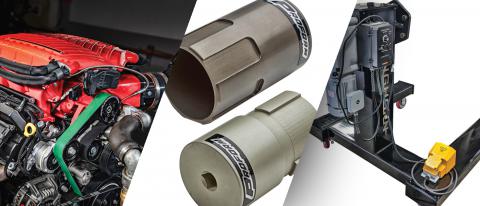
Now there’s a patent-pending oil-primer tool from PROFORM of Warren, Michigan, that makes this job much easier and cleaner if using an aftermarket oil-pump drive gear.

“This is actually one of the few products we didn’t come up with in-house,” said Ryan Salata. “The inventor approached us, due to our manufacturing and distribution capabilities, as well as the name recognition of a PROFORM tool.”

Constructed from hardened anodized aluminum, the tool allows the oil system to be primed with the timing cover in place. Before the oil-pump drive is installed, the tool is slipped over the crankshaft like a deep-well socket and snugs up to the splines of the
oil pump.

A drill with a 3/8-inch adapter is used to turn the oil pump and prime the system for about 30 to 45 seconds. The engine is manually turned over a quarter turn before repeating the process, and this procedure continues until the crankshaft has turned a full cycle.

These tools will not work with the OEM oil-pump setup because the drive gear doesn’t come off the factory crankshaft. They work only with engines modified with an aftermarket removable drive gear. —Mike Magda


Motorized Engine Stand
Longhorn Fab Shop
longhornfabshop.com

image 3

Frequently rotating an engine during assembly or teardown can certainly build fatigue in a person, possibly leading to a mistake. There are also engine builders who have a tough time turning engines on a traditional stand due to age or disability. Wouldn’t it be easier just to step on a foot pedal and have a motor do the work?

The team at Longhorn Fab Shop in Brookville, Ohio, thought so and designed a heavy-duty, motorized engine stand that is reversible and hands-free. It will support powerplants up to big-rig diesel engines and it is versatile with its mounting method.

“We started from the beginning and redesigned the whole concept of how we rotate engines,” said Manfred Schreyer, “much of which is side mounted to allow an engine to be bolted to the stand by only taking off one motor mount.”

Longhorn offers a variety of custom attachments to meet most applications.

“Another benefit is easily inspecting the engine from multiple angles to check for any nonconformities,” added Schreyer. “This reduces overall cost and time, while increasing profits and productivity.”

The stand can be floor-mounted or is available in a roll-around model. It comes with a 1-horsepower motor, and the shaft turns 1–6 rpm. —Mike Magda


Small Block Chevy Supercharger System
Vortech Superchargers
vortechsuperchargers.com

image 4

Vortech’s latest-generation supercharger system for small block Chevy engines features tighter packaging for easier fitment under the hood of many classic cars.

“With this latest revision we wanted not only a more compact and smaller footprint version of the SBC kit, but this new kit also gives customers versatility to run both A/C and power steering,” said Brian Cox of the Oxnard, California-based manufacturer.

The kit includes a V-3 Si-trim compressor that can support up to nearly 800 horsepower. It’s driven by a 10-rib belt-drive assembly, and the mounting brackets are constructed from billet aluminum or steel. Other features include discharge tube and Vortech Maxflow race bypass tube.

“Since most of the typical SBC engine builds would fall into the 450- to 750-horsepower range, we see these supercharged small-blocks geared toward the True Street (NMCA), and the Street Race Small Block Power Adder (Hot Rod Drag Week) classes,” said Cox. “And, of course, bracket racing that most tracks offer.”

Suggested engine displacement ranges from 283–383 cubic inches. The kit includes the air-inlet assembly with Roto-molded ducting and a 3.5- x 7-inch cone air filter, carburetor hat and base, belt tensioner, crank pulley, silicone sleeves, reducers, stainless-steel clamps and all necessary hardware. —Mike Magda


Gen III Hemi Crate Engine
DSR Performance
dsrperformance.com

image 5

A 1,000-plus-horsepower Gen III Hemi crate engine that runs on 93-octane pump gas (9.8:1 compression ratio) is available from DSR Performance, the aftermarket division of Don Schumacher Racing (DSR) in Brownsburg, Indiana. The first production run will be limited to 20 engines with plans to release more units in the future.

The engine displaces 426 cubic inches (7 liters) and is rated at 1,150 horsepower at 6,500 rpm with peak torque of 974 lbs.-ft. at 5,200 rpm. Other features include a Gen 5 Whipple 3.0-liter supercharger, high-nickel cast-iron block and modified production Hellcat cylinder heads.

Code-named the DSR 1150, this crate engine is the result of a collaboration between DSR Performance and AJ Berge, owner of HemiTuner Performance in Bay Shore, New York, and a crew chief on the DSR Drag Pak cars that run in the Constant Aviation NHRA Factory Stock Showdown and NMCA Factory Super Cars class. Berge leveraged some of the technology and tricks learned in developing the shootout cars.

“We run the shootout motors at 10,000 rpm plus,” said Berge. “It’s all about how the piston interacts with the head and the cam profile works with the displacement. What we’ve learned working with Whipple on the Shootout motors has trickled over into these superchargers that we’re using.”

The DSR 1150 retails for $37,950. Each engine is hand assembled and dyno’d. —Mike Magda


Square Wave TIG 200 Welder
Lincoln Electric
lincolnelectric.com

image 6

Racers on the go will appreciate the portability of the Square Wave TIG 200 welder from Lincoln Electric in Cleveland, Ohio. Designed to provide smooth and stable AC TIG welding on aluminum and DC TIG on steel and chromoly, the TIG 200 also offers a user interface that makes setup easy.

When welding aluminum, users can easily adjust the AC frequency, and AC balance can be adjusted to provide additional cleaning on dirty metal or maximize penetration on thick materials. Users also have the option of stick welding for outdoor work.

“The DC-TIG arc is extremely focused and smooth. This offers great control for manipulating in and out of tight 3D joints that are comprised of thin-wall metals,” said Joseph Keipert. “Then for aluminum applications, the square-wave output provides an arc that achieves effortless puddle-control, filler medal deposition and penetration.”

The TIG 200 works with standard 120V or 230V outlets, and it weighs only 46 pounds.

“Lincoln Electric maintains countless communication channels with racing teams, fabrication shops, and contract welding companies,” added Keipert. “These customers voiced the need for a 120/230V machine that is ultra-portable while also being able to provide 200 amps of AC/DC TIG welding output. This posed a challenge because many AC TIG welding machines historically are bulky or limited to 180 amps.” —Mike Magda


Athesil RTV Silicone Sealant
SCE Gaskets
scegaskets.com

image 7

Racers and the OEMs have long used silicone sealants to seal the intake manifold along the front and rear rails of the lifter valley on a V8. So it’s no surprise that high-performance versions of silicone sealant are available to help ensure a long-lasting seal on race engines.

The Athesil RTV silicone sealant from SCE Gaskets in Mount Pleasant, Tennessee, is thermally stable from -40 degrees to 430 degrees F and has performed at 572 degrees F peak. It will not damage Lambda sensors and resists oils, fuels, and coolants for superior shape retention and adhesion to surfaces.

“This sealant is the latest chemical technology, meeting all EU standards,” said Aaron Hunter. “It’s safe to use in most applications on the motor when sensors are involved. Racers now have one silicone they can rely on and keep in their tool box instead of having to carry around an inventory of different chemicals with an application chart to go along with it.”

Athesil can be used for formed-in-place gasketing (FIPG) and is useful in marine, motorcycle, and heavy-duty off-road applications. It comes in 2.7-ounce tubes in either a single pack or a 12-piece pack. Each tube includes an applicator tip and squeeze key.
—Mike Magda


ML1000 Miniature Pressure Transmitter
PMC Engineering
pmc1.com

image 8

Accurate feedback from a race vehicle is key to setting it up for optimum performance, and precise sensors are necessary to generate that information.

PMC Engineering of Danbury, Connecticut, has recently released its ML1000, a digitally compensated miniature pressure transmitter that has a variety of uses in a race car.

“It can be used for gearbox oil pressure, as a MAP sensor, or for brake pressures,” said Robert Knowles. “The product is designed with very high-proof pressure (overload) to maximize reliability. The small size enables installation where space is restricted.”

The ML1000 provides a 4-20 mA, two-wire output, and offers static accuracies of 0.1%FS, including linearity, hysteresis, repeatability, zero and span setting errors. This sensor also uses piezoresistive silicon technology and is suitable for static and dynamic pressure measurements with a frequency response of 1ms.

“Stainless steel construction and operation at high temperatures and vibration levels enhance reliability,” added Knowles. “Very high accuracy provides precision measurements where necessary.”

The ML1000 is just two inches long with a diameter of .83-inch. It has an operating range of -40 to 250 degrees F and weighs 1.6 ounces. PMC offers numerous options, depending on the requirements. It’s available with either a six-pin bayonet or four-pin M12x1 connector.
—Mike Magda

July 2022

New Owners For Lancaster National Speedway (NY)

Submitted by laurap on Tue, 06/14/2022 - 14:26
Lancaster Motorplex logo


Lancaster National Speedway, the motorsports facility in Lancaster, New York, has been purchased by a group of investors headed by drag racer Mike Swinarski and stock car driver Scott Nurmi. The track was formerly owned by Gorden Reger.

The 77-acre auto racing complex—which includes a 1/2-mile asphalt oval and a 1/8-mile drag strip—was purchased for $1.49 million, according to reports. 

The track will now be named Lancaster Motorplex and has kicked off its 2022 season with the moniker “Old Traditions, New Memories.” The schedule features the Race of Champions Modified Series, Gianni Mazia’s Mod Class, Jr. Dragsters, Trophy Class, Senior Nostalgia, Sportsman, Street Stocks, 4 Cylinders, and more. 

For more information, visit facebook.com/LancasterMotorplex. 

June 2022

Stop Doing That…Do This Instead: Wiring Fans

Submitted by johnc on Tue, 06/14/2022 - 14:16
image 1

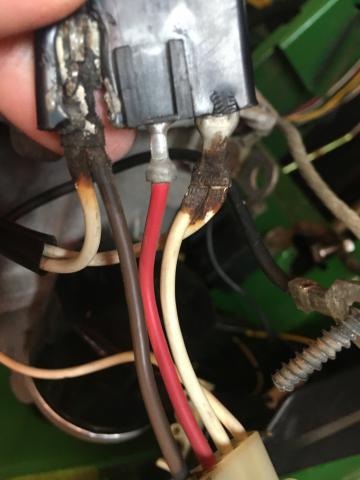
Pictured here, a customer had used a self-tapping screw to try and ground the relay to the same mounting tab that comes off the top of it, explained our source at Derale Performance. “The resistance from that bad ground caused a heat build-up, which made it all melt,” he added.


Incorrect technique can result in any number of problems, from burning wires to catastrophic component failure. Here’s how to avoid some of the most common miscues.


What can go wrong if a race car’s fan isn’t correctly wired? Beyond the obvious problem of the fan not working, “it can burn up wires, blow fuses and breakers, and short-circuit the motor on the fan,” said Cam Brandt of Derale Performance, Los Angeles, California. Brandt, and Brent Chuck of SPAL Automotive USA in Ankeny, Iowa, spoke with us recently about the common mistakes that can happen when customers wire their race car fans incorrectly, and how to fix them.


Going to Ground

“People worry about the positive wire, but they don’t care as much about the ground wire,” said Chuck. “They don’t consider that it needs to be a continuous loop all the way back to the battery. So it’s common for people to ground the fan at the radiator support or the engine block. Which is not necessarily a bad thing, but they need to make sure whatever is grounding the engine block back to the battery is sufficient to handle the current draw of the fan as well. They have to think about the whole loop, from the positive terminal back to the negative terminal.”

An improper ground “can cause the fan to not run at full speed, or it can burn out relays or whatever electronics are operating it,” said Brandt. “The most common faulty ground we see is when people use a self-tapping screw into any sheet metal that’s not really cleaned or prepared. It increases the resistance and builds a lot of heat, which causes numerous problems.” A better approach, he said, is “grounding to the battery directly if possible, or having a welded stud on the chassis frame or whatever they might be working with. When it’s welded and properly cleaned and prepared, it’s a more durable ground that will have a better connection.”


Battery Relocation

“Amperage drop is a problem,” Brandt said, when a racer relocates the car’s battery, putting distance between the fan and its power source. “The best solution is a larger gauge wire” from the battery, he noted. “That’s preferable to pulling power from an existing large wire. People tend to go off of a starter solenoid or alternator wire. The problem with that is it’s unconditioned voltage. It’s spiking, dropping, dependent on the load of the engine. It’s not providing consistent voltage, which could cause a spike that could damage the fan’s electronics.”

image 2
It’s important to account for car size when determining the appropriate wire gauge. Fortunately, there are ample resources online—not to mention the fan’s manufacturer—that can assist in in those decisions. Photo courtesy of SPAL Automotive USA.

There is no rule of thumb to determine the proper wire gauge in this situation, Brandt said, because of the variables among race car applications.

“Amp draw determines wire size,” he said. “With a 10-amp fan they could get away with a 14-gauge wire at 15 feet coming from the battery. But for a 25- to 30-amp fan or bigger, they’re going to need a much larger wire size, depending on the distance. Bigger is generally better.”

Another variable is the size of the car in question, Brandt said. “Look at a 1967 Chevelle compared to a Miata. The length overall is entirely different, even if it’s in the trunk for both.” There are many resources available online to help determine the correct wire size based on amps and length. If the answer can’t be found there, Brandt and Chuck recommend calling the fan’s manufacturer and discussing the specific application to determine proper wire size.

One particular problem Chuck sees with battery relocation is when “people run an unprotected wire the whole length of the vehicle under the car. They don’t necessarily think about what could happen if the wire chafes or if there’s a ground short on that wire.” His recommendation is to use a battery relocation kit that “runs a jumper cable or a large wire through a fuse all the way to the front of the car. Then it would go to a junction block or something they could tie other stuff to.”


Making Connections

“Connections are the key,” Brandt said. “Crimp, solder, whatever their method is, connections are crucial in high-amperage applications like an electric fan. It is very important to verify that the connection is secure. We’ve had plenty of guys who call and swear up and down they know how to solder, and as soon as they pull on the wire, it separates.

image 3
According to our source at SPAL Automotive USA, when working with connectors it’s important to “avoid dielectric grease or anything like that inside the connection because of the fan’s heavy current load.” This, he told us, can cause corrosion or arcing at the terminals, among other problems; it can also “cause the grease to wick up and down the wires.”

“Any time you have a connection that’s bad, it creates an arc,” Brandt explained. “As the amperage gets higher, it gets hot and arcs within that connection. Even if it’s just the slightest little arc, it eventually creates more heat and then melts. Take a spade connector. If the parts aren’t tight—if they’re a cheap, loose connector—that’s enough in a higher amperage situation to create an arc, which can create serious heat and could ultimately cause a failure.

“There are lots of different crimp connectors out there,” Brandt added. “You don’t need to spend $1,000 on a crimp, and you certainly don’t want to get the cheapest junk out there either. Just use quality crimp connections and wire, and you will have a dependable cooling source race after race.”

“We tell people the best thing you can do with connectors is avoid dielectric grease or anything like that inside the connection because of the fan’s heavy current load,” Chuck said. “It can cause corrosion, it can cause arcing at the terminals, and it can cause the grease to wick up and down the wires. We’ve seen that in quite a few cases. As a fan motor runs, it creates a small vacuum inside the motor, and that vacuum can suck water or grease or whatever you have from the connector through wires all the way into the motor. Just use a good, clean, tight connection.”

Ultimately, Chuck said, “if you have any doubt, contact us. We can provide a lot more information if you tell us what fan you have. We’re available and open, trying to help everybody we can with what they’re working on.”

SOURCES

Derale Performance
derale.com

SPAL Automotive USA
spalusa.com

July 2022
By
Drew Hardin

Newly Appointed: Malissa Pennington

Submitted by johnc on Tue, 06/14/2022 - 14:09
image 1


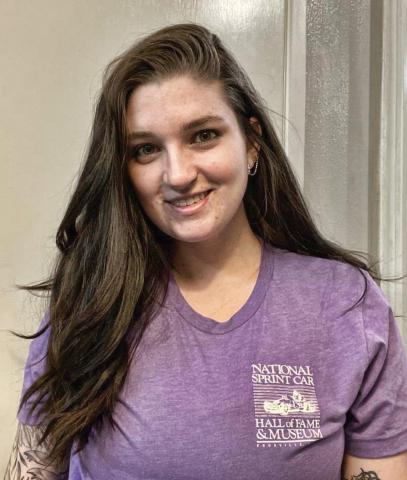
This Kansas City-area native grew up in a motorsports family, suggesting her current role with the National Sprint Car Hall of Fame & Museum may have been predestined.


Growing up in a racing family, it probably stood to reason Malissa Pennington would one day find herself on duty at one of motorsports’ most celebrated and revered venues. After all, the Missouri native was surrounded by competitors—her dad raced street stocks, her brother ran quarter midgets, an uncle raced go-karts—from the start. Pennington raced bikes herself as a youth; in 2013 she was BMX state champion for her age group.

“I was always around and helping out at tracks like Topeka,” she recalled of those earlier days, “working in the concession stand and places like that. Those are some of my first memories of getting excited about race cars. I had to be no more than 8 years old at the time.”

Fast-forward to the present day, and the recently named special events coordinator at the National Sprint Car Hall of Fame and Museum in Knoxville, Iowa, has a good-sized to-do list, chief among them educating race enthusiasts and potential fans on the world of sprint cars.

“For someone new to sprint cars, it can be overwhelming to try and understand it all,” she noted. “In the very near future…new educational displays will travel around with me to different events. [These] pieces will be centered around what to know, where to look, and who to follow.”

Keep reading to discover what Pennington and the National Sprint Car Hall of Fame & Museum team have in store for the near- and long-term, as well as the one thing she absolutely can’t live without.


PRI: Why are you excited to take on this new position? Why is it a great fit for you?

Pennington: As a race fan—especially a dirt race fan—getting to be right in the middle of it all…I get excited just waking up in the morning. Part of my job includes traveling around with our raffle sprint car. We go from Knoxville, Iowa, to Minnesota, California, Pennsylvania, and many more places. But it’s exciting even when I am not traveling because [this position] is based on education. Researching auction items, planning golf tournaments, helping with whatever projects I can; it incorporates other aspects like scheduling, organizing, design, and creativity. Every day I go to work I learn something new. Not to mention, the fact that I get to travel and see new places, new tracks, and new people makes this opportunity especially fulfilling. Working in racing means I don’t have a “job” in the traditional sense—it means I get to do what I love each and every day.

PRI: Clarify your racing family background for us and explain how it’ll serve you in this new role.

Pennington: My dad’s family would race anything they could: cars, bikes, each other. They all got the itch to race, and it’s never left. When I was introduced to the family I was introduced to racing. My brother raced quarter midgets, I raced bikes. Eventually my brother and I got older, and life happened. So we went from racing to the stands…although we still love it. Every time my dad’s side of the family meets, we must discuss what’s new in the racing world. Who won the NASCAR race? Where is Terry McCarl and how are Austin and Carson (McCarl) doing? I know the feeling of walking into your favorite track and smelling the dirt, hearing the engines roar, and feeling your skin bristle with excitement. I use that excitement and channel it into my work.

PRI: Give us one or two of your long-term goals.

Pennington: One is to find new ways to introduce the National Sprint Car Hall of Fame & Museum to new people. Another is to improve and elevate sales for our raffle sprint car. We print off 15,000 raffle tickets each year and I would like to find more engaging ways to help sell those tickets. In this world of online participation, it’s really important for me to be able to provide an engaging and exciting experience in person. I’ve met countless people out on the road who have never seen or even heard of sprint cars before, and I don’t want to be the person that says, “Oh, just go online and enter and read all about it,” and have that be their first experience with a sprint car. My job needs to speak to all generations.

PRI: From your perspective, what are some of the biggest challenges your organization faces right now and how will you overcome them?

Pennington: A big one is with our raffle sprint car. With COVID-19 putting a pretty sizable pause on our way of life, everybody—not just us—has run into issues obtaining parts. Through the amazing work of those who did my job before me, we are sitting pretty good with our current car, except for a select few parts. If not much changes in the next year, this will affect how we obtain parts for our next car. Because we are a nonprofit, the parts on the car are donated, so you can imagine, with an already sizable parts shortage, how hard it can be for companies to participate. I should mention, though, that all of the organizations and parties we work with on this project are incredible, and everything they do for us is beyond appreciated. But the answer to overcoming it is time and patience. With supply chain issues likely to continue, we expect to start next year’s project earlier knowing that parts may not arrive until later in the year.

PRI: Who has been the biggest influence in either your professional or personal life, and why?

Pennington: It would have to be my mom. She’s taught me so much about just being a woman, and especially being a woman in a male-dominated field. Whenever I felt discouraged about something she would always tell me, “You can do whatever you set your mind to.” That has stuck with me throughout my life. My parents had the opportunity to choose their kids through the power of adoption, and I am beyond blessed to have the family I do and the support system I have.

PRI: Excluding your cellphone/tablet/computer, what’s one thing you can’t live without?

Pennington: I can honestly say I cannot live without coffee. I am a cup-every-morning type of coffee drinker. Sometimes one in the afternoon, but every morning I have to get my caffeine. I like my coffee with hazelnut creamer and a dash of cinnamon.

Malissa Pennington

Title:
Special Events Coordinator

Organization:
National Sprint Car Hall of Fame & Museum

Hometown:
Liberty, Missouri

Fast Fact:
Malissa Pennington collects vintage Pyrex—from 1915 all the way up to the 1980s. She has eight pieces and a few sets. “One that’s near and dear to my heart is a set of bowls with a rare pattern,” she told us. “I found them in an antique mall in Branson, Missouri.”

July 2022
By
Dan Schechner

Make The Case: Bump Stops Vs. Bump Springs

Submitted by johnc on Tue, 06/14/2022 - 13:43
image1


Although these suspension components perform similar tasks, the two designs use different approaches to accomplish those goals. That results in unique advantages in some situations and compromises in some others. Our experts weigh in on the applications where each solution is most effective, and why.


Bump Stops ADVOCATE:

Jason Enders, RE Suspension

image 2

The general purpose of a bump stop really depends on the application it’s being used in. There are situations where they offer advantages over a bump spring, but there are also situations where a bump spring might be a better option. We sell both for that reason.

In circle track racing, bump stops are generally used to control the dynamic attitude of the car. We want to get the car down to where we want it to ride, and we want to stay there in a pretty small window of suspension travel. The use of bump stops in these cars really all stems from ride height rules, and those rules typically specify heights that are much higher than are ideal. So the goal is to get the car as soft as possible and as close to the ground as we can. Bump stops keep the suspension operating in a small window of travel so we can have better control of variables like the camber curve, the caster curve, and the load on the wheels.

Bump stops also see a lot of use in road racing formats, but the purpose is a bit different. You generally don’t see ride height rules in that type of racing, and if there are ride height rules, they’re usually close to where you want it to be anyway. In this type of application, bump stops are typically used to mitigate the problems that could be caused by an anomaly on the track surface. For example, if you want to run 500-pound springs in the race car, but there’s this one dip or bump in the track that would require 600-pound springs to prevent the suspension from over-traveling, you can use a bump stop to do that. That way you’re not setting up the race car to deal with this one anomaly on the track.

One advantage that bump stops have over bump springs is that bump stops tend to be more forgiving on rougher tracks. If your setup is off a little bit or you change your driving line, polyurethane bump stops tend to be less harsh and less likely to cause instability or change your grip levels. These are inherently progressive—the further you get into the bump stop, the more rate it gains. That progressive character allows for a larger margin of error than a bump spring typically does.

Polyurethane and polyurethane foam bump stops also have a certain amount of hysteresis built into them, and that means the stop behaves different in compression than it does in extension. If I’ve got a bump stop that builds 100 pounds of rate at a quarter-inch of compression, it can have 50 pounds of force in extension if I design it that way. Springs essentially have no hysteresis—it’s going to apply more or less the same amount of force in extension as it does in compression. But with bump stop packages, we can intentionally dial in more hysteresis. So, for example, you might use 500 pounds of force coming into the corner, but as you get back into the gas, you don’t have the same amount of force trying to push back on the suspension. People thought hysteresis was bad for decades, but as we started playing around with it, we’ve discovered that it’s a very useful tuning tool for asphalt cars in particular. It really helps with sway bar timing and sway bar wrap.

Bump stops are much cheaper than bump springs, and they offer an advantage in packaging as well. Depending on the application and what we’re trying to do, I can build force out of a bump stop that’s a half-inch tall, whereas most of the bump springs that are available today are at least four times that height. In the road racing world, some open wheel cars with inboard suspension setups simply don’t have the room required to run a bump spring.

There are some other considerations to make. Bump springs generally last longer, and bump stops don’t do well in extreme heat, so you need to pay attention to that if you’re going to use them. The height also changes over time as they settle. As they get shorter, it changes your engagement point, so that means the car has to travel that much further to get the load that you’re expecting from it. But as with springs, if you keep an eye on the height of the bump stops you’re using as they take a set, you should be good to go.


Bump Springs ADVOCATE: 

David Cardey, Eibach

image 3

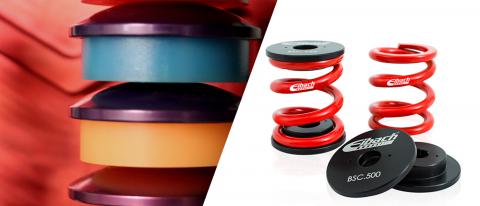
Like a bump stop, a bump spring is primarily used to prevent the suspension from over-traveling, and it’s popular in setups where the primary spring might not have enough rate to completely hold the car up in a dynamic position. In an ideal setup, it’s going to provide a smooth transition from the primary spring to the bump spring so it’s not an abrupt change. I think that’s one of the main advantages of using two springs rather than a spring and a bump stop: A bump stop typically doesn’t have the travel or the variety of rate options needed to make that transition smooth while still stopping the car from over-traveling.

Bump springs have some advantages in road racing as well. If you’re running a softer primary spring that allows the car to sit on that bump spring, the preload that it creates is building grip because of the opposing force that it creates. Bump springs also are more consistent. As bump stops get hot, they tend to lose rate, and once you’ve heat cycled them enough times, they get brittle and start to come apart. The guys in the World of Outlaws who are still using bump stops are typically changing them out every night, whereas I tell everyone who uses our bump springs to change them yearly.

Bump springs aren’t as limited on rate options, either. You might have a few different rates to choose from with a bump stop, but with a bump spring we have about 20 different rates in the same size spring that range from 50 to 5,000 pounds. You’re not going to get that in a bump stop.

Of course, to get the most out of a combination like this, you’re going to need someone who has experience with a load rate machine. I wouldn’t recommend just trying something out on race day and hoping for the best. There are a lot of variables involved, so it’s probably going to take a little bit of experimentation to find an ideal setup between the main spring and the bump spring. Testing equipment will help you figure out where you’re at, document it, and determine how different adjustments are going to affect the car.

July 2022
By
Bradley Iger

Industry Mourns Passing Of Prominent Track Promoter Jody Deery

Submitted by laurap on Tue, 06/14/2022 - 13:41


Jody Deery, the longtime promoter at Rockford Speedway and a pillar of the motorsports community, has passed away at 97. Deery is the mother of PRI Track Ambassador Tom Deery.

In 1966, Deery and her husband Hugh became sole owners of Rockford Speedway, the 1/4-mile asphalt short track in Loves Park, Illinois. The duo owned Deery Company, the parent company of the track, and helped launch the National Short Track Championships. The event, which debuted in October 1966, was one of the first multi-day, season-ending race events for full-bodied stock cars and still runs today.

Following Hugh’s passing in July 1984, Deery became one of the first women to solely operate a racing venue in the US. She officially retired from day-to-day duties at the track in September 2020.

Prior to her retirement, Deery became the first woman to win the "Auto Racing Promoter of the Year" award in 1994. She also served on the nominating committee for the NASCAR Hall of Fame and the voting panel for inductees since 2013.

June 2022

Ask the Experts: Raising Prices

Submitted by johnc on Tue, 06/14/2022 - 12:43
image 1

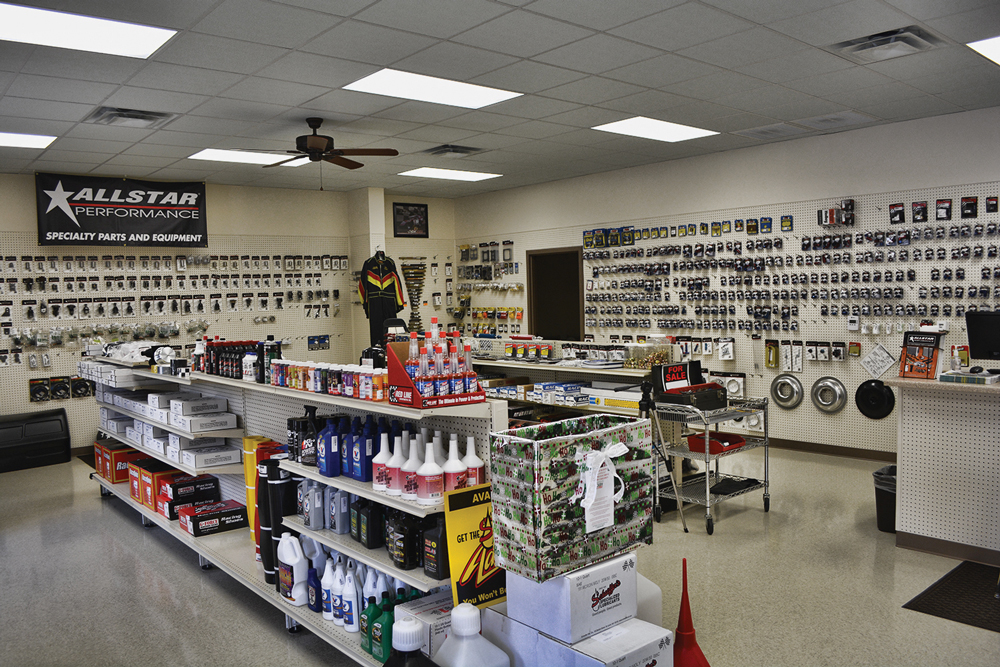
Our source at St. Louis Race Gear noted the danger in not taking a price increase when wholesalers raise theirs. “What are you going to do [then] when the next increase comes two weeks later? Now you’re two behind. You have massive sticker shock. So institute your pricing on a specific product as it comes in.”


Price increases are a natural component of any business; at times, they may also be necessary in order to keep the company thriving.


These days, a trend chart tracking prices for just about anything arcs upward. That results in an inevitable need to raise prices. Like breathing, it has to be done. Yet doing it objectively and sensibly will ensure that a business keeps breathing, too. Coping requires discipline grounded in understanding both buyer psychology and sound business practices.

“I worked most SEMA shows the last 20 years teaching business management,” explained Tom Shay, a small business expert at Profits Plus in Dardanelle, Arkansas, who has presented seminars at the PRI and SEMA shows. “The advantage in our industry is our love for the sport, which separates us from [the big catalog and chain retailers]. The challenge is, they don’t demonstrate the same passion or love for understanding how to run a business. The Captain and Tennille had a song named ‘Love Will Keep Us Together.’ That’s a song. That is not a business plan. I want you to become good at operating your business.”

One of the worst steps is delaying a pricing decision—or ignoring one entirely—until a wholesaler calls with the bad news. As Shay teaches his students, determining prices is a constant, ongoing responsibility for every retail manager. Wholesalers will inevitably boost them at some point. Shay strongly suggests retailers stop apologizing and instead, sell customers on a whole-of-shopping experience that benefits everyone.

“You should be looking at raising your prices every day,” Shay said. “This is not a charity. I’m under the belief that you open a business because it’s what you like to do, and hopefully you’re going to make money at it. It’s my job to teach you how to make that money. I don’t buy for less so I can sell for less. I buy for less so I can make more money. The other view doesn’t make sense.”

As an example, Shay told the story of a simple but essential component, like a performance starter motor. Lots of places sell them; some, as is the case with volume retailers, for cheaper prices. What to do? As Shay explained, don’t panic. If you physically stock the item, you’re already ahead. Then start thinking about what else the buyer might need to install it.

“Instead of selling the starter against a starter, tell them, when you buy a starter from me, here’s what it comes with,” is Shay’s strategy. “How about new bolts for mounting the starter, which I have? And what about a tube of thread locker? And shouldn’t you have some dielectric grease on hand when reconnecting the starter?”

He, and others, note that at the make-or-break moment when a customer decides to buy, having what he or she needs—right now, immediately—almost always outweighs price as a consideration.

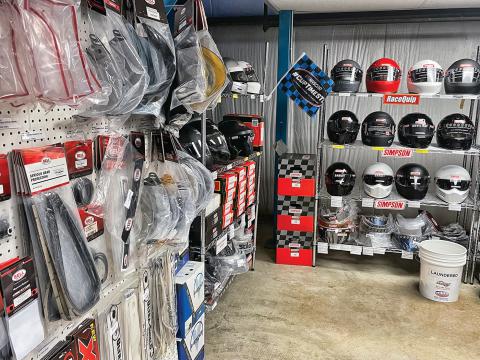
Frank Palazzo founded St. Louis Race Gear in St. Louis, Missouri, because he couldn’t find a local store to sell him the helmet he needed to wring out his Viper on track days. Since then, he’s also acquired US Race Gear in Cincinnati, Ohio.

image 2
Tennessee-based retailer Brandon Maxwell told us he shares pricing information with customers as they come in. As for the occasional customer who insists they can buy online for less, “we quit fighting that battle a long time ago,” he explained. “If they’ve got it in their hand and it’s in my store, they’re usually more humble.”

“I have every market segment in racing because everybody around here knows that I have stuff in stock to try on,” Palazzo said. “People who come in want to know what your item costs today, not yesterday. The danger in not taking a price increase when it occurs is, what are you going to do when the next increase comes two weeks later? Now you’re two behind. You have massive sticker shock. So institute your pricing on a specific product as it comes in. That’s why we have multiple product lines.”

Like Palazzo, Brandon Maxwell is a small, locally focused retailer. His store, 45 Race Shop in Milan, Tennessee, has a base of about 1,500 customers in a rural area between Memphis and Nashville. The price shock hit him immediately with components that make heavy use of plastics and aluminum alloys. Racing fuels and tires have also jumped. In Maxwell’s view, tires are the least likely market segment to eventually drop their prices, regardless of what happens in the world.

“We’ve been doing this 25 years and never seen a price reduction in tires,” he explained. “Eighty percent of our customer base is made up of people we’ve been doing business with for years. We just share pricing information with them as they come in. We hang on to our prices as long as we can until we have to change. You get that one guy who comes in, says, ‘I can’t believe it, I can buy it online for less.’ We quit fighting that battle a long time ago. If they’ve got it in their hand and it’s in my store, they’re usually more humble.”

Shay echoed this, agreeing that having a component in inventory is more important to most shoppers than simply the price tag. “It’s really, what can I get for this item? If it’s $72.43, I can probably sell it for $79.99. Is somebody going to walk away from me? I don’t think so. Because of COVID-19, a customer now has lost their burning desire for a low price. Their question now is, ‘Do you have it?’ I’m tired of hearing people say, ‘I do business with you because you’re local and convenient.’ I don’t want your sympathy. I want you to buy from me because I’ve got a damn good staff and I’ve got the things that you want at a fair price. Not the cheapest, but fair. That’s where I want my business to be.”

SOURCES

45 Race Shop
45raceshop.com

Profits Plus
profitsplus.org

St. Louis Race Gear
usracegear.com

July 2022
By
Jim Donnelly

Member Check-In: D H Davies Racing

Submitted by jeffreyc on Tue, 06/14/2022 - 12:38

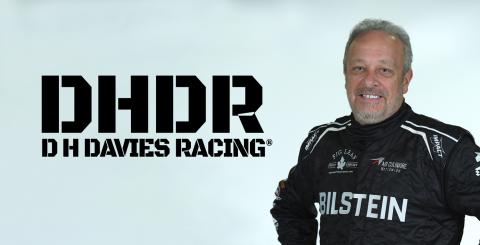
David Davies has a vested interest in the health of motorsports as both a team owner and CEO of Constant Aviation, which signed on last year as the title sponsor of the NHRA Constant Aviation Factory Stock Showdown, where he also competes as a driver.

David Davies is determined to ensure the future health of motorsports as a PRI Founding Member, driver, team owner, and title sponsor of an emerging drag racing series.

Even if they like racing, and work in the transportation sector, few CEOs will ever take the plunge and become motorsports sponsors. Fewer still will have a race team competing in the series their firm supports. And practically none of them will ever drive the race car. 

On the other hand, there’s David Davies. He not only runs the major aviation business that sponsors a developing NHRA racing series, but when it’s race time, Davies is on the line in his drag-prepped Dodge Challenger antsy to grab the green.

“I came up through the Modern Street HEMI Shootouts, with those guys, so I came up through street cars,” Davies explained. “I was running a 2018 Dodge Demon in 2019 when they announced this new generation of Drag Pak at SEMA. I knew I wanted to do this. It was time to upgrade.”

The end result was that Davies, the CEO of Constant Aviation in Cleveland, Ohio, got himself a new Drag Pak Challenger, and he didn’t stop there by any means. A PRI Founding Member, he also inked a deal with the NHRA by which his firm became title sponsor of today’s NHRA Constant Aviation Factory Stock Showdown category, which will perform at eight of the 22 national events on NHRA’s 2022 schedule. Campaigning one of the limited-production 2021 Dodge Challenger Mopar Drag Pak race cars, Davies also hammers the Challenger at NMCA Muscle Car Nationals events and elsewhere.

2
A chance meeting with team owner Don Schumacher in 2021 led to an agreement by which D H Davies Racing became a satellite operation of Don Schumacher Racing. David Davies anticipates driving in all eight of the 2022 NHRA Constant Aviation Factory Stock Showdown events, plus selected NMCA and Modern Street HEMI Shootout stops.

“They announced they were going to release the car in 2020, and we all know what happened in ’20,” Davies said. “The SRT team at Dodge did a good job of reaching out to those of us who had expressed interest, and come March of 2021, they tell me, ‘You have car 15. Let’s get the paperwork done.’ About the time I was getting ready to take delivery of the car, the NHRA called and said, ‘Hey, the NHRA Factory Stock class is looking for a sponsor.’ They’d started the season without one. One of the things that I’ve always done with companies that I’ve been involved with is to think outside the industry bubble.”

Constant Aviation is what the Federal Aviation Administration calls an MRO, which stands for Maintenance, Repair, Overhaul, essentially a general repair facility for aircraft. The service can perform fabrication work and FAA-approved modifications. Davies explained, “You want a pool table in your aircraft? We can get that approved by the FAA and have it installed.” 

Constant Aviation has major operations in Cleveland and in Sanford, Florida. A company affiliate, Flexjet, operates a fleet of 170 business jets. Constant Aviation’s FAA certification allows it to work on any type of aircraft in the world. 

Flexjet already had Davies’ type of outside-the-bubble affinity linkage through its sponsorship of a tony polo league. Constant Aviation was looking for a somewhat broader sponsorship presence and established NASCAR relationships, particularly in the truck series.

“This time, I started to zero in on NHRA because the skill sets that are used to work on the cars that are racing are almost identical to the skill sets of my troops in the hangars,” Davies said. “The fabrication, the electrical, the composite work, all that stuff is pretty well transferrable. The difference is, you don’t have to have a license and be certified to work on a race car.”

Beyond that logic, Davies also recognized that some of Constant Aviation’s technical specialists were already wrenching on their own race cars outside of work. “It was a very relatable sponsorship,” he recalled. “It wasn’t like the troops didn’t understand what I was doing. So when it came time to get a sponsorship, the NHRA knew I was already involved and that they had me hook, line, and sinker.” 

Constant Aviation came aboard as an NHRA title sponsor partway through the 2021 season, beginning at the Norwalk, Ohio, event. “At Norwalk, we had 120 employees there at the track, every day,” he said. “It was the first time we took the employees out as a group since I took over the company.” 

At the Denver stop in 2021, a chance meeting with team owner Don Schumacher led to an agreement by which D H Davies Racing became a satellite operation of the Don Schumacher Racing army. The team has also lined up major sponsorship from Bilstein.

Davies anticipates driving in all eight of the 2022 events in NHRA, plus selected NMCA and Modern Street HEMI Shootout stops. It’s the culmination of his raucous recreational past running doorslammer cars down the quarter-mile. His involvement with PRI as a Founding Member has helped ensure that the cars, and the series, keep a vibrant existence as part of American motorsports.

“What PRI is doing is providing a voice, to the parts manufacturers, the tuners, the car builders—and specifically, to the drivers—that they understand what the regulatory risk is,” Davies said. “I had the fastest stock Demon in the country, and if you tune it, you’re technically running afoul of the regulations that they’ve been talking about. In the environment we’re in, the odds of someone tapping the EPA to do something stupid is 100% legitimate. PRI is facing that head-on, providing our people with a voice.”

July 2022
By
Jim Donnelly

Energy & Commerce Committee Chairman Frank Pallone Visits Formula Drift In NJ 

Submitted by laurap on Mon, 06/13/2022 - 16:52
Left photo: PRI General Manager Jim Liaw, left, and Energy & Commerce Committee Chairman and U.S. Representative Frank Pallone (D-NJ) at the Formula Drift event in New Jersey. Right photo: Rep. Pallone, right, met with representatives from the U.S. Air Force.  


Congressman Frank Pallone (D-NJ)—one of the most important and influential lawmakers in Washington, DC, on the Recognizing the Protection of Motorsports (RPM) Act—showed his support for the motorsports community by attending the Formula Drift event at Old Bridge Township Raceway Park in Englishtown, New Jersey.  

Rep. Pallone is chairman of the US House Energy & Commerce Committee (E&C), which has jurisdiction over the RPM Act. His support is critical to the motorsports industry and for efforts to pass the bill in 2022.  

The RPM Act (H.R. 3281/S.2736) is bipartisan legislation that would protect the future of racing by clarifying in federal law that it is not illegal to modify and convert a street vehicle into a dedicated race vehicle. The House and Senate must pass the RPM Act by January 3, 2023, in order for it to become law during the 117th session of Congress. 

During last weekend’s event, Rep. Pallone met with New Jersey-based Formula Drift PROSPEC drivers Ricky Hoffman, Alex Jagger, and Matthew Bystrak, who helped convey the importance of passing the RPM Act to their ability to compete in modified street vehicles. 

The Congressman watched PRO Series drivers compete in race cars that the EPA maintains are not currently legal—the RPM Act would eliminate any uncertainty that street vehicles can be modified for track use. PRI staff and Chairman Pallone also met with track owner Mike Napp, members of the US Air Force, and racing businesses from New Jersey; the Congressman also was honored during opening ceremonies.  

For more on the RPM Act and how to contact your federal representatives, visit saveourracecars.com. For additional information, contact Eric Snyder at erics@sema.org. 
 

Rep. Pallone

 U.S. Representative Frank Pallone (D-NJ)—the Chairman of the U.S. House Energy & Commerce Committee (E&C)—was PRI and SEMA’s guest of honor during the Formula Drift event in Englishtown, New Jersey, last weekend.

 Rep. Pallone

June 2022