PRI Tech: Fuel Injector Selection

Submitted by jeffreyc on Mon, 03/13/2023 - 09:49

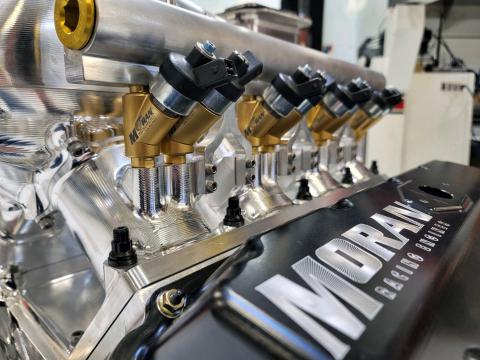
For high-horsepower engines, typically 2,500 hp and up, two fuel injectors should be used per cylinder, said Anthony Donnarumma. The primary injector operates at all times when the engine is running; the secondary turns on when the vehicle’s ECU detects that the primary injector has hit a duty-cycle threshold.  

Fuel choice, power adder usage, and sizing are just some of the factors to be considered when determining the optimal fuel injectors for a race engine build. 

The fuel injector in an electronic fuel injection (EFI) system plays a critical role in the performance and reliability of a modern internal combustion engine. It is the injector that allows EFI systems to attain fuel flow accuracy and efficiency that was previously not accessible with carbureted systems.

The simplest and longest-standing version—the “needle and seat” or EV1-style fuel injector—remains the injector of choice throughout much of the performance drag-racing aftermarket. This is due largely to both its reliability and design simplicity. 

There have been many evolutions of this original Bosch-designed EV1, such as slimmer EV14 or EV6 injectors with disc-style actuation. But because of its ease of construction and reliability, the EV1 remains the preferred option for drag racing engine builders. 

How Injectors Function in an Electronic Fueling System

At its core, a fuel injector is a simple solenoid valve that is used to meter the amount of fuel that the engine demands at a given moment in time. This valve can be broken down into a few main components for an EV1-style injector:

• An electromagnetic coil 

• An armature

• A needle 

• A seat 

• A housing to hold all these components together

The fuel injector actuates when an electrical signal is given from the vehicle’s ECU. This electrical signal, or current, is passed through the injector’s coil windings. This induces an electromagnetic field that in turn moves the armature. The end of this armature contains the needle that is raised off the seat, thereby allowing fuel to pass by into the intake port. 

Knowing the basics of how injectors function, we can begin to understand how to select the right injector for your racing application. Amongst the many factors to consider:

Fuel Choice. The goal of a fuel injector is to maintain an optimal Air to Fuel Ratio (AFR). It is important to know what that specific ratio is for your select fuel. For example, gasoline has a stoichiometric AFR of 14.7: 1, while methanol is 6.5: 1. Thus, the size of the fuel injector that is required for methanol will be much larger than one that’s required for gasoline.

The type of fuel used determines the volume of fuel needed inside the cylinder. The volume of fuel needed in the cylinder, which is relative to the engine’s displacement, is what dictates the size of the fuel injector. Without knowing what fuel you’ll use and its AFR, you can’t properly size your injectors. 

Power Adders. What about your selected induction method? For example, most engines across all displacement levels—naturally aspirated or forced induction—will use very little fuel at idle. In these instances, larger injectors are not required to keep an optimal AFR range. 

However, when any of those same engines are at peak torque, they will consume much more fuel. When you add, say, 50 psi of boost at that peak torque level, you are now changing the theoretical volume of that cylinder. As a result, larger fuel injectors must be used to maintain the optimal AFR needed. 

For performance applications, the primary consideration is the fuel flow needed at peak torque, where fuel demand and engine stress is highest. That demanding torque range is the basis you use to determine the requirements of your injector size.

Sizing Considerations. We’ve already noted that the goal of a properly functioning injector system is to maintain optimal AFR. If we know that adding more air requires more fuel, why not always buy the biggest and best flowing injectors? If it were only that simple....

If you decide to run an oversized injector relative to the engine’s fuel requirements, the first thing you sacrifice will be idle quality. This is because injectors have an optimal operation range. An injector that flows enough fuel to support 5,000 horsepower won’t also be able to happily idle at 800 rpm. 

This is because injectors function by allowing fuel to flow into the cylinder in specific and controlled intervals. Each of these intervals is determined by a precise electromagnetic pulse. How often these pulses occur is known as the duty cycle. If an injector is at 100% duty cycle, the needle that allows the pass-through of fuel flow never closes. At that point, your injector is no more controlled than a valve on a garden hose. 

You never want to max out your injector’s duty cycle either; instead, you want to keep them within their optimal dynamic ranges. This tends to be around 50% to 90% duty cycle depending on the application, so it’s important to be precise with your selection. 

Multiple (Staged) Injectors Systems. Consider that the flow rate of the injector is determined by two factors: the diameter of the opening orifice and the distance the needle lifts off the seat. When your injector is too large for your fuel requirements, the injector’s electromagnetic coil will not be energized long enough to control the correct amount of fuel needed to maintain a proper idle. 

How do you solve this idle issue when you need a very large injector for your application? In the case of high-horsepower engines, typically 2,500 hp and up, a single fuel injector per cylinder will not suffice; rather, two fuel injectors will be used per cylinder as a primary and secondary injector. 

The primary injector, typically the smaller of the two injectors, will operate the entire time the engine is running. The secondary injector turns on when the vehicle’s ECU detects that the primary injector has hit a duty cycle threshold. This threshold is determined by the tuner based on the engine’s application and size. 

A smaller primary injector is used because of its better idle characteristics compared to a larger secondary fuel injector. This way, you can get the fuel you need at peak torque without sacrificing the precise fuel control needed to maintain good idle characteristics. 

2
In a multiple injector system, the secondary injector provides the engine with the fuel it needs at peak torque, while the primary injector delivers the precise fuel control needed to maintain good idle characteristics. 

Incorrectly Sizing Injectors Has Consequences

When it comes to performance injectors, it’s always better to have more fuel flow than less. Remember, the goal of a proper injection system is to maintain optimal AFR. If your injector can’t provide the fuel the engine needs at peak torque, this can cause it to run lean when you need fuel the most. 

An unbalanced AFR at peak stress levels can lead to a detonation event. That is something you want to avoid at all costs. For that reason, it’s generally safer to overbuild your fueling system than to do the opposite. 

A good tuner will be able to work out the kinks for your setup and make good power while maintaining proper idle with a bigger injector than needed. However, if the injector is too small and peak torque fuel flow isn’t cutting it, they may choose not to tune the engine altogether, knowing the possibility of a critical failure in the system. 

Don’t make your tuner’s life harder than it needs to be. If you don’t know what’s best for your setup, ask questions. 

3
When it comes to performance injectors, it’s always better to have more fuel flow than less, so the injection system can maintain the optimal air-fuel ratio.

System Optimization

Now that you have considered the key factors that go into choosing the right fuel injector for your application, it is just as important to pick the rest of your fuel system components with the same level of research. 

Many injector manufacturers will give their customers recommendations on what fuel pump flow and system filtration will be required to match an injector setup. If you are unsure of what size and system is right for your engine build, consult your injector supplier. Every drop of fuel counts! P

Anthony Donnarumma has eight years of professional experience in the automotive racing industry. He currently works as a Design Engineer and Engine Builder for Moran Motorsports. Prior to this position, he worked for Fiat Chrysler Automobiles in the SRT Motorsports group as an engineer to help develop the 2021 Dodge Challenger Drag Pak. He has a BS in Engineering Design from Western Michigan University.
April 2023
By
Anthony Donnarumma

Industry Insights: Latasha Causey

Submitted by jeffreyc on Mon, 03/13/2023 - 09:36


NASCAR looked outside the racing world for its new president of Phoenix Raceway. What it found was a passionate, homegrown professional focused on creating and building relationships for the benefit of racers, fans, sponsors, and the motorsports community at large.

It’s rare for a racing organization to select someone outside the racing scene for a critically important position, but there’s method to NASCAR’s madness. To carry Phoenix Raceway forward, they selected Latasha Causey, who brings a wealth of experience from the Phoenix business community to the job. The racing industry is increasingly aware of its interdependence with the larger business ecosystem, and along with her organizational and management chops, Causey brings a comprehensive network of contacts to connect the track to the greater Phoenix business circle. 

Causey’s career has focused on business outreach, from her time as an executive director with USAA insurance to her most recent position as VP and community development officer with Bell Bank. Through it all, her specialty is bringing businesses to the table to commit resources to the greater benefit of the Phoenix metro area. That’s a key skill for any track manager in the 21st century. It builds relationships and understanding of a track as a key player in the vitality of a city or town. 

Causey is also the second woman in a row to run Phoenix’s racing operations, succeeding Julie Giese, who has gone east to manage the NASCAR Chicago Street Course event. As a Phoenix native, Causey has deep roots in Arizona and a passion to see the city and the racing facility thrive. She started that process as a member of the NASCAR Accelerators, a collective effort to promote NASCAR activities at the raceway. We sat down to ask her how she’s putting all this experience to work in taking the raceway to the next level in partnership with other stakeholders in the business community. 

2
“I would love to be able to get young kids of color involved in the sport,” said Latasha Causey, seen here speaking at a Beyond the Finish Line program at Arizona’s West Point High School.

PRI: Let’s dive right in. After a career in insurance and banking, how did you find yourself working in racing? 

Causey: My background is more as a community development type of person and a relationship person. But more personally, what you don’t see is that I’m a huge sports advocate. I love everything that’s associated with sports and motorsports. I just love the energy! You go to a race, and it’s all about the experience and the people. I think that motorsports probably has the most committed fans, as well as momentum. 

I’m definitely a fun, energetic type of person. But also at the same time, I am a business person. I have the ability to continue the momentum that has been going on here at Phoenix Raceway. 

PRI: Coming in from the outside, has anything really surprised you since you took over the job?

Causey: No, nothing seems odd or confusing. You know, I think the one surprise has been the relationships across the board. When you really get to know the teams, you get to know the people that are involved in racing. It’s such a family sport, whether you’re related or not.

It has been such a nice surprise to see the number of people in NASCAR and racing who want to make sure that we’re all successful together. That’s not something that you normally see in everyday business. You have competition, but while there are competitors in the racing world, everyone wants it to be fun, wants it to be a great experience, and wants everyone to continue to thrive. 

3
Phoenix Raceway went through a major track reconfiguration in 2018 “to make sure that it is state of the art,” and recently named track president Latasha Causey said she will “continue to make sure that we keep up with what has been happening over the past few years.”

PRI: Have you felt well-supported by the NASCAR organization as you transition into this job?

Causey: Yes, absolutely. Everyone from [NASCAR President] Steve Phelps all the way to my peers and individuals who work alongside me, it has been such a great welcome. You mentioned at the beginning that I didn’t have a ton of motor racing in my background. And there are a lot of people at NASCAR who do. But the excitement and the welcome from individuals to someone with a different perspective and a different lens and a different light has been amazing. They have all been very welcoming and collaborative working with me as we continue to do great things.

PRI: Speaking of great things, what do you most want to achieve there at Phoenix Raceway?

Causey: Well, you know I’ve been in my job for a whole six weeks, right? [This interview took place in January 2023.] The first thing I want to do is get to know the fans. I said a little bit earlier that the fans are different with NASCAR. They are so committed to the sport. If you come to a race in Arizona, you’re traveling. They’re not necessarily from Arizona. They come from all over the place to see the races that they’d like to see. I think that’s special.

I want to ask them, what else can we do? What can we do to keep the fans coming? Also, for me to be the first African American woman in this type of leadership role, I can’t miss the opportunity to say that I would love to be able to get young kids of color involved in the sport. To get them to a track and get them to see the sport early. I’d like to create some partnerships there because we know that representation matters, and so when they see someone like me in this role or at a race track, maybe they will want to come along, too. So I’m looking forward to integrating a more diverse fan base. To keep the fans that we currently have and integrating others so that they know that they are welcome in the sport, welcome at the track.

PRI: Are you planning any physical changes like repaving the track or building new garages or anything like that?

Causey: We just reimagined the facility back in 2018 to make sure that it is state of the art. I’m not saying that there isn’t an opportunity to do more, but right now we’re just getting started. So I can’t say that I have a plan to redo, knock down, tear down, or add anything additional at this time. But we will continue to make sure that we keep up with what has been happening over the past few years.

PRI: Let’s take a step back and look at your previous experience. What are you bringing from your career to your new role that maybe somebody who came up through racing wouldn’t necessarily have?

Causey: I think we all have our unique talents. What I bring that is unique, first and foremost, is that I’m a Phoenix native, and that makes a difference in knowing the community. I was born and raised here in the West Valley, not too far from the race track. Then from an experience standpoint, being in business for so long, I came from a human resources background as well as banking, and then community development.

So being able to bring all of those things and all of those talents together allows me the ability to be able to see people differently. Whether that’s my HR experience or building relationships, I have a unique and diverse network of individuals. It takes people to make all sports go. If we don’t have fans, if we don’t have people in the seats, then we don’t have racing. So it’s really about me being able to bring my business networking experience and all of the things that I have done over the last 20 years in this market. I know this market because I’ve lived it and embraced it my entire life.

4
“Representation matters,” said Latasha Causey, the first African American woman in this type of leadership position, “so when [young fans of color] see someone like me in this role or at a race track, maybe they will want to come along, too?”

PRI: Do you have goals that have been set for you by the NASCAR organization or that you have set for yourself for the next five years and into the long term, whether that’s fan growth or more events or anything like that?

Causey: Being six weeks into the job, when I think about year one, it’s about getting to know the people, not just the fans, but the people that are here and within NASCAR on my team. Relationships are key, both internal and external. It’s really about that. I’m a very curious person, so if you interview me one year from now, while I won’t be a motorsports expert, I will have some pretty good knowledge about motorsports because for me it’s important to get out there to see it and touch it.

I will be traveling to some key races and meeting the key players within the industry. It’s really about me getting to know what I can do and how I can put my stamp on this role and on Phoenix Raceway. I can’t just come in and say, ‘Here’s what we’re gonna change.’ I don’t know what needs to be changed, and I don’t know what we need to add without listening. So I’m going on that ‘year of listening’ tour. I’m definitely going to make sure to do that. 

The other thing is making sure that I welcome people into the raceway. I’ve been here for six weeks, and I’ve already had six tours of individuals who had never been to the raceway, and some of them are pretty heavy hitters within the community. That’s just from that network where people are really excited about me being in this role. They tell me they forgot about Phoenix Raceway, but they’d love to come and see what we have going on here. There doesn’t have to be a race going on for them to see the track, and I want them to know that. I want them to know that we have other events going on 12 months of the year.

I also want the community to know that they can have events at Phoenix Raceway as well. I want to open up our home to this market, to the community, and to the fans. Within the first year, I want to be branding us within the community so that people can get very, very excited about motorsports. In the first year I would love to be able to say that we got some really cool new fans to go alongside the really great fans that we already have.

PRI: What are those events other than auto racing that you plan to have there at the track?

Causey: We already have some really great events. We have at least 13 Electronic Dance Music concerts planned for the year. Then we have sports competitions that are here, and some nonprofits host their events at the track. We have a great partnership with Luke Air Force Base. They have some events here as well. So it’s making sure that both the for-profit and the not-for-profit communities know us, and we want to have some entertainment here. Who knows, maybe in a couple of years we’ll have a really big music festival here? That’s just on my dart board somewhere. We are open to all events that make sense. 

PRI: What are the two or three most pressing concerns that you have at Phoenix Raceway? 

Causey: Honestly right now I can’t say that we have any pressing concerns. I mentioned that we redid the facility back in 2018, and we have had really, really great experience with being able to sell out. Like, last year we were sold out for the championship race in May. So we have really high expectations. I guess if there are any concerns or things that we have to keep up with, it’s our high expectations. How do we make sure that we keep that momentum? 

5
A Phoenix native, Latasha Causey brings some 20 years of local business connections to her role as Phoenix Raceway president. “Whether that’s my HR experience or building relationships,” she said, “I have a unique and diverse network of individuals.”

PRI: Getting back to some things we talked about earlier, what do you think the motorsports community can do to reach out and encourage people of color and underserved communities to get involved, whether as fans or participants?

Causey: It’s about starting early. There are a couple of organizations, like the Urban School of Racing, that are in motorsports. We can make partnerships with local schools and nonprofits to let kids know about motorsports. One of the things that kids know really well is video games, and we know that we have tons of simulators in the racing space. So we want to make sure that we introduce kids early. It’s also doing things like having conversations with certain organizations to let them know what we have here. We want to get the word out in front of those groups and make sure that they feel really comfortable when they come here. NASCAR as a whole has done things like getting rid of the Confederate flag, and that helps.

Those types of things open up doors for other individuals to feel comfortable to come into a track, any track, not just Phoenix Raceway. NASCAR led from the front doing that, and our team here in Phoenix will continue to do that.

PRI: Do you have any plans or programs to get tickets into people’s hands who might not be able to afford them otherwise?

Causey: We do that now. We partner with organizations like the Phoenix NASCAR Accelerators, which is our nonprofit space where we raise money from various avenues, and we can gift those funds out to nonprofits. We partner with organizations like the Boys and Girls Clubs and other organizations. Through those partnerships, they’re able to get discounted or free tickets through the nonprofit.

PRI: My next question was about the NASCAR Accelerators. Let’s dive into how that got started and what it does. 

Causey: Absolutely. This was something that Julie Giese created when she moved here to Phoenix. One of the things Julie worked on was creating a committee of business leaders, individuals in the community who could serve as ambassadors for NASCAR. Really it was the ability to create this group who would talk to other people about motorsports.

The Accelerators helped raise some funds to invest into the community as well. I plan to continue the Accelerators. Right now, there’s about 30 people, anywhere from small business owners to some large business leaders and a couple elected officials. We have a wide variety of individuals who are interested in motorsports and in making sure that the raceway is successful.

So not only do they donate money or in-kind donations themselves, but they go out and raise awareness. A lot of times those business leaders can get people to open their checkbooks, who maybe wouldn’t otherwise.

PRI: Are there any people, individuals or organizations, who you particularly seek to emulate personally and professionally? 

Causey: I’ve had a lot of mentors throughout my career, and I have picked up something from each of them. One of the things that is key for me is making sure of the values that I have and the way that I lead. I’m a servant leader. If I need to get out there and sweep the raceway, I’m out there sweeping the raceway with the team. It’s about making sure that I am in there doing the job that the team is doing. 

PRI: Is there anything else you want to talk about?

Causey: Just this—for the latest news and information, go to phoenixraceway.com.

April 2023
By
Jeff Zurschmeide

Newly Appointed: Tommie Estes

Submitted by jeffreyc on Mon, 03/13/2023 - 09:29


With its Silver Crown championship enjoying a growth spurt, USAC names a veteran racer and track manager as its new competition director for circle track racing.

The USAC Silver Crown Championship has enjoyed a growth spurt in recent years, and for 2023 it gets new leadership. In early November 2022, Tommie Estes, a name well known in dirt track racing for 45 years, was appointed competition director for USAC’s Circle Track division. Estes will lead the USAC Silver Crown National Championship, which has 13 events scheduled for 2023—seven on pavement, five on dirt, and one to be announced. The series kicks off April 16 at Lucas Oil Indianapolis Raceway Park.

Estes knows the landscape well. Starting out of high school in 1977, he competed extensively in sprint car and midget racing, including with USAC’s National Midget and Silver Crown divisions. He was a frequent competitor at the Chili Bowl and the Belleville Midget Nationals. After 22 years, Estes retired from driving.

“A week later, I went to work with ASCS doing their scheduling, and it snowballed from there,” he told PRI. He served as the competition director for both the ASCS National Sprint Tour and the Chili Bowl Nationals, and he oversaw racing operations at Dodge City Raceway Park for more than 10 years before moving to I-70 Speedway for 2021–2022.

PRI: What made you decide to take the position with USAC?

Estes: The Silver Crown is on an upswing but needs someone to give it full attention. I had done race directing and tech work for ASCS for 14 years, and I enjoyed being on the road for that. I felt the time was right to go back on the road. 

PRI: What are you most looking forward to in this new role?

Estes: The challenge of keeping it growing. Back when I raced, if you got to race a Silver Crown car, that was a really big deal. Races were events. I want to bring back that special event feeling.

PRI: Can you share your vision for the Silver Crown championship going forward?

Estes: The Silver Crown races used to be tied in with Cup races or IndyCar races. My long-range goal is to connect them to bigger races. That’s where you get the event atmosphere to draw more people.

PRI: What do you see as the most pressing concerns for open wheel racing today?

Estes: Live streaming. That has hurt a bunch of race tracks. When I was at Dodge City, we’d have 3,000 people in the grandstands for World of Outlaws. I’d be trying to sell a $40 ticket to basically just break even. But when you have streaming services selling a $39 monthly subscription, you could have 50 people over at your house watching on a big screen and have a party. That can be hard for promoters to compete with.

PRI: Do you see that situation changing?

Estes: Promoters must be able to get a little piece of that pie. There’s room for everybody to grow in this deal. Some groups doing the streaming are starting to understand what the promoters are talking about, especially at the smaller tracks. 

PRI: What is one professional or personal accomplishment for which you are most proud?

Estes: Probably the thing I’m most proud of is, if I tell you I’m going to do something, I try with all my ability to get it done. I was raised to believe you get out of something what you put in.

PRI: What is one recent mistake you’ve learned from—it could be yours or someone else’s?

Estes: I’ve made plenty of mistakes, but I learn every day. I’ll tell racers the reason I do things the way I do them is because somewhere on the road behind me it bit me in the tail, and I learned from it. Once they see that side of it, they listen.

PRI: If you could have a conversation with anyone in racing, living or passed, who would it be?

Estes: I grew up the first 10 years of my life in Albuquerque, New Mexico, and there was a driver there, Buddy Taylor, that nobody in the Southwest could beat. He was basically my hero. He kept his car in his local gas station, and I’d always go over to look at it. He died at Manzanita Speedway in 1978, the night I went to pick up my new race car. I named my daughter, Taylor, after him. 

PRI: Who do you look up to and why?

Estes: Anybody who’s been successful in my business—any aspect of it. Back when I was promoting, I paid attention to other successful promoters, trying to watch what they did. I’ve seen plenty of guys come in and try to reinvent the wheel, and they don’t last very long.

Tommie Estes

TITLE:
Competition Director, Circle Track division

ORGANIZATION:
USAC

HOMETOWN:
Ada, Oklahoma

FAST FACT:
As a hotshot pitcher in high school, Estes attracted baseball scholarship offers from three colleges. “I could throw a lot of junk. I made it hard to hit,” he said. “But I decided to go racing. I already had my car purchased.” When his mother passed away in March 2022, in her home Estes found the ball he threw to strike out 17 of 21 batters in one game.

April 2023
By
Jim Koscs

Fast Movers

Submitted by jeffreyc on Mon, 03/13/2023 - 09:17


A look at some of the country’s (and Canada’s) in-demand motorsports products and services by region and segment.

Motorsports retailers and service providers are constantly tracking the newest parts and trends to give their customers a competitive edge. For the latest on which products and services are moving the retail needle, we present the following sales snapshots from shops across North America.

LMS-EFI

Floyds Knobs, Indiana

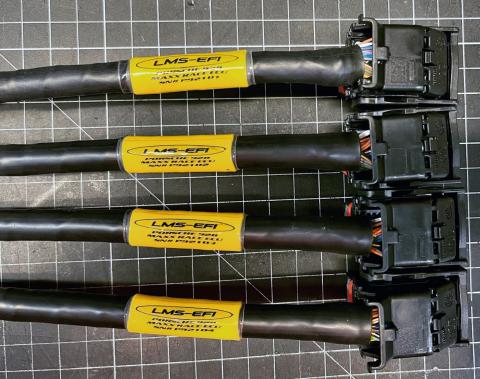
LMS-EFI customers—mainly running Japanese production-based road race cars in Sports Car Club of America (SCCA), National Auto Sport Association (NASA), and Gridlife—“consistently” buy power distribution modules (PDMs) and dash loggers from brands ECUMaster, Haltech, and Syvecs. “We also have domestic and European vehicles as well,” said owner Chris Ludwig.

1

“[Racers] are learning the benefits of PDMs. We can do some neat strategies [with those] that we would have a really hard time doing with a conventional fuse and relay setup. Good data systems are a thing we’ve been working to teach our customers about to show them the benefits; how data can make them a better driver or highlight issues with the chassis, for example.”

Ludwig pointed out that he also supports some drag racers and street enthusiasts—and that costs have increased, even on “simple things like Tefzel wire and mil-spec switches.” Available stock and back orders have also been a challenge for the company since 2020, but savvy purchasing has helped negate long lead times.

Performance Cellar

Hamilton, Ontario, Canada

It was building season when we asked Canada’s Performance Cellar about its fast movers, so DIY customers were purchasing more engine components from brands like King Engine Bearings, Total Seal Piston Rings, Jesel Valvetrain, Precision Products Performance Center, Manton Pushrods, Morel Lifters, and Cam Motion Camshafts. 

2

“I have a primarily drag race following, but we do have some sprint car customers, some neat hot rodders, and a dash of pro touring clients,” said owner Venice Perno. “My customers have been trending toward better-quality products. I help liaise the relationship between the end user and some of these higher-end parts and make it easier for the customer to understand the ‘why’ and ‘how’ of these more complicated purchases.”

Customers compete across the gamut of classes but include NHRA Stock and Super Stock, Can/Am Stock and Super Stock, and the Race Cayuga Sportsman Series (RCSS) brackets. “I’m also seeing a lot of participation in the No Prep arenas, which is encouraging,” Perno said. “Toronto Motorsports Park is within 40 minutes of us, and they’re constantly moving forward with improvements and cater to a wide range of disciplines.” 

Snyder Motorsports

Fort Worth, Texas

Mick Snyder of Snyder Motorsports pointed out that his customers could also be considered competitors—on the drag strip. The company markets its offerings by proving them on the track in Top Alcohol Dragster, Top Alcohol Funny Car, Pro Mod, and Top Sportsman classes, in addition to referrals, social media, and targeted online advertising. 

3

Customers of the retailer range from locals competing at Texas Motorplex (Ennis, Texas) and Xtreme Raceway Park (Ferris, Texas) to racers as far away as Sweden, France, Finland, Belgium, England, and Australia. 

“We specialize in a small niche of a much bigger industry. Specializing has allowed us to make a name for ourselves in high-horsepower drag racing,” Snyder said. 

When we connected to discuss his bestselling items, the company was pushing more consumables like blower belts, rod bearings, and spark plugs as teams worked on new builds, updates, and restocks for their vehicles. Its Snyder Motorsports-exclusive line of products also account for some big movers, including 13-pound Hi-Per 12-volt batteries that “pack a punch and are inexpensive compared to similar options.”

April 2023
By
Laura Pitts

Lubrication Specialties Announces Additions To Marketing Team

Submitted by laurap on Fri, 03/10/2023 - 18:44
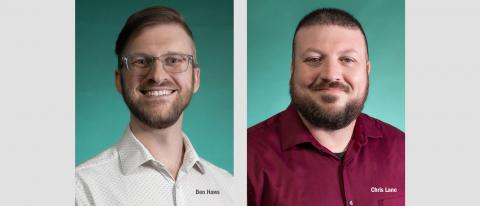
Ben Haws, Chris Lane


Lubrication Specialties (LSI)—the Mt. Gilead, Ohio-based manufacturer of Hot Shot’s Secret (HSS) brand of additives, oils, and fluids—has announced the addition of Ben Haws as its new digital marketing manager and Chris Lane as Hot Shot’s Secret’s new field marketing representative.

Haws will develop strategies to build brand loyalty from new and returning users for multiple markets. He will also work to increase educational opportunities for the HSS dealer network and fleets. Haws has 10 years of experience in digital media production and marketing. 

Lane will help create programs that will drive brand loyalty and develop strategies to increase brand awareness at consumer and trade events. A self-described racing and semi-truck enthusiast, Lane has a collection of performance vehicles and has co-hosted No Prep events throughout Ohio, Kentucky, and Michigan. He has also served as a race official across the country. 

“Rarely do we find people that have a true passion for their work and are able to hit the job running. Haws has a proven track record with creative digital strategies that are executed flawlessly, and Chris is a natural in his role as a field marketing representative. He has even used our products for three years and can speak about their effectiveness first-hand. We are fortunate to have both on board and look forward to their contribution to the long-term growth of Hot Shot’s Secret,” said Brett Tennar, LSI president. 

For more information, visit lubricationspecialties.com and hotshotsecret.com. 

March 2023

Editors’ Choice

Submitted by jeffreyc on Fri, 03/10/2023 - 14:17


Hundreds of new product announcements cross the desks of PRI editors each month. Following are our top picks for April.

Direct-fit Roll/Control, Line/Loc Kits
Hurst

holley.com/brands/hurst/

GM F-body and Ford Fox-body Mustang drag racers can reduce the chance of rolling out of the staging lights with a direct-fit Roll/Control, Line/Loc from Hurst, part of Holley Performance Products in Bowling Green, Kentucky. This control also helps produce more effective burnouts by locking up the front tires.

“Hurst’s new Roll/Control, Line/Loc kits are designed to be a platform-specific answer for older platforms, in the same way that newer models have benefitted,” said Bryan McTaggart. “These kits come ready to install, with brackets and brake lines designed for your platform. No more worrying about bending brake lines—just install, hit the button, and start warming up the rear tires.”

These kits cover 1979–1983 5.0-liter Mustangs, 1979–1986 2.3-liter Mustangs, and 1987–1993 Mustangs—all without ABS. For GM vehicles, these kits cover 1970–1981 F-body and 1978–1988 G-body.

The control has an extra threaded port for a separate bleeder or a brake line-pressure gauge. The valve assembly is constructed from stainless steel to avoid corrosion, and there’s a 150-micron filter to prevent contamination. There’s also a finned aluminum housing to help dissipate heat.

The control is not recommended for use as a parking brake, or to be used longer than 60 seconds at any one time. —Mike Magda

2

VRS-4150 Carburetor
Edelbrock

edelbrock.com

The new VRS-4150 carburetor from Edelbrock in Olive Branch, Mississippi, is available in 650-, 750-, 850-, and 950-cfm models. Although street friendly, the VRS offers plenty of race-ready features, and it can be bolted directly to any manifold with a 4150 or 4500 footprint.

“This carburetor will pick up around 10 horsepower, typically on smaller engines,” said Brent McCarthy. “Depending on the engine size, operating range and configuration, all will play a factor when comparing this unit with others in the industry.”

The carb is based around a one-piece, cast-aluminum body. Other features include PTFE-coated throttle shafts, larger capacity fuel bowls, and built-in provisions for a standard GM three-wire TPS mount.

“The four circuits of fuel trim result in an extremely flat WOT air-fuel ratio curve from low rpm to high rpm,” explained McCarthy. “The customer can easily move the entire curve up and down to match their engine horsepower with just a main jet change.”

The half-inch-taller main body has longer taper lengths on both the entry and exit sides of the venturi for improved fuel mixing. Users will likely see better cylinder-to-cylinder distribution when back-to-back tested against other carburetors.

The VRS carbs have one of the most comprehensive feature lists on the market, with everything from pinned throttle shafts to jet extenders, bowl drain screws, borosilicate sight glass, vacuum provisions, etc., and an excellent price point. —Mike Magda


3

AZ850DR Drag Radial Tire
Atturo Tires

atturo.com

There will be 11 sizes available in the initial release of the new AZ850DR drag radial tire from Atturo Tires in Waukegan, Illinois. The AZ850DR is DOT compliant for rear-axle applications and complements the AZ850 line that fits on the front of modern high-performance cars.

“As the ultra-high performance AZ850 gained popularity with muscle car owners, the excitement about further pushing the performance potential in our tires grew. We developed the DR version to pair with the standard AZ850,” said Michael Mathis. 

The current lineup has one size for 18-inch wheels, two sizes for 19-inch wheels, and eight sizes for 20-inch wheels. The AZ850DR features extra-wide shoulder blocks and a solid center rib to emphasize high grip at launch and stability throughout a run. It’s designed to support the weight of a late-model vehicle while allowing low-pressure launches under high horsepower.

“In our testing, the simple change from the original equipment tire on a Challenger Hellcat to the AZ850DR resulted in a 0.70-second improvement in quarter-mile elapsed time,” added Mathis.

Constructed from a sticky compound, the tire also features dual wide channels to reduce noise on the road, and it has directional shoulder grips. —Mike Magda

3

Aluminum 5.0- and 5.2-liter Replacement Coyote Engine Block
Bear Block Motors

bearblockmotors.com

Seven years ago, Bear Block Motors in Chatsworth, California, developed a race version of the Ford Coyote cylinder block with improved A356 T6 material, extra ribbing for strength, and a different main-cap design. However, there were problems using this block in production vehicles.

Now the company has released a production version with all the same performance qualities of the race block, but at a $2,000 lower price, and it will fit in any 2011–2024 production vehicle using a Coyote engine.

“Racers who used Coyotes didn’t have this option before,” said Jim Ronzello. “They either had to buy the race block or put sleeves in a Ford block, which doesn’t have the structure of the race block.”

Unlike the race block, this new block has provisions for knock sensors and an oil filter adapter. Some features on the race block interfered with the production alternator mount, but now there are no restrictions, so it’s easier to mount the block in a production vehicle.

The new production replacement utilizes the factory 12-mm head bolts/studs, and there are modified water jackets for increased sleeve support. Other features include oversized reinforced motor-mount bosses, screw-in plugs for oil galleys, and provisions for piston squirters.

“Just a few subtle changes to the race block, and voila, there’s a production replacement,” added Ronzello. “All the strength factors carried over, and it will fit in any vehicle with Coyote in it, from a pickup to a Mustang.” —Mike Magda

4

Billet Scale-pad Leveler
Intercomp

intercompcompany.com

Getting accurate chassis weight-balance numbers is now easier with the new billet-aluminum scale-pad leveling fixtures from Intercomp in Medina, Minnesota.

“It allows you to scale the car on an uneven surface,” said Matt Hursch. “A shop floor may have a level surface, but if you’re at a race track, it may be more difficult to get a level surface for the scales.”

The leveling feet provide up to 2 inches of vertical adjustability. The product is constructed from 6061 T6 billet aluminum and will support 15x15 scale pads with either a 2.5- or 4.0-inch profile.

“It offers virtual zero deflection when you’re scaling the car,” added Hursch.

Intercomp also offers a 2.5- and 4.0-inch billet levelers with roll-off pads. This design allows the car to be rolled off the scales with little effort. And the company has a steel model without the roll-off option at a lower cost. —Mike Magda

5

SIAG Transmission
Pure Drivetrain Solutions

puredrivetrainsolutions.com

What could be the most versatile transmission ever developed for high-performance and racing applications, the SIAG (Super Intelligent Adaptive Gearbox) is being released by Pure Drivetrain Solutions in Medford, New York, on April 1.

This new transmission can be configured with up to eight speeds, works in RWD and AWD setups, and is rated for 2,000 lbs.-ft. torque and 10,000 rpm. It features seven internal clutches, an external clutch, and a torque converter. It can be a paddle-shifted sequential six-speed gearbox, a four-speed H-pattern with a clutch, or a fully automatic eight-speed.

The SIAG was developed by Chris Miller, who started with an idea to design a transmission that would shift faster than a DCT but keep the planetary concept. Then a couple of drag-and-drive racers asked about alternatives to an auxiliary overdrive.

“I asked them, what if there was a transmission that could support 2,000 lbs.-ft., and it could be an eight-, six- or even two-speed. You pick from eight different ratios. They thought I was in fantasy land,” recalled Miller.

The gearbox control module is fully programable, from the number of speeds to the “feel” of the clutch pedal. The GCM can store five full tuning files that can be toggled through using a remote button panel. An app will also be developed to make minor adjustments from a cell phone. —Mike Magda

6

CTR55-110 Air-cooled, Oil-less Turbocharger
Comp Turbo Technology

compturbotechnology.com

Rated at 2,650 horsepower, the new CTR55-110 air-cooled turbocharger from Comp Turbo in Pomona, California, fills a void in the company’s lineup of high-end turbos.

“Nobody really has a 110 available. It’s a new size option,” said Joe Delgado. “It’s designed to fit between a 105 and 120. Distributors and users were asking for something in the horsepower range and not have to run oil or water.”

This turbo features a 110-mm inducer and 140-mm exducer on the compressor side. The housing has a 6-inch inlet and a 3.5-inch outlet. The R-line of compressor wheels are 7-14 vaned and have a small-diameter hub to maximize air intake.

By eliminating the need for oil and water lines to the turbo, there is more flexibility in mounting the turbo or turbos in the vehicle. For example, if oil return lines can’t use gravity back to the engine, then complicated scavenging systems are needed. Also, any engine-oil contaminants won’t find a way into the turbo.

Comp Turbo relies on a patented ceramic ball-bearing assembly where the bearings are lubricated by a proprietary grease. There are Zerk fittings that allow easy servicing at the required intervals. The billet aluminum bearing housing incorporates an internal air passage for cooling in place of a water jacket and can save up to 12 pounds over competing turbos. —Mike Magda

7

April 2023
By
PRI Staff

West Coast Stock Car/Motorsports Hall Of Fame Names Five Members For 2023

Submitted by laurap on Fri, 03/10/2023 - 12:43
WCSCMHoF logo


NASCAR Cup Series champions Kurt Busch and Kevin Harvick, winners of nearly 100 premier division races, including the Daytona 500 and other crown jewel events, head the West Coast Stock Car/Motorsports Hall of Fame’s five-member Class of 2023.

In addition, the following members were also chosen via two rounds of voting:

  • Matt Crafton, a three-time NASCAR Craftsman Truck Series champion and winner of 15 NASCAR national series races
  • Brent Kaeding, a 13-time Northern Auto Racing Club (NARC) sprint car champion and World of Outlaws winner
  • Lyn St. James, International Motor Sports (IMSA) class winner at the Rolex 24 at Daytona and 12 Hours of Sebring; Indianapolis 500 rookie of the year; and leader of Women in Racing North America. 


The inductees will be enshrined on Thursday, June 8, during an induction gala, presented by World Wide Technology Raceway, at Sonoma Raceway’s Turn 11 Club VIP/Hospitality complex.

The organization will also induct its sixth Heritage class, comprised of individuals whose careers (mostly) ended before 1971. Also featured will be the 3rd Annual Kickin’ Doorz Down Philanthropist of the Year Award presented by 51FIFTY. Additional details are expected next month.

For more information, visit westcoaststockcarhalloffame.com.  

March 2023

Stop Doing That…Do This Instead: Race Car Plumbing

Submitted by jeffreyc on Fri, 03/10/2023 - 11:08

When selecting fuel lines, the choice typically comes down to two options: synthetic rubber lines and PTFE hose, said Kevin Fitzgerald of Redhorse Performance. “PTFE generally has a wide range of fuel compatibility” beyond just pump and race gas.

Following these simple yet crucial best practices can help prevent complications, as well as additional expenses, down the road.

It’s all too easy to find yourself with tunnel vision on a new project. Hardware that increases horsepower, adds grip, or reduces weight can certainly yield a competitive edge, but all the performance in the world isn’t worth much if a racer can’t actually make it to the finish line. Even though well-thought-out plumbing won’t dramatically reduce lap times, it can prove to be a crucial factor in overall reliability. And nothing’s slower than a DNF. 

“If you go into this blindly, you’re asking for trouble,” said Kevin Fitzgerald of Redhorse Performance, Bridgeview, Illinois. “We just got a call from a guy who told us he wanted ‘the biggest, the best’ fuel lines for his car. But when it comes to race car plumbing, bigger doesn’t necessarily equate to better—especially with fuel systems. So much of this comes down to doing your research and choosing the appropriate components for the application.” 

He often sees teams choosing inexpensive plumbing components to help keep costs in check, but that approach can ultimately end up being more expensive in the long run. “Folks who’re using a pump gas setup will go with the cheap option because it’ll work with what they have at that moment,” Fitzgerald explained. “But builds can change very quickly. If you suddenly decide you want to run E85 or some other exotic type of fuel, you now have to replace all of those fuel lines because they’re not compatible with that new fuel you want to use. It’s important to consider your long-term goals in a situation like that. Even if something isn’t in the immediate future, it’s wise to spend a little more for the high-quality stuff that can grow with the build.” 

2
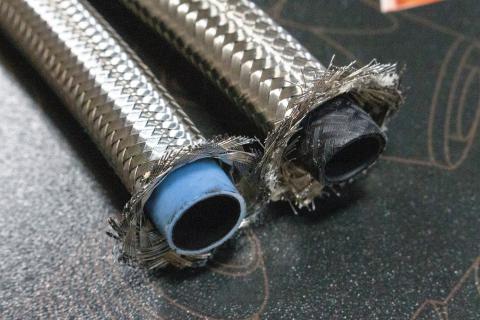
“Synthetic hose is eventually going to dry out over time,” regardless of whether it’s compatible with the fuel being used, said Brint Mclellan of Fragola Performance Systems. He said it would be wiser to invest in lines, like this PTFE hose, which will last longer.

Fitzgerald said that with fuel systems, the choice typically comes down to two options: synthetic rubber lines that are compatible with pump gas and race gas, and Polytetrafluoroethylene (PTFE) hose. “PTFE generally has a wide range of fuel compatibility. Our PTFE lines are like a hard polymer, and it doesn’t break down like a rubber hose will over time.” 

He also said that ignoring material compatibility can lead to some pretty serious problems down the road. “If you’re running the wrong inner liner, or you’re just using the wrong type of hose material in general, the material will decay over time, and that’s going to cause contamination downstream that could potentially clog up your injectors,” he said. “Suddenly the system goes lean and the engine is toast. Even if you catch it before that happens, it’s going to send you down a rabbit hole of trying to figure out what’s contaminated, and what parts of the fuel system need to be flushed out.” 

Brint Mclellan of Fragola Performance Systems in Southington, Connecticut, said it’s a mistake that can also be triggered by other factors. “Maybe they don’t want to smell fuel in the car, or in the garage, so they’ll plumb it using synthetic rubber hose when they really should have used a Teflon or PTFE product to begin with. Regardless of whether or not it’s compatible with the fuel you’re using, synthetic hose is eventually going to dry out over time. It’s something you’re inevitably going to have to replace down the line, so it might be worth the extra expense up front to get something that will last for a longer period of time,” he advised. 

3
Our source from Fragola Performance Systems said simple installation errors can cause big headaches. A common one to avoid “is getting stainless braid, or a nylon weave, caught up in the socket as they’re mating two components together. That can cause galling, and some people will push it to the point where they break the hose end apart.”

Mclellan emphasized that simple installation errors can also cause big headaches. “One of the things we commonly see is folks getting stainless braid, or a nylon weave, caught up in the socket as they’re mating two components together,” he said. “That can cause galling, and some people will push it to the point where they break the hose end apart. It’s important to make sure the braid isn’t in the way of the threads and the components themselves. It seems simple, but we see it a lot.” 

Filters can be another problem area in the fuel system, according to Fitzgerald. “People call us all the time asking what kind of filter they should be using, and I always refer them back to the manufacturer of their fuel pump.” 

He added that the requirements are usually very specific, and often include using a filter of a specific micron level before the pump and another type after the pump. “They are going to be able to tell you what degree of filtration is needed at what point in the chain, and disregarding that can have a significant impact on the longevity of the pump. If you’re running a filter that’s too restrictive before the pump, for instance, it can starve it. On the other hand, if you’re running a filter that’s not fine enough, you could be allowing debris to get through, and that can also damage the pump. The manufacturer is always going to have the most comprehensive knowledge of what pre- and post-pump filters you should be using in order to maximize the life of the pump,” Fitzgerald concluded.

Sources

Fragola Performance Systems
fragolaperformancesystems.com

Redhorse Performance
redhorseperformance.com

April 2023
By
Bradley Iger

Ask the Experts: Selling Your Race Car Online

Submitted by jeffreyc on Fri, 03/10/2023 - 10:26


It may seem straightforward enough, but the process can be made simpler—and more profitable—by selecting the right site and optimizing your listing.

Whether a racer is stepping up—or down—to a new class, clearing out the shop, or just ready for a new adventure, there are many places to sell his or her no-longer-needed race car. The worldwide reach of the World Wide Web makes it a popular marketplace, and options there tend to fall into two categories: ad sites and auction sites. 

Ad or Auction?

RacingJunk, founded in 1999 as a drag racing website for grassroots racers, now reaches millions of users with ads in more than 40 different categories. In many ways, RacingJunk functions like a 21st century version of newspaper classified ads. The seller posts an ad, potential buyers reach out, and the deal is closed between buyer and seller without any intervention from the site itself. At RacingJunk, that process is free to private party sellers and buyers, unless the seller chooses to pay for upgrades, like a featured position on the site, a photo gallery, or visibility upgrades to make the listing stand out.

Online auction site eBay got its start in 1995, and its eBay Motors division “is home to more than 7,000,000 unique monthly vehicle shoppers,” said Kevin Considine. As with an ad site, the seller posts information about the car for interested buyers, but on eBay the sale can take place in one of two ways: via the traditional auction system of increasing bids over a set time frame, or through the Buy It Now process “that allows sellers to send or accept offers,” Considine said. Either way, the auction site is involved in the transaction and the transfer of funds, and it takes a commission from the sale.

1
“Listings should be as detailed as possible to clearly outline the vehicle’s history and intended discipline,” said eBay’s Kevin Considine. On an auction site, setting a reserve price ensures the car won’t sell unless bids reach that threshold.

“The main difference between a site like ours and an auction site is that you get to control what the car sells for,” said RacingJunk’s Ian Downey. “At an auction site, it will sell for what it sells for.” 

But that can also be a good thing. “Auctions can initiate a burst of bidding activity that may drive the price higher than anticipated,” said Considine. Many auction sites also allow the seller to set a reserve or minimum price, so the car won’t sell unless the bids reach that threshold. 

Maximize the Listing

Getting the most out of an online sale begins with the listing itself. Downey advised sellers to start by doing some research to determine their car’s value. “There’s the price the seller thinks the car is worth, but then there’s the market price. Go to our website, and others too, and search for cars like your vehicle that others are selling. See what they’re selling it for. Do some compare-and-contrast to see if your car should be listed for more or less than what other vehicles are listed for.”

It’s important to have photos of the car before starting to post the ad, Downey said, or the whole process—which can take just minutes—will come to a stop until the photos are ready. 

2
Listing a car on RacingJunk.com is free, though sellers can pay for upgrades to make a listing stand out. Upgrades can include a RacingJunk Club membership, featured status, a red border, and bold text, as seen in the top ad, and a larger thumbnail photo, seen in the middle ad. 

There’s also an art to writing the ad, Downey said. “You know your vehicle. If you wanted to sell your vehicle to yourself, what would you say?” Because RacingJunk has specific categories for race cars—from Dirt Oval to Truck and Tractor Pulling—“a lot of times your vehicle will be placed next to vehicles that are similar, so you need to find ways to make it unique.” Detail is good, “but don’t write a novel about every single thing on the car.” In fact, he said, leaving some details out will encourage prospective buyers to contact the seller, who can then use that personal interaction to help sell the car.

“Taking basic steps like providing detailed listing titles and vehicle descriptions is important for boosting searchability and buyer confidence,” Considine said. “Listing specific modifications and upgrades is particularly important when selling a race car. For example, if the listing is for a rallycross car, take the time to specify suspension upgrades and ride height, differential types, and brakes. Listing a stock car? Highlight engine specs, chassis and body work, and anything else that may be relevant to the buyer.” 

Selling Safely

Scammers are “all over the Internet,” Downey pointed out, but in his experience the less-than-honest have traits that reveal them. “Scammers don’t want to talk to you on the phone; they want to email or text you because they know nothing about what you’re selling.” Get a potential buyer on the phone, he recommended, “and build some type of relationship with this person so you feel like they’re trustworthy.” 

When the deal is closed, “don’t get scammed out of the money,” Downey added. Banks may make money available in the seller’s account within 24 hours of receipt of funds, “but the bank can have a seven- to 14-day process to make sure the check is not fraudulent. I’ve seen situations where the check came in, money went into the account, the item was shipped, and 10 days later the bank said that check wasn’t valid and took the money back. If you sent the car out and the person took ownership, now you have to go through the legal system to get the vehicle back.” Sellers should find out from their bank how long this vetting process will take for various types of payments, including electronic transfers, and then be up front with the buyer about the time frame before the car will be transferred. 

Considine said eBay Motors “offers tools to protect both sellers and buyers. If sellers opt to auction their car, setting a reserve price is a great way to hone in on serious buyers.” The site also offers third-party inspection services through WeGoLook “so sellers and buyers can confirm the vehicle is exactly as described. At the transaction phase, Escrow.com is another valuable service that enhances safety and security by vetting both the buyer and seller, and holding funds until the vehicle has been shipped, inspected, and accepted by the buyer.”

Downey offered this final piece of advice: “When you want to sell something, be committed to selling it. Answer the phone, call people back, have conversations. If you don’t, you might miss the person who might have been the sale for you.”

Sources

eBay Motors
ebaymotors.com

RacingJunk
racingjunk.com

April 2023
By
Drew Hardin

Cummins Announces Accelera Green-Tech Power Business 

Submitted by laurap on Thu, 03/09/2023 - 18:12
Accelera by Cummins logo


Cummins—the Columbus, Indiana-based specialist of diesel and alternative fuel engines, generators, and related components—has launched Accelera by Cummins, a new brand for its New Power business unit. Accelera provides a diverse portfolio of zero-emissions solutions for several industries, with operations in North America, across Europe, and in China, with additional joint ventures in the Netherlands and China.

“Achieving our goal of reaching net-zero emissions by 2050 requires leveraging our entire portfolio of businesses,” said Jennifer Rumsey, Cummins president and CEO. 

As both a components supplier and integrator, Accelera will focus on a range of zero-emissions solutions, including hydrogen fuel cells, batteries, e-axles, traction systems, and electrolyzers. 

Amy Davis, who has led the New Power business unit since 2020, will serve as president of Accelera.

For more information, visit accelerazero.com.

March 2023