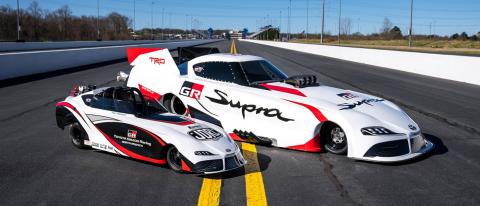
Photo of the GR Supra Jr. Roadster, left, courtesy of NHRA National Dragster
Toyota and Toyota Racing Development (TRD, U.S.A.) have unveiled the first-of-its-kind GR Supra Jr. Roadster set for National Hot Rod Association (NHRA) competition. NHRA will establish a new Jr. Roadster class for the NHRA Summit Racing Jr. Drag Racing League, although a launch date has yet to be set.
“The motivation behind developing the GR Supra Jr. Roadster nearly two years ago was primarily around the concept of giving families an alternative to the already-popular Jr. Dragster class within NHRA,” said Paul Doleshal, group manager of Toyota Racing. “With the Jr. Roadster, it has a shorter wheelbase compared to the dragster and, therefore, can ideally fit in the bed of a Tundra and taken to the race track... We hope that our other OEM partners in NHRA will design their own bodies for the cars and we can see them all competing very soon.”
Toyota and TRD U.S.A. worked with Half Scale Dragsters Incorporated and Antron Brown, who fields Jr. Dragsters, to create the new vehicle.
NHRA’s Jr. Dragster class started in 1992 and has proven a popular launching point for young racers looking to start their careers in drag racing. The class currently competes at over 130 NHRA member tracks across the country on any given week.
Additional details are expected to be announced at a later date. For the complete details, visit the NHRA announcement here. To purchase the GR Supra Jr. Roadster, visit halfscale.com/roadster.
U.S. Representative John Joyce (R-PA) has introduced H.R. 1435, the “Preserving Choice in Vehicle Purchases Act,” a bill designed to protect Americans’ right to choose the technology that powers their motor vehicles. The bill was introduced in response to the California Air Resources Board’s plans to ban the sale of new internal combustion engine (ICE) vehicles by 2035. The Preserving Choice in Vehicle Purchases Act would restrict the U.S. Environmental Protection Agency (EPA) from issuing a waiver for regulations that would ban the sale or use of new motor vehicles with internal combustion engines. The bill is critically important to stopping CARB’s plans to ban ICE vehicles, which requires the EPA to waive federal preemption provisions in the Clean Air Act in order for California’s zero-emissions vehicle (ZEV) mandate to go into effect.
“PRI and SEMA believe that vehicle owners should not be directed toward a specific technology, but rather be allowed to choose the type of vehicle technology that best serves them,” said PRI and SEMA CEO Mike Spagnola. “While electric vehicle technology expands clean transportation options, PRI and SEMA will continue to advocate on behalf of the industry that has helped make the internal-combustion engine a reliable, affordable and clean option for millions of consumers.”
It is critically important that the EPA does not permit CARB’s ZEV regulations to take effect, as it could lead to 17 other states that have followed all or part of California’s previous clean-car rules adopting similar proposals. California requires 35% of new cars, SUVs and small trucks sold to be zero-emissions starting in 2026, increasing to 68% in 2030 and 100% in 2035. In 2022, zero-emissions vehicles made up about 16% of new cars sold in California. The rule also sets durability, warranty and other provisions on zero-emissions vehicles. However, the rule does not impact the sale or use of used diesel- or gas-powered vehicles already on the road.
Click here to send a letter to your U.S. Representative that asks them to support the Preserving Choice in Vehicle Purchases Act by co-sponsoring the bill.
For more information, contact Eric Snyder at erics@sema.org.
“The traditional V8 is the bulk of what we do,” said Milodon’s Steve Morrison. He feels the company’s “golden years” were the 1950s–1970s, but the current resurgence of American muscle cars “has rejuvenated us.”
This aftermarket pioneer that helped usher in the muscle car era has found a “renewing marketplace” on the strength of its crate engine business and work with modern machines from domestic OEMs.
It’s a given in the world of high performance, especially as it involves good old, American overhead-valve internal combustion: Going fast, whether in a straight line or around corners, requires a specialty oil pan designed from the drawing board for maximum efficiency under severe-service loads. That’s still the essential stock in trade at Milodon of Simi Valley, California, a pioneer in the world of lubrication for extreme-performance engines for more than 65 years.
Milodon, and its famous oil pans, have been the industry standard across drag racing, street performance, and other American motorsports disciplines since Milo Franklin and Don Alderson founded the firm in 1957. And for the record, it’s pronounced “MY-lo-don,” an amalgam of the founders’ given names.
Milodon first thundered to prominence when the Dead End Kids, a pioneering East Coast drag outfit, moved west and began campaigning in the Top Fuel wars of California with Milodon engineering help, which initially produced the company’s first lightweight Hemi engine block for drag applications. Famed for its bottom-end durability, the Milodon block was employed from Top Fuel to tractor pulling.
While Milodon’s product lineup encompasses fasteners, valves, gear sets, and engine-assembly tools, the core of its catalog is oiling equipment, including some 150 precision-designed oil pans for nearly every North American engine application.
The firm then built an aluminum small block Chevrolet block that became hugely popular in sprint car racing and eventually was raced successfully in the Indianapolis 500. Milodon has since kept its focus on hardcore parts for serious performance engines, its current product lineup encompassing fasteners, valves, gear sets, chains for timing, and engine-assembly tools. But the core of its catalog is oiling equipment, starting with some 150 precision-designed oil pans for nearly every North American engine application, plus windage trays and pumps. About a third of Milodon’s workforce has been onboard since the founders were still in charge, including current owner Steve Morrison, who said Milodon’s pans should be standard equipment for anyone planning to go seriously fast in an American-engine car.
“We have been manufacturing oil pans since 1963,” Morrison said. “We focus ourselves on American domestic V8 applications, not sport compact. It’s just the traditional V8 that’s the bulk of what we do.
“It’s been kind of a renewing marketplace for us. You get so many crate motors right now from General Motors, Chrysler, and Ford. People out there keep building 1955 Chevys. It may not use the original body, but it’s got a tube chassis with fiberglass parts and a brand-new crate motor, so the longevity is there, the drive, that we’ve always experienced. The golden years for us were in the 1950s and 1960s, I guess, and the 1970s, when all these muscle cars filled the streets.”
Market Resurgence
Milodon’s current lineup of oil pans falls into three broad categories, for drag racing, circle track, and off-road. Despite Morrison’s musings about the good old days of early drag racing, Milodon’s current market is vibrant, due in large part to the plethora of crate engines now being sold across the parts counter by every major domestic automaker. “We’re moving forward, which is where we’re at right now with the Camaros and the Challengers and the Mustangs,” Morrison said. “It’s sort of rejuvenated us. Of all the crate motors that are sold, 100% of them will need an aftermarket oil pan to go into whatever chassis the guy wants to put it into. We do this by the dozens every day. The government keeps trying to fight us, but hot rodders always seem to find a way. Business is good for us.”
The global pandemic turned out to be something of a boon for Milodon, at least in terms of sales while most of the planet was in lockdown. “All the performance issues just went crazy on the business end with the COVID-19 issue,” Morrison recalled. “Everybody got to stay home, UPS was still delivering, so hey, let’s get some components and go work on the car. It was sort of a golden opportunity for us. We were working 10 hours a day, seven days a week, for a long time here. Even today, we all work extra hours, but we’re starting to catch up. The supply situation wasn’t too bad. It was more extended, and we went out and bought a lot of materials, and pretty much had them stacked to the roof. It took a little longer for them to get here, so we bought more, and when they got here, we were good.”
Milodon, and Morrison, are bullish on 2023 and beyond. “Our sheetmetal, which is a base material for making oil pans, has come down probably 10–15% from where it was pre-COVID,” he explained. “It was up to a 225% increase before then, so I guess this is a light at the end of the tunnel. We get the materials down, but then everybody’s raised their prices so much, so what do we do with that? Do we lower the cost? The consumer’s seen sticker shock, but between material shortage and container charges, it drove our costs through the roof.”
It’s still undetermined, but if inflation continues to drop, Milodon could consider downward price adjustments in the future. Part of that process involves interacting with other business leaders at the PRI Trade Show, which Morrison has been attending since the very first.
“PRI is very grassroots, and the location in Indianapolis is in the heart of racing,” Morrison said. “The vibe is always really good for the PRI Show. You have very serious engine builders coming in, looking for information. It’s really beneficial. The Show’s all about racing, everybody’s excited and looking forward to next year, and finding ways to do it better. When Milodon was founded in 1957, it was just a bunch of guys who started out making components and racing on the weekends. And here we are today, a billion-dollar industry.”
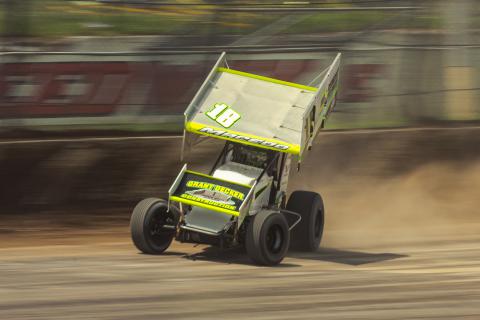
Increased purses and new promotional strategies are helping to revitalize sprint car racing’s premier division.
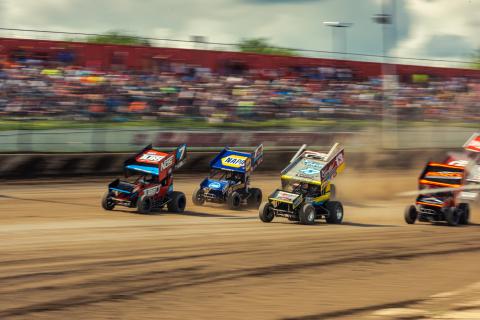
Like so much in motorsports, 410 sprint car racing has seen its fair share of tumult in recent years. Beyond the inherent challenges associated with the pandemic, the division was already hampered by a continued rise in running costs, and a general sense that many organizers had shifted their energy elsewhere.
“Five years ago, 410 racing wasn’t doing so well over here on the West Coast. It felt like things were headed in the wrong direction,” noted Peter Murphy of Skagit Speedway, Burlington, Washington. “Back when I was racing, I chose to go to 410 because the money was pretty good, but unfortunately it got stagnant for a number of years. Eventually it became tough to get people interested in it—it just wasn’t bringing in enough cars when they turned up to a track. But over the last few years, we’ve seen people putting in a little more effort, and things are starting to change again. It’s not a simple task, but we’re seeing positive results. At the last race that we put on at Hanford, we had more than 30 racers running 410s. So, something seems to be working.”
Nick Graziano of the World of Outlaws series in Concord, North Carolina, agreed that the 410 division is now on the upswing. “Even through the COVID-19 years we progressed, and I think we actually came out ahead,” he said. “Between the iRacing events that we did and our connection with NASCAR, I think it brought a lot of new eyes to the sport, and a lot of new interest. We’re seeing the social numbers and the amount of viewers grow, along with the number of fans at the tracks, and even just the sheer number of sponsors that have come on in the last couple of years has increased.”
The World of Outlaws’ Nick Graziano has seen renewed interest in 410 sprints. “Even through the COVID-19 years we progressed, and I think we actually came out ahead. Between the iRacing events we did and our connection with NASCAR, it brought a lot of new eyes to the sport.”
The rise in interest isn’t attributed to a handful of sweeping changes, but rather an array of refinements in approach and overall strategy. Those revamped tactics have not only made the division more attractive to racers and fans, they’ve also improved communication between various series, and that has helped to strengthen 410 sprint car racing on the whole.
Building Momentum
“When I came back in 2017, the series was in serious trouble,” said Sacramento, California’s NARC Fujitsu Sprint Car Series general manager Jim Allen. “We were averaging a whopping 19 cars per show, and the 360s were just killing it in California. But those racers were spending about as much money as the folks running in 410s, so we had to sit down and figure out what the problem was. For us, part of it was about firing up the old PR machine and building our brand.”
NARC averaged more than 28 cars per show last year, and Allen attributed much of the improvement to the concerted efforts of the folks who are running events at tracks like Skagit Speedway, and Silver Dollar Speedway in Chico, California.
Those efforts also resulted in an expanded race calendar that provided racers and fans with more options to get in on the action. The series had 16 races on the schedule when Allen returned to the fold in 2017; last year they ran 25. He said that sprint car teams collectively now have between 45 and 50 reasons to go race a 410 for more money as compared to the 360s that they may have gravitated toward in the past. While the year-over-year improvements have been incremental by his estimation, they appear to be setting up the division for sustained long-term growth.
California’s NARC Fujitsu Sprint Car Series averaged more than 28 cars per show last year, up from fewer than 20, five years ago, said Jim Allen. He attributed much of the improvement to the concerted efforts of those who are running events at tracks like Skagit Speedway in Washington State and Silver Dollar Speedway in California.
Steve Sinclair of the Interstate Racing Association Outlaw Sprint Series in McHenry, Illinois, told us that the increased interest seen at the upper echelons of 410 sprint car racing has had a tangible impact on his series as well. “When Tony Stewart comes to race with us, or Kyle Larson, they bring a NASCAR fanbase with them. That definitely helps, and I think we’ve gotten a trickle-down effect from the growth that World of Outlaws has seen. When NASCAR was on hold during the pandemic years, some of those guys got more involved in sprint car stuff, and I think it helped a lot.”
Meanwhile Andrew Morfier, the director of operations at Attica Raceway Park in Attica, Ohio, pointed out that while the expense of campaigning a 410 remains a challenge for many teams, organizers are actively attempting to address the issue. “Costs are up, but that’s true of everything right now. The owners, teams, and drivers are absorbing that, so that’s where we try to help out with the purse. And I think we’ve got a really good point program for the 410s—we’re over $20,000 on the point fund.”
Improving purses and points funds have been one main focus for organizers at all levels of the sport in recent years. It’s another aspect of the collective challenge that can’t be solved overnight, but the trend is encouraging.
With 25 races a year in its series, NARC offers its racers more reasons to race a 410 for more money as compared to the 360s that they may have gravitated toward in the past.
“We’ve got to give them what they’re worth,” said Murphy. “We’ve got a double-header this year that pays $1,000 to start and $11,000 to win. I think one of Chico’s events is up to $25,000 now, and Dirt Cup was $50,000 to win last year. Things like that naturally change peoples’ thought processes in a variety of ways. It gets the teams excited for the races, and that’s our job as promoters.”
IRA’s series has made similar improvements in recent years, but Sinclair said there’s still more work to be done. “The purses haven’t gone up at the rate that I would like them to, but we have a travel package for the teams that are full-timers with us, and a portion of our sanction fee goes into additional toll money for the teams. We’ve also got a pretty solid point fund for a regional series, and we’ve got a good contingency program as well. We give a couple of cars away at the banquet, along with wings, wheels, and some other things. Some of it has become tougher to get since the pandemic, but we work hard at it because it really helps the teams out.”
Top-Tier Attraction
While the bigger payouts are certainly part of the allure of 410 racing for teams, there are other aspects of the division that add to its inherent appeal. “Beyond events like Huset’s High Bank Nationals, which will pay $250,000 to win, 410 is where the big names are, and where the big stories are being told,” said Graziano. “This is where the greatest talents are competing. When you see big names coming in from other disciplines, they’re hopping in 410s.” That’s an exciting prospect from the perspective of fans and racers alike.
“One of my goals is to turn our top 15 drivers in the point standings into household names,” said Allen. “If you want to see someone who can beat the Outlaws when they come out, then you need to come to a NARC King of the West show. That’s something that the 360s just can’t give you.”
“410 is an incredibly competitive division, so the racing is incredible,” said Andrew Morfier of Attica Raceway Park in Ohio. “When the All Stars and Outlaws come in, we have strong showings from our locals that prove it.”
In 2018, a group of tracks, sanctioning bodies, chassis builders, and drivers created the Sprint Car Council. Along with collaborative discussions on cost containment and safety concerns, the council also helps to keep regional and national series on the same page when it comes to potential rule changes. Thanks to improved communication between the various series brought on by initiatives like this, the 410 has become a much more unified division across the country.
“Whether you’re regional or national, our rules are all essentially the same,” said Sinclair. “I think 410 racing, specifically, has done a really great job with that. One of my guys can race with the World of Outlaws, or the All Stars, or pretty much anywhere else they may want to go, and they’ll be legal.”
A big part of the appeal of 410 racing is the cars and the competition. “The thrill of the speed and the noise—people still love the noise of a 410,” said Morfier. “And 410 is an incredibly competitive division, so the racing is incredible. When the All Stars and Outlaws come in, we have strong showings from our locals that prove it.”
Getting The Word Out
Marketing and promotion are another aspect of the division that’s seen significant development over the past few seasons. The changes not only heighten awareness for longtime fans and veteran racers, they’re also grabbing the attention of a new generation of would-be spectators and competitors.
“At the end of the day, I can’t ask for more money if they can’t get it through the front gate,” Allen said. “So we’re tackling this from all sides. On the social media side, we set an annual target for how many followers we’ve brought in and how many likes the content is getting, and we’ve brought someone in to help us out on that side. Our Twitter account is blowing up, and we’re not done yet. We also have two Facebook pages—one’s a history page, and the other’s more focused on current events—plus Instagram, TikTok, and our YouTube channel. It’s all updated on a regular basis. But we’ve told our promoters that our PR efforts—the stories, the press releases, the profiles—everything we’re doing is designed to complement their efforts rather than replacing them. Old habits die hard, and I think some of these guys would rather place an ad in the newspaper like they used to, but that mindset is starting to change.”
Morfier said that there are situations where a localized approach can be particularly effective, but social media has largely taken over as medium of choice for Attica Raceway Park’s marketing efforts. “Some of the Outlaw races we’ll put on the radio,” he explained. “That generally stays within the local market, maybe a hundred miles or so. But when so many people tell us that they saw this or that on social media, it makes sense to focus most of what we’re doing there.”
“410 is where the big names are, and where the big stories are being told,” said Nick Graziano of World of Outlaws. “This is where the greatest talents are competing. When you see big names coming in from other disciplines, they’re hopping in 410s.”
Graziano also said that social media has become an integral part of World of Outlaws’ marketing and promotional strategy, but he’s quick to point out that each platform requires its own unique approach.
“I think the biggest thing for us is just getting those stories out there—the drivers, the crews, the events—and making sure that those stories are told properly. Facebook is still just as important as ever, and Twitter is good for race days when we’re doing a lot of live tweeting of the races. Instagram Stories have become a big deal, too. And we have a World of Outlaws TikTok as well. It’s one of the biggest social platforms for the younger generation, so that’s a world that we need to be in. Along with entertainment, we try to bring an educational aspect to what we post there by showing people the sound and speed of sprint cars. You never really know what’s going to go viral there. You just have to have fun with it, and people will pick up what they like.”
If you want to hit the ground running in that regard, Sinclair suggested bringing in someone who already speaks the language. “I’m old school when it comes to this sort of thing, but we have this kid who has been helping us out tremendously,” he explained. “He works at MyRacePass, so he’s up on all of this stuff. It’s been great to have young ideas in the mix—it has benefited us a lot.”
Murphy pointed out that it’s not only about reaching fans where they already are, it’s about bringing a new audience into the sport. “We, as promoters, have to adapt to what’s going on in the world. We can’t do what we were doing 10 years ago—or even five years ago—and expect to get the same results. The world is constantly changing, and it’s our responsibility to keep up. We’re using every avenue that we have available to us. You don’t have to do a dance on TikTok, but if you want to get new people involved, you need to be where they are in order to connect with them. Reaching the diehards isn’t enough.”
Promoters, sanctioning bodies, and racers alike are exploring options to make sure open wheel racing remains a vital and flourishing part of American motorsports.
It’s a story we’ve heard several times, this particular version from Jerry Gappens of Eldora Speedway in Rossburg, Ohio: “In 1979, I bought a brand-new-everything, pan-to-injectors engine for the sprint car I raced in high school from Earl Gaerte for $10,000, ready to bolt in the car.”
Today, a competitive sprint car engine “is in the $60,000–$65,000 range,” Gappens said. “Same thing with midgets. If you want a Toyota or another front-running engine, it’s going to cost $45,000–$50,000.
“It seems like technology just drives costs up,” he said. “This has been part of the industry for a long time, but it seems more magnified now. It’s getting up to where a sprint car or midget engine is close to what it would cost for a NASCAR Cup-series engine. It doesn’t make sense why we do that to try to win a $1,500 feature on a Friday or Saturday night, or even a $3,000 or $5,000 feature. Somebody’s going to have to figure out how to get their arms around it.”
Getting that genie back in the bottle will be challenging, Gappens acknowledged. “Racers are going to be racers. They’re going to find what Roger Penske called the ‘unfair advantage,’ anything you can do from a technology standpoint to make your race car go faster than the next guy’s.”
What, then, can be done to make sure the open wheel show goes on in the face of what seems like ever-increasing costs?
Longtime Problem
“It’s the engines, there’s no doubt about it, and we’ve been fighting this for a long time,” observed John McCoy of Knoxville Raceway, Knoxville, Iowa. There was a time, he explained, “years ago, when we would get the engine builders together at the Nationals or at the PRI Show” to discuss rising costs. “The same engine builders are around today, but there’s no consensus. Nobody would agree on any one area. Everything was discussed, and everything was shot down, so it’s kind of disheartening.”
Still, McCoy said he’s “not all negative. About seven or eight years ago we started noticing, talking to the teams, that engines were just getting better, the materials that they use in the engines was a lot better. I just heard today from a guy who has a team and builds his own engines that the blocks in the 410 world are heavier, beefier than they used to be. I’ve never been told that by anybody before. I think that’s for the better.”
“The cost of racing, like everything, will continue to go up,” predicted POWRi’s Kenny Brown. “A small percentage can make a living off of it, but racing is a hobby for a majority of the racers. We have to figure out what can we do to help save racers in the future.”
McCoy also said some of the sprint car racers running at Knoxville “have built their engines a little looser. They’re not making quite as much horsepower, so they last longer.”
“In midget racing 10–15 years ago we used to have four or five engine builders, and a lot of teams built their own engines,” said Kenny Brown of POWRi, Belleville, Illinois. “Today, very few build their own engines, and we only have two engine builders out there right now.”
Brown recalled that “back in 2005, Esslinger had the ST motor that you could run 50 nights. The speeds of that motor were off a little bit, 10–20 mph on a bigger track, but on a short track like the Chili Bowl you couldn’t tell. As a matter of fact, that’s all Sammy Swindell ran was the ST short track motor and won all those races with it. We as a sanctioning body failed to hold that motor down there, failed then to limit horsepower, limit cubic inches, limit everything back then. If we could back up time, that motor would still be $25,000, and we’d have more people in the sport.”
Lower-Cost Alternatives
The rising cost of racing engines isn’t new, and neither are the efforts to come up with lower-cost options.
“Here in the last few years, they’ve had sealed crate engines, both in sprints and in late models,” said Gappens. “I think it’s great to have a company like General Motors that can sell you an engine, and you just have to put a few bolt-on parts on it and drop it in the car and race. A crate engine is about $8,000; you might have to put a couple more in it, but for $10,000 you can run a crate series. Most people in the grandstands can’t tell what kind of engine is in a race car when you’re on any track that’s a half-mile or under.”
At Knoxville “we have an all-aluminum Chevy 525 class that goes within three seconds of the fastest car on the race track that night,” said McCoy. “It’s a great class. Other than the engine, every other rule on the car is the same.” The Chevrolet Performance CT525 “is an entry-level engine, at $18,000, and we have guys who have been running them for three years. At Knoxville, that’s 45 races. They don’t have to do anything to them. Just change the oil, take them to the car wash, and learn how to set up their race car.” The class had “20–22 cars for a couple years, and it did exactly what it was supposed to do: Six of them moved up into our 360 class.”
There are also midget racing series enjoying success with a production-based engine format. One is the USAC Midwest Thunder SpeeD2 Midget Series, based in Troy, Ohio, which arose in the wake of USAC’s waning Ford Focus series in the Midwest, Greg Watson explained.
“It seems like technology just drives costs up,” said Jerry Gappens of Eldora Speedway. “It’s getting up to where a sprint car or midget engine is close to what it would cost for a NASCAR Cup-series engine.”
“After the 2015 season, my partner, Chuck Taylor, and I approached USAC and proposed opening the motor package rules to allow the Chevy Ecotec and Honda A24 motors, but still use the stock OEM internal guidelines that the Focus series had followed.” That means “everything internally in the engine is required to be OEM parts in their original places. The intent is to have an OEM long-block you can bolt aftermarket parts to.”
Engine costs vary, depending on who’s doing the building. Watson told us junkyard long-blocks can be found for as little as $600, to which a racer would add “$7,000–$8,000 of bolt-ons” such as injection, ignition, pumps, header, crank adapter, and oil pan. Remanufactured engines are available “from $2,500–$3,000. Or you can go to a number of engine builders and get a race-ready Honda or Ecotec built to comply with the series’ rules for around $12,000–$14,000.”
The Midwest Thunder midgets “are slightly slower than the national cars,” Watson pointed out. “They’re 400 horsepower, we’re 225–240, so the cars behave differently. I don’t know if the casual fan picks up on it unless they see them side-by-side, but we’re talking two- to three-tenths per second slower than the national cars on a quarter-mile track. But we are known for close, competitive racing, which a lot of times makes up for that slight speed differential.” Car counts last year averaged 23 per race, with a high of 32.
“These midgets are exactly the same from a chassis/body specification standpoint as national midgets,” Watson said. “Somebody could buy a used national midget, and it wouldn’t require anything from a fabrication standpoint to run with us. There are a lot of midgets across the country that are just sitting or only come out for the Chili Bowl. This is a way for someone to buy those cars at a reasonable price, put in an affordable engine, and go racing.”
The Badger Midget Auto Racing Association (BMARA) in Sun Prairie, Wisconsin, began as a production-engine series and transitioned into purpose-built SESCO engines. “In 2015–2016, we looked back at that production-based program, what used to work, and realized if we could utilize production engine parts, we could drastically reduce the cost of the engines,” said Robbie Ray. “The predominant three engines we utilize are Honda, Chevrolet, and Mazda, all roughly 2.4 liters.”
The use of production-based engines, as with the USAC D2 Midgets, makes midget racing “more affordable and enables others to experience just how much fun midget racing really is,” said Shannon Mausteller of the ARDC.
The BMARA engines “only use three parts of those engines: the engine block, crankshaft, and cylinder head,” Ray said. “We allow our competitors to build their engines with performance parts to increase longevity and performance.” For example, “you can do whatever you want with compression, because regardless of what style of piston you’re going to put in it, you’re spending about the same amount of money. Piston manufacturers don’t change price based on what the compression ratio is, they only change their price based on how many you buy and what size they are. So why would we not allow the performance gain you’d get from having the domed piston for the same money? We want them to go fast. It’s still auto racing, still a sport that requires fast cars, right? We want to get the most performance for the least amount of money.”
Ray said a BMARA engine “costs $25,000 or less,” while a rebuild is in the $3,000–$5,000 neighborhood, “so we have drastically reduced the costs” compared to the Toyota or SR11 engines used in national midget series, “and we did not reduce overall speed. We are virtually turning the exact same lap times today at Angell Park Speedway, our home track in Wisconsin, as we were turning when we were utilizing purpose-built engines.”
Car counts for BMARA events “have averaged in the mid- to upper 20s over the past three to four years,” Ray said. He noted that the number of people purchasing cars has grown so much “that we’ve expanded to two series in 2023. We just launched a new series called MARA, the Midget Auto Racing Association, which will be based in Illinois, as a second division for the Badger Midgets.”
The American Racing Drivers Club (ARDC) changed its engine rules in 2020 to align with BMARA’s production-based engines. “The cost of these OEM-based engines makes midget racing more affordable and enable others to experience just how much fun midget racing really is,” said Shannon Mausteller. “The only difference between what they’re doing and what we’re doing is we are grandfathering in Gaerte and Fontana engines. We have a good group of members with Gaerte engines, so we’re not going to get rid of them.”
Mausteller said he had a recent request from a racer who wanted to run an SR11 engine, “but I turned it down.” He explained that in the past, “we had two or three racers who could afford high-dollar engines, and that cost us the guys who couldn’t afford them, so we’re not going down that road.
“Racers are their own worst enemy,” Mausteller continued. “When you try to control costs, there will be somebody who wants to spend more money. So it’s a constant battle to appease that person and still bring in somebody who doesn’t have a lot of money. I believe as a club, coming out and having a good time is a key to bringing more race cars. I don’t always agree that it’s a money issue.”
Not Just the Engines
Engine costs are not the only reason open wheel racing has become so expensive.
“One of the biggest costs right now is fuel for your truck to get to the track,” said Brown. “You can spend $600–$800 round trip with a toter home or a diesel truck. When fuel stays up, that makes it difficult to get to the track week in and week out.”
“When the cost of gas or diesel goes up, it significantly impacts our participation,” agreed Ray. To keep travel costs down for BMARA racers, “we drew a circle around our home base, and we try not to travel more than 150–200 miles beyond our home base,” he said, “except maybe once a year for a special race.”
The cost—and availability—of tires is another concern. “Unfortunately, Hoosier got caught off guard,” said Brown of the tire maker’s pandemic-related shortages. “The cost for materials has gone up like everything else, and then there’s the labor issue. It’s tough to get labor to produce tires when you have companies like Amazon out there offering $20 an hour.” Yet he believes “Hoosier has rebounded really well, by getting it down to one tire in sprint car and one tire in late models. We’re working with them, as are all the other sanctioning bodies, to get down to one midget tire, which should be coming this year as well.”
The cost and availability of tires remain a concern for open wheel racers. Some series are loosening their tire rules to make it easier for traveling racers to join them.
Different series have different strategies to cope with tire costs. For 2023, BMARA “is going to disallow the [Hoosier] SP2 tire that we have used previously and go to the SP3 to try to get more longevity out of the tire,” Ray said.
At ARDC, “we opened up the tire compound rule, so it’s any Hoosier, no compound restrictions,” Mausteller said. “We have people who have run the Chili Bowl, and they want to be able to run those tires. People have tires from other groups. That’s fine, run them.”
Watson told us the Midwest Thunder Midgets worked a deal with some of the national midget teams in their area to be able to go through their discarded tires, which are often used only once, and “take what we thought we could use, and sell them to our guys.” That not only significantly reduced the number of tires those national teams had to dispose of, “but a right rear tire that sells new for $250, we sell them for $50, and that $50 goes into our points fund and is returned back to our members at the end of the year. Guys might get two to three runs out of those, which is a heck of a deal. We don’t prohibit new tires, but there are people winning races on those tires that we sold them for $50.”
Help from the Other Side
Purses and points funds payouts are another way to help defray the costs of racing, but are they rising in line with the costs? In a few cases, yes.
In July, Eldora Speedway will host its third Eldora Million, offering a winner’s purse of $1,002,023. “This will be the first time a sprint car driver will race for a winner’s check worth $1 million,” said track owner Tony Stewart.
“And it’s not just a million to win, but the preliminary nights will be more inclusive to where we’re going to have more features,” Gappens added. “More cars will be able to run a feature and make money than a normal one-off special normally showcases.”
Gappens realizes “the bench racers will say, ‘Instead of paying a million, why don’t you pay $500,000 and take the other $500,000 and put it down through the field?’ That would be great, and it would benefit a lot more teams, but the truth is, from a ticket selling standpoint, and to get the national attention that you need, the million dollars does that trick. If it’s $500,000 or $200,000 to win, people in the industry know about it and appreciate it, but it doesn’t make that spectacle. When you’re going to Eldora, and it’s paying a million to win, you can feel that throughout the evening. There’s electricity in the air. Those people don’t want to be anywhere else in the world.”
BMARA’s Robbie Ray credited Angell Park Speedway promoter Gregg McKarns with doing “a fantastic job of promoting the race track and enticing people to come to the race track. He’s done a very good job of making sure the grandstands are full of people when we go to race there.”
Knoxville Raceway also announced that the purse for the 2023 Knoxville Nationals/360 Nationals in August is going up. The winner’s purse grows from $175,000 to $185,000, and McCoy said “we also added some money all through the features on Saturday night. Saturday night we added approximately $150,000 to the purse on the 410 Nationals. On the 360 Nationals we moved it up from $15,000 to win to $20,000 to win, plus we’re doing $500 per lap. So if you were to win the race and led all 30 laps, that race would pay $35,000.”
The purse increase was paid for by raising the ticket price “a little bit,” McCoy said. “But all the money we raised went into that purse.”
That strategy doesn’t apply just to the big-name specials. “You have to either increase the price of a ticket or increase the number of people coming to races,” Ray said. “That can be extremely hard to do.” BMARA is “slowly increasing our purse over time to help, but there’s so much competition for the entertainment dollar today that it’s very hard for promoters to raise ticket prices.”
Ray credited Gregg McKarns, the promotor of Angell Park Speedway, with doing “a fantastic job of promoting the race track and enticing people to come to the race track. He’s created value packs for families, and he’s done a very good job of making sure the grandstands are full of people when we go to race there.” Ray acknowledged that “purses have not gone up at the rate we’d like to see them go up, but we believe over time we’ll see them increase, as long as promoters stay at it and continue to increase the number of people in the stands.”
Some track promoters are getting creative about how they spend—and raise—their purse money.
“In our 410 series that we started last year, rather than putting tow money and pit passes in there for the top 10, we took all that money and put everything into the purse so it would pay good,” Brown said. “For example, our wing series is $5,000 to win, $500 to start. We felt it was more important to give it back to everyone.”
“When I ran Gas City,” Gappens recalled, “I did a thing called the Twin 20s, which were twin 20-lap features. I increased the pit pass by $5, but the teams were getting two purse payouts that night with no additional travel and for one admission. Fans were getting two features, and I increased the front gate $5. But then, instead of an $8,000 payday that night, there was $16,000, and everybody had a chance to race in both features. That was the first time drivers came up and said, ‘Thanks for doing this. This was a good idea.’”
At Knoxville, there are two organizations that help put funds into racer payouts, McCoy said. “Our Knoxville Raceway Charitable Organization does all of our 50/50s, and every dime of it goes back to the racers. This year they bought all of them who were in our points fire bottles.”
Knoxville also has a 360 Booster Club, made up of local businesses, which augments the 360 purses. “You know, it’s easier for individuals to find money sometimes from brands and fans than it is the track,” McCoy said. “People think the track is going to pocket half of it, but that’s not true here.” McCoy said club organizer Al Dehaai “has really worked his butt off. This group is adding probably close to $2,000 to the purse every week. We immediately put it all in the races. We pay now $2,000 to win and feather it back to about half of the 410s, $600 for 10th and back to $350 to start the race. That’s unheard of for any weekly 360 show, I believe. That’s what you have to do—figure out other ways to get the purse.”
It’s probably not exaggerating by much to observe that “Now Hiring” signs appear to be as plentiful as sponsor decals in today’s motorsports world. How will that play out for the industry in 2023?
In some ways, the act of hiring employees doesn’t change much over the years. Sifting through applications and resumes, checking qualifications and references, face-to-face interviews, are all part of a process that would feel familiar to any employer from 20, 40, or 60 years ago.
But in other ways, the process of hiring employees is undergoing a constantly churning evolution. The job market is influenced my numerous outside factors—recessions, wars, shifts in immigration policy, government regulations, technological breakthroughs, even changes in generational attitudes.
The most recent disruption to turn the act of hiring people upside down was the COVID-19 pandemic and the response to it from governments around the world. In many important ways, the motorsports industry is still dealing with the fallout from that global shutdown, not least in the area of hiring employees.
Rick Hall of Rick’s Performance Center said finding qualified candidates to hire has been a constant battle. “You can’t just pick this auto parts stuff up through osmosis.”
The top echelons of the sport will probably always have more job applicants than openings, so for this article we reached out to a sample of small and medium-sized retail shops, employee relations experts, and automotive-oriented schools for a view on the current state of the hiring process closer to ground level. Based on our conversations, it’s not a part of running a business that many look forward to in today’s market.
“No one shows up for interviews,” said Tina Bitner Nardo of Bitner Automotive, a shop in Trenton, New Jersey, that does repair, restoration, machining services, and dyno tuning. “If they do show up for an interview and you get lucky that you even think they are going to fit and you hire them, then they might not show up on the day you hire them for.”
For Rick Hall at Rick’s Performance Center in Las Cruces, New Mexico, finding qualified candidates for parts counterperson openings has been a constant battle. He has hired four full-time people and one part-timer in the last year, primarily for entry-level parts store positions such as checking in freight, sweeping floors, and stocking and pricing inventory. “Two-and-a-half didn’t make it,” he said.
“You can’t just pick this auto parts stuff up through osmosis. I would get people who would come in and drop off a resume, and in the interview I’d ask them what their qualifications were. ‘Well, my grandfather had a service station,’” Hall said. “That actually happened a couple times.”
Wade McGowan with Race Part Solutions in Maysville, Georgia, a shop that specializes in forced induction components, has added one machinist position and a part-timer in the past couple of years. “The biggest challenges are finding good reliable people who want to work and have the experience,” McGowan said. “Previous experience is absolutely preferred. We are just slammed busy and really need somebody who doesn’t need to be trained too much. We need someone who can walk in and go to work.”
Bitner Automotive’s Mark Bitner sees potential in up-and-coming technicians. “A select amount of the next generation is more in tune to what we’re doing here, not just fixing cars but working on hot rods and the engine room and the dyno. That appeals to more of the younger crowd.”
Mark Osmundson is an agency recruiter with Jamison Search International in Orem, Utah, who focuses on finding candidates for sales, marketing, product management, and operations roles in the automotive aftermarket. He believes qualified candidates are out there to be found, even if it is a challenge to uncover them.
“I talk to thousands of potential candidates a year, and those conversations generally take one of two forms. One of which is just a general discussion about what might compel that individual to make a change. The other direction is a conversation about a specific opportunity,” he said.
“What I’m hearing is, there are great people who are open to something new, but they don’t advertise that, for good reason,” Osmundson continued. “If they are gainfully employed, they’re not going to publicize that they are looking for something else or even open to a discussion. So I think there are people out there, but the asterisk to the whole answer is that it is still a candidate-driven marketplace. There are still more open jobs than there are candidates to fill them, generally speaking. Because it is a candidate-driven marketplace, it means that employers have to really employ different tactics to find the people for the positions. The process itself has to be candidate-centric. I don’t think most employers have embraced that. And so from a cultural standpoint, employees look at the hiring process and think, ‘You know what? This company is not for me because the hiring process is more about the employer rather than it being a two-way street.’ The best people have options. It’s a unique dynamic, and it’s more unique now because during COVID, people reassessed their careers and many are saying. ‘Here’s what I really want.’”
Wins and Losses
Pleasant or not, hiring is a necessary part of doing business, even more so following pandemic disruption. In normal times, companies like to keep turnover to a minimum, but those days seem a long time in the past.
“It should be zero,” Nardo said. “What happened to us, was about half-way through COVID, the labor force went into a bidding war. So we lost one technician that we had trained from high school, and we had lost our shop front-end customer service manager, and the machinist. We normally keep eight people on staff, and that includes me and Mark (Bitner, her brother), and our mom, who is the president. Mark is in the assembly room and a machinist, and we have a machinist as well. We have two mechanics, and normally we would have a front-end manager, and a couple of guys part-time.”
To the frustration of the companies we spoke with, many conventional sources for finding employees yielded few successful candidates. “I use Indeed, which costs a lot of money for someone who is a small business,” Nardo said. “I got a lot of butterfly catchers from Indeed. In the summer of 2021, we turned over six mechanics. It was bad, and the ones who were coming through here either ghosted us, didn’t show up on the day they were supposed to start, or stayed for two weeks and were useless. It was horrible. I’ve used WrenchWay, but I got nothing from WrenchWay.”
It was a similar story for Hall. “We pay for Facebook ads to expand the area that it reaches and just don’t get many people looking for a job. Very few applications, and most of those who do apply aren’t qualified,” he said. “We used Indeed, and we received a lot of resumes from people just sending out blank resumes to anybody who will take one. It doesn’t cost them anything, they just click a box and send a resume out. I had people from two states away that were more qualified as a meat cutter than a parts person. That doesn’t work out so well.”
“We are all car guys here,” said Wade McGowan of Race Part Solutions, “and they are always encouraged to attend events that interest them. A few employees on our team now came from meeting them at the race track.”
Fortunately, there are avenues for finding employees that yielded better results, including trade schools and colleges. “What we ended up doing was hitting the trade schools,” Nardo said. “Automotive Training Center in Pennsylvania reached out to us as a machine shop because they wanted to give a tour. They brought a group of their soon-to-be graduates in for a tour to see what a working machine shop was like. It turned out that a lot of their equipment was the same as our equipment, and so when our machinist left, that’s when we took one of their graduates, and he’s still here.”
Clay Harshaw is an associate professor of Motorsport Management at Winston-Salem State University, an Historically Black University in Winston-Salem, North Carolina. The Motorsport Management program is small but growing, and Harshaw said most of his students are aiming for marketing, sales, and media relations positions in the motorsports field. He reported that a substantial part of his program is centered around preparing students for the realities of the job market.
“At the university, we do a lot of development of critical thinking skills. And I think what employers are looking for is people who will take action and take risk. Sometimes you have to do that with the way you think, and be willing to be wrong,” Harshaw said. “I tell my students that I tend to give vague instructions, because that’s what they’re going to get in the workforce.
“I think there’s a mentality or a mindset for people who work in motorsports, that they want to do whatever it takes to win. That translates to their business management and their marketing plan,” Harshaw added.
Business-oriented social media can also widen the pool of prospective hires. “I’m a big believer in LinkedIn,” Osmundson said. “Whether you’re an employer or an employee, or a hiring manager or somebody who is an individual contributor who is just grinding every day, LinkedIn is a key because there is no better professional networking platform. There is no better professional personal branding platform, and the more you give through the platform the more you get back.
“If an employer has a critical role to fill, my advice would be to get on LinkedIn and start looking at your feed,” he added. “Start connecting with people at companies that you like, that have products that you like, that have cultures that you like. Because the people will espouse that as well. Start connecting with people. It’s amazing how that kind of outreach can pay dividends.”
Networking at ground level, through personal referrals—aka “word of mouth”—also yields good results, according to our sources. “I think there is still an inclination for the employers to do things the old way, which is, first of all, post a job on a job board. And I think the ‘post-and-hope’ strategy is not the best strategy to attract the best candidates,” Osmundson said. “It doesn’t mean that they won’t, but it means that their percentage of success is decreased. I’m a big believer that whether you are an employer looking to fill open positions or an individual looking to make a change, who you know is going to be a catalyst toward achieving that objective. So as employers, I think that post-and-hope is part one of what they need to do. Part two is engage their existing employees to get referrals. Dangle a nice financial carrot, put a referral program together that will encourage their employees to dig into their networks to recommend somebody for any particular job. Generally speaking, those employees are going to refer somebody who they want to work with or know well enough to understand they can do the job.”
Enthusiasm for racing can flare up quickly among university students. Rajah Caruth, who has just begun his NASCAR Craftsman Truck Series career, came through the Motorsport Management program at Winston-Salem State University in North Carolina.
A well-thought-out word-of-mouth plan can also be a cost-effective method of finding employees. “The challenge often becomes a financial one. How much is enough? The financial realities of filling an open position are such that it’s costly,” Osmundson continued. “It takes time, it takes effort, and there’s an opportunity cost because you’re devoting time and effort away from other things that need to be done. But the other option is employing somebody like me for a targeted search. Well, my service fee, their investment, is 25% of the candidate’s first year compensation. For a $100k gig, that means $25 grand. On the flip side, if you’re offering $1,000 to your team, you’ve just saved yourself $24,000.”
“Word-of-mouth probably works better than anything. We ask our customers, ‘Hey, do you guys know anybody you’d like to talk to across the counter that might be a good fit here?’” Hall said. One of his all-time best hires was a former customer who raced in an entry-level circle track series. “He was a customer of mine and I saw potential. I asked him if he’d ever thought about being a parts guy. He came back a couple days later and said, ‘Are you serious?’ That was a home run, he was with me 23 years. He was my store manager.”
McGowan has seen similar results in Georgia. “In today’s times, for us anyway, social media is a huge way to reach people not only in our local market but all over the country. That combined with just good ol’ word-of-mouth referrals have worked out the best for us so far and have put together a great team we have in place now.”
Pressing the Advantage
If there’s one thing the motorsports market has going for it, it’s that racing is considered cool and exciting in a way that other industries are not, and therein lie opportunities for recruiting employees.
Mark Bitner of Bitner Automotive reported promising results in hiring high school-age part-timers versus full-timers. “I think it’s easier because the younger kids are at school and they are more excited,” he said. “A select amount of the next generation I think is more in tune to what we’re doing here, which is not just fixing cars but working on hot rods and all the atmosphere that’s here with the engine room and the dyno running, and all that. I think that appeals to more of the younger crowd right now.”
Harshaw has also witnessed how enthusiasm for racing can flare up quickly among university students. “Rajah Caruth is getting ready to start his NASCAR Craftsman Truck Series career with GMS Racing. He’s one of our students. Through him I’ve been getting more phone calls and interest in the program, and the university in general, from all across the country.”
Encouraging employees in their motorsports endeavors is not only a morale booster but an advantage in attracting new hires. “We are all car guys here at RPS and are heavily involved in all forms of the automotive hobby as well as motorsports,” McGowan said. “Racing is definitely our bread and butter, but we have guys here into motorcycles, street and sport trucks, classic muscle cars, etc., and they are always encouraged to attend events that interest them. A few employees we have on our team now came from actually meeting them at the race track. So, yes, I would say getting out and getting involved and getting to know the people who share the same interest as you is a huge benefit to landing both customers and employees.”
Tina Bitner Nardo has seen interest in technical schools rising among young people in her area. The local high school used to use just one bus to take students to visit the technical school nearby, but when her son graduated, “they had to hire four buses.” One such school that trains future automotive industry professionals is Universal Technical Institute, seen here.
“We’re in an enthusiast industry. It’s one of those few industries where people are just jazzed to be a part of it,” Osmundson explained. “The additional benefits manifest in several ways. For one, employees just want to be part of a cool company. They want to be part of a company that makes a product they believe in, or makes their car perform better. That’s a piece of it. The employee discount might be a part of it, or the ability to go to events.
“Because it’s an enthusiast industry, there are opportunities for employers to keep compensation at a slightly lower level. I think it’s not that much less, but they rely on people’s passion to attract them to the company,” he added.
Anyone who has walked through a racing paddock has noticed fans happily wearing T-shirts and ball caps with their favorite brands on them, which also elevates the image of a company. “Some of these motorsports or automotive aftermarket products are lifestyle brands, too,” Osmundson said. “I think the lifestyle element of some of these brands is also an effective way to attract people.”
For Hall, a second storefront at a local track has worked as a way to keep employees engaged with racing. “We have a little store at Vado Speedway Park about 15 miles south of us. It’s three years old, a very nice dirt track. It just had the Wild West Shootout there with all the Late Models,” he said. “It’s quite a facility, and I have a little store there. Anytime there’s a race car on the track we’ve got somebody down there. I consider it a perk. If I was a 20-year-old guy into cars, I think it would be a perk to get into races free and get paid to do it.”
The recent breakdowns in the hiring process won’t last forever. It’s only one anecdote, but Nardo, as the parent of a recent high school graduate, has witnessed recent hopeful signs around the annual field trip to the local technical school. “They used to hire one bus a year to take the kids over to tech school to visit to see if they wanted to do that, and last year when my son graduated, they had to hire four buses to take all the interested kids to tech school,” she said.
For many motorsports businesses, those kids can’t graduate fast enough.
Considering Factors
When searching for a new employment opportunity, Mark Osmundson of Jamison Search International in Orem, Utah, explained, “Every individual is assessing essentially six different factors when they are looking at a new opportunity. Those six things are universal, although each individual will define and rank them uniquely. Those six things are challenge, location, advancement, money, people, and security. Benefits is a part of that, but for some candidates, they’re looking for the challenge and willing to sacrifice on the compensation or benefits if the challenge is spot-on for what they are looking for. Or any number of those other factors.” —Steve Statham
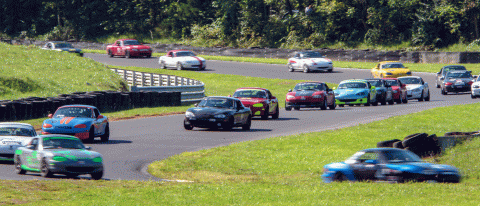
Whether on dirt or asphalt, purpose-built or modified, a race car must be put together using parts that work in harmony—with each other as well as the driver—to achieve optimal performance.
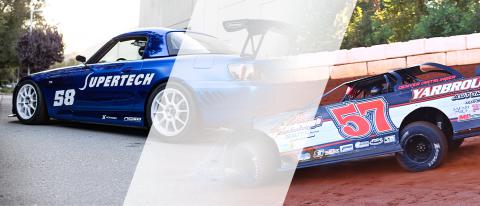
2007 Honda S2000
Martin Tagliavini |Morgan Hill, California
Race series/class: NASA Super Touring 4 and SCCA ITE
Engine: Supercharged Honda F22C built by Blacktrax
Car: Built by TC Designs and Blacktrax
Features: New cylinder head casting by Endyn with a complete range of Supertech Performance products to showcase the importance of having the
correct parts that all work together.
Facts: This car was purchased from the dealership as a fun, getting-around-town vehicle that turned into a full-blown race car build as the owner’s passion for the sport grew. From weekend driving to casual track days to only race weekends, it’s a never-ending project squeezing the most out of this chassis and engine.
2022 Longhorn Chassis Dirt Late Model
Danny Yarbrough |Denver, North Carolina
DRIVER: Adam Yarbrough
Race series/class: Super Dirt Late Model and Carolina Clash
Engine: 438 wide bore all-aluminum small block Chevrolet built by Clements Racing Engines
Car: Built by Longhorn Chassis and Danny Yarbrough
Features: Bilstein shocks, FK rod ends, Weld wheels, Winters Performance rearend, Wiles driveshafts, Falcon transmission, various All-Star Performance products.
Facts: Adam won two races in this car last year along with numerous top-five finishes. It’s his favorite race car to drive of all his past cars because “it just fits me,” he said.
Photo of Summit Point Motorsports Park, in Summit, West Virginia, by Mike Adaskaveg
West Virginia lawmakers have passed PRI-supported legislation to establish the Motorsport Responsibility Act, which would define areas of responsibility and assumed risks by participants for recreational and commercial motorsports facilities. The bill now awaits approval by Governor Jim Justice.
Enactment of The Motorsport Responsibility Act will reduce liability insurance premiums and allow racing venues to invest the savings—for example, for promotion purposes, which would increase tourism and create more jobs in the state.
Racers, teams, promoters and sponsors at all levels of competition are invited to join sponsorship guru Alex Striler and more than a dozen top panelists from some of the biggest brands in motorsports for the 2023 Drag Racing Sponsorship Summit.
The all-virtual conference—available through Zoom—takes place March 28, from 4-7 pm Pacific / 6-9 pm Central, and includes four separate sessions: Why Brands Sponsor; Successful Activations; Creating Value; and Networking & Closing Deals. Visit 2023.DragRacingSummit.com for more information and to register. Enter promo code “PRI50” at checkout and save $50 on registration.
“We can’t teach you to drive, but we can tell you what sponsors want for their investment,” Striler said. “There are many ways to create value for sponsors through racing, and exposure is no longer on top. Connections—including digital—have replaced exposure. The goal of this summit is to explain what brands value so you can generate that value and finally get PAID CASH, instead of product.”
Panelists scheduled to appear include NHRA Funny Car Champion Ron Capps; Tom Bogner, formerly of Lucas Oil; Andre Jackson of Toyota; Ritchie Lewis of Sunoco Race Fuels; Scott “Woody” Woodruff from Elite Motorsports; Two-time PDRA World Champion Amber Franklin of Red Line Oil; Jackie Donahue of NGK Spark Plugs; BMW Motorcycle Racing Ambassador Dystany Spurlock; Dan Schechner of PRI; and many more.
Everyone who attends the live event receives access to the recording for one year. For more, including complete agenda and speaker information, visit 2023.DragRacingSummit.com. Enter promo code “PRI50” at checkout and save $50.
Tracking legal, legislative, and regulatory developments impacting the racing and performance industry.
PRI’s Washington, DC-based legal and advocacy teams work continuously to protect and support motorsports venues, sanctioning bodies, and businesses around the nation. We are tracking several initiatives this month, including how West Virginia is laying the groundwork for tracks around the nation to reduce risk liability, as well as the introduction of a new Washington, DC-based PAC manager for PRI and SEMA.
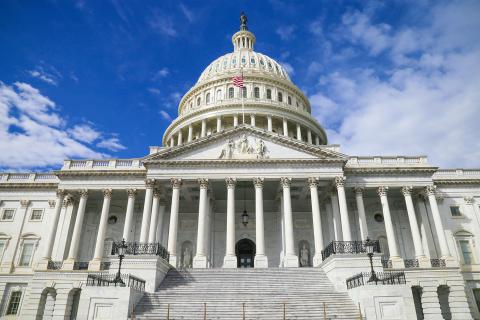
West Virginia Raises Awareness For Track Responsibility Bill With ‘Motorsports Day At The State Capitol’
Racing operators, promoters, officials, parts manufacturers, and related professionals recently gathered at the West Virginia State Capitol in Charleston, West Virginia, to help educate legislators about the positive impact the industry makes on the local and state economy. Representatives included professionals from the entire spectrum of motorsports—dirt tracks, road courses, paved ovals, drag racing, and more—along with PRI, SEMA, Summit Point Motorsports Park, and GNCC Motocross.
Organized by the West Virginia Motorsports Committee, this second annual event also highlighted the PRI- and SEMA-supported “Motorsports Responsibility Act” (H.B. 2569/S.B. 236), designed to help racing facility operators and owners by defining areas of responsibility and assumed risks by participants. [Editor’s note: H.B. 2569 is currently pending in the House Judiciary Committee while S.B. 236 is in the Senate Judiciary Committee. To contact lawmakers in support of the Motorsport Responsibility Act, visit https://p2a.co/S9lLlWt.]
Pictured at top row: Tim Cotter (MX Sports), Jeff Johnson (Summit Point Motorsports Park), Tom Deery (PRI), and Edwin Pardue (Summit Point Motorsports Park). At bottom row: WV Senator Ben Queen, WV Senator Mark Maynard, Kiley Chapley (SEMA/PRI), Laura Bowman (WV Motorsports Committee), Jared Frederick (Summit Point Motorsports Park), and Christian Robinson (SEMA/PRI).
Passage of this bill would likely reduce liability insurance premiums and allow the venues to invest the savings—such as to promote the venue—increasing tourism volume and, possibly, creating more jobs.
PRI race track ambassador Tom Deery was on hand to share information on PRI’s Race Track Promoter Helpline [202-794-8279 and racinghelp@performanceracing.com], which is monitored five days a week and helps provide motorsports facilities and sanctioning bodies with access to relevant legal resources, peer-to-peer discussions, grassroots campaigns, lawyer referrals, and more support.
“PRI is represented at events around the nation, from NASCAR’s biggest race in Daytona to short tracks in the Midwest to important legislative gatherings. Yes, PRI is the three biggest days in the motorsports business [set for December 7–9, in Indianapolis, Indiana], but we’re working hard year-round to support all levels of the industry,” Deery said. “What’s good about the WV Motorsports Day and the Motorsports Responsibility Act is that they provide a template for other state racing groups that might need to introduce similar legislation in their region. If passed, the bill would put motorsports venues in the same vein as ATV, equestrian, snow skiing, whitewater rafting, and related protected recreational venues in the state of West Virginia.”
State Senator Mark Maynard, a huge supporter of motorsports, is helping to pass the Motorsports Responsibility Act to protect race venues.
West Virginians can also celebrate the passing of February 24 as the official WV Motorsports Day at the Legislature. The resolution was sponsored by Senator Mark Maynard and, as a result of its passage, will ensure the gathering will continue to elevate motorsports tracks and businesses in the state for years to come.
PRI, SEMA Hire Alicia Steger As PAC Manager
PRI and SEMA have hired Alicia Steger as their Political Action Committee (PAC) manager. Based in the Government and Public Affairs office in Washington, DC, Steger will lead fundraising efforts for both PRI and SEMA during the 2024 election cycle.
Members of PRI and SEMA PACs can contribute personal funds, which are used to help elect lawmakers that support pro-motorsports positions and initiatives. One hundred percent of PRI and SEMA PAC donations are allocated to funding political candidates’ campaigns that support PRI, SEMA, and their members.
Alicia Steger
“The 2024 elections will be here before we know. What’s on the ballot? EPA overreach, internal combustion engine bans, burdensome noise and zoning ordinances, and so much more. It’s essential that PRI and the racing community have a voice in each of these fights—and PRI PAC is our first line of defense,” said Christian Robinson, Senior Director, State Government Affairs & SEMA PAC.
 MEMBERSHIP LOGIN