Business Profile: Busted Knuckle Off Road
Submitted by johnc on Tue, 09/26/2023 - 09:06
image 1


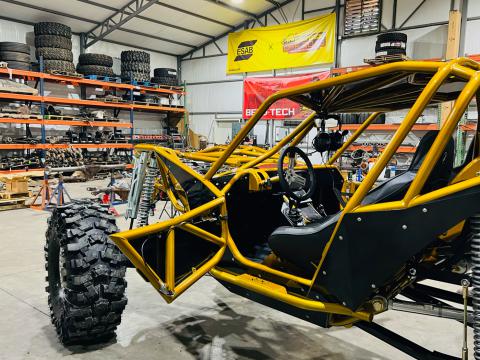
These passionate riders turn out production buggies while attracting a following with their savvy social media.


It was about 11 years ago when an off-roader from Georgia brought his tube-chassis buggy to Jake Burkey for fabrication work.

Burkey, a mechanical engineer who had a day job as a project manager at a nuclear plant, was tinkering with off-road vehicle fabrication and repairs on the side.

Although he had worked on many off-road vehicles since he was a teenager and had beaten his own Jeep Wrangler into submission on the trails of the Southeastern US, this buggy changed his life.

“I’ll never forget,” Burkey said. “When that thing dropped off the trailer, I said, ‘I’m dedicating my life to this.’”

He recalled the story with a laugh, but he wasn’t kidding.

By 2018 Burkey’s commitment to building full-size off-road buggies would lead to his partnership with Busted Knuckle Films founder Matt Myrick. Together, they launched Busted Knuckle Off Road. Myrick, who has a degree in construction management, and Burkey have offices side-by-side in their 26,000-square-foot shop in Cullman, Alabama.

A unique combination of engineering innovation and social media savvy has them producing $100,000-plus production volume buggies and attracting online followers by the hundreds of thousands.

Appropriately, the two 38-year-olds met through off-road events where Myrick had filmed Burkey’s “big wrecks.”

image 2
“We’re bringing a market to people who otherwise wouldn’t be able to be in that market,” said Jake Burkey about Busted Knuckle’s rock crawling buggies. “Not everybody has fabrication skills. But everybody thinks off-roading is a blast.”

“I think I can do the technical side and you could do the marketing side,” Burkey recalled telling Myrick. “We could really build something.”

That’s exactly what they’ve done. After just five years from building the first custom buggies, Busted Knuckle Off Road is knocking out a turnkey production buggy about every three to four weeks while also creating a parts inventory—much of it designed and manufactured in-house—of around 4,000 products.

The company’s “rock bouncers,” a handful built for racing, have sold across the United States and beyond. Busted Knuckle parts also sell worldwide to off-roaders who retrofit their own rides.

“We’ve been able to have 22 employees and grow to where we’re at in a very short period of time,” Burkey said. “We’ve built buggies and took them all over the world.”

While Myrick had established the Busted Knuckle brand—so named for the willing sacrifice of he and his friends in college while feverishly wrenching on their off-road rigs to get back to the trail—it went to a new level when Burkey started doing tech videos. He believes it added to the notoriety from his daredevil off-roading videos and buggy racing success.

“It positioned me as a professional in the industry,” he said. “We’ve grown the business around that.”


Parts Drive Revenue

Buggy building once meant welding one-off creations in a basement or garage, but the market has changed.

“Polaris and some other companies started doing the four-wheeler thing and really hit the nail on the head when they started doing the side-by-sides. That really exploded,” Burkey said. “Being able to make it simple for people to own and get into the hobby is why Polaris is so successful.”

He says Busted Knuckle is doing the same, though at a higher price point and with larger vehicles.

image 3
Lightweight brake rotor packages, ball joint eliminator kits, and a joystick-controlled rear-steer system are among Busted Knuckle’s most popular products.

“We’re bringing a market to people who otherwise wouldn’t be able to be in that market,” he said. “Not everybody has fabrication skills. Not everybody has a welder and a torch. But everybody thinks off-roading is a blast.”

Busted Knuckle generates some $5 million in manufacturing and retail sales annually. While the buggies rightly get most of the attention—who can look away from a 700-horsepower, powder-coated beast, available with a supercharger and rear steering, with 43-inch tires?—it is the retail components that produce some 80% of the revenue.

“Building a widget, putting it in a box, and shipping it out is much more profitable than building these buggies, because I just have so much manpower that goes into them,” Burkey said. “We’re more of a manufacturer than anything.”

He said most of the parts are designed and manufactured with the goal of retailing them. Current hot sellers include a lightweight brake rotor package, weatherproof relay/fuse center, and a ball joint eliminator kit.

Automation became critical when Busted Knuckle switched from custom to production building. Burkey studied how to “scale” the work, “and that’s where the automation came in,” he said.

image 4
“Our entire structure is built out of tubing, and the body panels are attached to the tubing, so it makes the assembly extremely rigid,” Busted Knuckle Off Road owner Jake Burkey said about the company’s off-road vehicles. “It’s just a lot stronger way to build.”

He trained himself in Solidworks and CAD and began to meld design and manufacturing. Busted Knuckle’s body mount tabs are a good example.

“I can send a file to the laser and have it cut 1,000 of those…and you have a product you can retail, and a product you can train an employee to build,” he said.

Busted Knuckle has a Haas VF-4 Series vertical machining center that produces yokes, sway bar arms, brake hats, transmission adapters, and other parts; and an Okuma four-axis mill-turn lathe with a large bed used to spline its own axle shafts and cut and turn link bars and handles for their rear steering mechanism.

A Dragon Tube and Pipe Plasma Cutter from Bend-Tech uses software that automatically creates bending patterns and notches in tubing, and a plasma head that cuts and engraves the tubing.

“Our entire structure is built out of tubing, and the body panels are attached to the tubing, so it makes the assembly extremely rigid,” Burkey said. “It’s just a lot stronger way to build. Our entire chassis is built off of that machine.”

Busted Knuckle’s latest machine purchase is a 2022 Bodor laser cutter, a 6,000-watt machine with a “fiber” laser, known to cut faster and finer than CO2 lasers.

It’s economical for cutting and engraving, but it’s especially valuable for cutting thick metal, such as the 3/8 plate used for Busted Knuckle’s Ultra Light rotor brake package, at extremely tight tolerances.

The laser cuts the holes where body panels bolt to the chassis, and laser engraves the bend borders and bend locations right onto the part. “So I can take that plate and go straight over to the CNC press brake, and it will have a line going across the part and it will say bend here, up 25 degrees,” he said.

The “very popular” automatic self-centering rear-steer kit controlled by a joystick is another recent engineering feat for Busted Knuckle. “You grab the joystick and turn it left or right, the rear tires turn left or right. As soon as you stop turning with the rear joystick, the tires automatically come back to straight and stay there,” Burkey said. “It increases the maneuverability of the vehicle 10-fold. It allows you to dodge obstacles, it allows you to climb at different angles, it allows you to show off to your friends and be the coolest person at the Christmas parade.”

Burkey said Busted Knuckle’s latest accomplishment is the release of its T4 model four-seat buggy. “We are most excited to reach a larger audience by allowing families to off-road together,” he said.

The T4 can actually accommodate five people if the passengers are children, he added.


Parts On the Shelf

All Busted Knuckle buggies, available in Ride, Vision, and T4 models, have a 17-digit VIN number, allowing customers to order replacement parts with ease.

Todd Ryon of Oneida, Tennessee, bought his Ride unit in December 2021 after having witnessed the durability of a Busted Knuckle buggy at King of the Hammers.

“That terrain is so demanding; it’s brutal,” he said. “To keep a buggy together for six to seven days and not break an axle, not break a driveshaft…it’s something that is built well.”

Not having to locate and then replace parts while on a trip is valued for those who trailer their buggies across the country to ride. “You can go out there and have peace of mind,” he said. “When I get there, I’m riding!”

When he does need parts, often “self-induced,” Busted Knuckle’s customer service is “second to none.

image 5
To scale up from custom builds to production, Jake Burkey taught himself Solidworks and CAD. “I can send a file to the laser and have it cut 1,000 of those. You have a product you can retail, and a product you can train an employee to build.”

“Everything that’s on my buggy they can pull it up and send you the exact replacement part. The parts are on the shelf,” Ryon said.

A smooth ride is what convinced Jerry Hoover and his wife, Marsha, of Monterey, Tennessee, to purchase a Ride unit in July 2022.

In a test ride at the Busted Knuckle property, they launched off a jump about 5 feet into the air (Burkey went twice that high in his demonstration) with the rough landings of past buggies as a reference point. In the Busted Knuckle unit, “it was like landing on a pillow,” said Hoover.

“You notice what you pay for,” he said, crediting Busted Knuckle’s use of shock bypasses.

Like Ryon, Hoover values the durability of Busted Knuckle parts. “Going out with other guys with Busted Knuckle buggies, and watching them beat on these things, I had a much higher appreciation about how damn solid they are,” he said, “and I’ve become much more aggressive in my driving.”


Social Media

Burkey said the tight-knit off-road industry in the Southeast has been following him on social media since he was a teen working on Jeeps “in the rocks” of his driveway. Combined with Myrick’s spectacular filming, they’ve been “really successful in creating the brand” and attracting followers.

There are the buggies, of course, and their wild rides up boulder-filled creeks and seemingly impossible rock faces, but there are also plugs for parts sales, merchandise, and sponsors. An ESAB welder, a can of WD-40, or a Baileigh Industrial machine might be integrated into videos for these valued sponsors, subliminally or quite obviously.

It has resulted in Busted Knuckle Films having more than 833,000 YouTube subscribers.

Myrick stressed that fancy equipment is not required for filming. “It can all be done on your phone,” he said. “Always focus on the story you are trying to tell, and make sure it is something you are passionate about.”

Yet social media success is not as simple as merely having content. “You have to be different. You have to be unique,” Burkey said. “You have to have a niche that’s something that’s better than everybody else or more intriguing than everybody else.”

Posting frequency alone isn’t enough. “People say you’ve got to post twice a day. Well, if it’s about something nobody cares about, it doesn’t matter,” he said. “You’ve got to post twice a day and have content that people find amusing, informative, and also intriguing.”

Burkey believes Busted Knuckle has become successful because it is an industry leader that is effecting change. “We come out with products and we test them, and then it filters to the market. People want our products because of the brand and our success,” he said.

It doesn’t hurt, he acknowledged, that “we’re always doing something crazy.

“We built a 1,600-hp off-road buggy with a big block running on alcohol with 35 pounds of boost,” he rattled off. “I mean, it’s a Pro Mod, five-second drag car motor in an off-road buggy.”

That particular ride was so popular it inspired the creation of a toy RC car, the Axial Ryft, that is sold worldwide in retail stores.

A vehicle that bold speaks to Busted Knuckle’s drive to break boundaries. But for those seeking success in a high-performance business, Burkey’s advice is much more controlled. He relates it to his switch from custom to production buggy building.

“The number-one thing I would always suggest to somebody in business is don’t let people drive your vision for success,” he said. “You get a young guy who’s starting a business and has this vision…and thinks that he has to say ‘yes’ to every single client and every idea they come up with no matter how absurd it is. If you don’t think it’s going to work, don’t do it,” he said.

“You have to trust your gut. And doublecheck your gut with your mind,” Burkey concluded.

Trail Responsibility

Busted Knuckle Off Road sells a range of gear designed to help build its brand.

It includes the typical—hats, shirts, and hoodies—but also neoprene magnetic coozies, Croc charms, and trail trash sacks. The latter builds the brand not only through the product, but by how it’s used.

“You’ve got a place to put trash—yours or that found along the trail,” said Jake Burkey. “It helps the image of off-roading people. We’re also cleaning the trails up because it’s the right thing to do.”

The bags are very popular. “It sounds weird saying it, but they want to be like us,” he said about customers. “We’re out there acting like fools; they’re going to act like fools. We’re out there picking up trash, they pick up trash, too.” —Andy Heintzelman
October 2023
By
Andy Heintzelman

Featured Vehicles

Submitted by jeffreyc on Tue, 09/26/2023 - 08:49


These go-fast racers were designed to set speed records on land and water.

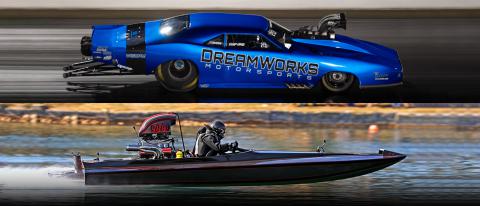
1970 Dodge Charger R/T

1

Chip King  |  Roxboro, North Carolina

Race Series/Class: PDRA (Professional Drag Racers Association) Pro Boost and NMCA (National Muscle Car Association) Xtreme Pro Mod

Engine: Screw Blown Hemi built by Joe Hornick Enterprises

Car: Chassis built by Jerry Haas Race Cars

Features: B&J Racing Transmissions, Carmack Engineering rearend, body and paint by Dreamworks Motorsports

Facts: Crew chiefs are Terry Coyle and Justin Carmack.


2016 Cheyenne Tunnel Hull

2

Mike and Jessa Finnegan  |  Atlanta, Georgia

Race Series/Class: NJBA (National Jet Boat Association) Quick Eliminator and Unblown Fuel Jet classes

Engine: 632ci big block Chevrolet built by Mike Miller Racing Engines

Boat: Built by Andy Ralls of Ralls Precision Machine

Features: Standard 4.84 bore space tall deck engine with a Brodix cast
aluminum block and 11-degree Dart Big Chief cylinder heads. Propulsion comes from a race-prepped American Turbine Dominator jet drive that was assembled by Marine Performance Designs. The hull is made of hand-laminated carbon fiber and weighs just 300 pounds. All the hardware to rig the boat was CNC-machined from 6061 aluminum.

Facts: The boat makes 1,300 horsepower at 7,000 rpm.

October 2023
By
PRI Staff

From The Executive Editor

Submitted by jeffreyc on Tue, 09/26/2023 - 08:36


Columbus 1996

When was your first PRI Show? One of my favorite discussions at the PRI Show is listening to others about how long they have been attending the Show. Some go back to Orlando, some have only known Indianapolis, some first visited PRI in Columbus (mine was in 1996), and some even go back to the very early days in Louisville in 1988 (a few of you are proudly raising your hands right now). 

What always strikes me as interesting is just how eager each person is to share with me the number of Shows they’ve attended, and how willingly they reveal memories from various events. A select few of my favorite highlights from past PRI Shows include the Red Bull Kart Race, the Industry Roundtable, the Twin 25s at Orlando Speedworld, Tony Stewart’s first Grand Opening Speaker gig when he was lowered from above the stage to the floor to sit on Santa’s lap. Little did we know at the time that Smoke is not a fan of heights, and “Santa” turned out to be his good friend and fellow racer Ken Schrader. Speaking of “smoke,” who remembers Smokey Yunick’s Smoketron, which literally made some smoke (and maybe even some flames???) of its own. And what about the 50th anniversary celebration of the Chevrolet small block engine where several of the original engineers who were still with us in 1995 were rightfully honored for their contribution to the automotive and motorsports industries. Can you imagine where motorsports would be today if they had not invented the venerable Chevy small block?

One component I’m looking forward to at PRI 2023 is the return of live-action racing with the PRI EV Indy Karting Classic presented by Top Kart USA, which will take place all three days of the PRI Show, in Lucas Oil Stadium. Virtual racing will also be on display as PRI partners with SRO Motorsports Group to present professional simulator races at the Show. Look for more details announced in next month’s edition of PRI Magazine. 

If you haven’t already finalized your arrangements for the 2023 edition, set for December 7–9, I highly recommend you complete that by visiting pri2023.com. Starting this month, the new version of the PRI App is available, so download it to any smart device from the App Store or Google Play. Use this as your virtual guide to the PRI Show, where you can save favorite exhibitors, products, and PRI Education and exhibitor-sponsored seminars. Plus, you can add notes and photos in your planner or see the virtual floorplan.

With this October edition, we welcome a new addition to the PRI editorial team, Coordinating Editor Jack Haworth. He is already anticipating his first PRI Show as he brings you the PRI Show Preview, beginning on page 64, along with details about our current lineup of first-time exhibitors, beginning on page 68. Stop by these new exhibitors’ booths in December, along with the other 1,000-plus race industry suppliers, to prepare your racing operation for a successful 2024 season!

October 2023
By
Meredith Kaplan Burns

Building Connections

Submitted by jeffreyc on Mon, 09/25/2023 - 16:22


First-time exhibitors explain why they’re headed to Indianapolis in December for the 2023 PRI Show.

The roar of the engines falls silent each December, but racing industry insiders know they can’t afford to stay quiet. 

On December 7–9, the motorsports industry will take over the Indiana Convention Center and Lucas Oil Stadium in downtown Indianapolis for the 2023 PRI Show. Whether they are discovering the latest advances in equipment, attending educational seminars, or networking with thousands of industry professionals, the PRI Show is a once-a-year opportunity for motorsports businesses and professional race teams to invest in the latest racing products and technology this offseason and build momentum heading into next season. 

Longtime exhibitors and attendees eagerly anticipate the PRI Show each year, giving it the feel of a giant family reunion. However, everyone is always eager to welcome new faces, products, and companies to Indy. This year, we welcome approximately 100 first-time exhibitors. While their products and services vary, these companies are united in their motivation for traveling to Indianapolis: The PRI Show is the most influential business event in the motorsports industry. 

While many showgoers are based in North America, the PRI Show’s significance attracts scores of international companies. In 2023, that list includes new exhibitor Tillett Racing Seats, a UK-based manufacturer of high-end carbon fiber seats and accessories. 

2
B&J Racing Transmissions is exhibiting at the PRI Show to “reach new markets” and “increase our visibility in the markets we currently serve,” said Steven Macklyn.

“The USA is a huge market in which we can see the potential for our products to flourish,” said Laura Tillett of Tillett Racing Seats, Sittingbourne, Kent. “We will be attending the 2023 PRI Show as it is a great opportunity to demonstrate our fantastic products to the US trade, create brand awareness, and give people the chance to feel the comfort and quality of our seats.”

The Tillett team is bringing a selection of race seats to demo, including its new C1 and C1XL FIA-homologated 8855-1999 racing seats, and its new B10XL road seat for roadgoing sports cars. 

“The company is a family-run business, which stems back almost three generations,” said Tillett. “All members of the Tillett family have been heavily involved in motorsport, and their passion comes through in the product design and technology development to create the most stunning high-end racing seats on the market.” 

The PRI Show is an important North American showcase for international companies, but it’s also a must-attend event for stateside companies hoping to gain initial traction in the motorsports industry. We’ve heard from several first-time exhibitors that’ve been in business for decades but are just now testing the waters in motorsports—a positive sign that bodes well for the overall health of the industry.

With more than 60 years in the transmission business, GFX is launching its performance line at the 2023 PRI Show, seeing an opportunity to tap into a new market of potential customers. The Miami, Florida-based company will showcase a variety of performance transmission products, including aluminum oil pans, friction plates, sprags, filters, and a new 4L60E Servo Piston (Corvette style) in anodized aluminum.

“GFX is not only a distributor, but we also manufacture many hard parts for the transmission industry,” said Dios Garcia of GFX. “We can manufacture by original specs, or for customer specific specs or needs.”

3
“We are exhibiting at PRI to connect and integrate more deeply into the high-performance automotive community,” said Christina Carnahan of Elite Tuned. Seen here is Mike Carnahan of Elite Tuned.

Dayton Rogers Manufacturing Co. is another deep-rooted business set to explore new possibilities and partnerships in Indy. 

“As a custom metal stamper and fabricator serving many industries, we can provide solutions to your metal-forming needs,” said Lisa Matheis of Dayton Rogers Manufacturing Co. “With 90-plus years of experience and four strategic locations in the US (Minneapolis, Minnesota; Columbus, Ohio; Columbia, South Carolina; Arlington, Texas), we offer versatile capabilities and services including assemblies. At the PRI Show, we will display an array of racing-related metal-formed products, and our goal is to develop relationships and be a value-add to your business.” 

The PRI Show is a terrific opportunity for lesser-known companies to introduce their brand and products to a new industry, while more established motorsports businesses will value expanding their network and building fresh partnerships. The latter goal is what attracted The FOD Control Corporation in Garland, Texas, which specializes in Foreign Object Debris (FOD) control solutions. Its products and services—which include the FOD-Razor, TracSweep, and POWER BAR Magnetic Sweepers—are designed to eliminate debris from track surfaces, preventing damage to equipment and personnel.

“By participating in the PRI Show, we aim to enhance our visibility and increase awareness among professionals and stakeholders in the racing industry,” said Pete MacGregor of The FOD Control Corp. “We want to highlight our partnership with NASCAR as a Competition Partner. The PRI Show also provides an opportunity for our company to connect with race track operators, racing teams, and other key players in the industry to establish partnerships and explore potential collaborations.”

With almost 60 years of experience, B&J Racing Transmissions in Lindon, Utah, is another mainstay in the world of motorsports. Specializing in air-shifted planetary transmissions, B&J products include auto shifting equipment, air systems, driveline components, tools, and other accessories. 

“Many of the pioneers in drag racing used our transmissions,” said Steven Macklyn of B&J Racing Transmissions. “B&J transmission-equipped racing vehicles currently hold multiple speed and ET records in all types of racing, a feat that we are proud of. We realize that the teams are the ones that put forth the effort to achieve the record runs, but they need quality and reliable components to do that. That is where B&J comes into the equation.” 

Despite decades of success, B&J Transmissions continues to innovate and will be attending the PRI Show for the first time. Like many other new exhibitors, Macklyn views it as an opportunity to expand the company’s network, interface with existing customers, and unveil new products that include ceramic bearings and a boat transmission. 

“B&J has a couple new products, and we want to expand our marketing efforts to reach new markets,” said Macklyn. “Additionally, we want to increase our visibility in the markets we currently serve.”

4
The PRI Show “provides an opportunity to connect with track operators, racing teams, and other key players in the industry,” said Pete MacGregor of The FOD (Foreign Object Debris) Control Corporation.

From enhancing safety to maximizing speed, the PRI Show is where the latest advances in motorsports are revealed and discussed. Building fast race cars requires premium parts and manufacturing, but utilizing digital technology and education also plays a large role in accelerating on-track performance. Specializing in education content, the Elite Tuned School in St. Petersburg, Florida, has tapped into this emerging trend and will be eager to share the knowledge at its first PRI Show.

“We are exhibiting at PRI to connect and integrate more deeply into the high-performance automotive community,” said Christina Carnahan of Elite Tuned. “We have worked hard to promote a massive change in the accessibility and quality of the tuning education that is available, and we are here to continue to expand brand awareness. We will showcase what we offer and show how we have structured our school and content to be different from the rest and provide the most complete and comprehensive tuning education on the market.”

Show Highlights

The racing industry runs on innovation. Just as race shops are constantly tinkering to unleash performance, PRI has been focused to improve the show experience and increase the overall value for attendees.

These improvements begin with the relocation of our popular Featured Products Showcase, which will move to the ICC Capitol Connector to increase the visibility of these cutting-edge products. Thursday evening’s Happy Hour will remain in Lucas Oil Stadium where PRI members will be able to enjoy complimentary drinks and appetizers in the second floor lobby area, while simultaneously watching pro drivers compete in the new PRI EV Indy Karting Classic presented by Top Kart USA on the Stadium floor. The new eSports Arena will showcase top sim drivers competing against one another, plus an opportunity for attendees to hit the virtual track for themselves. Plus, with more than 1,000 exhibitors and more than 45 conferences, seminars, and social gatherings held across some 750,000 square feet of exhibition space, Indianapolis is the place to be for any racing-related company. 

From track safety to transmissions, race seats to simulators, motorsports is an ever-growing tent. The 2023 PRI Show is where our entire industry comes together for three memorable days in the heartbeat of the motorsports world.

We look forward to seeing you there.

PRI Show: New Exhibitors

*List as of 8/24/23

2.0 RaceCars and Components
2point0racecars.com
Race Cars and Race Car Components

8TWELVE Wheels
8twelvewheels.com
Custom-Built Aluminum Racing Wheels

Advanced SimRacing
advancedsimracing.com
Racing Simulators, Racing Simulation Products

African American Automotive Association
aaaassoc.com
Contributions in the Motorsports Industry

Aluminum Cabinet Company
aluminumcabinetco.com
Aluminum Trailer Cabinetry and Drawer Units

Artec Performance
artecperformance.com
Carbon Intakes, Cast Turbo Manifolds

Asetek SimSports
aseteksimsports.com
Simulator Racing Hardware

Bigstuff
bigstuff3efi.com
Electronic Fuel Injection Computers

Blackstone - NEY Ultrasonics
ctgclean.com
Ultrasonic Cleaning Systems

BOELLINGER GROUP Holding GmbH
boellinger-group.com
Cylinder Head, Turbocharger, Crankcase, Piston

Burnyzz
burnyzz.com
Custom Cars

Capital Core Inc
ecapitalcore.com
Transmission Parts

Chicane Racing LLC
chicaneracing.com
Performance Driving, Racing Footwear

Chrome Domz
chromedomz.com
Stainless Steel Custom Signs

Circle D Specialties
circledspecialties.com
Torque Converters, Flexplates, Converter Parts

CIRCO Brakes
circobrakes.com
Racing Brake Pads, Racing Brake Fluid

Competition Eliminator D4 Bonus Fund
compeliminatorbonusfund.com
Comp Car, Classified Ad Sign-Up, Media

D3 Performance
d3performance.net
Performance Parts and Electronics

DayStar Machine & Cycle Concepts
daystarmcc.com
Harley Drag Racing and Performance Parts

Dayton Rogers Mfg Co
daytonrogers.com
Short to Medium Run Stampings, Fabrications

DieselCore
dieselcore.com
Diesel and Gas Engines and Parts

Double “O” Green
ambeampersand.com
Hand Cleaner and Soap Products

Drag-N-Drive Addiction
drag-n-drive.com
Drag and Drive Event Information

Eastwood
eastwood.com
Welding and Metal Fab

Elite Tuned School
elitetunedschool.com
Tuning Education for Ford, GM, Dodge, and More

Ellwood City Forge
ellwoodcityforge.com
Forged Aluminum, Engine Blocks and Aerospace

E-Motive Online
e-motiveonline.com
We Manage Your Strategy on eBay and Amazon

FANUC America Corporation
fanucamerica.com
CNC Systems, Robotics and Factory Automation

Geneva Capital LLC
gogc.com
We Provide Low-Cost Machinery Financing

GFX Inc
gfxcorp.com
Oil Pans, Filters, Pumps and Components

GNS Auto Parts
gns-exhaust.com
Exhaust Parts and Fabrication Parts

Grand National Super Series
grandnationalsuperseries.com
One Car on Display with Series Info

Guiyang Talfri Brakes Co Ltd
talfri-brake.com
Carbon Ceramic Brake Disc & Brake Pad

GUNIWHEEL
guniwheel.com
Guniwheel

GZERO Additive
gzeroadditive.com
3D Printers and Manufacturing Services

Halo by Orthene
orthene.co.uk
High-Spec, Racing-Grade Brake Fluid

Horsepower Indy
horsepowerinc.net
American Made V-Twin Performance Products

Hot Shoe Racewear
hotshoeracewear.com
Race Suits, Crew Wear

ICI Metals
icimetals.com
Aluminum, Stainless, Inventory Management

Indianapolis Speedrome
speedrome.com
Outlaw Figure 8 Racing, Oval Track Racing

Indy Power Products
indypowerproducts.com
Ford 7.3L Godzilla Engine Products

InnoV8 Race Engines
innov8raceengines.com.au
Godzilla 7.3 Intake Systems ITB, 8Stack

Intercooler Chiller
icchiller.com
Forced Induction Heat Exchanger Interchiller

KD Kanopy Inc
kdkanopy.com
Canopies, Flags, Table Covers, Stickers, Etc.

KNUTH Machine Tools USA Inc
knuth-usa.com
KNUTH Machine Tools, Silbertool Thread Repair

Kyowa Eidemiller
kyowa-industrial.com
Precision Machining for Automotive Products

LightBOT - LightSAFE
serralaserstore.com 
LightBOT, Co Robot Laser Welding, LightSAFE

Linde Gas & Equipment Inc
linde.com
Welding & Automation Machines

Lisle Corporation
lislecorp.com
Tools, Brushes, Creepers, Lube, Tire Products

Litemax Batteries
litemax.us
Lithium Lightweight Engine Starter Batteries

Lokithor
grepow.com
Lokithor’s Multifunctional Jump Starters

Lotse Steering Wheels
lotse.com.br
Racing Steering Wheels and Hub Adapters

M.O.M.S. Place
lawrencemotorsports.com
Aluminum Trailer Accessories

Magicmotorsport
magicmotorsport.com
Magicmotorsport Products

McKinney Corp
mckinneycorp.com
Chassis Components, Transmission Shields

MY WER
mywer.it
Karts & Motorbikes Racing Timing Systems

Offroad Anonymous
offroadanonymous.com
Offroad Fabrication Builder Parts

Out There Brands
outtherebrands.com
Custom Branded Motorsport Displays & Apparel

Performance Data Systems
racepds.com
Data Loggers, Sensors, Cables, Accessories

Podium 1 Racing
podium1racing.com
Racing Simulators

Premier Mega Truck Racing
facebook.com/PremierMegaTruckRacing
Mega Truck Racing Series

Pro Eagle LLC
proeagle.com
Offroad Jack

PSI Power Inc
agdieselsolutions.com
AG Diesel Solutions, Throttle Master

Pulsar Turbo Systems
pulsarturbo.com
Turbos, WGs, Manifolds, Intercoolers

Red Wood Enterprise Co Ltd
redwood.com.tw
Air Filters, Racing Harness

Redwood Rally - Motorfab
redwoodrally.com
West Coast Drag & Drive Racing Suspension

Reich Tool & Design - Orr CNC
reichtool.com
Manufacturing

Reid Products Inc
reidproducts.com
Motorsports and Aerospace Fasteners

Resolute Precision Manufacturing
resoluteprecision.com
Machined Shocks, Suspension Forgings, Swiss

Retrofit USA LLC
retro-fitusa.com
A/C Fittings, A/C Hoses, A/C Repair Kits

RevolutionParts
revolutionparts.com
Revolutionizing Auto Parts Commerce

Rhino Tuff Tanks
rhinotufftanks.com
Oil & Fluid Bulk Oil Dispensing Systems

Rockingham Dragway
rockinghamdragway.com
Track Promotions, Events and Rock Batteries

Rogers Dabbs Performance Parts
rdc123.com
All GM Performance Parts and Engines

ShopSabre - Langmuir Systems
shopsabre.com
CNC Plasma, CNC Mill, CNC Routers

SMW Autoblok Corp
smwautoblok.com
Workholding Product for Metal Cutting

Snell Foundation
smf.org
Snell Helmet Standard Materials

South Bend Clutch
southbendclutch.com
Clutch Kits for Gas and Diesel Applications

SP Tools USA
sptoolsusa.com
Professional Automotive Tools and Equipment

Speedtek Transmission Components 
speedtekautoracing.com
Gear Sets for T56/TR6060, RB25/26, R154/AR-5 

SRO Motorsports America
sro-america.com
Race Sanctioning Body

Stanadyne
stanadyne.com
High-Performance GDI Fuel Systems

Star Racer Belts
onetracksolutioncorp.net
Blower, Drive & Timing Belts, Tire Bead Tool

Stratus Auto Equipment
stratusautoequip.com
Scissor Lifts

T&D Tungsten Products Manufacturing Inc
tdmfginc.com
Tungsten Crankshaft and Chassis Weights

Tackform
tackform.com
Action Camera & Device Mounts for Race Cars

Talladega Gran Prix Raceway
tgprace.com
1.4 Mile Road Course and 2.5 Offroad Course

Temco Parts Washer
washparts.com
Parts Washers and Related Chemicals

The Bangshift Billy
bangshiftbilly.com
Digital Clutch Controller, Wireless Buttons

The FOD Control Corporation
fodcontrol.com
The FOD-Razor Motorsport Sweeper

The Mental Agility Coaching Center
themacc.net
Reaction Time and Mental Focus Training

Tillett Racing Seats Limited
tillett.co.uk
Composite Road and Race Products

Top Kart USA
topkartusa.net
Kart Manufacturer

Toro Tents Banners and Displays Corp
torotents.com
Custom Branded Tents, Flags, Banners, Signs

Tsugami America
tsugamiamerica.com
Tsugami America CNC Lathes

Ultrasonic Power Corp
upcorp.com
Ultrasonic Cleaning Equipment

Vampire Optical Coatings Inc
v-coat.com
Laminated Goggle and Helmet Tearoffs 

Verge Quick Outlaw Series
vergemotorsports.com
Drag Racing Series

Westwood Cylinder Liners Ltd
westwoodcylinderliners.co.uk
Engine Cylinder Sleeves

WIKD Motorsports
boltmotorsports.com
Remote Tuning Modules and Cooling Innovation

October 2023
By
Jack Haworth

Showtime: What’s New at the 2023 PRI Show

Submitted by jeffreyc on Mon, 09/25/2023 - 16:17


It’s just about showtime. Here is a summary of the new features at this year’s PRI Show in Indianapolis—including the return of live racing action—plus details about popular Show activations.

It’s time to get ready for the fastest and loudest family reunion on the planet when the motorsports industry unites in downtown Indianapolis on December 7–9 for the 35th edition of the PRI Show. 

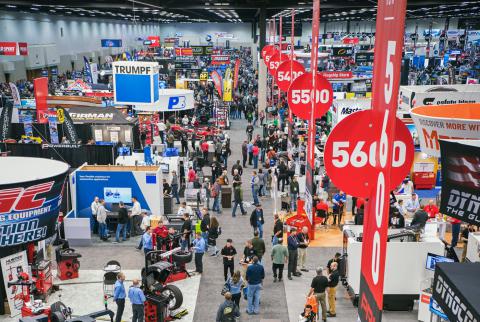
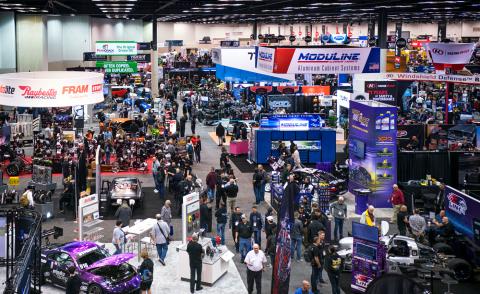
Featuring more than 1,000 exhibitors and some 3,000 booths spread across more than 750,000 square feet in the Indiana Convention Center and Lucas Oil Stadium, this unrivaled event unites professionals from every racing discipline in one city. 

The most influential business event in racing, the 2023 PRI Show will feature the newest parts and technology, access to countless manufacturers and service providers, and virtually unlimited opportunities to network face-to-face with industry leaders. If you’re in the business of racing, the 2023 PRI Show is a must-attend event. 

“The PRI Show actually feels like a reunion, because it is the one time each year that everyone in our industry meets up to conduct business,” said Karin Davidson, PRI Show Director. “It’s that little niche of time after the previous race season ends but before pre-season testing begins, when everyone goes to PRI to see what’s new and upcoming and find out what they need for the next season.” 

2
Live racing action returns to the PRI Show with the PRI EV Indy Karting Classic presented by Top Kart USA.

Among the Show’s aisles of innovative products, tools, machinery, and gear, buyers will also find 100 first-time exhibitors showcasing a bevy of never-before-seen offerings, from transmissions to motor oils, parts washers, stud kits, race seats, engine stands, and much more.

In addition to the many new exhibitors, there will also be several new exhibits at this year’s Show. Most notably, we are thrilled to announce the return of live racing action to the PRI Show, part of several new activations inside Lucas Oil Stadium set to include a showcase on the growing influence of alternative racing platforms, as well as a curated selection of race cars at the Goodyear/Mickey Thompson Experience. 

“Lucas Oil Stadium is not just an extension of the PRI Show, it is a ‘must-see’ area of the Show,” said Jim Liaw, General Manager of PRI. 

Back at the Indiana Convention Center, attendees can check out fascinating interviews at the PRI Podcast studio, a dedicated stage for motorsports influencers and media personalities to host live podcasts featuring various special guests. It’s an extension of our reimagined PRI Paddock, where members can go for all Show-related questions, giveaways, and more. For those not near the PRI Paddock—located in the Yellow Lobby, next to the hanging race car—the 2023 PRI Show App will serve as their virtual guide to the Show.

Most Popular Events

We are excited to bring revived energy to Indy with our new activations and exhibits, but longtime attendees can be rest assured we’re also bringing back our most popular events.

On Thursday morning, attendees can begin their Show at our Grand Opening Breakfast, offering complimentary breakfast paired with a live talk-show-style program featuring a special guest, to be announced soon. After a full day of discovering the latest motorsports innovations, attendees will have a chance to unwind and network over complimentary drinks and appetizers at our popular PRI Happy Hour, which will take place in Lucas Oil Stadium beginning at 5 p.m. 

Another can’t-miss activity is taking a stroll down Machinery Row, an invaluable opportunity for engine builders, welders, fabricators, race teams, and manufacturers to get an up-close look at the ground-breaking innovations that’ll help complete their jobs quicker and more efficiently. Additionally, those looking to upgrade their hauler rigs will want to visit the Trailer Exhibit at Lucas Oil Stadium, featuring dozens of the newest trailers, haulers, RVs, and toterhomes from top manufacturers. 

3
Top-ranked sim racers will compete head-to-head at the PRI Show, and Show attendees can try their hand in the cockpit, too. Photo courtesy of SRO Motorsports Group.

No attendee should miss the Featured Product Showcase (FPS), where both buyers and media will discover the latest and most innovative products from hundreds of top motorsports brands. To ensure these innovative products receive increased attention and foot traffic, the FPS has been relocated to the ICC Capitol Connector, which is strategically located near the Yellow Hall, Georgia Street entrance, Capital Cube hanging car, and the PRI Paddock for maximum visibility. 

In addition to networking and browsing motorsports’ latest products, services, machinery, and technology on the Show floor, attendees will have valuable opportunities to learn from racing’s most innovative minds. With more than 45 conferences, seminars, and social gatherings, there will be countless opportunities to engage with industry experts through a dynamic conference lineup that includes the PRI Education program, Race Track Business Conference, ICMS Annual Congress, and many more. 

Alternative Racing

We are dedicated to giving PRI members a complete 360-degree view of the motorsports landscape, which is why we are constantly searching for the next innovation, trend, or regulation that may affect your bottom line. Some changes will affect your company, while others may have a minimal impact, but in an industry where the gap between success and failure is measured in milliseconds, every detail matters. At the 2023 PRI Show, we are putting a spotlight on the emerging trend of alternative racing—particularly EV and sim racing. 

“The PRI Show continues to grow and evolve,” said Liaw. “Being the largest B2B motorsports show in North America, we have to do our part to showcase new trends and the diverse opportunities for racing-related businesses.”

Alternative racing has continued to grow in popularity over the past several years, with sim racing seeing big gains since 2020. To showcase the potential of alternative racing to our entire industry, we will activate space within Lucas Oil Stadium like never before, including the return of live racing action at PRI. 

Not since the Orlando-era of the PRI Show has racing’s most influential business event showcased live racing action. That changes in 2023 with the PRI EV Indy Karting Classic presented by Top Kart USA. With a kart track located on the floor of Lucas Oil Stadium and high-performance electric karts provided by Top Kart USA, this activation will provide entertaining racing action throughout all three days of the Show.

4
Featured Products Showcase has a new home at the PRI Show. Stop by the Indiana Convention Center (ICC) Capitol Connector at the Georgia Street entrance, near the Yellow Hall, to see the newest race components for the 2024 season.

Most notably, Thursday’s kart action will feature professional drivers from various top racing series, with serious bragging rights on the line. Adding to the buzz, the pro main event is slated to be run during the PRI Happy Hour—which has been expanded to the Lucas Oil Stadium lobby, concourse, and field for 2023—so PRI Members can enjoy complimentary drinks and networking, all while cheering on their favorite driver.

Our new PRI eSports Arena will also be making its debut at the Show—a new activation area dedicated strictly to the world of sim racing. This activation will be located inside Lucas Oil Stadium, next to the EV and Alt. Racing area, and will showcase not only EV technology but other forms of racing power, including propane, renewable fuel, and hydrogen. 

As for sim racing, that’s all about computer power and driver skill. 

PRI is partnering with SRO Motorsports Group, which will hold one of its professional simulator races at the PRI Show. The race will be broadcast live for attendees to watch via giant LED screens, with up to 16 top-ranked sim drivers racing head-to-head on fully equipped simulator cockpits at the PRI Show. Additionally, there will be two additional simulator cockpits for Show attendees wanting to take a hot lap on the virtual track and discover what sim racing is all about. 

Finally, Goodyear will also have a large activation at Lucas Oil Stadium that is already creating some excitement. The Goodyear/Mickey Thompson Experience will curate a selection of race cars that will line the pathway leading into the stadium, culminating at a Goodyear booth that’s sure to generate buzz. 

With the motorsports industry continuing to build positive momentum, the 2023 PRI Show is tracking to be one of our largest shows yet. The motorsports tent is bigger and more diverse than ever before, including everything from computer-powered sim racing to 10,000-horsepower engines in tractor pulling. But no matter what powers you off the start line, the 2023 PRI Show is where you’ll find the parts, people, and knowledge needed to succeed, both on and off the track. 

“You’ve got to go to the PRI Show to figure out what’s the new technology and what are the latest secrets. The conversations you’re having in those aisles are ones you can’t have at the track, because everyone is focused on their own car. At PRI, you have three days to absorb all this information, take it home, get your parts, and build a car for next year to kick some ass,” concluded Davidson.

October 2023
By
Jack Haworth

Industry Insights: Alberto Longo

Submitted by jeffreyc on Mon, 09/25/2023 - 15:54

Photos courtesy of FIA

Alberto Longo was considered a “visionary” just a decade ago when it came to electric formula car racing. In that short period of time, his ABB FIA Formula E World Championship has led the way—along with a variety of manufacturers—in developing not only EV race technology but advancing motorsports technology as a whole.

There aren’t many people who go from a successful career in banking and law to founding and managing a world championship racing series, but that’s what Alberto Longo did. After graduating from the Universidad de Sevilla in Spain, Longo worked for Banco Santander and as a partner in his family’s law firm. But then his cousin Alejandro Agag approached Longo with a plan to promote FIA Formula 1 racing on Spanish television. The partners were successful in that venture and soon set their sights even higher. 

Longo and Agag purchased the Campos Racing GP2 team in the FIA Formula 2 series and changed its name to Barwa Addax. Longo served as team principal and raised money for the effort, winning two team championship titles, and they finished second as a team three more times. 

After learning the ropes of an FIA series with a global schedule, Longo and Agag met with FIA president Jean Todt and created the world’s first and only all-electric racing series for open wheel formula cars, known as the ABB FIA Formula E World Championship. 

The series held its first race in Beijing in 2014. In the first few seasons, each driver had two cars because the batteries would not deliver enough distance for an FIA championship race. The drivers would pit mid-race and change cars. The Formula E series is now on its third vehicle design, and the cars now have plenty of power to finish an hour-long race. Additionally, the series uses innovative strategic elements such as Attack Mode, which gives drivers a little extra power for a limited time. This is similar to “push to pass” and Alternate Red tires used in IndyCar racing. 

Formula E has just wrapped up its ninth season, and it’s more successful than ever. Automakers such as Nissan, Porsche, McLaren, Maserati, Jaguar, and Mahindra are involved, with established racing organizations including DS Penske and Avalanche Andretti fielding teams. With races in Europe, India, Africa, South America, Indonesia, and in the United States, Formula E is a growing force in FIA racing. PRI Magazine caught up with Longo in Jakarta, Indonesia, where the 10th and 11th races of the season were held. 

PRI: You’ve been with the Formula E championship since the beginning. How has it evolved over the past nine years? 

Longo: I think technology plays a key role, and the event calendar. Technology is important, and the calendar is so visible. The more big cities that we go to, the perception of the championship is growing. Those are the two main things we needed in order to see progress. 

The technology of the cars is also important because obviously you need to attract manufacturers. We were born with the idea of attracting manufacturers, but at the beginning we had a generation-one car where you needed two cars to win the race. The technology and the range of the batteries clearly wasn’t there yet, but we thought that it was important to kick off with this championship as soon as possible. The biggest barrier of penetration for the electric vehicles back then was the range of the battery. 

2
Formula E has just wrapped up its ninth season, and it’s more successful than ever. With races in Europe, India, Africa, South America, Indonesia, and in the United States, Formula E is a growing force in FIA racing.

PRI: What was the biggest challenge to getting the series going?

Longo: Back then, it was showcasing that you can actually do a very exciting and fast race with an electric car. That was a very good idea, but you needed two cars. It was conceptually a little bit of a challenge, but we had a very clear road, and this is what the manufacturers bought into. Having the first manufacturer sign up for Formula E, they bought into the idea that we know we are using two cars now, but you know, in four years we’re going to be able to double the capacity of the battery to do the same length of races. Now it’s a much faster car, it’s a much lighter car, and we use only one car instead of two. 

So you can see the impact of that technology. Then from the second-generation car to the third-generation, we thought that the most important thing was obviously fast charging, in order to mitigate the barrier of the battery. You have two factors, whether you have a bigger battery that can actually last for longer or you can actually charge the battery. Those are the two elements that can make it work. 

We were focused on the battery in generation two and on the charging on the generation-three cars. Now our cars are charged by an ABB charger from zero to a hundred in 43 minutes. With our ultra-fast charger, it can charge 10% in only 30 seconds. Technology today is telling us that you can have a charger that can charge your car from 0 to 100% in seven to eight minutes. That’s actually the same time it takes for you to refuel your car. 

PRI: You mentioned manufacturers earlier. Over the years, you’ve had manufacturers join and leave the series. How do you provide value to manufacturers so that they want to keep coming back season after season?

Longo: Well, we must be doing something good because they keep asking to come back! There is a lot of appetite to be involved in the greater formula, to be part of this family. Obviously, we’re the only formula from FIA that promotes electromobility. And we know that electromobility is not the future of mobility, it’s the present. You’re seeing a lot of different manufacturers that have already announced that by 2025, some of them 2030, and most of them by 2035 are not going to manufacture any more internal combustion cars. They are definitely seeing the value of our platform to promote their new technologies. We like to say that track-grown technology is what we do. They use Formula E as a test bed in order to transfer all that knowledge and experience to the factory. That’s the biggest value. We provide return on investment.

3
Alberto Longo (far left) was among the dignitaries on the podium celebrating the 100th race of the ABB FIA Formula E World Championship, which took place in August 2022 at the Hana Bank Seoul E-Prix.

PRI: How about your audience? How has your fan base grown?

Longo: Massively. Our latest number is 381 million in TV viewership last year, which was something like 20% more than the year before. This year is looking really good. We are also growing the live audience, where we had more TV viewers in the past. Now we have a lot more live audience, and that tells you that we have more avid fans than before. People actually put our race on their agenda. I think we are 85% above last year already in the first nine races that we have done. You can see all the races that we have done up to today packed, sold out. For the two that we’re going to do here in Jakarta, we’re expecting to have 60,000 people each day, 120,000 people over the weekend. That has happened constantly since we launched the Gen Three car.

PRI: How has the Gen Three car changed the series? 

Longo: The car provides a lot of overtakes. I think it’s over 115 overtakes each race. I always use the example of Monaco because if you think about another FIA championship that goes there as well, they don’t do as many overtakes. They do one or two. We do 110, and that’s how exciting our racing is. We had 196, I think it was, in Brazil, and 11 changes of leaders. We look more like Moto GP, and that’s absolutely exciting. People are really having a lot of fun watching our races, which is all about entertainment. 

PRI: Is there a way that non-FIA racing organizations can leverage the technology and the learning that you are developing in Formula E? 

Longo: Well, that’s a very good question, but it’s more for the manufacturers. The automakers and teams develop the technology for the cars. For the Gen One car, we were the ones doing all the research and development. From Gen Two onwards, the manufacturers are the ones who are developing the car. 

PRI: You mentioned very fast charging that is enabled on the Formula E cars. Is that feeding back to the automakers that are sponsoring teams? Are they getting access to that so that they can make their street cars faster charging?

Longo: For sure. We are the test ground for them, and I can give you clear examples. Nissan’s motor is actually 180% more efficient than before, because of the development that was done for Formula E on the software. So that’s the value that they get. This is one of the key elements of why we have so many manufacturers: because they invest in the software here, and the end goal of the software is basically to control the power and the energy and make it more and more efficient. The software controls absolutely everything. So the better software you have, the more efficient your car is, and the less battery you use, which puts you in the lead.

4

PRI: Formula 1 has announced greater use of the hybrid system for the next year. Will Formula E battery technology or software be used in Formula 1?

Longo: No, there is no other championship that we can transfer our technology to. Is that something that we’ll be looking into in the future? We need to ask the manufacturers about that, because they own the electric motor and software development. 

PRI: Where do you see Formula E in another 10 years? 

Longo: What do you want me to say there? We obviously want to be the pinnacle. That’s the goal, but always with our mission, which is very, very clear. We want to be racing in more cities, we want to have more manufacturers. We are going to be doing more spectacular events. Having a show continuing to grow year on year to become a tier one sport. 

PRI: I notice that Formula E drivers tend to be very young. Do you have a younger group of drivers than Formula 1? 

Longo: Definitely, we are something like 11 years younger on the driver’s side, it’s true. We have a mix, you know, because we have a lot of drivers who are experienced, and who have been in the championship from day one, so now they’re 10 years older. Definitely there are new people coming into the championship. We had the Formula 2 champion with an offer to go to Formula 1, but he decided to come to Formula E. That was a really good thing. It’s pride for us to have those drivers come into Formula E instead of going the traditional route.

5
Alberto Longo (left) and Dilbagh Gill, CEO and team principal, Mahindra Racing, at the 100th race of the ABB FIA Formula E World Championship. Mahindra is one of a number of automakers participating in the series. The automakers “are definitely seeing the value of our platform to promote their new technologies,” Longo said.

PRI: Electric vehicles can be hard to sell in America. What is your message to all the people who are in the racing business in America? Not the drivers or fans, but the people who are building cars and making tires and everything else. How can they participate or leverage what you’re doing in their own business? 

Longo: I think that the most important thing, first of all, is to state where we are today. Where we are today is a world which is going electric already. The reality is that we have the experience of getting all those manufacturers, all those different suppliers, and all the challenges that we have faced because the technology was totally nonexistent. We built all this from scratch. People would say that we were totally crazy doing a full electric championship, because the batteries would never cope with the temperature. It was challenging, obviously, but we got there. When we started this, people used to call us visionaries, but today it’s a fact.

So for all these industries related to motorsport, what I tell them is, we slowly need to start swapping into electric. With something like tires, you can change manufacturers or compounds, but it’s all pretty much the same. But there are all these other components, like the software or the powertrain or the battery where the technology is still, I would say, at about 5% to 10% of what’s going to be coming in the next five to 10 years. If someone would have told me when we started this that we were going to have a charging capacity of 600 kilowatts or battery power output of 800 kilowatts, I would have said that they were crazy. It’s only eight years later that we’re producing that. 

Now that’s going to the mass market. So what’s going to come in the next three or four years? Because this is exponential, you’re going to be seeing cars that have a range of 1200 kilometers (750 miles). And you’ll be capable of charging your car in three or four minutes. That will totally change mobility in the world. 

Then, motorsport is driven by manufacturers, and manufacturers are not going to have an economic interest in combustion. Like it or not, it’s going to happen. I don’t know if it’s going to be seven years, 10 years, 15 years, whatever. But really, we are in the right spot.

October 2023
By
Jeff Zurschmeide

Newly Appointed: Steve Ward

Submitted by jeffreyc on Mon, 09/25/2023 - 15:45


While racers quickly recognize the VP Racing Fuels name, the company’s new director of marketing will apply 30 years of experience to make sure more people learn about its expanding product line. 

The VP Racing Fuels brand is hard to miss in this business. Yet, its product range transcends its name and includes a growing line of lubricants, additives, coolants, non-racing fuels, and appearance products. The San Antonio, Texas-based company recently appointed Steve Ward as director of marketing to ensure racers, as well as more people outside the racing community, get the message.

Ward’s previous position as director of marketing for financial services giant H&R Block had him in charge of the vision and strategy for the company’s web properties. That was just one of several stops along the way in his 30-year career in marketing, serving a diverse array of clients at major marketing and advertising agencies.

Ward earned his Bachelor of Science degree in Organizational Communications with a minor in Marketing from Missouri State University. He recently shared his goals for marketing at VP Racing Fuels with PRI.

PRI: What excites you most about this new role?

Ward: The opportunity to work for and make a positive impact at a company that has such a long, successful history in racing. 

PRI: Tell us how your experience in strategic marketing, digital marketing, and advertising meshes with VP Racing’s goals. 

Ward: My background in creative development, strategic planning, and online marketing will be a plus as we work to align our messaging across all business units, both domestically and internationally. My experience in “speaking with one voice” across all communications media to multiple markets and channels will ensure marketing consistency as we grow.

PRI: Are there specific marketing approaches you bring to the table that you feel had been lacking at VP?

Ward: Prior to me, VP Racing had good contributors in this role. I don’t think it’s been a matter of lacking anything, but I do feel a commitment from our leadership team to allow me to flex a few more marketing muscles. Our marketing team is also nearly all in-house, and in-office, so my years in agency leadership is also a plus when it comes to building a best-in-class marketing team. 

PRI: What would you say is your top marketing priority for the rest of 2023?

Ward: My top priority for the remainder of 2023 is to align marketing strategies across VP Racing’s business units. This alignment will allow us to have cohesive messaging, more targeted marketing efforts, and benefit from operational efficiencies. 

PRI: What role does social media play in your strategic plans for VP Racing Fuels? 

Ward: We use organic, paid social, and a variety of post types to promote, educate, and sell. VP Racing is involved with nearly all race categories, having an array of product offerings, sponsored athletes, series, retailers, and partners. It’s important to showcase the connection VP Racing has between its products and winning, then further promote where followers can find those same products for their own use. It’s a testament to the quality and performance of our products that you’ll see numerous posts every week about winners using our products. 

PRI: What is one challenge you see ahead? 

Ward: A big challenge ahead is prioritization. Our efforts to align marketing strategies across multiple business units will force tough decisions about prioritization. There’s a saying, “If everything is important, nothing is important.” We’ll need to be diligent in making sure we’re adhering to our strategies and focusing on those that have the best opportunities to positively move the needle. 

PRI: What is one recent mistake you’ve learned from in your professional career?

Ward: A recent mistake I made was not communicating clearly and assuming the entity I was dealing with was aligned with my thoughts. The lesson learned was to take the time to review details with whomever I’m working with, having them tell me what they think we’ve agreed to, writing up those details, and getting approval before proceeding. The pace of business in today’s world is quite hectic. It’s often hard to make time for this type of process. I promise that, in the long run, it’s a time saver. 

PRI: Who has been most influential to you in your professional career and why?

Ward: I’ve had the good fortune to work or associate with many very talented individuals. Of those, Mark Heminger [creative director at Harry & David] has had the greatest impact on my professional career. Besides being a dear friend, fraternity brother, and former business partner, Mark has challenged me to push creative boundaries and to never settle for mediocrity.

PRI: What is one piece of advice you have received, whether personally or professionally, that has greatly impacted your life?

Ward: The advice paraphrased from the Scottish poet, Robert Burns: “The best laid plans of mice and men often go awry.” I learned early in my career during my first stint as an agency owner that no matter how tight you think your plans are, there will nearly always be the need for change. Have a backup plan. Remain flexible. Have an advisor or two to bounce ideas off. Enjoy the detour. The hiccup in your plan isn’t a failure, it’s an opportunity to do something even better.

PRI: Excluding your cellphone/tablet/computer, what’s one thing you can’t live without? 

Ward: I’d struggle to live without the support of my family, but after that, I’d say music. A good song can instantly alter my mood or initiate a thought of a time, person, or place that the song is connected to. I’m an Eighties guy, so my favorite is hair bands. I also enjoy classic rock, alternative, blues, classic country, and hip hop when riding around with my daughter.

STEVE WARD

TITLE:
Director of Marketing

ORGANIZATION:
VP Racing Fuels

HOMETOWN:
San Antonio, Texas

FAST FACT:
“When I started my first marketing agency with three friends, despite a strong business plan, all banks we approached refused to extend a line of credit. I mentioned this to our accountant, who had consulted with us on the plan for a year. A few days later, a bank made an offer. I only found out a year later that our accountant and his wife had personally guaranteed the line of credit. When I called to thank them, they only asked that I pass it on to others deserving of a little help. I share that story to thank Roger and Kay Novak for getting me started on this amazing path, and to encourage others to pay it forward.”

October 2023
By
Jim Koscs

Utilitarian No More

Submitted by johnc on Mon, 09/25/2023 - 15:42
image 1


As side-by-sides get sportier by the year, aftermarket opportunities abound to turn them into dedicated racing machines.


“I’m old enough to remember when UTVs were only Ranger vehicles at state parks,” said Matt Scarpuzzi of Savage UTV, Alpine, California. “That’s where the name came from, utility vehicles. I remember the first year [race team] Jagged X was racing in Baja and people said, ‘That’s never even going to finish.’”

“They were never intended to race,” added Justin Smith of Shock Therapy, Phoenix, Arizona. “Everyone had to build pretty much everything on the car to be competitive.” Now, however, “UTVs are certainly the fastest growing class in off-road racing, and the UTV class has started to knock on the door of overall race times for Class 10. Class 10 is a pretty fast class, the fourth fastest class in off-road racing. UTVs are getting to where they’re faster than half the field.”

It was Polaris, Smith said, that started the “UTV arms race” with the introduction of the RZR XP 1000 in 2014. In 2022, Polaris introduced the RZR Pro R, “the most capable UTV in history to date,” Smith said. “You can race it stock and not have to touch anything on there from a breakage or structural standpoint. It really is an off-the-showroom race car.”

“We can spend $150,000 building a Pro R, or you can get one from the dealership, add window nets and a radio, and be ready to go,” Scarpuzzi pointed out. “The suspension is really good out of the gate, and the cage is so much better. They used to come with literally seatbelts, and now it’s four-point harnesses. I think these manufacturers are starting to see what people are spending their money on after the initial purchase, and they’re starting to include some of that equipment in the original layout of the vehicle.”

image 2
Brian Crower Inc. specializes in building UTV engines for “the dune style of riding, which is more wide-open throttle,” said Brian Crower. The company’s billet crankshafts are key to engine durability in a high-horsepower application.

That doesn’t mean there isn’t room for improvement. Racers being racers, parts have been developed to make the Pro R faster, safer, and nimbler. Although, “the Pro R being new, it’s very expensive to build, maintain, and race,” Scarpuzzi said. The fact that a Pro R has a two-liter, four-cylinder engine also relegates it to Unlimited classes in certain series, or classes just for Pro Rs, as the rest of the UTV racing field is powered by two- or three-cylinder engines of 1,000–1,300cc. “So really, the top, top names in UTV racing are in that class, and a majority of other racers are still in the other classes.”

That means there are plenty of opportunities for building Polaris, Can-Am, or other brands of side-by-sides for racing. “The biggest question that you have to start with is, what is the race series and class?” said Dan Fisher of Lone Star Racing, Mesa, Arizona. “And then, having a budget in mind is important. It’s very easy to get carried away. There’s needs, and there’s wants.”


Engine Upgrades

This is an area where builders and racers need to do their homework, especially where the Pro R is concerned. “In the Best in the Desert series or any American series you can’t touch the motor,” Smith said, “though in the SCORE races in Mexico they do allow you to play with the motor.”

“There’s something like 10 different short course series going on, and they all have different rules,” said Brian Crower of Brian Crower Inc., San Diego, California. “The rules are just all over the map based on what series you’re in. The rules could say you can run cams, but you can’t run aftermarket rods or pistons. Or you can’t run anything that didn’t come from the factory.”

One racing segment where the rules are more liberal, “at least in the higher up classes, is sand drag racing,” Crower said. “The Sand Outlaw Series has single-handedly pushed the boundaries in that segment. There are guys who, with a 900cc engine, are making 1,000 horsepower to the crank, which is pretty respectable coming out of a little two- or three-cylinder engine.”

Another “growing horsepower segment, especially in the Southeast region, is mud bog or mud pit racing with the Southern Bounty Series and Mud National events,” Crower said. “They are doing big-horsepower builds similar to the drag crowd and draw thousands of spectators.”

Building side-by-sides for the sand is Crower’s focus. “A lot of the bigger horsepower builds, which involve our cranks, rods, and pistons, are geared toward the dune style of riding where it’s more wide-open throttle.” In this segment, the two-cylinder Polaris RZR XP Turbo and three-cylinder Can-Am Maverick X3 “cover literally 70% of the market,” Crower said. The rest of the “engine totem pole for hot rodding” includes the three-cylinder Yamaha YXZ; Polaris Pro R; and the two-cylinder Polaris XP 1000, Honda Talon, and Kawasaki KRX.

How does Crower build a 1,000-hp Can-Am engine? A combination of Darton aftermarket sleeves in the stock crankcase, bigger ARP head studs, Crower’s billet crankshaft and connecting rods, King main rod bearings, bigger wrist pins, either CP or BME pistons, a ported cylinder head, Crower’s camshafts and adjustable cam gears, “and then as big a turbo as you can run,” he said. “These guys were running 70 pounds of boost last year. This year it’s 80, and next year it’s going to be 90, and they’re starting to run compound turbos.” With these big turbos, “there’s obviously a lot of lag at the bottom end,” he added, but his stroker crankshafts “build more boost quicker with the torque that they deliver.

“These drag cars are unreal,” Crower continued. “They’re doing 300 feet in 3.4 seconds—in sand.”

Most of the sand drag classes limit engine displacement to 1,300cc “because the Can-Ams have a 1,200cc snowmobile engine they want to cater to.” To make the two-liter Polaris Pro R eligible, Crower developed a de-stroker crank that turns it into a 1,300cc, four-cylinder engine.

image 3
Dual-rate spring kits are among the suspension upgrades available from Shock Therapy for the Polaris RZR XP (seen here) and other models, including the Polaris Pro R. The springs were designed to reduce washboard chatter and bucking through whoops, while also increasing bottom-out resistance.

“Word on the street says the 2024 Can-Am will have a 1,600cc engine with a transmission—meaning no more belt—so that will revolutionize the game,” Crower said. “And Polaris is already working on a turbo version of the two-liter.” Crower predicts that these new developments will generate interest in second-hand UTVs. “Guys will realize they can buy a 2016–2018 turbo RZR for 10 grand, then put another eight grand in the engine. Now they’ll have a 300-hp RZR, and it only cost them 18 grand, compared to a brand-new Pro R, which is like 55 grand from the showroom. And everybody who wants to buy a new Can-Am will put their old Can-Am on the market, and the savings guys will get by buying a used X3 can be put into the engine or clutching.”

Crower also acknowledged that sand-drag power levels can be incompatible with racing elsewhere. “In short-course racing you can overpower the track. So even with turbo builds you don’t want to have more than 250–270 hp because you’ll have wheelspin and you won’t really be able to control the car.”

“I don’t think horsepower wins off-road races. It’s the chassis,” Smith said. “It’s how you can run through the whoops, and how you can run through big stuff without ever having to hit the brakes. And whip in a corner without rolling the car. Those two things right there make you fast.”

“Guys are welcome to supply me with a built motor,” Fisher said, “but I don’t think you need anything like that. Having a car that is reliable race after race wins races.”


Suspension & Tire Upgrades

The Polaris Pro R is available with “an electronically controlled Dynamix system with Fox shocks that are all live adjustable, so it shines when things get rough,” Smith said. “About the only thing we’re doing with those before we race it is a set of aftermarket ball joints, because the factory ones are a little questionable.”

Shock Therapy “makes a ton of parts for the Pro R,” Smith added, “and they do get quicker with some shock mods and spring packages.” The company offers dual-rate springs and a Ride Improvement System, which adjusts the internal valving to increase bottom-out resistance at full compression and soften the ride quality at low and medium speeds. For other Polaris side-by-side models, Shock Therapy offers dual-rate spring kits, shock upgrades, the Ride Improvement System, and other components. Upgrades for Can-Am X3 models include dual-rate springs, sway bars (and adjustable links), and Fox’s IQS adjustable shock system.

image 4
When building a Polaris UTV for competition, Lone Star Racing relocates the fuel cell from underneath the seats to between them, which lowers center of gravity. “It definitely gives it more of a Can-Am feel when you sit in it because you’re sitting so low,” said Dan Fisher.

Smith is also designing some new products for the Pro R that he didn’t want to discuss in detail just yet. “They will be electronic products that make these things even faster than they currently are. Or safer. Or both.”

Craig Stumph of Pro UTV Parts in Delta, Utah, takes a different approach to suspension mods. In his area, rock crawling is more popular than open desert racing, so he builds UTVs to climb boulders.

“The trailing arms on these Polaris machines work great for desert racing, but for anywhere like our rock crawling, they hang up on rocks really easy and you get stuck. We have another trailing arm made by ORB that we sell for these cars. They give us an additional five inches of clearance.”

Stumph is also engineering UTVs to mount 39-inch-tall tires. “When you roll up on one of these cars on 39s it looks pretty freaking cool,” he explained. The tall tires require aftermarket A-arms and gear-reduction hubs known as Torque Vector Multipliers (TVMs). The TVM 25% gear reduction hubs are manufactured by Hymark Performance and distributed by Pro UTV Parts. They are different from the current portal design. TVMs add 2 inches of width per side and only 3/8 of an inch of lift. “You just bolt the gear reduction on the hubs and you’re in business.”

Stumph pointed out that “when you start changing the tires and the gear ratios, you have to match the CVT to the changes you’ve made. That makes a lot of difference in these cars.”

Upsizing the tires on a Pro R from the factory 33s to 35s is a popular modification, “but there are definitely some upgrades that you need to do around the 35s, like wheel studs and things like that,” said Fisher. “It’s a lot more load on the back of them, especially if you start running tire balls [run-flat inserts].”

“We put 35s both on the race car and on the prerunner, and they make such a big difference when you get in the big stuff,” Scarpuzzi said. “It’s able to just float over some of those bigger whoops. And the added ground clearance obviously is huge when we’re running these Baja sections where the ruts are so deep from the Trophy Trucks.”


Cage and Safety Upgrades

“I’m a dad and not a young man, so for me, the safety thing—being able to come back home—is big,” Scarpuzzi said. “I was really excited to see the Pro R had a fully welded cage. Every naturally aspirated car, the Turbo S, all of those were bolt-together cages with 1.75 tubing. This Pro R from the dealership, having fully welded, 2-inch tubing, is something that guys who are building a race car for the first time, and are on a real strict budget, are going to feel better about that than racing something with a bolt-together cage.”

For racers in the top tiers, “our cages are all custom, usually DOM tubing or chromoly,” Scarpuzzi added. “At the upper end, we replace all that stuff. But for the local races where I live, I see a lot of cars racing with a lot of stock components.”

image 5
Based in Utah, Pro UTV Parts builds many side-by-sides for rock crawling. It is developing a system to bolt 39-inch tires on a UTV using aftermarket A-arms and gear-reduction hubs.

At Lone Star, “we do semi-custom chassis,” said Fisher. “When we do one of our full-race builds, we always have a lot of involvement with the customer, to give them what they want while keeping within the safety rules of the class.

“We focus on weight, without sacrificing durability,” he added. “We build a car that can handle a lot, but not weigh a ton.” He said some racers “want us to stretch the rules on material thicknesses, but at the end of the day, it’s such a minimal gain to do that—maybe 20 pounds—that if you do end up having a bad wreck, you’ll have to scrap the car because it just doesn’t hold up.”

One big change Lone Star has made to several Polaris models, including the Pro R, is to lower the car’s center of gravity by relocating the fuel cell. “We do not put the fuel cell under the seats. It goes down the center,” Fisher said. “We have a few options on capacity, from 26 gallons all the way up to 33 gallons. It definitely gives it more of a Can-Am feel when you sit in it because you’re sitting in it so low. It’s not your typical position where you sit up in a Polaris.”

Adding a fuel cell is a common upgrade, both for safety and range, but “don’t go overboard,” Fisher advised, citing a “less is more” philosophy regarding weight. Size the cell “depending on what race series you’re running.” He races Best in the Desert and the Mint 400 with a 21-gallon fuel cell, while Scarpuzzi uses a 46-gallon fuel cell for Baja racing.

Brakes are another popular upgrade, depending on the model. “The Pro R has really good brakes on it,” Stumph said. “Can-Am brakes are not as good, but Wilwood makes kits for those, and we sell those. Some of the ceramic pads that are out are a little bit better than the sintered.” Racers who run in the mud “are using bronze pads because a standard or ceramic pad will wear out,” he added. “The mud in the water is extremely abrasive, like using a grinder on them.”

Fisher said he uses a Wilwood master cylinder on his side-by-side. “That’s worked out around all the stock calipers. It gives us a little bit more fluid, a little bit better piston.”

One upgrade that Scarpuzzi called “an absolute game changer” was the addition of a satellite communication system. “We have sat phones wired into our intercom system, and all the chase trucks have it, so when I talk in the car, every truck hears me. We are able to coordinate the logistics of getting chase trucks to a pit, or if a chase truck can’t get to a pit, another one can cover it.”

His team also added a Starlink system to the chase trucks, “so they can get on the Internet anywhere, and they can pull up SCORE’s official live tracking. They can see where our competitors are. When I come into a pit, they can tell me, ‘Hey, you’re in third place, you’re two minutes behind this person. And we see this person is four minutes behind you.’ They tell me what my back door is, so I know how much we need to push the car.

“All that communication and information is so important, especially when we’re really close in points for a championship and we start to get closer to the Baja 1000,” Scarpuzzi added. “It’s expensive,” he admitted, “but for upper-level racing, it’s a must-have.”

As Scarpuzzi sees it, there are multiple tiers of UTV racing. “There are the guys racing with factory support and big budgets, the guys you see all over the magazines. But it is amazing to see the field of recreational racers out there. It’s a different level of racing, but the fun, the excitement, the challenge, the competition is exactly the same.” Within that group of enthusiasts are those who can “go to their dealership, get a car, upgrade the harnesses, and add some safety features, and they’re out there, rubbing paint with 10 of their buddies. But the majority of people still want to build their own setup, because it’s easier to do that, keep modifying, keep upgrading over the years to make the car exactly what you want.”

Speed UTV

“The race series have done a great job of trying to make off-the-shelf, production-built UTVs raceable, but I wouldn’t recommend it,” said Todd Romano of Speed UTV, Anaheim, California. “There is not enough safety or reliability built into a production-based UTV to go racing. At Speed UTV, our intention was just the opposite: to build the very first production car that you could pick up at the dealership and go racing. There’s nothing to add to our car outside of a fuel cell, and maybe GPS and intercom radios.”

Speed UTV is the brainchild of racers Robby Gordon and Todd Romano, who spent years working on developing UTV technology for companies that included Polaris and Textron. Romano was also a pioneer in UTV accessories, having founded Dragon Fire Racing and developed the Team Green Factory accessory line for Kawasaki and its Teryx.

sidebar

Speed UTVs are available in three lengths: a two-seater with a 95-inch wheelbase, a four-seater with a 120-inch wheelbase, and a two-seat, 110-inch wheelbase model Romano calls “the ultimate desert wheelbase for a sub-80-inch-wide car.” The company’s 999cc, two-cylinder, turbocharged engines make between 225–300 hp and are fitted with three-speed CVT transmissions. Standard tires are 33s; 35s are optional. Steering is hydraulic.

The Speed UTVs are built with “the SCORE-legal race cage from the factory,” Romano said. “Because it’s bolted on, you just have to weld where it’s bolted and it’s legal. We’re the first manufacturer to have intrusion bars on the front of our cage and the B-pillar for roll-over. Without that B-pillar bar, the cage collapses on your lap if you do a forward roll. We also have produced our cage for FIA in a continue-tube version—it cannot be a bolt-on cage that is welded—that passes all FIA standards.”

A big point of difference between Speed UTVs and others is the trailing arm design of their rear suspension, which gives it negligible track changes through the full range of travel. “Under a half-inch,” Romano said, “which allows for greater wheel travel and reduces the track change and leverage issue that compromises drivability and breaks suspensions on other cars.”

The top-of-the-line RG Edition includes “Speed carbon-fiber racing seats, Speed five-point racing harnesses, window nets, and production two-piece beadlock Speed wheels,” Romano said. Available Speed-designed and manufactured accessories include fuel cells, thicker skid plates, light bars, radio/intercom, and a Wilwood brake kit “for the guys racing with 35s.”

Romano said Speed UTV is working with “about 100 dealers, mostly in the Southwest, the Upper Peninsula panhandle, and the southern belt. We are in our first year of shipping cars and have 16,000 on order right now. To put that in perspective, in the category that we’re playing in, which includes the Pro R, the Turbo R, and Can-Am X3, there’s about 80,000 units sold a year.” —Drew Hardin

SOURCES

Brian Crower Inc.
briancrower.com

Lone Star Racing
lsracing.com

Pro UTV Parts
proutvparts.com

Savage UTV
savageutv.com

Shock Therapy
shocktherapyst.com

Speed UTV
speedutv.com

October 2023
By
Drew Hardin

To Finish First . . .

Submitted by johnc on Mon, 09/25/2023 - 15:23
image 1


A new wave of cutting-edge technology in off-road racing is helping teams go faster with better control, improving their odds of making it to the finish line.


For anyone who hasn’t been there in person, the rigors of off-road racing are difficult to comprehend. Thanks to advances in live streaming, and drone and in-car video technology, this motorsports segment is getting more media attention than ever. The excitement of off-road racing is coming through loud and clear, yet no video can fully capture the heat, choking dust, or the obstacles—natural and man-made—that off-road racers must endure just to make it to the finish line, let alone to the podium. The old saying, “To finish first you must first finish,” probably wasn’t written about desert racing, but it should have been.

Organized off-road racing has been around since the mid-1960s, and in that time the vehicles and their components have undergone tremendous evolution to help them survive those extreme conditions, while also making them faster and safer for drivers and co-drivers. As often happens in motorsports, technological changes can come in waves. Right now, off-road racing—especially at the upper tiers—is in something of a transition, with significant innovations that are taking speeds and car control to new levels. As Bryan Harrold of Fox Motorsports in El Cajon, California, put it, racers need to “try to rewire their brain completely” to adapt to what their trucks can do now.


All-Wheel Drive

When asked to identify the most significant technological advancement in off-road racing these days, many of our sources pointed to the rise of the all-wheel-drive (AWD) Trophy Truck.

“There’s a big transition of the Trophy Trucks from two-wheel drive, which had long been the desired package because of reliability, to the all-wheel-drive trucks,” said Greg Adler of Off Road Warehouse, San Diego, California. That’s due, he said, to the “evolution of the parts and reliability of the transmission, transfer case, front differential, and the independent front suspension. Some of that came out of Ultra4 racing and the King of the Hammers race, where the guys were building this super-massive, super-strong stuff to survive the rock race. Now that’s morphed into desert racing, where some of the best Trophy Trucks are now all-wheel drive. They’re pretty close to dominating the desert races.”

Several companies build AWD Trophy Trucks, including Brenthel Industries, Jimco Racing, and Racer Engineering, but the pioneer in the field is Mason Motorsports of Lake Elsinore, California, which has built 15 of them and has four more under construction. “Right now, we have about a two-year wait list to start a truck,” Neal Mason said. “We’re working on things to shorten that, like building a bigger facility, but I don’t want to build them too quickly. I don’t want to sell 12 Camaros a year. I want to sell four Ferraris.”

The advantage to all-wheel drive is traction. Adler touched on the reliability issues inherent in driving the front wheels in an off-road racing environment. It has also been difficult to make front-drive parts work with a lot of suspension travel.

To solve those problems, Mason opted to design and build his own components, from the front differential and axles to the transmission and the rearend, rather than trying to adapt existing driveline parts. It has been a winning formula. Mason Motorsports trucks won all three Trophy Truck class championships in SCORE’s 2022 season, and the trucks continue to win in 2023. Recently, Bryce Menzies won the Baja 500 overall in his Mason AWD truck.

image 2
Andy McMillin was among the racers testing Fox Motorsports’ new Live Valve computer-controlled shock absorbers. Fox’s goal with Live Valve “is to minimize or remove altogether the compromises typically made in suspension tuning for off-road racing,” said Bryan Harrold.

The growing number of AWD trucks has pushed Mason to evolve his products. “When there were only a couple of AWD trucks, they didn’t have to push very hard to stay ahead of most all the two-wheel drives,” he said. “But now most all the top teams have AWDs. They’re all racing each other, and they’re racing each other really hard. So we’ve made some advancements in figuring out ways to keep the drivetrain reliable while driving them harder and with more power.” These include a “bigger and more robust” rear differential, updated one-way drives for the front differential, and the Masonmatic five-speed paddle-shifted transmission. It uses “a hydraulic clutch pack like an automatic and spur gears like a sequential,” Mason said, which enables full-power shifts without cutting the ignition and eliminates the problem of a damaged gear restricting access to the others. “If there’s ever a problem with a clutch pack or gear, you can skip it. It doesn’t have to go sequentially through that order.”


More Power

“Over the last few years, the all-wheel-drive technology has shown up big in our sport where it was traditionally two-wheel drive and typically a small block because you couldn’t get a lot of traction,” said Kevin Kroyer of Kroyer Racing Engines, Las Vegas, Nevada. “Now it’s all-wheel drive and big block-based engine packages. Big blocks have been around for a long time, and even in some off-road stuff, but they haven’t been the norm. They’re more the norm now.”

“Every single AWD we’ve ever built is either a big block or the Joe Gibbs motor, which makes more power than the other builders’ big blocks,” Mason said. “The trucks used to have 870 horsepower. Now a lot of them are 1,100-plus horsepower and a lot more torque.”

When asked for output numbers of his engines, Kroyer laughed. “I don’t make anywhere near the numbers that everybody in California makes. Everybody else is advertising 1,100, 1,200, 1,300, whatever. As long as we can pass you, we’re okay.”

Kroyer pointed out that “big blocks have been around for a long time, and people use them in hot rods, drag racing, boats, and all the rest of the stuff. I guess the closest comparison we have to anything that’s out there on the market is endurance boat racing. There are some similarities there, but we’re trying to push 7,000-pound trucks with all-wheel drive and 30-some-odd inches of wheel travel for up to 24 hours. So they gotta run pretty hard, but they also gotta be reliable.”

image 3
New communications and navigation systems from Garmin and other makers “allow race vehicles and chase vehicles to be connected via satellite and communicate with each other,” and at a much lower cost than earlier satellite-based systems, according to Off Road Warehouse’s Greg Adler.

Kroyer said most of his big block builds start with a Chevrolet-based aftermarket aluminum block, “short deck, machined in-house. Dry sump with an integrated pan and pump. Right now we’re doing some 20-degree cylinder head stuff, mechanical roller [cam] stuff, and we do our own cam drive design.” Induction is typically “eight stacker ITB throttle-body stuff from Kinsler. It’s drive-by-wire, a lot of electronics, all MoTeC-based.”


Via Satellite

On the subject of electronics, we asked Kroyer about the possibility of tuning these engines remotely, using the Internet and satellite links. “Tune your truck in the States while you’re in Mexico,” as Randy Smith of Butch’s Speed Shop in Las Vegas, Nevada, described it.

“People are starting to go that direction,” Kroyer said, “but we’re not doing any of the remote tuning yet. Not on the fly. We’ve done it with stuff down in Mexico when we’ve been up here testing, but it’s more, make a run, look at data, make changes. We can monitor data in some of the vehicles remotely and call the radio if we need to. But typically, by the time you have that big of a problem, you’re not having a great race anyway.”

“In theory, that’s been able to be done for some time,” added Ray Field of Dougans Racing Engines, Riverside, California. “But it’s complicated, because you need a router and service to send that information across the Internet. So either you have to have a helicopter close by, or you have to have an Internet provider on the race car, and that only works so well. So it’s not perfect, but yes, that can be done.” The Starlink satellite system, Field said, improves the chances of getting a signal in remote locations in the desert Southwest or Mexico.

“Can we be live with the trucks? Sure, we can,” Field said. “Have we been live with trucks during races? You bet. Could we tune them? Sure. Do we need to tune them? No. They’re tuned when they leave, but we do monitor a lot of things on the race car.”

Starlink, and advancements in communication systems in general, are having an impact on other aspects of off-road racing, Adler said. “I have seen a shift in communication technology in terms of keeping the race trucks more connected to the chase teams. Starlink is playing a role for guys to be able to stay connected, whether you’re racing or chasing. Some of the guys are even doing live feeds and in-car video using some of that technology. There are also systems, like Garmin inReach, that allow race vehicles and chase vehicles to be connected via satellite and communicate via text to each other and see their location. That’s changing a lot of the challenges you had in the past of knowing what’s going on or where your race car is if there’s a problem. It’s morphing from $5,000 MSAT systems that each vehicle had to have and were very expensive to buy and maintain to something that’s a lot more reasonable, whether it’s for a Trophy Truck or even a UTV.”


Computer-Controlled Shocks

“Imagine a vehicle that could corner on fire roads like a rally car, float over 4-foot-deep whoops in excess of 100 mph, cruise across boulder fields like they aren’t there, soak up the huge G-out you didn’t see until it was too late, jump over 100 feet with a nice smooth landing even on flat, and be able to speed down a dry lakebed at 150-plus mph. Multiple times, for hundreds of miles, over countless consecutive hours.”

That, said Harrold, is what Fox Motorsports is working toward with the development of its Live Valve semi-active, computer-controlled shock absorber system. “We’re trying to optimize your suspension to adapt to a wide spectrum of driving conditions while delivering comfort and confidence-inspiring performance. We want to bring sportscar-like handling to a 7,000-plus-pound whoop-eating machine with up to 36 inches of suspension travel. For a driver, that translates to confidence and reduced fatigue, which is critical for the types of terrains and duration of races they face.”

Fox’s Live Valve racing suspension collects real-time data every few thousandths of a second from acceleration, braking, steering, and inertial sensors. Using that data, the system electronically adjusts compression and rebound damping through independent oil flow paths, so each compression and rebound adjustment does not affect the other. These are similar to the computer-controlled systems used in OE applications on the Ford F-150 Raptor pickup and Polaris RZR UTV, though “what we’ve been racing on is the first application on our external bypass shock architecture as well as the first application of Live Valve on both compression and rebound circuits,” Harrold said.

“The base Live Valve algorithms are designed to improve typical handling characteristics that might be considered undesirable, especially some that are grossly exaggerated on a platform with significant wheel travel like an unlimited desert truck,” Harrold continued. “We have a ton of parameters to play with that affect how those base algorithms behave and essentially limitless possibilities for more based on driver feedback and additional sensor development.”

image 4
On the dyno is one of four big blocks that Kroyer Racing Engines built for racers Luke and Dan McMillin. According to Kevin Kroyer, the 555-cubic-inch Brodix block is filled with a Bryant billet crankshaft, Carrillo rods, and JE pistons. Daley Engineering supplies the oil pan and dry sump pump; the heads are from Dart (and use T&D rockers), front engine plate and drive accessories are from ID Designs, and induction is via either Kinsler eight-stack or ITB billet manifolds.

Harrold said the feedback from drivers racing with Live Valve shocks “has been extremely positive, and we’ve already garnered numerous podiums and wins with the technology to back it up.” Justin Lofton and his two-wheel-drive Jimco Trick Truck took overall wins at two Best in the Desert races in 2020 and 2021; Cameron Steele and Ryan Arciero put their Live Valve-equipped Trophy Truck on the podium at the 2021 Baja 1000; and Arciero won the 2022 Vegas to Reno race after he put Live Valve on his truck.

Casey Currie of Currie Enterprises in Corona, California, has Live Valve suspension systems on his racing RZR UTVs, and he’s having a system installed on his Trophy Jeep race truck. “It’s pretty wild what it does, electronics-wise. If you turn the wheel left, it’ll stiffen the right side. It’s basically keeping the sway bar under control. You can add rebound on the fly. If you’re hitting a jump, it’ll add compression while you’re in the air. If you’re going down a graded road, it will keep it soft, so the car has a plusher ride and more forward bite.”

Live Wire development is ongoing, Harrold said, based on data from races and Fox’s in-house Racing Applications Development (RAD) truck. “We’ve made numerous algorithm changes as well as some mechanical improvements to the shocks and related components to optimize performance with everything we’ve learned thus far.” Currently, Live Valve systems for racing “are only available to select race teams that are helping us test and develop it due to its complexity,” he noted. “Once we’re done developing, we definitely want to make it available for purchase on the racing side.”

Live Valve isn’t the only race shock under development at Fox. “The increased availability of data, including the ability to capture our own with vehicle instrumentation and data acquisition, are what really help us drive innovation and advancement,” Harrold said. “We’ve even invested in the biggest shock dyno in the world, specifically designed for Fox with the ability to run our largest shock (Factory Race Series 4.4 External Bypass) to its full capacity. Combined with data acquisition, we can quickly iterate and test multiple designs or tunes before we even hit the dirt, getting 90% of the way there before the old ‘butt dyno’ comes into play. We can even record shock data from an entire race and replay it on the dyno.”

Harrold said Fox is also trickling down some of its latest technology to the more limited classes of racing. “A good example of this is the prototype RAD shocks we built for Cisco Bio’s Class 11 shocks, which was a super fun and challenging project we took on just to see how extreme we could get on the most limited off-road racing suspension platform possible, a stock VW Bug, both in terms of performance and rules. It may not be as technologically advanced as Live Valve, but we packaged external coolers, recirculating finned reservoirs, and DSC adjusters we developed for the bigger cars in an effort to get every last bit of performance out of a vehicle with only a handful of inches of travel and extremely strict suspension rules.”

image 5
“Whenever we first activate Live Valve on a new vehicle, the initial reaction is sort of a sense of bewilderment” on the part of the driver, Fox’s Bryan Harrold said. “They’re confused because the shocks feel soft and compliant, but they don’t bottom when they expect it because they automatically firm up when they need to.”

Predictability and Consistency

There is a cohort of racers who are skeptical not necessarily of Fox Racing’s system but of the idea of computer-controlled shocks in general. “If a vehicle is tuned correctly, if it’s dialed-in correctly and working correctly, whether it’s a Trophy Truck or track car, the last thing you want is a computer changing or adjusting things on the fly,” explained Ben Brazda of Filthy Motorsports, Boulder, Colorado.

“Absolutely it has its place in the industry,” he added. “Polaris wouldn’t put it on their rigs if it didn’t sell. But for a racer, the most important things are predictability and consistency. Racers are pushing vehicles to the absolute limit, and the only way they’re able to do that is by trusting the vehicle. They’ve spent weeks tuning that truck to handle the terrain. Weight balance, weight distribution, anti-squat, anti-dive, everything about the truck is dialed in, and it’s working really, really well. Would you ever introduce the risk of a computer system changing things? No. You have to be able to trust the suspension system. It cannot change. It needs to be consistent. That’s why you see all the traditional-style coilovers and bypass shocks on Trophy Trucks, and they’re fixed.”

For Brazda, technological gains in suspension systems “have to do with the fit, the finish, and the build quality. When it comes to Trophy Trucks, the reason you see King shocks on everything is because that technology is really on the manufacturing side of things—CNC machines, high-quality materials, super tight tolerances, quality control. But ultimately, you still have a very simple shock for that reason.”

We asked Mason if Live Valve technology was being installed on his AWD trucks. He said a couple of teams are using it during races, but most who put it on his trucks are testing the system but not yet racing with it.

“It has great potential to be the must go-to in the future,” Mason observed. “To get there, though, you have to have a person who not only understands how to tune suspension the analog way, but you also have to have somebody who understands what the truck needs to be looking for digitally to do that, and what changes you want to have it make. So it takes two different kinds of people, a very smart computer programmer and a very good shock engineer. Those two people have to communicate. The problem is, right now one of those people is an artist, and the other person’s an engineer. One person does everything by feel, while the other person is numbers. It’s going to take some time for them to work together, to communicate in the same language. Once that happens, then you’ll really see that take off.” 

SOURCES

Butch’s Speed Shop
butchsspeedshop.com

Currie Enterprises
currieenterprises.com

Dougans Racing Engines
dougansracing.com

Filthy Motorsports
filthymotorsports.com

Fox Motorsports
ridefox.com

Kroyer Racing Engines
kroyerracingengines.com

Mason Motorsports
masonmotorsports.com

Off Road Warehouse
offroadwarehouse.com

October 2023
By
Drew Hardin

Special Report: Family Business

Submitted by johnc on Mon, 09/25/2023 - 15:04
image 1

Working with family can be beneficial and prosperous—if done correctly. These owners of family-run motorsports businesses provide a behind-the-scenes glimpse into what has led to thriving operations, and the plans they have in place for another generation to successfully continue the tradition.


For a good many people, the thought of operating a family business is a dream job. To be surrounded by loved ones, all working toward a common goal, not having to answer to remote bosses who may not have the family’s best interests in mind, has the feel of an ideal occupation.

It is true that with a family business, the good parts can be very good. It is also true that family dynamics can be tricky to navigate, bringing their own unique complications to running a business.

The motorsports industry seems especially fertile ground for family businesses, as many young gearheads and their families start out chasing dreams of racing success, only to discover along the way that engine building, chassis fabrication, or selling parts is their true calling.

Several of the sources we spoke with for this article followed that very pattern. These long-time family-run operations have seen the good side and the harder side but have managed to work their way through to success.

Brandon Maxwell and his father Gary have run 45 Race Shop in Milan, Tennessee, for many years. “My dad started an auto salvage business in 1971. I came along shortly thereafter,” Brandon said. “As a teenager I started racing, and we started horse-trading race car parts on the side to offset what I was doing. By the mid-1990s it had turned into a full-fledged business. I went off to college, and when I came back, I said to Dad, ‘You keep going with the salvage yard, and I’m going to push the race car stuff.’ We ran it all out of the same location, because a lot of our salvage customers were racing people.”

They operated both businesses for several years, until selling the salvage yard nearly 10 years ago. “My dad was getting older, and I was getting wiser, I guess, and decided that wasn’t the route I wanted to pursue the rest of my life.”

At Automotive Specialists in Concord, North Carolina, Keith Dorton has been building racing engines first with his brother and now with his son Jeff. “It’s a lot of fun, but it can bring you to your knees, too,” Dorton said. “We started in 1965. It was just me at that time as far as the family, as that was the same year I got married. My wife had to keep a regular job to support my addiction for working on engines until we got established.

“As things got bigger, she helped with the books and things,” he continued. “But the first real family member to work with me was my brother Randy, who was 10 years younger. He started when he was just a toddler almost. He worked with me until he went to technical school for two years, and then a year after that he went out on his own, drag racing. Which I totally agreed to have him do his own thing.”

image 2
Barry Wright Race Cars has been in business since 1977, and Wright’s wife, and later their children, have been working with him, above, since the very beginning.

Randy went on to great motorsports success, rising to director of engine operations at Hendrick Motorsports, before tragically losing his life in the 2004 airplane crash that saw 10 members of the Hendrick family and NASCAR race team killed. “Randy was a smart guy, a good engine guy, and a good businessman. He ran the engine shop for Mr. Hendrick until the plane crash,” Dorton said.

“Then my son followed in the same way. Jeff just turned 55. He took an interest and started helping in the shop when he was a toddler also, and that’s all he’s ever done. I don’t know how we’ve managed to stay pretty tight. We kind of separate our family social part of it from the business. We try not to talk about the business so much when we’re having Thanksgiving dinner or we’re at the beach.”

Blake Robertson has worked with his father Brock at sprint car specialists BR Motorsports in Visalia, California, until Brock’s recent retirement. “We started in 1993, so we just celebrated 30 years on March 1,” Blake said. “I was a senior in high school, and my dad had a wheel and tire shop company. We raced and came up through quarter midgets, micro sprints, and mini-sprints, and we had a sprint car. We had some friends who were in the industry, and we got some support from some manufacturers.”

As a racer with connections, he would get requests from other locals for parts, so when ordering for himself, he would tag on some additional parts for other racers. “It was actually on a trip to PRI in 1992 when my dad and I decided on the flight home. He said he would really like to get into a business like that.”

Blake had his eyes on being a World of Outlaws sprint car driver, but financially it wasn’t viable, and being located far from the sport’s Midwestern stomping ground made it tougher. “So we started this little company, and the rest is history. It’s just kind of grown and evolved over the 30 years. My dad just retired in 2020. It’s been a thrill ride, that’s for sure.”

image 3
45 Race Shop grew out of Gary Maxwell’s auto salvage business. His son Brandon decided to “push the race car stuff” when he graduated from college.

Bud Kaeding is the third generation to work at Kaeding Performance in Campbell, California, and works alongside his dad Brent. “The shop itself started with my grandfather and his brother; they started building lawn furniture back in the 1950s and ’60s. They started building wheels, and that turned into engine work. We were a machine shop for years,” Bud said. “About 1986 my dad started the retail side for sprint car racing. From then on it has blossomed from a hobby shop—that’s kind of what sprint car racing was at the time. It wasn’t quite the industry it is today. There weren’t so many specialty manufacturers in sprint car racing at the time. It was one-off parts where you had to modify everything to fit your car.

“My dad and Brian Matherly really run the shop now,” he continued. “My dad’s here pretty much every day, but Brian pretty much runs the show. My dad’s 63 now, and since he’s kind of retired from racing, he’s found other things in life that excite him. He’s built himself a second hot rod and has been hitting up car shows here lately.”

Barry Wright Race Cars in Cowpens, South Carolina, has been a family business from the beginning. “I’ve been in business since 1977,” Barry said. “My wife Judy—she’s wanting retirement—she’s been with me the whole time. And I’ve got my daughter Ashley and my son Lance working here.”


All Together

Reality TV has presented many warped versions of family-run businesses in recent years. Even though few of our sources could relate to the wrench-throwing antics at Orange County Choppers, nearly all of them mentioned the American Chopper TV show unprompted.

“There are definitely some pros and cons (to a family business),” Robertson said. “The pro is, you’re getting to work with your family. There’s nothing better than having your dad there, who’s someone you look up to, your hero—that’s the way I looked at it—and always want to learn from him, and he could do no wrong. The cons are, tensions do get high. When things go tough, there are definitely some fireworks that go off every now and then. We had our fair share of those. I think back to the American Chopper show that was on Discovery. And I was thinking, ‘They should have done a story on BR Motorsports. Dad, we could have retired by now if they’d have spent a month here. They’d have been like, ‘Holy cow, these people are nuts.’”

image 4
It was on a trip home from the 1992 PRI Show that Blake Robertson, seen here with his wife Kasey, decided to open BR Motorsports with his father Brock. The elder Robertson retired in 2020, and Blake has taken over the business.

For others, that reality TV vision of a family business was more of an eye-opening cautionary tale. “That TV show that was on a few years ago with those motorcycle fellas, the guys that cussed and throwed and kicked each other, I thought, ‘God has really blessed me that we can get along, working, and seeing each other every day sometimes,’” Dorton said.

Our sources were unanimous in believing that the best part of a family race shop was the closeness between family members through every stage of life. “I guess the best part is, how many people who are 50 years old get to see their dad six days a week? I’ve worked with my dad since I got out of college in the mid-1990s,” Maxwell said. “I’ve only quit a couple times, and that lasts for a couple hours. I would quit and go home and eat a sandwich, and come back, one of those kinds of deals.

“Over time it’s been really good,” he added. “We’ve got to watch each other grow as people, and he’s got to watch me grow up from a kid to a young adult to having a family of my own. We get to see each other and communicate every day. The plus is just that. I get to spend a lot of time with my dad that I probably wouldn’t if I had a different job or career. And we take family very seriously in my house. Family is my priority, and then everything else. My kids, when they were little, would come and go every single day and get to see their grandparents. To me that was important.”

“What I like about it the best is being able to see my family,” Dorton related. “I see all these people, long-time friends and acquaintances, their kids and grandkids are 2,000 miles away and only get to see them once or twice a year, or maybe not even that much. It makes me realize how blessed my wife and I are.

image 5
There are many advantages to working with family, said Barry Wright’s wife, Judy. “We can trust each other,” she said of her children, Ashley, above, and Lance. “It’s good to know it’s just us, taking care of business.”

“For instance, when our first grandchild was born—and she’ll soon be 20—our daughter was full-time in our office. She was a flight attendant until she got pregnant, and we needed somebody, so we talked her into coming on full-time here. We took one of our offices that wasn’t used that much and converted it into a nursery. So I got to see my now-almost-20-year-old granddaughter daily and help take care of her. When our son Jeff, they had their first child—and she just turned 15—it was the same way. After they got to be five or six years old, we turned that office into a playroom for them.”

That appreciation for seeing family regularly runs from both ends of the age scale. “My grandfather is fixing to turn 91 in August, and he just lives a couple blocks away and comes by the shop a couple days a week,” Kaeding said. “He’s pretty involved in the properties and staying on us to keep stuff up around here. I’d say the pros of it are just being around your family, and having your family involved in the day-to-day is just pretty special and cool to me. Not a lot of people I know have the relationships with their dads that I do, and I think a lot of that is attributed to just being involved with the business and being here working daily.”

Besides the satisfaction of working alongside family members, there are other advantages to family businesses that aren’t always obvious. “We can trust each other,” Judy Wright said. “Some companies have to worry about people messing with your stuff or messing with your books. We don’t have to worry about that. It makes it really good to know it’s just us taking care of business.”

Family support at work also provides flexibility that is especially important when hard times hit. After Maxwell received some bad medical news, his family was there to cover for him at the shop until he was back on his feet.

“If I’d had a job working for somebody or somewhere else, it might have been a bit of a challenge,” he said. “But we talked about it, and what the doctor said was, ‘What you’ve got is curable, it’s just going to take some time.’ And the first thing he asked was, ‘How flexible is your work schedule?’ I told him, ‘As flexible as it needs to be.’

“I had to go to treatment five days a week for seven weeks,” Maxwell continued. “So I wasn’t able to work. And then for the next two-and-a-half months I wasn’t able to work because of the side-effects of the radiation and chemotherapy. Just in the last six weeks I’ve started back to work every day, but about three days a week I still have to go to therapy or a doctor’s appointment. So my dad has stepped up and stepped in, and we’ve never missed a beat. If I worked for someone else, it probably wouldn’t have been as easy of a transition as we’ve gone through with this.”


Succession and Ownership

Family or no, business being business, at some point any small race shop will have to address ownership shares and succession for the next generation. For some, those topics stay quietly in the background, but it’s best for all concerned if a plan is put in place before it is too late.

“There was a succession plan, definitely. I think that’s something that’s probably overlooked by more family companies than anything,” Robertson said. “Or any company at all. The owner needs to have some type of succession plan, have somebody that they’re going to be able to groom to take this thing over, or buy them out, or assume the responsibilities. That is something that we had talked about.”

“That’s something that we’re going through right now,” Dorton said. “I don’t have any plans of retiring, but one day after church, my wife and I talked about updating our wills. And so we did. I’ve been president of the company since it started, and when Jeff got of age, he became vice president. But we don’t want to wait until I’m not here or no longer able to make decisions to give him what he rightfully deserves, and that’s to be in charge. He thinks he’s in charge now anyway, but that’s okay.”

Maxwell said his father was always very business-minded and put together a succession plan early. “As I got older, that plan was still in place, but the constraints got a little more unlimited when he saw that I was going to make it and that I was going to be able to handle it and the working was going to be okay,” he said.

“The succession then started being, ‘Well, do you want to buy this place from me? Do you want me to give this place to you when I pass? Do you want to buy part of it?’ We talked through all that, and so we’ve had a succession plan in place for a long time for me. With that said, I have a succession plan in place for my children the same way he did. It’s got some limitations on it, some age constraints—at this age you can do this, at this age you can do that—and they are about to reach those milestones. But to be honest, I don’t think either one of my kids will ever do what we’re doing,” Maxwell added.

image 6
Jeff Dorton, left, has been around Automotive Specialists since he was a toddler, “and that’s all he’s ever done,” said his father, Keith, right. “God has really blessed me that we can get along, working, and seeing each other every day.” Photo courtesy of Jeff Huneycutt/The Horsepower Monster.


Family Advice

That is another challenge that family businesses must deal with: It may be easy to have two generations working in a race shop, but there are no guarantees that future generations will want the same career path. To avoid potential problems that might discourage the next generation, our sources had solid advice for maintaining a successful family race shop.

“I don’t think you should force a family member, or try to persuade them so much,” Dorton said. “I think you should just lay out, ‘Here’s the opportunity, here’s what you can do if you want to,’ and let them make that decision, whether it’s a son, daughter, brother, whatever.”

“My biggest advice would be from two different aspects. The first is, communication is 100% the key,” Maxwell said. “We figured out a long time ago that communication is the biggest thing. Whether I want to hear it, or he wants to hear it or not, if you get it out in the open and talk about it, there’s never any shock. The repercussions are so much less if everybody knows what’s going on than if you have a big surprise or an ‘uh-oh.’

“The other thing is not to get greedy. If there’s a dollar laying on the table and half of it is his and half of it is yours, that’s the way it needs to be. It doesn’t need to be, ‘Well, today I really need 70 cents of that, and you need 30 cents of that.’ Don’t let greed interfere with your relationship.

“And greed can be with time and everything else,” Maxwell continued. “‘Hey, I’m going to be off today.’ ‘Well, if you’re off today, I’m going to be off tomorrow.’ Don’t play that game that way. Because you never know when you’re going to be diagnosed with throat cancer and be off for four months instead of a week for a vacation.”

Not letting work overwhelm every aspect of family life may be the biggest factor in operating a successful family race shop. “The biggest thing is separating business from life,” Kaeding said. “Being able to separate that is tough. It’s obviously hard work with any business you’re in. Just work hard and stay dedicated. I think that if you can do those couple things, you can see through any problems that might come across with anybody in your family as far as bumps in the road through the journey.”

The nature of motorsports will likely make it friendly ground for family-run businesses for some time to come. “I think motorsports is a great way to bring family together, remembering that motorsports can be dangerous,” Dorton said. “There’s nothing better than watching a family member win a race, whether it be because he was driving, or he built that engine, just being a part of that winning effort is very gratifying.” 

SOURCES

45 Race Shop
45raceshop.com

Automotive Specialists
automotivespecialists.com

Barry Wright Race Cars
barrywright.com

BR Motorsports
brmotorsports.com

Kaeding Performance
kaedings.com

October 2023
By
Steve Statham