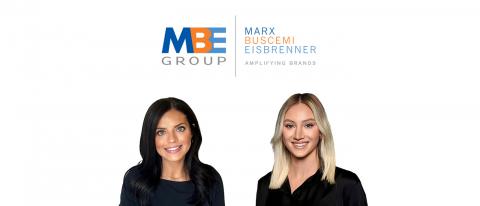
Marx Buscemi Eisbrenner Group (MBE Group), a marketing communications agency serving the automotive, mobility, trucking, tech and consumer goods industries, has hired Bianca Shepse and Sydney Croft as account executives.
Shepse and Croft will lead client initiatives through digital marketing, brand strategy, event coordination, social media and media relations activities. They will be based out of the company's new headquarters in Troy, Michigan.
Shepse joins MBE Group after spending more than five years developing and executing marketing and communications strategies for small businesses. Most recently, she was a digital marketing manager and event coordinator for an event management company.
Croft, meanwhile, most recently held the role of a senior analytics digital consultant for automotive OEMs and dealerships, including brands like Jaguar Land Rover.
Holley has appointed Philip Dobbs to the newly created role of senior vice president of customer experience marketing.
As senior vice president of customer experience marketing, Dobbs will lead strategy and management for the full Holley brand portfolio, overseeing advertising and promotions, public relations, content marketing, tradeshows and events and digital/website solutions. He will also be responsible for the management of the Holley customer engagement center, third-party marketplaces and the company's direct-to-consumer business.
Previously, Dobbs was chief marketing officer at Bridgestone Americas, where he led the company's integrated marketing efforts for more than 11 years.
Öhlins Racing, a Swedish manufacturer of suspension components, has named Marc McAllister as the brand's new vice president and general manager and Tom Wittenschlaeger to the newly created position of general manager, North America.
McAllister replaces Henrik Johansson, who announced last fall that he would retire after nearly 30 years as a member of the Öhlins team.
McAllister joins Tenneco, Öhlins Racing's parent company, after spending the past 30 years in the powersports industry. He most recently served as president and CEO of Tucker Powersports. Wittenschlaeger joins Tenneco from AYRO, a low-speed electric vehicle company based in Round Rock, Texas, where he served as CEO. Prior to his time with AYRO, Wittenschlaeger was CEO of Stator MicroMobility and spent four years with FOX Factory.
Lubrication Specialties, the Ohio-based manufacturer of Hot Shot's Secret, has appointed Steve Green to lead the company's dealer sales management.
As Hot Shot's Secret's dealer sales manager, Green will be responsible for developing the strategy to expand the Hot Shot's Secret dealer network supporting multiple markets, including performance, racing, truck, agriculture, RV and fleet. He will be responsible for developing the sales staff, territories, promotions and customer support to ensure a robust sales network for the growing Hot Shot's Secret product line, the company said.
Green has two decades of sales management experience working for companies in automotive and heavy-duty transportation aftermarkets, outdoor shooting sports and law enforcement equipment.
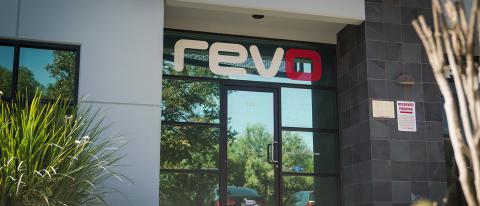
REVO, a United Kingdom-based provider of performance tuning electronics and performance parts for Audi, VW, Porsche, Ford and other global brands, has opened a new facility in Murrietta, California, to better serve the North and South American markets.
The California facility serves as a hub for all United States distribution and sales and serves as a development center for North American vehicles. REVO will also offer training for factory certification at the facility.
"We are excited to establish our physical presence in the US," said REVO owner Mark Yates. "This has been in the works for some time and we are pleased to announce that Revo has arrived. We understand how critical it is to have a regional support base to ensure our customers' success and believe that our efforts will prove that we are serious about supporting the North American market."
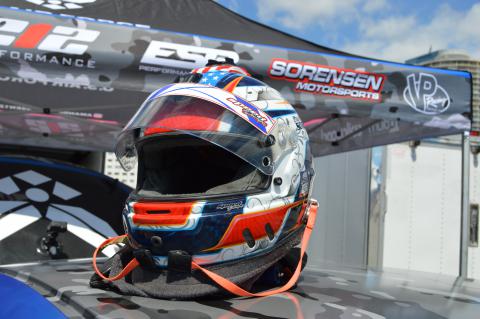
Advances in design, materials, and construction methods are producing helmets that are safer, more comfortable, and more versatile than ever before.
Like many aspects of motorsports, helmet design is largely a balancing act between features, function, and cost. If one of these aspects is allowed to run wild, it typically comes at the detriment of the other two, and that makes breakthrough innovation a tricky proposition.
But thanks to advances in development and production technologies, helmet manufacturers are finding ways to innovate that simply weren’t feasible a decade ago. As a result, racers are getting advanced protection that’s increasingly dialed in to their specific needs.
“Today we’re using software like Fusion 360 and Solidworks for development, and 3D printing tech for prototyping,” said Gary Peters of Simpson Race Products, New Braunfels, Texas. “It really speeds up the development process, but we also still use clay modeling for some ideas. Sometimes that ends up being a quicker way to create something or make a change. The construction materials have evolved significantly in recent years as well, and those have led to improved manufacturing methods with more consistent results. For example, in the past we used composite fabrics, and we would coat in the resin by hand after each piece of material was installed. Now we’re using more pre-preg materials, and that reduces excess resin in between the layers, which results in lighter shells with better fit and finish.”
Technical advances have also ushered in other improvements in aspects like aerodynamics and visor sealing, and that in turn has allowed manufacturers to put a greater focus on comfort and modularity while still ensuring that their products meet the latest safety standards.
Plush Appointments
While safety is ultimately the top priority in helmet design, comfort is also a core development focus. Because of racing’s physical demands, and the inherent need for a snug-fitting helmet to provide effective protection, manufacturers are continually on the hunt for ways to make wearing a helmet a less cumbersome affair for racers. Over the years, that’s brought features like air venting and interchangeable cheek pads into the fold, and as Steve Russell of Pyrotect in Redmond, Oregon, explained, manufacturers are now taking those concepts a step further.
“We’ve now designed the inner liner of the helmet into a four-pad system, so you can essentially re-size the helmet to get an absolutely perfect fit,” Russell explained. “You can change any one of those pads, or all four of those pads, with different thicknesses to essentially tighten or loosen the helmet as needed to better fit the shape of your head.” Separate from the interchangeable cheek pads, this four-pad system focuses on the crown of the head to additionally improve fitment.
Impact Racing has been able to achieve safety certifications while also minimizing the size of its helmets, which improves driver comfort. “Anyone can pass those tests if they build a big enough helmet,” said Ben O’Connor. “The challenge is achieving those safety targets while keeping the helmet small.”
Danilo Oliveira of G-Force Racing Gear in Acworth, Georgia, noted that the company has adopted a similar approach across its helmet lineup. In an era when the majority of helmet purchases are made online rather than in-store, this adjustability made it much easier for racers to purchase a helmet that feels custom-made.
“Someone might find that a medium-sized helmet is too tight, and a large helmet is too loose, so they don’t really have an ideal solution either way,” he said. “With a system like this, we can suggest trying the large helmet with more padding or using the medium with a little less padding. Sometimes it’s not the shell of the helmet that is the issue, it’s the padding inside. If we can provide the opportunity to the customer to make those small adjustments, it can really improve things if they’re in between sizes. Two millimeters can make a difference when it comes to comfort.”
Russell said that while Pyrotect was developing its crown pad system, it also took a closer look at how air flowed into and out of the helmet to further improve comfort.
“Years back, at the very top of the inside of the helmet, you’d have a smooth crown pad and a smooth headliner, and some manufacturers would pump in air through a couple of ports at the top of the head, but the air had nowhere to go,” he explained. “You’ve got to have air movement in order to have a cooling effect, so we spent a lot of time looking at that. Our design utilizes a double inner EPS core: Air blows in through certain ports and is routed through channels in the liner and the head pad. We also use exhaust vents at the back of the helmet to ensure that the air has to go over the top of your head and then out of those vents. Creating a place for the air to go provides that flow.”
G-Force Racing Gear is improving helmet fit through the use of interchangeable pads inside the helmet. They allow racers to make small adjustments, “which can really improve things if they’re in between sizes,” said Danilo Oliveira. “Two millimeters can make a difference when it comes to comfort.”
Ben O’Connor of Impact Racing in Indianapolis, Indiana, said that comfort is being improved through weight reduction as well. “The size of the helmet affects that. We don’t want a large helmet, and ours is significantly smaller in diameter than the majority of what’s on the market today while still achieving the same safety certifications. Anyone can pass those tests if they build a big enough helmet. The challenge is achieving those safety targets while keeping the helmet small.”
Oliveira told us that material improvements have been the key to bringing that mass down. “When you reduce a helmet’s weight by, say, 100 grams, it’s going to make a noticeable improvement in driver comfort,” he explained. “The driver’s head is being subjected to significant G-forces in a race car dozens—or even hundreds—of times during a race. So, if you can reduce weight by even that much, it’s going to make a difference in fatigue, and in turn overall comfort, throughout the race. For us, the materials are still primarily fiberglass and carbon. The difference is that, in the past, a carbon helmet might have actually been 70% carbon. Now we have helmets that are 100% carbon. Before you had to have some fiberglass involved in order for the helmet to provide enough protection, but with the latest materials that are available, we’re able to provide that protection entirely with carbon. That makes the helmet much lighter as a result.”
Tailored To The Task
Manufacturers typically offer a range of different shell types to provide racers with a helmet that’s specialized for a given application, whether that’s the aerodynamic needs of open wheel racing or the environmental concerns of off-road competition. While these design elements address some of the key requirements of various use cases, recent development efforts have seen an increased emphasis on modularity as well.
“The goal is to get these helmets to accept a wider range of electronics, and more ear-cup capable,” said Peters. “There’s got to be room in there to make ear cups work, so you’ve got to have cheek pads of different shapes, and relief in the EPS to provide that space. And, of course, all of that has to be tested to ensure that the helmet still provides proper protection.”
Given the array of different accessories that a helmet can be outfitted with, manufacturers are now making a stronger effort to offer these options right out of the box. That way racers don’t have to do it themselves and risk compromising the helmet’s integrity.
With the array of different accessories that a helmet can be outfitted with, and racers’ potential concerns about compatibility and aftermarket installation hassles, O’Connor said that manufacturers are now making a stronger effort to offer these options right out of the box.
“The big thing for us is that we want to offer all of that in one turn-key package,” he explained. “So if you’re racing in the Baja 1000 and you want to have a helmet skirt, FHR posts for a HANS device, and you’re planning to run PCI wiring in the helmet with ear cups as well as a FluidLogic hydration system, we can send you a helmet that’s immediately ready to go. That means you don’t have to send it out to five different companies for retrofitting, or risk your safety by doing it yourself, which could potentially create a dangerous situation if the helmet is modified in a way that it shouldn’t be.”
Greater modularity is being designed directly into the helmet shells as well. “We make a helmet that has a mid forced-air attachment, and it also comes with a side forced-air attachment,” said Russell. “So if you’re driving a car with low head clearance, you can take the top air piece off, put the cover on that element, and use the side port instead. It also comes with a communications and drinking tube cover, which can be utilized to plumb your radio and hydration system. All of these attachments and covers come alongside the helmet in the box, and that allows the customer to configure the helmet to their preference once they’ve decided how they want to use it.”
Upping The Ante
While the safety of modern racing helmets is largely dictated by Snell and FIA certification requirements, each manufacturer takes a slightly different approach in its mission to reach those targets. For its part, O’Connor said that Impact Racing’s emphasis on minimizing weight with reduced shell sizes also provides safety benefits alongside enhanced comfort.
“The lighter a helmet is, the safer it is in terms of preventing secondary injuries like whiplash,” he explained. “Some of the big differences with today’s helmets are in the composites, along with different fabrics, resins, and different ways of laying the materials up. There are now more advanced techniques that ensure better penetration into the matting with the resin. That’s not only going to help it absorb energy more effectively, but it’s also going to allow you to create a stronger shell overall with less resin, which results in less weight.”
Meanwhile Peters said that reaching these safety standards without compromising other aspects of a helmet’s design requires some deliberate strategy. “The new standards force manufacturers to make changes. If they change the impact requirements, you may need to stiffen up the shell, or you may need to make the shell more flexible in combination with a certain density of the EPS foam. Weight is always one of the biggest concerns, so we’ll take different materials and produce different layups for the shells, and we’ll try various combinations of materials placed in specific areas. There’s a bit of trial and error to it; the testing doesn’t always go the way you think it will. With some products, we’ll work with aerospace construction companies to get their insight regarding the kind of strength we need in certain areas to reduce weight while still reaching those safety goals.”
Simpson Race Products is using “Fusion 360 and Solidworks for helmet development and 3D printing for tech prototyping,” said Gary Peters. “The construction materials have evolved significantly in recent years as well, and those have led to improved manufacturing methods with more consistent results.”
As the new Snell 2025 certification standard approaches, manufacturers like Impact Racing are now working to find ways to meet the elevated requirements without making sacrifices elsewhere.
“The idea is that each standard results in an incrementally safer helmet than the previous one,” said O’Connor. “But there are always trade-offs in whatever you do. For example, maybe you need to bump the impact resistance by 20% but the only way to get there is to make the helmet 10% heavier. This time around the main focus is on reducing the G-forces that the head is subjected to in an incident. It’s not a huge jump, but it’s significant enough that there’s going to be a little bit of development work involved. Some of the stuff we have is already beyond that standard, so it’s just a matter of re-testing it, but we like to stay ahead of the curve.”
Looking ahead, Oliveira also expects more sophisticated technological integration in the helmets that we’ll see a few years down the road. “A lot of companies are looking to improve radio integration at the moment. And there’s a lot of discussion around headphones with noise cancellation features, so you hear the radio rather than the noise inside of the car. Bluetooth is also something that I expect to see more of in radio systems in the coming years. The technology hasn’t been perfected for this type of an application yet, but there are benefits in terms of reducing the wiring that has to be hooked up to the helmet, so I think we’ll see more development there, too.”
But as Russell noted, the pace of innovation in the helmet world is heavily influenced by the safety standards that all manufacturers must adhere to. “If you’re going to come out with a new helmet design, you want it to be something that will suit the market for a 10-year period. This is why some manufacturers don’t make a XXXL helmet, or a larger shell helmet. If the market isn’t there in the five to 10 years of the standard, you may not be able to recoup the development and production costs. That’s why we try to do our big design changes every 10 years. I think that with the 2025 standard being more of an incremental change, the biggest leaps in design will probably be aimed at 2030.”
Continuing education is just one component of the PRI Show. Our PRI Education program offers advice and tips that can quickly be implemented, beginning with these highlights focused on improving business starting today.
“Never stop learning” is an often-cited mantra by successful leaders who value education and the ability to learn new concepts, techniques, or theories. Education goes far beyond K–12, and even college or tech school training. PRI acknowledges the value of continuing education, which is why the PRI Education program is a core component of the PRI Show. Each year’s PRI Education program is carefully crafted to allow thought leaders and technology innovators in the motorsports industry to share their knowledge, which allows PRI Show attendees to leave Indianapolis with valuable tools to ignite sales, improve performance in marketing and promotion, or just implement new methods of conducting business.
The following is a summary of just some of the quality information about how to operate a business that was shared as part of PRI Education, which you can promptly start using in your organization.
Marketing Strategies for Today
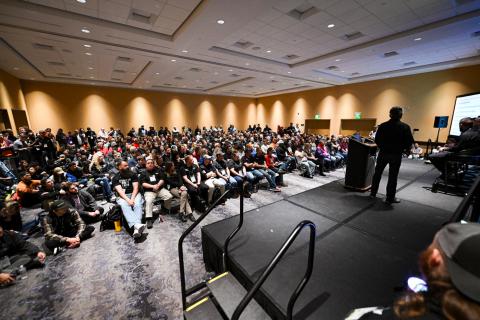
The importance of digital media, and more specifically social media, cannot be understated for the motorsports industry overall, and more specifically to drivers, teams, race tracks, and more. In fact, any PRI Education seminar that focuses on the digital world fills the Indiana Convention Center meeting rooms.
Digital marketing includes social media, along with other promotional avenues, and Bryan Robb of Digital Throttle in Incline Village, Nevada, shared the lessons he learned over several decades in the automotive and motorsports industries in “Digital Marketing: Lessons Learned.”
To understand how relevant social media is in today’s digital-centered world, Robb provided a breakdown of US users per platform. Facebook currently has 256 million, YouTube has 239 million, TikTok 150 million, Instagram 143 million, SnapChat 109 million, X/Twitter consists of 99 million, Pinterest has 85 million, and Reddit has 26 million. Of those numbers, 56% of YouTube users are between the ages of 18–44, half of all TikTok users are ages 24 and under, 62% of Instagram followers are between the ages of 18–34, and 59% of those on SnapChat are 24 or younger.
Why is digital media so important? Robb shared some startling statistics: The average time spent per day by US adults on digital media was estimated at 7 hours and 34 minutes in 2023! Traditional media garnered only 4 hours and 53 minutes. And the digital timeline is only charting upward.
That pocket computer called a “cell phone” is truly valuable where digital ads are concerned, as 64% of them are seen on a mobile device. In addition, approximately 80% of digital ads are clicked from a mobile device.
When determining what content to include in social media posts, Robb provided a “good, better, best” example. In the “good” category are product shots, customer vehicles, and contact information. “Better” includes lifestyle images/posts, Events/Recent Stories, and one to two posts per week. Actively posting, videos, and creating community fill in the “best” category.
For online searches, Robb reported that 88% of users choose Google as their preferred search engine, though don’t overlook the importance of Bing, which makes up 12%. Under the topic of “Learned Google Search,” he advised using all the free search ad elements available, which includes validating the company to show the logo, name, and the customer service phone number. Also include callouts with information, images, and site links.
Another lesson learned that he shared is free social posting is not advertising. Six percent of your followers will see your organic posts. He added that “boosting” a post is not always beneficial because of imprecise targeting and inaccurate reporting, and it can be expensive.
Finally, once social ads are posted, don’t click and forget. Be sure to monitor the questions and comments in the ads you run.
Alex Striler, marketing and sponsorship expert, and founder and host of SponsorshipSummits.com, returned to the PRI Show to present “Using Social Media and Technology to Create Value for Sponsors.” He was joined by Megan Meyer, founder of MotorsportsMarketingTips.com, and Cole Striler, a software engineer who specializes in data science, AI, and workflow analysis.
A core component of the annual PRI Show, the 2023 PRI Education lineup filled meeting rooms in the Indiana Convention Center and Lucas Oil Stadium. People are hungry to expand their knowledge base, and the 22 seminars delivered with a focus on Business, Technology, and EV and Alternative Fuels.
When choosing which social media platforms to be on, the team recommended being “selective where you post content and who you are trying to reach.” Consider the different ages of your audience, their interests, and uses. Ask yourself the following questions: What is the key to being memorable and valuable when using social media? If everyone is on social media, how can you stand out?
A self-proclaimed “social media Grinch,” Kyle Estes of KRT in Rosemount, Minnesota, found the social media seminars helpful. “It was pretty clear to me that in order to do what you want to do on the marketing side that you have to be active on social media.” As a result, he planned to expand into the digital marketing platform upon returning home.
Branding
Another component of marketing is branding. Ben Porter of Redline Ace in Speedway, Indiana, shared tips he’s learned over 23-plus years of his graphic design career, with a focus on logo and brand design. Branding, he explained, is based on a consistent theme made up of a company’s name, logo, visual identity, mission, values, and tone of voice. The goals of a successful logo are an invitation to interact with your brand, a symbol that customers can easily recall, how to separate your brand from your competitors’, how to command respect and set precedence, and how to foster brand loyalty.
When designing or refreshing a logo, several design provider options are available. Choosing to do it yourself may be appealing pricewise, but does it deliver the uniqueness or quality that you desire? Copy and pasting is another option to mimic what others have done, which is fast and cheap, but isn’t unique and may not offer the quality that is desired. AI was a topic in several seminars at the PRI Show, and this technology is now available to design a brand. While it can definitely be fast, cheap, and even offer a higher quality than the other two methods, is it unique? Finally, a professional designer can work with a customer to deliver that unique and high-quality logo, but the professional service does come at a higher cost and takes longer. When considering using professional services, review that expert’s portfolio for examples of what has been delivered to other customers. Seeing that high-end result can easily sway someone to see the value of choosing a professional designer.
As the digital marketing landscape constantly changes, marketers need to stay updated to the latest trends and technology. Bryan Robb of Digital Throttle shared his expertise in his seminar “Digital Marketing: Lessons Learned.”
When designing a logo, Porter offered advice to those who are already working with clients. First, he recommended evaluating the individual (such as a driver) or a business. Next, research the industry, and then find out where the logo will be used. Sketch a variety of logo concepts and develop an initial set of proofs for the client. Finally, refine the designs with feedback and deliver the final logo files to the customer.
Yazz Maye and Charles Demmings of MassAppealDMV in Upper Marlboro, Maryland, attended the “Graphic Design and Branding” seminar. Maye noted that a helpful tip she picked up from the seminar was don’t give clients too many options at once when designing a logo. “Break it down, simplify it, bring it step by step. Don’t bring in colors, specifically, don’t bring in color until the end of the design. It’s so simple and it makes sense. Why didn’t I think about it sooner?” she asked, laughing.
“But you are so focused on giving the customer immediate gratification, especially with social media in this day and age, everyone wants something yesterday. Not even now, but yesterday,” she added. That one little step seems like it would drag the process on, but it actually makes it that much faster because it allows them to make that decision quicker and move forward. That was invaluable.”
In the Trenches
Sometimes business owners get lost with ideas of grandeur and think they need to go in myriad directions to be successful. Tom Shay of Profits Plus Solutions in Dardanelle, Arkansas, discussed why getting back to the basics is often needed to course correct in “Why A Business Plan Can Make You More Money.”
A business plan is a common requirement to obtain a small business loan at a local bank. Sure, it’s needed for that, but it can also serve as a guide to where you want to take your business in the next year, three years, five years, and longer. A benefit of a business plan is that it is not static. This document can be updated to address changing market conditions, new or different goals, or when new product lines or services are added.
Shay outlined the basis of a business plan, which includes a cover page; table of contents; series of introductory statements; vision statement, such as what your business looks like in three to five years, or the length of the loan you are requesting; where your company is going; company’s mission statement; statement of purpose, which is who you are, what you are going to do, what you want with regard to funding; and concluding with an executive summary, which Shay referred to as the “CliffsNotes” page of your business plan.
Anyone who attends a PRI Education seminar taught by Tom Shay of Profits Plus Solutions can count on receiving sage business advice. Shay provides useful, real-life examples of what to do and what not to do to operate a successful company.
While a business plan may be a basic tool for a company, Krista Lamb of DeatschWerks in Oklahoma City, Oklahoma, discussed a more advanced option in “ERP Selection and Implementation Doesn’t Have to be Disruptive.” In this seminar, she provided an overview of ERP, or enterprise resource planning. ERP refers to a type of software that organizations use to manage day-to-day business activities such as accounting, procurement, and supply chain operations.
Lamb shared her personal experience with going through this process and freely shared what worked and what didn’t. To begin the process, she visited every staff member at DeatschWerks and asked them to list their job duties. After 90 days, she returned to each person and asked if they forgot anything, followed by what they liked about the current processes in place as well as what they didn’t like.
If your organization is considering implementing ERP software, she provided a path to selection. Step one is to gather information. Interview your organization’s leaders and employees in all areas of your business, as noted above. Step two is to understand flow. Outline how various business processes flow through your organization. Step three is to define the requirements. Develop and rank a set of requirements for each of your business areas. Step four is to conduct market research. Research the ERP marketplace and determine an initial list of solutions. Request information is step five. Develop and publish your Request for Information (RFI), then evaluate the responses. Pruning makes up step six. Narrow the list of options to solutions that best fit your requirements. Step seven is to find solution demos. Schedule onsite demonstrations, evaluate participants, and further narrow down your options. Request proposals is step eight. Request and evaluate proposals from the top software vendors on your list. Step nine is references and visits. Check references from your proposal requests and conduct onsite visits. Finally, selection is step 10. Select the final solution and negotiate the terms of your agreement.
Her last piece of advice is to avoid business disruption by not getting ahead of the process. Provide training until the subject matter experts are confident. Test everything multiple times, then identify and support an internal project owner for implementation.
To watch these and all of the PRI Education seminars from the 2023 PRI Show, visit PRI’s YouTube page at youtube.com/user/pritradeshow.
Nostalgia drag cars are getting faster and drawing bigger crowds, but is the rest of the industry paying attention?
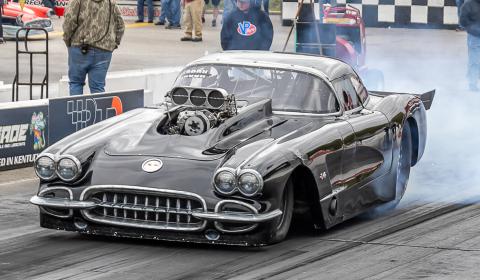
Attending a nostalgia drag racing event may seem like stumbling into a time warp, but it would be wrong to assume that nostalgia racing is simply some sort of historical replay, like a Civil War reenactment on a battlefield. The cars keep getting faster, the crowds keep getting larger, and hidden yet modern technology is making the cars safer.
It’s a dynamic scene, but what does that mean for a motorsports industry that has traditionally preferred to look forward, not backward? Track-level anecdotes suggest there are plenty of opportunities for savvy racing suppliers to make inroads in this growing market.
Wayne Ramay of Performance Forge in Montebello, California, drives the fastest blown A/Fuel dragster in the nation. “Most classes have grown, although some have not. As for what is different today, the current racers seem to be more serious about performance, while two decades ago the early racers were more about barbeques and socializing,” Ramay reported. “The bracket classes, the slower classes, there seems to be a lot of growth in Nostalgia Eliminator, 7.0 Pro, the drag racing classes that race against an index, so it makes it a little easier to be competitive.
“Recently I’ve seen even Top Fuel and Funny Car growing,” he said. “Top Fuel had two fields at this last race, a top-half field and a bottom-half field. And Funny Car just had gobs of cars. There’s definitely some growth going on with people building cars. My class, unfortunately, A/Fuel, that’s not the case. We’ve shrunk a little bit, so not all the classes are growing, but a good majority of them are.”
Many nostalgia drag race cars, like Mike Ruth’s Bob Glidden Fairmont, balance their nostalgic look with contemporary parts in the interest of safety. Ruth installed a Funny Car cage in the Fairmont “because I’m going faster than what the rules require. Most people don’t even notice.”
Nostalgia drag racing is steadily raising its profile among a more general automotive audience as well. In late November, “we were at the Muscle Car and Corvette Nationals, the largest indoor show of its kind in the country,” said Mike Ruth, who drives a Bob Glidden Ford Fairmont with the Midwest Pro Stock Association. The Muscle Car and Corvette Nationals is held every November in suburban Chicago, and features hundreds of the finest restored and original vintage muscle cars and Corvettes. “When I left after the show, the organizer shook my hand and said, ‘Your group, your display, was the talk of the whole show. You hit it out of the ballpark.’ We were mobbed the whole time.”
Speed and Balance
One thing keeping the sport interesting is that the cars keep getting faster. “I know we have increased significantly,” Ramay said. “Even just over the last five years, we’ve taken off another tenth or two-tenths of a second. It keeps getting faster. We made some rule changes last off-season to try and slow us down a little bit. I think people are afraid to join the class because it just looks like it has run away and it’s hard work and going to be hard to compete.”
Merritt Snyder, with the Pennsylvania-based Mid-Atlantic Nostalgia Drag Racing Association (MANDRA), has seen more cars hit milestone ETs. “I think we had more 8-second cars this year than ever before,” Snyder said. “At the end of the year we do acknowledge the low ET for the year. This year I believe there were at least four cars that had run 8-second runs. There have been a lot of years where there was only one person with an 8-second run. But they are not causing problems in the class. I did kind of see this coming when we passed 1982 [on MANDRA’s 40-year cut-off], because now all of a sudden, an ’82 Camaro Pro Stocker is a nostalgia car, theoretically.”
A major factor behind those quicker times is the adoption of modern speed parts. That creates a potential conflict in striking a balance between new-generation technology and true nostalgia, but the racers and organizations we spoke with didn’t see it as a problem.
“There’s nothing old in my car,” said Wayne Ramay of his A/Fuel dragster, which is powered by a “brand new Alan Johnson billet Hemi and the best parts you can buy anywhere. It’s not that you have to have old parts to sell to us.”
“Most of the changes we make don’t have an impact on the appearance,” Ramay said. “They’re much more hidden, like the transmissions or the torque converter, or internals to the engine that people aren’t seeing. There are some electronics on the car. We’re allowed to run electronics in my class. Learning how to get the most out of those electronics is just something that we learn. Some people are better at that than others, and it maybe shows in their performance a little bit.”
Ramay pointed out an example of hidden parts on his car that improve performance but don’t ruin the nostalgic affect. “I’ve got some brand new pistons that are a new, recent design,” he said. “They’re using them in Top Alcohol Funny Car and Top Alcohol Dragster. It’s a great design that really stabilizes the piston. I’ve started running those in my car and it’s really helped.”
Butch Hill, with the Nostalgia Drag Racing League (NDRL) in Mooresville, Indiana, acknowledged some concessions that have been made in incorporating modern technology. “We have let Grids into the program. Guys can now use an electronic Grid. But that Grid can’t control the car going down the track. It can control the car in the pits, and you can set your timing and so forth in the pits, but you can’t have things like traction control to control the time on the track,” he said. “With that, we’re trying to stay true to the old way as best we can with the technology that’s out there.”
Safety, of course, is a primary reason for incorporating newer parts that aren’t strictly period correct. “My car, originally when it was raced in 1979, did not have a Funny Car cage in it. Because I’m going faster than what the rules require, we put one in,” Ruth said. “A lot of the guys did that. Most people don’t even notice. I have a little bigger wing on my car than was used back then. The big thing that they notice is the bodywork—the tires and the wheels, the hood scoop, and the wheelie bars. The fans want to see the period-correct hood scoops, they want to see tunnel ram carburetors, the big Holleys, and they want to see the Lenco transmission.”
Fortunately, safety upgrades in the nostalgia ranks haven’t been controversial. “They’re definitely doing restrictions, whether it’s fire suits or SFI tags on wheels. If you go too fast, they’re most definitely making more requirements on us for safety,” Ramay said. “And none of us really fight that. I have a beautiful two-piece fire suit that’s good for the next five years, but it’s not good after the first of the year. My class now requires a one-piece suit. So I went out and bought one. It’s just part of the deal.
“I actually have a spreadsheet for my car that lists every piece of safety equipment on the car, who made it, what the number is, and when it’s due for recertification, so I don’t lose track,” he added.
MANDRA’s Merritt Snyder, who races this 1965 Comet, acknowledges that getting younger participants into nostalgia racing is a challenge. However, the series has implemented a 40-year cut off, which now allows cars manufactured up to 1982 to compete.
“Our rules, as far as the safety part of it, are extremely strict,” Ruth said. “All of our cars are NHRA certified. All of our drivers are NHRA licensed. We had HANS devices long before anybody thought about having them. There are fire extinguishing systems in the cars. We’re all about safety. Nobody wants to get hurt or hurt anyone. The caliber of cars in this group is top-notch. They’re all high-dollar cars driven by people who have been driving these things for 20, 30, 40 years.”
If striking a balance between modern parts and nostalgia appearance hasn’t been too much of a challenge, the bigger adjustments surround generational issues. After all, what qualifies as “nostalgic” is a matter of perspective. “The age group is changing. The nostalgia guys are nostalgia. The age group is higher,” Hill said. “At some point we’re going to have to move it up just to keep the crowd involved and keep the car counts up.”
One of the boundaries in nostalgia drags is the shift from carburetion to fuel injection in production vehicles and race cars, and all the technology associated with EFI. But it is inevitable that as the EFI cars age, they’ll become an increasing part of the nostalgia scene. “The 1995 car used to be brand new, and now it’s considered more of a nostalgia car, an antique vehicle. We keep going forward with these things,” Ruth said. “Originally it was all 1960s and ’70s cars. I’m of that era. I remember Bill Jenkins and Sox and Martin, all of that. But you get a guy that’s in his 30s or 40s? He doesn’t know who they are. That was way before his time. So we have it all. We’re doing everything from the 1960s up to the mid-1990s. I think we’re doing something right. We have more bookings than we know what to do with.”
For MANDRA, flexibility with rules is one way to attract new competitors to the sport. “A problem that we really do see is getting younger members, because it takes significant money to get an older car and get it back in good condition and prepare it for racing. That’s a problem,” Snyder said. “What we’re trying to do is be a little more lenient on rules. Ten years or so ago, if a car had an aero scoop or a wing, no chance. Now we’re kind of going by the three strike rule. If you have a car that has an aero scoop, a wing, and 33-inch tires, we’re probably going to turn you down. But if your car has a wing, and this guy has an aero scoop, and everything else is okay, yeah, we’ll overlook that. We don’t want to chase people away.”
Open for Business
With the growth in nostalgia racing, there are opportunities for aftermarket companies. It’s not hard to make a case that nostalgia drag racing is an underserved market.
“Watching a lot of drag racing this weekend as it finished up its season of the Big Show stuff, we don’t have a fraction of the advertising,” Ramay said in November. “People are just not marketing to us as racers, for whatever reason. I don’t know if it’s their view of nostalgia racing, what they think that is, from years ago maybe? Years ago, it was a bit different. In fact, they’ve recently changed the name of the last nostalgia race of the year, the Hot Rod Reunion, because they didn’t want it to be a reunion anymore. They want it to be a race.
One thing keeping nostalgia racing interesting is the fact that the cars keep getting faster. “Even just over the last five years, we’ve taken off another tenth or two-tenths of a second,” said A/Fuel dragster competitor Wayne Ramay.
“Most of our cars, with the exception of some of the slow classes, are all brand new. There’s nothing old on my car,” Ramay continued. “I’m not racing an old car with a picked-up, warmed-up old engine. Mine has a brand new Alan Johnson billet Hemi in it and the best parts you can buy anywhere. It’s not that you have to have old parts to sell to us.”
When it comes to both the drivers and the audience, there is considerable crossover between nostalgia racing and a more current, mainstream racing market. “The way I look at it, every guy that’s in nostalgia racing, a lot of them have a more modern race car as well,” Hill said. “When they’re not racing with NDRL, they’re racing in another program of some sort that’s the modern EFI type stuff.”
Some of the names that served the racing market when these vintage cars were new are discovering opportunities once again as the cars age into the nostalgia ranks. “I’ve had several really good conversations and meetings with the lady who runs Hairy Glass. Back in the day, that was where everybody got their fiberglass,” Ruth said. “She’s actually giving the guys a discount, and she’s selling the stuff. As more people start to build these cars, why not? She has the original molds for, say, a 1979 Camaro or all the Glidden cars except for mine—they started with Glidden with the EXP. It’s really good stuff, and she’s noticed an uptick.”
The view from the track is that nostalgia drag racing has a long way to go before peaking. “We’ve had a lot of people who’ve come up and shown us pictures on their phone and tell us, ‘Hey, I’ve got this Comet that I’m doing,’ or ‘I’ve got this Chevelle, I’ll be out next year,’” Ruth said. “Whereas a couple of years ago, everybody was saying, ‘Nah, it’s too expensive,’ or ‘It’s a fad, it’s going to go away.’ Nostalgia is not going to go away. Not just racing, but everything. Everybody thinks that whatever it was back when they were a teenager or 20 years old, that was the best. So why not ride the wave if you can? We’re about giving everybody a good time and letting them relive what they feel were the best years of their lives.” For nostalgia drag racing, the best years may still be ahead.
Attendees explain why they put the PRI Show high on their must-attend list every year and provide a glimpse of what paid off at the 35th edition of the ULTIMATE motorsports trade show.
The 2023 PRI Show may be over, but its influence on the racing industry is only beginning to be felt.
On December 7–9, tens of thousands of motorsports professionals gathered at the Indiana Convention Center and Lucas Oil Stadium in downtown Indianapolis for the 2023 Performance Racing Industry (PRI) Show, the most influential business event in racing. Featuring more than 1,000 exhibitors and almost 3,600 booths, it was an action-packed three days of education, networking, and showcasing cutting-edge products and machinery.
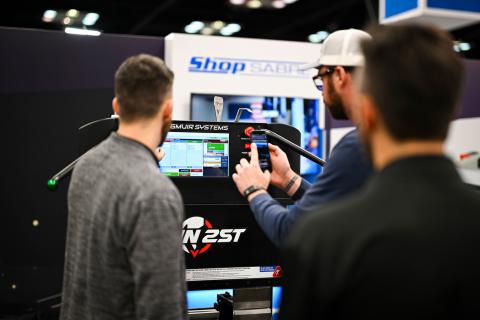
Much more than handshakes, the 2023 PRI Show attendees got plenty of hands-on experience with cutting-edge race parts and components. “What’s nice about coming here is you actually get to meet the people,” said one attendee. “The personal attention here is absolutely awesome.”
The reasons for attending the PRI Show are as varied as the disciplines we race—some folks come to build connections, others to buy the newest race parts, and many value the free education sessions—but in an industry where efficiency is essential, being able to accomplish multiple goals in one place makes the PRI Show valuable for everyone.
Wheeling and Dealing
“We come here every year with a goal to look for more speed,” said George Bessette Jr., a modified racer from Connecticut. “We always leave here with something, no matter if it’s knowledge or product.”
This year, Bessette was pleased to have found a good deal on a belt sander. “They have great deals here with show pricing. It’s awesome just to be able to come here and meet with people we usually talk to over the phone,” he explained.
The Northeast modified racer wasn’t alone in that last sentiment, as several attendees heralded the benefits of conducting business face-to-face with fellow motorsports professionals. For example, Volkswagen drag racer JD Curry Jr. traveled from Ohio to Indianapolis in search of hard-to-find parts for his VW. The trip paid off, as he found one vendor to custom build new intakes for a set of heads and another vendor to build a custom carburetor.
“What’s nice about coming here is you actually get to meet the people,” said Curry. “You can’t do that over the phone or through the Internet. The personal attention here is absolutely awesome.”
First-Time Connections
The opportunity to reconnect with colleagues and fellow gearheads keeps industry veterans coming back to Indianapolis on an annual basis. However, the PRI Show also offers an opportunity for fresh faces to introduce themselves to the industry. For first-time attendee John Esburnett, the general manager of Lee USA Speedway in Lee, New Hampshire, he arrived to Indy ready to learn.
“I’m new to the general managing role of [Lee USA Speedway], so we decided to come down here to PRI to learn new things,” said Esburnett. “I’m 25, so I’m just sponging it up and absorbing all that I can.”
When we spoke with Esburnett, he had just finished listening to the “State of the Racing Market” education session—one of 22 PRI Education seminars offered throughout the three days. The sessions were free to Show attendees and covered important topics ranging from “Advanced Technology in Dirt Late Model Racing” to “Digital Advertising: Measuring Success.” (Learn more about the PRI Education sessions beginning on page 50.)
Lucas Oil Stadium was activated to highlight the emerging trend of alternative racing—particularly the EV & Alt Racing and Esports sections. This included dozens of high-tech simulation rigs that gave attendees the opportunity to turn virtual hot laps.
Another first-time attendee was California-based Late Model driver, Kylie Glick. At only 13 years old, the young racer and her family flew from California to Indianapolis to help her gain exposure in the industry.
“This is our best opportunity to shake hands with big brands, meet people in the industry, meet other drivers, and just learn a ton,” said Mirinda Glick, Kylie’s mom. “Being able to collect it all in one spot where we can get that all accomplished, it definitely makes the trip worthwhile.”
For racers like Kylie, a simple handshake in Indy can be the first step to building a lasting connection that launches a lifelong career. The PRI Show is also a critical opportunity for organizations within the industry to connect and strategize for the coming year.
As buyers scoured the aisles for new products and machinery, suppliers stayed busy taking orders all three days of the PRI Show. Machinery Row is a popular destination for anyone considering adding new machinery or equipment to improve the bottom line.
Indianapolis local McKenna Haase is a 410 sprint car racer on the track, but off the track works to support the next generation of racers. She founded a youth motorsports foundation, Youth Racers of America Inc., as well as a youth racing team, Compass Racing Development LLC. Haase explained she was using the PRI Show as an opportunity to meet with folks from another youth racing organization, Speed Youths.
“We are just trying to get [youth racing] to be more important to this industry,” said Haase. “I think it is definitely a deficit that we need to address, and this event is giving us an opportunity to connect on that and have a good dialogue about it.”
Ultimately, that’s what the PRI Show is all about—connecting, networking, and planning how to improve for the 2024 season. No matter what your racing business specializes in, the PRI Show is where the business of racing gets done.
Chasing the Cutting-Edge
Just as race teams are always looking to elevate their performance, the same is true for the team at PRI. We listen to feedback and work year-round to improve the PRI Show and make it more valuable to our industry. In 2022, we began limiting attendance to PRI Members. The show floor is still revved up, but as New Jersey-based shop owner Andrew Jackson noted, the quality of the attendees has improved.
“Every year has been good, but also every year has been getting better,” said Jackson. “It’s become more condensed, less of a show for everybody and more of a show just for the industry. You’re able to talk to more companies because of the simple fact that there’s less congestion. It’s definitely been a better experience because you’re able to get more time with different people.”
For 2023, we continued to innovate and improve. We activated the space inside the Lucas Oil Stadium area to highlight the emerging trend of alternative racing—particularly EV & Alt racing and Esports. New activations included the return of live racing action on the e-karting track and dozens of cutting-edge simulation rigs for attendees to test their talent in sim racing. The updated layout infused new energy and showcased new disciplines, while the PRI Ekarting Classic presented by Top Kart USA had our PRI Happy Hour buzzing on the Show’s opening night.
“The Business of Racing Starts Here.” While that is always true for the PRI Show, the 2023 edition also included some actual racing with the inaugural PRI Ekarting Classic presented by Top Kart USA, which took place on the floor of Lucas Oil Stadium during the PRI Happy Hour.
“PRI has a lot of newer stuff out, like with the e-kart track and the simulators,” said Missouri-based drag racer Cory Clemens. “It’s been great this year.”
In its 35th year, the PRI Show was stronger than ever—both a celebration of our racing community and an essential event for the industry. From drivers to track owners, builders to buyers, the PRI Show provided a coveted once-a-year opportunity to gain invaluable knowledge, parts, and connections to fuel on-track success in 2024.
“If you’re not here, you’re not seeing what’s out there and what’s great about whatever type of racing you’re in,” said Clemens. “You’ve got to be cutting edge, and that’s what PRI is all about.”
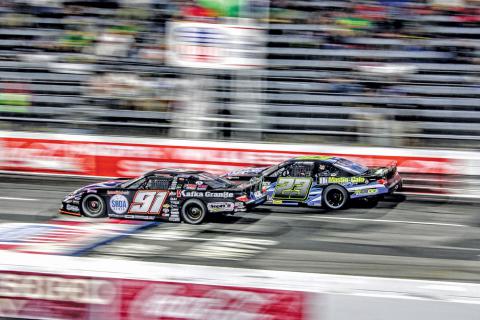
Ongoing efforts to contain costs and level the playing field have helped to keep asphalt Super Late Models healthy over recent years, while rising visibility and increased cooperation between series is establishing the path ahead.
Asphalt Super Late Model racing has seen some significant changes over the past few years. As Jeff Munro of All American Speedway in Roseville, California, noted, what was once a fragmented landscape of rulesets, schedules, and events—particularly on the West Coast—has evolved into a more unified front thanks in part to the concerted efforts of touring series organizers.
“The Super Late Model stuff has really been narrowed down recently,” Munro observed. “At this point we’re basically down to one group—SRL (StockCar Racing League)—that’s now doing this on the West Coast, and they’re hosting a national series. That has really brought things together in terms of rules package continuity with the rest of the country. It’s healthier to have one bigger group on the West Coast to spearhead the effort.”
That organizational consolidation also made it easier for Munro to introduce the Wild West Super Series as a way to offer local racers additional opportunities to get on track. “Last year we did a little four-race season at All American Speedway with the same rule package. Among the folks who race with SRL, there are probably a dozen of them who are based right in our backyard, so we wanted to put something together where they could race close to home. And we purposely set up our schedule to avoid any overlap with the other races. There are also strong indicators that some of these race tracks are going to change hands in the near future for various reasons, and those changes will likely bring even more alignment amongst the series.”
While these developments are encouraging for West Coast racers, Munro also quickly added that trends established in the Midwest and eastern regions of the country have really dictated the direction that the Super Late Model segment has taken on the whole.
Refining The Formula
As is the case with many motorsports disciplines, one of the biggest challenges that has faced Super Late Model organizers has been the need to find an agreeable middle ground between cost containment and innovation. As racers continue to incorporate increasingly sophisticated technologies into their programs, sanctioning bodies are often forced to react. If they don’t, they run the risk of driving away those without the financial means to do the same.
“Teams are getting smarter and smarter at a very rapid rate,” said Tim Bryant of Five Flags Speedway, Pensacola, Florida. “It’s a very intelligent bunch racing in Super Late Model, and with the advancement of technology, it’s getting tougher and tougher to stay on top of it. Tech crews across the country are challenged way beyond where they used to be. They have to try to stay ahead of those advancements as well as the loopholes that these really smart crew chiefs are continuously looking for.”
Several signs point to a healthy Super Late Model market, starting with the 56th annual Snowball Derby at Five Flags Speedway, which boasted one of its best car counts to date and an increased purse to match.
Those loopholes are often related to aerodynamics, Bryant said. “It really starts with the bodies. We’ve got a lot of what we call ‘North Carolina influence’ in Super Late Model racing these days. These teams are very clever when it comes to aero, and many of them have wind tunnel access. They find ways to tweak the bodies—and we’re talking about template body racing here. But small changes can make a big difference, so some folks will take a look at every template we have and find an area on the car where there isn’t a template and find some way to gain an advantage. We’re always looking for ways to keep that reeled in and keep the racing fair. I think we owe it to the smaller teams that don’t have those resources.”
Meanwhile Bob Sargent of the ASA STARS National Tour in Macon, Illinois, told us that greater cooperation between sanctioning bodies has resulted in a tangible effect on the costs faced by traveling teams. “Before we started seeing this effort to establish common ground between the series and tracks, there were some things that were getting out of hand and hurting the sport. Tires have always been a big concern—the amount of tires that the teams have been using, and the different tires that different regions have been using. It really starts to add up when it comes to costs. We’ve been putting a lot of focus into addressing that.”
Larry Collins of the SRL National Super Late Model Tour in Bakersfield, California, said that his series sought to replicate many of the successful organizational strategies that have been implemented in dirt racing. “Wherever you run a dirt late model, it’s pretty much the same set of rules and they’re enforced in the same way, so there’s consistency. The idea is pretty straight-forward: We wanted to ensure that teams could travel from one of our events to another series’ event and not have to make significant changes to the car in order to be competitive. So, a while back Ricky Brooks and I started working to unify the Super Late Model rules here on the West Coast and worked with series back east to make sure these traveling teams would be able to compete over there, too. That was a big accomplishment for us, and since then we’ve seen a lot more cars traveling the country and hitting those big events.”
The SRL has worked “to unify the Super Late Model rules here on the West Coast and worked with series back east to make sure these traveling teams would be able to compete over there, too,” said SRL’s Larry Collins. “Since then we’ve seen a lot more cars traveling the country and hitting those big events.”
Collins also noted how often NASCAR Cup series drivers are using Super Late Model racing to hone their skills outside of their primary racing endeavors, while more and more young drivers are looking at the discipline as a steppingstone into the upper ranks of motorsports.
“The Cup series teams like to come out to the weekday events as a way to stay sharp,” he explained. “We’ve heard from those teams that these Super Late Models are similar to the current Cup car from a drivability standpoint, and their participation keeps fan interest high. We have a lot of strong teams that are willing to travel and hit the big events as well, while in the past some of the bigger teams might’ve just focused on chasing points in one particular series. But we’re also about the veteran drivers like Bubba Pollard who have been in this sport for a long time and will continue to be involved in the sport. And we have these young up-and-coming drivers who are an integral part of it, too. They may not have the name recognition that the veterans have, but they have the talent, and a lot of them are looking at these marquee events as a way to elevate their visibility.”
The Balancing Act
As sanctioning bodies have worked to establish a consistent ruleset and contain costs throughout the country, the sealed engine package has become the power plant of choice for the majority of teams in asphalt Super Late Model racing. These 350-cubic-inch Chevrolet small block-based power plants are supplied by approved builders like Hamner Performance and Progressive Racing Engines, but some teams are also allowed to build a Southern Super Parts Engine (SSPE) from an approved list of components.
“It’s almost like a spec motor—anyone can build it,” said Bryant. “It has cost ceilings on individual parts, and there’s also a claim on that engine, which is currently at $24,000. Like the bodies, some of these folks are finding ways to squeeze more power out of these components, but we had sealed engines win races in 2023, so the rules are pretty close. And occasionally we will pull engines after a race and take them to an authorized engine builder to do back-to-back dyno testing on the different engine packages just to make sure that we still have parity.”
Greater cooperation between sanctioning bodies has caused a tangible effect on the costs faced by traveling teams, said ASA STARS’ Bob Sargent. “Before we started seeing this effort to establish common ground between the series and tracks, there were some things that were getting out of hand and hurting the sport.”
Bryant explained that sanctioning bodies are trying to keep significant year-over-year rule changes to a minimum as a general rule of thumb. “To some degree, constant changes frustrate the racers. One thing we hear from them is, ‘Quit trying to save us money. Every time you do, you end up costing us money!’ So we’re cognizant of that.”
With that in mind, the majority of tweaks for 2024 have focused on safety, like requiring steel roll bars on the right side of the car rather than aluminum, minimum thicknesses for aluminum bumpers, and steel plate protection on the front and back of the fuel cells. But there are a few rule tweaks that could affect performance more directly, too.
“We’re now requiring mufflers on the cars,” Bryant added, as “many of the tracks have adopted pretty stringent noise regulations. On the engine side, we’ve disallowed a specific oil pump—a very high-dollar piece on a dry sump engine—and we had a valve spring change for 2024. They’re relatively minor changes done in the interest of costs.”
Although it isn’t required, the ASA STARS National Tour is urging its competitors to use a 750-cfm four-barrel carburetor going forward. The 750 has long served as the standard for many events throughout the country, and series organizers are hoping to streamline things in the interest of parity and simplicity.
“It’s the carburetor of preference,” Sargent said. “What we’ve seen is that different sanctioning bodies and different tracks have tried to design rules so that it would give a lot of different carburetor options an equal playing field, but that’s very difficult to achieve, so we want to focus on the 750. We think that’s the best way to keep the playing field level for everyone at every event that they go to.”
Super Late Model racing helps drivers across the racing spectrum. NASCAR stars visit the weekday events to keep their skills up, while up-and-comers see the series as a steppingstone into the higher ranks, SRL’s Larry Collins said.
The introduction of a common Hoosier tire for asphalt Super Late Model racing follows a similar strategy of simplification in the interest of continuity and cost containment. “I think that will be healthy for the sport,” Bryant observed. “This is something that the racers have been asking for. When someone can go to a race track, unload their car, and do some practicing on the tires that they used at the last race—whether that was with the same series or a different one—they are going to save a lot of money over the course of the season.”
Keeping The Pace
Although ongoing challenges exist for sanctioning bodies and event organizers, there’s a near-universal sense of optimism about the future of asphalt Super Late Model racing.
“Right now, there’s this trend of promoters and tracks one-upping each other with bigger and bigger payouts and things like that,” said Munro, who predicted December’s Snowball Derby was on track to be one of the largest events in Super Late Model history, when interviewed just prior to the event. “It seems like a lot of it is being inspired by what’s going on in the dirt world—events like the Eldora Million, where those drivers are racing for a million dollars to win. I think a lot of folks in asphalt Super Late Model want to get these events into that realm.”
With an increased presence through streaming services like FloRacing, that level may be within reach sooner rather than later. “The amount of exposure that’s available even at the local level is unprecedented,” Collins said. “The streaming services have been a game changer in terms of how people follow the sport, and how fans can access the races even if they can’t get to the track. When it was first introduced, people had mixed feelings about streaming. There were concerns about it hurting ticket sales and that kind of thing. But it’s part of the sport now, and as far as we’re concerned, the results have been overwhelmingly positive. It creates more exposure for our teams and our events.”
Bryant cited another similarly important trend as well. “The developmental teams are coming. The drivers have gotten younger. A lot of that goes back to karting and quarter-midget racing. These kids are getting a really early start, and by the time they’re 13 or 14 years old, they’re ready to step into a Late Model. We’re seeing a lot of that, and many of them have their sights set on the higher levels, so they want to run the marquee events and make a name for themselves. That used to be kind of an anomaly in this type of racing, but it’s almost becoming the norm. I think that as long as the economy stays healthy and there’s funding out there for these younger drivers, it’s a trend that’s going to stick around for a while, and we’ll see even more of it.”
 MEMBERSHIP LOGIN