Tracking legal, legislative, and regulatory developments impacting the racing and performance industry.
PRI’s Washington, D.C.-based legal and advocacy teams work continuously to protect and support motorsports venues, sanctioning bodies, and businesses around the nation. We are tracking several initiatives this month, including the upcoming SEMA & PRI Washington Rally, a successful industry advocacy event in West Virginia, and a new bill introduced by Kansas lawmakers that would secure consumer freedom.
Attend the SEMA & PRI Washington Rally
Don’t miss out on the opportunity to attend the SEMA & PRI Washington Rally, taking place in Washington, D.C., on May 8–9, 2024. The Washington Rally provides an opportunity for SEMA and PRI member companies to come together and advocate on behalf of the specialty-automotive aftermarket and motorsports-parts industries with members of Congress.
By attending the Washington Rally, you will have the opportunity to meet with your members of Congress and their staff, discuss critical issues, and advocate for policies that will benefit our industry. Your participation will help ensure that our industry’s concerns are heard and that we can continue to innovate and grow.
Whether it’s protecting the right to repair and modify vehicles with advanced technology, combating vehicle technology mandates that limit consumer choice, or protecting motorized access to federal government lands, there are many issues facing SEMA and PRI members in the nation’s capital. With the 2024 presidential election heating up and the balance of power in both the House and Senate up for grabs, it’s more important than ever for SEMA and PRI members to come to Washington, D.C., to advocate for the industry!
SEMA and PRI have a limited number of rooms available at the Royal Sonesta Washington, D.C. Capitol Hill for $409 per night plus tax. A link to book a room will be provided upon completing the registration form. The deadline to RSVP for the Washington Rally and book a room in SEMA and PRI’s room block is April 15.
Below is a list of 2024 Washington Rally events:
Wednesday, May 8, 2024
5:30 pm–7:00 pm: SEMA-PRI PAC Reception, Royal Sonesta Capitol Hill, Sapphire Room & Terrace – Penthouse level
*A PAC contribution is required to attend in the suggested amount of $250 per individual. If you have already contributed to the SEMA and PRI PAC in 2024, this event may be complimentary as a part of your PAC Membership Benefits. Please contact PAC Manager Alicia Steger at alicias@sema.org if you have any questions.
7:00 pm–9:00 pm: Washington Rally Congressional Dinner, Royal Sonesta Capitol Hill, Crown Ballroom – Penthouse level
Thursday, May 9, 2024
7:00 am–8:30 am: Breakfast & Welcome Briefing, Royal Sonesta Capitol Hill, Crown Ballroom – Penthouse level
9:00 am–12:00 pm: Meetings with Congressional Representatives, House & Senate Office Buildings
9:00 am–3:00 pm: Cars at the Capitol Event, Southwest side of the US Capitol on Maryland Avenue (across from the Botanical Garden)
12:00 pm–1:30 pm: Congressional Luncheon, Capitol Hill Club, Eisenhower Room
2:00 pm–5:00 pm: Meetings with Congressional Representatives, House & Senate Office Buildings
Racers and Lawmakers Celebrate 2024 Motorsports Day at West Virginia Capitol
Industry professionals, elected officials, and state agencies came together on February 23 for the 2024 Motorsports Day at the West Virginia Capitol. The event served as a platform for collaboration, education, and the celebration of motorsports’ significant contributions to the Mountain State.
“Participating in West Virginia Motorsports Day is vital for SEMA and PRI,” said Christian Robinson, SEMA and PRI senior director of state government affairs and grassroots. “It afforded us direct connections with lawmakers and industry-driving businesses. Through events like these, we can advocate for the future of motorsports, and celebrate its positive impact on communities in West Virginia.”
2024 Motorsports Day at the West Virginia Capitol
In the State Capitol Rotunda, more than 30 businesses and vendors, including SEMA and PRI, showcased the diverse landscape of West Virginia’s motorsports scene. Meanwhile, outside the Capitol, more than 30 racing vehicles displayed the pinnacle of motorsports engineering and design. Notably, Chaos Motorsports’ AK Whatley received legislative recognition for completing the grueling 2024 King of the Hammers event.
Throughout the day, attendees engaged in open discussions and networking, fostering collaboration, and identifying avenues for growth with government officials and peers.
For more information and assistance engaging with your local and state officials, contact Christian Robinson at christianr@sema.org.
Kansas House Approves Bill Protecting Vehicle Choice Freedom
Kansas has introduced PRI-supported legislation to ensure consumers’ choice of vehicle powerplants and fuel by preventing a state agency, county, or city from limiting access to internal combustion engines. Kansas lawmakers passed a resolution last year, but this year’s bill will codify this into law.
The House Federal & State Affairs Committee recently held a hearing for the House’s version of the bill (H.B. 2783), where it passed with overwhelming support. Following a vote by the full House, the bill received quick approval and now awaits consideration by the Senate.
“Based on this topic’s importance to industry in the state, we were among several groups that testified in support of the proposal,” said Colby Martin, SEMA and PRI director of state government affairs. “It is reassuring that Kansas lawmakers have so strongly agreed that this effort promotes consumer choice, fosters innovation, and protects jobs.”
PRI believes Kansans, not the government, should be allowed to choose the type of vehicle technology that best serves them and their families.
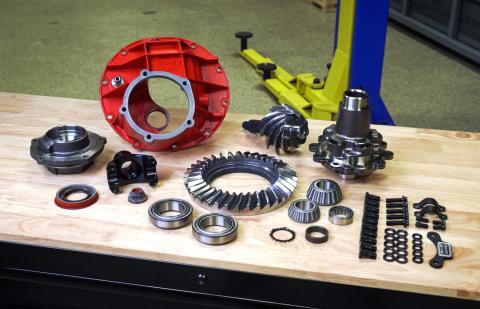
Preparing a Ford 9-inch rearend typically starts with the third member, which houses most of the rearend’s vital components, including the ring-and-pinion gears and differential. By choosing the right combination of these parts, racers can tailor their 9-inch for practically any type of motorsports segment.
With effective prep, the Ford 9-inch rearend can be used for just about any form of motorsports. Getting that ideal setup starts with its third member and using the right components for the job at hand.
The Ford 9-inch is the most widely used rear-axle assembly for practically any form of racing in rear-wheel-drive vehicles. The reason for that is simple. These proven units have an unrivalled combination of strength, weight, and reliability that makes them effective in wildly different applications. The tremendous aftermarket support developed for the 9-inch over decades has made them even more adaptable.
At the core of the wide-ranging prep choices available for a 9-inch is the center section. Unlike many other rearend designs, the Ford 9-inch has a removable third member, which holds the ring and pinion and differential in a tidy, easy-to-remove housing. This feature not only makes the 9-inch simpler to service, it also adds to this rearend’s adaptability. By selecting different third-member housings and fitting them with the correct components, the rearend can be tailored precisely for each type of racing.
When setting up a Ford 9-inch third member for racing, cars tend to fall into one of two categories: those that turn and those that don’t. By that, we’re referring to road race or stock cars and drag cars. Each has very specific parameters for third-member preparation.
Drag Racing
Cars used for drag racing go really fast for very short bursts. The rearend needs to handle an incredible amount of shock load when the driver dumps the clutch or leaves off the trans brake from the line. But then after that, the rearend just needs to get the car to the end of the track. There isn’t much heat buildup.
That lack of heat in a drag car rearend allows for a wide range of material choices to manufacture the third-member case. Iron is still a popular choice, but aluminum cases are definitely worth considering. Granted, aluminum cases don’t hold up well in prolonged high-heat environments, but that’s not an issue in drag racing. The car is just blasting down the quarter- or eighth-mile and then loping back to the pits on the return lane. And the weight savings of aluminum is definitely an advantage.
The next component to consider is the differential. Drag racing differentials have evolved over the years due to the rise in popularity of drag-and-drive events. Traditionally, drag racers have used spools, since going straight as fast as possible is the main priority. But with the introduction of street driving in the form of drag-and-drive events, many customers have switched to a traditional locker or a helical gear-type limited slip, such as the Eaton Truetrac or Strange S-Trac differential. These helical differentials allow for docile street manners and consistent, reliable traction on the track, while still handling the extreme abuse that comes with hard launches on a prepped surface.
For street/strip drag cars, the ring and pinion choices are largely the same as those of road racers and stock cars. But high-horsepower drag cars that don’t see street use generally use Pro gears, which are made to be less brittle, so they can better cope with high shock loads.
There are strength choices between differentials, and horsepower is only part of the story; tire size and transmission type also play a significant role in deciding which differential to use. We recommend the Eaton Truetrac in 31-spline up to 1,000 horsepower. If the customer plans to use a trans brake, manual transmission, or drag radials, we prefer to upgrade to 35-spline for anything over 800 horsepower. At the 1,200–1,400 horsepower mark we recommend the Strange S-Trac, again in 35-spline. If the car is strictly for track use, we typically use a spool, as there’s no need for cornering manners.
That said, there’s a lot of misinformation out there. In our experience, rearend knowledge is built primarily on word-of-mouth. Many customers call in asking for a spool or old-fashioned locker for a street/strip combination. While these work, the road manners leave something to be desired. Modern helical-style limited slips are a great option for cars that run drag-and-drive events as they provide excellent drivability while still handling the extreme abuse of drag racing.
Ring-and-pinion sets are always an important consideration for drag cars, too, and they become particularly crucial over about the 1,200 horsepower level. Again, that number isn’t a rigid standard—cars that leave the line particularly hard for any number of reasons may find that cutoff to be even lower. Vehicles used purely for drag racing at these higher levels of performance typically run a Pro gear. This type of ring and pinion is made from a softer base metal—typically 9310 steel alloy—and heat-treated specifically to absorb high impact shock loads. Pro gears are less brittle, so they can absorb much higher shock loads than standard ring-and-pinion sets. The downside to Pro gears is that they don’t take prolonged loads well at all—they’ll fail relatively quickly when used for street or dual-purpose cars.
Road Racing & Stock Car
Cars that turn while racing present their own unique challenges in 9-inch third-member prep. In these applications, shock loads are far lower, which puts less strain on the ring and pinion and other components. But unlike drag cars, road race and stock cars face vastly more heat buildup, especially in long endurance events. That heat buildup becomes an important factor when choosing a third-member case. For one thing, it pretty much eliminates aluminum cases from consideration. When aluminum cases get hot, they lose their dimensional stability. This throws the very precise relationship between the ring gear, pinion, and other components totally out of whack, which typically results in the rearend eating itself.
For this reason, iron remains the best material for road racing and stock car third members. It’s not the lightest, but it can survive the punishment of even the longest endurance events. For those who do want to shed some pounds, the Ford HS case is a good option. It’s an investment-cast steel case that weighs about 8 pounds less than a typical nodular iron case, and it can handle just about anything below 1,000 horsepower—more than enough for the vast majority of road race and stock car setups.
Nodular-iron cases, such as the Ford N-Series case, are one of the most common choices for all types of racing. Although nodular iron isn’t the lightest, it’s durable, affordable, and widely available, making it a sound choice for drag, road racing, and stock cars.
Ring and pinion choices aren’t as critical for road racers as they are for drag cars, due to the lower shock loads encountered. Of course, there’s always a megabucks alternative. For example, NASCAR teams typically use very exclusive ring-and-pinion sets that are optimized to provide minimum friction at the exact speeds they’ll be sustaining on any given track. These gears are priced accordingly—around $7,000 a set. But for normal road race or stock car teams, just about any high-quality ring-and-pinion set will work. Worth noting, however, the quality of almost all mass-produced ring-and-pinion sets has diminished drastically in the last couple of decades. But the difference is mostly in how noisy they are, rather than in their overall strength, which is what really matters on a race car.
When it comes to differentials, road racing and stock cars are completely different from drag cars. Once again, consistent traction is the name of the game. A spool isn’t optimal, as it will always resist direction changes. Alternatively, an open differential will allow direction changes but won’t transfer power reliably when one corner loses traction. Most, if not all stock cars use a traditional locker differential. Lockers are great for consistent traction when needed, yet they still allow the differential to unlock when turning sharp corners.
In road race applications, many racers prefer a clutch-type limited slip or helical limited slip. Two common differentials in road racing are the OS Giken SuperLock and Eaton Truetrac. The OS Giken is a tunable clutch-type limited slip that allows the user to tailor the differential to course conditions and driving style. The downside is that with repeated racing, the clutches will wear and need to be replaced over time. The Eaton Truetrac is a common choice for weekend warriors; it provides reliable grip when traction is inconsistent but remains budget friendly as there are no clutches to replace.
Differentials are one of the most important choices to be made when setting up a Ford 9-inch third member. Road racers tend to prefer clutch- or helical-type, limited-slip differentials, while stock cars typically run a locker. Dedicated drag cars usually run a spool.
Choosing the wrong differential can cause inconsistent cornering characteristics and result in slower lap times. In extreme situations, incorrect differential choice can result in internal damage or even an accident. A perfect example would be in a dedicated road-course situation with a differential that can’t handle wheel hop or sudden shifts in chassis loading, such as when the car hits the rumble strips in a fast corner. These situations unsettle the suspension and can cause the inside tire to lose traction. If the driver doesn’t lift, this rapid loss and regaining of traction under power can damage the differential. This is where a locker or clutch-type differential can benefit the dedicated racer.
By following these recommendations, Ford 9-inch rearends can be as at home on a drag strip as they are on punishing laps of endurance racing. The key is in proper setup. This tremendously adaptable rearend design can do it all if the right components are used for each application. When prepped effectively in this way, these robust units are more than up to the job race after race, season after season.
Lucas Hardin is the drivetrain technical specialist at Detroit Speed & Engineering, a division of Holley Performance Products. In his role at Detroit Speed, Hardin works with a team of master technicians to help racers in all forms of motorsports select and set up drivetrain components. To learn more about Detroit Speed rear axle assemblies, visit the company’s website at DetroitSpeed.com.
Combining proven design with state-of-the-art manufacturing, Schnee-Lawson Chassis has attracted some of the country’s top sprint car teams and scored wins at major events. And that’s just in the past 12 months.
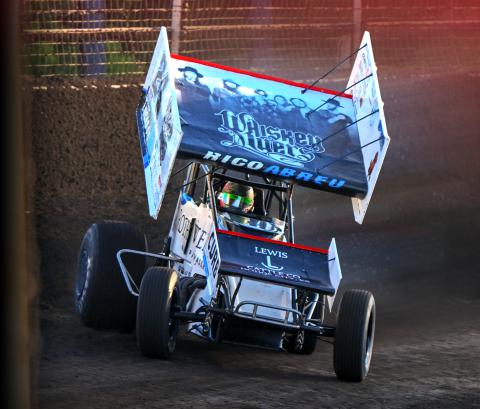
It’s been just one year since retired racer and lifelong entrepreneur Dan Lawson acquired the EMi division of Speedway Motors and renewed production of Schnee Chassis sprint cars. Since then, cars from the newly formed Schnee-Lawson Chassis have won the Knoxville Nationals and, said Lawson, “pretty much every big event in the country,” with a roster of drivers that includes Kyle Larson, Rico Abreu, Tyler Courtney, Ryan Timms, Chase Randall, and Paul Nienhiser.
In October, Schnee-Lawson moved into an all-new, state-of-the-art facility at the I-70 Motorsports Park in Odessa, Missouri, about 15 minutes east of Kansas City. “When we opened, we had 40 sprint cars on back order and a deadline for each car,” said Lawson in January. “Fortunately, we are on track to meet all of our customers’ season-openers. Our mission isn’t to become the largest sprint car chassis manufacturer, it’s to be the best—through excellence in design, build quality, and safety.”
Racing Toward Success
A self-described “second-generation open wheel racer,” Lawson “grew up with my dad driving midgets and sprint cars—and I followed in my dad’s footsteps. Racing is where I developed my work ethic. I learned early on that racing demanded a lot of time and a commitment to excellence if you wanted to reach the top.”
Lawson was 16 and a high school senior in 1974 when he drove his first race in a non-wing sprint car. He graduated to wing cars two years later. At 22 he founded the business that became Design Source Flooring, “and I spent the next several years focusing on that business. Then I got back into racing and won three championships as a driver, and then I put a younger guy in my car and won a couple of championships with him, too.”
By then it was the 1980s, and Lawson “kind of retired” from racing a second time, again to grow his flooring business. (Today, Design Source Flooring employs 125 people at locations in Kansas, Oklahoma, and Missouri.) He returned to open wheel racing in 2020, as sponsor and mentor to young racers Xavier and Natalie Doney—more about that later—and purchased EMi in April 2023.
“The way we build our chassis is unique,” said Dan Lawson. An overhead crane system carries each chassis through a series of workstations, which Lawson likened to an OE assembly-line approach, “creating efficiencies and facilitating the highest level of quality control.”
Brian Schnee, Lawson reminded us, “has been designing and building sprint car chassis for over 35 years and is known as one of the best designers, builders, and TIG welders in the country.”
Schnee (say Shuh-nay) welded up his first chassis in 1985 and quickly earned a winning reputation with Doug Wolfgang at the wheel. That reputation, and Schnee Chassis sales, extended worldwide by the time Schnee merged his company with Speedway Motors’ Eagle Motorsport (later EMi) in 2013. Lawson stepped in when Speedway announced its intention to close EMi and end production in March 2023. Now Brian and Jean Schnee, his wife and longtime collaborator, have moved to Odessa, where Brian continues as designer, fabricator, and welder with Schnee-Lawson.
Quality Through Consistency
Initially, Lawson leased the former EMi shop from Speedway and resumed production of Schnee’s sprint car chassis in Lincoln, Nebraska, while building his new plant in Odessa. The Schnee chassis was “tweaked” (Lawson’s word) a couple of years ago with input from team owner Paul Silva, and additional refinements have been made since then. But beyond good design, Lawson emphasized the consistent build quality made possible by the advanced production facility in Odessa. “The way we build our chassis is unique,” he said. An overhead crane system carries each chassis through a succession of specialized workstations, which Lawson called “an assembly-line approach, like GM or Ford…creating efficiencies and facilitating the highest level of quality control.” All tubing is US-sourced 4130 chromoly. “And we use precision-built jigs and templates, so the way we bend our tubing, the way the car is tacked up and then welded, is all repeatable.
“A lot of our competitors can’t say that,” he added, which is why “occasionally you’ll hear a racer say, ‘Man, I really liked that car, but I can’t get this other car [from the same manufacturer] to feel like that car.’ They really like our cars because each car feels similar to all the others.”
It helps, no doubt, that Brian Schnee’s cars were already noted for their consistency. “Brian was building my cars when they bought Schnee out from EMi,” said Jimmy Jones, team manager and crew chief for Ryan Timms Racing. “We haven’t seen any variance in them, and we’ve not had a car that hasn’t worked yet.”
Schnee’s cars have certainly worked well for Timms, whose second-place finish at Red River Valley in August 2022 made him the youngest podium finisher in World of Outlaws history. (For then-16-year-old Timms, it was only his second ever WoO start.) In 2023, Timms scored eight wins in wing and non-wing 360s and 410s, including the Southern Sprint Car Shootout at Volusia.
In an effort to give back to a sport that has been important to him since birth, Dan Lawson, left, is mentoring up-and-coming drivers, including Xavier Doney, right. Lawson formed the Doney-Lawson Racing Team with Xavier and his sister Natalie. Their father, Mike, is GM of Schnee-Lawson Chassis.
Jones has ordered four Schnee-Lawson cars for the 2024 season. “Brian is a really good welder,” he added. “He’s been with Wolfgang forever.” Jones has also run an imported brand, “and they were decent cars, but they wore out really fast. They were a lot cheaper, but you have to buy a lot more of them. So I’m glad people are still manufacturing in the US. The craftsmanship is so much better.”
“If you are in the sport, you know who Brian Schnee is,” added Tim Clauson, co-owner of Clauson Marshall Racing. “He’s always had a stellar reputation. His cars are works of art. They are beautiful.” Still, when Clauson Marshall launched its current program, it chose another chassis that “everybody seemed to be winning with. And we were happy, we had good luck with them.”
Clauson met Dan Lawson at a USAC race in South Dakota “a couple of years ago. I started keeping track of what he was doing with Xavier Doney, and we’d talk now and again.” When their conversation turned to business last summer, Clauson met Schnee and came away impressed. “His passion for what he does, and the way he does it, matched our passion for the sport.”
Clauson agreed to try a Schnee-Lawson car at the 2023 Charlotte World Finals. “We ran in the top five every night. We were quick time in our group one night, and second quick time the next night, and we won at Cherokee. After that, we were all in.
“We only had the one car they built for Charlotte, and we had to turn over our whole inventory,” Clauson continued. “But Brian and Dan have been phenomenal. They got two more cars done for us right away, to get us through Florida.” When we spoke in early February, Clauson expected delivery of a fourth car that month and a fifth around April.
Offering Options
Schnee-Lawson’s standard product line starts with a bare frame. Customers can also choose a Basic Kit, which adds a rear motor plate, torque tube hoop, and Dzus springs. A Dressed Kit adds body panels (carbon fiber is an additional option); and with the poplar Deluxe Kit, “they only have to put in a rearend, steering, and an engine,” said Lawson. Schnee-Lawson also sells axles, drag links, and tie rods, plus accessories such as nerf bars, although they leave shock absorbers to the shock experts: “That’s a whole ’nother world of specialization.” Lawson added. “But we can build a roller if the customer supplies the rearend and steering. They could pick it up, put in an engine, and go race that night.”
While maintaining the baked-in repeatability described above, Schnee-Lawson can customize a chassis to meet a driver’s individual preferences—“as long as it meets our safety standards.”
Dan Lawson’s mentorship of young talent goes beyond the driver’s seat and into the shop. “Two years from now, we will have mentored and trained several people to design, fabricate, and TIG-weld our race cars,” he said, with the goal of making those chassis indistinguishable from chassis built by Brian Schnee.
The shop has also modified existing chassis. Lawson recalled adding a pair of front wing mounts to Kyle Larson’s car on a Saturday when Larson’s team was in town. “He had just one wing mount on each side of the downtube, and decided he did not like the balance; he wanted more downforce further forward. So we added new wing mounts on each side of the downtubes, so he had four instead of two.” What may sound like a small change can make a big difference when a driver is “looking for that sweet spot where the car balances out.”
Another advantage of the new facility is ample room for repair work. “If they wreck, we have the space in the building for them to leave the car,” Lawson added. “We’ll do whatever we need to do to help them out.”
Promotional support is provided by Lawson’s son Justin, whose JDLawson Media maintains Schnee-Lawson’s Facebook page. Social media, said Lawson, has “helped brand Schnee-Lawson Chassis, while our customers and fans stay in touch with our builds, and with who is racing our chassis.”
Beyond that, said Lawson, new customers are attracted by “our reputation for quality design, customer service, and how we treat people. Every customer becomes a friend. If someone is at the track, and they are struggling with a setup—or whatever—they can call us, and if one of us can’t answer, we’ll return the call in a matter of minutes. They can call us and reach us after hours—we’ll take those calls. We want to make sure our cars are successful, and that everybody wins, so we’re willing to go the extra mile to do whatever we need to do to help out our customers.”
Building The Future
Even before buying EMi, Lawson was not only looking for a way to get back into racing, but to give back as well, “to the sport that’s been part of my life since birth.” Lawson thought the best way to do that would be to help develop some younger drivers. So in 2020, “I began going to the race tracks around the Midwest, just watching different drivers and their families,” not only “spotting talent” but also observing family dynamics. “That’s how I discovered Xavier and Natalie Doney. The whole family was involved, working on the cars at the track. And these kids were phenomenal. They were doing great, driving older cars with older engines, because that’s what mom and dad could afford. I decided I could help the Doney family take their kids a lot farther than they would be able to on their own. It’s been an incredible ride.”
Brian Schnee, below, has been designing and building sprint car chassis for more than 35 years. He is “known as one of the best designers, builders, and TIG welders in the country,” reported Dan Lawson.
Xavier and Natalie had been racing since they were 5 1/2 and 4 1/2, respectively, starting in quarter midgets and then moving up to micros. Natalie is now driving a 305, while “we put Xavier directly into a 410 when he was 14,” said Lawson, “and into a 410 wing car about a year ago.” Here too, social media has provided a boost, helping “fans keep up on our in-house Doney-Lawson Racing team.”
Xavier has also demonstrated his potential as a builder; mentored by Schnee, he “has become an incredible welder just in a matter of three months.” Their father, Mike Doney, is now general manager of Schnee-Lawson. “After Brian and I put together our deal,” said Lawson, “I approached Mike, who was looking for a career change, and he came aboard.
“Over the next couple of years, we want to build up our racing program, make it bigger, and allow the kids to go even further and really showcase their talents.” (The team sponsor is yet another Dan Lawson enterprise called Motor Haven, a storage facility for cars, boats, and RVs, situated on the same property as the Schnee-Lawson facility.)
Additionally, “Mike and I are growing and expanding our mentorship program, training and developing the next generation of Schnee-Lawson fabricators, designers, and welders. Two years from now, we will have mentored and trained several people to design, fabricate, and TIG-weld our race cars, so if any of our customers sets any of our chassis side-by-side, they won’t be able to tell if the car was built by Brian, or by any of our other awesome employees.”
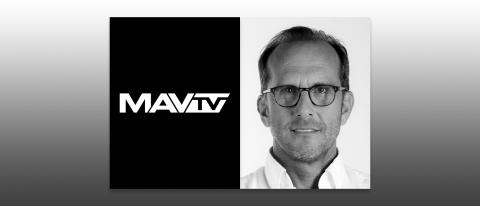
CJ Olivares is guiding the MAVTV platform to be motorsports enthusiasts’ first choice when viewing events, which gives them more options and control about what they are going to watch and which device they use.
Among the biggest challenges for any racing series is figuring out how to reach the largest potential fan base. At the track and series level, getting fans through the gates and into the seats is both a measure of success and a means of funding the operation. In the modern era, that means having a smart media strategy that includes putting the racing product on screen as well as generating organic social media and traditional advertising.
Television channels devoted to racing have been pivotal in creating new fans, and now streaming channels are adding to the array of options to bring new fans to the sport. Among the heavy hitting media channels is MAVTV, which is owned by Lucas Oil and exclusively carries motorsports and automotive programming. MAVTV carries coverage of a long list of motorsports, including dirt late model, Trans Am series, MotoAmerica, Formula DRIFT, and other related programming.
The man selected by Lucas to run the show is CJ Olivares, who brings impressive career history and credentials to the project. In December 2023, he relaunched MAVTV with a range of new platforms and distribution agreements. We caught up with him recently for a discussion of how the TV and streaming business works, and what it can mean for a racing series.
In 2023, MAVTV entered into a new partnership with Formula Drift to be the series’ exclusive cable broadcaster. “This partnership further demonstrates our commitment to showcasing the diversity and excitement of motorsports to our passionate viewers,” CJ Olivares said.
PRI: Tell us a bit about yourself. How did you get to MAVTV?
Olivares: I’ve been at MAV a little over a year now. I joined full time in September of 2022, but I’ve been in sports media my whole life and in sports television for 30-plus years. I started as a print journalist and photographer in the endurance sports world, and then I was at Fox Sports for 15 years on the programming production side. That led to an opportunity to create and run a network called Fuel TV that focused on the action sports, surf, skate, and snow. What attracted me to MAVTV is that I saw a couple of dynamics at work in the motorsports space.
What I saw in the landscape a year-and-a-half ago was that after SPEED went away, there was no mass media property that really stepped into that void at the intersection of motorsports and auto enthusiasm. I looked at what was happening and realized that there are so many subcultures within motorsports, of different types of racing. Whether it’s four-wheel, two-wheel on dirt or pavement, domestic or international, they don’t have one place to go from a video perspective. And I thought, ‘You know what, if not us, then who?’
PRI: MAVTV had its own history as well, before focusing on motorsports. Did that concern you?
Olivares: When it launched in 2006, MAVTV was what I lovingly refer to as ‘Bro TV.’ It was bikini contests and cage fighting and some motorsports and action films. But as the world and culture evolved, it ran into some challenges. Lucas Oil purchased the channel based on the fact that they were supplying virtually all of the motorsports programming, and they repositioned it as more family friendly. They made it more grounded in who the Lucas family is and what Lucas Oil is, which is really the heartland of America. Just good, honest, hardworking people, and they really focused on that. Then almost seven years ago, they pivoted to motorsports exclusively.
PRI: What does being on MAVTV offer to a series or a track or anybody who’s considering involvement? What is your sales pitch for the channel?
Olivares: That they can be part of re-establishing the new home for motorsports on television. Very candidly, that’s our aim. We want to be the campfire around which anybody in the motorsports community can come hang out, watch great racing, share stories, and learn and become inspired. I think we have arguably the only race-centric cable television network in the United States, and by the time this interview comes out, we will have launched Amazon FreeVee, adding that to our free FAST channel offering. And we are now available directly on smart televisions and Roku-type devices.
Our traditional cable TV channel is holding ground in terms of households in the United States. The television universe has shrunk 30% over the last decade. It’s continuing to shrink with all of these other opportunities and ways that you can consume. The good news for us is, while the rest of the market has been shrinking, we’ve been holding ground. Then our FAST channel has experienced some pretty explosive growth. With the launch on FreeVee, we will be north of 300 million devices globally, and 90% of that is in the US. We’re on effectively every major streaming service platform and/or device. So from a distribution perspective, we also offer these race series a couple of different opportunities, whether it’s the pay TV cable side or the free TV side to get live and delayed or highlight programming out to an audience.
Another thing that we’ve worked really hard on this last year is being a good partner to the series, trying to find ways that we can collaborate and work together to amplify their ability to sell sponsorships, to promote their races, to get people going back to the butts-in-seats. Depending on what series you’re talking about, it’s either the series or a track promoter who are the ones who are taking the risk on getting people out to the races.
“Trans Am is a great example of a property that really didn’t have a [broadcast] home,” said CJ Olivares, seen here at the 2024 Sebring Trans Am race. After initially showing highlights a week after the races and “experimenting with going live” in 2023, “this season we’re going to go live with both TA and TA2 all season long.”
PRI: How does the money flow—from MAVTV to the series or from the series to MAVTV?
Olivares: That’s a great question and there’s not a single answer. A lot of it depends on the size and scale and scope of the series. Not all series are the same. We know NASCAR, Formula 1, IndyCar, and NHRA all have their broadcast partnerships. They’re awesome, amazing, hundreds of millions, if not billions of dollars. In the case of NASCAR recently, there are huge rights fee deals. So we’re chasing everything else in some of the bigger properties like MotoAmerica. We had an existing highlight relationship that we expanded to get live races this year. Trans Am is a great example of a property that really didn’t have a home. We started last year showing highlights and primetime on Thursday nights the week after a race. By the end of the season, we were experimenting with going live. This season we’re going to go live with both TA and TA2 all season long.
With smaller series, we start with the audience history. Has this series been able to draw attention? Has it had any live viewing before? What’s the quality of the live production? Is it drawing an audience? Is it a good live product for us, or is it a challenging live product for us? For example, one of the things we found was that the Lucas Oil Late Model Dirt Series is a really challenging series for us to go live with. It’s a great highlight show for us, but because they’re running at night in the Midwest in the summer, you get a lot of rain and a lot of delays for track prep. That impacts the quality of the experience, so we really look at that.
We also look at the sponsorship complexion: who’s spending, how much are they spending? Is there an opportunity for them to spend some money in support of this? We try to be realistic about the ecosystem, and once you get out of those tier-one race series, it’s challenging.
PRI: What do you need to see from a small series to even consider televising them?
Olivares: First, how long have they been running? If there’s a series that’s underexposed but has consistently delivered a really entertaining race product, that can be a great show. Then we try to find a place to fit it into the system. Sometimes that means going directly to our pay TV side, and sometimes it means going to the free TV side.
PRI: Will new technology help more series to get on your channels?
Olivares: One of the other things that we’re preparing to launch is a new video viewing app. We had an epic fail in 2022 with the MAVTV Plus app. So we got out of that business, and now we’re looking at re-entering it. When we launch this app in a couple of months, that will give us yet another way to reach out to the fans in the community and serve them. Because as I said before, there are some properties that aren’t well suited to a rigid schedule of linear television. So if we can just say, ‘Hey, folks, we are going live with whatever short track race from wherever, tune in,’ there’s a little different standard if you’re watching that. If it’s streaming, then people are a little more forgiving, I think.
PRI: I want to dig into the money side of the program a bit more, since that’s a top concern of series promoters. Can you offer any more details?
Olivares: Again, there’s no single answer to any property. For example, our partners MotoAmerica have all of their classes and produce the feed. We pay a rights fee, and we get the feed. The quality of the feed is amazing. It’s got everything we need. Other folks come to us with a product that isn’t fully baked or has maybe been streamed previously and is not quite ready for broadcast. Maybe the quality of the cameras needs upgrading, or the reliability of the signal, maybe even the talent that they’re using to call the races on camera is not as experienced. We’ll work with talent directly to train them up, tune them up, and give them notes on how they can be more effective and more engaging. It is all of those things.
One of the ways that we look at the space is, we’re trying to elevate motorsports and bring more people in and create more fans, because ultimately that’s good for us. If it’s good for motorsports, it’s good for us. So if we can help different race series and different production companies refine their production within their budgets, we’ll do it.
It would be great to have 27 cameras and all these elaborate telemetries that you see in NASCAR and Formula 1 and all of that stuff, but most series can’t do that. The economics aren’t there for that. We ask, ‘What is the best product that we can produce from what they have?’ And we really try to work in partnership with people.
Not every program on MAVTV is motorsports-related. Dream Collections with Chris Jacobs highlights car builders who “transform, modify and customize virtually anything mechanical.” Here, Jacobs, left, and McKeel Hagerty, center, visit designer and car builder Chip Foose.
PRI: So you get the best product you can, and then you decide whether it goes onto to the free channel or the streaming or through the app or onto the cable channel, as it works out the best economically for everyone?
Olivares: Sometimes it goes on everything. Maybe it will go live on the cable channel, and then we’ll do highlights on the free channel, and then we’ll push out clips on social, and then it’ll go live on-demand through the app eventually.
PRI: Switching up for a moment, can you describe the relationship between MAVTV and FloRacing and FloSports?
Olivares: The easiest way to characterize it is that we have a content partnership. It originally included more than it does today. Originally it included Sprint 500, some Chili Bowl, also Shootout maybe, and then late model dirt. Now in 2024, it’s basically just late model dirt. We see them as a great partner, and I think they have a different business model than we do. The position that they have captured is really regional racing and heavy on the dirt track. So as I was referencing earlier about the challenges of late model, it’s a really great product for us on Monday nights.
PRI: What advice would you give to a promoter who has a series, and they want to grow their appeal, they want to grow their audience? What are one or two things that they can do to make their series more successful?
Olivares: I think part of it goes back to the fact that motorsports are entertainment. The drama and emotion that you get from watching and being a fan of sports and motorsports in particular is a rush. It’s dramatic, and it can be heart wrenching and joyful and all of the things, the spectrum of human emotion. It’s really about the fan experience from the time they turn into the parking lot until they’re pulling out.
Then try to be very deliberate about how you can translate that excitement of being someplace live into your race coverage, whether you are doing it or whether it’s in partnership with somebody. Invariably, the series operators and the owners and promoters know their own world inside out. What they have to figure out if they’re going to stream it or broadcast it is how to speak to your audience. You don’t want to speak down to existing fans who may be watching, but also you don’t want to speak over the potential new fans’ heads, so you take a little bit of extra time to explain the nuances.
PRI: Let’s talk about the future of motorsports programming. What is all this going to look like in five years or 10 years? Is it even possible to know?
Olivares: I think there’s a lot that we don’t know and can’t know, but I can tell you about what has evolved over time, and if you look at the last 15 years, it has been characterized by control really being in the hands of the viewer. You as a fan now have more choice and control about what you are going to watch and on what device you’re going to watch it. I think that trend is never going backwards. I was looking at VR goggles the other day, and somebody was talking about watching live racing via the VR goggles. If you’re in a Cup car with Kyle Larson and you see what he sees, and you turn your head and you see what’s out the side of the car, if you got Bubba Wallace coming up next to you.
It’s a hard thing to know in specifics what the future holds, but I really believe firmly that choice and control are going to continue to move into the hands of the fan. I think the quality of racing, the diversity of racing that you can watch live is going to increase. That’s certainly one of the things we’re trying to do.
The Top Alcohol Funny Car double champion who made his mark in Sweden and America joins Paul Lee’s nitro team as crew chief.
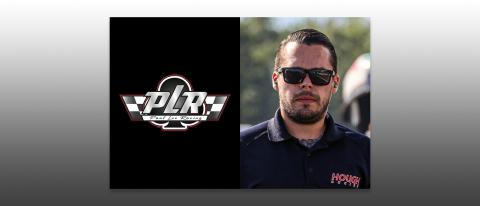
There’s a new yet familiar face on the nitro scene this season, with Top Alcohol Funny Car champion Jonnie Lindberg now serving as crew chief and tuner for Paul Lee’s Funny Car team in the 2024 NHRA Mission Foods series. Lee’s operation announced Lindberg’s appointment this past December. John Medlen, who had tuned for top nitro teams for three decades and retired from full-time work after the 2022 season, will serve as a consultant for Lindberg.
Many know Lindberg as the Swedish drag racing star who raced Pro Mods and alcohol Funny Cars in Europe with his brother, Johan, before moving his career as a driver, tuner, and builder to the US. Lindberg drove his first US race in 2013 at the World Finals in Pomona. He won back-to-back NHRA TA/FC World Championships in 2015 and 2016 and made the cover of Drag Illustrated magazine’s “30 Under 30” issue in 2016.
Lindberg began tuning alcohol Funny Cars when he was 18 and, after his two championships, drove a nitro Funny Car with Jim Head’s Head Contractors team. He also began tuning Brian Hough’s TA/FC in late 2018, and the car finished third in national points in 2020. The same year, Doug Gordon won the 2020 NHRA TA/FC world championship in a car built by Lindberg and his team of fabricators.
“As a former alcohol Funny Car racer, I appreciate the talent and skills that it takes to become a successful racer, and Jonnie has proven he possesses those skills as a former NHRA World Champion,” Lee said in a statement.
Upon returning from a Christmas visit to Sweden, Lindberg shared his thoughts on the move to Lee’s nitro team with PRI.
PRI: What got you started in drag racing?
Lindberg: My dad was building hot rods when I was growing up, so that’s where I got into American cars. Then my brother and I started racing with a blown 1963 Nova. After that, we raced Super Comp with a ’23 T-bucket altered.
PRI: What is a favorite memory from your involvement in the sport?
Lindberg: Man, that’s a hard question, there are just so many good ones. I guess my top one would be the first championship we won in Europe in 2010. My brother was driving the Pro Mod, and I tuned it. The second one must be when we won Charlotte in 2015 and set the national record in TA/FC—the first one in the 5.30s and 270 mph.
PRI: What are you most looking forward to working with Paul Lee and John Medlen?
Lindberg: I’m excited working together with John and to learn from one of the greatest tuners in our sport. He has so much knowledge, and he’s just a great guy to be around. Same goes for Paul. We always got along well, and I’m excited to give him the best race car possible.
PRI: With your extensive experience tuning alcohol Funny Cars, do you see any challenges to bringing your skills to the nitro category?
Lindberg: I know the basics on how to run a nitro car thanks to Jim Head and Dave Leahy, but of course I need to learn it and make my own mistakes. Hopefully, I don’t make too many with John watching over my shoulder!
PRI: Is there anything else in your background that you see as an advantage that you bring to the Paul Lee team?
Lindberg: I used to run my own operation, so I know how much work, preparation, and dedication it takes in the shop to be successful at the track. I have experience driving Funny Cars, plus I know how to build one of those from scratch.
PRI: Can you name one mistake you’ve learned from in your professional career?
Lindberg: Yes, sometimes you need to rest and recover and don’t burn the candle at both ends for too long.
PRI: Is there one piece of advice you have received, personally or professionally, that you feel has greatly impacted your life?
Lindberg: Think positive! Positive anything is better than negative nothing.
PRI: Excluding your cellphone/tablet/computer, what’s one thing you can’t live without?
Lindberg: On the race track and at the shop, it’s the adjustable wrench in my back pocket, for sure. But then it’s the welder and the lathe…can’t live without them.
Jonnie Lindberg
TITLE:
Crew Chief
ORGANIZATION:
Paul Lee Racing
HOMETOWN:
Brownsburg, Indiana
FAST FACT: “Outside of racing, I’m starting to build my own street motorcycle in my shop.”
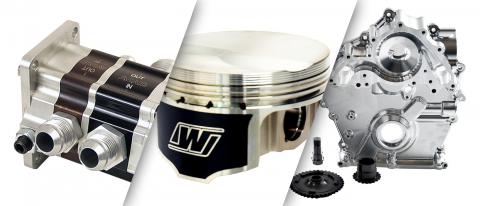
Aviaid in Chatsworth, California, is upgrading its Series 2 oil pumps with a new six-tooth gear design that has proven to increase scavenging through-put by some 12% over previous rotor designs.
“Engine builders want increased vacuum in a compact pump package,” said John Schwarz. “With four available scavenge section widths ranging from 1.000- to 1.750-inch to choose from, plus four-, five-, and six-stage designs, we can tailor scavenging vacuum to the engine builder’s needs.”
There are six different section widths available on the pressure side of the pump, ranging from 0.600- to 1.750-inch. The unique design of the Series 2 pump allows the use of both standard and specially angled sections to facilitate running lines in space-restricted installations. A variety of regulator sections and pump ends—as well as mounts—is employed to configure the pump to most any application.
Now in its fourth iteration, all previous Series 2 models can be upgraded to the new design. The components are designed to work with low-viscosity oils in a variety of racing applications, including road race, drag race, circle track, and marine. The Series 2 is available in either belt or cam drive, and the pumps can be adapted to right- or left-side engine mounting.
Designed to work with standard V-type, Gilmer, or radiused-tooth HTD drive systems, this new mechanical water pump from Meziere Enterprises in Escondido, California, is configured specifically for LS performance engines.
“It will perform well in drag-and-drive applications as well as circle track and endurance,” said Don Meziere. “We also have a lot of experience with Baja 1000 vehicles, so these pumps have proven performance aspects, like the bearing and seal package.”
The pump is constructed from billet aluminum and features a high-flow 4-inch swept-vein impeller. There are auxiliary ports for bypass, sensor connections, and additional output lines. The modular top can accept a wide variety of thermostat housings and hose connections.
While factory style iron pumps may begin to cavitate under racing conditions—which could cause the coolant temperature to spike—the Meziere pump is designed to maintain proper flow through the entire rpm range. The pump carries a two-year warranty and is manufactured in the USA. All Meziere mechanical and electrical pumps are fully tested before packaging and shipment.
“There was a need for a reliable mechanical solution,” recalled Meziere. “We saw a void in the market where we thought we could improve performance for those types of vehicles.”
Wiseco Performance Products in Mentor, Ohio, set out to engineer a highly featured forged piston with a budget-minded price by developing the Red series. The newest addition is a flat-top model designed for the GM LS family.
“We really wanted to bring out a fully machined piston similar to the professional series and not as-forged, like the Pro Tru Street series,” said Michael Skeen. “The Red series fits right in between those two.”
The LS piston is available in multiple bore diameters, compression heights, and dome volumes to most engine builders’ needs.
“The big selling point over the Pro Tru Street is the machined features, and the Pro Tru Street is made from 4032 aluminum. The valve pockets and domes are machined and not as-forged,” added Skeen. “This would be similar to a race-ready piston out of the box.”
The Red series is constructed from dedicated 2618 aluminum forgings. Features include ArmorGlide skirt coating, horizontal-slot oiling in the wrist-pin bores, and an accumulator groove. Every piston comes with a 1.2-mm steel top ring, 1.2-mm iron second ring, and 3.0-mm stainless steel oil ring.
“You can be comfortable running boost or nitrous,” said Skeen.
The new front cover kit from Late Model Engines in Houston, Texas, for the Ford 7.3-liter Godzilla engine deletes the VVT and replaces the factory oil-pump arrangement with a Coyote-style gerotor pump.
“You can get this cover in billet or cast aluminum and with or without a distributor provision,” said Bryan Neelan.
By integrating the gerotor into the front cover, LME eliminates the factory jackshaft that drives the oil pump mounted in the rear sump. The LME solution includes a standard pickup tube and allows a variety of oil pan styles with either a front or rear sump to clear chassis components in most popular vehicles.
“The factory jackshaft pump-drive system isn’t good for swaps,” said Neelan. “There will be more racing applications for Godzilla.”
The kit also includes a billet timing set. The LME kit complements other Godzilla products, including a new intake manifold and CNC-ported cylinder heads and billet valve covers.
Potential overheating issues with the 8HP70 eight-speed automatic transmission found in late-model Dodge Challengers and Chargers can be prevented with a Max-Cool kit from TCI Automotive in Ashland, Mississippi.
“It has four times the cooling capacity of the factory system,” said Brian Hosenfeld.
This secondary cooler has a removable thermostat that will open the thermostatic cooler block when needed to reroute coolant through the heat exchanger to provide maximum cooling.
The kit includes the heat exchanger, -6AN braided hoses that can be cut to length, thermostatic cooler block, fittings, brackets, and hardware. This bolt-in kit is specifically designed for the two Dodge applications. Cutting and welding are not required.
The cooler is quite handy when boosting engine power with a cam swap and installing a TCI torque converter to help control the torque demands.
Manufactured in-house from 6061 aluminum, the new Hipster Turbo 350 transbrake valve body from Automatic Transmission Design in Germantown, Wisconsin, is a clean-sheet design to complement a growing number of aftermarket products for the TH350 transmission.
“It’s the only billet Turbo 350 valve body on the market,” said Michael McCormick. “An iron valve body weighs around 17 pounds. This billet one weighs 7.5 pounds.”
The Hipster is designed for crisp shifts and instantaneous setup/release timing. It features an adjustable pressure regulator and improved filter design that was leveraged from ATD’s work with the Powerglide.
“A lot of bracket racers are still running Turbo 350s,” continued McCormick. “Plus, there are guys running Comp and other NHRA classes who want the lightest possible transmission. Some guys think they can get that with the 350.”
Additional valve bodies are available without the transbrake function.
If you can strengthen the 8-inch rearend in a Ford, there’s less likelihood that a 9-inch swap will be required when modifying the engine for more power. The new 8-inch nodular-iron dropout case from Quick Performance in Ames, Iowa, will help toughen up the factory rearend in many popular applications.
“There’s going to be added strength because it’s nodular,” said Ashton Thompson. “But it also gives you a period-correct look with the double ribs.”
The case is cast and machined in the USA. The case, bearing caps, and pinion support are all constructed of nodular iron. Other features include nodular iron 1310-series pinion yoke, billet side adjusters, a 2.89-inch carrier bore, and snap-ring pilot-bearing retainer. The case accepts all factory components.
Customers can also order a fully assembled case with Timken bearings and Motive Performance ring-and-pinion gears in addition to numerous options covering lockers, spools, or limited-slip differentials.
SRI Performance concentrates on used parts for the circle track market, as those racers tend to go through parts more quickly than racers in other disciplines.
Establishing a marketplace for second-hand equipment can create new revenue streams for racing businesses and help teams recoup upgrade costs.
Rising costs are a well-understood pain point across a wide range of motorsports disciplines, and the expenses involved in acquiring must-have parts and equipment play no small role in the equation. Although used gear comes with its own inherent caveats, the commonality of parts and equipment between series and classes offers an opportunity for teams that are updating their race programs to ease the burden of investment through consignment. For the racing businesses that provide these consignment services, it presents a new revenue stream with customers who’re often already on the hunt for specific types of products.
“We were originally a retail outlet, and we wholesaled items because we manufactured things for different companies,” explained Butch Hatton of Race Parts Liquidators, Crown Point, Indiana. “Over time, more and more people came to us wanting to put used stuff up for sale in the showroom, and interest in consignment kept growing to the point where we added a department dedicated to the used stuff. As technology changed and new products were coming out, folks needed to move their older gear in order to afford to buy new equipment, and I think that people started to realize that they could reach a larger audience through us than they could by themselves.”
As time went on and the Internet started to become a more viable resource for used parts sourcing, the company established an online catalog for the parts in its inventory. “I wasn’t a computer person—I had to learn the technical stuff as we went,” said Hatton. “But it kept growing, and eventually we realized that we were seeing better margins with the used parts and equipment than we were with the new stuff.”
These days Race Parts Liquidators is keenly focused on the circle track market, and people have consigned everything from lug nuts to complete cars. Hatton said that circle track racers tend to cycle through parts more quickly than folks in other racing disciplines, and that in turn creates greater demand from both buyers and sellers who’re looking to step up their race programs. It’s a dynamic that was also identified by the folks at SRI Performance, a Mooresville, North Carolina-based retailer that’s primarily focused on the circle track market as well.
Among the in-demand items at SRI Performance are Andrews transmissions. “They’re looking not just for the transmission, but also the gear set that’s in them,” said Todd Foster. “The ratios need to be different if they’re running on road courses.”
“NASCAR Cup teams are a major source of our used parts inventory,” SRI’s Todd Foster told us. “They know they’re only going to run parts for a certain amount of time or mileage before they replace them. And they’re looking at all of these parts sitting around and thinking, ‘These parts are still usable. We ran them 5,000 miles, but they can probably go 30,000 miles. We should be selling these to people running in other series.’”
He said that teams from the ARCA, Xfinity, and Truck series are often the ones who are buying this equipment second hand. That’s led certain items, like 22-gallon fuel cells, to become hot sellers. “These fuel cells were used by the NASCAR guys before they went to fuel injection—it was the biggest cell that they had ever run. I believe these can be used in ARCA, and there’s a vintage NASCAR series that uses them as well.”
Transmissions from Andrews and G-Force have also seen interest at SRI. “They’re looking not just for the transmission, but also the gear set that’s in them,” Foster said. “The ratios need to be different if they’re running on road courses.”
Meanwhile, Hatton pointed to blocks, cylinder heads, camshafts, and other engine components as particularly high-demand items. “We’ve sold NASCAR engines to folks in drag racing and road racing, too—there’s a lot of crossover. COVID is still having an impact on racers, even today. Many manufacturers are still way behind on production. If you order a new crankshaft and the lead time is 39 weeks, you might not even be able to use it that season. That’s led a lot of people to start looking for other solutions.”
He said that while they generally take whatever parts that folks want to consign, there are some things that they tend to shy away from. “You don’t want to tie up a significant portion of your warehouse space with stuff that might sit for a long time. Rearend housings, axles, purpose-built stuff, and so on. You’ve got to keep the product moving along. If something just sits on the shelf, it’s occupying our warehouse space and our time, but we’re not making a commission off of it.”
Foster said that suspension parts like springs and control arms can be tough to shift as well. “We have quite a few of those. We don’t avoid taking them in, but they don’t sell as quickly as some other parts. Some of that is because the parts were purpose-built for a particular car or team, so they might not fit a lot of other applications.”
Both SRI and Race Parts Liquidators work with their consignors to determine pricing for the items that come in as well as the split between the consignor and the company. “Sometimes people will say, ‘I want to get this much out of this particular part or piece of equipment,’” Foster noted. “But most of them—especially the bigger teams—just trust us to use our best judgment, and price it appropriately based on our knowledge of the sport and the market.”
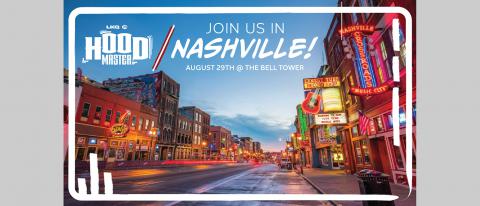
The LKQ FinishMaster team and the Collision Repair Education Foundation (CREF) invited the industry to celebrate Hood Master's fifth anniversary on Thursday, August 29, at The Bell Tower, downtown Nashville's largest historic event space.
The Hood Master Challenge is an exciting platform where painters and refinishers push the boundaries of their creativity with original artwork on mini car hoods, judged in person by a panel of industry experts hand-selected by Hood Master sponsors. Challengers can win prizes, including cash, spray guns, industry-related products and fun swag totaling more than $26,000 this year. The contest categories have expanded to include airbrush, graphics, pinstripe, wild card and online crowd favorite.
"It has been incredible to see the growth of this event year over year, not just with the additional hood and pin submissions but also the industry support. Thank you to LKQ FinishMaster for organizing this to help raise additional awareness and funds for the high school and post-secondary collision programs that CREF works to support across the country," said Brandon Eckenrode, executive director of CREF.
The event coincides with the PiN Master Challenge for high school and collision repair students to repair, design and paint retired bowling pins.
Legendary Companies has announced the relocation of its West Coast wheel manufacturing facility and distribution center, which has operated in the City of Industry, California, since 2013.
The announcement comes as Legendary Companies evolves its wheel company operations with plans for product line expansion, improved inventory and better customer service, the company stated.
Legendary Companies will continue to offer original and custom steel wheels for classic cars, muscle cars, and hot rods to its customer network, which includes domestic and international distributors, dealers and individuals, as it has for more than 25 years. It will also service the needs of the end user customer through its well-known brands Coker Tire, Wheel Vintiques and Roadster Wire Wheel.
Legendary Companies' facilities in Tennessee, Michigan, Virginia and Germany will accommodate the relocation of the manufacturing and distribution operations.
Legendary Companies is comprised of Coker Tire Company, Corvette Central, Zip Products, Inc., Wheel Vintiques, Specialty Wheel, Roadster Wire Wheel, Universal Vintage Tire and Great Race, as well as German tire distributor MOR (Munchner Oldtimer Reifen).
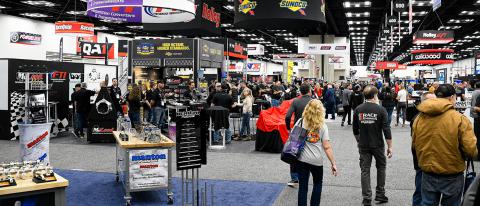
The exhibitor space rental agreement for the 2024 PRI Show, December 12-14, in Indianapolis, Indiana, is now open online, but the deadline to secure a booth is quickly approaching.
To be included in the initial plotting of the floor plan for the world's largest gathering of motorsports professionals, exhibitors must submit a booth agreement and deposit by Friday, May 24.
The PRI Show team will begin the initial booth-plotting process on Monday, June 17. Booths will be placed based on seniority. Show officials will then release the Show floor plan and Exhibitor Resources alongside the opening of 2024 PRI Show registration on Tuesday, July 9. Note: PRI Show booth agreements are accepted through the opening of the Show dates; it won’t be too late to get on the official floor plan following these dates.
"We're seeing a high demand for booth space following the success of the 2023 PRI Show," said Karin Davidson, PRI trade show director. "To ensure your booth at the 2024 PRI Show, we encourage exhibitors to submit their agreements as early as possible."
 MEMBERSHIP LOGIN