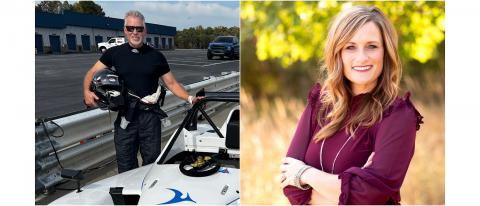
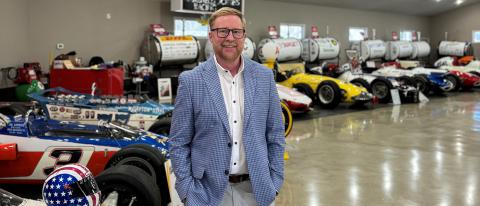
Jeff Barrow has joined the Sports Car Club of America (SCCA) as the organization's new director of road racing, taking over for Deanna Flanagan, who will transition to her new role as director of program services.
Barrow has more than 30 years of industry experience and previously held positions at Honda Racing Corp. U.S., Ligier Automotive North America, Radical Motorsport and Wellman Friction Products. He will be responsible for managing SCCA's amateur road racing program, including the U.S. Majors Tour, Hoosier Racing Tire SCCA Super Tour and National Championship Runoffs, as well as working with SCCA members and leaders within the SCCA Road Racing program.
As Director of Program Services, Flanagan will join SCCA's business operations department, where she will use her experience in sanctioning, risk management, registration and worker initiatives in a newly created position to benefit all of the SCCA's events and programs.
NMRA and NMCA have announced the Annual Open Comp All-Star Showdown sponsored by Eagle, a special race between select NMRA and NMCA Open Comp competitors in Rockingham, North Carolina, at Rockingham Dragway, April 11-14.
The total payout for the Open Comp All-Star Showdown includes $1500-to-win, $1000 to the runner-up and $500 to each semifinalist.
The Eagle Open Comp All-Star Showdown will be a 16-car field filled in the following format from each series on a custom ladder listed below.
NMCA
NMCA 2023 Open Comp champion.
Next Top 5 NMCA 2023 Championship points finishers preset at event.
NMCA champions pick.
One wild card to be selected via chip draw from the remaining NMCA open comp competitors teched in.
NMRA
NMRA 2023 Open Comp champion.
Next Top 5 NMRA 2023 championship points finishers preset at event.
NMRA Champions pick.
One wild card to be selected via chip draw from the remaining NMRA open comp competitors teched in.
Lane choice in the first round will be decided by a coin flip in the staging lanes with the higher seed in each pair calling it. The winner gets lane choice. Second, third and final rounds lane choice will be decided by the fastest speed in the previous round for each pair.
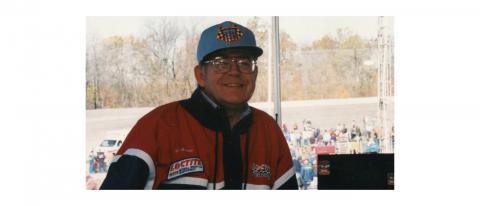
The Indiana Racing Memorial Association (IRMA) and the town of Brownsburg, Indiana, have unveiled a new memorial marker for Dick Jordan, the longtime United States Auto Club (USAC) public relations and promoter.
The memorial, donated by Tony Stewart and located at Arbuckle Commons in Brownsburg, aims to serve as a reminder of Jordan's contributions to the sport throughout his five-decade career.
In 2023, the town of Brownsburg and IRMA partnered to develop the Brownsburg Racing Memorial Trail, the first in Indiana, to celebrate motorsports history. The trail spans just over 2.1 miles and highlights multiple motorsports legends.
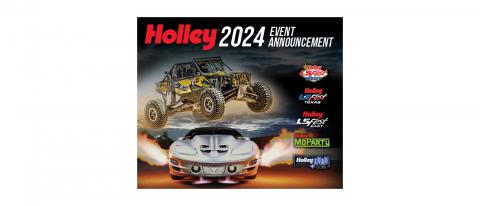
Holley Performance Brands has revealed its full schedule of experiential marketing events for 2024.
Launching in April, Holley's event season will showcase its various aftermarket verticals, the company said, including domestic musclecars, late-model truck and off-road, Euro and imports, and safety and racing.
This year's lineup features the return of flagship Holley events, including multiple Holley LS Fests, Holley Ford Festival and MoParty. Additionally, Holley is expanding its consumer engagement program to reach an even broader set of automotive enthusiasts through participation in more than 20 third-party events.
In addition to its flagship events, Holley experiences will be featured at events and trade shows throughout 2024, including a return to the SEMA Show, November 5-8, in Las Vegas, and the PRI Show in Indianapolis, December 12-14.
PRI welcomed its new President Michael Good on February 26, 2024. He recently sat down with PRI Magazine and shared his vision for the brand, where he sees the industry headed, how our industry can unite to address current and impending challenges, and his focus on continuous improvement not only for himself but guiding his team members as well.
For the complete interview, please read PRI Magazine's Newly Appointed column with Michael Good in the May 2024 edition.
PRI: How has your experience prepared you for this role to lead PRI?
Good: It is truly a humbling privilege to step into this role, into a team that exudes passion to connect, protect, and advocate for an industry that brings out the best in people. Each of us is a culmination of our prior experiences. It's through those experiences that we continuously learn, shape, and mature in our approaches to simple tasks, and how we overcome and solve complex problems in changing times.
I am confident that my prior experiences, which include starting a company from just an idea to leading and growing global brands in the automotive space, have collectively given me the diverse background needed to embrace our changing world. Together we will bring new and innovative methods to the industry that further strengthen our position to attract future generations while embracing those that have been engaged with PRI from the beginning.
PRI: Why is this position a good fit for you? And why are you a great fit for PRI?
Good: I don't take for granted that I've been able to align my passions and my career. I believe that you are either running from something or running to something throughout your life. I was fortunate to have a great career prior to joining PRI. I saw this opportunity as definitely running to something. When I look at the foundation of PRI—a strong connection to our members, constantly advocating for our members, and always looking for new, innovative ways to connect our industry peers to one another, and then combine that with the brand equity of a 36-year-old organization, I see tremendous upside potential. My ability to help shape the culture and strategic vision, understanding how to bring the voice of the customer into our decision-making process, to do all of that at a best-in-class level, is what excites me the most. I can clearly see the path ahead and understand what it will take to for PRI to become an even more integral partner to the industry.
PRI: Can you cite some examples as to why you are bullish on the racing market? Why are you optimistic about racing's future?
Good: The racing industry is not only founded on innovation, but it also embraces the technologies that exist outside of the racing industry – autonomous driving and AI, for example - and finds ways to incorporate them. In many ways, innovation and technology have lowered the barriers to entry for enthusiasts to get involved in racing. The expansion of the SIM racing world is bringing a younger generation into the industry and giving them an introduction into the sport, in a virtual manner. Technology and innovation can drive future growth, and I believe we're seeing that in the growth of grassroots racing in local markets across the United States.
I'm optimistic that racing will continue to evolve and take on new and exciting ways to pursue speed.
PRI: What are you most looking forward to in your new role here at PRI?
Good: Engaging with the manufacturers to learn more about how best to help them grow their businesses! Driving change where it is needed and making sure not to try and fix what is not broken.
PRI: Is there a valuable piece of advice, or a lesson you picked up along the way that has served you well through the years?
Good: Three things come to mind. I'm a firm believer that you get back what you put into the world, so lead with grace. Invest in your EQ (emotional intelligence) as much or more than you invest in your IQ. Never let your current circumstances drive you to make an impractical decision that could have long-term negative implications.
And BTBVOY: Work a little bit each day to 'Become The Best Version Of Yourself.'
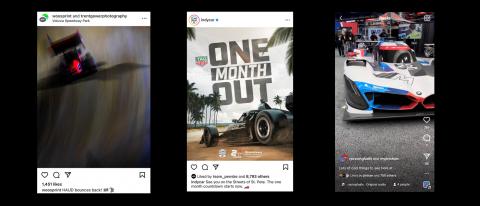
Create quality content that captures the interest of your online audience so they stop scrolling and start viewing.
Social media is content driven, and in today’s digital landscape, creating quality content has become the foundation of a successful online presence. With millions of users scrolling through endless streams of content daily, it can be challenging to capture their attention and spark interest.
One of the first steps to creating quality content is understanding your target audience. As you grow a following, test various types of content to figure out what resonates best with your audience. Tailor your content to your audience preferences and demographics.
Be authentic. Give your brand a personality to build trust and connect with your audience. If possible, create original content for a more genuine feel, and tell a story or give insight with your content to reflect your brand values. Engine or chassis builders could post about their background in racing, how they got to where they are, and what racing means to them.
With strong imagery, video, captions, or storytelling, create a scene that will captivate your audience and evoke emotion, whether it’s excitement, empathy, happiness, or heartwarming joy. Has a customer recently won a race, or come back to competition after an accident? Their stories can inspire other racers. This can help make your content more engaging and memorable.
Additionally, provide value to your audience through your social media posts. Educate them, inspire them, motivate them, or purely entertain them. Offer useful information that solves a problem or addresses a need, give ideas to inspire others who might want to emulate that concept, or create something exciting that captures your audience’s attention. Whichever avenue you choose, focus on delivering value with every post.
Experiment with various content formats to figure out what resonates with your followers and to keep things interesting. That could include short- or long-form video, imagery, graphics, memes, polls, user-generated content, live videos, and so on. Make sure to diversify so you don’t become stagnant. Furthermore, keep up with current trends to stay relevant, and incorporate some of those trends into your content strategy when you feel it’s appropriate, while also staying aligned with your brand.
To build brand recognition and stay top of mind with your followers, maintain a consistent posting schedule. This will help to keep your audience engaged, which will also help grow your following.
Visual content tends to perform better than just words on social media platforms. Using high-quality and captivating images, video, and graphics to communicate your message effectively can quickly grab attention and lead to increased engagement.
And lastly, regularly analyze your content performance metrics to understand which types of content resonate with your audience and where improvements can be made. Use this data to refine your strategy and optimize future posts.
Mastering the craft of creating quality content is essential for individuals and brands to thrive in this ever-growing digital realm.
This month’s featured vehicles include a tribute to one famed test driver while the other pays homage to two German marques in one combined badge.
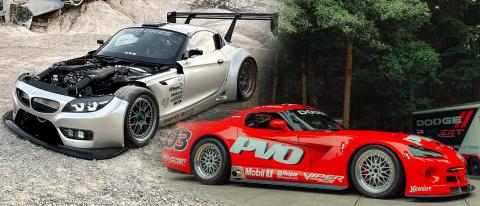
2012 BMW Z4 (E89) GT3
Jason Bacon |Fort Lauderdale, Florida
Race Series/Class: Time Attack and exhibition events
Engine: GMS Stage 3 M120 V12 engine built by Gooichi Motors in Loxahatchee, Florida
Car: Built by Gooichi Motors
Features: ProCharger F1x blower, Celeritech headers, Air Lift Air Ride suspension, Öhlins coilovers, Wilwood brakes, Fifteen52 three-piece center lock wheels on Toyo Proxes RR tires, Haltech EMS, Braille Battery, five-axis ported heads, oversized valves, billet cams, long rod rotating assembly, full billet dry sump
Facts: Everything in the engine has been developed by Gooichi Motors and was built to handle 1,800 horsepower. The car color is a silver/Mercedes F1 Petronis green color scheme. “We have been known to upset purists, so we thought it was the perfect color scheme on a Mercedes-powered BMW race car. The emblems on it have even been CNC machined to be half BMW, half Mercedes logo,” said Sam Morris of Gooichi Motors.
2003 Dodge Viper Competition Coupe GTC-VCC#15
Mansen Way | Corydon, Indiana
Race Series/Class: SCCA, NARRA, Viper Racing League GT, TT
Engine: Dodge Viper V10 built by Performance Vehicle Operations (PVO)
Car: Built by Performance Vehicle Operations (PVO), sold under SRT
Features: Tremec T56 six-speed manual transmission, AP Racing air jacks, BBS three-piece wheels, Hoosier tires, StopTech two-piece rotors, Brembo calipers, RaceTech seats, Moton adjustable dampers, MoTeC data acquisition system, carbon fiber composite body panels, Polycarbonate windshield and rear window
Facts: This is No. 15 of 125 built. It features Prototype #4 livery as a tribute to test driver Tommy Archer and his contribution to make the production Viper Competition Coupes (VCCs) safe and strong enough to win titles across the world. “It’s surprising how few people even know these cars were purpose-built race cars by Dodge and sold with a Bill of Sale only, not street legal,” said Mansen Way.
Although the segment faces some challenges at both regional and national levels, midget racing continues to serve as a springboard into professional motorsports careers for many competitors, and events like the Chili Bowl have become an annual pilgrimage for racers and fans alike.
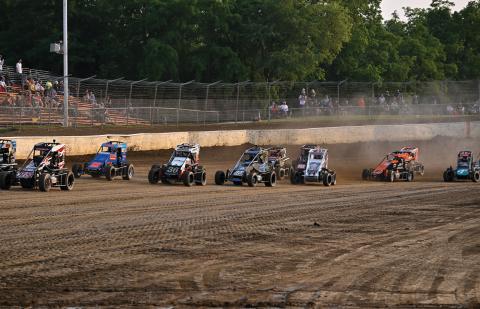
Midget racing’s first organized events date all the way back to 1933. Members of the Midget Auto Racing Association gathered at Loyola High School Stadium in Los Angeles, California, to kick off the sport’s first official weekly program that summer. Thanks to close competition and a fairly straightforward premise, interest soon spread to other regions throughout the country and beyond.
Nearly a century later, midget racing finds itself affected by challenges that have become commonplace in most types of modern-day oval track competition, but its inherent appeal and rich history have allowed the segment to endure where others have faltered.
“Costs have gone up quite a bit over the past few years, but that’s certainly not unique to this segment,” explained Brad Hayes of the Kenyon Midget Series, Lebanon, Indiana. “That has impacted things at the regional level. The purses don’t justify some of the costs for engines and things like that, so that has caused some difficulties. But there are plenty of folks who are still doing it at the national level. There’s an incredible passion for this sport—that’s one thing that midget racing really has going for it. There are people who will always run a midget, no matter what.”
Midget racing is also buoyed by events like the Chili Bowl Nationals, which sees hundreds of competitors from a range of oval track disciplines converge on Tulsa Expo Raceway in January for the annual, nearly week-long event. This, along with a concerted effort to unify the ruleset among various national series to curb cost increases, has given top-tier midget racing momentum that’s not expected to wane for the foreseeable future. Meanwhile, regional series have also developed their own strategies to ensure that the segment remains on an even keel.
National Interests
“It’s just such a fun and entertaining segment of dirt racing,” said Nick Graziano of the Xtreme Outlaw Midget Series, Concord, North Carolina. “It’s one of those situations where all the pieces are in place: It’s a cool car, and they put on great shows no matter where you’re watching them because they mostly race on small, bullring tracks. That forces them to have this three-wide, tight-corner, slide job kind of racing. One of the big things that we’ve seen lately is that midget racing has become part of the ladder for future stars. We’ve seen guys like Kyle Larson and Christopher Bell come out of midgets, and we’re also seeing newer young talent like Jade Avedisian, who won the Xtreme title last year and became the first woman to win a national title in any form of dirt racing. Racers are making a name for themselves here.”
Graziano also said that Toyota’s support of the segment has helped to elevate its visibility and appeal, and that the automaker often develops fledging talent here before they step up to other motorsports segments. The company’s midget racing engine package has also become one of the go-to options for teams that are determined to put together a highly competitive car.
“Midget racing has become part of the ladder for future stars,” said Nick Graziano of the Xtreme Outlaw Midget Series. Among them is Jade Avedisian, left, who won the series title last year “and became the first woman to win a national title in any form of dirt racing. Racers are making a name for themselves here.”
“The Toyota TRD and Stanton SR-11x motors are dominating right now,” observed Tommie Estes of USAC (United States Auto Club), Speedway, Indiana. Estes said that with the recent influx of technology in the sport, the sanctioning body has updated its rulebook to prevent teams from taking advantage of the adjustability that the electronics can provide.
“Everything’s computerized now, and that makes it easier to manipulate things,” he explained. “There are companies that are making ignition boxes with dual settings, and that basically allows you to create a type of traction control based on which setting you’re using, and we don’t allow any form of traction control. It forced us to change the ruleset to allow only one ignition switch in the cockpit. But that’s always been the nature of the sport—you’ve got a set of rules, and some people try to work in the gray areas. It’s like a chess game. You might not get caught tonight, but when you do, it’s checkmate. And then we start a new game.”
With engine packages venturing into the $50,000 range and beyond, midget racing at the national level requires funding that has some teams eyeing sprint cars and other divisions as a potentially viable alternative. Yet there are still those who’re steadfastly loyal to the segment and have the means to invest significant sums of money to stay competitive.
“The Toyota TRD and Stanton SR-11x motors are dominating right now,” said Tommie Estes, competition director for USAC’s Circle Track division. With the recent influx of technology in the sport, USAC has updated its rulebook to prevent teams from taking advantage of the adjustability that the electronics can provide.
“We noticed that people were building one-off cars specifically for this event,” said Bryan Hulbert of the Chili Bowl Nationals, Tulsa, Oklahoma. “For a long time, the Chili Bowl didn’t have a mandate that said that your chassis had to use a certain tube thickness or a certain size, and fortunately we’ve never had an incident that really called the issue into question. But we were concerned about a situation where someone might have run a light car at the Chili Bowl and then goes on to sell it to another racer who goes out and runs at a 3/8-mile track. That could be a dangerous situation, so in the interest of making things as safe as possible, we’re implementing a new chassis rule for 2025. Ultimately it really just brings things in line with the ruleset that’s already in use by the major sanctioning bodies here.”
While the notion of building a car exclusively for one event might seem extravagant, the Chili Bowl has evolved into a massive, must-attend annual event for many competitors, fans, and companies in the oval track racing realm. The indoor race is held in January, when most series are still on hiatus, which makes it much easier for competitors to allocate time for it on their racing calendar. More than 360 drivers and thousands of fans showed up for the event earlier this year.
Hulbert also said that the Chili Bowl’s ability to attract big names in racing has in turn brought more attention from big manufacturers to the sport as well as to this event, specifically, which has only added to its appeal. “The event has a really unique atmosphere. It’s been compared to the energy that you feel on the grid at Indy. If you roll in there, going up against that many other drivers, and walk out the winner, you’ve done something.”
The Kenyon Midget Series has adopted a spec model to keep costs down. “It’s especially good for competitors who are new to this sport,” said Brad Hayes. “They can get a taste of midget racing without having to spend 50 grand on an engine, or something like that.”
A substantial purse incentivizes racers to make time for the Chili Bowl, too. Hulbert explained, “$20,000 on Saturday night and $2,000 just for making the main event is nothing to sneeze at. You look at the run that Logan Seavey had this year, where he won his qualifying night, won the Race of Champions, and then won the main event. Between that and the lap money, he walked out of there with over $30,000.”
Graziano pointed out that those circumstances provide fans with an opportunity to watch some of the biggest names in the sport mix it up alongside future stars. “You get to see this incredible diversity of drivers competing in it from national quarter midgets, World of Outlaws, Late Models, NASCAR, and potentially even IndyCar. It’s become this event where almost the whole motorsport world kind of comes together at a time of year where there aren’t other races pulling attention away from it.”
A Specialized Approach
While those competing on the national stage are bolstered by sponsorship support and events like the Chili Bowl, some regional series have forged a path of their own to keep the sport viable for teams whose budgets simply cannot match that pace. Rather than seeking to maintain parity with national series, the Kenyon Midget Series has instead adopted a spec model to keep costs down.
Toyota’s support of midget racing has helped to elevate its visibility and appeal, said Nick Graziano of the Xtreme Outlaw Midget Series. The automaker often develops fledging talent here before they step up to other segments. Photo by Jacy Norgaard.
“The biggest issue when it comes to cost is the engines,” Hayes said. “National-level engines can cost tens of thousands of dollars, whereas the spec engines in our series are $4,000 for a fresh one. So that’s something we’re doing at the local level to bring some participation back. In our series, we’ve seen car counts increase over the past couple of years.”
The Kenyon Midget Series also uses a spec chassis. Although these mandates preclude participating teams from potentially campaigning the same car at the national level, the ruleset offers some compatibility with USAC’s D2 series. More importantly, Hayes said, the rule structure allows teams to get involved without requiring a national-level budget to do so.
“It’s especially good for competitors who are new to this sport. They can get a taste of midget racing without having to spend 50 grand on an engine, or something like that,” he explained. “The basic premise of midgets has an inherent appeal: fairly lightweight cars with more horsepower than they really need, and exciting competition. But when you look at how much it costs to run at the national level, it’s almost cheaper to run a sprint car these days. And depending on where you are in the country, there may be more races available, and the potential to win more money over there. We’ve had racers who’ve run with our series for a year or two and then just jumped straight into a 410 sprint car.”
The Chili Bowl’s substantial purse incentivizes racers to attend the annual January event. 2024 champion Logan Seavey, seen here, “won his qualifying night, won the Race of Champions, and then won the main event,” said Bryan Hulbert. “Between that and the lap money, he walked out of there with over $30,000.”
The Path Forward
Hayes added that, at the regional level, social media platforms like Facebook have been an indispensable tool not only for bringing greater visibility to the sport, but also from logistical and educational standpoints. Driver meetings are often held via Facebook Live events, and the Kenyon Midget Series makes information about effective chassis setups readily available through its page so that teams can quickly get a competitive car up and running. Because the segment often serves as a temporary waypoint on the path toward larger racing ambitions rather than a long-term destination, Hayes thinks that rentals and arrive-and-drive programs may have a promising future at the regional level.
“There’s a market for something where the drivers can just show up, get in the car, and go race rather than buying their own car and needing a truck and trailer to get it to the track,” Hayes said. “There’s already some of that at the national level, and I could see that continuing to grow. Especially with a spec series like ours, I think it’s perfect. It doesn’t make sense to invest a lot in the equipment if the plan is to move on to another series in a year or two.”
While costs will likely continue to remain high at the national level, recent efforts to bring uniformity to the various series through chassis and tire mandates should help prevent expenses from swelling further in upcoming seasons.
“This past year we moved to a specific tire requirement, the SP3 Hoosier,” Estes said. “A lot of the midget racing organizations have moved to this tire as well. We’ve had teams that have won races on the same tire two or three times, whereas before that wasn’t really possible with the softer SP2.”
Looking ahead, Graziano said that the Chili Bowl might be used as the model for the expansion of existing events in the future, or when organizers consider new ones to add to the race calendar. “I think the segment is going to continue to grow as these bigger names want to get involved and bigger stories are created as a result. We’ll see that full-fledged ‘event’ approach become more prevalent. Because of that, events like the Milton Hershey Appalachian Midget Week are poised to become the next big thing in this segment. It’s really about finding ways to elevate these events beyond being just another dirt race and into something that’s going to attract the whole family.”
Can High Limit Racing challenge the World of Outlaws’ grip on national touring 410 sprint car racing, and what will this “split” mean for the sport?
When two national touring series start competing against each other in a particular discipline, racing industry veterans get nervous. These dreaded “splits” bring up haunting memories of business battles gone wrong—most notably the high-profile civil war that engulfed Indy car racing.
410 sprint car racing has its own history of splits.
The World of Outlaws has maintained its position as the premier national touring sprint car series since 1978 but faced challenges from both the United Sprint Association in 1989 and the National Sprintcar League in 2006. Both series lasted only a single season before disbanding. In 2024, the World of Outlaws is facing a new challenger led by its own reigning five-time champion, Brad Sweet.
“I’ve been racing my whole life and on the road for 10 years with the World of Outlaws,” said Sweet. “So I always had ideas and ambition to help drive the sport to another level.”
Known for throwing slide jobs and running the cushion, the “Big Cat” saved his biggest move for the off-season. In partnership with Kyle Larson—multi-discipline motorsports star and Sweet’s brother-in-law—the duo officially announced the launch of High Limit Racing, a national series of 410 sprint cars with big ambitions and significant funding that has many in open wheel racing talking.
“It seems like there’s a new buzz in 410 sprint car racing because of High Limit being added to the mix,” said Jim Allen of the Northern Auto Racing Club (NARC), a West Coast 410 sprint car series based in Auburn, California.
The new High Limit series has ruffled feathers, set off a firestorm of online opinions, and ignited a scramble to secure full-time driver rosters and tracks. However, there’s optimism this split may not repeat past mistakes.
“These breakaway [series] have not been successful in the past, but the new game changer is streaming revenue,” said Jerry Gappens of Eldora Speedway, New Weston, Ohio. “Streaming has changed the landscape across the board, not only in sprint car racing.”
Indeed, the rise of streaming in motorsports is creating an interesting and quickly evolving dynamic. With new funding, bigger audiences, and a new national touring series in 410 sprint car racing, this once-niche segment of motorsports is reaching new heights while attempting to conquer old challenges along the way.
The Concept
The seeds of High Limit Racing were sown during the 2023 race season, when Larson and Sweet debuted the High Limit Sprint Car Series, a 12-race midweek series. Less of a full-fledged national tour, the series was a starting point for their team to kick the tires.
“I think last year was definitely a learning curve, but I thought we did a good job and had some great events,” said Sweet. “I think for us, it was more like a proof of concept.”
Founded by Kyle Larson and Brad Sweet, High Limit Racing is 410 sprint car racing’s new national series. Its inaugural full-time season spans coast-to-coast with 60 dates at 36 tracks in 19 states, with driver payouts topping $5 million. Sweet’s goal is to make High Limit “a more sustainable business for car owners” and to “feel like a professional sports league.”
The midweek series was successful, albeit restricted. World of Outlaws teams could not run in most High Limit races due to the Outlaws’ policy of restricting teams to four non-Outlaws races per year. If an Outlaws team exceeds this limit, they lose eligibility for various monetary benefits, including tow money, points fund, exclusivity bonus fund, and more.
Faced with the limited potential of their midweek series, Sweet and Larson decided not to fold but to go all-in.
“I think what happened was the Outlaws didn’t allow the drivers, like myself, to race in those races,” said Sweet. “I just felt like we weren’t going to be able to stay in that 12-race midweek [series] with it really helping what we wanted to help. But with the FloRacing [deal] and how well things went in those 12 races last year, it created the opportunity and desire to make more of a national series and to take all our ideas and innovation and really make it matter for everybody in sprint car racing.”
For Sweet and the High Limit crew, deals began to fall into place. In late October 2023, High Limit announced it acquired Tony Stewart’s All-Star Circuit of Champions, a Midwest-based 410 sprint car tour that’s been around since 1970. Next, High Limit inked a multi-year media deal with FloRacing—a streaming platform that provides live and on-demand coverage of circle track and grassroots racing—with the media company taking a minority equity stake in High Limit Racing.
In early November, High Limit Racing was officially announced as a new national series. This year, it will span coast-to-coast with 60 dates at 36 tracks in 19 states, with driver payouts topping $5 million. A $1 million point fund will be up for grabs, with the series champion collecting $250,000. Last year’s Midweek Money Series will also return as part of the High Limit national tour, awarding an additional point fund of $100,000. Comparatively, the 2024 World of Outlaws schedule features 86 races at 41 tracks in 19 states.
Perhaps most intriguing, High Limit will begin awarding charters after the first season is complete. Sweet said the series will award five charters to its top-five teams in points at the end of the 2024 season, and five more after the 2025 season. It’s all part of their overall vision to elevate the sport.
“We’re trying to create some equity for these team owners who are making huge investments,” said Sweet. “It’s no different than any other major sports league that has a franchise or a charter system.”
Launching a 60-race schedule and introducing a charter system is a big swing for a new sanctioning body with only 12 total races under its belt. But it’s a risk worth taking, according to Sweet.
“The biggest thing is that we’re trying to make it a more sustainable business for car owners and to capitalize on the momentum of what’s been happening for sprint car racing over the last few years,” he said. “We’ve been seeing larger audiences show up at the race tracks and streaming audiences growing, which has created a lot of opportunities to raise purses and try to share the money more evenly through the whole ecosystem. The ultimate goal for us is to improve every aspect of sprint car racing and be good stewards for the sport.”
The series plans to invest more money into safety and help race tracks make safety improvements, while also improving the overall fan experience at the facility. Additionally, High Limit will prioritize working closer with team owners by increasing transparency and “treating them more like partners.”
“We want to make it feel like a professional sports league,” said Sweet. “I think these owners need it to be more of a business rather than a hobby or something they are toying around with on the side. It’s a big money business behind the scenes.”
The World of Outlaws has long touted its series as, “often imitated, never duplicated.” In 2024, High Limit Racing is rolling the dice to not just imitate or duplicate the Outlaws’ tried-and-true brand of national 410 sprint car racing, but to elevate the status quo.
The Positives
Between the high price of travel and skyrocketing costs, to remain competitive in sprint car racing means funding is front of mind for most teams.
“We’re talking about businesses running down the road,” said Allen.
Funding 900-horsepower businesses involves scratching by with a combination of purse winnings, tow money, points funds, sponsorship, and personal investment. Yet with growing purses, high-paying marquee races, strong crowd sizes, and robust car counts, 410 sprint car racing is thriving.
“There’s a substantially increased amount of money on the line now,” said Allen. “It’s not all top heavy, which is good because we need to keep all those teams in business.”
Ultimately, a key difference maker has been streaming. Since 2018, the World of Outlaws has broadcast races on its own streaming platform, DIRTVision, while High Limit streams on FloRacing. Beyond the national series, both streaming platforms work with various tracks and regional racing series to stream local races, providing revenue and exposure to the weekly racing circuit.
“High Limit is a great venue for [FloRacing] to get subscribers,” said Allen, who just signed a two-year contract with FloRacing to continue streaming NARC races. “We got a little more money this year, our audience is increasing, and collectively, I think we all play off each other. It’s good for the sport.”
Not only are streaming services bringing in new revenue and new fans, but also new ideas to enhance the nightly programs. “One thing that FloRacing has really pointed out is that these shows need to be run more efficiently and be done in two or two-and-one-half hours,” said Allen. The idea is that efficient shows will keep fans engaged and entertained, both at the track and on the couch.
Eldora Speedway will host multiple nights of racing for both the World of Outlaws (seen here) and High Limit Racing in 2024. So which series will prevail? “From a track perspective, it’s butts in the seats,” said Eldora GM Jerry Gappens. “The fans will be the jury on whether they like it or they don’t.”
However, the money is making the biggest impact. Without FloRacing’s partnership, High Limit Racing likely wouldn’t have made the jump to a full-time national series or brought millions of dollars to the sport. Ultimately, this much-needed influx of funding is creating new opportunities for teams around the country.
“I think it will open up some opportunities for more race teams to go out on the road and have a chance to make a living from it,” said Gappens.
For example, Sweet said the All-Stars only had a few full-time teams last year, but at press time, High Limit has 17 drivers fully committed to its 60-race season. “I feel like we upgraded the All-Stars to the position we’re in now with High Limit Racing. It’s a lot more equivalent money-wise to where the World of Outlaws are at.”
In addition to creating more full-time teams, it creates new opportunities and aspirations for young drivers. “Hopefully more up-and-coming drivers will look at winged sprint car racing as a viable option to make their livelihood,” said Sweet.
Gappens agreed about the importance of developing new talent. “From a promoter standpoint, I think that’s really important to generate new stars. Any sport needs new stars and new [drivers] for people to cheer for.”
For most aspiring young drivers, the road to competing full time in a national series begins at the local track, in the local series. This could be a boon to the local racing scene according to Doug Johnson of Huset’s Speedway in Brandon, South Dakota, and Jackson Motorplex in Jackson, Minnesota.
“I think it’s a lure to some of these young kids coming up,” said Johnson. “Having both series on both coasts is going to help that. In turn, most of them aren’t going to jump right to the World of Outlaws or High Limit. That’s where the local racing is going to benefit from getting some of those guys.”
With more sprint cars on track, builders and parts manufacturers are another potential benefactor.
Dan Musselman of Maxim Chassis in Springfield, Illinois, is not concerned about the High Limit and World of Outlaws duel. “We still sell to the same customers, and it really doesn’t matter to us what series they’re in.” He described business as “very solid,” though not at the peak he experienced during the COVID-19 pandemic. He’s added three new employees over the past year to increase production and believes his shop’s outlook is positive.
“The small business economy is still pretty good, and that for the most part is what drives our business,” observed Musselman. “Australian business has picked back up after COVID-19, that also helps with our volume.”
Ultimately, Sweet believes healthy competition between the two series will lead to a better result for fans, drivers, teams, and the entire sport. He cited the fact that both High Limit and the Outlaws now travel with a safety team, and nightly features pay a minimum of $12,000 to win and $1,200 to start, with dozens of races offering much higher purses.
“These are things that wouldn’t happen without competition,” said Sweet. “The Outlaws have raised their bar, they’ve doubled their tow money, they upped their purses. We pushed them to make improvements, and I’m sure they’re going to push us to step up our game. In the end, there’s going to be more teams that can be more sustainable with all the extra resources out there, and I believe the fans will win with more content to watch and races to attend.”
The Concerns
Between two national touring series, there will be 146 race dates scheduled for the 2024 season.
“As a promoter, I always worry about oversaturation of a product,” said Gappens.
While these races are spread throughout the country, that translates to many high-paying races that need to be promoted, attended, and streamed. 410 sprint car racing continues to grow, but 2024 will provide a significant stress test to its overall popularity.
“My biggest concern is if the average fan has the disposable income to go to all these bigger events, and then in turn, what is that going to do to weekly racing,” said Johnson. “I have major concerns, but we’ll just wait and see how it plays out.”
While increased purses are a boon for teams and drivers, they are a challenge for local tracks. Gappens said the World of Outlaws raised purses by 20% to tracks for the 2024 season, which was “a big hit in one year.” While he said the price of hosting High Limit and World of Outlaws was comparable—Eldora is hosting both series this year—increased costs are difficult to absorb for small tracks making small margins.
In October 2023, High Limit Racing acquired the All-Star Circuit of Champions (seen here) from Tony Stewart. The Midwest-based series only had a few full-time teams last year, while 17 drivers will go full-time with High Limit Racing. “I feel like we upgraded the All-Stars to the position we’re in now,” said Brad Sweet. “It’s a lot more equivalent money-wise to where the World of Outlaws are at.”
He added, “20% is going to make a big difference on the bottom line for all of us, but especially at a family-operated race track.”
A major concern is if the increased costs will force promoters to raise ticket prices. “For every action, there’s a reaction, and we’ve got to be sensitive to when we price ourselves out of the market for the common race fan,” said Gappens. “That’s what’s getting lost in this that worries me with the sanctioning bodies.”
National touring sprint car shows typically draw healthy crowds to tracks because of big-name drivers, but most facilities rely on weekly shows to stay in business. That’s where the Catch-22 of streaming services comes into play. For all the benefits they have brought to sprint car racing, side effects are showing up in the form of lackluster weekly attendance.
“If people have just an inkling that it might rain or it’s too cold, they’re not going to go to the races, and they’ll stay home and watch it,” said Johnson. “[Streaming] is too convenient for weekly racing.”
This is creating a unique problem for track promoters. The streaming money may help fund their operation, but it can also keep people away from the track.
“As far as the national series, I think the streaming is great and it does great for them,” explained Johnson. “But we have got a weekly series we need to worry about and put butts in the seats because if we don’t, the doors aren’t going to stay open. It’s that simple.”
The surge in popularity for 410s is also decimating another sprint car class that was a mainstay at the weekly level—360 sprint cars.
“My son has raced 360s for a number of years, and it’s not cost effective,” said Johnson. “You look at it from a car owner standpoint, you’re spending the same amount of money [as 410s], but you’re racing for half the money.”
As the sport continues to grow, teams are sparing no expense in their fight to be competitive. But this mindset creates another challenge to the segment’s financial sustainability.
“We’re our own worst enemies with the cost,” observed Gappens. “Now it seems we’ve got to have titanium parts; you’ve got air pressure bleeders. When you bring technology into it, you’re increasing the cost.”
Keeping costs in check for teams, tracks, and fans will be a key challenge for these sanctioning bodies to navigate.
The Big Question
Is there enough support for two national touring series to survive in 410 sprint car racing?
Strong arguments could be made either way, but we won’t truly have a clearer picture until the dust settles at the end of the season.
“We’re going to give fans a good sampling of everything, and then the fans will be the jury on whether they like it or they don’t,” said Gappens. “They’ll vote by buying tickets to these events.”
Eldora will be an interesting case study, as it is hosting multiple nights of racing for each series. In Gappens’ view, the success or failure of either series will be easy to determine. “From a track perspective, it’s butts in the seats. If our attendance is the same or hopefully up for all of it, that’ll be a great success. If we see a drop off on one or the other, then that obviously is going to raise a red flag and cause some concern about the direction we’re going.”
410 sprint car racing is entering a new era. With more money, more races, and two national series going head-to-head, there’s a lot on the line this year. While disagreements about the sport’s direction and costs have led to this latest split, the sport’s overall success is ultimately what’s most important.
“We certainly don’t want to hurt the sport,” said Sweet. “We’re going to be very open-minded and try to make the right judgment calls on what’s going to be better for the overall health of the sport. I just hope in 10 years, this is a much larger sport, a more professional sport, and hopefully a lot more people know what a sprint car is.”
Clutches, driveshafts, and axles are on the receiving end of growing amounts of power. Driveline component manufacturers are stepping up to the challenge of managing those forces.
So much of innovation in racing can be boiled down to the concept of trying to hit a moving target—a target that is for the most part going one way: faster. It takes a complex series of functions to increase speeds and lower lap times or ETs, and bearing the brunt of those ever-evolving functions is the race car’s driveline.
“A lot of our products are born out of not just transferring torque but withstanding torque,” said Lee Mejia of The Driveshaft Shop, Salisbury, North Carolina. “People are making a lot more horsepower and torque than what the vehicle was initially designed for, and then they’re finding limitations in the drivetrain that the additional torque has created—twisted up driveshafts, broken axles, and things like that.”
“The trend of power going up is probably the biggest we see,” added Chris Bernal of Advanced Clutch Technology (ACT), Lancaster, California. “The numbers just go up and up, in street vehicles and race vehicles. That causes a lot of issues with the driveline, not just the clutch.”
“If you were recommending to people what they need to go race based off what those cars were capable of 10 years ago, you would have very unhappy customers, because the capability of those cars today is so much greater,” explained Dave Ely of Diversified Machine Inc. (DMI), Lancaster, Pennsylvania. “And the demands on the components are so much greater today than what they were 10 years ago. What you would have recommended as your go-to unit at that time just simply would not get the job done today.”
It wasn’t all that long ago that “we used to shift at 5,500–6,000 rpm,” recalled Will Baty of McLeod Racing, Anaheim, California. “Today, stock engines do that. A stock LS is set at 6,200. Now you have the new Ford Voodoo engines, which from the factory go to 9,200 rpm. This is the zone that we need to make sure our clutches will function and operate in properly.”
We asked these experts to identify some of the moving targets that are on their radar, how they’re hitting them, and if they could provide some torque transfer advice.
The Drag-and-Drive Challenge
“It’s still small, but it’s growing,” said Bernal of the segment of his customers taking part in Drag Week, Sick Week, and other drag-and-drive events. The dual nature of the competition, where participants drive hundreds of street miles—often towing a trailer—to make hard passes down the drag strip, and then drive to the next venue, complicates clutch selection.
“You can’t put 100% pure race products on and expect that car to be drivable on the street,” he pointed out. “At the same time, the street-type products are not going to last. These are 1,200-hp cars that are going drag racing but are also ‘street legal.’ They’ll tear up the clutch, or the clutch will help tear up the driveline if it doesn’t have any give at all in it. So it’s particularly challenging to do something for these guys.”
ACT’s clutches “span the gamut from the high-horsepower street guy to full race,” Bernal added. “The tricky part is in between, where you have big power, but the clutch also has to not shake the car, throw the transmission out of the car, or destroy the rearend.”
For this segment of the market, ACT has developed its new Mono Drive hub, which the company includes in its new Mod-Twin clutch kits. The Mono Drive hub is a single hub that drives the two discs in a twin-disc clutch. “Instead of two short hubs with maybe a half inch of engagement on the input shaft, we have an inch and a quarter of solid engagement, which the transmission guys are very happy about,” Bernal explained. Plus, the Mod-Twin clutch is modular, so the hub can be changed from a sprung hub to a solid one depending on the application. “You can change from race discs to street discs with one part number,” Bernal said. “It’s best to outfit it the way you want, but if you have to make any changes down the road, it’s easy to do.” The Mod-Twin is “a real robust system,” he added. “We took it from a racing approach, but we added some compliance to it for some of these drag-and-drive type of events.”
In Baty’s experience, many of the drag-and-drive cars he’s seen “were set up with smaller-diameter clutches, which are great for drag racing. They’re built to be light and hold power, but they have no inertia, not a lot of clutch active engagement time. You’re supposed to let the clutch out as fast as possible and go. Now these guys are on the street, and they’re trying to take off from a dead stop pulling a trailer. Without that inertia, they end up slipping the clutch a little more to get the vehicle moving. Slipping the clutch generates heat. Heat is the number-one killer of clutches.”
“If we’ve done our job, you forget we exist,” said Dave Ely of DMI’s quick-change rearends. When the rearend works properly and needs no attention, “it’s allowing you to figure out how to get faster, not be fixing it.”
McLeod’s RST and RXT twin-disc clutches are 9 11/16-inch clutches “that are the sweet spot between the really small clutches and the bigger clutches that hold more power,” Baty said. The RST is rated for applications up to 800 hp, while the RXT is made for applications up to 1,200 hp.
There is another option for those who want to stick with a smaller clutch, Baty said: “We add more discs to it. When we start stacking, going from a twin disc to a triple or four disc, it hasn’t really lost that inertia, because the performance of the clutch won’t really change as far as how the engine runs through the rpm spectrum. What changes is the life and the overall drivability. We essentially give the clutch more area, more heat sink. The more area we have, the more drivable that clutch is, even if it’s a smaller clutch.”
Dirt Car Rearends
Size has become a concern with the ring-and-pinion gears in dirt modifieds and dirt late models, Ely said. “Some of our competitors have tried to convince people that they need an 8-inch ring and pinion to save weight” instead of the typical 10-inch ring and pinion. “It does save about 2 1/2 pounds,” he admitted, “and it will spool up a little faster and increase the acceleration. We offer an 8-inch for those who feel they really need it. But there is no free lunch. One of the disadvantages of an 8-inch rear is that it’s not going to transfer as much torque because the leverage isn’t there to do it. If you are specifically looking for forward traction, the 10-inch is going to transfer
more torque into your torque arm than the 8-inch will.”
Reliability can also be a problem with a ring and pinion that’s too small for the application, according to Ely. An 8-inch “has a smaller surface area, so it will see a higher concentration of force per square inch on it than the 10-inch will. So it’s going to wear out sooner and will be more prone to pitting, etc.,” he said.
Ely noted that, as in so many forms of racing, technology in the dirt track world keeps progressing. Those changes, including suspension setup evolution and new shock technology, “all contribute to the wear and tear that you see on a ring and pinion set.” That means driveline parts suppliers have to “pay attention to the latest technology in all the market segments that you service, and then figure out how that applies to what you do. We see it frequently on the sprint car side through tire rules. As the tires change, whether they provide more grip or less grip, we have seen the driveline demands change with the tire changes. Surprisingly enough, when they start unhooking the cars, we’ll actually see increased driveline wear because the cars aren’t as locked down. It puts different harmonics through driveline components that will cause different wear than if things are locked down and have a load on them. There’s always a result based off of a change that takes place, and you have to be on top of it.”
Material Matters
Mejia told us some of The Driveshaft Shop’s customer cars “are making 2,000–3,000 hp, with torque numbers that are pretty far up there as well. We’ve had to figure out ways of making parts that are torsional enough to withstand that kind of shock and abuse over and over again.”
Among those are driveshafts for modern domestic muscle cars. “We’ve become a necessary upgrade for anyone going to the track who’s making more than stock horsepower. Before they ever launch that car, they know they’d better switch out the stock driveshaft because it’s going to break.”
OEM driveshafts, Mejia explained, aren’t made to withstand the forces of a hard launch on a prepped surface. “The big focus for the OEMs is NVH (noise, vibration, and harshness). They want to build the quietest, most comfortable car they can.” He also believes the factories are building their driveshafts to act as what he called “fusible links.” The factory would rather “warranty and replace a couple-hundred-dollar driveshaft or axle than a transmission or a differential.”
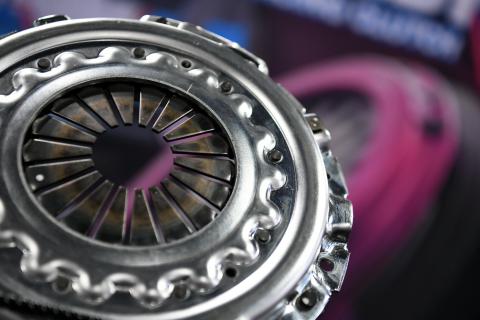
ACT’s Mod Twin clutch kits feature a Mono Drive hub that drives both clutch discs, providing more engagement on the input shaft. The modular kits also allow users to change from a sprung hub, seen here, to a solid one, based on application. “You can change from race discs to street discs with one part number,” said Chris Bernal.
(We heard this same fuse analogy from Bernal regarding clutches. “[Racers] want their clutches to be totally robust and never fail, yet at the same time, the clutch has to be the fuse. Replacing the clutch in the pits is not fun, but it can be done. Changing the transmission or rearend, on the other hand, gets pretty expensive. So we need to be the fuse that barely blows but does blow when it’s beneficial.”)
When it comes time to upgrade a driveshaft for a Challenger Hellcat, for example, The Driveshaft Shop offers replacements made from aluminum or carbon fiber. Most people think the choice of carbon fiber is based on weight, Mejia said, but that’s not the case. “For a Hellcat, the two driveshafts are pretty comparable in weight. The carbon might be 2 or 3 pounds lighter.” The big difference, he said, is that carbon fiber “is a more torsional material, so it has more capability to twist under load to absorb some of that initial shock during the launch. Aluminum is a torsional material too, with typically about 15 degrees of twist under load, but carbon can double that. By doing so, it typically smooths out the launch, helps with some traction, and it can help with wheel hop.”
Driveline material choice is less of a concern with front-wheel-drive performance cars, Mejia said, because the company makes the majority of its axle bars and spline pieces for high-horsepower applications from 300M chromoly. “We’ve come up with a lot of innovative ways to make these parts for optimal strength, but to fit in OEM size restraints. In our Honda line, for example, we make a set of axles that’s good to about 700–800 hp that fits the stock hubs. Beyond that, our racing axles are designed for people making over 1,000 hp. For them we increase the size of the CVs, and we increase all of our spline sizes on the internals, and the spline into the hub. Then we supply a different set of wheel hubs that fits the stock bearing but has a much larger spline, to have better engagement and be able to withstand a lot more power.”
The Driveshaft Shop also uses a proprietary splining method in which the splines are rolled, not cut, into the bar. “We’re basically forging the material into that shape, so we lose no material, and we don’t affect the grain structure of the material. It allows us to have much better quality control on the tolerances on the splines,” said Mejia.
When it comes to material choice for a clutch, what comes up first in most people’s minds is the friction material on the clutch disc. “But the biggest main choice is the flywheel,” explained Baty. “That’s what’s dictating how the clutch is going to react out the get-go. The biggest change we make is deciding whether it’s a steel or aluminum flywheel.”
The choice between a carbon fiber and aluminum driveshaft isn’t as much about weight as racers may think, said Lee Mejia of The Driveshaft Shop. Carbon fiber “is a more torsional material, so it has more capability to twist under load to absorb some of that initial shock during the launch.”
The choice depends on the car’s intended use, Baty said. “Say there’s a guy who has a performance street vehicle that he considers his race car as well. He may do autocross here and there, but he’s not a serious racer. I will tell him for the amount of time you’re going to lose on the track, your overall drivability and clutch longevity will benefit running a steel flywheel. A lot of these guys want all the power in the world, but they don’t want to sacrifice clutch drivability. So the steel flywheel is going to be the better option. It’s about inertia. Inertia is your friend. You don’t want to get rid of all of it. Now, the guy who’s looking to win championships, who doesn’t care what it drives like and isn’t going to be driving on the street? The aluminum flywheel is what he wants.”
Driveline Do’s and Don’ts
When we asked these experts for advice on what to do—and not—when it comes to driveline parts selection, each had a little different spin on the same bit of wisdom: Ask the right questions.
“The top teams do things for certain reasons that work,” Bernal said. “The teams that aren’t at the top struggle with getting advice earlier. If you call me when you’re going into a certain form of racing, and I know the setup you’re using, we’re going to have a real good recommendation on what works and how to set it up. You can call me after it’s messed up, but it’s a different kind of conversation than when you’re putting things together.
“There’s just so much power now,” he added. “You can’t get away with a clutch that you heard about on the Internet, or you heard about from someone else. That was fine when they were making 500 hp, but now that they’re making 900 or 1,000? That’s going to be a different answer.”
“The biggest thing that can cause an issue is when customers aren’t as forthcoming as they should be with what their actual plans are for a build,” Mejia said. “Maybe they’re trying to skimp on something like the axles or the driveshaft and are blowing stuff up, because they’re making twice as much power as what that part is rated to. It’s important that, when we’re talking about something that is actually transferring torque, that you’re realistic with what it is you’re going to be doing and what you need those parts to do. That way we can make sure that whatever it is that we give you is going to be able to hold up and for a good long time.”
Baty agreed. “We really need to know the overall intended use of that vehicle to have the perfect clutch performance. A lot of people will build a vehicle intended for all-out performance. They want every ounce of power that it’s potentially capable of producing. However, when they try to use it on the street or some different sanctioning body, everything changes. So we need to know those things.”
Critical for clutch selection, Baty added, is knowing the engine’s torque. “It’s all about the torque,” he said. “I don’t care about horsepower. Torque is that twisting force that’s trying to drive through that clutch.” Knowing the engine’s torque production, he can then utilize “the different ways to hold and harness that power, whether it be the friction material, clamp load, or a combination of the two.”
McLeod’s RXT is a 9 11/16-inch clutch that hits “the sweet spot between the really small clutches and the bigger clutches that hold more power,” said Will Baty. RXT clutches are made for applications up to 1,200 horsepower.
Regarding DMI’s quick-change rearends, Ely has found there’s “a fine line between no maintenance and preventive maintenance. Looking at my phone calls from people who have issues, half of them are because they’ve done zero maintenance, and the other half are people who just felt like they had to fiddle around with stuff that doesn’t need fiddling around with. Somewhere in the middle is where you want to be. You’ve got to have good experience, and you’ve got to rely on people to teach you properly. Ask questions as racers. Ask successful racers. Talk to guys who win. Talk to the manufacturer. What’s the life expectancy of this? How should it be maintained? How often should I be doing it?
“People tend to believe that everyone always has an angle,” he continued. “But speaking on behalf of me and Diversified Machine Incorporated, we have no angle, other than we want you to be happy, and we want you to have success. I’m not just trying to sell you something. I’m trying to put a product into your hand that you’re going to forget about. If we’ve done our job, you forget we exist. Let’s say you bought a quick-change rear. You’ve put it in, and you’ve focused on getting faster, on getting your tires right, on picking the right shocks, on your driving, on all these other things. Not one time has that quick-change rear taken one second of your attention. That means that we have done our job, because it is allowing you to figure out how to get faster, not be working on something fixing it.”
 MEMBERSHIP LOGIN