ICYMI: PRI Economic Report Highlights How Racing Helps Drive U.S. Economic Activity

Submitted by ajh on Tue, 07/29/2025 - 09:57
PRI Economic Report


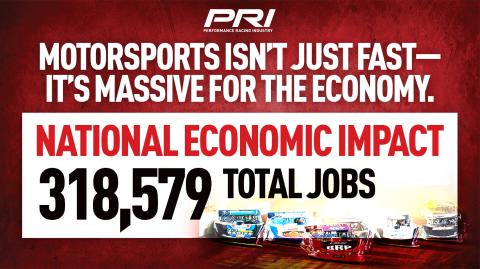
Motorsports Industry Powers $69.2 Billion U.S. Economic Engine, Supports More Than 318,000 Jobs, New Study Finds
 

Groundbreaking PRI economic industry study highlights how motorsports businesses serve as a key driver of American economic activity.
 

PRI recently released a landmark study that underscores the motorsports industry's pivotal role as a key contributor to the U.S. economy, supporting hundreds of thousands of jobs, generating billions in economic activity and delivering substantial tax revenue. 

PRI, the leading voice for the motorsports industry in the U.S., commissioned the research, which was conducted by John Dunham & Associates, based on 2025 U.S. economy data. The study encompasses automobile, truck, motorcycle and UTV/side-by-side racing activity.   

Traditionally, economic impact reports about racing are focused on the impact of a single event--major race weekend events for a specific local and state economy.  Those are studies that examine the impact of the tourism dollars that come into the economy as a result of that single event. PRI's report is different because it determines the economic impact of the businesses that support the existence of racing in the first place. 

PRI's research represents the most comprehensive assessment of motorsports' economic footprint ever undertaken to quantify the scale and significance of the business of racing to the U.S. economy. It evaluates the economic contributions from multiple racing businesses--including tracks and promoters, parts manufacturers, distributors, retailers, service providers and incorporated race teams.  

Key findings from the study include:  

  • The industry contributes more than $69.2 billion in annual economic impact to the American economy. 
  • Nationwide, the motorsports industry supports more than 318,000 American jobs.  
  • American workers in the motorsports industry earn more than $22.1 billion worth of wages and benefits.  
  • The industry generates more than $8.2 billion in tax revenue, including $5 billion in federal taxes and $3.2 billion in state and local taxes. 


As part of this study, PRI also launched an interactive economic impact map, enabling users to explore motorsports-related data by state and county--highlighting the industry's reach and relevance in communities of all sizes across the country. The website also offers downloadable infographics that can be shared with policymakers and other businesses to show the impact motorsports has on individual states and communities. 

The PRI Economic Impact Study provides valuable data about the economic footprint of the motorsports industry in the U.S. PRI undertook this effort to provide policymakers, industry stakeholders and the public with credible, data-driven insights into racing's role as a major driver of economic activity, employment and tax revenue. The study not only affirms the industry's significance but also serves as a foundational resource to inform advocacy, investment and long-term planning. 

"Racing holds a special place in American life, and this milestone report highlights the broad scope of the motorsports industry as an economic driver at the local, state and federal levels," said PRI President Michael Good. "Using these results as a foundation, PRI will continue to seek ways to foster the motorsports industry, from racetracks to manufacturers, and from small businesses to major national employers, to ensure motorsports continues to touch every part of the country and bring together people from all walks of life for competition and community. We're proud to serve as the leading voice for the motorsports industry in the U.S. and will continue delivering the data needed to demonstrate the industry's economic strength and value." 

This economic impact study represents an important bookend to PRI's 2024 Racing Market Report, a consumer trends analysis that found that consumers spent $8 billion on track-use-only parts for motorsports in 2023.

In 2023, a study commissioned by the SEMA found that the automotive aftermarket industry generates an economic impact of $337 billion annually to the American economy. While the motorsports study found small areas of overlap in the parts, repair and facilities areas, the motorsports study results are a complement to the SEMA report. PRI was acquired by SEMA in 2012 to connect, protect and advocate for the motorsports industry. 

Report Methodology 

The PRI Economic Impact Study estimates the economic contributions made by the motorsports industry, which includes manufacturers, distributors and retailers of automotive racing parts plus racetracks, race promoters, and professional race teams.  Data are for the United States economy in 2025. John Dunham & Associates (JDA) conducted this research, which was funded by Performance Racing Industry (PRI). This work used standard econometric models first developed by the U.S. Forest Service, and now maintained by IMPLAN Inc. Data came from the PRI, Data Axle, and other government sources.  

About Performance Racing Industry 

Performance Racing Industry fuels the passion for motorsports by building, promoting, and protecting the worldwide racing community. PRI supports the interests of racers, enthusiasts, builders, tracks, sanctioning bodies and businesses through legislative action and advocacy, its monthly business magazine Performance Racing Industry, and the world's premier motorsports trade show, the PRI Trade Show. PRI also supports businesses by providing market research, education and best practices in motorsports business and racing technology. For more information, visit PerformanceRacing.com. 

July 2025

FIA, Formula E Sign 10-Year Extension

Submitted by ajh on Fri, 07/25/2025 - 15:09
Formula E logo


The FIA, the Paris-based motorsports governing body, has signed a multi-year extension to its agreement with Formula E ownership for the continued promotion of the FIA Formula E World Championship all-electric, single-seater series.

The multi-year agreement secures the rights to the FIA Formula E World Championship for an additional 10 years beginning in 2038, when the previous agreement was set to expire.

The long-term extension will enable Formula E to build further on its growth, series officials said, providing the FIA World Championship with the long-term vision and support to thrive in the years to come, and opening the door to strategic long-range partnerships and expanded fan engagement.

Under current plans, Formula E is set to continue its phased development strategy for its racing cars, delivering faster top speeds, greater acceleration, enhanced aerodynamics and improved tire performance in an effort to showcase the increased relevance to consumers and the wider EV market.

For more information, visit fiaformulae.com.

July 2025

AAM Group Adds Josh Lubitz, Larry Lyon

Submitted by ajh on Fri, 07/25/2025 - 13:07
The AAM Group logo


The AAM Group, the distribution group based in Piney Flats, Tennessee, has hired Josh Lubitz as its new supplier relations leader.

In his new role, Lubitz will be working with the supplier relations team to help better serve group members and suppliers, while simultaneously growing sales, according to the company.

Lubitz has more than 30 years of experience in the automotive aftermarket industry across multiple segments, including retail, wholesale distribution and manufacturing. He began his career in retail at a truck accessory shop before transitioning into wholesale distribution. Lubitz has also served as an independent manufacturer's representative and later went on to hold roles at industry companies such as Rhino-Rack, WeatherTech, Bestop and Leer.

In addition, the AAM Group has also added Larry Lyon as the director of Business Development.

Lyon brings nearly two decades of experience in the automotive aftermarket, beginning his career at Bestop, where he spent 18 years contributing across all facets of sales, eventually becoming the National Sales Manager. In 2022, he joined APG/Premier Performance in a new business development role that evolved into Senior Director of Purchasing and Portfolio.

"After years of working with many AAM members, it's exciting to now join The AAM Group as part of the team. It's a first-class organization," said Lyon.

For more information, visit theaamgroup.com.

July 2025

Arrow McLaren Acquires New Indianapolis Facility, Plans 2026 Relocation

Submitted by ajh on Thu, 07/24/2025 - 15:41
Arrow McLaren Indycar Team


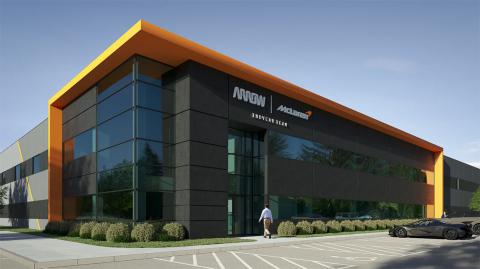
Arrow McLaren officially took ownership of a larger facility in Indianapolis, Indiana, and has begun renovations to expand and modernize the building, which will house its NTT INDYCAR SERIES team.

Dillon Construction Group, the original builder of the facility, will manage the renovation that will increase the square footage from 74,000 to 86,000 sq. ft. Arrow McLaren IndyCar Team has been operating out of a 33,000-sq.-ft. race shop in Indianapolis, and this new location will nearly triple the square footage that the team operates out of today, improving overall workflow and day-to-day operations, the team said. The renovations have been carefully designed and planned to increase adaptability while providing state-of-the-art equipment, technology and workspaces.

Among the significant changes to the building, Arrow McLaren plans to introduce an expanded lobby showcasing the team's success and heritage, a new second-floor mezzanine, a premier fitness center and a new elevator to enhance accessibility, the team said. The exterior of the building will also experience a facelift with additional windows, architectural elements and a repaint to align with McLaren Racing's brand identity. 

The team is planning to move into the new facility in January ahead of the 2026 NTT INDYCAR SERIES season.

For more information, visit mclaren.com/racing.

July 2025

NASCAR Announces New San Diego Street Race at Naval Base Coronado in 2026

Submitted by ajh on Thu, 07/24/2025 - 10:38
NASCAR San Diego


NASCAR will host a brand-new street race at Naval Base Coronado as a highlight of the 2026 schedule.

NASCAR San Diego will be a three-day race weekend headlined by the NASCAR Cup Series, along with the NASCAR Xfinity Series and NASCAR CRAFTSMAN Truck Series, on June 19-21, 2026.

The second-ever Cup Series street course race will take place on Sunday, June 21, 2026, and will be the first NASCAR event on an active military base. The Cup Series event will be preceded by races for the Xfinity Series and CRAFTSMAN Truck Series races on Friday, June 19, 2026, and Saturday, June 20, 2026. The official NASCAR San Diego street course layout will be unveiled in the near future.

Additionally, NASCAR named Amy Lupo the NASCAR San Diego president. Since joining NASCAR in 2021, Lupo helped launch the innovative and first-of-its-kind Clash at the Coliseum in Los Angeles, California, and has been instrumental in supporting other new NASCAR events. Prior to NASCAR, Lupo spent more than 20 years at ESPN.

NASCAR is partnering with Sports San Diego on operational and promotional support for the NASCAR San Diego Weekend. Sports San Diego is a nonprofit 501(c)(3) with a purpose to drive visitor demand to economically benefit the San Diego region through producing, recruiting, supporting and hosting sports events.

For more information, visit nascarsandiego.com.

July 2025

Canusa Added to AAM Group Distribution Network

Submitted by ajh on Thu, 07/24/2025 - 09:41
Canusa AAM Group


The AAM Group and Engine Pro have welcomed Canusa Automotive Warehousing Inc. (Canusa), a full-line warehouse distributor operating 64 APC Auto Part Centres across Ontario, to its distribution network.

Canusa offers a variety of undercar parts, tools, chemicals and performance products. The company's start in alternative-branded exhaust systems laid the foundation for its growth into a full-line automotive warehouse operation. Today, Canusa carries more than 128,000 active part numbers across 425 product lines, supporting jobber customers throughout Southwestern and Central Ontario, including the Niagara Peninsula.

"We're genuinely excited to be part of The AAM Group," said Corinne Mallough, marketing and accounts manager at Canusa. "It's a great fit for our passion for performance parts and accessories, and we're looking forward to building a partnership that will drive mutual growth and innovation across the specialty automotive aftermarket."

With a solid reputation, strategic market coverage and an unmatched commitment to quality, Canusa strengthens AAM's mission to grow the aftermarket industry through a united network of distribution professionals.

For more information, visit theaamgroup.com.

July 2025

First Laps: Road Racing

Submitted by laurap on Tue, 07/22/2025 - 15:42


How lowering road racing's entry barrier has proven effective and what is being done to build on that momentum.


The next time someone complains that motorsports' best years were in a bygone era, consider the words of Jon Krolewicz of the Sports Car Club of America (SCCA) in Topeka, Kansas: "Sure, I miss watching a GTP car blast around Daytona in the dark with only the exhaust flames and dim headlights showing, and we can be nostalgic for those things. However, when one considers the number of tracks, clubs, cars, businesses, TV shows, and internet groups providing opportunities, events, parts, awareness, and knowledge, this is the golden age of motorsports because so many people can see it and find out how to be a part of it."

Nowhere is that sentiment more evident than within the grassroots road racing space. Long-established players such as the SCCA and the National Auto Sport Association (NASA) are holding strong while adapting to a changing landscape. Meanwhile, newer organizations such as the ChampCar Endurance Series, Lucky Dog Racing League, and 24 Hours of Lemons all benefit from the rise in popularity of grassroots endurance racing, with new racers enticed by the promise of more seat time with fewer entry barriers.

Within this new "golden age" of motorsports, though, challenges still persist for sanctioning bodies and racers alike. The question is whether this space can continue to foster new growth and popularity among entry-level racers, or whether rising costs will put the brakes on this discipline's current momentum.

Grassroots Endurance Racing's Boom

In the world of grassroots road racing, true endurance racing is a relatively new concept.

"The advent of long-form endurance racing that the 24 Hours of Lemons introduced back in 2007 has been the largest evolution to grassroots road racing that I see," said Mike Chisek of the ChampCar Endurance Series, Piney River, Virginia. "Before that point, grassroots road racing existed via the SCCA and NASA, but the endurance part was a small afterthought."

ChampCar

"The advent of long-form endurance racing has been the largest evolution to grassroots road racing that I see," said ChampCar's Mike Chisek. "With new easier access and lower costs to entry, the sport has seen a wave of new people."
 

Fast forward to 2025 and low budget endurance races have become synonymous with grassroots road racing. While many forms of motorsports are out of reach to the average person due to high costs, low budget endurance racing bridged the gap between passion and feasibility.

"With Lemons, ChampCar, and the others that soon followed, there was no licensing process to get on track, and once on track, you had 14 to 24 hours of track time to use between yourself and a few of your friends," said Chisek. "With new easier access and lower costs to entry, the sport has seen a wave of new people who never would have joined the sport the old way."

ChampCar began in 2009 as the ChumpCar World Series and was "founded on the premise of $500 cars and encouraging homegrown engineering." After Chisek took over as CEO in 2016, it was rebranded the "ChampCar Endurance Series," which helped attract new sponsors including their current title sponsor, Tire Rack. The series now has nearly 4,000 members, and Chisek explained that its core mission has remained the same: "providing access to the world's greatest race tracks for everyone to enjoy, for as little money as possible in the world of motorsports."

The Lucky Dog Racing League in Martinez, California, is another key player within the growing segment of grassroots endurance road racing. "We make it incredibly easy to come race with us," said Cathy McCause Fuss. "That has contributed to the growth of folks who just don't want to deal with the cost and some of the politics. I basically have two rules: Our cars have to be 15 years or older, and I run a spec tire, which is the Hankook R-S4. And that [tire] was really to help manage it from being a wallet race, but to also help manage the speed."

The simplicity of the Lucky Dog rulebook has been attractive to both entry-level and more experienced race teams. "The higher levels of racing are now dropping down and racing with folks like Lucky Dog because it's cheaper and easier," Fuss said. "We're also seeing the pro level using Lucky Dog for testing."

With a wide variety of driver experience and team funding in the field on any given weekend, Fuss and her staff have to manage both "the pointy end of the field" and the entry-level drivers. While the spec tire helps keep things under control with regards to the bigger budget teams, they've also implemented a lap time rule. "A Superdog is a lap time identified at every race track that is considered too fast and outside the spirit of the series." Exceed the Superdog three times and that driver will be parked for the weekend.

However, the vast majority of racers participating in Lucky Dog and ChampCar are grassroots racers on tighter budgets. Fortunately, the team component of grassroots endurance racing further enhances the cost effectiveness of competing in each series.

"The beauty of team endurance racing is that everybody brings something to the table," said Fuss. "It's either time, talent, or money. So you may not have a trailer, but you have a car. It does make it easier that you're sharing costs and you're sharing the infrastructure to get to the track."

While getting to the track is the hard part, the positive community atmosphere and connecting with fellow racers, friends, and family makes the weekend a memorable experience.

"People realize how fun it is to connect," said Fuss. "The person who drags their car out for the weekend to go racing in a 20-minute sprint just doesn't have the same experience as spending the whole weekend. To have a whole weekend and this kind of seat time, there's just so much value."

Adapting to Shifting Demand

National club racing organizations such as SCCA and NASA have been forced to adjust to a grassroots road racing landscape in flux.

While the popularity of low-cost, low-barrier endurance racing has increased pressure on clubs to compete for entry-level drivers, road racing as a whole has continued to enjoy increased interest from newcomers and veterans alike.

"NASA itself is in a growth phase right now," said Jeremy Croiset of NASA in Las Vegas, Nevada. "The pandemic absolutely had a massive effect on the road racing industry as a whole. You see that in the pro side, you also see that on the amateur side. It gave rise to a lot of folks who were more interested in doing something outdoors, and we've carried that momentum with us into 2025."

SCCA

Many entry-level road racing programs, including those put on by SCCA, provide a positive community atmosphere by connecting with fellow racers, friends, and family, transforming the event weekend into a memorable experience.
 

NASA has also been at the forefront of facilitating the rise of High Performance Driving Events (HPDE), one of the fastest growing sectors in motorsports. According to Croiset, NASA helped to pioneer the HPDE model during the 2000s and developed a "national curriculum used to teach the ins and outs of high-performance driving." NASA's HPDE program is segmented into four different categories based on driver experience level and serves as the first step for new drivers getting on track.

"This allows us to more efficiently group people so they can be on track with folks who have roughly the same experience level," said Croiset. "That gives them the greatest opportunity to focus on learning, instead of potential distractions that may arise on track. Once you have attained enough experience on track, you can move into our time trial or road racing segment."

Croiset added that one of the major reasons for HPDE's popularity is the high-performance street car market. "You can go to GM and order a 2025 or 2026 Corvette Z06, go to the track, and it's faster than most any race car that you can build. It's quite amazing.

"One of [NASA's] focuses is on trying to delineate the clear distinction between the feelings that are evoked through high-performance driving, and the feeling that you get in road racing," Croiset said. "With such a high level of performance from a street car, how do you convey to someone that there's an even higher level to go?"

The SCCA is also adjusting to this shift in demand, adding new programs that cater to the high-performance street car market. This includes casual track day opportunities such as its Track Night in America program, as well as time trial events. Additionally, the SCCA has introduced a new program called Race Experience, which allows non-licensed drivers to get coaching and compete wheel-to-wheel in a low-pressure setting.

"Our traditional path of licensing for road racers has much less demand, and we've seen the market for driver's schools drop," said Krolewicz. "That's where programs like Race Experience tie in: offering a re-approach of how we invite people to events, and how we provide opportunities for those enthusiasts to get on track. While we may have pioneered getting enthusiasts those opportunities, we've had to also adjust to new ways of doing those things."

NASA has found success by partnering with Toyota USA to launch a program aimed at introducing new drivers to the thrill of on-track driving. As part of this program, everyone who purchases a Toyota GR sports car gets a complimentary membership to NASA and a track day that includes instruction from a certified NASA instructor.

"That program has introduced thousands of people to the world of HPDE over the course of these last five years, and many have gone on to move into our time trial or even road racing ranks," said Croiset. "That's been a huge blessing to not just NASA, but I think the overall industry. I wish more OEs would do that."

Croiset explained that one of NASA's challenges is simply educating people about the available opportunities to get on track. "Every day I talk to somebody who didn't know they could take their street car and drive it on a race track as fast as they want, with no one telling them to slow down."

This illustrates the fact that partnerships between manufacturers and sanctioning bodies are mutually beneficial, and in this case can encourage people to get on track for the first time. After that initial track day, every driver's journey will be unique to them.

"The end result is ultimately their journey," said Croiset. "Not everyone who gets involved in on-track motorsport has a desire to go wheel-to-wheel racing. I think the main goal is to introduce people to the fact that they can drive their cars on track and then allow them to progress throughout their driving career up to the area of motorsport that satiates their need for being there."

Tracking Cost Concerns

One thing is certain—entry-level road racing is enjoying a surge of new interest and participants. While that alone is cause for celebration, there are some worrying trends creating fiscal challenges for sanctioning bodies and racers alike.

Our sources cited rising track rental costs as one of their largest concerns, caused by the growing demand within this discipline...

To read the entire article for free, sign up for a digital subscription to PRI Magazine on Zinio here.    

Once you download the Zinio mobile app or are logged into Zinio on a desktop browser, you will gain immediate access to more than a year's worth of content, including "First Laps" here and more road racing coverage in the July 2025 issue here. 


Sources

ChampCar Endurance Series
champcar.org

Lucky Dog Racing League
racelucky.com

National Auto Sport Association (NASA)
drivenasa.com

Sports Car Club of America (SCCA)
scca.com

July 2025
By
Jack Haworth

Brittany Force Sets Top Fuel Record, Deemed ‘Fastest Person in NHRA Racing’

Submitted by ajh on Tue, 07/22/2025 - 15:09
John Force Racing


Brittany Force, the 2022 and 2017 Top Fuel world champion, secured a new record during the Muckleshoot Casino Resort NHRA Northwest Nationals at Pacific Raceways in Kent, Washington.

Force set the NHRA national record of 341.85 mph on a 3.659-second pass, surpassing Force's Funny Car teammate Austin Prock's 341.68 mph run from last year's season finale.

For the complete details, read the John Force Racing announcement here or the NHRA recap here.

Photo courtesy of John Force Racing.

July 2025

Trans Am's Triumph: Rediscovering the Legacy of American Road Racing

Submitted by laurap on Tue, 07/22/2025 - 15:09
Trans Am Series presented by Pirelli


Rediscovering the legacy of American road racing with the venerable Trans Am Series presented by Pirelli.


The year was 1984. Apple released its first Macintosh computer, movie goers were asking, "Who you gonna call?" as "Ghostbusters" hit the silver screen, and a computer scientist in the Soviet Union had just developed Tetris. The year also saw the start of one of the most exciting eras of American motorsports, as a new wave of action began in the Trans Am Series.

According to sources at the Trans Am Series presented by Pirelli, 1984 marked the first year Roush Racing entered the series. For the next six seasons, America saw Roush's Capris conquer the competition, "winning 46 of the 83 races, posting 97 top-three finishes, winning 40 poles, and recording 40 fastest laps," according to series' sources. The Roush Capris won 12 of the 15 races in the 1985 season with dominating performances by drivers like Willy T. Ribbs and Wally Dallenbach Jr., who were teammates and competitors alike.

The racing prowess that Ribbs and Dallenbach displayed was a sight to behold. But what made Trans Am one of the most exciting series in America at the time was the sanctioning body's rules package. Consider the following: Budweiser as the title sponsor, 1980s safety standards, no driver aids permitted, 800-plus horsepower, curb weights of no less than 2,500 pounds, and more than 30 drivers competing wheel-to-wheel for the checkered flag. The sights, the sounds, the smells of carbureted and raw race cars screaming through America's most famed tracks—Lime Rock, Watkins Glen, and the St. Petersburg Street Circuit. What a time to be alive.

Unfortunately, mullets eventually transformed into comb-overs, and Casio's calculator watches were shelved. Along the way, in the early 2000s, the Trans Am Series lost an audience. Make no mistake; Trans Am was still exciting. But costs rise, media shift attention, and manufacturers pull their resources in search of pioneering new ventures. This naturally led to reduced participation.

Trans Am image

Recently named Trans Am President Andy Lally (center) won the inaugural SpeedTour All-Star Race at Lime Rock Park in 2024. The race, featuring CUBE 3 Architecture TA2 Series cars, paired Lally and 2023 TA2 Series champion Brent Crews (right). They won with their combined performance of Lally's second-place finish in the All-Star race and Crews' third-place finish against Trans Am competitors. Photo by Chris Clark.


The Trans Am Series is one of America's longest-running race series, starting in 1966, and has never changed its series identity from the originally named Trans American Sedan Championship.

More Traction

Today, the Trans Am Series is gaining more traction than ever, and it's not by happenstance. Competition among teams and drivers is as fierce as ever, more competition classes have surfaced, and—against all odds—mullets and calculator watches are trending again.

John Clagett, Trans Am's former president, jump-started the series' momentum during his tenure. In a most serendipitous fashion, Clagett started his journey in 1984, doing public relations under the "factory works" teams, specifically with Chevrolet. He witnessed the original golden era of Trans Am, where manufacturers like Ford, Chevy, Chrysler, and AMC aggressively competed for ultimate bragging rights.

While the modern era of motorsports leans more on the team's name rather than the manufacturer, the essence of Trans Am hasn't been lost. "For one, it's the absolute purity of racing. These are sprint races. It's you versus the other guy. It's your team versus their team. It's no gimmicks. It's no BoP. It's basically show us what you've got," said Clagett.

"You're piloting high-horsepower cars that are going to train you for just about anything," including NASCAR, he noted. "If you're planning to make this your career, then I think Trans Am is better training than just about any series."

The landscape has changed over the years for American motorsports, but Trans Am as a series has done a good job serving three purposes: creating driving careers, maintaining the rawness of motorsports, and providing a competitive series for drivers at any stage in their careers.

However, it's not just purpose that has Trans Am following through on its upswing of momentum. "It was really starting from the ground up. No staff, no website, no PR, nothing. That's kind of what I inherited in 2011," when Clagett became president and CEO of Trans Am Race Company.

Determined to remind the motorsports community of Trans Am's importance, Clagett set out to reinvigorate the series. "Let's generate enough revenue from year to year, make improvements, put more of the marketing platform in place that would be meaningful.

"So, that led to the website, that led to broadcasting, but a lot of that is just significantly more money," he added.

Trans Am was well on its way to revival, thanks to Clagett and five team owners who turned into investors to help reignite the famed series. However, investing in the series was only half the battle. Clagett knew from a driver standpoint that the series had to be more enticing so racers would want to compete.

"Improving the prize money and improving the points fund are very specific to the competitors and making it a more viable platform for them" explained Clagett. "But up until that point, we had addressed a lot of things. Rule packages that were interesting to competitors, a different kind of starting point with all the different classes that we had. It gave so many different people that were interested in it a place to see where they fit."

Trans Am Classes

Eight classes make up the 2025 Trans Am Series season, six of which fall under the umbrella of the TA race class: TA, XGT, SGT, GT, GT1, and TA Cup. Each carries its own unique set of build limitations and rules. The TA2 classes consist of CUBE 3 Architecture TA2 Series and CUBE 3 Architecture TA2 Series Pro/Am Challenge.

Admittedly, the range of classes is a lot to consider. However, it can be simplified to the following: TA is Trans Am's fastest and most powerful class, using 850-plus-horsepower, previous generation ex-NACAR engines with zero electronic driver aids. XGT and SGT are categorized as a mix of OEM production vehicle conversions and limited-production track vehicles. XGT utilizes FIA GT3 factory-built race cars that originally competed in series that include International GT3, Ferrari Challenge, and Lamborghini Super Trofeo. SGT has a wider variety of makes and models, and the rules package largely aligns with the SCCA GT2-ST class.

Cole Moore No. 99 Mustang TA Cup and Trans Am Series presented by Pirelli

Cole Moore's No. 99 Mustang, seen here during practice at Sonoma Raceway, races in TA Cup. These are high-performance, spec tube-frame cars with silhouette bodies. They're eligible to race in the Western Championship and in the National Championship under the Pick 6 Challenge. 


GT consists mostly of factory-built FIA GT4 cars and cars built for the SCCA Club Racing T1 class. The GT1 class focuses on SCCA Club GT1 class cars that often use ex-NASCAR engines that are two generations old. TA Cup, referred to as the Western Championship, are high-performance spec tube-frame vehicles with silhouette bodies and use a single builder—Chris Evans Inc.

TA2 is a semi-spec series, using spec silhouette Ford, Chevrolet, Toyota, and Dodge bodies from Five Star Race Car Bodies. They use one of three approved chassis from Cope, Howe, and M1. Their 500-horsepower engines have spec intake restrictors and are built by a limited number of approved engine builders. They use sealed four-speed gearboxes with spec ratios and have the most rigorous technical inspections due to the nature of spec class racing.

TA2 Series Pro/Am Challenge has the same specifications as the TA2 Series, but championship points are determined based on the driver's nine highest finishes over the season.

Of all the high-octane classes in the Trans Am Series, CUBE 3 Architecture TA2 Series just may be the one attracting the most eyes as Trans Am continues its upward momentum. "It's just raw. It reminds me of when I was a kid, growing up racing," said Scott Lagasse Jr. of TeamSLR. Lagasse and his father are professional racers, and the TeamSLR garage is one of the few approved to build the M1 chassis used in the TA2 Series.

"They're just manual gearboxes, no ABS, no traction control, [and] Pirelli's done a great job with the tire where you literally just hustle the thing all race long. It's 'the guy that can drive it the hardest and make the least amount of mistakes,' and I think as a racer, that's what you want 100%," he added.

Lagasse said the TA2 Series is gaining traction with its audience because of its authentic nature, carrying on the tradition of the Trans Am Series' all-risk, all-reward style of racing,

New Horizon

The Trans Am Series continues its legacy with Andy Lally as the recently appointed president. He leads with 32 years of on-track racing experience, including being a three-time IMSA champion, plus earning five wins at the Rolex 24 at Daytona and four wins at the Six Hours of The Glen...


To read the entire article for free, sign up for a digital subscription to PRI Magazine on Zinio here.    

Once you download the Zinio mobile app or are logged into Zinio on a desktop browser, you will gain immediate access to more than a year's worth of content, including "Trans Am's Triumph" here and more road racing coverage in the July 2025 issue here. 


Source

Trans Am Series presented by Pirelli
gotransam.com


July 2025
By
Alex Torres

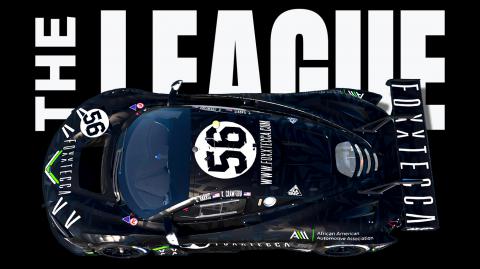
Foxxtecca Announces 'The League,' a New iRacing Series

Submitted by ajh on Tue, 07/22/2025 - 14:56
The League


Foxxtecca, an events and media company, is launching a new iRacing series, "The League," the company announced.

The League is a new McLaren GT3, U.S.-time-zone series open to all sim racers with the chance to earn prize money.

With an eight-round schedule beginning August 5, The League will feature three divisions: pro, contender and challenger. Drivers are assigned a division based on their pre-qualifying pace. Highlights for each round will be posted on the "All Def" YouTube channel, reaching 4.61 million subscribers. The races will also be broadcast live on the Foxxtecca Studios YouTube channel and produced by Apex Racing TV, delivering pre and post event coverage as well as coverage of all three division races.

The prize pool is currently set at $4,500.

For more information, visit foxxtecca.com.

July 2025