Longtime Industry Member Bill McCleskey, 78

Submitted by laurap on Tue, 07/08/2025 - 16:26
Melling logo, Bill McCleskey image


Bill McCleskey, a longtime veteran of the automotive and motorsports industries, has passed away at the age of 78.

With a career spanning more than 50 years, McCleskey held regional sales manager roles at companies including Dynagear, KSG/Badger and Michigan Engine Bearings/D.A.B. Industries. He spent his final 13 years in the industry with Melling Engine Parts, where he built lasting relationships across the performance and engine-building community and earned multiple sales awards before retiring in 2018. Over the years, Bill was recognized and won multiple sales awards.

For more information, visit melling.com.

July 2025

Off-Road Motorsports Hall of Fame Announces Class of 2025

Submitted by laurap on Tue, 07/08/2025 - 16:17
Off-Road Motorsports hall of fame event graphic

The Off-Road Motorsports Hall of Fame (ORMHoF) has announced the new inductees for the Class of 2025: Frank Currie, Bob Fox, Nate Hunt, Mike Julson, Lonnie McCurry Sr., Keith Purmal, Clyde Stacy and Dan Vanden Heuvel. 

ORMHoF will celebrate its 2025 Induction & Awards Gala on Sunday, November 2, at the South Point Hotel & Casino in Las Vegas. The evening will honor the Class of 2025 alongside past inductees and icons of the off-road racing community.

The celebration begins with a cocktail hour and silent auction at 5:00 p.m. PT, followed by a group photo, dinner, an awards presentation, and a live auction. The night caps off with an after-party at 9:30 p.m. PT, making it the premier gathering for racers, builders and legends in the sport.

For more information, visit ormhof.org.


Image courtesy of Off-Road Motorsports Hall of Fame (ORMHoF)

July 2025

Hidden Potential: Engine Management Systems

Submitted by laurap on Tue, 07/08/2025 - 16:01
Engine Management Systems


What features are embedded in engine management systems that are not being fully utilized by tuners and racers? Several suppliers share the often-overlooked benefits of today's engine management systems.


Race cars—the perfect combination of brains, beauty, and brawn. It's difficult to refute the beauty of a vehicle outfitted for maximum attack in any given race series. Under the hood, the brawn speaks for itself as soon as the engine turns over and you're met by a symphony of cylinders determined to make your ears ring, eyes water, and body rumble.

However, the brain of a race car is what makes the symphony come alive and the beauty of aggressive design functional. Engine management systems (EMS) operate in this capacity and tie all these components together. Similarly, the race car's brain is similar to the human brain in that the neural network allows for cognitive functions and memory storing.

EMS often reflects these aspects, equally having an abundance of channels that empower and unlock the potential of the vehicle with a variety of features, while sharing the ability to record the race car's cognitive function, recalling its data through storage banks of memory.

The potential of EMS relies on these features not being overlooked. Too often racers, engine builders, and tuners rely on their previous experience when they approach the tuning capabilities of their favored EMS, but so much more could be available to them. We surveyed engine management system manufacturers to share some of the many undiscovered features that can propel racers to the next level.

HIDDEN IN PLAIN SIGHT

With EMS technology rapidly improving year after year, the competitive edge grows. However, keeping up with the latest features can be cumbersome, and if overlooked, could be detrimental to a race team's potential for success. Lesser used features do exist, and do work, however, they are not being fully implemented, according to Doug Macmillan of Hondata, Torrance, California.

engine management systems Holley


Many builders or tuners are not implementing certain features simply because "they're not familiar with it," or "they're [often] not aware of it fully," he added. But those features are there, and they can help racing programs hone in on the race car's capabilities and improve a driver's time.

Products like Hondata's S300 and KPro flash tunes provide features that Macmillan said are, "definitely, definitely, overlooked."

One area he pointed to is traction control. "That's a separate circuit that attaches into the ABS sensors and feeds wheelspin information back to the computer. The computer is able to adjust the tuning of the engine about 100 times per second now.

"The reason why I'm focusing on traction control is we've had racers who own Civic Type Rs who are good circuit racers and have improved their lap times by two seconds per lap by using traction control," Macmillan added.

He cited the saying, "slow is smooth, and smooth is fast," and added, "you don't know you've got it because it's so smooth that as far as you're concerned, you've got traction, and it's just doing what it's supposed to do. It's just the lap times are better."

In 2017, this approach led Tom O'Gorman to the fastest recorded lap time during the practice runs, and a third place overall, at the 25-hour endurance race during the Pirelli World Challenge Touring Car A Championship held at Thunderhill Raceway Park in Willows, California.

"I was up there doing track support," said Macmillan. "I had traction control turned on for the Civic Type R. Tom O'Gorman came back in, and I said, 'Tom, tell me how the traction control works for you.' He said, 'I don't have traction control.' I said, 'Yeah, you do.'

"He hadn't even realized traction control was operating on his vehicle," continued Macmillan. "It's just that he was able to pull fast, smooth laps. It works so well, you don't know you've got it. It just works in the background and improves your lap time."

Sources at Bosch Motorsport, located in Farmington Hills, Michigan, shared a similar sentiment. In race cars, the traction control is often handled within the ECU, so engine builders and calibrators tend to overlook its importance. Traction control (TC) is a function mostly relevant to chassis dynamics and handling. It is one of the ways that the powertrain can contribute to the vehicle's performance during cornering, according to the representative.

Therefore, the engine calibrator must collaborate closely with the chassis, suspension, tires, and performance engineers to achieve a TC calibration that will improve lap times, added the source.

Bosch Motorsport's MS 6 line covers the "sport line" of engine management systems and is specifically built for spec race series and sports cars up to GT4/GT3 levels. The MS 7 is its "pro line" aimed at professional race programs that are often OEM or manufacturer supported...

To read the complete article for free, sign up for a digital subscription to PRI Magazine on Zinio here.    

Once you download the Zinio mobile app or are logged into Zinio on a desktop browser, you will gain immediate access to more than a year's worth of content, including "Hidden Potential: Engine Management Systems" here and more road racing coverage in the July 2025 issue here. 
 

Sources

Bosch Motorsport
bosch-motorsport.com

FuelTech USA
fueltech.net

Holley
holley.com

Hondata
hondata.com

HP Tuners
hptuners.com

July 2025
By
Alex Torres

PRI Membership: Motorsports Economic Impact Study

Submitted by laurap on Tue, 07/08/2025 - 15:46
Motorsports Economic Impact Study


PRI has released a monumental study that substantiates motorsports’ significant financial impact on the US economy. Compiled specifically for PRI, this Motorsports Economic Impact Study has determined that motorsports contributes $69.21 billion to the American economy.

This report is based on 2025 US economy data and looks at economic output, jobs, wages, and taxes, which is available on a national scale as well as going more in-depth to the local level. In summary, motorsports supports more than 318,000 Americans who earned wages and benefits of just over $22.1 billion. Motorsports generates more than $8.2 billion in annual tax revenue, consisting of $5 billion in federal taxes and $3.2 billion in state and local taxes.

“Racing holds a special place in American life, and this milestone report highlights the broad scope of the motorsports industry as an economic driver at the local, state, and federal levels,” said PRI President Michael Good. “Using these results as a foundation, PRI will continue to seek ways to foster the motorsports industry, from race tracks to manufacturers, and from small businesses to major national employers, to ensure motorsports continues to touch every part of the country and bring together people from all walks of life for competition and community. We’re proud to serve as the leading voice for the motorsports industry in the US and will continue delivering the data needed to demonstrate the industry’s economic strength and value.”

“The cultural value of motorsports is well documented—we celebrate the history of each race, and the standard setters who came before the current generation,” added Karen Bailey-Chapman, senior vice president, public and government affairs for PRI and SEMA. “But the economic value—that necessary component that helps drive investment and legislative and regulatory action—has often been anecdotal, and too often limited to the tourism clout of large raceways. This report changes the landscape by presenting a holistic view of the motorsports industry, one that drives investment in race tracks and motorsports facilities, the jobs they create, the communities they support, and the positive economic impact these facilities have. This report helps tell the story beyond just the large raceways and brings to life the positive impact the thousands of local race tracks bring to the US economy.

“This is a critical body of evidence for business owners to verify the impact of their industry when engaging with government leaders at the local, state, and federal levels, and when seeking investments and strategic partnerships. This report helps tell a story of American jobs and entrepreneurship which, when coupled with the personal and community impacts of motorsports, tells a powerful story.”

PRI’s research represents the most comprehensive assessment of motorsports’ economic footprint ever undertaken to quantify the scale and significance of the business of racing to the US economy. The study includes automobile, truck, motorcycle, and UTV/side-by-side racing activity. It evaluates the economic contributions from multiple racing businesses—including race tracks and promoters, parts manufacturers, distributors, retailers, service providers, and professional race teams.

John Dunham & Associates (JDA) conducted this research, which was funded by PRI. This work used standard econometric models first developed by the US Forest Service, and now maintained by IMPLAN Inc. Data came from PRI, Data Axle, and other government sources.

While these numbers are valuable, read on to learn how these numbers can be utilized to benefit your motorsports operation.

How To Use This Report

The PRI Economic Impact Study provides valuable data about the economic footprint of the motorsports industry in the United States. PRI undertook this effort to provide policymakers, industry stakeholders, and the public with credible, data-driven insights into racing’s role as a major driver of economic activity, employment, and tax revenue. The study not only affirms the industry’s significance but also serves as a foundational resource to inform advocacy, investment, and long-term planning.

“Data is power,” confirmed Good. “This type of information can offer valuable insights to business owners. It will help them make crucial decisions in the growth and expansion of their own business. Being able to ascertain where opportunities exist and uncover data points that they may not have had access to. Businesses rely on both internal and external metrics and this is just one area that PRI is able to offer that gives an overview of the impact of our industry.”

PRI Members can reference this Impact Study to determine economic output, jobs, wages, and taxes related to motorsports’ income on a national basis as well as a state and local scale. The website also offers downloadable infographics that can be shared with policy makers and other businesses to show the impact motorsports has on individual states and communities.

Simply pull up the interactive economic map for national numbers or click on a state to narrow the focus. Users can click on Congressional District, State House District, and State Senate District or county for localized numbers.

For example, a motorsports professional who wants to learn more about the economic impact in the state of North Carolina can either click on the state of North Carolina on the United States map or click on North Carolina in the drop-down menu. Motorsports supports more than 19,000 jobs in North Carolina for 2025 with a total economic output of over $3.8 billion.

Users can then get an even more microscopic view by clicking on the “Congress” button and view their congressional representative by district. In each district is a more detailed analysis.
 

PRI motorsports economic industry report north carolina call out


“PRI works every day to connect, protect, and advocate for the motorsports industry,” said Good. “We will continue to do so in the traditional and historical ways that we always have, but we will also work diligently to assist in new and innovative ways and this report is an example of bringing something to the industry that we’ve not been able to do before.”

“This gives us the numbers that back up the personal, hard evidence that the industry can share with lawmakers to demonstrate the impacts of proposed policies and legislation,” said Bailey-Chapman. “It can help bolster the case for positive policies like tax credits and incentives. It also helps defend against policies that harm local race tracks, like ill-conceived nuisance laws. It also reaffirms what PRI and SEMA already know: when our members speak, it’s worth it for lawmakers and their staffs to pay attention.

“We’re very proud to tell the story of the motorsports industry and the community of people who are part of it. This is a foundational study and will give us ammunition as we work to ensure race tracks can stay open, businesses can continue bringing products to market to support racing enthusiasts, and preserving our nation’s wonderful car culture,” concluded Bailey-Chapman.

To view and download the report, visit stats.performanceracing.com.

To read more like this, sign up for a digital subscription to PRI Magazine on Zinio here.    

Once you download the Zinio mobile app or are logged into Zinio on a desktop browser, you will gain immediate access to more than a year's worth of content, including "PRI Membership: Motorsports Economic Impact Study" here and more road racing coverage in the July 2025 issue here. 

July 2025
By
Meredith Kaplan Burns

Exhibitors: Enter the Featured Products Showcase at PRI 2025

Submitted by laurap on Tue, 07/08/2025 - 15:31
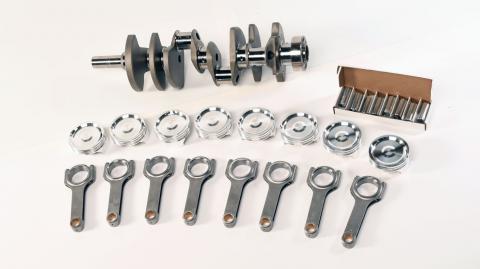
Featured Products Showcase at PRI Show. Rotating assembly product shot

Exhibitors: Supercharge your product exposure at the PRI Show by participating in the Featured Products Showcase, the ultimate destination for buyers and media seeking the hottest new products in motorsports.
 

The Featured Products Showcase returns to the 2025 PRI Show (December 11-13, downtown Indianapolis) as the premier destination for media, buyers and professionals to discover the latest innovations in the motorsports industry.

ENTER HERE button for PRI News Featured Products Showcase 2025 PRI Show


This dynamic showcase is located at the Indiana Convention Center in a high-traffic area near the Capitol Connector and Georgia Street entrance.

Exhibitors are invited to submit their newest and innovative products to be featured in this dedicated area. Whether it's cutting-edge engine components, advanced racing gear, the latest in fuel technology, or anything else designed to enhance racing performance, the Featured Products Showcase provides a unique platform to spotlight products and connect with decision-makers from all corners of the motorsports industry.

Participating in this program also grants you access to the Featured Product Awards, providing exhibitors with additional opportunities for publicity. A panel of top racing industry professionals, including track operators, sanctioning bodies' representatives, social media influencers and media, will select the product winners.

Even better, this value-added program is reasonably priced. Each product entered before December 5, 2025, is only $75 per entry. 

Don't miss out: Enter now to maximize your exposure at the 2025 PRI Show and get your products in front of the industry's key influencers and buyers.

Learn more about the PRI Show Featured Products Showcase and submit your products here.

Note: The pre-Show deadline for exhibitors to submit their product(s) entry is December 5, 2025. Exhibitors who miss the deadline and still want to submit product(s) can do so onsite at the PRI Show as space permits. All submissions are on a first-come, first-served basis.

For questions or more information, contact featuredproducts@performanceracing.com.

July 2025

PRI Show Hotel Spotlight: InterContinental Indianapolis, An IHG Hotel

Submitted by laurap on Tue, 07/08/2025 - 15:11
PRI Show Hotel Spotlight: InterContinental Indianapolis, An IHG Hotel

InterContinental Indianapolis, an IHG Hotel.
 

This year's PRI Show, December 11-13, 2025, in downtown Indianapolis, is shaping up to be one of the best yet. Attendee registration opens next week on Tuesday, July 15; however, it's essential to book your hotel rooms as soon as possible through Visit Indy, the official housing provider for the PRI Show, as downtown hotels are very popular.

This year's PRI Show—happening December 11–13, 2025, in downtown Indianapolis—is gearing up to be one for the books! Attendee registration opens next Tuesday, July 15, but here's your friendly heads-up: be sure to book early through Visit Indy Housing, the only official housing provider for the PRI Show, to secure the best rates and stay close to all the action.

Top 5 Benefits of Booking Through Visit Indy Housing, PRI's Official Housing Partner 

✅ Deep Value & Discounts: We do the hard work, so you don't have to. 

  • Behind every great hotel deal is a team that negotiates tirelessly on your behalf. PRI and Visit Indy work directly with top hotels to lock in exclusive discounts, ensure availability during high-demand dates and make sure Showgoers get the best value possible.  
     

🛡️ Book With Confidence—Total Flexibility, Real Benefits: Plans can change. That's why booking through PRI's official hotel block gives you complete peace of mind:

  • No change fees. 
  • No deposit required at booking. 
  • Ability to cancel or modify your reservation without penalty through October 17, 2025. 
     

🎁 Make Your Loyalty Count—Stay Rewarded When You Book in the Block

  • Unlock the full potential of your hotel loyalty program by booking your stay at an official PRI Show hotel. Your reservation will contribute to your rewards status, subject to the hotel's program requirements and availability at check-in.
     

🕒 Easy Group Bookings, 24/7

Book your entire group—large or small—in real-time with immediate confirmations. You can even secure the rooms you need now and log in later to assign specific guests to them. Rooms can also be selected based on your team's particular nights and stay patterns. You can also manage payment for your entire block or guarantee each room with separate credit cards—it's that easy. 
 

🏨 More Exclusive Guest Benefits 

In addition to the above, booking through PRI's official hotel block also includes: 

  • Free In-Room Wi-Fi: Stay connected throughout your stay. 
  • Complimentary Transportation: Enjoy complimentary transportation when you book at PRI-partner aiport and Plainfield-area hotels, including transportation to and from the Indiana Convention Center on PRI Show days and to and from the airport via hotel courtesy shuttles (where available).
  • Free Guest Parking: Enjoy complimentary guest parking at the airport hotels and hotels in the Plainfield area.


Book Here

BOOK HERE button for PRI Show hotels

Have Questions or Need Help?

Contact the Visit Indy Housing team:
📧 prihousing@visitindy.com
📞 317-262-8191 (M–F, 8:30 a.m.–5 p.m. EDT)


PRI Show Hotel Spotlight: InterContinental Indianapolis, An IHG Hotel

InterContinental Indianapolis room


Add a touch of timeless luxury to your PRI Show stay at the InterContinental Indianapolis. Just steps from Monument Circle and a short walk to the Indiana Convention Center where the PRI Show is located, this brand-new downtown hotel offers refined accommodations, elevated dining and signature Hoosier hospitality. Guests can expect modern, tech-ready rooms, spa-style bathrooms and a peaceful atmosphere designed for both relaxation and productivity.

Dining at this hotel is an experience in itself. Stop by Serliana for afternoon tea or casual bites in a light-filled second-floor lounge. For an upscale night out, Hyde Park Steakhouse delivers classic fare in a sleek setting, while Astrea Rooftop Bar offers cocktails and sweeping views of the city skyline—perfect for unwinding after a full day at the Show.

InterContinental Indianapolis bar


With its walkable location near the PRI Show, state landmarks, and Indy’s buzzing food and sports scenes, InterContinental Indianapolis puts everything within reach. Book through the official PRI Show and Visit Indy hotel block for the best rates and availability!

July 2025

Trump Signs 'One Big Beautiful Bill Act'

Submitted by laurap on Mon, 07/07/2025 - 14:05
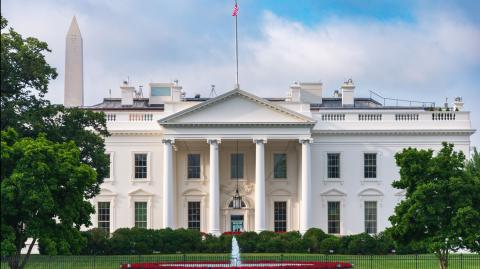
stock image of The White House courtesy of Shutterstock


From the PRI Washington, D.C., office


President Trump signed H.R. 1, the "One Big Beautiful Bill Act," into law on Friday, July 4. The new comprehensive tax law permanently extends several key tax incentives for businesses and expands several long-standing pro-growth tax policies in the coming years.  

The PRI-supported law provides tax certainty to American businesses and includes several key provisions that benefit PRI members and industry companies, making this a massive win for motorsports businesses.  

Key provisions in the new law include:  

  • Tax Rate Certainty: Make permanent the current tax rates for individuals and pass-through businesses, which were scheduled to increase at the end of 2025. 
  • 199a deduction made permanent: Pass-through businesses will permanently be able to deduct 20% of their business income. 
  • Section 179 expensing: Raises the cap for small business expensing under Sec. 179 from $1,000,000 to $2,500,000, with a higher phase-out threshold. Sec. 179 covers investments, including cars/work vehicles, office equipment, business machinery, and computers. 
  • Full expensing for R&D and capital investments: Permanently allows 100% immediate expensing for research & development (R&D) and investments in qualified property acquired on or after January 19, 2025. 
  • Depreciation allowance for qualified production property: Allows 100% immediate deductibility of certain investments in new factories and improvements. 
  • Expanded business interest deduction: Newly eligible deductions include any trailer or camper that is designed to provide temporary living quarters for recreational, camping, or seasonal use and is designed to be towed by a motor vehicle. 
  • Estate exemption: Increases and permanently extends the estate and lifetime gift tax exemption to $15 million per person (indexed to inflation), which was previously scheduled to drop to $7 million per person in 2026. 
  • State and Local Tax (SALT) Deduction Cap: Increases the SALT deduction cap from $10,000 to $40,000 annually for households earning up to $500,000 through 2029. The SALT deduction will return to a maximum of $10,000 in 2030. 
  • New markets tax credit: Permanently extends this tax credit to increase investment in low-income communities. 


The law also includes several automotive-specific provisions that will impact both the vehicles that automakers produce and incentives associated with purchasing new vehicles, including electric vehicles (EVs): 

  • EV tax incentives: The law eliminates the EV tax incentive ($7,500 for the purchase of a new vehicle and $4,000 for a used EV) starting on October 1. 
  • CAFE: Fuel economy penalties are now eliminated. These penalties had previously incentivized automakers to produce more fuel-efficient vehicles to avoid penalties. 
  • Buy American Incentive for Vehicles: A new, major provision encourages the purchase of American-made cars, trucks and SUVs. From 2025 to 2028, individuals can deduct up to $10,000 if they buy an American-made vehicle. These deductions decline past taxable income thresholds of $100,000 for individuals and $200,000 for joint filers. 


PRI thanks those in the Senate and House of Representatives who engaged with and listened to members of PRI's community of aftermarket businesses and automotive enthusiasts to ensure that pro-growth legislation champions businesses of all sizes and gives entrepreneurs the tools they need to compete in today's economy.  

Questions? Reach out to Juan Mejia, SEMA's senior manager for federal government affairs, at JuanM@sema.org. 


Image courtesy of Shutterstock

July 2025

U.S. Strikes Significant Trade Deal with Vietnam

Submitted by laurap on Mon, 07/07/2025 - 13:45
Image of Vietnam port courtesy of Shutterstock


From the PRI Washington, D.C., office


A new trade agreement with Vietnam is expected to reshape how many U.S. companies source and export goods, and arrives just as President Trump reaches a self-imposed July 9 deadline for additional tariff agreements with dozens of other countries. The July 3 announcement of a new trade deal with Vietnam establishes a 20% tariff on the products Vietnam exports to the U.S (thus replacing the originally proposed 46% reciprocal tariff). There will also be a 0% tariff on U.S. exports to Vietnam.

The deal comes with an important caveat regarding transshipments (more details below).

Key Takeaways for PRI members and industry members: 

  • Consider Vietnam as a more predictable and lower-risk production alternative to China.
  • Take advantage of tariff-free export opportunities into Vietnam.
  • Review your Vietnam-based sourcing for any Chinese-origin content.
  • Watch for future guidance on enforcement standards for the 40% transshipment penalty.
     

More Analysis on What This Means for Businesses

For motorsports businesses, the announcement provides both an opening and new compliance considerations.

Vietnam in recent years has become an increasingly important manufacturing partner for U.S. companies, largely due to steep tariffs imposed on Chinese goods during President Trump's first term, which President Biden kept in place. Those measures pushed companies to diversify their supply chains, and Vietnam emerged as a leading alternative, especially for electronics, textiles and furniture. Many automotive suppliers have followed that trend, with companies turning to Vietnamese facilities for components, accessories and electronics.

Now, with this formal tariff deal in place, Vietnam stands out as a viable and stable production base, especially for businesses looking to move production out of China.

However, the deal includes an important caveat: the U.S. intends to clamp down on goods that are rerouted through Vietnam by companies looking to reduce the cost of tariffs. This means that products that originate in other countries (especially China), and are only minimally processed in Vietnam, will face a 40% transshipment tariff.

  • Specific guidance and enforcement criteria remain unpublished, but companies relying on Vietnam-based suppliers should evaluate their sourcing and manufacturing processes to avoid penalties.
     

The most encouraging development is Vietnam's 0% tariff commitment on U.S. exports, including vehicles with large engine displacement. This opens doors for U.S. manufacturers, performance brands and specialty parts suppliers seeking to enter or expand sales in Southeast Asian markets.

Next Steps

For the Vietnam agreement, PRI will continue to monitor implementation and advocate for clear, fair standards on behalf of our members. For other nations, expect a flurry of announcements as the upcoming July 9 deadline is reached.

Questions? Contact Juan Mejia, SEMA's senior manager for federal government affairs, at jmejia@sema.org.


Image courtesy of Shutterstock

July 2025

FIA Announces DHL as Official Global Logistics Partner

Submitted by laurap on Fri, 07/04/2025 - 12:26


The Fédération Internationale de l'Automobile (FIA), the global governing body for motorsports and the federation for mobility organisations worldwide, has announced a comprehensive partnership with the logistics company DHL. The collaboration is designed to l enhance operational efficiency across FIA events while reducing emissions over the racing season.

As Global Logistics Partner, DHL will manage the transport, installation and maintenance of key FIA infrastructure across the FIA's Formula 1, Formula 2 and Formula 3 championships. This includes FIA trackside infrastructure such as Mobile Office Units and Garages, as well as race-critical equipment.

And also as part of the agreement, DHL will deploy seven trucks for European logistics, each powered by hydrotreated vegetable oil (HVO), which are designed to cut emissions by up to 83% compared to conventional fuels. 

DHL will support the sport to deliver the rationalised calendar that has been developed to create a geographical flow of races, thereby reducing travel distances across the season and enabling the use of lower-carbon freight solutions. "These efforts contribute directly to the FIA's ambition to halve its carbon footprint by 2030 compared to its 2019 baseline," an organization release stated.

For more information, visit fia.com or dhl.com.

July 2025

ICMYI: PRI Study Reveals Motorsports Fuels America With $22.1 Billion

Submitted by laurap on Fri, 07/04/2025 - 12:17
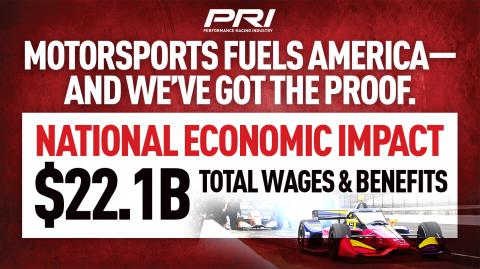
PRI Motorsports Fuels America Proof graphic. National Economic Impact $22.1 Billion in total wages and benefits


Motorsports Industry Powers $69.2 Billion U.S. Economic Engine, Supports More Than 318,000 Jobs, New Study Finds
 

Groundbreaking PRI economic industry study highlights how motorsports businesses serve as a key driver of American economic activity.
 

PRI today released a landmark study that underscores the motorsports industry's pivotal role as a key contributor to the U.S. economy, supporting hundreds of thousands of jobs, generating billions in economic activity and delivering substantial tax revenue. 

PRI, the leading voice for the motorsports industry in the U.S., commissioned the research, which was conducted by John Dunham & Associates, based on 2025 U.S. economy data. The study encompasses automobile, truck, motorcycle and UTV/side-by-side racing activity.   

Traditionally, economic impact reports about racing are focused on the impact of a single event--major race weekend events for a specific local and state economy.  Those are studies that examine the impact of the tourism dollars that come into the economy as a result of that single event. PRI's report is different because it determines the economic impact of the businesses that support the existence of racing in the first place. 

PRI's research represents the most comprehensive assessment of motorsports' economic footprint ever undertaken to quantify the scale and significance of the business of racing to the U.S. economy. It evaluates the economic contributions from multiple racing businesses--including tracks and promoters, parts manufacturers, distributors, retailers, service providers and incorporated race teams.  

Key findings from the study include:  

  • The industry contributes more than $69.2 billion in annual economic impact to the American economy. 
  • Nationwide, the motorsports industry supports more than 318,000 American jobs.  
  • American workers in the motorsports industry earn more than $22.1 billion worth of wages and benefits.  
  • The industry generates more than $8.2 billion in tax revenue, including $5 billion in federal taxes and $3.2 billion in state and local taxes. 


As part of this study, PRI also launched an interactive economic impact map, enabling users to explore motorsports-related data by state and county--highlighting the industry's reach and relevance in communities of all sizes across the country. The website also offers downloadable infographics that can be shared with policymakers and other businesses to show the impact motorsports has on individual states and communities. 

The PRI Economic Impact Study provides valuable data about the economic footprint of the motorsports industry in the U.S. PRI undertook this effort to provide policymakers, industry stakeholders and the public with credible, data-driven insights into racing's role as a major driver of economic activity, employment and tax revenue. The study not only affirms the industry's significance but also serves as a foundational resource to inform advocacy, investment and long-term planning. 

"Racing holds a special place in American life, and this milestone report highlights the broad scope of the motorsports industry as an economic driver at the local, state and federal levels," said PRI President Michael Good. "Using these results as a foundation, PRI will continue to seek ways to foster the motorsports industry, from racetracks to manufacturers, and from small businesses to major national employers, to ensure motorsports continues to touch every part of the country and bring together people from all walks of life for competition and community. We're proud to serve as the leading voice for the motorsports industry in the U.S. and will continue delivering the data needed to demonstrate the industry's economic strength and value." 

This economic impact study represents an important bookend to PRI's 2024 Racing Market Report, a consumer trends analysis that found that consumers spent $8 billion on track-use-only parts for motorsports in 2023.

In 2023, a study commissioned by the SEMA found that the automotive aftermarket industry generates an economic impact of $337 billion annually to the American economy. While the motorsports study found small areas of overlap in the parts, repair and facilities areas, the motorsports study results are a complement to the SEMA report. PRI was acquired by SEMA in 2012 to connect, protect and advocate for the motorsports industry. 

Report Methodology 

The PRI Economic Impact Study estimates the economic contributions made by the motorsports industry, which includes manufacturers, distributors and retailers of automotive racing parts plus racetracks, race promoters, and professional race teams.  Data are for the United States economy in 2025. John Dunham & Associates (JDA) conducted this research, which was funded by Performance Racing Industry (PRI). This work used standard econometric models first developed by the U.S. Forest Service, and now maintained by IMPLAN Inc. Data came from the PRI, Data Axle, and other government sources.  

About Performance Racing Industry 

Performance Racing Industry fuels the passion for motorsports by building, promoting, and protecting the worldwide racing community. PRI supports the interests of racers, enthusiasts, builders, tracks, sanctioning bodies and businesses through legislative action and advocacy, its monthly business magazine Performance Racing Industry, and the world's premier motorsports trade show, the PRI Trade Show. PRI also supports businesses by providing market research, education and best practices in motorsports business and racing technology. For more information, visit PerformanceRacing.com. 

July 2025