Race Events This Weekend: August 15-17

Submitted by ajh on Tue, 08/12/2025 - 12:51
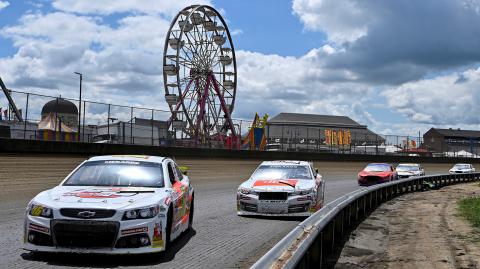
ARCA Menards Series


Motorsports competition is alive and well across the nation. Here's a roundup of racing events taking place this weekend:

NASCAR Cup Series

Event: Cook Out 400
Location: Richmond Raceway – Richmond, Virginia
Date: Saturday, August 16
Time: 7:30 p.m. ET
 

NHRA

Event: Mission Drag Racing Series – Lucas Oil NHRA Nationals
Location: Brainerd International Raceway – Brainerd, Minnesota
Date: August 14-17
 

Event: NHRA Summit Racing Series – Division 4 E.T. Finals
Location: Texas Motorplex – Dallas, Texas
Date: August 15-17
 

NTPA

Event: National Tractor Pulling Championships
Location: Wood County Fairgrounds – Bowling Green, Ohio
Date: August 14-16
 

ARCA Menards Series

Event: Springfield ARCA 100
Location: Illinois State Fairgrounds – Springfield, Illinois
Date: Sunday, August 17
Time: 2:00 p.m. ET
 

USAC Silver Crown National Championship

Event: 62nd Bettenhausen 100
Location: Illinois State Fairgrounds – Springfield, Illinois
Date: Saturday, August 16
Time: 3:00 p.m. ET
 

World of Outlaws Late Models

Event: Hawkeye 100
Location: Maquoketa Speedway – Maquoketa, Iowa
Date: August 15-16
 

zMAX CARS Tour

Event: zMAX CARS Tour at Anderson Motor Speedway
Location: Anderson Motor Speedway – Williamston, South Carolina
Date: Saturday, August 16
Time: 7:00 p.m. ET
 

World of Outlaws Sprint Cars

Event: Big O Showdown
Location: Ogilvie Raceway – Ogilvie, Minnesota
Date: Friday, August 15
Time: 6:30 p.m. ET
 

Event: World of Outlaws at Jackson Motorplex
Location: Jackson Motorplex – Jackson, Minnesota
Date: Saturday, August 16
Time: 7:30 p.m. ET


Image courtesy of ARCA Menards Series

August 2025

Innovation Next: Dirt Late Models

Submitted by laurap on Tue, 08/12/2025 - 12:38
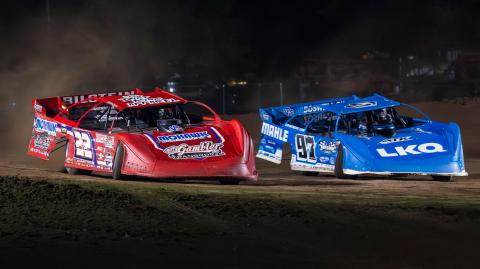
Dirt Late Models on track. Courtesy of World Of Outlaws Real American Beer Late Model Series

Photo courtesy of World Of Outlaws Real American Beer Late Model Series.


Who sets the pace toward advancement? Dirt late model racers or the rulebook?


In 2015, Jonathan Davenport outperformed the competition in the Lucas Oil Late Model Dirt Series. Race teams and sanctioning bodies tried to understand how. Kevin Rumley, lead engineer for the No. 6 race car, produced a precarious piece of dynamic, non-electrical technology that was believed to have allowed the driver side rear wheel to articulate laterally under specific forces or dynamic attitudes. The theoretical outcome would result in an increase of the race car's lateral footprint and aero stability, which allowed the race car's nose to maintain a downward pitch. This pitch created positive airflow over the body and reduced provisional aero stall.

News spread quickly, and race teams wanted to understand exactly how Rumley and Davenport were able to obtain such an advantage. Tech inspection eventually removed the piece of equipment so officials could inspect the odd piece of engineering.

Confused and curious, the dirt late model community shared snuck images taken of the equipment, and shortly after the community applied the moniker "The Device" to Rumley's mysterious invention. Fortunately for Davenport, he was granted approval to race the rest of the season with the use of "The Device" as it had not broken any rules—the assist was mechanical or hydraulically driven, rather than the illegal use of any electronic assisted components. However, the following season, the precarious piece of race engineering was no more.

To this day, Rumley won't publicly explain what their odd piece of equipment was or how that inflated their advantage against the competition during that infamous 2015 domination. Only one aspect is definitively known about that year: Davenport won 22 races, six of which were consecutive, and won nearly every major dirt late model "crown jewel" race, inevitably winning the 2015 Lucas Oil Late Model Dirt Series championship.

Innovation is the byproduct of steep competition, when racers need to be faster than the rest. While speculation tends to draw conclusions quaintly around a "common sense" position, such as, "Davenport and Rumley were 'cheating,'" many said otherwise. Often in the arena of racing, a gray area rulebook persists hand in hand with innovation, and racers in the 2015 season were reported to have asked Rumley how they could get their hands on this device for their own race cars. Seemingly, rather than condemning Davenport or Rumley as unethical, the dirt late model community reflected a sentiment closely akin to a "Ricky Bobby" position: "If you ain't first, you're last."

While "The Device" and Davenport's dominance stole the dirt late model headlines in 2015, what has been on the leading edge of innovation since then?

"Right now, I think the last couple of years we've really seen a focus on the chassis itself," said Adam Lambert of Penske Racing Shocks, Reading, Pennsylvania. "Longhorn Chassis has been revolutionizing the way the chassis are built. They definitely took a step back and looked at it from a NASCAR standpoint and said, 'How are these NASCAR teams doing it?' It's just much more organized—I think they're finding ways to build and make those processes more repeatable.

"These guys are coming with the complete car, full chassis, bump stops, everything," he continued. "We'll [Penske Racing Shocks] go through and do just like we do in NASCAR and conduct a full pull-down test and measure the entire car itself, looking at load traces, profiles, while looking at your bump steer, caster, camber gain—all that."

This trending approach to dirt late model builds has been sweeping the industry for the past few years. Lambert said implementing new theories and forms of telemetric data from the likes of 3D modeling, computational fluid dynamics (CFD), and the use of K&C rigs has changed the nature of competition. Kinematics and compliance rigs simulate suspension loads, "and can actually look at the exact movement of the car through certain frequencies, and can simulate the deflection of the chassis itself, because in the end the chassis is just a big spring," he explained.

Aerodynamics is the best form of grip, and Lambert suggested, "if you can find an aero advantage, it's really free grip. If you gain an extra 10 or 20 pounds of aero, it's just better, and it's never going to hurt you." Simulating aspects of aerodynamics through the likes of CFD and 3D modeling has assisted in innovation taking place in dirt late model racing and is increasing the overall competition and speeds, mirroring similar results that have equally come to fruition in other forms of racing like NASCAR, IndyCar, F1, and IMSA.

The Big Argument

While Lambert shares his perspective of aero only helping, never hurting, and competitiveness rising as a byproduct, can innovation actually tamp down competition? Lambert expressed the "big argument" that tends to surface when discourse surrounding aero gains prominence in the dirt late model community.

"When you start to have rules that come in that try to put you in a box and say, 'Here's where your spoiler has to be. Here's where your decklid has to be. Here's where your nose has to be,' it does start to put you into that box.

"The dangerous part of that is, the more aero-dependent the cars are, the harder it is to run side by side, because now your aero advantage really goes away when you start to follow another car."

Lambert expanded on his position about aero-dependent races as he recalled, "F1 has the same problem." The drag reduction system (DRS) on a rear wing creates huge advantages to leveraging clean air for more grip and diminshes the ability to race side by side. Without these types of innovation, "it's just follow the leader because clean air just gives you so much more grip."

Bill Schlieper of Pro Power Racing in Sullivan, Wisconsin, shared his perspective of innovation with aero in dirt late models. Going one step further, he explained, "The next innovation is going to be trying to figure out how to make it so that we can race in traffic, and we can race up behind people, because we've become so aero dependent. Many times in the old days, you could actually race your way into a feature and still have a plan of winning or coming through and getting a top five.

"The trend to winning in dirt late model right now seems to be the aerodynamic friendly bodies."

On the contrary, Schlieper explained, "they [dirt late model cars] are so twisted that the right rear is touching one side of the trailer, and the left front's rubbing on the other side of the trailer. Those things have happened over time—they just need to get it under control. We end up with those changes that have been made, and many local drivers have, basically, a worthless car because they don't have that body.

"As time goes on, many local drivers end up not having a chance or an opportunity to even race for a win, much less go to the races," Schlieper expressed.

Innovation or Impediment?

To culminate or propel innovation forward in the field of dirt late model racing, race programs, including the likes of chassis/engine/suspension builders, must stay within the guidelines of that particular sanctioning body's ruleset. The rulebooks of prominent dirt late model series are meticulously put together to create safe, exciting, and fair race guidelines predicated on past events, advantages, or disadvantages witnessed throughout each season. Much credit is deserved by these associations, as the rules are often designed from feedback heard and felt by racers, fans, experts, and other stakeholders that subscribe to the races.

"Rules are the most significant constraint. While this market is generally less price-sensitive than others, overly restrictive or reactionary rules can stifle creativity and ironically, increase costs," said Aaron Morey of Bilstein Motorsport's American headquarters in Poway, California.

Morey cited the "droop rule" as a post-COVID-19 mandate that created a large buzz throughout the dirt late model community. This mandate occurred in national series—which smaller race series tend to draw from for their rulebooks—and created a rule for a fixed droop limiter on the left rear suspension. "Effectively requiring everyone to run a 1-inch bump stop. This regulation rendered our existing droop limiter—which provided critical compliance and dynamic support—noncompliant," described Morey.

Changes like the "droop rule" affected the dynamic of how the drivers raced, as well as how the actual race car was set up. Mandates that amend previous seasons' rulesets create a wave through the industry that support and innovate the race driver's car and program. "We had to invest significant resources to recover the performance through alternative means," Morey continued. "That's the balancing act: Rules are intended to create parity and manage costs, but they can also eliminate well-engineered solutions and force a reset in development. True innovation thrives when there's enough freedom to explore new ideas—especially in a technically driven sport like this."

Morey stated, "Our job is to work within those boundaries while still pushing performance forward."

Sharing this perspective, Lambert sees the challenge as an opportunity that "makes you have to navigate" the full scope of where innovation may sprout. "You definitely want to help the series out with trying to understand what they're trying to do. But then obviously the racers are our customers. Our job is to help our racers win, trying to find where that next advantage is."

Rules Implementation

If innovation seems to exist and has the ability to thrive, is the inconsistent implementation of the rules stifling innovation in dirt late models?

Mike Nuchols of Warrior Race Cars in Seymour, Tennessee, suggested, "…Money, but not really money."

He explained, "Our sport, on its highest level, we're able to do whatever we can pay to do. Essentially, our rules really aren't dictating things to hold us back. Our rules are restricted, but our rules are still really wide open at the same time…. The only thing that dictates innovation or what we can or can't do is just how much money we want to spend. That's pretty much what it boils down to."

Nuchols' position establishes a paradox that often supports the seeds of change within racing regulations. However, many other genres of racing will have a spending cap delineated in the rulebook. Lacking a definitive cap allows a team with a more robust budget to inherently increase the odds of discovering finite advantages through its vast network of sponsors, builders, or engineers. CFD, wind tunnels, pull down rigs, spring smashers, etc. are all invoices that emerge as resources for a team. Are these aspects necessary? Difficult to draw a hard line, as the access exists for anyone and everyone—permitted the budget aligns.

For racers operating in the perfect zone of compliance within the boundaries of regulation, the advantage can be huge. Their innovations, like "The Device," for example, are yet to be considered non-compliant. What is allowed in racing and what is practiced aren't always congruent.

"There are tons of gray areas in our sport. Our sport is very backwards right now. The way I look at our sport is—in the super late model ranks, which is the highest horsepower, they have the most stringent rule package, and tech process is way more stringent there than it is at its lower levels," Nuchols explained.

Rules, as Nuchols alluded to, ensure that at the highest echelon of racing doesn't get out of control, as he exemplified the hypothetical scenario: "I for one know I can bolt on probably 75% of the stuff that's deemed illegal in the highest level, and I can go to a regional show this weekend, and it will not be caught."

Evaluating the landscape of the dirt late model series, the highest echelon must enforce the rules, as they have the bandwidth to do so. Aspects like "car counts and lack of employees" are components that contribute to the relaxed position smaller series may have. "Say you go to a [super dirt late model] event and you got something wrong. They [tech inspection] can chuck you out because there's 50 more of you sitting there waiting to go," Nuchols stated. "You go to a regional race, and there might be 17 cars there, and they need to put on a good show. They're not going to chuck four people out for having something goofy. Employee wise, most of these series don't have enough employees to have a stringent tech."

Nuchols cited "goofy little suspension tricks" that the community has "created over the years in the industry" as advantages within the "gray area" of racing. These tricks "cost a little more money and make the ride a little better," but stringent tech inspections at professional levels would eventually deem these aspects illegal. This occurs at the highest echelon of dirt late model racing, and these advantages "are forbidden at the very top," but they will end up trickling down and be used "on the lower-level cars, which is backwards."

"The lower-level guy can have that couple-thousand-dollar part that we're not allowed to have on the highest level. In turn, it makes the lower-level guys' cars more expensive," he pointed out.

Is this outcome positive if lower echelon builds increase cost and are deemed illegal by the top divisions they are looking to rise to?

Nuchols said, "If we start playing in the gray area, they just don't like it and tell us we can't do it anymore, instead of it just being a gray area and letting us try to explore that stuff."

Sanctioning bodies are protecting competition by attempting to have rules that "keep an even playing field." These contingencies are set in place to ensure the higher echelons of dirt late model racing can stay regulated. Nuchols explained, "They're not paying attention to the lower levels, and it's getting out of hand on the lower level."

The major dirt late model series range from 20-plus to 40-plus events in one season. Many racers overlap their events across different sanctioning bodies across multiple states. Often, 90-plus nights of racing may occur, then consider maintenance, preparation, testing, and of course, racing.

"I think what's holding it back, really, is the amount of racing they do," shared Lambert.

"Well, to tech and police these cars the way they need to do is physically impossible to do," stated Steve Baker of Rocket Chassis, Shinnston, West Virginia. He explained the constraints of time as an integral yet overlooked factor for the rulebook. "We need to keep the rules as simple as possible. It's really tough to tech cars and keep things under control. There's 30 people against one tech guy, and you're only there for a few hours.

"Then there are some places you go where there's no tech at all," he continued. "They just let you know whatever happens, happens—so that's definitely an issue."

Sharing Nuchols' sentiment, Baker also suggested the ""places"" that seem to have the least amount of rule enforcement occur at the lower echelon of racing.

Whether it's the confines of rules intended to even a playing field, time, or money, dirt late model racing continues to push for innovation and safe racing above all odds. Baker voiced the importance of effective regulations for all drivers when he stated, "We have car owners in the top divisions who put a lot of money into it, and that leaves the local racer behind. That gap is getting bigger between a local racer and the professional race teams."


To read more like this for free, sign up for a digital subscription to PRI Magazine on Zinio here.    

Once you download the Zinio mobile app or are logged into Zinio on a desktop browser, you will gain immediate access to more than a year's worth of content, including "Innovation Next: Dirt Late Models" here and machinery coverage in the August 2025 issue here. 


SOURCES:

Bilstein Shock Absorbers
bilstein.com/en-us/

Penske Racing Shocks
penskeshocks.com

Pro Power Racing
propowerracing.com

Rocket Chassis
rocketchassis.com

Warrior Race Cars
goddardwarrior.net

August 2025
By
Alex Torres

Porsche Unveils New 911 GT3 R, 911 Carrera Cup Cars

Submitted by ajh on Tue, 08/12/2025 - 12:22
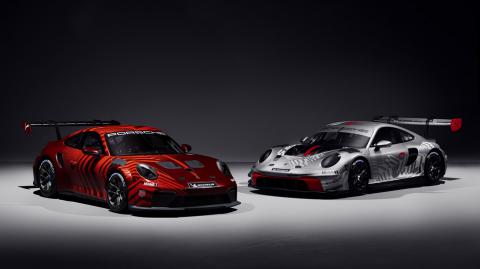
Porsche 911 GT3 911 Cup car


German automaker Porsche has unveiled its new 911 GT3 R customer race car and 911 Cup challenger for its various Carrera Cup championships.

Based on the 992.2 generation of the Porsche 911 road car, the new models will make their on-track debut in 2026.

Updates to the GT3 R, which saw 106 units delivered to customer teams across the IMSA WeatherTech SportsCar Championship, the FIA World Endurance Championship (WEC), Intercontinental GT Challenge, focused on the optimization of the car's suspension and aerodynamics to produce more balanced handling and improved drivability, the manufacturer said. Customer teams can also choose from a range of special equipment options that are tailored to the demands of a specific GT3 series.

The 4.2-L flat-six engine, which delivers up to 557 hp depending on its Balance of Performance (BoP) classification, and the drivetrain of the current 911 GT3 R remain largely unchanged.

The 911 Cup is largely derived from the road-approved 911 GT models and is produced alongside the series-production cars at Porsche’s main plant. It will be powered by a naturally aspirated 4.0-L six-cylinder boxer engine now delivers an increased output of 512 hp.

Redesigned elements include new bodywork for improved aerodynamics, upgraded engine and drivetrain components for increased power and performance, an overhauled brake system that improves durability and extended service life for individual brake components, an updated steering wheel and central control panel in the cockpit and new electronics systems to improve drivability and safety elements.

For more information, visit porsche.com.

August 2025

Industry Insights: TaiJaune Robinson

Submitted by laurap on Tue, 08/12/2025 - 12:12
TaiJaune Robinson


TaiJaune Robinson didn't expect to end up at GM Motorsports, but she made the decision to succeed.


TaiJaune Robinson has always been extraordinary. From childhood, she knew that engineering would be her career focus, and she took decisive steps to become an engineer as soon as possible. But instead of following a typical career path at General Motors, Robinson took a fast left turn into motorsports to manage GM's partnerships in NASCAR. Now she spends her days managing a cross-disciplinary and matrix-organized team to support the company's worldwide motorsports efforts.

On top of that, Robinson still finds time to give back to the community, teach Zumba dance classes, and to mentor young people as they explore and begin their own careers. Positive energy radiates from Robinson, and it's contagious. We recently spent an hour diving into that energy to see what drives her to succeed.

PRI: Looking at your resume, I noticed you attended "Early College" in your hometown of Youngstown, Ohio. Tell me about that.

Robinson: The Early College program is a partnership with Youngstown State University, which is my alma mater for two of my three degrees. It's offered to public school students in Youngstown. While you're in 9th and 10th grade, you complete all of your high school requirements. Then in 11th and 12th grade, you're at college taking freshman and sophomore courses. Through this program, I was able to complete an associate's degree in liberal arts and social sciences before I even got my high school diploma.

Another part of that program is that the remainder of their bachelor's degree is paid for. So not only do I have an associate's degree that's fully paid for, but I also have a bachelor's degree in engineering that I was able to complete in three years instead of four, fully paid for. If I'm not mistaken, this program is still going on to this day.

PRI: Another thing I've heard is that you like to lead by example. How do you express that in your career with GM?

Robinson: Getting into GM was my first "leap of faith" story that I tell anybody who will listen. I say that because again, born and raised in Youngstown, Ohio, I never had the thought or even ambition to leave my city. Also, I am a woman of faith, and that's one thing that I feel paved my way. While I was finishing my bachelor's degree, I had an internship with a company in Ohio that promised me a full-time job at graduation. But about two months before graduation, my manager told me my internship was coming to an end and there was no job for me.

This was the first time in my life that I didn't have a plan, and I was scared. But it just so happened that this was the biggest blessing in disguise for me because it just so happened that I was already attending the National Society of Black Engineers (NSBE) regional conference. This is a professional network where I was able to interact with companies where I could potentially have a future. I landed interviews with General Motors and got my first job as a specification analyst. Even though that had nothing to do with engineering, this was my foot in the door.


Pocono

TaiJaune Robinson said a "huge initiative" of hers is introducing young people to motorsports, particularly those with no racing background. Here Robinson (in the blue shirt) meets with students from Urban Youth Racing School before a Cup series race at Pocono Raceway.


PRI: How did you go from specification analyst to motorsports?

Robinson: As a specification analyst I was responsible for part numbers. I got to learn about the importance of managing every part on a car. I also had to learn about what happens if you don't manage that. I came in right after the Lucas Report came out with the ignition switch recall. When I came into such a sensitive time at General Motors, it was apparent to me that what we're doing every day is impacting lives. This is why GM takes safety so seriously.

Later I became an interior validation engineer, responsible for all our HVAC systems within the Cadillac CT6. After that, I became a design release engineer, where I owned the HVAC module inside of our C8 Corvette. Through every single one of those jobs, I used the skills I built and learned within those areas.

PRI: Then you went to the engineering side of GM Motorsports?

Robinson: Yes, engineering business manager for motorsports competition is my title right now. I've been in this role for three years now, and I absolutely love it. Moving to motorsports was another huge leap of faith because I had zero motorsports background. Plus, we had a brand-new facility that General Motors just built. We broke ground for our Charlotte Technical Center in 2021, opened the doors in 2022, and I was hired in 2022. I moved from Michigan to North Carolina, and the only thing I knew about NASCAR at the time is that there's cars going around on the track. My grandpa grew up in the segregated days, and we knew that this wasn't for us. So I had all these red flags that were popping up just based on preconceived notions. I explained that to my mentor at the time. She said that was all valid but just take a look at it and see if it speaks to you.

I had to sit back and really realize, well, wait a minute. Why am I scared? I'm not one that scares easy. Why am I afraid of going after this role? This is another unknown area, but it's just like the leap I took to get here, so why wouldn't I take another one? And also, if I was scared, who else out here is looking at a role like this, and maybe they are going to miss this opportunity because they're scared. This is an opportunity for me to lead by example.

PRI: Your job isn't like a regular manager. Your people are all over the company. How does that work in terms of leadership?

Robinson: I am an indirect leader. I don't have direct reports. That's harder than being a direct leader, because I can't say, "Hey, you need to do this because I said you do."

As an indirect leader, it is purely a matter of inspiration, empowerment, and having people want to follow you. My team members don't have to follow what I say. They don't have to do anything for me, but I try my best.

General Motors has a very strong team-oriented team-building culture. However, this is a combination of General Motors and motorsports. About 90% of my team came from race teams. They came from these environments that were not necessarily business-friendly or even business-appropriate, and it was because they never had to be. I'm not saying that you're wrong if you run a race team a certain way, but as a part of the mothership that is General Motors, I looked at this as my opportunity to try to change the culture.

PRI: You started working with NASCAR, but you have expanded that role. How far does your responsibility extend now?

Robinson: My role has evolved, and I'm responsible for all our series now. That includes NASCAR, IndyCar, IMSA, NHRA, and off-road. Beginning in 2026, we'll be on grid for Formula 1. Every single one of those teams, everything that has a Chevy bow tie or Cadillac crescent, those are the teams that I am managing on the internal side. As far as our business operations, my job is to make sure that my team has all the tools and resources that it needs so that our partner teams have all the tools and resources that they need to be successful on the race track.

PRI: So if a team wants to switch to a GM platform, they speak to you?

Robinson: If a team wants to come over, their first point of contact is going to be our program managers. I work extremely closely with our program managers and try to keep everybody up to date, up to speed, and having the tools and resources that they need.

Then once we have all the legal things in place, we begin the phase of asking, "Okay, how can we help you be better?" Once we get to that part, you'll see my face and you'll be invited to the building. You'll come in for different meetings and you'll interact with every member of the team.

PRI: One of the things that you've mentioned is your passion for helping young people who don't come up through a motorsports background. How can the motorsports industry do better for the young people who don't grow up in racing?

Robinson: That is a huge initiative of mine. I've had the privilege of leading our diversity, equity, and inclusion initiatives within motorsports competition. Our new name is the Motorsports Impact Committee. The purpose of that committee is to make sure that we are building connections, building relationships, and intentionally trying to grow the sport, both internal and external to General Motors.

When we're talking about providing opportunity, I think that the main focus should be providing experience and exposure. When I came to motorsports, I did not have exposure to what was available. I did not know anything about what it took to run a race team or that it was more than just the cars going around in a circle. Once I got exposed to it, it was a completely different thing.

Now we have several K–12 STEM initiatives where we actually take remote control cars and we have the kids set them up for racing. We're showing kids, at a much smaller scale, if we're talking about adjustments, this is what an adjustment may look like, and this is the impact. We also teach that it's more than just the driver. There is the engineer who's doing this stuff behind the scenes. There is a pit crew member who's putting the gas in the car. There is a mechanic who's checking these things. We teach that these opportunities exist in this industry, and here is how you can get a sneak peek of the day in the life of these people.

My biggest ask and suggestion to anybody who can impact youth is to simply provide the exposure. Simply provide the opportunity to have youth come to a race or to have them meet somebody, or even just to visit the technical center. I can't tell you how many times I've had kids come and visit and they love it. These opportunities are priceless. You're providing an experience, and as long as we follow through, we will naturally have that younger generation who wants to be in motorsports.


panel

TaiJaune Robinson on a panel, "The New Leadership Challenge—Advancing Women's Leadership," at the 2024 SEMA Businesswomen's Network (SBN) Women's Leadership Forum. While she acknowledged that being a woman in the male-dominated motorsports industry can be "difficult," she also believes being young, Black, and female is her "superpower, because that is where I can lead through example."


PRI: You've said a lot about being an African-American in this business, but less about being a woman in a male-dominated industry, which is just as remarkable. Can you speak to that?

Robinson: I wouldn't say that it's an issue. I would say that it's an opportunity for improvement. I do talk heavily about being an African-American in the space, but I do also speak on being a woman in this space. I like to group those two together. I'm young, Black, and female, and some people may see that as a triple threat, but I see it as a superpower for me. Some people may say, "Well, wait a minute. You're young, Black, and female, what do you know about this industry? What are you trying to do? Are you trying to come in and take over?" There's so many different stereotypes that pop up just from those three characteristics.

But I look at that as a superpower because that is where I can lead through example. You can simply see me, and I stick out because I am young, Black, and female. When I walk through that garage, I use that to my advantage because I want people to understand that you don't have to look a certain way to be an expert in these different environments. We really should be respecting each other regardless of how old you are, or what color you are. It doesn't even matter. But yes, being a woman in this space is difficult. We still go through those times, even now, where people view women as less-than. Because I'm a Black woman, I know what it feels like to be viewed as less-than on both sides of the spectrum.

PRI: Have you experienced discrimination at race tracks?

Robinson: There's been plenty of times where I'm at the race track and I have to show my hard card directly to somebody to make sure that they know that I'm supposed to be there. While that makes me so angry in the moment, it's also my job to kill people with kindness and simply say, "It's all right. You're just doing your job." But I didn't see those people check any of the white men or women who walked past. Those are some of the hardest moments. But I'm going through it right now so that the younger people coming up won't have to. We're slowly but surely breaking these generational curses. I understand that while it may not be fair, I have a responsibility to swallow my pride and say, "Yes, I am an engineer. I'm supposed to be here. I'll answer all your questions so I can do my job." Sometimes that's what it takes.

PRI: That's a heavy burden to carry, but you also make time to give back to the community outside of racing, and you're working to bring STEM education and racing to kids. Tell me about your extracurricular activities.

Robinson: Outside of work, I'm a math tutor for kids from kindergarten to college. I also own a nonprofit organization called the Pop Up series where we work to promote a healthy lifestyle while having fun. I'm a certified Zumba instructor. I was a dance line coach, a cheerleading coach, and all these things helped to build who I am.

I also helped create the Racing With Rajah program to focus on how STEM leads to speed. Rajah Caruth is a NASCAR Craftsman Truck Series driver, and he is motivated by the younger generation, and he has a passion for STEM and understanding how things work. He started in iRacing, so we're bringing a whole new perspective into this. This program is powered through GM Motorsports as well as Microsoft. We bring together two giants to make sure that we're not only touching on the career opportunities, but the technology that's used here. We're getting those young developers, those young coders, and showing them that the stuff that they love to do on that game every weekend can become a career.

PRI: Do you have anything else you'd like to make sure we cover?

Robinson: The only thing I have to add is what I tell anybody who will listen: The only choice you have to make is a choice to be great. I say that time and time again because it is no easy task to lead by example and to throw yourself into this industry. If you get up every day and choose to lead, you choose to do good work, everything else will work out. That's how I'm able to be an engineer, how I'm able to lead this group of extremely smart individuals. That's how I'm able to interact with these drivers and interact with these technical directors of these teams and bring a fresh new perspective. That's how I'm able to make an impact on our community. Don't let anyone tell you that you have to choose between what you're really good at and what you love to do. You can put it all together. I do it every day.


To read more like this for free, sign up for a digital subscription to PRI Magazine on Zinio here.    

Once you download the Zinio mobile app or are logged into Zinio on a desktop browser, you will gain immediate access to more than a year's worth of content, including "Industry Insights" here and machinery coverage in the August 2025 issue here. 

August 2025
By
Jeff Zurschmeide

CNC Refinements for Improved Performance

Submitted by laurap on Tue, 08/12/2025 - 12:00
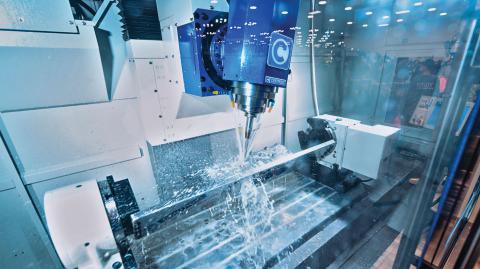
Centroid machinery at work


How modern machines are integrating automation and improving performance.


A technological revolution is underway.

Automation and artificial intelligence (AI) are rapidly changing the way people learn, work, and develop new innovations and products. The technology is already impacting nearly every industry.

Within the motorsports industry, this revolution is being felt in a variety of ways. While individual race teams explore integrating AI software for assisting with race strategy simulation or optimizing component development, parts manufacturers and builders are learning to embrace the benefits of CNC machining and increased automation to improve accuracy, efficiency, and performance.

"Operators need to be aware and open to the changes in the machining world, see how the technology fits their business model, and have a passionate desire to learn about what will help them achieve their goals," said John Cowher of Centroid, Howard, Pennsylvania. "To stay on the cutting edge, you have to always be looking at how to get to the next level to compete with other shops."

Today, much of that competition is centered around acquiring the best machines to help shops optimize their ability to produce race-winning components, whether that involves manufacturing new parts or machining engine blocks with the help of automation. However, for many small businesses within the motorsports space, making the jump—and investment—into automation can be daunting.

"A lot of race shops don't have a lot of volume, so they can't justify high-dollar machines," said Anthony Usher of MEC CNC, a Robins Machines distributor based in San Clemente, California. "They need simple machines that are easy to learn, anyone can work them, and they can do that kind of race work they need."

For these business owners, striking a balance between current investment and future efficiencies will determine whether a new machine is right for their shop.

EZ Learning Curve

Automation and CNC—computer numerical control—may sound great to some business owners, but not everyone is on board.

"A lot of the older guys struggle with CNC," said Usher. "They fear it a lot and worry if they get a machine that's too high tech, they won't be able to run it properly."

In an effort to bridge the gap, Robins Machines is branding its latest CNC machines with a new marketing phrase—EZmatic. Robins' SG 6 in 1 EZmatic seat-and-guide machine offers the ability to switch between manual or automated cycles, as well as a multi-angle seat-cutting system that can be calibrated to exact seat diameters. Robins will also unveil a new machine at the 2025 PRI Show—the RBS 1.11—a multi-purpose machine that does plato boring and surfacing for both large and small cylinder heads and blocks.

With both machines, the goal is to maximize production for operators while minimizing the learning curve.

"To operate this is super easy," said Usher. "When people buy a new machine, we have technicians who go out to train them, and it takes literally minutes. When you [use] an iPhone, you're not doing any programming, you're just working with icons. That's how we've made this system. It doesn't require any skills, and it's very intuitive. People can often teach themselves how to run these [machines]."

Developing easy-to-run software has been a major point of focus for the CNC machine market. While automation may initially seem intimidating to traditional operators, a simple interface can make a huge difference and quickly provide significant benefits to smaller shops.

"We have invested in software to make the machines very simple to operate," said David Bianchi of Rottler Manufacturing, Kent, Washington. "Most of our machines operate from the same platform, so operators can quickly go from machine to machine without hours of training. The ease of operation is important in shops because most times the operators are not trained in G-code. With Rottler automation, they don't need to be."

Training an operator to learn G-code—a combination of letters and numbers used to program CNC machines—takes both time and money. However, with today's more user-friendly software, more people in the shop are able to operate the machines with only minimal training.

According to Eric Smith of Smith Advertising International in Williamston, Michigan—a partner of MEC CNC—this can be a complete game-changer for smaller shops operating with limited personnel.

PRI Show Mazak machinery

Mazak is another manufacturer that has simplified the operation of some of its machines to not only make them easier to use, but also easier to train personnel to use them. Mazak displayed its VC-Ez X vertical machine centers at the PRI Show.
 

"In the motorsports world, sometimes the staff gets spread thin," said Smith. "So they may have a guy who does three or four other things but has some machining knowledge. So they bring in this machine, they train him, and now he can add that to his daily routine without [many] hours or dollars invested into training him to run it. That's how this technology is changing the industry. It requires less time and investment in the person. Of course, there's investment in the machinery, but it can be run without a huge curve of training."

With less time and money required for training, shops can quickly begin to reap the rewards of today's automated machines. Additionally, this allows skilled operators to be more productive and spend less time on mundane or repetitive work.

"The skilled machinists can oversee more in regard to quality control, machining operations, and processes," said Bianchi. "In many ways, this technology has allowed us to scale these critical employees. At the same time, automation has allowed us to be faster, simpler, and better than ever before. This is a winning combination."

Time & Cost Efficiency

Success in motorsports starts with efficiency. Companies only have so many resources to produce more parts, develop better components, and help teams find advantages. If maximizing time and money is the recipe to success, automation might be the most important factor to unlocking a company's potential.

"If it doesn't have automation, it requires an operator to be at the machine all the time, operating it," said Usher. "So the cost of the operator comes into the overall cost of the investment, as well as the skill of the operator. Less computerized machines require more skill."

For example, Robins' RBS 1.11 machine offers automatic hole-to-hole boring and surface finishing. "The machine can go down and bore a whole row of cylinders unattended and automated," said Usher. "Boring cylinder blocks is a pretty simple operation, so people appreciate that they can just let it work on its own. The surfacing also has a simple programming system called multiple pass, where you can set the amount that needs to be removed and the amount per pass, and then it'll keep going over and taking incremental cuts until it'll take a final pass to give you the correct surface finish. That's a great feature, especially when you get to modifications like angle milling."

The ability to automate tasks like cylinder block boring is a great way to improve shop efficiency, as operators can work on other tasks while the machine works. Usher explained that Robins' valve seat cutter also delivers impressive time savings.

"I was talking with a gentleman who said he takes about 15 to 20 minutes per valve seat, but he's able to achieve a good result. He's very experienced, but I said to him, 'Sir, with this EZmatic seat cutting machine, it'll take you about 10 to 15 seconds per valve seat.' So these computer systems are allowing it to be more productive and more accurate in this time."

Like many companies in the space, Rottler continues integrating automation into its machines. According to Bianchi, this results in massive leaps in productivity for customers.

"Our machines are some of the most automated in the industry, and we continue this commitment," he explained. "Rottler led the charge many years ago by automating. Today, the entire Rottler machine lineup has some degree of automation, and in many cases, we have automation that will cut labor down by over 85%. We recognize this as a huge benefit for our customers. In many cases, the automatic machines are almost like having another employee."

Not only is the machine's productivity like having another employee, but with even more advanced programming being developed, these "machine employees" are finding ways to improve performance and deliver unparalleled accuracy.

Simple conversational operation and dual-panel touchscreen control are two features on CNC machines available from Comec in Masury, Ohio. Its ACF200-CNC is a CNC boring machine that combines the operations of reconditioning monoblocks, such as boring and smoothing, in one machine.

Comec offers two CNC head and block resurfacers with its RP1000 CNC and RP1400 CNC. The RP1000 CNC can detect the profile of the cylinder head through a laser sensor that scans the surface of the heads with a dedicated software, process the data collected, and automatically perform the resurfacing operations while managing the working parameters in an optimal way.

The RP1400 CNC uses a brushless motor for the automatic and precise positioning of the milling cutter plate, which is controlled by the CNC, with tested technologies such as the linear guides and recirculating-ball feed screws. The axes and the rotation speed of the milling cutter are controlled by an inverter, and the feed speed can be monitored.

New Frontiers

While many of today's machines offer automation, companies like Rottler are actively looking to AI as the next frontier of development.

"We recognize AI as a tool that will take us to the next level," said Bianchi. "While we do not currently use AI in any of the machine systems, we are reviewing ways that we can utilize AI to improve overall customer experience, get closer to customers' needs, and assess industry demand."

While AI developments may benefit the machines of tomorrow, the digital connectivity of today's CNC machines helps manufacturers work with shops to optimize machines from afar.

"We connect digitally with customers on a daily basis to provide software updates and improvements," said Bianchi. "We also use digital connectivity to review data and troubleshoot machines all over the world. This allows us to get real-time data while significantly improving response time."

Response time is not the only thing that Rottler has been able to improve. According to Bianchi, recent advancement in honing automation has led to increased horsepower for customers.

Rottler machinery at the PRI Show

Rottler's machines "are some of the most automated in the industry, and we continue this commitment," David Bianchi said. The entire Rottler machine lineup "has some degree of automation, and in many cases, we have automation that will cut labor down by over 85%."


"Over the last three or four years, Rottler's H85AX has revolutionized honing with customers consistently reporting more horsepower. The automation not only saves operator time, but it also produces better cylinder finishes and improved bore geometry. The hone literally knows where and how much it needs to work the cylinder to produce optimal results."

Centroid has been working on integrating machine simulation into its systems to help predict bad outcomes and prevent machine breakage.

"We are working on integrating machine simulation into our systems either as part of our five-axis turnkey or option," said Cowher. "The ability to be able to simulate complex programs before they go to the machine is necessary in today's times and beyond. Everyone now wants to make high-performance parts from billet, whether it's a cylinder head, an engine block, or whatever. You can't risk machine crashes destroying tooling, materials, let alone machine breakage. This gets really expensive, really fast. Although machine simulation isn't something new, we are just now starting to offer it as we see the need for it in today's machining world."

In today's fast-paced environment with powerful technology growing by the day, manufacturers and race shops must grapple with a similar question: how to stay ahead without crossing a line.

"The biggest challenge that we face is determining how to embrace this technology without introducing risk," said Bianchi. "One benefit that Rottler has is that we are a cradle-to-the-grave manufacturer. From engineering to finished product, we have the resources to do it all. Because of this, much testing can be done in-house."

In addition to Rottler's in-house capabilities, its team also collaborates with motorsports clients and engine builders who "like to see new technologies and are very receptive to working together to introduce new technologies.

"Motorsports clients are constantly asking for more automation and looking for ways to have a competitive edge," Bianchi added. "We are investing heavily in young and talented engineers who are looking to bring creative solutions to race engine builders."

It's no secret that an arms race is underway in the tech world, as the power of AI grows by the day. However, the same is true in our industry, as leading motorsports manufacturers race to leverage the power of AI and automation in pursuit of more power, more speed, and more trophies.

To better understand how automation and AI are enhancing machines' capabilities, there's no better place than Machinery Row at the 2025 PRI Show in Indy. With most major companies in attendance, you'll have the opportunity to speak with leading engineers, see demonstrations of cutting-edge machines in action, and learn more about where the new AI frontier will lead.


To read more like this for free, sign up for a digital subscription to PRI Magazine on Zinio here.    

Once you download the Zinio mobile app or are logged into Zinio on a desktop browser, you will gain immediate access to more than a year's worth of content, including "CNC Refinements" here and more shop machinery coverage in the August 2025 issue here. 


Sources

Centroid
centroidcnc.com

Comec
comecus.com

MEC CNC
meccnc.com

Robins Machines
robinsmachines.com

Rottler Manufacturing
rottlermfg.com

Smith Advertising International
smithadvertisingintl.com

August 2025
By
Jack Haworth

PRI Individual Member Benefit: 15% Off Sonos Online Purchases

Submitted by ajh on Tue, 08/12/2025 - 11:49
Sonos


Sound off! PRI Individual Members receive 15% off Sonos purchases online. Whether you’re upgrading your home setup or setting the shop vibes, enjoy rich, room-filling sound at a discount. 

Access your benefit through the PRI Member Portal. 

PRI MEMBER PORTAL LINK

Not yet a PRI member? There's a tier for you! Learn more at performanceracing.com/membership.

PRI is not affiliated with, nor does it sell or thoroughly evaluate the products, services, and companies listed. PRI provides this information to PRI members for their evaluation and consideration and does not endorse or sponsor any company, product, or service. PRI takes no responsibility for, and makes no representation, warranty, or assurance as to the accuracy, quality, reliability, or completeness of the products or services offered.

August 2025

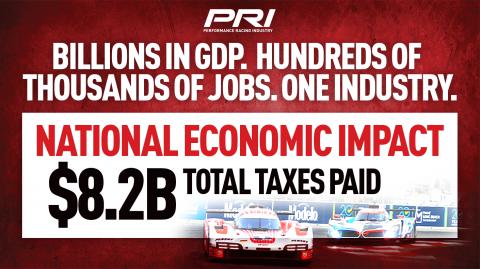
ICYMI: Study Find Motorsports Generates $8.2B in Tax Revenue

Submitted by ajh on Tue, 08/12/2025 - 10:40
Economic Report


Motorsports Industry Powers $69.2 Billion U.S. Economic Engine, Supports More Than 318,000 Jobs, New Study Finds
 

Groundbreaking PRI economic industry study highlights how motorsports businesses serve as a key driver of American economic activity.
 

PRI recently released a landmark study that underscores the motorsports industry's pivotal role as a key contributor to the U.S. economy, supporting hundreds of thousands of jobs, generating billions in economic activity and delivering substantial tax revenue. 

PRI, the leading voice for the motorsports industry in the U.S., commissioned the research, which was conducted by John Dunham & Associates, based on 2025 U.S. economy data. The study encompasses automobile, truck, motorcycle and UTV/side-by-side racing activity.   

Traditionally, economic impact reports about racing are focused on the impact of a single event--major race weekend events for a specific local and state economy.  Those are studies that examine the impact of the tourism dollars that come into the economy as a result of that single event. PRI's report is different because it determines the economic impact of the businesses that support the existence of racing in the first place. 

PRI's research represents the most comprehensive assessment of motorsports' economic footprint ever undertaken to quantify the scale and significance of the business of racing to the U.S. economy. It evaluates the economic contributions from multiple racing businesses--including tracks and promoters, parts manufacturers, distributors, retailers, service providers and incorporated race teams.  

Key findings from the study include:  

  • The industry contributes more than $69.2 billion in annual economic impact to the American economy. 
  • Nationwide, the motorsports industry supports more than 318,000 American jobs.  
  • American workers in the motorsports industry earn more than $22.1 billion worth of wages and benefits.  
  • The industry generates more than $8.2 billion in tax revenue, including $5 billion in federal taxes and $3.2 billion in state and local taxes. 


As part of this study, PRI also launched an interactive economic impact map, enabling users to explore motorsports-related data by state and county--highlighting the industry's reach and relevance in communities of all sizes across the country. The website also offers downloadable infographics that can be shared with policymakers and other businesses to show the impact motorsports has on individual states and communities. 

The PRI Economic Impact Study provides valuable data about the economic footprint of the motorsports industry in the U.S. PRI undertook this effort to provide policymakers, industry stakeholders and the public with credible, data-driven insights into racing's role as a major driver of economic activity, employment and tax revenue. The study not only affirms the industry's significance but also serves as a foundational resource to inform advocacy, investment and long-term planning. 

"Racing holds a special place in American life, and this milestone report highlights the broad scope of the motorsports industry as an economic driver at the local, state and federal levels," said PRI President Michael Good. "Using these results as a foundation, PRI will continue to seek ways to foster the motorsports industry, from racetracks to manufacturers, and from small businesses to major national employers, to ensure motorsports continues to touch every part of the country and bring together people from all walks of life for competition and community. We're proud to serve as the leading voice for the motorsports industry in the U.S. and will continue delivering the data needed to demonstrate the industry's economic strength and value." 

This economic impact study represents an important bookend to PRI's 2024 Racing Market Report, a consumer trends analysis that found that consumers spent $8 billion on track-use-only parts for motorsports in 2023.

In 2023, a study commissioned by the SEMA found that the automotive aftermarket industry generates an economic impact of $337 billion annually to the American economy. While the motorsports study found small areas of overlap in the parts, repair and facilities areas, the motorsports study results are a complement to the SEMA report. PRI was acquired by SEMA in 2012 to connect, protect and advocate for the motorsports industry. 

Report Methodology 

The PRI Economic Impact Study estimates the economic contributions made by the motorsports industry, which includes manufacturers, distributors and retailers of automotive racing parts plus racetracks, race promoters, and professional race teams.  Data are for the United States economy in 2025. John Dunham & Associates (JDA) conducted this research, which was funded by Performance Racing Industry (PRI). This work used standard econometric models first developed by the U.S. Forest Service, and now maintained by IMPLAN Inc. Data came from the PRI, Data Axle, and other government sources.  

How to Access the Report

To view the full report, including a breakdown of economic data by state, county or legislative district, follow the how-to instructions below:

  1. Navigate to the stats.performanceracing.com.

  1. Scroll down to the interactive map to click on your “State,” “County,” or even a specific “Congress,” “House,” or “Senate” member.  

  1. View the economic impact data or click “Download Report” for a one-page PDF summary.

About Performance Racing Industry 

Performance Racing Industry fuels the passion for motorsports by building, promoting, and protecting the worldwide racing community. PRI supports the interests of racers, enthusiasts, builders, tracks, sanctioning bodies and businesses through legislative action and advocacy, its monthly business magazine Performance Racing Industry, and the world's premier motorsports trade show, the PRI Trade Show. PRI also supports businesses by providing market research, education and best practices in motorsports business and racing technology. For more information, visit PerformanceRacing.com. 

August 2025

2025 Mid-Year Advocacy Report: Where We Stand at the Halfway Point

Submitted by ajh on Tue, 08/12/2025 - 10:14
Advocacy Mid-Year Report


Advocacy is a marathon, not a sprint, and we've reached a solid mid-way point in the year. With Congress back home during its summer recess, PRI and SEMA are preparing for a busy fall in the U.S. Senate and House of Representatives.

In January, PRI and SEMA mapped its advocacy agenda for 2025. Here's where things stand.

Halting Electric-Vehicle (EV) Mandates and Preserving Vehicle Choice

The big win so far this year. PRI and SEMA didn't just play a pivotal role in killing EV mandates--we led the effort in Washington, D.C., on this issue, earning a visit to the White House when President Trump signed a Congressional Review Act resolution that protects more than 330,000 American jobs and preserves $100 billion in annual economic impact for the nation's economy by revoking a waiver that would have enabled California to ban internal-combustion-engine vehicles.

Along the way, PRI and SEMA mobilized an army of advocates to:  

  • Send more than 56,000 letters and make more than 2,000 phone calls to lawmakers in the House and Senate.
     
  • Build a coalition of 335 small businesses for an April letter urging House and Senate leadership to hold votes to put an immediate stop to the implementation of the ACC II regulation.
     
  • Host aftermarket business leaders and automotive influencers for 56 in-person meetings in Washington, D.C., with lawmakers and staff.
     
  • Dominate the digital media landscape with countless memes and posts on the harms of EV mandates, reaching more than 2 million voters in key states, and running online ads that put pressure on lawmakers and staff around the Capitol. 


Meanwhile, other states wised up to the harms of EV mandates. Virginia, Maryland, Delaware and Vermont each backed off policies that followed California's emissions policies, while North Carolina, Texas, Ohio, West Virginia and eight other states passed PRI- and SEMA-supported "ban the ban" legislation to ensure such mandates can never take effect.  

Protecting the Right to Repair and Modify Vehicles

The REPAIR Act was introduced in the House and Senate and awaits committee action. However, PRI and SEMA have declined to support these bills, which do not provide sufficient protections for vehicle owners who want to legally and safely modify their vehicles, as well as the specialty aftermarket businesses that produce, sell and install products that modify vehicles. Our right to repair/right to modify principles document clearly outlines what must be done by lawmakers to earn PRI and SEMA's support.

Preserving Access to Public Lands for Recreational Use

Before departing from office, President Biden signed the PRI- and SEMA-supported Expanding Public Lands Outdoor Recreation Experiences Act (EXPLORE Act) (HR 6492), thus establishing an important, comprehensive public lands law that will improve the permitting process for motorized recreation events on federal lands and bolster the economic impact of outdoor recreation businesses, including manufacturers, retailers, guides and local businesses nationwide.

Then, in May, PRI and SEMA helped deliver a major, decisive win for off-road enthusiasts when the California Supreme Court declined to hear a petition from the California Coastal Commission (CCC), thus preserving access to Oceano Dunes State Vehicle Recreation Area (ODSVRA) located near Pismo Beach, California. This victory was a direct result of SEMA's lawsuit, which rightly argued that the CCC violated the state's Coastal Act when it ordered the phase-out of OHV use at Oceano Dunes. The ruling preserves motorized access to an area that's the only place in California where off-road enthusiasts can drive and camp on the beach, with unique sand dunes and options for off-roading, camping and exploring. 

Tariffs

PRI and SEMA continue to gather information on the impact of tariffs on our members and share this information with the Trump Administration and lawmakers. PRI and SEMA have met with the Department of Commerce to share survey data culled from our member businesses on tariff impacts, and established a strong set of guiding principles to serve as a north star for discussions with federal policymakers on international trade. Because tariffs remain a rapidly changing landscape, we'll continue to reinforce to the government how the automotive aftermarket is impacted by these policies.

Shaping Tax Policies That Help Small Businesses

PRI and SEMA advocated for and helped secure passage of the "One Big Beautiful Bill Act," which provides tax certainty to American businesses. The bill includes several key provisions that benefit PRI and SEMA member companies, including reduced tax rates for individuals and pass-through businesses, 199a deduction made permanent, Section 179 expensing cap increased, full expensing for R&D and capital investments, expanded business interest deductions, and 100% immediate deductibility of certain investments in new factories and improvements. The new law is a massive win for specialty-aftermarket businesses. 

PRI has also spent a great deal of time laying the groundwork for action in the fall to secure a more sustainable economic landscape for race tracks across the nation. The bipartisan Motorsports Fairness and Permanency Act (HR 2231/S 2462) would permanently ensure that motorsports entertainment complexes can depreciate the money they invest in their facility over a seven-year period. 

Without congressional action, race tracks' depreciation period would revert to up to 39 years at the end of 2025. This is why making the incentive permanent would provide track owners with important certainty for making long-term investments.

Defense of Classic Vehicles and Collector Rights

PRI and SEMA are leading the charge to improve the landscape in California for auto collectors, backing Leno's Law (SB 712), which would expand smog exemptions for a new swath of classic vehicles. This bipartisan bill represents the most significant progress we've made in California on this sort of bill in decades. It is foundational progress that shows the growing strength of PRI, SEMA and the automotive community to advance legislation in the most difficult political environments, like California.

Protection of Small Businesses From Regulatory Overreach

In a major development, the United States Environmental Protection Agency (EPA) said it will begin rulemaking to overturn the 2009 "endangerment" finding on greenhouse gases and repeal the greenhouse-gas standards for light- and medium-duty motor vehicles. The EPA's proposed rule will directly impact federal new-car requirements. The proposed rule will ensure that automakers produce vehicles driven by consumer demand, rather than greenhouse-gas limits, the latter of which has significantly influenced the models of vehicles available to the American people since 2009.

PRI and SEMA are reviewing the proposed rule to identify any potential additional impacts to the specialty automotive aftermarket, even as the rule is not expected to impact Clean Air Act requirements related to the maintenance of emissions controls after a vehicle has been purchased.

In the states, PRI and SEMA led successful efforts in Arkansas and Oregon to protect race tracks from orchestrated efforts to shut them down.

Want to learn more? Visit performanceracing.com/advocacy for the latest and follow the SEMA Action Network on Instagram to get involved.

August 2025

Connect Face-to-Face With the Global Racing Industry at The PRI Show

Submitted by ajh on Tue, 08/12/2025 - 09:48
Registration


New registration features make securing a PRI Show badge in 2025 easier than ever before.


Attendee registration for the 2025 PRI Show is now officially open for qualified industry members, and you don't want to waste any time securing you badge.

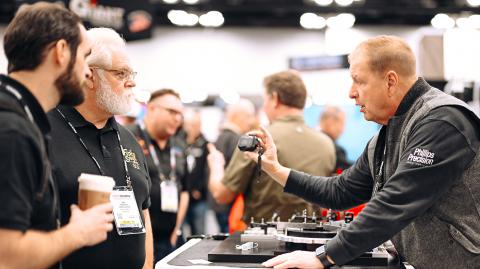
Set for December 11–13 in downtown Indianapolis, the PRI Show allows motorsports professionals to conduct business face-to-face with top racing suppliers and network with the worldwide racing community. Attracting motorsports professionals from all 50 states and 70 countries, this unrivaled global event unites professionals from every racing discipline under one roof. Sign up for your PRI Show badge now to uncover emerging technologies and source the hottest new racing products all at a convenient, affordable gathering.

New for 2025: Big Improvements to the Registration Process

The PRI Show team has introduced two exciting updates to make registering smoother, faster and more user-friendly:

One-Stop Shop Experience
After confirming membership, attendees will now only need to complete two prompts:

  • Profile information.
  • Demographic questions.


Single Transaction for Multiple Attendees
Planning to register your entire team? You now can do so all in one transaction. This requested feature eliminates one of the most common frustrations from years past.

Why Attend the 2025 PRI Show?

With a focus on the present and future of racing, the 2025 PRI Show promises to feature all the newest parts, latest innovations, nearly unlimited networking opportunities and access to an unrivaled number of motorsports manufacturers and service providers that can't be matched anywhere else. 

Expect the return of signature Show features like:

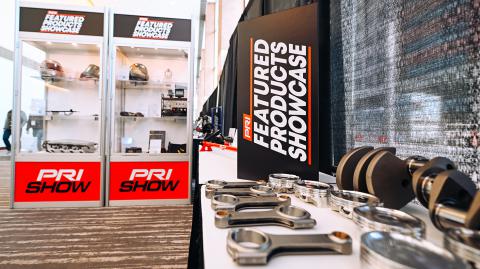
  • Featured Products Showcase.
  • Grand Opening Breakfast.
  • Machinery Row with live demos.
  • PRI ESports Arena.
  • Indoor motorsports trailers exhibit.
  • Track Operators, Promoters and Sanctions (TOPS) HQ.
  • And much more!
     

Ready to Plan Your Trip?

View the current 2025 PRI Show Floorplan and start mapping out your visit. Book your hotel now to secure the best rates and locations here. As a reminder, PRI Membership is required to attend. Be sure to renew or sign up before registering.

Don't miss your chance to be part of the world's largest gathering of motorsports professionals.

Register Here PRI Show button


For more information on the 2025 PRI Show, visit here.

August 2025

Own the Spotlight at the 2025 PRI Show: Enter the Feature Products Showcase

Submitted by ajh on Tue, 08/12/2025 - 08:43
Featured Products Showcase


Exhibitors: Supercharge your product exposure at the PRI Show by participating in the Featured Products Showcase, the ultimate destination for buyers and media seeking the hottest new products in motorsports.
 

The Featured Products Showcase returns to the 2025 PRI Show (December 11-13, downtown Indianapolis) as the premier destination for media, buyers and professionals to discover the latest innovations in the motorsports industry.

ENTER HERE button for PRI News Featured Products Showcase 2025 PRI Show


This dynamic showcase is located at the Indiana Convention Center in a high-traffic area near the Capitol Connector and Georgia Street entrance.

Exhibitors are invited to submit their newest and innovative products to be featured in this dedicated area. Whether it's cutting-edge engine components, advanced racing gear, the latest in fuel technology, or anything else designed to enhance racing performance, the Featured Products Showcase provides a unique platform to spotlight products and connect with decision-makers from all corners of the motorsports industry.

Participating in this program also grants you access to the Featured Product Awards, providing exhibitors with additional opportunities for publicity. A panel of top racing industry professionals, including track operators, sanctioning bodies' representatives, social media influencers and media, will select the product winners.

Even better, this value-added program is reasonably priced. Each product entered before December 5, 2025, is only $75 per entry. After the December 5 deadline, exhibitors must wait until the PRI Show week begins to submit an entry. Additionally, the cost for entries submitted after the December 5 deadline at the PRI Show increases to $100 per entry. On-site submissions are on a first-come, first served basis and will be accepted as space permits. 

Don't miss out: Enter now to maximize your exposure at the 2025 PRI Show and get your products in front of the industry's key influencers and buyers.

Learn more about the PRI Show Featured Products Showcase and submit your products here.

Note: The pre-Show deadline for exhibitors to submit their product(s) entry is December 5, 2025. Exhibitors who miss the deadline and still want to submit product(s) can do so onsite at the PRI Show as space permits. All submissions are on a first-come, first-served basis.

For questions or more information, contact featuredproducts@performanceracing.com.

August 2025