Alejandro Agag New Motorsport Network Strategic Advisor

Submitted by laurap on Tue, 07/29/2025 - 16:55
Image of Alejandro Agag in the pit-lane during practice ahead of the F1 Grand Prix of Monaco at Circuit de Monaco on May 23, 2025, in Monte-Carlo, Monaco, courtesy of Shutterstock


Motorsport Network, the global motorsports and automotive media company, announced the appointment of renowned industry visionary and innovator Alejandro Agag as a strategic advisor to the Chairman of the board. Agag's role includes providing strategic guidance on global initiatives, commercial transactions, brand positioning, market expansion and corporate development. 

This appointment underscores Motorsport Network's long-term growth strategy to drive commercial innovation and unlock new value across the global racing and media ecosystem, according to the company. 

"Alejandro brings entrepreneurial vision and industry expertise to Motorsport Network," said Gary Fegel, Chairman and controlling shareholder of Motorsport Network. "His unique experience, insights and enthusiasm will be a powerful force as we accelerate our business across media, live experiences and global partnerships."

Agag, a former Spanish politician, is known for creating and scaling innovative racing ventures as the founder and chairman of Formula E, founder and CEO of Extreme E, and founder and chairman of the new E1 Series. Beyond his pioneering work in sustainable motorsport, he has repeatedly transformed new ideas into global sports properties, attracting major brands, investors and audiences worldwide. His expertise spans across commercial rights management, brand storytelling, investor relations, and strategic dealmaking across multiple sectors. "Motorsport Network is perfectly positioned to thrive in this new era of innovation and fandom. I'm excited to help drive the company's next chapter of growth and success," said Agag.

Recent initiatives include the Motorsport Network Global F1 Fan Survey in collaboration with Formula 1, delivering insights into modern fan engagement and emerging audience trends. The company has also launched Autosport Business Exchange (ABX), its flagship leadership series driving strategic dialogue and innovation as investment interest accelerates—with its next iteration slated for October 15 in New York.


Image of Alejandro Agag in the pit-lane during practice ahead of the F1 Grand Prix of Monaco at Circuit de Monaco on May 23, 2025, in Monte-Carlo, Monaco, courtesy of Shutterstock.

July 2025

PRI Show's Ultimate Destination for Racing Innovations

Submitted by laurap on Tue, 07/29/2025 - 16:18
Featured Product Showcase


If you're seeking the newest motorsports parts, tools, technologies and services, there's one destination you can't afford to miss at the 2025 PRI Show, December 11-13, downtown Indianapolis: the Featured Products Showcase. For three full days, this spotlight area serves as the ultimate preview zone where attendees, buyers and media members get a first look at the most innovative products shaping the future of racing.

Strategically positioned near Yellow Hall, and the hallway connecting to Lucas Oil Stadium, the Featured Products Showcase brings together cutting-edge parts from top motorsports manufacturers in one easy-to-browse location. Attendees can explore hundreds of parts and components in one easy-to-navigate area—making it the ideal place to spot trends, discover new vendors and get inspired before hitting the main Show floor. A panel of industry experts—including track operators, sanctioning body reps, influencers and media—will also select standout entries for top honors, so make your guess on which products will be honored by planning to stop by this Show feature.

Add this feature to your PRI Show planner and custom agenda below!

Featured Products Showcase at PRI 2025
Add to your PRI Show agenda: 
+ Thursday, December 11
+ Friday, December 12
+ Saturday, December 13

Don't forget: PRI Show attendee registration is now open here! Book your hotel now through the official PRI Show block online here, and start mapping out your visit to the world's largest gathering of motorsports professionals with the 2025 PRI Show Planner.
 

July 2025

Shift on the Clay: Modifieds

Submitted by laurap on Tue, 07/29/2025 - 16:06
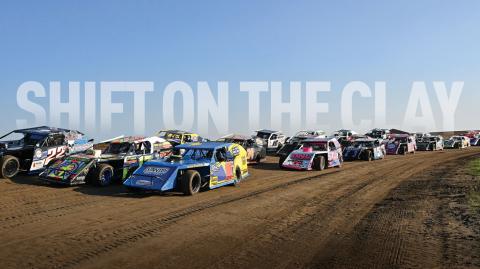
SHIFT ON THE CLAY text on top of full field of dirt modified vehicles


Modified racing is steering toward a safer future with recent engineering advances and a continued push to encourage additional safety products.


It's debatable whether safety in the loud and dust-choked arena of dirt modified racing has kept pace with the technological advancements seen in other high-profile series. Sanctioning bodies point to a strong safety record and consistent efforts to analyze accidents and adjust the rules, as needed. Manufacturers say the rules should not just recommend but require the latest and most advanced safety gear.

Modifieds are somewhat the blue-collar soul of small-town dirt tracks where bleacher crowds cheer the sideways action and admire the raw character of the machines and their drivers, who chase victories not for fortune but for pride and legacy. Modifieds look like they were born in a family garage, and they constantly remind us that the heartbeat of racing carries on under low-slung lights every summer weekend at local venues.

Still, there is the ever-present risk of danger on those clay tracks, and some would say an even greater threat in modified classes that race on asphalt where the speeds are much higher. Fortunately, safety advancements made in NASCAR and other top-tier racing series have trickled down to grassroots levels. Multi-layer driver suits are lighter and more comfortable, yet they're much more fire resistant than in years past. New materials and design elements have improved helmets, and head-and-neck restraint devices have clearly reduced injuries in high-speed crashes. The key to benefiting from these advancements is getting drivers to use the new equipment, either by sanctioning body and track mandates or intense education programs.

The race car itself is also at the heart of safety efforts in the modified division. The cars are engineered with purpose and feature crumple zones designed to absorb energy in a crash, improved roll cages, and modern fuel cells with safety features to prevent spills in a rollover.

Sanctioning bodies and continued education awareness aren't always enough to promote a rigorous safety culture in modified racing, where risk is part of the sport's seductiveness. It also takes personal responsibility where cost is often a limiting factor, or where racers simply believe "nothing will ever happen to me."

The problem is that safety consciousness is often driven only by tragedy, so that is why peer-driven understanding of safety benefits is necessary from within the industry. With that in mind, here are capsule reports from a sampling of sources associated with modified racing, including sanctioning bodies, car builders, and safety equipment manufacturers.


B&B Racing Chassis

As a builder of modifieds, Paul Burger's Belle Plaine, Minnesota-based shop has to deal with inconsistent rules between sanctioning bodies. Some may set a minimum of 1.500-inch diameter tubing in the roll cage or 1.625-inch, while others mandate 1.750-inch.

"That can be confusing," he said. "But we believe that an inch-and-three-quarter cage is the safest, so that's how we build all our cars. Compared to the cars 20 years ago, we have more X-bracing and more structural integrity."

The shop relies on 30 years of experience and "street smarts" to design the frames and corresponding components. "A lot does come from trial and error. You're always playing with what needs support and where to put extra metal," added Burger. "As far as the evolution of safety, the containment seats are a big factor. And we have some customers who will not have a race car unless it has a fire-suppression system.

"If you're looking to buy a race car, you definitely want to go with someone who has been doing this for a long time," said Burger. "There are so many people just starting to build cars and go off copying whatever they find, and then you don't know what kind of tubing and wall thickness they're using. Invest as much as you can into safety and go with a reputable car builder with a proven safety history."


ButlerBuilt

"Dirt modifieds aren't hitting the wall as hard as asphalt modifieds," observed Domenic Bickford of the seat manufacturer based in Concord, North Carolina. "The Whelen Modified Tour has a good set of safety regulations, but I know on the seat side we've seen people run just about anything on asphalt—so it hasn't been our primary market."

ButlerBuilt race seat installed in modified

ButlerBuilt places emphasis in containing the driver's head when designing its aluminum seats. "It's all about making sure that modified guys are really set in their seats versus having too much room," said Domenic Bickford.
 

The modified market has been opening up more for the company after a chassis builder in the Northeast started promoting the company's seats. "Big block modifieds are a unique chassis. We had to develop a seat that was specifically engineered to even fit in those cars," said Bickford.

ButlerBuilt offers a variety of seat sizes and back angles to suit different types of racing. "All our head buildups are the exact same as our NASCAR buildups, as far as material goes," added Bickford. "There's really a lot of emphasis on the head. When you crash, your head picks up speed before it hits the head foam. If you can close that gap, the head won't gain as much speed. It's all about making sure that modified guys are really set in their seats versus having too much room."


CASM Safety Products

In 2014 Scott Coffman witnessed his son-in-law break a vertebrae in a race. As an engineer developing parts for the sprint car market he sought to take some of the load off a driver's spine. His idea was the Compression Absorbing Seat Mount or CASM.

"In 2015 I made different prototypes and partnered up with Ron Shaver of Shaver Specialties. He helped me get it patented and in front of a bunch of people," recalled Mooresville, North Carolina-based Coffman.

The system basically has four attachment points on the chassis: two under the seat and two on the upper back of the seats. These points can be clamp-on or weld-on. The set on the bottom has foam inserts that absorb energy from an impact or even a rough track. The upper set is designed to allow and control the vertical seat movement.

"We have impact foam that's durometer rated for different body weights," explained Coffman. "We've tested a clamp-on system, and it reduces 68.9% of impact away from the driver. Recently we tested the weld-on system, and it does 74.5%."

While the system works in some capacity in every direction, it's designed for "frame to earth" impacts. "But we get a lot of guys in modifieds and Late Models and all kinds of different cars. It works with carbon fiber or aluminum seats. You just have to have clearance under the seat to mount the system. The clamp-on raises the driver up 1 inch, and the weld-on doesn't raise the driver at all," said Coffman.

While packaging can be difficult in some vehicles, cost is the most repeated reason that racers voice when shying away from the product. "Nobody wants to spend $1,500 on a system that helps keep you from breaking your back or keep you walking upright when you're an older man," said Coffman. "They'd rather spend $2,000 on a helmet wrap or wing lettering."


GRT Race Cars

In building modifieds, Keith Brown said sanctioning bodies don't require what he calls a "drag bar" in the roll cage. "It's a bar over the driver's shoulder, and it protects the driver," said Brown, whose shop is in Perryville, Arkansas. "We started putting it in our cars around 2019 after there were a couple of deaths. It's something that's been used in other types of racing."

Brown has also been challenged with addressing different rulebooks and the tube-size requirements when building frames.

"You know, drivers do want a lighter car. It's going to flex differently than a heavier car," said Brown. "A lot of guys will build a car just for one sanctioning body and they won't run another division. Other guys will get a car with inch-and-three-quarter tubing from us and run two sanctioning bodies."

Brown said seat development has come a long way in improving safety in the modified class, and he's also looking to protect those seats.

"We also do something on our cars that's not required by any rules," he added. "We have a plate in front of our four-bar (suspension component), so that if you broke a four-bar it wouldn't come through the seat."


International Motor Contest Association (IMCA)

By sanctioning hundreds of events at nearly 250 tracks across the country and Canada, IMCA in Vinton, Iowa, has a huge responsibility in reviewing and advancing safety guidelines in addition to helping control costs for the racers.

"We do our best to always promote what we consider to be the minimum safety standards that our competitors should be following, and then allow them to improve," said Brett Root. "We obviously want our competitors to be as safe as possible and at the financial means that most of them have. Some of this equipment can be extremely expensive. It's hard for us to mandate equipment and components from a safety standpoint that they can't afford."

IMCA drivers are required to wear fire suits, Snell-rated helmets with a fireproof lining, fire-retardant gloves and shoes, and run a five-point harness.

"And it's not unusual to see a guy run a fire-suppression system or the shoulder-supported seats," added Root. "The equipment you see evolve out of Cup racing does migrate down to our markets and is available to racers. It's just whether or not they can afford it, and they make that choice. We don't try to force that upon them because, again, we can write rules that nobody can afford to follow.

"We do an awful lot of communicating with racers every day, every weekend—also promoters, tech officials. We use those communications and at-track experiences if we see accidents," continued Root. "Things that might catch our attention—okay, is there something here that needs to be addressed? We have rule meetings with our core employees. We usually pull a racer or a promoter into those conversations."

Root pointed to fuel cells as an example of attending to safety needs. For a number of years, fuel tanks weren't required to have check valves or flapper valves. "If the car got upside down, we had some serious problems. We had people get hurt," he said. "So, we pushed toward better rollover technology. Also simple things. For years racers just Dzus-fastened mud covers on the wheels. We had a problem with them coming off and hitting people. We were one of the first that mandated that you had to bolt them on."


Shaw Race Cars

Collapsible steering shafts are one of the biggest safety improvements available for modifieds, according to Kevin Shaw of the Batesville, Arkansas, car builder. Unlike Late Models that have a slightly different steering arrangement, the steering boxes in modifieds are mounted close to the front bumper.

"If you go into the wall, that's a straight shot of the steering shaft back into the driver," said Shaw. "A collapsible shaft can absorb 10 or 12 inches before the steering wheel moves toward the driver. I consider that a must putting a car together in this day and time."

Shaw Race Cars safety modified

(Left image) Shaw Race Cars adds a halo bar to each of its chassis to help protect the left side of the driver. "The good part is that it doesn't restrain the driver from getting in or out," said Kevin Shaw. (Right image) A collapsible steering column is a "must" on modifieds built at Shaw Race Cars, due to the location of the steering box close to the front bumper. "If you go into the wall, that's a straight shot of the steering shaft back into the driver," said Kevin Shaw.


Another key safety innovation in modifieds is the "halo bar" that's positioned on the left side of the driver and helps close a gap in the frame structure where a tire or other large debris could invade.

"I think [Kevin] Rumley [formerly] from Longhorn [Chassis] was the first one to introduce that bar several years ago," said Shaw. "I know WISSOTA has started requiring it, but I don't think any other sanctioning body requires it, yet. The good part is that it doesn't restrain the driver from getting in or out."

Shaw is also a fan of full-containment seats, even though he's actually selling fewer seats these days. Car builders used to inventory seats since there are just a few universal sizes. Now drivers often purchase directly from the seat manufacturer.

"We're seeing more and more custom-made seats with foam that's made to contour your body. From a safety viewpoint it's better, and you're not getting tossed around in your seat. So you likely feel better the next day," said Shaw.


The Joie of Seating

Former NASCAR driver and seat builder Randy LaJoie, based in Concord, North Carolina, is pushing modified sanctions to mandate a seat safety certification similar to what NASCAR mandates for its series. For example, regarding an SFI 39.1 certified seat, which his company offers, "to get that certification the seat has to take a 100-G hit."

Lajoie stressed that modifieds running on asphalt carry risk because of the increased speeds.


United States Modified Touring Series (USMTS)

Darlo Mulder said USMTS in Webster City, Iowa, hasn't made any significant changes to the safety rules in recent memory, and the series hasn't experienced any serious accidents. However, there was an accident at a sanctioned track that drew officials' attention.

"The race wasn't related to our sanctioning body. The driver was fine, but the roll cage did fail," said Mulder. "There was a concern about a rule change across the board, not just our sanctioning body. But after review [of roll cage standards] we decided that everything was where it needed to be."

Safety is stressed by USMTS, and equipment like fire suppression is highly recommended. Yet, Mulder has argued with drivers who sometimes try to skirt the safety requirements.

"Some don't want us to require a window net, and I refuse to take that out of our rulebook," he said. "Some drivers don't think about safety, they just want comfort. But I'm the one who has to think about their safety."


To more like this for free, sign up for a digital subscription to PRI Magazine on Zinio here.    

Once you download the Zinio mobile app or are logged into Zinio on a desktop browser, you will gain immediate access to more than a year's worth of content, including "Shift on the Clay" here and more road racing coverage in the August 2025 issue here. 


Sources

B&B Racing Chassis
facebook.com/bbchassis/

ButlerBuilt
butlerbuilt.net

CASM Safety Products
facebook.com/CASMSafetyProducts/

GRT Race Cars
teamgrt.com

IMCA
imca.com

Shaw Race Cars
shawracecars.com

The Joie of Seating
thejoieofseating.com

USMTS
usmts.com

August 2025
By
Mike Magda

Speedhut Moves to Payson, Utah

Submitted by ajh on Tue, 07/29/2025 - 16:02
Speedhut

Speedhut, a Utah-based manufacturer of vehicle gauges and guage accessories, is moving to a new facility in Payson, Utah.

While the company will still be available to provide customer support, customers may experience some delays, according to a statement from Speedhut representatives.

"This move marks an exciting new chapter for Speedhut as we expand into a larger facility that gives us room to grow, innovate and serve you even better," a company representative said. "We're pumped for what's ahead and can't wait until we settle into our new home base."

Speedhut's phone number for customer support will remain the same, according to the company.

For more information, visit speedhut.com.

July 2025

Formula GT Announces Global Launch

Submitted by ajh on Tue, 07/29/2025 - 15:48
Formula GT

Formula GT, a new racing series, has announced its global launch ahead of its debut in Spring 2026. 

The new series, which will feature a field of hypercars, will debut in six cities around the world: Mexico City, Miami, Los Angeles, London, Cannes and Dubai. The series expects to draw more than 1 million live attendees and reach more than 100 million viewers globally through streaming. 

At the helm of Formula GT is British-Canadian entertainment veteran Arthur "AJ" Chipman, known for his previous work with the Olympic Games and Formula 1.

More information will be released at a later date.

July 2025

Unlock the August Issue of PRI Magazine Featuring Shop Equipment and More

Submitted by laurap on Tue, 07/29/2025 - 15:37
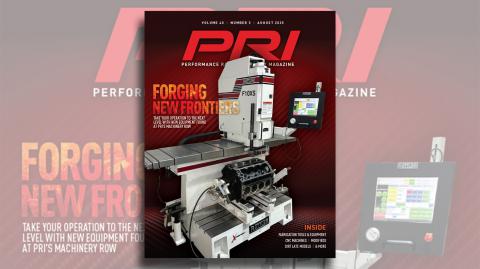
August Issue of PRI Magazine


The August issue of PRI Magazine delivers an essential mix of technical knowledge, industry updates and forward-looking trends for anyone working in or around the racing business. This month's Machinery Buyers Guide anchors the issue with detailed coverage of today's top CNC machines and fabricating equipment, along with expert analysis of the shop machinery powering professional race programs across the country.

A preview of 2025 Machinery Row exhibitors also gives readers a first look at what to expect at this year's PRI Show, while a feature on metals explores the materials shaping today's and tomorrow's high-performance builds. From the track, coverage of dirt late models and modifieds delivers updates on two of short track racing's most competitive categories, and this month's business profile takes readers behind the scenes of a standout motorsports operation in Urbana, Missouri.

In the departments, Race Shop features innovative new products including flashdry absorbents, a gloss floor finish for garages and custom-sized valves and retainers. Two dedicated column spotlights include insightful Q&As with TaiJaune Robinson of GM Motorsports and Mel Harder of WeatherTech Raceway Laguna Seca. And the PRI Education section explores how high school career programs are introducing students to opportunities across the racing industry.

From technical insights to talent development, the August issue offers real value for anyone serious about racing--and is free to read at no cost in a digital format.

Whether you're an industry member staying on top of trends or a racing enthusiast interested in learning more about the industry, the digital magazine is available in current and past issues.


Below is a step-by-step guide to claiming your free digital subscription to PRI Magazine on your phone.

Visit the link below or scan the QR code to claim your coupon voucher:

Claim your free PRI Magazine digital subscription here.

PRI Magazine QR code


Fill in the mandatory fields and questions regarding your motorsports background and interests.

PRI Magazine how-to


Hit subscribe to claim your free subscription. Now, you're able to activate your account by downloading the SEMA Magazine app. Tap the IOS link for Apple devices and Google Play for others.


PRI Magazine how-to step 2


Once you sign up, you'll have full access to a year's worth of valuable industry knowledge and insights. Get to reading! Be sure to sign up for notifications on the latest issue coming in January, featuring highlights you might have missed from the 2024 PRI Show and so much more.

PRI Magazine how-to step 3

For any questions or assistance, please reach out to PRI's Customer Service Team at membership@performanceracing.com or call 949-499-5413. 

August 2025

Content Creator Spotlight: Cameron Carraway

Submitted by ajh on Tue, 07/29/2025 - 14:48
Cameron Carraway

Instagram: @cammanraces
Facebook: @cammanraces
YouTube: @cammanraces
Follower counts: 7.5k on Instagram; 1.4k on Facebook; 130 on YouTube
Focus: Motorsports, NASCAR, pursuing personal racing career

Cameron Carraway is a rising content creator and aspiring NASCAR driver who's already making waves in motorsports through his racing, storytelling, and advocacy. With a growing online presence and a racing career that began at just five years old, Carraway is on a mission to inspire the next generation while championing industry causes that matter. He recently shared that passion with PRI News in the interview below.

PRI News: How did you get into the automotive industry?

Cameron Carraway: I got into the automotive industry through racing. I started in quarter midgets when I was just five years old, and it sparked my love for motorsports, cars and everything automotive. Since then, it's been all about finding ways to be behind the wheel, learning about the mechanics of racecars and connecting with people in the industry who share that same passion.

Cam Carraway​

PN: What's been your biggest motivator?

CC: My biggest motivator is knowing that each time I get on track or share something about my journey, I'm representing kids like me, showing them it's possible to chase big dreams no matter where you start. My family also motivates me daily; they've made huge sacrifices to support my racing and media goals.

PN: What's been your favorite part of being apart of the automotive community?

CC: My favorite part is the relationships. Whether it's fans, other racers, mechanics or brands, everyone has a unique story, and there's always something to learn. The community lifts each other up, and it feels like an extended family wherever I go.

PN: As a content creator in the industry, how do you hope to make an impact on your audience? 

CC: I hope to inspire young people to believe in themselves and go after what they want, even if it seems out of reach. I want to show the real behind-the-scenes of racing--the wins, losses and work it takes--and help people see that motorsports can be for everyone.

Cam Carraway​

PN: Why is advocacy important to you?

CC: Advocacy is important to me because I've seen how decisions in the industry and government can impact the future of racing and car culture. I want to use my platform to help protect the industry and also make it more inclusive for the next generation coming up.

PN: What's been the biggest moment of your career thus far?

CC: On track, it's been winning races in my Late Model. Off-track, I got a full media credential with NASCAR-sanctioned tracks and was selected to be a youth media correspondent for Championship Weekend in 2024.

PN: What is on the horizon for you in 2025? Anything you're looking forward to?

CC: In 2025, I'm excited to make my NASCAR ARCA West debut once I turn 15 and keep racing Late Models and micros, continue building my media presence and work with brands that align with my goals. I'm also looking forward to using my platform to advocate more within motorsports and expand my reach as a content creator and speaker.

PN: What are you hoping to see from the industry in the next few years?

CC: I hope to see the industry keep growing in ways that make motorsports more accessible to young drivers and all communities. Also, I'd love to see brands and organizations continue to invest in youth development and content creation that tells authentic stories.

July 2025

ANOTHER ONE: U.S. and EU Finalize New Trade Agreement

Submitted by ajh on Tue, 07/29/2025 - 14:35
US EU Tariff Agreement


President Donald Trump and European Commission President Ursula von der Leyen on July 27 finalized a new trade agreement between the United States and the European Union (EU) establishing a baseline 15% tariff ahead of the August 1 deadline.

Agreement Highlights 

  • Under the agreement, the United States will impose a 15% import tariff on most EU goods, down from the previously proposed 30%.  
  • The new tariff rate applies broadly across categories such as industrial machinery, textiles, some automotive components and consumer goods.
  • Pending further negotiations, a set of targeted product categories has been excluded from these new tariffs affecting "strategic" goods like airplanes, aircraft parts and semiconductor equipment.
     

Automotive Sector Implications

Critical raw materials are temporarily exempted from tariffs under the new deal. The scope of these exemptions will be revisited in follow-up negotiations scheduled for later this year.

The 50% tariffs previously imposed under Section 232 on steel and aluminum imports from the EU remain in place. However, both sides have agreed to open discussions on potentially converting those tariffs into a quota-based system. This is of relevance to manufacturers and importers of chassis, wheels, engine components and other parts that incorporate raw steel and aluminum.

European Union manufacturers remain concerned about tariff impacts on vehicle exports. While finished vehicles are not explicitly carved out from the 15% rate, individual member states such as Germany and Italy have confirmed they are in talks with United States trade officials to explore potential product-specific relief mechanisms. Of particular interest to the specialty aftermarket is the development of customs classifications and harmonization standards under the updated regime.

EU Commits to Spending on U.S. Goods and Investments

As part of the agreement, the EU has committed to purchasing approximately $750 billion worth of American goods over the course of Trump's second term, with emphasis on energy products, semiconductors and related technologies. These purchases are expected to include liquefied natural gas, crude oil and nuclear energy technology, and could result in increased investment in United States-based infrastructure and logistics.

In addition, the EU has pledged to invest roughly $600 billion in the United States economy, including in advanced manufacturing, critical materials and supply chain resilience. Industry stakeholders should watch for opportunities stemming from joint EU-American infrastructure and technology investment programs.

What's Next? 

Although the agreement provides short-term certainty for United States–EU trade relations, details remain fluid. Product-level tariff implementation schedules, customs rule adjustments and enforcement mechanisms are expected to be released soon. 

Stakeholders are encouraged to regularly review PRI and SEMA's government affairs communications for additional guidance by the Office of the U.S. Trade Representative and the U.S. Department of Commerce. 

The agreement also outlines plans to coordinate policy on steel and aluminum supply and address overcapacity as part of a new United States–EU "Metals Alliance." The strategic goal is to counter the impact of non-market economies such as China. This initiative could have long-term implications for raw materials pricing and availability within the automotive supply chain.

As negotiations evolve and implementation guidance is issued, PRI and SEMA will continue monitoring developments and providing members with relevant updates and analysis.

Questions? Please contact Juan Mejia, SEMA senior manager for federal government affairs, at jmejia@sema.org. 


Image courtesy of Shutterstock

July 2025

Cracking Down on Counterfeits: Protecting Your Products in the Digital Marketplace

Submitted by ajh on Tue, 07/29/2025 - 13:57
Counterfeit Protection


In the digital age, the internet has revolutionized global commerce, enabling businesses of all sizes to reach consumers across borders. However, this convenience does not come without a dark side: online counterfeiting. Counterfeiting, in general, refers to the act of producing and selling counterfeit products that imitate genuine brands. Online counterfeiting occurs when these fakes are sold through websites, social-media posts, livestreams and online marketplaces, often tricking buyers into thinking they're purchasing real parts from trusted sources.

Online counterfeiting is becoming increasingly sophisticated and widespread, and unlike traditional counterfeit markets, online platforms allow sellers to operate anonymously, making detection and enforcement much more challenging. 

Even worse, counterfeit goods are widely available on e-commerce platforms such as Amazon, eBay, Shopify, and Alibaba, as well as on social media, and on rogue websites, creating a multi-billion-dollar black market that threatens consumers, legitimate businesses, and economies alike. 

Unfortunately, numerous PRI and SEMA members have been impacted by online counterfeiting after finding evidence of fake products and fake websites that imitate the real ones.

PRI and SEMA have compiled the information below to help motorsports industry members learn more about how they can protect their trademarks and patents as well as how to report online counterfeiting of your brands and products. 

To combat the issue of online counterfeiting, brand owners can turn to several practical and legal solutions, in particular:  

1. Policing and AI-Powered Brand Monitoring
  • Brand owners should monitor and police the use of their trademarks in the online space. There are automated software tools available (e.g. Red Points, BrandShield, SmartProtection, Zero Fox) to scan product images, text, behavior patterns and new listings across online and underground channels.
     
  • Businesses can also maintain Google Alerts, social‑media monitoring and dark‑web surveillance to detect early infringement and take appropriate enforcement action.
     
2. Intellectual Property Enforcement
  • Brand owners can register their trademarks, copyrights and patents in every major market (For registration of trademarks and patents in the United States, see uspto.gov/. For registration of copyrights, see copyright.gov/registration/). While trademark registration is not required in the United States to have enforceable trademark rights (though it is extremely helpful in enforcement efforts), in most countries around the world, registration is generally required to have enforceable trademark rights. International trademark registration systems like the Madrid Protocol (wipo.int/en/web/madrid-system) and global enforcement treaties for copyright infringement like the Berne Convention are available for brand owners to maintain and enforce rights in other countries, especially jurisdictions where counterfeiting is prevalent. If you are in need of legal expertise to help you with your trademark, copyright or patent registrations, a list of PRI and SEMA business services members is available in the PRI and SEMA business member portal.
     
  • Brand and patent owners also have the ability to file complaints and seek exclusion orders from the International Trade Commission (usitc.gov/intellectual_property/about_section_337.htm). Upon receipt of a complaint, the ITC investigates and determines whether the importation of products into the United States infringes a U.S. patent, copyright or registered trademark in violation of Section 337 of the U.S. Tariff Act.  If the ITC determines that an imported product stands in violation, it can issue exclusion orders preventing such products from entry into the United States.
     
  • If infringement of copyrighted materials is detected in online marketplaces, the Digital Millennium Copyright Act (DMCA) provides copyright owners the ability to demand the takedown of infringing content from online platforms. For further information on filing DMCA takedown notices, see copyright.gov/512/. 
     
  • Owners of U.S. trademark registrations can record their trademarks with U.S. Customs and Border Protection (CBP) to prevent the importation of counterfeit goods into the United States (iprr.cbp.gov/s/). CBP has the authority to detain, seize, forfeit, and ultimately destroy merchandise seeking entry into the United States if it bears an infringing trademark or copyright and that trademark or copyright has been federally registered and subsequently recorded with CBP.
     
  • Brand owners can also collaborate with law enforcement agencies such as the FBI and Interpol, both of which investigate criminal counterfeiting and piracy. To report instances of counterfeiting and piracy with the FBI or Interpol, see ic3.gov/ and interpol.int/en/Contacts/Contact-INTERPOL. 
     
  • Brand owners have rights. When infringements are detected, brand owners can send cease and desist letters to infringers to demand that the infringing activity be immediately stopped. This is certainly harder to enforce if the violator is located overseas. Brand owners can rely on legal frameworks such as: (1) the U.S. Lanham Act which enables brand owners to secure injunctions, damages, impoundment and forced destruction of counterfeit goods and attorney's fees in certain cases; (2) the Trademark Counterfeiting Act which makes it a federal crime to traffic in counterfeit goods or services imposing prison sentences of up to five years and fines up to $250,000 for individuals, and $1,000,000 for corporations; and (3) the PRO‑IP Act which enhances criminal penalties and statutory damages up to $1–2 million per violation.


3. Platform and Marketplace Enforcement
  • Brand owners can demand the removal of counterfeit goods made available in online marketplaces through a notice and takedown procedure. E-commerce platforms often provide tools for reporting counterfeit listings and a process to have those listings removed. Takedown demands can be generated by the brand owner themselves or through third-party service providers that specialize in the takedown process. Brand owners should also consider paying for brand verification (the little blue checkmarks on your profile name) with social-media platforms as it will help eliminate false ad purchasing on these platforms.
     
  • Take Down Demands for Major Online Marketplaces (click for more):
  • Brand owners can join platform protection programs like Amazon Brand Registry, Project Zero, Transparency, Shopify's IP Protection, eBay's VeRO and Alibaba's IP Protection Platform. When brand owners are properly registered and accepted for such programs, platforms will proactively block counterfeit listings.
     
  • In addition, platforms are starting to deploy AI machine learning to detect suspicious listings.
     
4. Deployment of Authentication Tech
  • Brand owners can embed unique identifiers and authentication technologies like QR codes, NFC tags, holograms, serialization, hidden markers or digital watermarks on their packaging and products so that genuine product can easily be verified.
     
  • Brand owners can use advanced methods to track product provenance such as blockchain or certified traceability systems.
     
5. Consumer Education
  • In the fight against counterfeiters, knowledge is power. Brand owners should educate customers on how to identify authentic items: quality cues, packaging, serial numbers and purchasing genuine products from authorized sources. The clearest message to consumers is: if the price discounts advertised sound too good to be true, they probably are.
     
Fake Websites

While many online counterfeiters operate through social media and online e-commerce marketplaces, one of the most sinister tools in the counterfeiter's toolbox is the fake or clone website. These fraudulent websites are designed to mimic the websites of legitimate brand owners, and many times use the brand owner's logo, images, website "look and feel," and product descriptions to trick unsuspecting customers into buying substandard and even dangerous counterfeit products. Many times, consumers find themselves on these websites by clicking links in online advertisements for what they believe will take them to the brand owner's website. The link will instead direct the consumer to the counterfeiter's fake "lookalike" website, which mimics the legitimate website.

Red flags for spotting these fake websites include the use misspelled brand names (e.g., "nkie.com" instead of "nike.com"), the use of generic top level domains rarely used by companies (e.g., ".xyz" as opposed to ".com"), poor grammar or spelling errors, generic or incomplete pages (e.g., the About Us, Contact, or Privacy Policy pages are missing or copied from other sites) or the offering of steep discounts to lure buyers. Many of these websites are short-lived, often popping up, scamming victims and then disappearing before law enforcement can respond. Another flag is that many false websites require PayPal as the only form of payment.

When a fake website is detected or reported, there are several actions the brand owner can take to shut the website down:

  • Cease and Desist Letters: Brand owners can start by sending a cease and desist letter to the website owner demanding that they take down the website and stop infringing trademark and copyright rights. Most counterfeiters often operate anonymously and take steps to hide their identities and whereabouts. It may be necessary to conduct a forensic investigation to obtain identifying information such as names, addresses or e-mail information to send such letters and even if letters are sent, there is a chance that the demand to cease and desist is ignored.
     
  • Domain Takedowns: If a cease and desist letter is ineffective, brand owners can file a complaint with the website's domain registrar or hosting provider. The brand owner can locate the web hosting provider or domain name registrar by conducting a WHOis search in ICANN records (lookup.icann.org/en) or other domain name registrar websites (most if all have a WHOis search function). Filing such complaints may involve providing proof of intellectual property ownership (for example, federal trademark registration certificates) evidence of the infringing activities and demonstrating that the fake website violates the registrar's or hosting provider's terms of service. Major domain name registrars and hosting companies may suspend, disable or delete infringing domains once a valid complaint is verified.
     
  • DMCA Takedowns: If a web host is located in the United States or otherwise subject to U.S. laws, brand owners can submit a take-down notice under the Digital Millennium Copyright Act to have websites containing stolen images and textual content taken down. Hosts and platforms are legally required to respond and take appropriate action or they risk liability as a contributory infringer.
     
  • UDRP Domain Name Complaints – If the domain name being used by the counterfeiter contains the brand owner's trademark or confusingly similar wording, the brand owner can file a Uniform Dispute Resolution Policy (UDRP) complaint with an ICANN-approved dispute resolution service provider like the World Intellectual Property Organization (wipo.int/domains/en/filing/complaint) or the ADR Forum (adrforum.com/domain-dispute/udrp). The complaint is reviewed by a panel of arbitrators who have the power to order the infringing domain name to be cancelled or transferred to the brand owner.
     
  • Notify Law Enforcement: Brand owners can lodge complaints with the National Intellectual Property Rights Coordination Center (IPR Center) managed by United States Immigration and Customs Enforcement's Homeland Security Investigations (iprcenter.gov/). Under its Operation in Our Sites initiative, the IPR Center is leading the U.S. government's response to intellectual property theft. The Operation In Our Sites program specifically targets websites and their operators that distribute counterfeit and pirated items over the Internet. The IPR Center works with the U.S. Department of Justice to prosecute, convict, and punish counterfeiters as well as seize website domain names, profits, and other property from IP thieves.
     
  • Search Engine and Ad Network Complaints: Brand owners can submit infringement notices to the major search engines like Google and Bing to have fake websites de-indexed or blocked from ad networks. This dramatically reduces discovered traffic and monetization.
     
  • Fake Website Complaint Submission for Major Search Engines:
  • Legal Action in U.S. Courts: In more serious cases, brand owners can seek a court injunction to force internet service providers, registrars or search engines to block access to fake websites.       

The battle with counterfeiters is not a one-time effort, but an ongoing battle. As long as there are producers of quality motorsports parts, there are going to be counterfeiters looking to freeload off that success. As counterfeiters grow more sophisticated, brands, law enforcement agencies and internet infrastructure providers must collaborate, leveraging both legal mechanisms and advanced technology. With coordinated action and public awareness, it is possible to significantly disrupt the counterfeit networks that operate in the dark corners of the digital landscape.


Image courtesy of Shutterstock

July 2025

PRI Business Member Benefit: 25% USI Insurance

Submitted by ajh on Tue, 07/29/2025 - 10:39
USI Business Member Benefit


PRI Business Members can save up to 25% on employee health insurance through USI. This exclusive benefit helps you protect your team while keeping costs under control.  

PRI MEMBER PORTAL LINK

Not yet a PRI member? There's a tier for you! Learn more at performanceracing.com/membership.

PRI is not affiliated with, nor does it sell or thoroughly evaluate the products, services, and companies listed. PRI provides this information to PRI members for their evaluation and consideration and does not endorse or sponsor any company, product, or service. PRI takes no responsibility for, and makes no representation, warranty, or assurance as to the accuracy, quality, reliability, or completeness of the products or services offered.

July 2025