Anyone who has witnessed a stage rally race in person will never forget the experience of cars careening by at break-neck speed on the edge of often tree-lined roads—both paved and dirt—as they stir up pebbles, leaves, and dust—lots of dust. The rush of air carries with it the scent of exhilaration.
While a stalwart on the European racing schedule, American stage rally events are more covert. Except for those who are closely aligned with the sport, events can be difficult to find, and sadly, a television presence is virtually non-existent.
Twenty years ago, it appeared rally was on an upswing with the American audience. “In the middle of the 2000s, we had Ken Block, Travis Pastrana, Tanner Foust, these fairly well-known X-Games competitors rallying and racing,” observed Chris Cyr of Team O’Neil, Dalton, New Hampshire. “We were all surprised that we didn’t get a bigger bump in support or greater longevity of the series.”
To garner more interest, he continued, “we have to attract fun drivers with fun stories and some sort of marketing. But there’s a lot of chicken-and-egg problem with our sport, like, who’s going to make the investment to get people like that involved? And how are we going to make sure we monetize that to ensure more people will support it? We still have Travis Pastrana rallying in the United States. And that really is a good resource to try to get more sponsors and spectators. But he’s one person who can only do so much.”
With so much promise not so long ago, why hasn’t American rally racing reached the same notoriety as its counterpart across the Atlantic? We polled industry decisionmakers to find out if this exciting sport will ever pick up stateside, what is being done to improve its future trajectory, and how motorsports businesses can get involved to ride the tide.
Overcoming Obstacles
“European rally has just existed way longer than American rally,” stated Cyr about what he believes is the main reason stage rally is much more popular overseas. “European rally can be traced back to some of the founding manufacturers testing their vehicles against each other.”
A second reason Cyr cited is the fact that America’s infrastructure was based on a grid, “so we were able to build everything on straight lines,” which is more conducive to America’s love affair with drag racing. “But if you look at European roads, a lot of them followed the Roman chariot trails. And back in the day when you had to build trails, you didn’t modify the land, you just followed the land. So you have left and right turns and crests and corners and all the things that make a road exciting to drive, especially in a rally environment.
“The last big thing that we can attribute is that you can’t watch rally from a stand,” he continued. “You can’t have a hot dog and a beer and sit there and watch rally cars go by. You have to put in a ton of effort as a spectator to get out in the woods and actually see the cars go by.”
And regarding the lack of broadcast coverage? “In Europe you can watch this from the comfort of your own home. But they can do that only because they have the sponsors and the revenue to justify the cost that it takes to get out in the middle of rural Europe or these other countries that have rallies and stream all that video service live into the video network that they have. You could pay five bucks a month to sit there and watch it from your home,” said Cyr, adding, “I think our sport is just as exciting as Europe, but the money doesn’t exist right now.”
“Obviously in Europe, there’s a big cultural head start,” observed Perry Seaman of NASA Rally Sport, Industry, Pennsylvania. “European rally is really ingrained in their motorsports culture. They have top rally competitors as household names. They have a lot of World Rally Championship (WRC) events. So naturally you have much more awareness of the sport, which builds grassroots efforts. People want to race and be like their heroes in the sport. They already have that whole infrastructure built out. They have race series that you can step your way up through to progress in the sport.”
The physical vastness of the US has definitely influenced the limited growth of stage rally racing, according to Chris Heikkuri of the Lake Superior Performance Rally (LSPR) in Marquette, Michigan. “No matter where you are in Europe, there are one or two events within a day’s drive with multiple series below the top level,” he said, pointing to the European Rally Championship, Irish Tarmac Rally Championship, and British Rally Championship, among others. “There is just way more rally going on, and much closer!”
In the US, events are much more spread out. American Rally Association (ARA) national events are held in Michigan, Missouri, Washington, Oregon, Ohio, Minnesota, and Tennessee, while NASA Rally Sport’s national events are held in South Carolina, Kentucky, and Michigan, with plentiful regional events for both series scattered from coast to coast.
To read the rest of this article for free, sign up for a digital subscription to PRI Magazine on Zinio here.
Once you download the Zinio mobile app or are logged into Zinio on a desktop browser, you will gain immediate access to more than a year's worth of content, including "Rally On: America's Best Kept Motorsports Secret?" here and additional coverage in the September 2025 issue here.
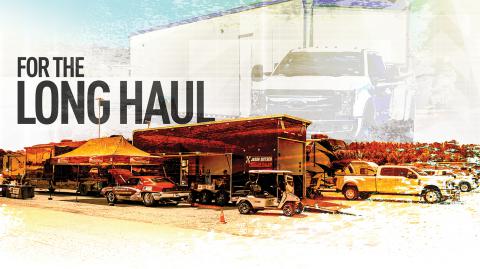
Trailers can dramatically improve the race day experience in so many ways. The options in the modern landscape of trailers and toters are so plentiful that Wayne Quakenbush of Capitol Custom Trailers in Beltsville, Maryland, quoted the old adage, "measure twice and cut once," when speaking about racing customers who order new trailers.
Laughing, he explained, "Budget twice and buy once, so to speak. That's what I see a lot. They've made an important purchase decision based on timing, perhaps budget, just not quite thinking it through or not understanding what all their options are when building a trailer."
Making the leap into a trailer isn't a cheap endeavor, but neither is building race cars and participating in motorsports. Affordability is approached in the same vein race cars begin: having a vision, budgeting the build, and responsible financing. Unfortunately, acquiring a stacker trailer isn't the same as acquiring parts through bartering with other racers, a strategy often used for weekend hobbyists.
We interviewed a handful of trailer builders for this article, and each manufacturer or dealer had a motorsports background. Their trailers are designed for racers, by racers, with the racing experience in mind.
"The trailers we build are primarily custom built to a specific racing style, whether it be a sports car trailer, a drag race trailer with a stacker to carry multiple cars, or the same thing for sprint cars, dirt modifieds, pavement modifieds. Each have specific trailers," explained Quackenbush.
Custom built or prebuilt, trailers play a significant role in motorsports, offering more than transportation. "The trailers don't win races, but organized racers win races," stated Quackenbush. Racing is the proverbial essence of efficiency. The location of tools, and where and how they are put away, is the difference between being prepared and adding time to a pit stop, serving as a technical time out.
Organized Trailers Win
"I think it's great when we have customers who come to us and know what they want," expressed Chad Boespflug of Flying A Motorsports, Cape Girardeau, Missouri.
"I think it's crucial to get with a dealer who can help navigate some of those things," he advised. "Network with your peers, your fellow racers, looking at what they like, what they don't like. Put a game plan together of what you think you would need or would fit you and your operation best."
Boespflug expressed questions that often come to mind when planning for the right trailer setup. "What do you race? What all are you putting in the trailer? How do you load the trailer for the car, golf cart, pit bike, etc.? What do you prefer as far as your loading sequence? What size are your tires? You've got to make sure it's going to fit your needs."
He chuckled and added, "You don't want to spend $100,000 on your golf cart, and it doesn't fit in your trailer now."
Sharing Quackenbush's position on organization, Boespflug echoed the adage, "trailers don't win races," and added, "being prepared, rested, and organized is what will win your race." He later described a scenario of how racers taking 45 minutes to load up a trailer prior to race day will then take 45 minutes to unload and set up at the track.
Forward planning for races through trailer organization has lasting benefits that are felt financially, mentally, and physically. Planning for track days helps racers save money in the long haul while increasing efficiencies at the track.
To read the rest of this article for free, sign up for a digital subscription to PRI Magazine on Zinio here.
Once you download the Zinio mobile app or are logged into Zinio on a desktop browser, you will gain immediate access to more than a year's worth of content, including "For the Long Haul: Sound Advice from Motorsports Trailer Providers" here and additional coverage in the September 2025 issue here.
Every racer knows the difference that the right camshaft, crankshaft or valvetrain component can make. As a PRI Individual Member, you get 10% off Lunati products—so you can put trusted performance parts to work in your program while keeping more money in your pocket.
Access your benefit through the PRI Member Portal.
PRI is not affiliated with, nor does it sell or thoroughly evaluate the products, services, and companies listed. PRI provides this information to PRI members for their evaluation and consideration and does not endorse or sponsor any company, product, or service. PRI takes no responsibility for, and makes no representation, warranty, or assurance as to the accuracy, quality, reliability, or completeness of the products or services offered.
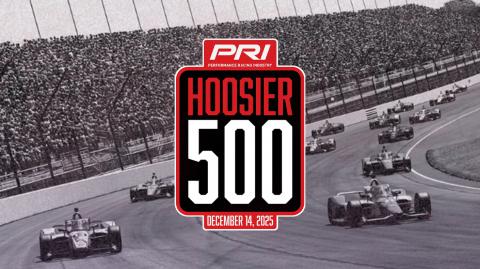
The PRI Hoosier 500, the PRI-sponsored sim-racing event held at the virtual Indianapolis Motor Speedway, is already less than 100 days away.
To celebrate the milestone, organizers provided a sneak peek at a limited-edition Hoosier 500 watch crafted in collaboration with race organizers, PRI and Visitor Watch Co., that will go to the winner of the event, scheduled for December 14 on the iRacing sim-racing platform.
In addition to serving as the entitlement sponsor of the event (read more about the partnership here), PRI is also the streaming home of the PRI Hoosier 500. PRI's digital channels, including Facebook and YouTube, will stream the race live, and provide lead-in coverage during the event's qualifying weekend.
More details will be announced at a later date.
Sim racers interested in learning more about competing in next year's event can subscribe to the competitor communications list by clicking here. You can also view the virtual race's official rulebook here.
Competitor registration begins on October 1, running through November 3.
Exhibitors: Supercharge your product exposure at the PRI Show by participating in the Featured Products Showcase, the ultimate destination for buyers and media seeking the hottest new products in motorsports.
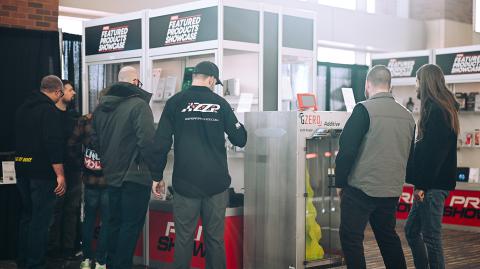
The Featured Products Showcase returns to the 2025 PRI Show (December 11-13, downtown Indianapolis) as the premier destination for media, buyers and professionals to discover the latest innovations in the motorsports industry.
This dynamic showcase is located at the Indiana Convention Center in a high-traffic area near the Capitol Connector and Georgia Street entrance.
Exhibitors are invited to submit their newest and innovative products to be featured in this dedicated area. Whether it's cutting-edge engine components, advanced racing gear, the latest in fuel technology, or anything else designed to enhance racing performance, the Featured Products Showcase provides a unique platform to spotlight products and connect with decision-makers from all corners of the motorsports industry.
Participating in this program also grants you access to the Featured Product Awards, providing exhibitors with additional opportunities for publicity. A panel of top racing industry professionals, including track operators, sanctioning bodies' representatives, social media influencers and media, will select the product winners.
Even better, this value-added program is reasonably priced. Each product entered before December 5, 2025, is only $75 per entry. After the December 5 deadline, exhibitors must wait until the PRI Show week begins to submit an entry. Additionally, the cost for entries submitted after the December 5 deadline at the PRI Show increases to $100 per entry. On-site submissions are on a first-come, first served basis and will be accepted as space permits.
Don't miss out: Enter now to maximize your exposure at the 2025 PRI Show and get your products in front of the industry's key influencers and buyers.
Learn more about the PRI Show Featured Products Showcase and submit your products here.
Note: The pre-Show deadline for exhibitors to submit their product(s) entry is December 5, 2025. Exhibitors who miss the deadline and still want to submit product(s) can do so onsite at the PRI Show as space permits. All submissions are on a first-come, first-served basis.
Set for December 11–13 in downtown Indianapolis, the PRI Show allows motorsports professionals to build a foundation for a successful season ahead. Whether you're sourcing new parts--from cutting-edge machinery to groundbreaking new products--or looking for new industry connections, the PRI Show attracts motorsports professionals from all 50 states and 70 countries, creating an unrivaled global event unites professionals from every racing discipline, including stock car, drag, sports car, prototype, sprint car, midget, modified, formula, dirt late model, sport compact, karting, vintage and more, all under one roof. Sign up for your PRI Show badge now to uncover emerging technologies and source the hottest new racing products all at a convenient, affordable gathering.
New for 2025: Big Improvements to the Registration Process
The PRI Show team has introduced two exciting updates to make registering smoother, faster and more user-friendly:
One-Stop Shop Experience
After confirming membership, attendees will now only need to complete two prompts:
Profile information.
Demographic questions.
Single Transaction for Multiple Attendees
Planning to register your entire team? You now can do so all in one transaction. This requested feature eliminates one of the most common frustrations from years past.
Why Attend the 2025 PRI Show?
With a focus on the present and future of racing, the 2025 PRI Show promises to feature all the newest parts, latest innovations, nearly unlimited networking opportunities and access to an unrivaled number of motorsports manufacturers and service providers that can't be matched anywhere else.
Expect the return of signature Show features like:
Featured Products Showcase.
Grand Opening Breakfast.
Machinery Row with live demos.
PRI ESports Arena.
Indoor motorsports trailers exhibit.
Track Operators, Promoters and Sanctions (TOPS) HQ.
And much more!
Ready to Plan Your Trip?
View the current 2025 PRI Show Floorplan and start mapping out your visit. Book your hotel now to secure the best rates and locations here. As a reminder, PRI Membership is required to attend. Be sure to renew or sign up before registering.
Don't miss your chance to be part of the world's largest gathering of motorsports professionals.
For more information on the 2025 PRI Show, visit here.
Building a bulletproof racing valvetrain requires attention to many moving parts.
When a four-stroke, two-valve-per-cylinder, pushrod engine operates at 6,000 rpm, the intake and exhaust valves are opening and closing 50 times per second. And that's at only six grand, where some engines are just waking up.
Building a valvetrain to handle those kinds of stresses and at the same time produce power under competition conditions requires paying attention to a lot of moving parts.
"It isn't just flow; it isn't just lift. There are a lot of things you have to worry about in the valvetrain as an engine builder," said Claude Holguin of CHE Precision, Newbury Park, California. "All this has to work together."
Holguin was one of several valvetrain experts we spoke to about how to keep a valvetrain from failing under race conditions. In what follows, we'll unpack in greater detail those "lots of things" he referred to.
Lobe Design
Camshaft lobe design plays a big role in "being easy on valvetrain parts," said Bobby Biancaniello of Cam Motion, Baton Rouge, Louisiana. "To look at the valvetrain and why valvetrain parts fail, you have to start with the camshaft, especially in hydraulic roller applications. If you're trying to accelerate the valve off the seat extremely quickly, you can piss off a hydraulic lifter pretty easily. And if you have some deflection on opening, you're definitely going to have some seat bounce on the closing. That's hard on valve seats, it's hard on valves, and the valve springs won't last as long."
"If a part deflects—be it a rocker arm, a pushrod, a retainer—kind of bowing a little bit, all of those become springs," said Chris Potter of COMP Cams, Memphis, Tennessee. "They absorb energy, and then they give energy back. The more we understand that and help control that through lobe design, the better the engine is going to perform."
Lifers & Pushrods
"The bottom line is, the bigger the lifter, the stronger the lifter," said Guy Aguayo of Crower Cams & Equipment, San Diego, California. "We sell an 0.842-, 0.874-, 0.903-, and a 0.937-inch lifter. On the Fuel end, the big lifter is 1.062-inch. We sell them in needle bearing and bushing styles."
Crower's oiling recommendation for both kinds of lifters is a HIPPO system, which stands for high-pressure pin oiling. "It feeds oil to either the bushing or the needle bearing as the engine has oil pressure," Aguayo said. "In the golden days—or let's call it a few years ago—you would just rely on splash oiling, the splash coming from the rotating of the engine. That doesn't cut it anymore."
Bigger is better thinking holds true for pushrods as well, Aguayo said. "The more spring pressure, the more pushrod you're going to need to keep them from flexing. You don't want it to flex, because you're losing camshaft lift out of the flex of the pushrod."
Pushrod length is important "to get the proper geometry," said Jay Ryan of S.B. International (SBI), Nashville, Tennessee. "Even though the engine might be based on an OEM design, that doesn't necessarily mean that's the geometry you should go after, because there's going to be a lot of changes in that geometry, with rocker arm ratio, lengths of valves, tip lengths of valves—all those things factor into that pushrod length."
He also said to "use hardened chromoly pushrods, especially when you're dealing with high lift cams and higher rpm. This will assist in avoiding deflection or breakage. Pushrods tend to bend a little. So a chromoly hardened rod, with an 0.080-inch wall thickness, is very common."
Rocker Arms
Rocker arm material choice is critical for valvetrain life, said our experts.
"In general, a steel rocker arm material will have a higher stiffness ratio than aluminum," said Potter. "It's not going to deflect as easily."
But in the right application, "aluminum rocker arms are fantastic," said Chris Mays, who works at COMP with Potter. "They're lighter weight, so we can get by with a little less spring pressure. But that only goes to a certain power level, a certain rpm level. There are a lot of things that dictate when it's time to move to maybe a chromoly steel or billet rocker."
COMP Cams is tending to "back off of valve spring pressures, diameters, and weights," Chris Mays said, "because we've got so much control with the cam lobe design and how we're setting up these systems."
Biancaniello called an aftermarket cylinder head with a stock rocker arm and a bronze valve guide "a recipe for disaster. Stock rockers don't have a roller wheel on the tip. When people increase lift and use an aftermarket cylinder head with a bronze guide, they don't have a good range of motion without a roller wheel on the end. It'll kill the valve guide. If you just use a different rocker that has a roller wheel on the end of it, that solves the problem."
Aguayo said Crower is continually developing shaft rocker systems "for the new 'hot' cylinder heads." Each Crower shaft rocker setup is designed to maximize valvetrain rigidity and accuracy. "We utilize the longest arm length possible for each application, resulting in minimal rocker tip travel. This results in less frictional power loss, and it accommodates larger diameter valve springs."
He said Crower shaft rocker setups allow for quick 'at the track' valvetrain modifications. "Any change that requires rocker removal can be performed without concern for absolute accuracy upon assembly."
When we asked Holguin if there were engine families that had particular issues with rocker arms, he brought up earlier generations of the Hemi.
"One of the toughest [valvetrains] to get right is the old-style Hemi," he said. "You can't have a rocker arm that goes across the street. There's too much breeze in there." The newer generation Hemis "are much better," he acknowledged. "They fixed a lot of problems."
Some late-model engines, "like LS and LT engines, the Gen III Hemis, and the new Ford Godzilla, don't have an adjustable rocker arm," Biancaniello pointed out. "You can't put a solid roller cam in it unless you change the rocker arms. You'd have no way to lash the valves."
Valve Springs
"Race engines are race engines. They're going to kill valve springs," Biancaniello said. "You crank up the lift, and you spin these things to 8,500–10,500 rpm, you're asking a lot of the springs. They become a regular maintenance item." He acknowledged that valve spring technology has improved over the years, and racers don't have to change springs as often.
Technicians at Howard's Cams in Oshkosh, Wisconsin, agreed that valve springs are consumables. The harder you run the car, they advised, the more often the springs should be checked to ensure they're within correct parameters. Otherwise, the lifters could take a beating, and as the Howard's team said, "lifters are only good for a couple of bounces, and then really bad things happen."
"The best thing you can do with a valve spring is to keep it from having any harmonics," Aguayo said. "You want to utilize the full spring, but you want to keep it between 50- and 70-thousandths before coil bind. Any more than that and it'll cause the spring to harmonic. It will want to bounce around."
The most robust valvetrains are those built from components designed to work together, said our sources. It's difficult to piecemeal parts together into a system that will be competitive and durable.
Valve spring material is "extremely important in assisting with valve closing, maintaining a good seal, and minimizing valve floating," said Ryan. SBI manufactures its valve springs from several high-tensile strength alloys, including Silicon-Chrome-Vanadium and Silicon-Chrome-Vanadium+Nickel. These types of materials have a greater resistance to fatigue and relaxation than carbon steels as they are exposed to elevated temperatures. "There are also processes the springs go through to give them a longer life, like a nitriding process. Some race engines might have valve springs with an isotropic type of finish, which has a chrome look to it. With the combo of high-tensile materials and additional processes, you increase fatigue life and wear resistance, which is very important in performance applications."
On that point, Potter noted that COMP uses "super-fine micro-polish finishes to get the loads, the rates, and the longevity we need to be able to control these systems." He warned engine builders not to touch those valve springs with their bare hands. "The combination of oils and salt on your skin will leave a fingerprint rust mark on a spring, and that is an immediate stress riser. That can lead to failure, especially on our race springs."
When choosing a spring, Ryan pointed out that "you can go too heavy on seat pressures, which can cause some damage to the cam lobes."
Mays said COMP is tending to "back off of valve spring pressures, diameters, and weights, because we've got so much control with the cam lobe design and how we're setting up these systems. We don't need as much valve spring as we did 25 years ago. We have engine builders to this day who still think the complete opposite of that. They want to run everything at 300 pounds of seat pressure and 900 pounds of open pressure and keep it as far away from coil bind as they possibly can. That's the opposite of what we're doing in today's valvetrain systems."
"As we get away from being over-sprung, it frees us up to do a whole lot more," Potter added. "We know we're controlling energy in the system a lot better. We know we're transferring more lift and more area to the valve through less deflection. We're taking advantage of everything we can offer to make that engine happy. We have drag racing customers with the older lobe designs and heavier springs who are changing springs 15 or 20 runs in. When we make some modern lobe changes and tweaks to their package, we have springs that will last three times as long."
Much of what's been said in this story pertains to severe-duty applications like drag racing. Other race disciplines need other approaches. In road racing, for example, "you're going to use a different cam. You'll be much more conservative on valve lift," Biancaniello said. "Instead of an inch or inch-plus of lift, you may be in the high six-hundredths or mid seven-hundredths. That will allow you to run a valve spring that can hold up a lot longer, something that can be raced for two hours straight, put away, and then pulled back out for the next weekend. The difference between 0.750 lift and 0.850 lift is huge in terms of making parts stay alive."
Valves
"Most of the time, valve failure is not the valve's fault," Ryan pointed out. "Normally the person who picked the valve chose the wrong valve dimensions or materials for the application. If you're trying to increase horsepower by whatever means, you might consider something other than a stainless intake valve. Depending on weight requirements and the engine environments and dynamics, some might run a titanium intake valve and an Inconel exhaust valve to handle the heat and the cylinder pressure."
"Buy the best American-made quality valve you can," Aguayo said. "You have three choices: stainless steel, titanium, and Inconel. You're limited to about 7,500 rpm with a stainless valve. Titanium valves can go to higher rpm, and they are lighter. An Inconel valve works well as an exhaust valve under pressure and temperature."
When it comes to preserving valves, "never overheat them or let them go lean," Aguayo said. "You run them lean, you're going to burn them and hurt them."
"Weight is everything when it comes to racing, period," Ryan said. "The more you lighten the engine up, the more of an advantage you could gain. That's why titanium valves are widely used in some of these higher performance applications. But in a circle track car, a weekend racer application, it's not uncommon to see the use of a one-piece stainless-steel valve."
"It depends on the application, but we like to keep valve weights down as much as we can," Mays said, "whether it be with a titanium valve or a hollow stem stainless or a smaller diameter: 8 millimeter versus 11/32s, 11/32s versus 3/8s. It means a lot to the system's overall weight and what we're trying to control with the cam lobe design and the valve spring."
Valve Guides
"Stem to valve guide clearance is so critical," Ryan said. "The guide-to-seat concentricity is very important, especially in these types of engines. If you're not concentric between the valve guide and valve seat, then the valve is going to basically start impacting and flexing as it contacts the seat, and it can and will break the head of the valve off very fast."
"Valve guides made out of brass are worn out before you get started," Holguin said. CHE Precision developed a blended bronze alloy "that is very strong, has very good thermal conductivity, and very good wear resistance, as well as being slick and smooth so it doesn't hang up the valve in any way." The company makes other guide variations as well, he pointed out, "because the rougher things get—the more nitrous they put in, the more fuel they put in—there's some applications where nothing lives. We make parts for that as well that are stronger and will take more punishment.
CHE Precision developed a blended bronze alloy for its valve guides "that is very strong, has very good thermal conductivity, and very good wear resistance, as well as being slick and smooth so it doesn't hang up the valve in any way," said Claude Holguin.
"A lot has to do with the guy who's putting it together," Holguin added. "If he doesn't know how to get the geometry right, you could put unobtanium in there and it wouldn't live."
Forced Induction
Introducing a power adder "alters the equation big-time on the exhaust side because you're trying to open that exhaust valve against a bunch of cylinder pressure," Biancaniello said. A lightweight aluminum rocker arm may be fine on the intake side, "but an aluminum exhaust rocker won't hold up because you're trying to wrench that exhaust valve off the seat against all that cylinder pressure. A lot of guys will run a steel rocker on the exhaust. If you get to a high enough level and you have enough valve spring pressure on the intake too, you're going to run a steel rocker on the intake as well."
Holguin agreed. "Once you put a turbo or nitrous in there, things change," he added. "You're going to put a different valve seat in there, something that will take a lot more temperature. And it wouldn't be smart to put a skinny valve in there. You get that hot and it gets plastic."
"The higher the boost in the engine, the more critical any of the valvetrain components become," Ryan said, "especially the spring and the force there. And it's very, very critical that the pushrod be a hardened, robust rod. The rocker components also must be extremely robust. Choosing the right mating components for the environment will directly impact how well you perform."
"Billet rockers work well on supercharger, turbocharger, and ProCharger applications," Aguayo said, "because the boost puts a lot of pressure on the exhaust, and the billet rocker will withstand the load."
COMP's valvetrain philosophy, not just for engines with forced induction but with valvetrain systems in general, is to build an engineered system of components designed to work together. "Especially on the race side, it's so hard to piecemeal parts together into something that's going to be successful and competitive," Potter said.
This approach becomes even more important in a forced induction scenario where "you've increased the power level typically by twos and threes," Mays said. "Now that engineered package has to be spot on. You're now asking more out of all of the rest of the components of the engineered system.
"If you're increasing the size of the power adder," he continued, "we would start looking at the valve spring and the pressures that are going to be required to get us into that area that we like to see for the engineered package. If I can get a 7/16, straight-wall pushrod in there, I'll do it every time. It eliminates the pole-vaulting effect. The pushrod is not bending and flexing as we go through revolutions of the engine."
SBI manufactures valve springs from high tensile strength alloys "for greater resistance to fatigue and relaxation," said Jay Ryan. Then the company runs them through additional processes, including nitriding or adding an isotropic finish (shown here), to "increase fatigue life and wear resistance."
Failure Analysis
In racing, building the engine is just one step to success. What's also important, said Ryan, is to observe what went on during a race. "What did we not do this time? What could we change for the next run that's going to improve that result? All people who build race engines have to have a level of failure analysis capability to look at and observe what this engine is going through. That's how we get better at what we do. Unfortunately, in the racing world, you learn a lot by trial and error. It's not a matter of if you're going to have a failed component on a run, it's when."
Or, as Holguin put it, "You learn because of your errors. That doesn't come in school, or an engineering degree. You have to have busted knuckles to prove it."
To read more like this for free, sign up for a digital subscription to PRI Magazine on Zinio here.
Once you download the Zinio mobile app or are logged into Zinio on a desktop browser, you will gain immediate access to more than a year's worth of content, including "Avoiding Valvetrain Failures" here and off-road coverage in the September 2025 issue here.
Use these helpful tips to finalize your plans to get the most from December's PRI Show.
For those on the hunt for the latest developments in motorsports technology, the newest product introductions, advances in machinery and equipment that can immediately add to the bottom line, and countless networking opportunities, the annual Performance Racing Industry (PRI) Show is the place to be.
Across three days, December 11–13, 2025, serious buyers from the motorsports industry will flock to Indianapolis, Indiana, for the opportunity to visit with more than 1,000 suppliers of racing parts, technology, and equipment. Those suppliers provide the solutions these owners, managers, and team members seek to add more revenue or resolve challenges they currently face in their businesses or race programs.
Beyond the thousands of motorsports products on display, the PRI Show offers numerous exclusive events and activations that can only be experienced at the motorsports trade show. These activities provide exceptional value and so many reasons to attend. Each day at the Show is packed, starting with the Grand Opening Breakfast on the morning of Thursday, December 11. Bringing the first day to a close is the new PRI Full Throttle Social Fueled by Aeromotive. Over the three Show days attendees can take part in educational seminars, visit Machinery Row, check out the PRI SIM Racing Arena presented by SRO Motorsports Group America, inspect trailer exhibits, look for new products in the Featured Products Showcase, stop in at the Track Operators, Promoters, and Sanctions (TOPS) HQ, see the Goodyear & Mickey Thompson Racing Experience, look over the Featured Vehicles, and take in the various ancillary events leading up to the opening of the Show. And, of course, what will be chosen as the hanging car to greet you as you enter the Capital Cube entrance of the Indiana Convention Center?
We have compiled the following timeline with important steps to make sure the registration process goes as smoothly as possible, so you can make the most of your time while visiting downtown Indianapolis.
Register Now
If you haven't registered yet, PRI Show Manager Nicole Harless advises doing so now, especially if you would like to receive your PRI Show badges by mail. The deadline to receive them via the USPS is November 20. Visit performanceracing.com/trade-show/attend, then click on the red "Attendee Register" button. From there, enter the email and last name used to sign up for PRI Membership. If you are not yet a member (everyone who attends the PRI Show must be a PRI member), visit performanceracing.com/membership/individual and sign up to be a Pro Member, Champion Member, or Student Member.
The registration process for the PRI Show can be accomplished quickly and easily. Keep in mind that all those attending must be PRI members so be sure your membership is up to date (through December 13).
For anyone who misses the November 20 deadline or prefers to pick up their badge at the Show, good news: Online Registration never closes, so you can even register on your phone or laptop on the way to the Show. Once you arrive, several Scan and Go stations will be available at the Indiana Convention Center (ICC). After registering on the PRI website, you will receive a confirmation email with a QR code that can be scanned onsite at the Scan and Go stations. They are located in Registration, at the ICC's Maryland Street entrance, near the hanging car display at the ICC's Capitol Avenue entrance, and in the Lucas Oil Stadium entrance.
If attending the PRI Show is a last-minute decision, not a problem. You can register onsite between 8 a.m. and 5 p.m. on Wednesday, December 10, through Friday, December 12, and from 8 a.m. to 3 p.m. on Saturday, December 13. Harless advised those planning to register onsite to arrive at the registration area early. "The registration area opens an hour before the Show opens at 9 a.m., so if you get there early, you beat the lines. Peak time for us is usually 9 a.m. to 11 a.m."
Even with the line, Harless admitted, "Registration is not horrible because we do move everyone through the line within five to seven minutes. If you do have to go to Registration, just keep in mind that it might look long, but the line moves fast."
Registration Enhancements
PRI has moved to a new registration platform—Maritz—that allows us to implement new features to improve the registration experience. As a reminder, everyone who attends the PRI Show must be a PRI member. After updating or confirming an active membership (through December 13), attendees will now only need to complete two prompts: profile information and demographic questions.
For anyone who would like to register their entire team at one time, you now have that ability. Numerous PRI Show attendees have requested this feature, and we have responded to eliminate one of the most common registration frustrations from years past. One person can register and pay for the entire team at the same time.
Scan and Go stations were introduced at last year's PRI Show, which allows event attendees to register before arriving to Indianapolis and then quickly print their badges either at the Capitol Avenue entrance or in the Registration area of the Indiana Convention Center or the main entrance of Lucas Oil Stadium.
Lodging
Hotels located in downtown Indianapolis often book as soon as housing opens in June due to their convenient proximity to the ICC and Lucas Oil Stadium. But plenty of hotel options are still available. Visit here to search for a property in the Indianapolis area. PRI and Visit Indy have worked together to negotiate the best rates with hotels specifically for the PRI Show. If the downtown locations are not available, check out the options in Plainfield and by the Indianapolis International Airport. For convenience, PRI offers complimentary shuttle service between the ICC and several hotels in Plainfield and near the airport. For a schedule and which hotels participate in the shuttle, visit here.
Start Planning Now
It doesn't hurt to start filling in your schedule now for the PRI Show. My Show Planner is a free online show scheduler that provides the opportunity to mark specific exhibitors to visit, which events to attend, view products and press releases shared by exhibitors, review guest appearances, and more. Simply click the plus sign icon within any of your search results to add it to your schedule. When traveling with colleagues, My Show Planner has the option to share favorite exhibitors with each other.
To log in or set up a free account, visit pri2025.mapyourshow.com/8_0/login/login.cfm. Set up your name and password, then create a profile. From there, you can quickly and easily fill in your Show schedule.
Preparing for the PRI Show doesn't have to be a hassle with some simple planning. If you have any questions during the process, visit performanceracing.com/trade-show/attend#attendee-show-resources. We have added a chatbot, Turbo, that can provide answers about the PRI Show in an instant. Or, you can always reach the PRI team at 949/499-5413 for a helpful representative.
To make an Indianapolis hotel reservation at a discounted rate, visit here.
To read more like this for free, sign up for a digital subscription to PRI Magazine on Zinio here.
Once you download the Zinio mobile app or are logged into Zinio on a desktop browser, you will gain immediate access to more than a year's worth of content, including "Ready, Set..." here and off-road coverage in the September 2025 issue here.
It was another newsworthy series of days for international trade and tariffs. Here's the latest, compiled by the PRI Washington, D.C., office:
A major court ruling. A federal appeals court ruled that the tariffs President Trump imposed under the International Emergency Economic Powers Act (IEEPA) are unlawful and exceed IEEPA's authority. The 7-4 ruling takes effect on October 14, giving the Trump administration time to appeal the decision to the U.S. Supreme Court.
If upheld, the ruling could:
● Require the federal government to repay businesses for IEEPA tariffs previously collected. Click here for a link to country-by-country tariff rates.
● Impact trade deals that the Trump Administration has struck with the European Union, Japan, South Korea and other major trading partners that provide reduced reciprocal tariff rates on their imports (compared to the tariff rates the President first proposed in April).
● Impact IEEPA tariffs imposed on China, Canada and Mexico, including:
➔ Canada (EO 14193) and Mexico (EO 14194): 25% tariff for goods that do not claim or qualify for USMCA duty-free preference, and a 10% tariff for energy and potash imports that do not claim or qualify for USMCA duty-free preference.
➔ China (EO 14195): 20% tariff for all goods from China.
Canada Acts on Retaliatory Tariffs on United States Exports
Canadian Prime Minister Mark Carney in late August announced that Canada will remove many of its retaliatory tariffs on American goods in an effort to align Canada's tariff regime with United States exemptions under the United States-Mexico-Canada Agreement (USMCA). The changes were effective September 1, although tariffs on American steel, aluminum and automobiles remain in place. However, automotive parts that comply with USMCA remain tariff free.
Canada continues to apply a 25% tariff on non-USMCA-compliant American vehicles. In addition, even vehicles that qualify under USMCA can face a 25% duty on non-Canadian or non-Mexican content. These tariffs were adopted as countermeasures to American trade actions earlier this year and remain in force pending further negotiations.
On the United States side, automobiles and certain categories of auto parts imported from Canada and Mexico are subject to a 25% tariff unless they qualify under USMCA. USMCA-compliant parts remain tariff-free, but the U.S. Department of Commerce has indicated that tariffs may eventually be calculated only on the non-United States content within otherwise compliant goods.
The announcements followed a phone call between President Trump and Prime Minister Carney, during which both sides discussed trade, security and the potential for renewed negotiations. Canada's move was described as an effort to de-escalate tensions and preserve a framework for future talks.
More Clarity on Derivative Tariffs, Stacking
The U.S. Department of Commerce recently expanded Section 232 to cover407 additional steel and aluminum derivative products, which are subject to a 50% tariff on their metal content. When looking at the potential impact of this increased tariff, it's important to look at "tariff stacking," which outlines below how it works. Executive Order 14289 (April 2025) and subsequent CBP guidance created a hierarchy to reduce overlap on Section 232 duties--especially in autos and metals--while leaving most other tariffs cumulative.
1. Automobiles and Auto Parts: Highest priority; if these tariffs apply, no other Section 232 or IEEPA duties attach to the same product.
2. Aluminum: Applies only to the aluminum content; non-aluminum components can still face lower-tier tariffs.
3. Steel: Same principle as aluminum: duty covers steel content only, with other materials potentially subject to additional tariffs.
4. IEEPA Canada and Mexico:
➔ These tariffs only apply if the auto/auto parts, aluminum and steel tariffs do not.
➔ USMCA-qualified articles are exempt from IEEPA tariffs.
Outside this hierarchy, rates, global surcharges, Section 301 (China) and reciprocal tariffs generally stack, often pushing cumulative duties for China-origin goods above 40–70. Accurate HTS classification, supply-chain mapping and mitigation strategies (e.g., tariff engineering or shifting origin) are now essential to control landed costs.
HTS Codes Related to Automobiles Impact by Derivative Item Tariffs
Below is a running list of Harmonized Tariff System (HTS) codes in the motor vehicle space that are subject to derivative tariffs. Note: some vehicular tariffs are for agricultural equipment components.
HTS Code
Description
8701.10.01
━━━━━━━━━━━━━━━━━━━━
Tractors (other than tractors of heading 8709), specifically for agricultural use.
8701.21.00
━━━━━━━━━━━━━━━━━━━━
Motor vehicles for the transport of persons, with a cylinder capacity not exceeding 1,000 cc.
8701.22.00
━━━━━━━━━━━━━━━━━━━━
Motor vehicles for the transport of persons, with a cylinder capacity exceeding 1,000 cc but not exceeding 1,500 cc.
8701.23.00
━━━━━━━━━━━━━━━━━━━━
Motor vehicles for the transport of persons, with a cylinder capacity exceeding 1,500 cc but not exceeding 2,000 cc.
8701.24.00
━━━━━━━━━━━━━━━━━━━━
Motor vehicles for the transport of persons, with a cylinder capacity exceeding 2,000 cc but not exceeding 2,500 cc.
8701.29.00
━━━━━━━━━━━━━━━━━━━━
Motor vehicles for the transport of persons, with a cylinder capacity exceeding 2,500 cc.
8702.10.31
━━━━━━━━━━━━━━━━━━━━
Motor vehicles for the transport of goods, with a gross vehicle weight not exceeding 5 tons.
8702.10.61
━━━━━━━━━━━━━━━━━━━━
Motor vehicles for the transport of goods, with a gross vehicle weight exceeding 5 tons but not exceeding 10 tons.
8703.10.10
━━━━━━━━━━━━━━━━━━━━
Motor cars and other motor vehicles principally designed for the transport of persons, including station wagons and racing cars.
8703.10.50
━━━━━━━━━━━━━━━━━━━━
Other motor vehicles principally designed for the transport of persons.
8703.21.01
━━━━━━━━━━━━━━━━━━━━
Motor vehicles for the transport of persons, with a cylinder capacity not exceeding 1,000 cc.
8703.21.02
━━━━━━━━━━━━━━━━━━━━
Motor vehicles for the transport of persons, with a cylinder capacity exceeding 1,000 cc but not exceeding 1,500 cc.
8703.21.03
━━━━━━━━━━━━━━━━━━━━
Motor vehicles for the transport of persons, with a cylinder capacity exceeding 1,500 cc but not exceeding 2,000 cc.
8703.21.04
━━━━━━━━━━━━━━━━━━━━
Motor vehicles for the transport of persons, with a cylinder capacity exceeding 2,000 cc but not exceeding 2,500 cc.
8703.21.05
━━━━━━━━━━━━━━━━━━━━
Motor vehicles for the transport of persons, with a cylinder capacity exceeding 2,500 cc.
8703.90.10
━━━━━━━━━━━━━━━━━━━━
Parts and accessories of the motor vehicles of headings 8701 to 8705.
8704.21.00
━━━━━━━━━━━━━━━━━━━━
Motor vehicles for the transport of goods, with a gross vehicle weight not exceeding 5 tons.
8704.22.00
━━━━━━━━━━━━━━━━━━━━
Motor vehicles for the transport of goods, with a gross vehicle weight exceeding 5 tons but not exceeding 10 tons.
8704.23.00
━━━━━━━━━━━━━━━━━━━━
Motor vehicles for the transport of goods, with a gross vehicle weight exceeding 10 tons.
8705.10.00
━━━━━━━━━━━━━━━━━━━━
Special-purpose motor vehicles, other than those principally designed for the transport of persons or goods.
8706.00.30
━━━━━━━━━━━━━━━━━━━━
Chassis fitted with engines for the motor vehicles of headings 8701 to 8705.
8708.40.30
━━━━━━━━━━━━━━━━━━━━
Parts and accessories of the motor vehicles of headings 8701 to 8705.
8708.40.60
━━━━━━━━━━━━━━━━━━━━
Parts and accessories of the motor vehicles of headings 8701 to 8705.
8708.92.10
━━━━━━━━━━━━━━━━━━━━
Parts and accessories of the motor vehicles of headings 8701 to 8705.
8708.92.50
━━━━━━━━━━━━━━━━━━━━
Parts and accessories of the motor vehicles of headings 8701 to 8705.
8708.92.60
━━━━━━━━━━━━━━━━━━━━
Parts and accessories of the motor vehicles of headings 8701 to 8705.
8708.92.75
━━━━━━━━━━━━━━━━━━━━
Parts and accessories of the motor vehicles of headings 8701 to 8705.
8708.93.15
━━━━━━━━━━━━━━━━━━━━
Parts and accessories of the motor vehicles of headings 8701 to 8705.
8708.93.30
━━━━━━━━━━━━━━━━━━━━
Parts and accessories of the motor vehicles of headings 8701 to 8705.
8708.99.23
━━━━━━━━━━━━━━━━━━━━
Parts and accessories of the motor vehicles of headings 8701 to 8705.
8708.99.81
━━━━━━━━━━━━━━━━━━━━
Parts and accessories of the motor vehicles of headings 8701 to 8705.
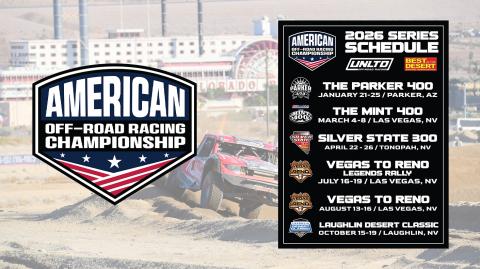
Best in the Desert (BITD) and Unlimited Off-Road Racing (UNLTD) are proud to announce the official 2026 season schedule for the newly unified American Off-Road Racing Championship.
The merger between the two desert racing organizations is designed to unify the sport, streamline competition and deliver more value to racers, sponsors and fans, according to series officials. The 2026 schedule includes events from both the BITD and UNLTD schedules.
The 2026 American Off-Road Racing Championship will kick off with The Parker 400 in Parker, Arizona, January 21-25, a historic season opener known for its challenging terrain along the Colorado River. The five-race season will conclude in October with the Laughlin Desert Classic in Laughlin, Nevada.
"In many ways, the 2026 calendar feels like a homecoming. The band is back together," said BITD CEO Bryan Folks. "The Parker 425, Mint 400, Silver State 300, Vegas to Reno and Laughlin Desert Classic once stood side by side as the shared backbone of American desert racing. For racers, teams and fans who remember that era, seeing these legendary events reunited under one banner brings a sense of nostalgia and continuity, a reminder of BTID's roots and a powerful signal that the future will be stronger alongside UNLTD Off-Road Racing."
"When putting this schedule together, we put all our chips on the table and focused on building the strongest championship calendar possible," said Matt Martelli, UNLTD Off-Road Racing CEO. "We believe a five-race format, using your top four results, gives teams a fair and practical path to competing for a championship. These events were chosen carefully to provide the American Off-Road Racing Championship with key pillars to build the most solid foundation for long-term success."
 MEMBERSHIP LOGIN