
Special Report: Getting CARB Certified

Submitted by jeffreyc on Thu, 07/21/2022 - 09:55


Understanding the ins and outs of the California Air Resources Board certification process is essential for today’s performance parts manufacturers.

No one ever claimed that the performance business was easy, and that’s particularly true during these days of ever-tightening emissions control regulations. Aftermarket parts manufacturers not only service the pure racing market, but also the much larger street performance scene. A key to reaching the widest possible market includes securing emissions certification for parts from the California Air Resources Board (CARB). That CARB certification is the dividing line between a 49-state legal part and a 50-state legal part. 

CARB certification is a complex subject, and one that parts manufacturers have been navigating for years. But it’s worth taking a current read of the lay of the land, particularly with rule changes that have been implemented this year. After all, to say that attaining CARB certification for parts is a major focus of any aftermarket business plan is, frankly, an understatement. 

Gale Banks of Banks Power in Azusa, California, is one of the pioneers in getting aftermarket parts CARB-certified. Banks first worked with CARB in the late 1970s when Pontiac approached him about developing a dealer-installed turbocharger kit for the Sunbird. At the time, Banks said, CARB didn’t yet have a procedure for approving aftermarket parts. He has watched the importance of the CARB Executive Order (EO) grow from the beginning. 

“From a business standpoint, if you don’t have an EO in California for a popular vehicle, that’s 20% of your marketplace,” Banks said. “The population of California is more than the population of Canada.”

At K&N in Riverside, California, obtaining CARB EOs is a constant part of business. “We have a really good relationship with CARB right now,” said Jonathan Fiello, chief engineering officer at K&N. “In terms of total number of Executive Orders, at K&N we lead the way—we have more than any other aftermarket company out there. That’s a combination of K&N and our other brands. 

“Every year is a little different, but in terms of part numbers, on average we typically go through 85–100 part numbers a year. Those part numbers then cover multiple applications,” Fiello continued. “So we get anywhere from 500 in one year all the way up to 2,600 vehicle applications that go along with those 85–100 part numbers. We want the part numbers, so we want to cover as much as we can. In a good year, more than 2,000, on an average year I’m looking at probably 1,200 to 1,500 applications.”

ABCs of CARB

To unpack the complexities of the CARB-certification process, it helps to step back and take a wider view. “There are two governing bodies that oversee emissions in the United States,” said Peter Treydte, director of emissions compliance for SEMA, Diamond Bar, California. “There’s the Environmental Protection Agency (EPA) that oversees the whole country, and in California there’s the California Air Resources Board, which oversees air quality in the state. Because CARB was formed prior to the EPA, CARB has continued to be allowed to set tighter standards than the EPA does for the state of California.”

The Clean Air Act was the federal legislation that set the stage in the 1960s for what was to come. There has been a steady progression of emissions-related requirements for vehicles, running from Positive Crankcase Ventilation (PCV) systems, to catalytic converters, to On-Board Diagnostics systems (OBD). The key issue for aftermarket parts makers is to show that their performance parts do not adversely affect emissions. 

2
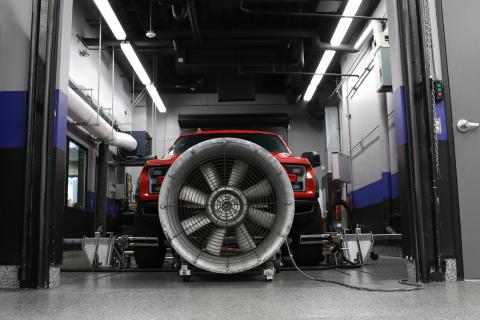
The SEMA Garage emissions lab can help manufacturers attain a SEMA-Certified designation for EPA 49-state emissions compliance, or the data necessary for CARB EO certification. It has the capability to conduct exhaust emissions testing but cannot test for evaporative emissions. “We have relationships with other test facilities that can do that,” said our source at SEMA. 

For California, that proof is expressed in the form of an Executive Order from the California Air Resources Board. “Under EPA law, which is nationwide, you have to have a reasonable basis that the part does not take the car out of its original compliance,” said Daniel Ingber, vice president of government and legal affairs at PRI and SEMA. “Until very recently, the CARB EO was the best way to show that, even for EPA purposes. The EPA recognizes a California EO. Once you have a California EO you are 50-state legal. We advise all of our manufacturers that are making parts that go into the emissions system to get a California EO, generally.”

Complicating matters is that the EPA has recently started interpreting the Clean Air Act in such a way that the very act of converting an emissions-compliant street car into a race-only vehicle could soon be essentially illegal. 

“The RPM Act, which is currently in Congress, would clarify that you could convert a street car into a dedicated race vehicle,” Ingber said. “The racers need to know that without the RPM Act, with the EPA’s increased enforcement, with the EPA going after people who merely sell parts that could go on street vehicles but are made for dedicated racing, this creates a chill in the marketplace. This is going to mean that the parts they want for racing these vehicles may not be available.”

The Process

What goes on inside that Black Box of emissions certification for aftermarket parts? Frank Bohanan has run emissions labs for aftermarket companies and has worked as a consultant on the topic for many companies under his Brighton, Michigan-based GreenSpeed Automotive company. 

“Before you even get the vehicle to the lab, you realistically have to start a dialog with CARB and say, ‘Here’s what I want to do.’ And then they’ll come back and give you a Test Letter,” Bohanan said. “That Test Letter says exactly what you have to do. Sometimes they’ll ask you to test a vehicle that’s hard to get, and you have to negotiate with them to see if you can use a different vehicle instead. It could be something like they want you to test an F-350. Well, you can’t find an F-350, so maybe you counter with an F-250 that’s got the same powertrain and you dial up the weight on the dyno to make it think it’s an F-350. Those are the kind of things you do to make the process a little more user friendly.”

The SEMA Garage has an emissions lab that can help manufacturers attain a SEMA-Certified designation for EPA 49-state emissions compliance, or the necessary data for CARB EO certification. “There are two types of emissions that we typically have to be aware of,” said SEMA’s Treydte. “There are exhaust emissions, and that is what comes out of the tailpipe of the vehicle while it’s running. And then there are evaporative emissions, and that’s what comes off the vehicle when it is not running. Evaporative emissions regulations are only applicable to gasoline vehicles. Diesel vehicles are not subject to evaporative emission regulations. For those two types of emissions there are tests that are necessary to demonstrate emissions compliance in both those areas. At the SEMA Garage we don’t do evaporative testing. We do have relationships with other test facilities that can do that. We do have the capability to do exhaust emissions testing. 

3
Our source at K&N said the company “leads the way” when it comes to the number of EO numbers it has obtained for its various brands. “We have a really good relationship with CARB right now,” he added. Photo courtesy of K&N.

“We have all the necessary certification equipment in our Diamond Bar, California, SEMA Garage,” he continued. “The equipment itself involves a chassis dynamometer with a 48-inch roll that offers good road simulations, and gas analyzers that measure the emissions that are coming out of the tailpipe.

“The required testing will vary depending on the vehicle type and the product type. In general, what we usually do is start with an OBD verification. That involves resetting the OBD system, essentially clearing the system so that all the monitors in the OBD system are incomplete. Then we do mileage accumulation with that vehicle to allow the OBD system to go through all of its processes. The intent of doing that is to demonstrate that the OBD system is not adversely affected by the product,” Treydte added.

“Once that’s complete, we then prep the vehicle for the chassis dyno testing. The prep process involves storing the vehicle in a controlled temperature and humidity environment. We then drain the fuel from the vehicle and put a certification test fuel into the vehicle. Then it goes through a prep process on the dyno. That prep is intended to establish all the operating conditions for the vehicle to normalize it. 

“After that prep is done, the vehicle is kept in the controlled environment for a minimum of 12 hours and a maximum of 36 hours. We call that a ‘soak period.’ Following that soak period, the testing is performed. The first test we typically run is what’s called Federal Test Procedure 75. The FTP-75 includes a cold start. If you can imagine the vehicle, having been stored in the controlled environment, will essentially be at room temperature when it starts that test. That means that the catalytic converter is not up to operating temperature yet. So we’re capturing any emissions that would come out of the engine prior to the catalytic converter being at its operating temperature. That’s part of that FTP process. The FTP-75 is a road simulation—it basically simulates city driving. The way I like to describe it is, it’s as if you get in your car in the morning, you start it up, you pull out of your driveway, and you drive through town, hitting a few stop signs and signals there, a few stops and starts, and you’re driving on city streets where the speeds are nominal. The FTP-75 doesn’t exceed roughly 52 mph. Then it’s as if you went to the donut shop, you parked your vehicle and went in to get a donut for 10 minutes. There’s a 10-minute wait period during two portions of the test. Then you get back in your car and finish your drive to work and park the car. That’s the concept of what the FTP-75 is simulating. It’s all a simulation of city driving,” Treydte said.

“Then we have two other tests that would represent highway driving. Both of those tests can follow directly after the FTP test because they are hot-start tests. Those two tests are called the highway fuel economy test and the US06. And finally, there’s another test that’s often referred to as the air conditioning test. Its official name is the SC03 test, and that test is performed with the air conditioning active in the vehicle. The idea there is that the compressor is going to place additional load on the crankshaft of the engine, which could potentially affect emissions output. The SC03 test is also a simulation of city driving speeds.

4
Certification testing requires the use of very accurate, precise, and costly equipment to measure emissions down to the parts-per-billion level, while particulate emissions are measured down to millionths of a gram. All this is done while using very specific, mandated procedures. Photo courtesy of GreenSpeed Automotive.

“The OBD verification portion of it is probably a one- to two-day process,” Treydte explained. “In some cases, it can be longer than that. The prep takes about a day, then the testing itself takes about a day. We typically indicate it will take about a week’s worth of time to complete a full round of testing.

“Following that test process, we would compile that information into a report. That report is what is used either by the manufacturer of the product for their own internal purposes or could be submitted to CARB in the efforts to obtain a CARB EO.

“A third option is, SEMA is starting its own certification program called SEMA Certified-Emissions (SC-E). We would use that same type of data and that same type of report process to issue our own certification for a product. SEMA Certified-Emissions is intended to specifically meet the requirements of the EPA. One thing that’s distinct between CARB and EPA is CARB offers a program for demonstrating emissions compliance, that’s the CARB EO program. EPA does not. So our purpose in developing the SEMA Certified-Emissions Program is to meet EPA’s requirements in the absence of a program that specifically does so,” Treydte said.

Mistakes and Misconceptions

The CARB EO process has been in place for years, and most aftermarket parts companies have dealt with it at some level. Even so, there are common misconceptions surrounding the process. 

“Manufacturers should have a better understanding or respect for what the OEM catalytic converter achieves,” Treydte said. “The catalytic converter is the primary emissions control device on modern vehicles, and it is doing a significant amount of work to control emissions. There are a lot of assumptions that aftermarket catalytic converters are capable of achieving the same result, and in most cases I have found that that’s not true. Aftermarket catalytic converters, or what people assume to be high-performance catalytic converters, aren’t performing at the same level as the OEM catalyst.

“That initial minute to two minutes of vehicle operation during the FTP-75 is really pretty critical,” he continued. “If your product affects the ability of the catalyst to reach its operating temperature in a negative way, then you could find yourself affecting the results of that FTP-75 test. The other issue is that there are assumptions made that aftermarket, or performance or high-flow catalytic converters, will do just as good a job as the OEM. I have yet to see test data that would support that claim.”

When it comes to enforcement actions against the industry, it’s important to remember that there is liability all up and down the chain—manufacturer, distributor, and retailer. Bohanan cautioned against simply labeling parts and thinking that is sufficient. “I would say probably the biggest single thing is, having a disclaimer that says, ‘Off-road Only’ or ‘Racing Use Only,’ doesn’t mean squat. You can put that all over on everything, but the bottom line is, what did you actually do? Did you actually take steps to ensure that your ‘racing parts’ are only sold to people who are actually racing? Or are you doing the ‘nudge, nudge, wink, wink,’ and if a guy comes in with a car with a license plate, you sell him a set of long-tube headers knowing that he’s going to take his catalytic converters off. And God forbid you should actually do the installation,” Bohanan said. “It really comes down to, you have to make a good faith effort to walk the walk, so to speak.”

Companies can protect themselves from allegations of illegally selling race parts for the street by documenting the sales process, but that also requires taking the whole idea of emissions compliance seriously. 

“It can be everything from taking pictures of the vehicle to show that it’s a race car with a tube frame chassis, to, if selling mail order, having a firewall where you get somebody to check a box that says, ‘Yes, I am only using this for exempted use,’” Bohanan said. “People forget that if you get a car built prior to 1966 you can do pretty much whatever you want to it. It’s not just racing use, it’s racing and motorsports and other exempted uses, which also includes emergency vehicles, and stuff like that. But you have to basically show that they are affirmatively attesting to the fact that they are going to do that. 

“Now, even that doesn’t get you out of the crosshairs, because then it goes to what we call ‘the laugh test,’” Bohanan said. “The laugh test is, there were 50 vehicles in the world that could use this part as a race part, and you’ve sold 5,000 of them. So you had to know, just by virtue of the fact that there aren’t that many legitimate uses out there, you had to know that some of these are ending up on street cars.”

Change In The Air

With tightening emissions standards for new vehicles and a more aggressive environmental outlook by the Biden administration, the motorsports industry will need to adapt to the changing landscape.

“The regulations just changed as of January 1, 2022. They got a lot more specific than they had been for a number of years,” Bohanan said. “Before, you could group a lot of things together and now you can’t. Now you have to really break it down into much smaller pieces.”

Some companies used to be able to get hundreds of part numbers on a single EO, but that’s much harder to do now. That’s ostensibly to make it easier for CARB engineers to go through the applications, Bohanan said. “The other thing is, conveniently, coincidentally, they’re going to start charging for the applications now.” 

5
The emissions testing equipment at the SEMA Garage includes a chassis dynamometer with a 48-inch roll and gas analyzers to measure tailpipe emissions. Typically, it takes about a week to complete a full round of testing. 

If attaining a CARB EO is more difficult than it used to be, it need not always be an adversarial process. K&N has had productive meetings with the California Air Resources Board and has been able to present the industry’s perspective. “I think this is always a very touchy topic, but it’s also a topic people need to be educated about,” Fiello said. “Some people make it out to be way more difficult than it really is, and then there are people who make it out to be so simple, which it’s not either. 

“I had the fortune two weeks ago to tour the new CARB facility, which is literally two miles down the road from us in Riverside,” Fiello said. “We spent two or three hours with them talking about our experience and some of the challenges. One of the biggest challenges we’re facing is just the cost of getting an EO has more than doubled for K&N because of the emissions standards and the testing that’s required. I wanted them to see that because they didn’t realize how expensive it had gotten, and they’re willing to work with us now to try to figure out ways to curb some of those costs. It was a really excellent meeting, and they’re willing to help. They showed us the new facility and all the new test cells that they have for full SHED (sealed housing evaporative determination) tests. It’s an amazing facility.”

SEMA Garage Expands

Helping members navigate the EO (Executive Order) process has long been a mission for SEMA. “A few years ago, SEMA surveyed the members and asked a few questions about emissions compliance. We asked what were the challenges or difficulties that our members were experiencing with emissions compliance,” said Peter Treydte, director of emissions compliance at SEMA. “It really came down to a handful of issues. One was that dealing with CARB was challenging. There was a lot of difficulty in understanding the regulations, and our members indicated they needed a source of information that would help to cut through the red tape. Secondly, our members were concerned that it was difficult to get time in the emissions laboratories to do the testing that was required. A lot of the emissions laboratories had historically been dedicated to OEM work, and that resulted in aftermarket manufacturers finding difficulty getting availability in laboratories. The third thing that kept coming up was the cost of doing testing. Some manufacturers found that when it came time to do the testing, the cost was prohibitive to their business model. So SEMA set about to address those three issues, and that’s what led to the formation of the SEMA Compliance Center.”

SEMA’s Diamond Bar, California, Garage has the necessary equipment for testing as part of the certification process, and SEMA is now adding a second location in Michigan that will also have all the state-of-the-art emissions measuring equipment. The second Garage, at 14655 Jib Street in Plymouth, will hold an open house in August. The lab will be operational sometime around November, “but we will have other services earlier than November, including some ADAS testing capabilities, and a handful of additional systems,” Treydte said. —Steve Statham 

Sources

Banks Power
bankspower.com

GreenSpeed Automotive
fstncln@yahoo.com

K&N Engineering
knfilters.com

SEMA Garage
semagarage.com/services/emissionslab

August 2022
By
Steve Statham

Cummins Announces Jennifer Rumsey As CEO

Submitted by laurap on Wed, 07/20/2022 - 16:48
Jennifer Rumsey, left, and Tom Linebarger 

Columbus, Indiana-based Cummins has announced Jennifer Rumsey, president and chief operating officer (COO), will assume the role of president and chief executive officer (CEO). She replaces CEO Tom Linebarger, who ends his term with the diesel and alternative fuel engine and component manufacturer on August 1.

Rumsey will be the seventh CEO and first woman to lead the company since it was founded in 1919. Linebarger will continue to serve as chairman and executive chairman of the board of directors, working directly with Rumsey on specific initiatives, including the pending acquisition of commercial vehicle aftermarket manufacturer Meritor.

“Jen is a once-in-a-generation talent and the right leader for Cummins at this important time in our history,” said Linebarger.

Since taking on the role of COO in March 2021, Rumsey has overseen Cummins’ global operations. In February, she was elected to the Cummins Board of Directors. She will continue to maintain her seat on the board.

For more information, visit the Cummins announcement here or cummins.com.

July 2022

Off-Road Motorsports Hall Of Fame Announces Class Of 2022

Submitted by laurap on Wed, 07/20/2022 - 13:26
Off-Road Motorsports Hall of Fame Class of 2022
Image courtesy of Off-Road Motorsports Hall of Fame (ORMHOF) 


The Off-Road Motorsports Hall of Fame (ORMHOF) has announced its class of 2022 includes Randy Anderson, Lance Clifford, Vic Curl, Butch Dean, Jim Fricker, Brad Lovell, Eric Solorzano, Scott Taylor, and Mike Thomas.

The ORMHOF Class of 2022 will be celebrated at the Off-Road Motorsports Hall of Fame Induction & Awards Gala presented by 4 Wheel Parts on Sunday, October 30, at the South Point Hotel Casino & Spa in Las Vegas, Nevada.

“We look forward to welcoming the Class of 2022 to the Hall of Fame,” said ORMHOF chairman and inductee Mark McMillin.  

For biographies of the inductees, visit the ORMHOF announcement here. For more information, visit ormhof.org.


July 2022

Advocacy Corner

Submitted by jeffreyc on Tue, 07/19/2022 - 16:58


Tracking legal, legislative, and regulatory developments impacting the racing and performance industry.

PRI race track ambassador Tom Deery and the Washington, DC-based advocacy team work continuously to protect and promote tracks, sanctioning bodies, and motorsports businesses around the nation. This month, we are tracking several initiatives that affect racing, including a new resource to help enthusiasts identify the elected officials that support motorsports; why tracks and sanctioning bodies should host lawmakers; a resource for businesses seeking talented new employees; and more.    

Resource Center: Vote Racing In November 

The Performance Racing Industry (PRI) enhanced Save Our Racecars initiative is aimed at further promoting and protecting one of America’s oldest pastimes and hobbies: motor vehicle racing.  

The program is highlighted by a redesigned website (SaveOurRacecars.com) that streamlines the process for industry professionals, enthusiasts, and fans to join the fight to preserve racing. Included is an all-new “Vote Racing” program to help facilitate voter registration while highlighting pro-racing candidates in the November midterm elections. Visitors will also find template letters, phone scripts, and other resources designed to streamline outreach to lawmakers. 

Critical to the industry’s future—and central to PRI’s advocacy efforts—is the Recognizing the Protection of Motorsports (RPM) Act of 2021 (H.R. 3281/S.2736), which must be enacted into law to protect the right to modify street cars, trucks and motorcycles into dedicated race vehicles. Supported by PRI and SEMA, the RPM Act aims to protect Americans’ right to convert street vehicles into dedicated race cars and the motorsports-parts industry’s ability to sell products that enable racers to compete. 

“SaveOurRacecars.com makes it easy to do your part to protect racing and identify whether your lawmakers in Congress support the RPM Act. With the November midterm election only months away, it’s important that racers and everyone who works in the industry consider whether their member of Congress has supported racing when they cast their vote,” said Eric Snyder, PRI’s Director of Congressional Affairs. “An informed racing community that holds their lawmakers to account is a powerful force in the campaign to pass the RPM Act into law.” 

Visit saveourracecars.com/vote-racing.html for a list of the 150 federal lawmakers and candidates who have either signed on as co-sponsors or expressed support for the RPM Act. 

Congressman’s Formula Drift Visit Highlights Outreach Opportunities

Congressman Frank Pallone (D-NJ)—one of the most important and influential lawmakers in Washington, DC, on the Recognizing the Protection of Motorsports (RPM) Act—showed his support for the motorsports community by attending the recent Formula Drift event at Old Bridge Township Raceway Park in Englishtown, New Jersey.  

Rep. Pallone is Chairman of the US House Energy & Commerce Committee (E&C), which has jurisdiction over the RPM Act. His support is critical to the motorsports industry, and for efforts to pass the bill in 2022.  

The RPM Act (H.R. 3281/S.2736) is bipartisan legislation that would protect the future of racing by clarifying in federal law that it is not illegal to modify and convert a street vehicle into a dedicated race vehicle. The House and Senate must pass the RPM Act by January 3, 2023, in order for it to become law during the 117th session of Congress.  

2
While drivers of autocross and road course vehicles—including the vintage build pictured here—set up their cars in different configurations and horsepower levels, typically they should be steered toward economical, high-quality twin-disc clutch systems.

3

“As Chairman of the Energy & Commerce Committee, Rep. Pallone runs the committee and sets its agenda. His visit to Formula Drift was especially important because he saw, firsthand, the professional drivers that compete in race cars that the EPA currently deems illegal,” Snyder said. “Chairman Pallone understands the importance of the RPM Act to the future of racing and to the thousands of people who make and sell products that are used on the track.” 

PRI encourages businesses and tracks to work with the PRI Government Affairs team to host federal and state lawmakers. Congressional visits are critically important to educate policymakers on racing and the businesses and communities that it supports.  

“It’s important that race tracks educate lawmakers on the important role they play in providing family-friendly entertainment in their communities,” Snyder said. “I can’t think of a better way to do that than to host your members of Congress and state lawmakers at the track so they can see what racing is all about for themselves.”  

If you would like to get to know your members of Congress, the PRI team is ready to help and provide the heavy lifting. PRI will draft an invitation, identify and contact the appropriate lawmakers, and provide a briefing and day-of logistics prior to the event. For additional information, contact Eric Snyder at erics@sema.org. 

For more on the RPM Act and how to contact your federal representatives, visit saveourracecars.com.   

Employers Encouraged To Utilize PRI Career Center  

PRI’s interactive job board, the PRI Career Center, offers PRI Members and the entire racing industry an easy-to-use and highly targeted resource for online employment connections. 

Employers can use the PRI Career Center to reach qualified candidates. PRI Members can post open jobs, search for suitable candidates based on the specific job criteria, find online reports for job activity statistics, and create an online resume agent to email qualified candidates daily—all at no cost.

Employers that are not PRI Members can also use the service—and access a directory of automotive motorsports professionals—for a nominal fee. Over 1,600 searchable resumes were available at press time, with about 350 average views per job listing.  

“The PRI Career Center allows job seekers and employers to access a collection of job opportunities focused solely on the racing industry. We’re proud to offer this service for motorsports businesses now more than ever as companies work to find and retain quality employees,” said Dr. Jamie Meyer, PRI President. “The PRI Career Center is the best, most effective way to ensure you get candidates that align with the passion and excitement found only through motorsports.”  

There are also several add-on options for employers, including the popular single 30-day online job posting package, which includes full resume search access and automotive career network distribution. 

Additional resources include branding solutions, automated bulk posting options, employer resources such as articles and videos on government compliance, a look at “the candidate experience,” and tips on how to attract top talent. Job posting enhancements are also available, including featured jobs, job posting videos, and social media recruiting. Employers can also distinguish themselves with a Featured Employer brand profile page, banner ad, and enhanced job postings. 

For more information, including how to register for the PRI Career Center and search for jobs, visit jobs.performanceracing.com.  

Automotive Specialty-Equipment Sales Rise To $50.9 Billion 

Sales of specialty-equipment parts reached a new high in 2021, increasing to $50.9 billion in retail sales for the first time in history—up from $47.9 billion in 2020.  

The finding comes from the new “2022 SEMA Market Report,” which is available for download at sema.org/research and provides the automotive aftermarket industry with a comprehensive review of the specialty-equipment market in 2021. The report includes new data on the US market size, consumer profiling, industry trends, and changes in the vehicle population.  

SEMA estimates that the growth was driven by strong consumer interest in working on their car or truck, as more than 80% of specialty-equipment consumers reported spending as much, if not more, time working on their personal vehicles as they did during 2020.  

“The 2022 SEMA Market Report can help member companies identify key areas of interest for consumers, and where the most money was spent on parts in 2021,” said SEMA Director of Market Research Gavin Knapp. “As our biggest research report of the year, this is a must-read for any business owner who wants to make strategic, data-driven decisions.”  

Restrictions on in-person shopping eased in 2021, prompting consumers to become more comfortable going back into stores to buy parts. As a result, the split of in-store versus online sales in 2021 was roughly 50/50—versus 54% online in 2020, and 45% online in 2019. This normalization is expected to continue in 2022.  

Pickup trucks remain the single biggest segment in the specialty-equipment parts market. An estimated 13.6 million pickups were modified by consumers in 2021, accounting for a combined 31% of specialty-equipment parts sales.  

Ongoing supply chain issues are also a concern in 2022. More than 90% of specialty-equipment manufacturers, distributors, and retailers feel that supply-chain-related challenges have impacted their business. This, in turn, is softening expectations regarding 2022 sales. 

For more information, visit sema.org/research.

August 2022
By
Laura Pitts

PRI Education: Race Car Clutch Selection

Submitted by jeffreyc on Tue, 07/19/2022 - 16:55

When upgrading to a performance clutch, the most important factors to consider are the intended use of the vehicle and the racer’s driving style. You should also take into account the vehicle’s weight, horsepower, and torque numbers. 

Choosing the optimal part can be a daunting task, but this guide provides racers with the knowledge they need to make the right purchase the first time around.

Selecting the right clutch for your build can be challenging. With so many clutch options on the market today, it can be tough to know which clutch is the best for your race car and driving style. Clutches aren’t a one-size-fits-all product, and as such, work best when appropriately paired with the vehicle’s intended use.

To help consumers make an informed decision and get the most out of their three-pedal vehicle, we put together a guide to take some of the guesswork out of what could be a daunting task. 

Types Of Clutches

The most significant differences in clutches are the type of friction disc material and the number of discs used. Depending on the application and horsepower numbers, various clutch disc materials can be used to handle different power outputs, absorb more heat, and take the abuse thrown at them. The clutch disc is also responsible for delivering a smooth application of power when the clutch is transitioning from disengaged to engaged.

The main types of friction materials used in today’s performance clutches include:

Organic: This material is often used for daily driving and stock/OEM replacements for smooth engagement and longevity.

Heavy-Duty Organic: This material is ideal for most performance applications and heavy-duty uses, such as autocross and road racing categories. The disc can typically engage more smoothly while handling higher temperatures with this premium material. 

Segmented Friction Configuration: This option uses a segmented design to increase pressure per square inch. The design, in conjunction with organic materials, offers great on- and off-track performance, making it an ideal combination for street/strip and street/track applications. 

Ceramic/Metallic: This material is ideal for most racing applications—including drag racing, or big power off-road racing vehicles—as it is designed for repeated clutch engagements and high heat. 

Single or Dual-Disc Clutches?

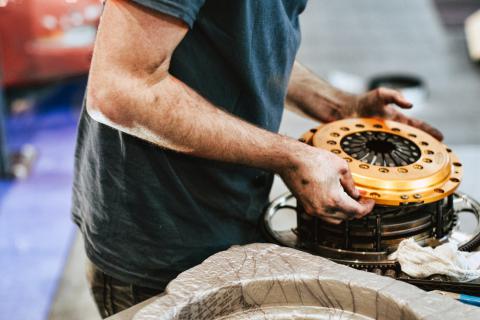
Dual-disc clutches handle more power. As their name implies, dual-disc clutches use two discs instead of one. The additional disc allows them to have a significantly higher torque rating, which makes dual-discs attractive for significantly modified diesel trucks, sports cars, drag race cars, or other vehicles with major torque and horsepower.

2
Dual disc clutches allow for a higher torque rating than a single disc clutch; it’s important to note, however, that this significant increase in torque load ratings can sometimes come at the expense of drivability. 

There are some characteristics of dual-disc clutches to consider before opting for one, however. The significant increase in torque load ratings can sometimes come at the cost of drivability. Smaller dual-disc clutches have a more “on-or-off” feel, making them “grabbier” and more challenging to use. Feathering the clutch on race-style dual-discs can be more difficult, and smoothly driving in heavy traffic or taking off from stops is almost impossible. 

This is why some manufacturers employ designs meant to reduce drawbacks, making dual-disc clutches a suitable option for race vehicles that also drive on the street. 

How To Find The Right Clutch For Your Application

Many motorsports enthusiasts opt for three-pedal cars for a variety of racing disciplines, and having the correct clutch to match the vehicle’s intended use makes all the difference. This clutch guide is designed to help determine clutch selection for manual transmission motorsports and what to look for in a clutch:

Stock Replacement: Most single-disc, entry-level clutch kits in this category feature high-quality friction materials ideal for applications with stock engines or mild power increases from bolt-on modifications. It provides much-needed increased holding capacity while still allowing light pedal effort and smooth engagement. 

Off-Roading: For truck and off-road applications—or any application with added weight or mild performance modifications—look for products that offer superb holding power and a light pedal feel, such as full facing discs and pressure plates with centrifugal weights. Typically, weight is the enemy in racing, but in this category, the added weight of a high inertia billet steel flywheel can offer more resistance to stalling at idle and can keep the engine running at lower rpm’s.

3
While drivers of autocross and road course vehicles—including the vintage build pictured here—set up their cars in different configurations and horsepower levels, typically they should be steered toward economical, high-quality twin-disc clutch systems.

Street/Strip: If driving to and from the race track is your goal, look for a pressure plate and disc combination that offers ultimate holding power and performance without sacrificing pedal effort and driver control. 

Circle Track: In circle track—and other applications where weight savings is key—look for a single-disc clutch specifically designed to offer lightweight, low-inertia performance and reduce engine rotating mass. One example is the Light Metal Clutch by Centerforce, which features pressure plates machined from high-strength aircraft-grade billet aluminum with a unique heat-treated replaceable friction surface.

Road Course/Autocross: Autocross and road course racers build their vehicles in different configurations and horsepower levels, but whether the build is wild or mild, many autocross enthusiasts succeed with economical, high-quality twin-disc clutch systems. Look for discs that utilize solid hubs to reduce the rotational weight on the input shaft for quick and clean shifts, making a significant difference on the autocross track. 

Drag Racing: Drag racers who make big power need the best holding capacity to transfer power to the ground. Not to mention, drag car components need to handle the high temperatures caused by the repeated high-power cycles. This is why a premium, dual-disc clutch system is recommended for drag racing applications. There are a few different options in this category, but systems typically feature a pair of segmented discs with premium, organic friction material capable of holding up to 1,600 lbs.-ft. of torque. Many options can still retain a soft pedal feel and remain streetable. 

While this guide should help you consider your available options, be sure to consult with your manufacturer or builder to find what’s best for your race vehicle.

Trent McGee is the marketing manager at Centerforce Clutches in Prescott, Arizona, and has been a freelance contributor to various automotive enthusiast publications for more than 25 years. Though his interests include anything that runs on gas, he is an avid off-road enthusiast and spends much of his time exploring backcountry trails all over the Southwest.

August 2022
By
Trent McGee

PRI Motorsports Retail Business Survey: Turning Away Business

Submitted by jeffreyc on Tue, 07/19/2022 - 16:49

“Parts issues are huge,” said Dan Nudelman of Dan’s Machine Shop in Livermore, California. Saying “no” to a customer isn’t easy, but, as he explained, “I’m sitting on 15 engines, and I have to tell people ‘no’ because I don’t have the room and can’t produce it out quick enough.”

Sometimes it’s better to be selective than all-inclusive. Here, several motorsports entrepreneurs explain when and why they turn down certain jobs—and how to do so while keeping their reputations intact

The goal of any entrepreneur, especially in the racing industry, is to build a business so successful that it creates high demand for a specific product or craftsmanship.

The last 12 months, however, have included labor shortages and supply chain interruptions that have led some companies in racing to actually turn away business.

In the recent PRI Motorsports Retail Business Survey, when asked their best business decision the past 12 months, several respondents said they turned away work rather than accept it.

PRI Magazine contacted several racing businesses to ask the reasons why, in a challenging economic time, they are turning away business and being more selective with the jobs they accept.

s1

s2

Which Jobs to Accept

When asked about which jobs or type of work to accept, Dan Nudelman of Dan’s Machine Shop in Livermore, California, cited “supply and demand.” Nudelman has been running his machine shop for the past 30 years and started this line of work with his father when he was 13. Today, he specializes in the “old school muscle cars,” including Mustangs, Camaros, and Corvettes. He said, “Knowing what is not out here and what is and how it changes every day, it’s hard. 

“Like everything, the parts issues are huge. I have to be forward with these guys. I don’t know how long sometimes it can take. I just had one of my customers come in a while ago who said he can’t find a part of a 454. I say, ‘Welcome to my world.’

“I’ve been in this business 54 years, and I’ve never seen it like this,” he continued. “It’s frustrating. It’s hard when you have to bounce from job to job. My jobs are small. I’m just a one-man player. I had another guy, but COVID-19 took him out, and I haven’t been able to recoup another person. I’m the teardown guy, the cleaner guy, the machine guy, the assembly guy. I’m sitting on 15 engines, and I have to tell people ‘no’ because I don’t have the room and can’t produce it out quick enough.

“I’m just being very cautious and careful. If I get these engines out, then I can move forward,” Nudelman added.

Steve Morris runs Steve Morris Engines in Muskegon, Michigan. Morris has a larger operation with seven employees and describes his business as “a busy shop with lots of work.

“We’ve developed a very good niche field of boosted engines only,” he said. “Ninety-nine percent of everything we do is boosted. If it’s not in the boosted market, then it is something we would turn away. We wouldn’t have time to do it.

“The other thing is, if it is so far out of our normal niche—say if somebody wants a 2,000 hp AMC 360—I can make it happen, but they will have to wait for it, and that’s not our normal deal. We would probably have to turn away that thing, too.”

Morris acknowledged the supply chain challenges have affected his business. “We are currently waiting on parts and have some 20-odd jobs waiting on parts to finish.”

Roger Williams runs Williams Precision Engines in St. Paul, Indiana, and has been machining engines for 30 years. Williams has two employees, plus himself. He discovered a solution to the conundrum was to align himself with a professional tractor pulling team and devote most of his time to that operation.

2
“Parts issues are huge,” said Dan Nudelman of Dan’s Machine Shop in Livermore, California. Saying “no” to a customer isn’t easy, but, as he explained, “I’m sitting on 15 engines, and I have to tell people ‘no’ because I don’t have the room and can’t produce it out quick enough.”

“Over the last number of months, parts availability has become the biggest issue,” Williams said. “I’m not even taking on any new assembly jobs because I can’t tell a customer I will have his engine together. The jobs I’m taking on are more freshen-ups and possibly easier-to-get-parts types. It’s hard to make a living when you can’t get the parts or tell the customer a date. The piston companies are telling you eight to 10 weeks, and it makes it a little rough to do anything.

“I recently started building engines for a pulling team. They supply most of the parts, but I have 10 big Brad Anderson blown Hemis that I’m taking care of for those guys, which is a multi-engine tractor team.

“It is definitely making us change our business outlook,” he continued about the parts shortages. “It used to be somebody would call me up and I would say, ‘Sure, I’ll put an engine together,’ without thinking much about it.

“The last new engine I built, it took me three days just to find the connecting rods. I can’t charge my customer three days for me hunting and calling trying to find connecting rods. It has become unprofitable to build engines for them,” Williams said.

Adam Bolyard has been involved in Adam Bolyard Racing for more than 10 years in Franklin, Indiana, and is the sole proprietor of his shop. He bases most of his business on personal reputation.

“Normally, I decide on which ones to accept based on personal relationships,” Bolyard said. “If I know people and have done business with them in the past, that is my first priority. If it is for people that I know and like and are pleasant to work with, I take care of them even if I have to go above and beyond on my schedule to make that happen.

“I also try to do more higher-end stuff, so the more exotic or challenging, I like to take those projects on,” Bolyard added.

When to Decline a Job

Nudelman bases his decision to decline a job by the customer’s budget. “There are a lot of dreamers,” he observed. “The Internet can be your best friend or your worst enemy. They see this stuff that is sold online and want people to compete, but I can’t compete with Jasper. We do custom motors, restorations. I do everything from Mercedes to 1970 Mustangs and things like that. I can’t do it for five grand, and you have to be careful with what you buy. And who is buying this?

“I had a mom, dad, and 16-year-old in here the other day. Dad asked for a true 500-horsepower small block, and I said, ‘$15,000 to $18,000.’

“He was like, ‘OK.’

“I said, ‘I won’t do it. He’ll kill himself.’ Dad said he would let him drive a Corvette because it doesn’t put out as much horsepower. 

3
Supply chain issues have impacted Steve Morris Engines of Muskegon, Michigan. “We are currently waiting on parts and have some 20-odd jobs waiting on parts to finish,” said Morris (not pictured).

“I have to be careful. I’m a father. The last thing I want on my conscience is somebody getting hurt by something I built,” Nudelman added.

Morris determines his decision based on the engine style, which must be boosted. “It also has to be in the engine platform that we do,” he explained. “Third would be price. Sometimes we end up turning away things because we have a high-price threshold. We do high-quality work, we stand behind our work, this is what it costs, and sometimes people aren’t willing to pay that. Sometimes, it weans people out from that.”

Profitability is what determines what Bolyard will accept or reject. “If we can’t make money on it, then it’s not interesting. It really has to be something you are really passionate about as well. I have a TQ midget to run, and nobody manufactures headers anymore except for Schoenfeld. I’m trying to fix that and produce bigger numbers on the dyno. I’m doing that right now, and I’m trying to figure it out and hope to sell some.”

Preserving Customer Relationships

Telling a customer the reasons for declining a job may be awkward, but Nudelman explained his approach. “I have to be honest and say, ‘I don’t have the time unless you want to wait. I can’t do what you want, so I have to be honest. If you are looking for a rebuild with Edelbrock heads and all these pieces that add up, if I can’t make a profit on it, I can’t do it.’ It’s being straightforward and honest. I’ll tell them, ‘If you find something on the Internet, that might be the way to go.’”

“We can be super nice about it, and if it is not in our wheelhouse, in the normal threshold of what we do, I just tell them that,” added Morris. “If somebody wants me to do a normally aspirated Olds 455 for his 1970 442, a stock rebuild, I’m sorry, that’s just not in our wheelhouse. If we did do that, it would be very expensive because that is not the platform that we do,” again, pointing to his main niche, boosted engines only, 1,000 hp and above.

4
In addition to his race chassis work, Adam Bolyard is developing headers for his three-quarter midget. “I’m trying to produce bigger numbers on the dyno and hope to sell some,” he said.

However, Williams said, “So far, that hasn’t been an issue because they understand. Most of the people who are interested in building an engine of this caliber are fairly professional themselves. They know we are all facing these problems in every industry. I haven’t had any grief from them. I just tell them it’s unprofitable to do it. 

“I’m just not accepting any new jobs at this time,” he continued, but he added, “check back later. If they want me to do the machine work and they put them together, that’s fine. But I’m not just doing the assemblies.”

Bolyard admitted, “Normally, you can tell pretty early in the conversation or process if you want to take on a job. If I don’t want it, maybe it’s not profitable, or it’s for a customer who is difficult to deal with, then I price them out. I price them so high you know they will turn it down, and then you kindly send them on their way.

“I like to deal in higher-end clientele,” he continued. “You get better classes of people who don’t bark at you about price. I’m pretty expensive, my rates are pretty high, but I do neat work and the quality is there. Higher-end customers want the quality.

“It’s not about the money, it’s about the product,” he added.

Sharing Advice

Our sources offered their advice to other racing businesses about how to politely decline work.

“Be honest,” said Morris. “If it’s not in your wheelhouse, it’s not in your wheelhouse. I’m a big proponent of, ‘This is what we do.’ I try to stay in my lane as much as possible. I don’t do mod motors because other people do a great job with it, and I don’t have the manpower or resources to do it and recommend they go somewhere else. I send the work that they do away to them, and they should send the work they can’t do to us when it fits our platform.”

“Everybody has to look at their own individual situation,” advised Williams. “You have to do what you have to do to make a living. Everybody knows the cost of living is going up. Everything is going up, so you have to make as much money as you can. 

“The Saturday night sportsman racers are generally not your best customer to make money because they are scrounging around for every dime that they can. My outlook is, do a really good job and go for a pro series team with a big budget. If you do a real good job and get picked up by somebody like I did, you can make your living that way.

“I found a pro team and work on a salary. I don’t have to spend all day searching for stuff,” concluded Williams.

“Don’t burn any bridges,” said Bolyard. “Always be professional in how you communicate or decline a certain customer or project. Sometimes, you can price it right to where it won’t make sense. There are ways to decline someone without insulting them.”

Sources

Adam Bolyard Racing
instagram.com/bolyardac/

Dan’s Machine Shop
dansenginebuilding.com

Steve Morris Engines
stevemorrisengines.com

Williams Precision Engines
wpespeedshop.com

August 2022
By
Bruce Martin

Member Check-In: SRO Motorsports Group America

Submitted by jeffreyc on Tue, 07/19/2022 - 16:44

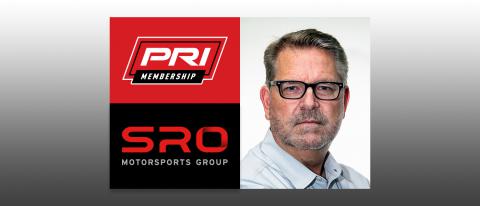
SRO Motorsports Group America joined PRI because “it’s a connection with the core of motorsport in North America,” said President and CEO Greg Gill, at left.

To secure racing’s future, SRO Motorsports Group America President and CEO Greg Gill believes the industry must “start talking to a broader group of people than just ourselves.”

Some racing series make do with a mere handful of manufacturer participants, engine suppliers, or title sponsors. That’s why it’s dizzying to contemplate the welter of corporate partners that SRO Motorsports Group has been managing for the past three decades. Founded in 1995 by Stephane Ratel, SRO Motorsports Group is recognized as the global leader in presenting GT events on road courses, contested by a multitude of household-name automotive brands. In 2022, GT races will be staged under SRO tutelage on five continents, led by the umbrella group’s signature event, the TotalEnergies 24 Hours of Spa in Belgium.

In addition to a heavy overseas presence, buttressed by operations at the SRO Race Centre at Circuit Paul Ricard in France, SRO has a very formidable footprint in North America, led from its headquarters in Austin, Texas. SRO America’s new GT America series, backed by Amazon World Services, debuted last year with single-driver sprints in a pair of timed 40-minute races at each event weekend, with GT3, GT2, and GT4 classes eligible. No fewer than 14 makes of cars compete. Nearly all the same makes also take part in SRO America’s Pirelli GT4 America championship, which adds Saleen and, most recently, the new Lotus Emira GT4 as legal cars, running in Pro-Am, Silver, and Am categories during race weekends.

That’s a ton of competitors, manufacturers, and sponsors to keep happy, yet SRO Motorsports has been doing it for decades with success. “It’s pretty simple,” SRO Motorsports Group America President and CEO Greg Gill explained. “Pirelli is the spec tire for all of our racing series, and in terms of balancing the interests of all of the OEMs, it really comes down to respecting what their platforms are. And, by the same token, keeping it fair. It’s something of a curse word to some people, but it’s about balance of performance. In our case, it’s not only balancing the vehicles through annual testing, but also looking at the facilities where we race and finding the commonalities of those facilities around the world. We have an alphanumerical letter-based system of track rankings. We can use the parameters from those tracks with the vehicle manufacturers to evaluate power-to-weight ratio and the performance dynamics of the vehicle. 

2
According to Greg Gill, competitors often move to SRO America after training with the Skip Barber Racing School, or they come from single-make racing series such as the Lamborghini Super Trofeo, Porsche Cup, or Ferrari Challenge. “We are customer racing, and we focus on that, and we’re in some ways a 30-year overnight sensation,” he said.

“It’s a well-measured system,” he added. “If you measure our GT classes, the top five to top 10 are within a tenth of a second in terms of lap times. That’s what it comes down to. It comes down to the drivers.”

Some of SRO America’s precise evaluation protocols are proprietary, although Gill described the basics. It’s common for SRO America to monitor some 20 channels of vehicle data, in conjunction with the manufacturers, while coming up with its balance-of-performance parameters. “There are literally tens of thousands of data points that you can analyze,” he said. “We’re working with onboard computers and system diagnostics to learn what is the best outcome we can get for a particular track or a particular manufacturer. This vehicle may need more air coming into the engine, another vehicle may need less air in terms of downforce, and another vehicle may need a little more weight, or a little less. It’s a balancing act, quite literally.”

SRO America has a broad presence in road racing, mirroring its parent company’s international footprint. In the United States, the group partners with the United States Auto Club (USAC). According to Gill, competitors often move to SRO America after training with another longtime ally, the Skip Barber Racing School, or transfer out of single-make racing series such as the Lamborghini Super Trofeo, Porsche Carrera Cup, or Ferrari Challenge. Manufacturers in the series run from A (Acura) to T (Toyota), with exotics such as the Bentley Continental GT3 and X-bow track cars from KTM mixed in. The GT4 America series adds Ginetta, McLaren, and Saleen as producers.

“We are customer racing, and we focus on that, and we’re in some ways a 30-year overnight sensation,” Gill said. “We are not pursuing a factory-funded program, which can go in and out of vogue over time. It can change very quickly. We take a view that what’s in the best interest of our customer is to have a stable, predictable area. We saw that in GT4 at Sonoma, where General Motors announced it will now have a fully focused customer-racing program.”

SRO Motorsports’ formula for continued success is simple: Know your customer and make the customer your focus. Look at the customer’s goals: Is he or she a beginner, interested in moving up GT-wise, or does the customer have a specific goal of racing 24 hours at Daytona or Le Mans? “We try to learn that goal and focus on it,” Gill said, noting that SRO can already provide a 24-hour tableau for racers at Spa or 12 hours at Bathurst in Australia. “A customer may want to get involved because they think there’s a branding message and a tie-in to the paddock that’s extremely important to them. You just have to understand what the customer’s ultimate goal is.”

Making that sort of connection with the greater motorsports world propelled SRO America to join PRI. “It’s a connection with the core of motorsport in North America,” Gill explained. Looking forward, Gill sees SRO’s most immediate change as the return of spectators to the post-pandemic paddock. “There’s a whole new group of people that we have to entertain and educate, that doesn’t see this world the way we did even a few years ago. 

“The average consumer has no knowledge of saving our race cars,” he said. “What we really want to do about developing those people’s minds about the bigger picture of transportation and mobility—which may include alt fuel—means that we’re going to have to expand our industry a lot more. We have to start talking to a broader group of people than just ourselves.”

August 2022
By
Jim Donnelly

Edelbrock Group Announces New VP Of Human Resources 

Submitted by laurap on Tue, 07/19/2022 - 16:34
Sondra Dowdell, Edelbrock Group logo


Sondra Dowdell has joined Olive Branch, Mississippi-based Edelbrock Group as the vice president of Human Resources. Edelbrock Group is the parent company of automotive brands, including Edelbrock, COMP Cams, Fuel Air Spark Technology (FAST), TCI Automotive, and Russell. 

Prior, Dowdell served as the Senior HR Business Partner for Memphis, Tennessee-based Tru Green, and before that, as an HR Business Partner with National BevBak in Gainesville, Georgia. 

She earned her bachelor’s degree in Chemical Engineering from the University of Florida and her master’s degree in Business Administration from the University of Memphis.

For more information, visit edelbrockgroup.com. 

July 2022

Establishing Roots In Indiana

Submitted by jeffreyc on Tue, 07/19/2022 - 16:28


PRI strengthens its commitment to the motorsports industry with the grand opening of its 42,500-square-foot Membership headquarters in the Racing Capital of the World. 

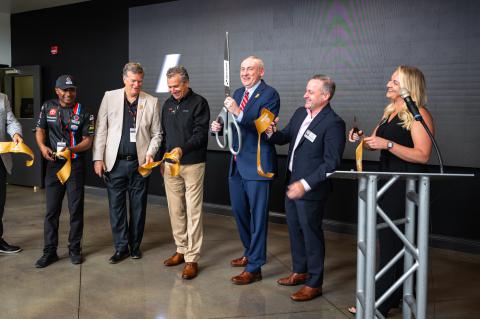
Giant scissors sliced through ribbon on May 26 to officially open the Performance Racing Industry (PRI) Membership headquarters. 

“This space is to help everybody in the industry do business,” said Mike Kirks, PRI’s membership benefits manager. “Big business.” 

Just days before the 106th running of the Indianapolis 500, racers, industry leaders, and the media joined hundreds of motorsports professionals for the public christening of the new PRI Membership headquarters building. The heavily renovated member-focused facility is among the many new attractions in the small town of Speedway, located Northwest of Indianapolis proper. 

2
PRI headquarters exterior.

PRI’s headquarters building is on Speedway’s revitalized Main Street, just a few blocks from the Indianapolis Motor Speedway. The 42,500-square-foot facility is situated among neighbors Indy Racing Experience and the Dallara factory. The Bell Helmet Pro Shop and Bryan Herta Autosport are even closer, as they’re co-located in the PRI building. 

“We’re excited to provide the racing industry with a place to call home,” said Dr. Jamie Meyer, PRI president. “For years, the industry has gathered at the PRI Trade Show to conduct business and celebrate all things motorsports. For the first time, the racing industry has a dedicated place where they can connect all year long, not just for three days in December.”

3
Speed painter Justin Patten.

NHRA racer, team owner, and PRI Founding Member Antron Brown added, “This building brings PRI Membership to life, and I think this space will strengthen our advocacy efforts. It gives us a physical presence.” 

Brown expects the facility to help his new NHRA team grow by tapping into the collective wisdom of the PRI community. “I need the knowledge that PRI is assembling in this space,” referencing the fact that key staff of both PRI (including the PRI Membership Team) and SEMA are now located on-site at the building.

4
Guests enjoying the opening reception.

“We hope our members will use this facility when they come to the upcoming Brickyard 400 and US Nationals, and certainly 2023’s Indy 500,” added PRI General Manager Jim Liaw.

Large conference rooms equipped with the latest AV and connectivity gear make the PRI headquarters well-suited to conduct business. Meyer and Kirks both added that the building is ideal for PRI members to use for team training, client presentations, board meetings, and media events. “We are here for our industry,” Meyer said.

5
DJ Mike entertaining the crowd.

Added Kirks: “We also saw an opportunity to be part of this neighborhood, and we knew it was the right thing to do.” There are plans for the PRI headquarters to host local cruise-ins, car shows, and community activities. 

Among the many distinguished grand opening attendees was Edelbrock Group Chief Commercial Officer Chris Douglas, a member of PRI’s Advisory Committee. “I became a PRI Founding Member to help bring about a place like this. This place, and the things that will happen here, will help our industry thrive for decades,” Douglas said. “With [Edelbrock’s] status as a Founding Member, we can support the community that supports us, and we’ll be using this space for meetings and events in the near future.” 

Douglas affirmed his personal and corporate support, too, for the RPM Act of 2021 (H.R. 3281/S.2736), a bipartisan bill designed to protect Americans’ right to convert street vehicles into dedicated race cars, as well as the motorsports-parts industry’s ability to sell products that allow racers to compete. “Our company mission is to help people achieve their dreams, but this can only happen if the ecosystem is healthy,” he explained, referencing the reality of government interference in motorsports. 

6
Greg Fornelli of SRI Performance and Stock Car Steel & Aluminum.

“I’ve watched PRI grow and grow, and this is an innovative next step to help members and solidify the fact that PRI is more than just a trade show,” commented Greg Fornelli of SRI Performance and Stock Car Steel & Aluminum. “As a Founding Member, I wanted to be a part of something like this. PRI did this space right.”

What Fornelli and others saw was just the first phase of the PRI headquarters build-out. Phase II installations will include the completion of a members’ lounge, multiple podcast studios, and a photography/video stage. Members will be able to reserve these resources to further their marketing and content creation goals. 

Contact the PRI Membership team with inquiries about PRI headquarters at membership@performanceracing.com. Access to the facility is open to all members, so if you’re not on the PRI Membership roster already, join now at performanceracing.com/membership.

July 2022
By
Rex Roy

Custom Combinations

Submitted by jeffreyc on Tue, 07/19/2022 - 16:25


Oil system component manufacturers work painstakingly to provide tailor-made solutions to complex lubrication scenarios.

Amid all the bromides and sloganeering directed at the world of racing engines, this much is an unshakable truth: Inadequate oiling, for any reason, is going to invariably result in a dead engine and a lost race. Keeping the engine sated with slippery stuff is paramount. Doing so in an environment where physics, or simply rules, restrict the available room to package an engine’s oiling system is a crucial challenge. 

Fortunately, the racing industry is well-populated with manufacturers who have been thinking about customized lubrication applications for a long time. The variety of components they offer to provide proper oiling in a tight space, or a constricted regulatory environment, is impressively broad and effective.

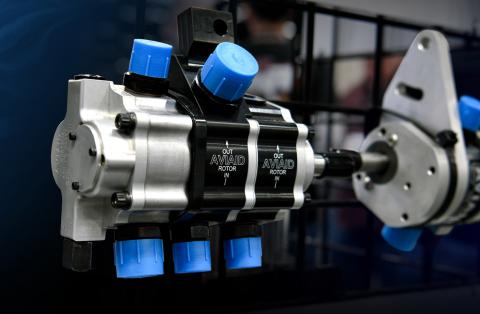
“We used to be more involved in custom oil pans, but now, it seems, we’re mostly advising other people on how to build their own because everybody seems to have their own CNC machines,” said John Schwarz of AVIAID, Chatsworth, California. “Typically, engine builders, chassis builders, people who are trying to package a dry-sump system into a vehicle are already making a lot of their own parts. What we do are basic lubrication system components.”

AVIAID’s entrée into customization is actually a very basic part, called a builder core, which is an unfinished oil pan stamping that’s 4.5 inches deep at the bottom, just like a small block Chevrolet V8’s wet sump. “If you’re building a dry-sump pan, with typically three or four different pickups, right or left side, the pan core becomes the framework that we build our features into to accomplish our goal,” Schwarz said. “Nobody runs wet sump unless they’re required to. Basically, someone will tell us where they have suspension components, crossmembers, transaxles; and the core is minimum displacement, as shallow and narrow as can be, and we add from there.”

2
AVIAID builds wet- and dry-sump oil pans, oil pumps, and other oiling solutions for applications that run the gamut from turbocharged four-cylinder engines to popular Ford and Chevy V8s (including the LS engines) to “a 5,500- to 6,000-horsepower John Deere engine with 5 pounds of turbo boost for tractor pulling,” said our source.

AVIAID currently offers a series of wet-sump oil pumps utilizing both belt and camshaft drive, with a variety of diameters and flow capabilities. AVIAID’s wet-sump pans are designed from the start for road racing applications, with the appropriate pickup locations for race cars turning left and right. The pans are fabricated from steel and cadmium plated. One application covers American Motors engines, in addition to the more common Chevrolet and Ford parts. ARP fasteners and Fel-Pro gaskets are standard with AVIAID installations. 

Schwarz said that most US customers are using Chevrolet or Ford engines, which eliminates much of the dimensional guesswork. AVIAID also does extensive work with import-sourced engines and will have customers request an oiling solution for a turbocharged four-cylinder engine that has to fit tightly into a specific chassis space. “We also do a 5,500- to 6,000-horsepower John Deere engine with 5 pounds of turbo boost for tractor pulling. When I look at my catalog, I have 40 different ways to mount an oil pump.”

Working with a Legend

Melling Engine Parts of Jackson, Michigan, doesn’t offer custom-designed oiling systems per se, but Mike Osterhaus said that research with longtime customers can result in the kind of innovation that leads to custom packaging, or performance parameters. 

“One such example is our 10294 low-volume performance LS oil pump. The idea for that oil pump originated from a conversation at the SEMA Show a number of years ago with Richard Maskin, the founder of Dart Machinery,” Osterhaus recalled. “At that time, Richard was developing Dart’s LS Next engine and needed a solution to an oiling issue he encountered. The LS Next design incorporated priority main oiling that supplied oil to the main bearings first before the camshaft, lifters, and valvetrain. In early testing, Richard found that the flow rate of the original Gen III oil pump created high oil pressure across the engine’s operating range. He had installed a variety of different pressure relief springs, but the oil pressure was still too high, and he needed a solution. The answer was in reducing the amount of oil flow provided by the pump.”

3
Melling’s 10294 low-volume performance LS oil pump was the result of a collaboration with Dart Machinery, which was experiencing high oil pressure when developing its LS Next engine design. “The answer was in reducing the amount of oil flow provided by the pump,” said a source.

The LS oil pump is designed for use with performance aftermarket Chevrolet LS engine blocks with priority main oiling, and without variable valve timing or Displacement on Demand features. With 15% lower volume than stock, the high-pressure LS pump has a cast-aluminum housing, an anodized hard-coated body with phosphate-coated cover, and it utilizes standard steel rotors. A high-pressure spring is optional. The pump uses a 7/8th-inch bolt-on screen. 

Melling built up a series of prototype oiling assemblies with stepped drops in oil flow for dyno testing. “We found that reducing the flow by 15% was the best solution,” Osterhaus explained. “With validation testing completed, we then moved to the production phase and added the pump to our performance oil pump product line. The 10294 low-volume performance oil pump comes with all the features that make the Melling Performance wet-sump oil pumps best in class. Features include a hard-coat-anodized housing, coated cast iron cover plate, exclusive rotor design, and optional springs to increase the pump’s original bypass pressure setting by 10 psi and 25 psi.”

pf1

pf2

pf3

pf4

pf5

pf6

pf7

pf8

pf9

pf10

pf11

Demanding Environment

Quantifying oil flow in customized applications was the same sort of research undertaken at Schumann’s Sales & Service of Blue Grass, Iowa, which currently has 13 patents applied for, pending, or issued for designing oiling solutions. Company founder Verne Schumann—who calls himself a tribologist, after the physical study of interactive surfaces in motion—said that much of his research and product development is aimed at race classes that require wet-sump systems due to rules.

“The most demanding oil-pump application in the country is 305 sprint cars because of their rpm potential, plus the fact that they’re mostly fuel injected and pushing out almost 2 horsepower per cubic inch these days,” Schumann said. “With promoter’s restrictions, such as flat tappet camshafts or compression ratios, they’re doing it the hard way. It is the most demanding because you have to use 305 bore and stroke and the 42-pound crankshaft. The oiling system on a 305 is just as demanding as a 360 or a 410 Outlaw motor.”

4
The custom oil pumps from Peterson Fluid Systems are modular in design and can accommodate anywhere from one to eight stages. Most of Peterson’s custom pumps use off-the-shelf components, which minimizes custom machine work.

The research led Schumann to develop a $400 oil pump for wet-sump applications, and to develop a new way of measuring oil flow, in feet per second. Schumann’s specialized solutions include the patented Paddle Wheel configurations for common gear-to-gear oil pumps, which result in higher flow rates at both GPM and feet per second at the same engine rpm, requiring less horsepower to move the oil. The firm also produced the ER-VAC wet-sump pump system that allows for maximum energy recovery while being unaffected by G-loadings, a key consideration for rock crawlers and Monster Truck teams. Schumann’s has also developed its 140 Ball Valve, which reacts in a fraction of the time needed by conventional OEM-style cup valve systems, allowing surplus oil to vacate the sump at lower oil temperature and with no impact on ignition timing. 

Conventional gear-to-gear oil pumps essentially squeeze the oil to move it via the curvature of the teeth in the gears as they rotate against each other. The Paddle Wheel gearing incorporates cup cavities in the pump’s idler gear that aim high-velocity oil at the outlet of the pump. While the meshing of the gears is the primary means of moving the oil, the Paddle Wheel adds a secondary level of oil transfer within the same pump housing. 

Schumann’s offers performance wet-sump oiling systems for truck, circle track, and drag applications, the latter including atypical engine applications such as the big-block Oldsmobile. The same “dimple tech” gear design incorporated in the Paddle Wheel is also utilized by a high-performance wet-sump pump created for the 2.5-liter Subaru engine. 

“What makes the Paddle Wheel work is when oil oozes up through the idler gears, the gears are parabolic shape, but the cavity cup is exactly the opposite, spherical,” Schumann said “Each tooth on the idler gear has a cavity cup machined into it. So we came out with feet per second measurement.”

Customizing Off-the-shelf Components

Peterson Fluid Systems of Longmont, Colorado, offers several options for custom components, ranging from single, one-off custom pieces to engineered parts ordered in limited quantity. The firm expects to resume fabrication of custom sump tanks shortly. Typical custom parts are oil pumps, as Peterson works with engine builders on specific requirements regarding flow rate and the type of scavenging needed for a particular application. 

Peterson pumps can range from one to eight stages, with multiple sizes of rotors and different shaft designs and lengths for the pump drive. Since the pump is modular, most custom pumps utilize off-the-shelf components. Due to the unique design of the R4 l pump, it allows for a solid foundation from which a plug-and-play type construction can be built. The combination of off-the-shelf components allows a custom application with minimal additional custom machine work. In most cases, the custom components are centered around the shaft assembly, such as a male hex key for the installation of a front-mounted ProCharger supercharger.

Dry-Sump Offerings

When it comes to dry-sump oiling for performance engines, two of the industry’s pioneers are Gary and Sandy Armstrong, who founded Armstrong Race Engineering in 1974, and first began fabricating dry-sump oiling systems after getting their start building race engines. Gary Armstrong started making dry-sump pans out of cast alloy 356A T6 aircraft aluminum, the same material used for oiling systems by numerous Formula 1, Indy car, and Le Mans racing teams. Within 10 years, ARE Dry Sump Systems was building products for competition Corvettes and Formula 5000, as well as NASCAR teams, and was no longer building racing engines. 

The Armstrongs are now in the process of selling ARE Dry Sump Systems to Kragen and Rachel Faulkner of Oroville, California, and their business, Advanced Race Engineering Inc. The company still lives up to the Armstrong standard of comprehensive dry-sump solutions, with more than 55 different dry-sump pans currently produced, mostly CNC machined. As Gary Armstrong explained, “The state-of-the-art designs led us to contracts with GM, Chevrolet Racing, TRD, Honda, and so on, which carry on to this day. Our desire to build high-tech, dyno-proven dry sumps by working directly with the factories and pro engine builders has always kept us up front.”

5
ARE’s work with dry sump oiling systems dates back to the mid-1970s, when it started making pans out of 356 T6 aircraft-grade aluminum alloy. “The state-of-the-art designs led us to contracts with GM, Chevrolet Racing, TRD, Honda, and so on, which carry on to this day,” said our source.

The Armstrongs aren’t ready to retire, not by any means. In 2011, they formed Spintric Technologies, which created and continues to market an inline air-oil separator for dry-sump systems. “As most dry sumps scavenge out two to three times more air than oil out of engines, this invention separates as much as 80% of the air on the return to the pan,” Gary explained. “Now, there are 10 patents on Spintric products, including our dry-sump tanks, atmospheric vent cans, air-oil separators, filter adapters, screens, and more.”

Gary Armstrong received a patent in 1983 for a mechanical separator for air and oil incorporated within the pump of a dry-sump oiling system, using the physical concept of centripetal force. The Spintric, as designed, has no moving parts and is mounted separately from the pump. The separation force is generated by the internal channels of the Spintric as oil passes through the assembly. The percentage of air varies with pump rpm, oil temperature, and flow volume. 

Packaging Requirements

At FLUIDYNE High Performance in Mooresville, North Carolina, Gary Johnson said the firm’s oiling answers are largely determined by the space and packaging requirements dictated by customers.

“FLUIDYNE makes a wide variety of oil coolers, which are available in different shapes and sizes in an effort to accommodate our customers who present us with various types of oil cooling challenges for aftermarket applications,” Johnson said. “These challenges are normally resolved by offering packaging solutions where we help the customer place the right-sized oil cooler in the best location available in his vehicle to achieve maximum cooling performance.”

Insurance Protection

Some oiling solutions can be made applicable to both dry- and wet-sump lubrication systems. At Canton Racing Products in North Branford, Connecticut, engineers have developed an intermediate component that ensures the crucial bearings are properly fed under all rpm and loading scenarios. “Our Accusump oil accumulators, which we’ve been producing for more than 35 years, would be the best fit for a custom application,” Iann Criscuolo explained. “Accusump stores pressurized oil from a canister with oil on one end and air pressure on the other side. When oil falls below [the oil level] in the Accusump, it pushes the oil to supply the engine bearings under high-performance applications in any kind of racing you can think of, for both wet-sump and dry-sump systems. 

6
Canton Racing Products’ Accusump oil accumulator stores oil in a pressurized cannister to lubricate engine bearings under high-performance applications. The Accusump can be plumbed into wet- or dry-sump oiling systems.

Canton markets the Accusump system as one of the most original designs of automotive oil accumulators on the market today. Each Accusump accumulator is precision fabricated from heavy-wall, roller-burnished aluminum tubing, with a Teflon hard-coated interior. Each accumulator uses a billet aluminum internal piston with screw-in end caps and is equipped with an internal pressure release valve. For turbocharged applications, Canton also produces the Accusump Turbo-Oiler, which supplies a pressurized flow of oil to hot turbocharger bearings during spool-down, making bearing failure less likely. The turbo after-oiler prevents heat-related coke buildup, which can limit oil flow to the turbocharger bearings. 

Variations in ambient air pressure and oil viscosity determine how quickly the oil dumps from the Accusump, with Canton engineers recommending 5 to 7 psi. Canton is primarily focused through its product lineup at budget-minded racers, so the majority of its catalog deals with wet-sump systems, which have broad applications including oval track, road racing, autocross, off-road competition, and even aircraft.

“There are only a few things that can really be customized, one by purchasing the size of components they really need for their type of engine, or that need pre-oiling to stop dry-start scuffing inside the engine,” Criscuolo added. “The Accusump is more of an additive to someone that has an oil system already. It can improve the longevity of the race engine, as well as being a little insurance that the oiling system isn’t going to be an issue.”

Sources

ARE Dry Sump Systems
drysump.com

AVIAID
aviaid.com

Canton Racing Products
cantonracingproducts.com

Champ Pans
champpans.com

Clear View Filtration
clearviewfiltration.com

FLUIDYNE
fluidyne.com

Jones Racing Products
jonesracingproducts.com

Melling Performance
melling.com

Moroso Performance Products
moroso.com

PBM
pbm-erson.com

Peterson Fluid Systems
petersonfluidsys.com

PWR Advanced Cooling Technology
crracing.com

Schumann’s Sales and Service
schumannssalesandservice.com

August 2022
By
Jim Donnelly