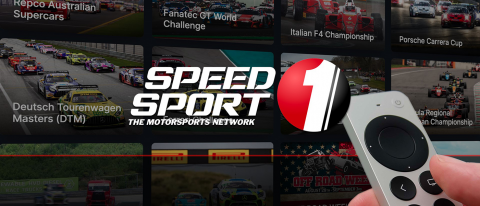
SPEED SPORT 1, "The Live Racing Network," has announced its debut on Freevee, Amazon's free ad-supported television platform. With an emphasis on live domestic and international racing, SPEED SPORT 1 will bolster Amazon's growing sports content portfolio.
The Freevee partnership marks a significant milestone for the network. To date, SPEED SPORT 1 is accessible as an app on all major mobile devices and on various free ad-supported television platforms, including Sling Freestream, LocalNow, Sports.TV and more. With the addition of Freevee, SPEED SPORT 1 is now available in more than 100 million households and devices.
"The timing of our Amazon launch is perfect," said SPEED SPORT 1 President Dan Teitscheid. "As we enter the heart of the racing season, we are thrilled to bring our extensive lineup of live events to Amazon Freevee. This partnership allows us to reach an even broader audience and share the excitement of motorsports with more fans than ever before. Kicking off with marquee events such as the ADAC GT4, Ferrari Challenge and the 24 Hours of Nurburgring, we are set to deliver unparalleled racing action right from the start. Our goal is to provide fans with front-row seats to the most thrilling moments in motorsports."
SPEED SPORT 1's live coverage includes the Fanatec GT World Challenge Europe and America, DTM (German Touring Car) and Australia's Repco Supercars Championship.
SPEED SPORT 1's primetime lineup during the week features informative news and magazine-style programs such as Mobil 1 The Grid, GP Confidential and Fastzone, with new content added daily. SPEED SPORT 1 is also enhancing its grassroots racing content, showcasing some of the best short-track racing in the U.S. each week with the "Prime Cuts Racing" series, along with live and tape-delayed events. Additional programming is in development and will be announced soon.
To access SPEED SPORT 1 on Amazon Freevee, look for the Freevee app on your connected TV or navigate to free live programming via Amazon Prime. SPEED SPORT 1 content will also be available on-demand on Freevee and AmazonPrime. Select live content will be presented in the Live Guide on the platform as well. For a complete list of platforms and apps, program listings and more, visit SPEEDSPORT1.com.
Burned out after years of asphalt racing, David Stremme embraced dirt track racing so much that he started building his own modified chassis.
Dirt track racing is one of the most revered sports in all of Pennsylvania, and modified racing accounts for one of the most popular classes among spectators and racers alike. So it stands to reason that Pennsylvania would also be home to one of the top builders of modifieds in the country—David Stremme and his company Lethal Chassis.
Stremme didn’t set out with the goal to own a race car building company, but his desire to have racing be a part of his world began early. He started so young that he actually forfeited his first victory after officials discovered he didn’t meet the minimum age requirement to drive.
Once he did reach that age, Stremme quickly earned success on the track and was noticed by Chip Ganassi Racing, with whom he signed a driver development contract. After toiling for more than a decade in the NASCAR environment, Stremme became burned out in asphalt racing. It was at this time the seeds of what became Lethal Chassis sprung to life.
As long-time Lethal Chassis customer Ken Schrader recalled, “David wasn’t a dirt racer at all and went to a dirt race where he got to drive, I think it was Macon, Illinois. He had all kinds of questions about, ‘Why do they do this? Why do they do that?’ He was used to the pavement stuff and thought he could build a better car.”
Stremme responded, “I was really burned out on the asphalt stuff, and I messed around a little bit on dirt, and we went racing. I’ve always been kind of a hands-on guy, and I bought a car from another guy. We got it late, couldn’t get parts, couldn’t really get any help, and I was just frustrated with that. So I thought we’ll just end up doing our own deal. I had a lot of equipment already from when we had our asphalt stuff, so I built myself and a couple other guys’ cars, and we found success right away. That was really all I was going to do with it, and the next thing you know, guys wanted cars.”
SHOP ON THE MOVE
Lethal Chassis was founded in Mooresville, North Carolina, in 2014. The business thrived and saw steady growth, outgrowing shops until it ended up in a 7,500-square-foot building. All told, the business stayed in Mooresville for nearly six years. Then, a major change took place at Lethal Chassis.
“As we get older, we look at things differently,” Stremme explained. “My wife Ashley, as an only child, was from Pennsylvania, up near Port Royal, and her parents were there. I liked going up there, so we moved in 2021.”
Stremme initially had concerns about how the move might affect his business, but soon found this not to be a concern. “I had thought location was key. Before the move, I evaluated a lot of companies and found that as long as you’re out in the field and racing in different parts of the country, it doesn’t matter where you’re at. There are different brands all over. A lot of our customers didn’t even know we moved.”
David Stremme spent years in NASCAR before dipping a toe into dirt track racing. He built a car for himself and a couple of customers, “and we found success right away. Next thing you know, guys wanted cars.”
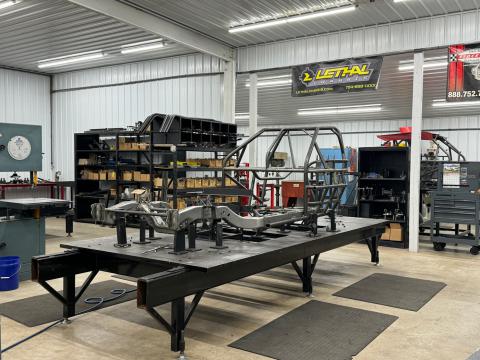
Next came the decision of where to set up their racing operations, something that wasn’t taken lightly. “We were going to build a shop next to the race track [Port Royal Speedway] as we had some land there. Then the next exit up we found a lumber yard with nine buildings on the property. We revamped four of them to build the cars in. It all sits on a five-acre property, fenced in, a very nice, professional place that makes up a nice facility. In the main building we manufacture the frames.” Even though everything ended up working out well, Stremme quickly added, “I’ll probably never move my shop again; it was a very big undertaking in doing it.”
LIMITING GROWTH
Stremme’s goal for his business was to remain small and offer a balanced approach to keep overhead expenses in check. “It’s been great. We’ve been very blessed with how the company’s gone,” he said. “The first year was really hectic. We built a lot of cars; we manufacture the whole car there in our facility, and it keeps us busy. We set a number, and we build a little over 35 a year now. We wanted to build 30, but with repairs and replacement on some cars, it tends to be a little higher. We stay pretty busy with that.”
This approach not only works for Lethal Chassis, but it’s also beneficial to the company’s customers as well. Spencer Andrews, a customer since 2021, explained why he purchased a car from Lethal Chassis and the related benefits.
“I became a customer because we kept getting beat by his equipment,” Andrews admitted. “His cars were performing better than ours on the track, so we wanted to get one of his chassis. He has maintained control of his output. He’s been measured in how many cars he’s producing, and that helps the resale value. It also makes sure there are so many Lethal chassis out there that we can’t learn anything from each other.”
After operating in North Carolina for six years, David Stremme relocated Lethal Chassis to a former lumberyard on five acres in Pennsylvania to be nearer to family. “As long as you’re out in the field and racing in different parts of the country, it doesn’t matter where you’re at,” Stremme stated.
Stremme’s success has garnered much interest from the racing industry. In fact, he has been approached about building cars for other classes, but as the old adage goes, Lethal Chassis does one thing, and they do it right. “We stick strictly to what we call A-mods. We don’t get into anything else just because we’re too busy with it,” he said.
PERSONNEL
In any business, the product is only as good as the people who manufacture it. Moving across states can disrupt even the best of businesses, but Lethal Chassis proved to be an exception. “The move was good because Pennsylvania is very strong in motorsports,” Stremme explained. “I didn’t realize how big it was. It’s huge. Obviously coming from North Carolina, it was big there, but in the Pennsylvania area, they are die-hard racers. In North Carolina, there is such a big motorsports industry there, you get robbed of a lot of your people, a lot of your product that you develop. As we moved, I think it has helped our business because our productivity is much better. There are sprint cars, Late Models, 600s, a lot of motorsports here in Pennsylvania, and we get a lot of interest from people wanting to come in and work, so we are very blessed from that standpoint.”
Lethal Chassis has five full-time employees and one part-timer. “Kevin Carpenter has been with me a long time, and he moved up to Pennsylvania with us. We don’t have a lot of turnover because people want to come in and work, and we have a good facility,” Stremme added.
KEEPING UP WITH TECHNOLOGY
Keeping up with the latest technology is an area where Lethal Chassis particularly shines due to Stremme’s active involvement in the sport. Testing for other teams and driving his own race cars sharpens his skills and gives him hands-on knowledge to determine what customers want. “When you’re in the seat, you have an advantage of what you need to work on,” Stremme explained. “It keeps you on the edge of what you need to improve on as far as the cars and their technology.
“My experience and the relationships I’ve made growing up in racing, and the years I was in NASCAR where I still have a lot of great relationships, it’s through those relationships we keep up with the technology,” he continued. “We’re constantly developing a lot of stuff and keep a lot of our secrets to ourselves.”
He cited the continual advances that go into his cars. “Anything dealing with speed and performance is under constant development,” Stremme said. “Right now, there’s been a huge gain in shock technology through our partners at Penske shocks. I feel like they’ve really stepped up. If you’re not developing, then you’re just staying stagnant. You’ll get behind, and you’ll go out of business.”
Those relationships are also integral to the marketing of Lethal Chassis. “We don’t really advertise,” Stremme admitted. “My advertising is my customers winning. We’ve had, I feel, really good success. We’ve won every big race; we’ve won every big series. We built a car for a guy who’s a paraplegic [Chris Morris]. He’s won more races than he had for years. We try to help people race and have a good time and see they have everything they need.
“We’re on all the popular social media sites,” he continued. “If you’re winning, you’re selling cars, people want to know where you’re at. It’s more of not just one person winning, but the majority of your customers winning. Word-of-mouth advertisements are great, but it’s not like winning. The old saying, ‘win on Sunday, sell on Monday,’ is still true.”
The Lethal Chassis operation is a “family effort,” said customer Spencer Andrews. David Stremme, above with his family, races as well as builds cars, and his wife Ashley “is directly involved in the marketing and is very passionate about dirt racing as well.”
A SIMPLE PHILOSOPHY
Lethal Chassis has its own unique philosophy, which is aimed more at the sport of racing modifieds than the product itself. “More than anything I like his philosophy about the sport,” Schrader said about Stremme. “We’re running dirt modifieds. We’re not making a living doing this. We’re supposed to have fun, and that’s what we’re doing. This is more laid back. If you don’t want to run this week, you don’t have to.”
The laid-back aspect of modified racing was a major component of what drew Stremme into that class and ultimately the creation of Lethal Chassis. “I did about 14 to 15 years of NASCAR when it was at its peak—attendance, ratings, everything. It was awesome to be a part of. I enjoy life now. I run modifieds. Schrader and I were talking about how modifieds are a working man’s car, where you can take me, my buddy, my wife, and go race. You don’t need to have full-time guys. You don’t need to spend day and night on them. I enjoy it, and as long as I’m having fun, I’m going to keep doing it.”
SUPPORTING CUSTOMERS
Service after the sale is a hallmark of any successful company, and Lethal Chassis is no exception. Andrews provided a glowing testimony to how Stremme and Lethal Chassis cares for its customers.
“He’s available, he’s down to earth, he understands our goals,” Andrews said. “He has a wealth of racing experience that comes from all over, not just dirt track racing. Obviously, he has an extensive asphalt history, and that comes through in his product and in how he takes care of you after you become a customer. I’ve known him a long time; I used to work with him in NASCAR. His work ethic has always been the same; it’s always been over the top. He gravitates toward racers, and he treats everybody with respect. He understands our passion for the sport. He makes no judgment about where we start as we learn, how to field a team, how to field a car, how to do the setups. He’s got a real nice product he’s selling, but that doesn’t necessarily mean we don’t have something to learn about fielding the car and setup and all that stuff. He just works with you where you’re starting from and makes sure you’re performing as good as possible for your situation.
“Clearly this is a family effort,” Andrews continued. “His wife is directly involved in the marketing and is very passionate about dirt racing as well. It is a family affair but with a professional skillset right on top of it.”
“We manufacture the whole car in our facility, and it keeps us busy,” David Stremme said. He’s been approached to build cars for other classes, but “we don’t get into anything else just because we’re too busy” building dirt modifieds, he said.
Andrews is not the only customer who takes note of Stremme’s experience and customer care. Schrader also shared how Stremme and his team offer an edge to those who race Lethal Chassis’ cars.
“Obviously I like his cars, but I like him and Ashley as people for how much they put into the sport,” Schrader said, citing customer support, parts availability, and service after the sale. “You can pick up the phone and he’ll answer it. You’ll get questions answered. He’s in the trenches doing it himself. He’s not relying on a couple of people calling in and telling him what adjustments they’ve made. He obviously listens to that, but he’s always out there and looking for an edge. I don’t think we’re going to be left behind real quick. He’s just been great. More than anything the way he treats people, and the love of the sport are what makes it.”
Dirt modified racing has enjoyed consistent growth in recent years. Now the challenge is to keep it going on the road ahead.
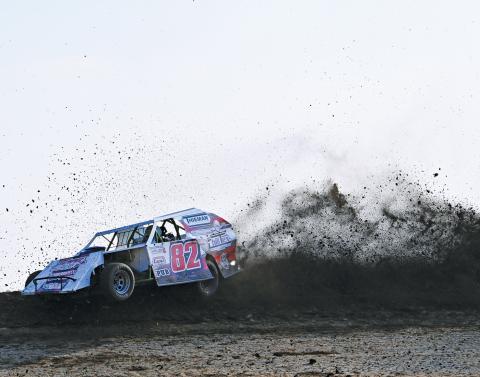
Thanks to an ongoing rise in both car counts and fan interest over recent seasons, dirt modified has emerged as something of a template for circle track racing organizers who’re looking to effectively balance the needs and expectations of teams with those of sponsors and audiences. While the segment has faced concerns about the cost increases that are currently affecting virtually all aspects of motorsports, it has largely managed to keep an even keel through the storm. But as Jeff Nun of the United States Modified Touring Series (USMTS) in Webster City, Iowa, pointed out, that success story isn’t entirely a product of careful rulebook tweaks.
“The fans dictate the direction that things go, but this is also a passionate group of racers,” he said. “I’ve had many drivers tell me over the years that they’d race in a ditch somewhere if that’s what they had to do in order to compete.”
Teams are continually on the hunt for a way to gain an advantage, said Jeff Nun of the USMTS. “We try to keep an eye on what’s going on, and if a performance enhancement is suddenly going to cost the next guy $40,000, that’s something we generally have to crack down on.”
Although interest remains high, there are some developments in the segment that are encouraging organizers to take a closer look at their operating strategies, scrutiny that has the potential to affect everything from car setup to race schedules.
Walking The Tightrope
As evidenced by the developments seen throughout the post-pandemic economy, cost increases are certainly not exclusive to dirt modified racing—or even motorsports as a whole. This trend has brought a whole host of challenges along with it; and as is currently the case in many racing segments, dirt modified organizers are saddled with the unenviable task of trying to keep competition safe and economically viable for their teams without stifling potential innovation or alienating a portion of their racers and fans as a result.
“Things have been fairly smooth over the past five years or so. There haven’t been any drastic changes to the bodies or anything like that,” said Jeff Ahlum of Grandview Speedway, Bechtelsville, Pennsylvania. “But suspension has been a bit of a hot-button topic as of late, and that’s because a couple of guys did some experimenting that was kind of inspired by what some folks are doing in late models. Nobody really said much about it until these guys started becoming successful with it, and then everybody jumped on the bandwagon. When those types of changes start to become popular, that’s typically when you start to see issues.”
Problems that cropped up along the way as a result of these changes ultimately convinced the track’s organizers to outlaw left-side panhard bars starting in the 2025 season, Ahlum explained.
“We had to take the bull by the horns here, but we also wanted to give teams some time to make the adjustment,” he said. “That panhard bar allows the car to rotate to the right rear, in sort of the way that late models do, but it requires a change in frame in order to implement that panhard bar. The issues that Grandview has seen are mainly related to safety. We noticed when the cars were rotating so drastically, it was causing a large increase in driveshaft yoke failures. When you have the driver sitting in the center of the car, the potential for injury is a big concern. The driver is protected by that hoop, but if we can do things to prevent those failures from happening to begin with, it only makes sense to do so.”
Cars don’t win races—people win races, said one of our sources. To be competitive in dirt modified racing, it’s not just about being the best driver, it’s also about understanding how to set up the car for track conditions.
As noted by Bill Engelstad of WISSOTA in St. Cloud, Minnesota, some innovations, when left unchecked, can end up discouraging teams and hamper car counts in turn. “With the way the industry is right now, it’s very costly to race these cars,” he said. “Our total numbers are still good, but we’re losing the number of cars that are at race tracks. Racers are getting more selective about the events they’re doing because the tracks are having a tough time paying the racers what they’re worth. So instead of racing two or three nights a week, maybe they’re racing one night a week.”
Engelstad said that shock packages in particular have become a major source of cost concerns for organizers, which led WISSOTA to increase rule specificity in turn.
“It’s just crazy what some of these shock packages cost today, so we’ve worked hard to address that,” he continued. “For example, there are three-way and four-way clicker shocks out there now, but we only allow two-way, and we specify the shaft size. When you have a specific shaft size, it limits the number of tricks that you can fit into the shock. And with anything you run—even coilovers—you have to run a 4.5-inch OD coil spring with us. You can’t, for instance, use the little one that you see on the late model stuff.”
Dave Brenn of IMCA in Vinton, Iowa, told us that it can be difficult to enforce shock rules as the technology continues to evolve, so they tend to rely on other tactics to keep everything in check. “Taking shocks apart would be a can of worms in and of itself, so we still rely on simple mechanical rules. We don’t allow bump stops, the driver has to be able to compress the shock by hand after the race, and to this day we also have a shock claim. If a racer feels like the shocks on the car in front of him are outside of what he thinks the class should be, he can still claim shocks. Like engine claims, that can get a bit contentious, but it’s one of the few aspects that racers have control of at the race track. Cost is part of the issue, and so is competitive parity. We want the racing to be close because that affects the show.”
Brenn said race results have proven that sophisticated technology doesn’t automatically equate to a dramatic competitive advantage, either. “The shock packages can be expensive, but they don’t have to be. We go to our races all over the country, and we see race-winning cars every day. You can certainly buy some really fancy stuff that might still be legal, but a lot of folks are still winning races on a typical gas shock. Just because the guy in front of you has something doesn’t mean you have to have that to be competitive. I’ve always said that cars don’t win races—people win races. And it’s not just about being the best driver, it’s also about understanding how to set up the car for the conditions.”
Aero, however, is another story. “That’s a never-ending chase,” he added. “We play it pretty tight here. There’s a common saying that ‘air is free.’ But what you do to use the air is not. So we are very specific about the aero package, because even small things can make a difference. And we say ‘no’ a lot.”
Staying On Pace
As expenses have continued to mount, Engelstad said that the disparity between running costs and prize purses has caused a shift away from weekly races toward special high-dollar events, and he expects that trend to continue going forward.
“The purses are certainly a common topic of discussion these days,” he explained. “A weekly show typically offers $800 or $900 to win, while a special could pay $3,000 or more. Down the road I think it’s going to affect the weekly events, and sooner or later, we’re probably going to be in a situation where we’re just doing specials. But as soon as you do that, you limit the number of races that you can have, so it’s a bit of a double-edged sword.”
One thing that separates dirt modifieds from dirt late models and sprint cars, said a source, is that modifieds are able to do a lot of passing. “It’s part of what makes this segment so exciting.”
Engelstad also cited disparities in rulesets as another pain point that’s currently affecting both racers and organizers. “If you look at late model stuff like Lucas Oil and World of Outlaws, they’re the same cars,” he said. “And aside from some engine rules, our late model car is the same as well. But it’s not that way in dirt modified. For example, we have one set of rules for the bodies, while another sanctioning body might have another set, and another sanctioning body has their own set. I think this shift away from the weekly races toward these special events has contributed to some of that. Regardless, I would definitely like to see greater collaboration between the organizations so that the cars are basically the same across the board. It would certainly make it easier for these racers to run with multiple organizations.”
The issue is also compounded by the fact that organizers are continually playing a game of whack-a-mole as teams seek out new methods of outwitting their fellow competitors.
“Fortunately, we haven’t found anyone cheating with tires in our series, but tire doping is kind of a big story right now,” Nun said. “From what I understand, it’s something that has come over from karting; folks are soaking tires in chemicals before races to enhance grip. Part of the problem is cost, but also these are hardcore, caustic chemicals that you shouldn’t be breathing. The theoretical benefit is circumstantial at best—a stickier tire isn’t necessarily going to do you any good if the track is already sticky.”
Ahlum said that while Grandview Speedway is always willing to try new things to attract more fans, organizers tend to be hesitant about making big changes when a strategy is already yielding desirable results. But he did cite a particular aspect of dirt modified racing that might benefit from greater awareness.
“When you’re seeing some success, there’s kind of a mentality of, ‘If it ain’t broke, don’t fix it.’ But we also want to keep it interesting and do more where we can, so we’ve added things like the fan appreciation $10 night, which was immediately very popular when we added it last year, so it’s back again for this year,” he said. “Some of the traveling series bring their own spin on things as well. Also, one thing that dirt modified really has going for it that kind of separates it from late models and sprint cars is that, as long as the technical aspects of it are kept under control, modifieds are able to do a lot of passing. On weekly races you can still handicap, which forces the faster guys to race their way to the front. I think that’s the sort of thing that folks in modified racing should market more. It’s part of what makes this segment so exciting.”
While one industry source acknowledged that the fans dictate the direction of dirt modified racing, “this is also a passionate group of racers,” who will do whatever it takes to compete.
Meanwhile, Nun said that while a strong social media presence is practically obligatory these days, a routinely updated website is also crucial. “The only thing worse than not having a website is having a website that’s never updated. People come to our sites because they know there’s always ever-changing information on them.”
Brenn noted that streaming can serve not only as a way to further connect with fans, but also as a means of bolstering cash flow. “The race tracks have their own marketing strategies, but we do a lot of promotion on events and weekly shows as well. And we have IMCA.tv; we’ve partnered with some really good people for that. It has provided us with a platform to reach more fans, which also pays back to race tracks and competitors, contributes to points funds, and other things.”
Nun said that while there’s an inherent limit to how much power these cars can effectively use, teams are continually on the hunt for a way to gain an advantage, and that also has a way of keeping things interesting.
“All of the bars, birdcages, and wild setups are about making more traction on that right-rear. We just try to keep an eye on what’s going on, and if a performance enhancement is suddenly going to cost the next guy $40,000 to have it, that’s something we generally have to crack down on.” Racers, Nun said, are “always looking for ways to get more aerodynamics out of the bodies, and limiting the amount of damage that comes with contact. So we have to monitor that stuff. The goal for us is to keep them fast and make them safer as we go.”
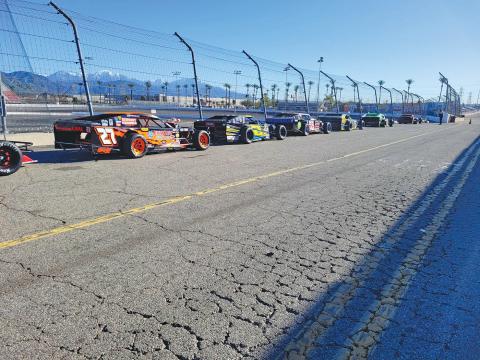
Despite some headwinds, car counts are up, and the competition is intense. Now the focus for many organizers is the development of strategies that will help asphalt modifieds maintain that momentum.
Asphalt modified racing has seen its fair share of ups and downs since fledgling incarnations of the sport began to sprout in the early 1970s. That in turn has led to fluctuations in interest over the years. But a diehard contingent of fans and competitors has remained passionate about the sport regardless of the speed bumps it has encountered along the way.
“It’s cyclical,” said Larry Collins of the Spears Modified Series, Bakersfield, California. “Every race division goes through cycles like this. We’ve had an upswing of interest lately, but six or seven years ago we were seeing a dip in car counts, and that had us wondering if we should go to a crate-motor-only format or open it up and regulate the horsepower with the tire. It’s one of those debates that’s always a mixed bag with the teams. Going into this season we no longer have restrictor plates on the built motors, but you can also still run a 602 motor with a weight break. People seem pretty happy with that.”
As is the case across virtually all motorsports disciplines right now, cost is a growing concern for asphalt modified organizers and competitors alike.
“The series have been looking at a lot of different strategies that we can use to make it viable for more drivers to compete,” explained Chris Williams of the SMART Modified Tour, Martinsville, Virginia. “Everything from entry forms to tire costs to race formats has been re-examined to assess where we can help control costs. There are a number of folks with race cars just sitting in their garages. We want to figure out what it is going to take to get them out to the track.”
Threading The Needle
Joe Skotnicki of the Race of Champions (ROC) in Buffalo, New York, noted that engine rules have been a recent common item of contention in asphalt modified racing. As organizers seek to curb running costs, they also have to avoid alienating competitors whose setups may potentially run afoul of proposed regulations.
“The evolution of the NASCAR spec engine has changed the landscape a bit,” he explained. “It’s much lighter, and that allows teams to move some weights around. That engine has brought some new elements to the game; for many years, the 18-degree engine kind of ruled the roost. But we have to be gentle with implementation. We try to focus on the budget, recognizing that the teams don’t have a free-flowing faucet of money. So we have to take an approach that avoids forcing teams to re-tool their entire shop in regard to their engine program. And we’ve made some weight adjustments again this year in order to fine-tune the balance of the field.”
Collins said it can be difficult to get everyone on the same page when it comes to engine rules, but a measured approach to regulation helps ensure that teams aren’t pushed out of the division as a result of the power plant they’ve chosen.
With rising costs across all segments of motorsports, asphalt modified series promoters have been tasked with examining how they can save competitors’ costs as they develop strategies to allow more drivers to compete. Photo courtesy of Race of Champions.
“When you ask a team what they want, they’re going to vote for whatever they have in the car today,” Collins confirmed. “If they have a 602 crate engine, they’re voting crate. If they’ve got an open motor, they’re voting open. So you almost have to give a voice to the person who doesn’t have a vote—the person who is about to build or buy a modified to come run with us in the future. If they’re on the outside looking in, seeing that everyone’s running a 602 crate motor, and those motors are $5,000, it’s like, ‘OK, I can afford that, and I’ll have the same motor as everyone else.’ But as soon as you open it up, you might have that same guy wondering what it’s going to cost to have a race-winning built motor. The sky’s the limit when it comes to that. So there’s a sense that the 602 might be more inviting to the new teams, but at the same time, we don’t want to exclude the cars that have built motors sitting in them right now. There’s really no right answer, so we ultimately landed on a weight break for the 602 and allow the built motors to be more open, and we’re going to see where things end up.”
Meanwhile, Matt Eddy of Howe Racing Enterprises in Beaverton, Michigan, also pointed to suspension tuning as another aspect of the car that has been scrutinized by organizers in recent years as they seek to rein in running costs.
“In this division you get racers who’re moving up from Street Stocks, and you also have people who’re moving down from Late Models to save some money, so there’s a wide range of experience here,” Eddy said. “That has shaped how organizers operate things to a degree. In the southern regions there are some regulations that don’t allow bump stops, for example. Bump stops are pretty finnicky when it comes to tuning—a lot of folks don’t understand them that well, and the folks who do can get a pretty big advantage from them. Allowing them would force a lot of teams to work with specialists to get that sorted out, which would, of course, drive up the expense.”
But the near-unanimous sentiment is that rising tire costs are one of the primary challenges that asphalt modified teams face today. “It’s concerning when a team’s tire bill is $2,000 for a race,” said Darren Hackett of Caraway Speedway, Sophia, North Carolina. “Back in 2019, that probably would have been $1,400. Raw materials and labor costs keep rising, and the starting money just hasn’t been able to keep up. The tracks just can’t afford it because it will kill the ticket sales.”
Shortages in the wake of the pandemic forced series to put limits on the number of tires that teams could use, and many have chosen to maintain those regulations even as supply has stabilized to help stem the tide.
Rising tire costs are a primary challenge that asphalt modified teams face today. “It’s concerning when a team’s tire bill is $2,000 for a race,” said Darren Hackett of Caraway Speedway.
“The most expensive part of the equation once you leave the shop is tires,” Williams said. “So we started taking a look at how many tires you really need in order to run. We needed to put in limits to prevent teams with bigger budgets from out-spending others to give themselves a competitive advantage. We also cut our races back to 99 laps, which helps lower the motor costs for the teams, too. This is a hobby; these teams aren’t doing this for profit. We’re trying to have fun and provide a platform for these folks to get to the race track. So much of that comes down to cost, so we’re doing what we can to minimize how much they need to spend. We don’t make money off the tires like some other series do, and that seems to have helped out tremendously.”
While innovation has always been an integral part of motorsports, the teams that hunt for the gray areas of the rulebook have a tendency to create more expenses for the rest of the field if they’re left unchecked by series organizers. Skotnicki pointed out that efforts to push the boundaries also rarely result in significant, lasting innovation that bolsters the appeal of the division for teams, organizers, and audiences.
“The recipe for making these cars do the right thing has always been pretty basic,” he said. “There are people who can grasp that, and then there are people who are in the industry and they’re looking to revolutionize the racing. But revolution costs people a ton of money, and the technology doesn’t really resonate with the fans we’re trying to sell tickets to. At the end of the day, we’re collectively better off when more people are racing.”
The Path Forward
Hackett said that despite ongoing cost challenges, he remains optimistic about the division’s overall health in the years ahead. “If the economy stays where it’s at, I think we will be OK. We had 27 SMART Tour cars here at our most recent event, and in 2019, that same event had 12 or 13 cars. So the car count has effectively doubled over the past few years, and that’s a big increase. I think the crate mod cars have led to more tour mod cars as people move up the ranks, and that’s something that is happening in a lot of different regions. It’s also just an incredibly competitive division. Managing the tire has become a big part of winning races, but track position and pit stops are important factors, too.”
He added that the recent influx of younger competitors coming into the division bodes well for its future. “That’s hugely important as some of the older racers start to age out of motorsports. Younger drivers also tend to bring more fans to the table, and potentially more sponsorship dollars along with that. We’re seeing more interest in open wheel racing from the younger generation right now than we have in quite a while.”
Engine rules have been a common item of contention in asphalt modified racing in recent years, noted Joe Skotnicki of the Race of Champions. The sanction implements rules with budgets in mind, so teams don’t have to “re-tool their entire shop in regard to their engine program.”
Skotnicki agreed that engaging with younger audiences is crucial to the lasting health of the sport. “I think for a period of time, the division was kind of ignoring some of the strategies that were working in the dirt stuff, and we’re just starting to catch up to that now,” he said. “It’s almost like it skipped two generations. You go to an asphalt modified race and look in the stands, and the average fan is over 50 years old. It’s an older crowd, and every time the calendar flips, there are fewer of those people involved unless we actively bring more people in. That’s been an important goal for us, so a few years ago, we created the entry-level crate modified division than runs on the narrower 10-inch tire. Several of the racers who started with us in crate have moved up to the sportsman class, and they will eventually become modified competitors. The interest is there; we collectively just didn’t have the insight to create something for those racers until now. Thankfully, it wasn’t too late.”
Along with improving the sport’s visibility through social media and event streams, he said that traditional outreach methods have also been an essential part of the strategy. “It’s about getting back to the organic types of programs that we as promoters have kind of forgotten about, like taking cars to schools and events. We’re also looking at different scholarship programs and other initiatives that will bring young folks out to the race track. I think it’s important to teach people that they don’t have to be a race car driver in order to have a career in the sport.”
The Spears Modified Series has debated engine rules as well. “When you ask a team what they want, they’re going to vote for whatever they have in the car today,” said Larry Collins. “There’s really no right answer.”
Collins said that the steps taken over the past few years have led to the gradual growth of the sport, and the goal is to maintain a similar pace in the years ahead. “I think it will continue to slowly grow over the next few seasons, and we’ll be stronger five seasons from now than we are today,” he predicted. “That’s based on the chatter amongst the teams, and the fact that we are in that sweet spot in the cycle of interest right now. Those cycles really are a natural occurrence in race divisions, and when things are headed in the right direction, you do everything you can to keep it going that way.”
Williams said car counts are the key to maintaining that trajectory. “Strong car counts ease the pain for a lot of different reasons. It benefits television coverage, streaming, the back gate, and the purse payout. So everybody is trying to do what they can to get these cars racing, whether that’s bonuses for showing up, a points purse, going to ‘destination tracks,’ or other creative means of encouraging participation. You’ve got to do everything you can to incentivize showing up to these events,” Williams concluded.
NASCAR announced that Ricky Rudd, Carl Edwards, and Ralph Moody were selected as members of the NASCAR Hall of Fame Class of 2025. In addition, Dr. Dean Sicking was named the recipient of the Landmark Award for Outstanding Contributions to NASCAR.
The members of the NASCAR Hall of Fame Voting Panel met in an in-person closed session at the Charlotte Convention Center to debate and vote upon the 15 nominees for the induction class of 2025 and the five nominees for the Landmark Award.
The Class of 2025 Induction Ceremony is set for Friday, February 7, 2025, at the NASCAR Hall of Fame and Charlotte Convention Center in Charlotte, North Carolina. Tickets for the Induction Ceremony will be available later this month on NASCARHall.com.
For the full announcement, including inductee bios, visit the NASCAR article here or nascar.com.
QualCast, the provider of cylinder heads and valvetrain products, has announced the move to Sumner near Seattle, Washington, to join Melling Engine Part's warehouse. Melling acquired QualCast at the beginning of this year.
"QualCast is so excited to announce our move into the Melling Seattle location in Sumner, Washington. The facility totals 6,000 square feet and will better serve our Northwest customers with access to QualCast inventory extending well beyond Oregon and Washington," said a company release.
QualCast will retain its original Nashville location and customers may still reach that facility directly to place orders.
Melling Seattle is located at 13701 24th St. E., Unit D6, Sumner, Washington. Customers may reach QualCast directly at (253)864-0590 between 7:00 a.m. and 4:30 p.m. PT.
Women in Motorsports North America (WIMNA), the organization dedicated to supporting and creating resources that enable women in racing, is partnering with Jostens, the official award provider of NASCAR, INDYCAR, NHRA and other motorsports awards, to present the second year of the SHEro Award and recognition program.
The SHEro Award provides a means to highlight and celebrate an outstanding woman who has demonstrated unique effort and results contributing to advancing motorsports, the organization said, and inspire the next generation of females entering the sport.
To nominate a SHEro recipient, individuals can complete the application and purchase the SHEro trophy from Jostens. The profits from each trophy are donated to WIMNA.
Each person or organization submitting a nomination receives an engraved award to present to their SHEro for $175. All nominations received before October 31, 2024, are automatically entered to win the National WIMNA SHEro Award, which will be presented at the Women with Drive IV Summit, scheduled to be held ahead of the PRI Show in Indianapolis in December 2024. The national winner of the award will receive complimentary admission to the summit including paid flight and hotel expenses, along with the opportunity to speak about their experiences and highlight their efforts for which they are recognized.
Thirteen women were nominated in 2023 with Abigail Hempy, powertrain engineer at NASCAR Research and Development Center, winning the national award.
"We enjoy working with Jostens so much on this award and are very excited to see who the nominees will be this year," said WIMNA Executive Director, Cindy Sisson. "The stories and details of the women nominated are always so intriguing and inspirational."
After nearly seven decades of operation, Rockford Speedway in Loves Park, Illinois, is auctioning off its equipment, assets and memorabilia in an online sale scheduled to conclude on June 3, 2024.
Items available for bidding will be organized across four online rings. Among the offerings are grandstand bleachers, food and concession equipment, track and shop equipment, and Rockford Speedway memorabilia. Over 1,200 lots will be offered via the four rings.
"For years we have watched the surrounding area evolve into a vibrant retail corridor. The auction is the final step in the Last Lap for Rockford Speedway," said Tom Deery, speaking on behalf of the Deery family, who owns the propery. "This day has been coming and it stings for the thousands of fans and racers who have made Rockford Speedway their 'family' for generations. This auction presents an opportunity for enthusiasts to acquire cherished pieces of the Speedway's legacy and continue its story elsewhere."
"We are very proud of the contribution the speedway has made to the racing industry as the starting spot for so many in racing and business, and the impact this place has had on the greater state-line community," said Rockford Speedway President Susan Deery.
Interested parties can preview the auction items on Wednesday, May 22, from 10:00 a.m. to 3:00 p.m. Bidding will begin on Monday, May 27, and conclude on June 3. Each of the four rings will have staggered closing times.
For further information, contact the following Rockford Speedway representatives:
Ring One: Race operations, grandstands and lighting -- Jack Deery -- (315) 224-9700
Ring Two: Concessions and food service (including the famous popcorn machine) -- Chuck Deery -- (608) 304-1234
Ring Three: Buildings, electrical, fixtures, building supplies, operational equipment -- Dave Deery -- (815) 703-0474
Ring Four: Memorabilia -- Jack Deery -- (315) 224-9700
The Louisiana legislature approved PRI-supported legislation (H.B. 515) to ensure consumers' choice of vehicle powerplants and fuel technology by preventing a state agency from limiting access to certain power sources.
Having passed both chambers, the bill now awaits final approval or veto by Governor Jeff Landry.
"H.B. 515 is a pro-consumer, pro-innovation, and pro-business piece of legislation," said Colby Martin, PRI’s director of state government affairs. "PRI urges the governor to support this bill and allow the motorsports industry to continue delivering the freedom and choice that Louisianans deserve."
Louisiana is among several states seeking similar proposals. PRI believes that Louisianans, not the government, should decide what vehicles are best for them and their families. This effort promotes consumer choice, fosters innovation, and protects jobs.
Use this link to send a letter to lawmakers supporting this pro-motorsports legislation.
For more information, please contact Colby Martin at SAN@sema.org.
As president of Hendrick Motorsports, Jeff Andrews executes a lofty vision in the power of “all of us.”
Like many racing professionals, Jeff Andrews grew up around racers and race tracks, and he started his career assembling engines for racing teams. But after he went to work for Hendrick Motorsports, the organization saw leadership potential in him. Andrews progressed through management ranks and today serves as president and general manager of Hendrick Motorsports, one of the most successful organizations in NASCAR history.
We caught up with Andrews to ask him for the Hendrick recipe for success, and to explain how a wrench spinner ends up in the corner office. What we got is a master class on motivating and facilitating excellence in motorsports and in life.
PRI: Tell us a bit about yourself and how you got to be president of Hendrick Motorsports. Andrews: I’m originally from Fresno, California, and I grew up in a rich environment out there, racing in the Central Valley of California. My dad had always been involved in racing in the Central Valley, mainly on the engine side. So I grew up in it, spent weekends at the race tracks, and I got an opportunity.
I grew up with Billy Vukovich III, and also a good friend of my dad’s was [Indy car builder] Fred Gerhardt out there in Fresno. Between those two, I was urged to take an opportunity in my early 20s to go professional racing. That started with an introduction to Dennis Swan, who ran Shierson Racing at the time. I took that opportunity and worked for Shierson for two years in the engine shop. When that program closed down, I was given an opportunity to go to work for Penske Racing and their engine program. I was there for three years. Those two teams were my start in professional motorsports.
Then I had an opportunity to meet Randy Dorton at Hendrick Motorsports. Randy offered me a job at the end of the 1991 race season, and I moved down here to Charlotte. I’ve been with Hendrick ever since, so 32 years. I assembled engines for Randy for many years, and then he started giving me some managerial opportunities. Long story short, I ended up overseeing some different areas of the program for Randy, and then sadly, when Randy passed away in 2004, Mr. Hendrick graciously looked to me to help him continue that program.
“I don’t know that folks really understand just how involved he still is today and how passionate he is,” Jeff Andrews, at left, said about NASCAR team owner Rick Hendrick, right. “He’s making sure that everybody knows he still has this hunger to win.”
I did that until 2016, and then I was given an opportunity by Mr. Hendrick to move within the company to vice president of competition for the whole company. I did that until the 2021 season, at which time Mr. Hendrick offered me the president and general manager role. PRI: It’s fairly unusual for somebody to go from a hands-on engine assembler into upper management. Was there more to that story, or did you just have a knack for it? Andrews: I like people and I enjoy working with people. I enjoy passing along the values of Mr. Hendrick and the work ethic, and I enjoy motivating and rewarding people. I think if you asked me one of the hardest things in my career, quite honestly was watching the team win a race when I was not the engine assembly man anymore. I was not solely responsible for that race part. I’m not saying it came naturally, but it took some time for me to get used to a role where I was contributing to the company more on a global basis than just an individual team member with a job of building engines for one race car. But as I did it, I enjoyed it, and I found myself with even more of a rewarding position within the company. PRI: What drives you to succeed? Andrews: I learned to be part of something bigger and not just me. I use Mr. Hendrick’s slogan when I talk about it: “All of us are better than any one of us.” So, all of us together are better than any one of us alone. Early in my career, I hadn’t grasped that concept yet, but the Hendrick culture teaches you to be part of the team, part of an organization in which we all need each other. And as I learned that, I appreciated it and I found value in it, and I enjoy passing that value on and motivating our folks. I don’t need to be that guy in Victory Lane in front of the camera. I like being that guy who knows I helped contribute. I helped give them the tools that they need to go out and do the great things they do, whether it’s people or technology or physical machinery and tools.
Hendrick Motorsports has been very supportive of NASCAR’s social change initiatives and has implemented some of its own. Hendrick driver Kyle Larson, at right, supports the Urban Youth Racing League, “which is dedicated to getting minority folks in, not just from a driving side, but getting young folks interested in our sport,” Jeff Andrews said.
PRI: What do you do with your days and how do you work with Jeff Gordon and Mr. Hendrick? Andrews: I report directly to Jeff Gordon. I have to say about Jeff, he’s one of the most impressive individuals I’ve been around in terms of his understanding of the business, whether it be marketing or our relationship with NASCAR or Chevrolet. I’ve learned a lot from Jeff, and I continue to do so. Obviously, he learned a lot of that from Mr. Hendrick. But on a day-to-day, week-to-week basis, Jeff and I meet about three to four times a week on different topics, or we are involved in different meetings.
As to my work week, on a Monday we’re reviewing the race weekend and how did that go? That involves meeting with the drivers and crew chiefs, the competition side of the company. My role is just listening in on that and being there for guidance or help. Then the rest of the week, I have meetings and we talk about either personnel or about NASCAR rules. We talk about our race teams, our staffing, all those things. I’m relying on the people under me and I’m meeting with them, listening to them, offering advice, giving direction.
Sometimes those are financial decisions that we’re talking about. Sometimes those are competitive decisions if our performance isn’t where it needs to be. Sometimes we’re having a lot of discussions on NASCAR and rules. Sometimes we can be having some discussions on capital expenditures, and all this stuff is just kind of rolled into a week. Of course, at the top of the list is competition. I want to help those three or four key individuals stay sharp and give them the tools they need to make sure we’re executing and winning on a weekly basis. PRI: Hendrick Motorsports is one of the most successful teams in NASCAR history. What would you say is your secret ingredient for success? Andrews: I would say it’s our culture. It’s a culture of winning. Mr. Hendrick will tell you this anytime you talk to him, that it’s all about our people fostering and creating an environment in which people can thrive and work and succeed. And we have a respect for each other. Let me start with that. I think we respect each other first and foremost, and that’s easier said than done at times within big companies. Let’s be honest, racing has egos, right?
Egos exist, and they can be a real problem and a real distraction, but when things aren’t going well, it’s easy to say, “That’s not my area to work on,” or get yourself into a silo. But this company doesn’t do that. Our culture is to treat each other with dignity and respect, and we work as a team. I used the phrase before, no one of us is better than all of us together, and we live by that.
Jeff Andrews reports to Jeff Gordon, at right, vice chairman of Hendrick Motorsports, who Andrews said is “one of the most impressive individuals I’ve been around in terms of his understanding of the business, whether it be marketing or our relationship with NASCAR or Chevrolet.”
PRI: That’s a great philosophy, but there has to be an edge to it as well. If you’re going to be part of a winning team, you have to be able to perform at a certain level. How do you guys deal with weak links? Andrews: Of course, we have our issues internally, and we do manage those kinds of things. I start with the Hendrick name and what’s expected. I’ll use our crew chiefs as an example because those are our highest-ranking team members over the race teams. There are four different personalities there, four different individuals who each have their own personality, and each one runs his race team a little bit differently. We allow that, we nurture that, we like to watch that, and they all do a great job.
I think one thing that we have is the fact that those four individuals believe in each other. They trust each other, they share information, and they generally want to see each other succeed. We’ve not always had that. When that happened, we have had to go and make swift changes because you’ll tear a team down from the inside far quicker than you’ll tear it down from the outside. If you’re not performing, and the media’s talking about you, and race teams are pointing fingers at you, we can withstand all those things. But when we start to tear ourselves down from the inside, and we don’t have good leadership or we don’t have trust in teammates, that’s an obvious problem.
I think one of the things we weed out the quickest is if you’re going to look at the driver and you’re going to look at the crew chief and you’re going to point fingers. That’s because you’re a part of that team, and you’re responsible for that team’s performance. If you can’t fit into that and be part of the solution, you’re either on the bus or you’re one foot out the door. Those are some of the tougher things that we have to deal with. It’s very black and white. You’re either with us or you’re not. You can’t be with us in victory lane and with us for championships, and then be off the bus two weeks later when Hendrick Motorsports is in a bit of a slump, and just get back on when things are going good. We look for strong team members who we know will have our back when we’re going to battle. PRI: That’s a great answer, and to build on that, what do you look for in people you’re going to hire at Hendrick Motorsports, whether that’s a guy sweeping the floor or a crew chief? Andrews: Of course, there’s the talent aspect, but the one thing that means the most to us is that “can-do, will-do” type of attitude and work ethic. We’re looking for young folks who want to work hard, who want to succeed, and who want to be a part of something bigger than just one person. It’s the same with our drivers. To sum up your question, what are we looking for? We’re looking for someone who wants to be a part of something and not just be something. PRI: Hendrick Motorsports is known for its charity work, whether it’s Mr. Hendrick buying cars at auction for charity or the various foundations you support. How does that integrate with the business side of the entire enterprise? Andrews: That starts with the Hendrick family. There are multiple charities and organizations that they support nationally and throughout our community here in Charlotte. That’s a prime example of what the Hendrick name means. The name and culture are associated with success, but it should also be known that the Hendrick name is associated with giving and caring and taking care of people and communities. We just finished a huge spring meal drive where our people go down to food banks in different places and box up meals for different charities. PRI: NASCAR has been testing hybrid and even all-electric powertrains in different cars. Where do you think NASCAR technology is headed in 10 years? Do you think that they might go hybrid or electric? And if they did, would that change the nature of NASCAR racing? Andrews: In my opinion, there’s change coming, and I think you’ll see a change in technology within the industry. There’s an image out there that NASCAR is this sport from the 1950s and ’60s and ’70s, and the technology level is not that of F1 or IndyCar or other professional motorsports. I would challenge that. I would challenge anyone who has that belief, respectfully, to come to our facility to see the tools, to see the processes that we work with, to see what we use. We are a sport of emerging technology. Obviously, there are guidelines and precautions that we have to take, and the economy that we have to work in to succeed. Hendrick Motorsports is a privately held company, and it races in the NASCAR series under that sanctioning body, but the teams are solely responsible for our financial models, and our success financially depends on the sponsors and partners we attract by the success of our drivers. We’re not supporting ourselves based off winnings. We have to have partners and sponsors to keep our company going.
What I’m getting to is that there’s a lot of speculation right now about another OEM [automaker] that NASCAR wants to bring into the market. While we support that and we want to see that, we have to be very careful that the financial responsibility of another OEM does not fall back on the race teams in the form of complete spec or engine architecture or vehicle changes that end up costing existing race teams a ton of money. I want to reiterate that change needs to happen for the health of our sport. We need multiple OEMs in our sport, and we welcome whoever is coming next.
That leads me to the technology side. I think the same principle has to be applied to the technology that comes into our sport. Our finances are fixed, our OEMs are set on what they’re going to spend on this sport and what they’re going to put into our companies. So whether it’s EV or hybrid, we’re going to support the direction that General Motors and Chevrolet want to see in our series. We’ll work with Chevrolet to not only support that in NASCAR, but also support that and develop that within our team.
Each of the Hendrick Motorsports crew chiefs, including Alan Gustafson, at left, of the No. 9 NAPA Auto Parts Chevrolet, has “their own personality, and each one runs his race team a little bit differently,” Jeff Andrews said. “We allow that, we nurture that, we like to watch that, and they all do a great job.”
PRI: Along the same lines, NASCAR has been very outspoken supporting social change at its events. The ban on confederate flags is the most obvious example. Does Hendrick Motorsports do anything in support of that effort? Andrews: Speaking on behalf of Hendrick Motorsports, we welcome any social change and any fairness that is going on in the world today. Our company is very, very supportive of all those initiatives. The world is changing and not only in racing and NASCAR. We have to be smarter as a world and more respectful of humankind in general. We participate in several programs, a lot of them through NASCAR, some of them through our individual drivers. Kyle Larson supports a group called the Urban Youth Racing League out of Philadelphia, which is dedicated to getting minority folks in, not just from a driving side, but getting young folks interested in our sport. PRI: Is there anything I have not asked you about that you would want to put on the record? Andrews: I would just want to make sure to note that Mr. Hendrick has probably the biggest heart of anyone I’ve ever met. Many of us have witnessed many, many times, when he and his family take the time to take care of somebody in need. Not only with material things, but over and over as our leader. What amazes me about him, and I don’t know that folks really understand, is just how involved he still is today and how passionate he is. He’s on our calls, talking to our drivers and talking to Jeff and myself and our crew chiefs, making sure that everybody knows that he still has this hunger to win, whether it’s in selling vehicles or winning races.
The unique thing that this builds is an environment where we come to work every day wanting to make him proud. We want his respect. We strive for that all the time, and he makes you want to be better, whether it’s at the race track, at the shop, or in your home life. That builds a sense of pride within our company. We call it “Protect the H,” and the H is our brand. I always go back to our culture. It’s about respect, and we as leaders of our company stand for nothing less than for the Hendrick brand and its name to be respected as the very best.
 MEMBERSHIP LOGIN