Ask the Experts: When To Rebuild Race Parts
Submitted by johnc on Thu, 06/20/2024 - 12:12
image 1


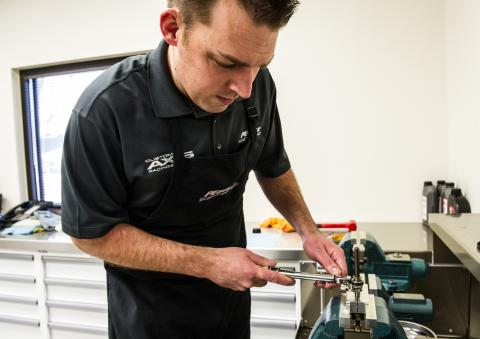
Reconditioning components can be a significant cost saver, but it’s not always the best option.

With the recent rise in costs both within motorsports and the world at large, competitors across virtually all racing disciplines continue to look for ways to make better use of their budgets. For some, that might mean extending the life of a chassis by an extra season or switching to a tire compound with improved longevity. But as Aaron Lambert of Penske Racing Shocks in Reading, Pennsylvania, pointed out, there’s an effective tactic that is often underutilized.
“Servicing and rebuilding certain parts in regular intervals can be a significant cost-saver,” Lambert explained. “If a racer can be disciplined about maintaining components like shocks, they might never need to replace them.”
Lambert told us that the inherent design of components like shocks—which include both reusable “hard” components like bodies and shafts as well as consumable elements like oil, seals, and shims—are often good candidates for rebuilds.
“All of our shocks are owner-rebuildable, though racers need to be aware of any limitations imposed by a class rule set,” Lambert explained. “With Spec Miata, for example, shocks need to be sent to us at Penske to be rebuilt simply to ensure that the internals remain in line with the rules. But we can show someone how to do a rebuild in just a few minutes.”

image 2
While all of Penske’s racing shocks are owner-rebuildable, “racers need to be aware of any limitations imposed by a class rule set,” said Aaron Lambert. Some classes mandate that the manufacturer does the rebuild to ensure the shocks remain in spec.


This cost-conscious approach isn’t limited to shocks, either.
“Ninety percent of what we manufacture is rebuildable,” said Carl Depazza of Jesel, Lakewood, New Jersey. “Rockers and lifters are particularly popular for rebuilds. Depending on the part and what a customer wants to do with one of those rebuilds, the cost savings can be anywhere from 40–60% versus replacing the part.”
Lambert said that having Penske Racing Shocks service a shock can save customers as much as 75% of the price of replacement, while racers who are willing to do the work themselves can save as much as 90%. The latter does come with some caveats, though.
“If you want to check your work, you really need to have a shock dyno. It’s important to start with a baseline measurement before the rebuild, and then dyno it again after the work is done to make sure the shock is performing as it’s supposed to. That can be a worthwhile investment for a lot of racers, though. If you’re at the level where you’re making adjustments to your shocks and tuning them, looking at tire wear and all of that, you really should have one. I’ve seen racers waste months of time trying to tune around an issue, but if they’d had a dyno, they would have been able to immediately realize that they actually had a shock problem. In other cases, it would have been able to confirm that they didn’t have a shock problem, and that they should look at other parts of the car. At a certain point, it becomes about the value of your time.”
He noted that the service and rebuild process of a shock is often simply a matter of replacing oil, seals, and shims, but there are situations where other parts may be needed.

image 3
Jesel prefers to limit rebuilds of aluminum rockers to 10 years “because of metal fatigue,” said Carl Depazza. “But even with that recommendation, it can be a huge cost savings. You could rebuild them 10 times in that time frame if you’re doing it once a season.”


“All of the parts are replaceable,” Lambert stated. “If a shock body is worn down, for example, we can replace that as well. Customers can just take the body off of a shock and send that in to us, or simply order a body separately. It’s just a matter of knowing what to look for. Shock bodies normally don’t wear out through normal use, though. If the car is involved in an incident and the shock is dented, obviously it’s no good anymore.”
Excessive wear can also be caused by bad habits. “The only situation where we really see bodies wear out is when they’re left on the car when it’s riding in the trailer,” Lambert added. “Traveling across the country with the car strapped down, those small, repeated oscillations in the same area of the shock for hours on end can do some damage. On the race track, the shock is going through its full travel—you’re never really riding just one area of it.”
As with shocks, virtually all of a rocker’s components are replaceable, Depazza explained. “When a rocker is sent in to us for a rebuild, it’s disassembled, which involves taking the adjuster assembly out and pressing the axle bearings out, along with the roller tip. A solid roller can often be reused, but a needle roller is usually replaced along with the axle.”
Rocker components are then inspected for cracks and other damage before being put into an ultrasonic hot tank and then inspected again. After that, new components are sourced for the rebuild, and reused parts are put through a tumbling process to recondition them. Aluminum bodies are put through a shot peening process to remove imperfections, and afterward all of the components are once again put through a wash process before reassembly begins.
“Generally speaking, with aluminum rockers we try to limit rebuilds to 10 years because of metal fatigue,” he added. “But if it’s a nostalgic set, or something along those lines, we’ll rebuild them. There are folks who’re still running sets that were produced in the 1980s and 1990s. But even with that 10-year limit recommendation, it can be a huge cost savings. You could rebuild them 10 times in that time frame if you’re doing it once a season.”
There are situations with shocks where it makes more sense to go with a new part, Lambert said.
“Wrecks can create situations like that,” he explained. “When a sprint car gets in an accident, they tend to flip and roll, and the violence of that can do quite a bit of damage. You can ding up a shock body, bend the shaft, and all sorts of other things all at once. Roughly 60% of the total cost of a shock is in three or four parts, so at a certain point, you lose the cost-effectiveness of rebuilding the shock rather than simply replacing it.”

SOURCES

Jesel
jesel.com
Penske Racing Shocks
penskeshocks.com

 

July 2024
By
Bradley Iger

Know Before You Go: U.S. Customs Requirements to Bring a Race Car Into the U.S.

Submitted by laurap on Tue, 06/18/2024 - 16:36
US CUSTOMS AND BORDER PROTECTION


As summer heats up and the racing season kicks into full swing, it is critical that racers based abroad understand the laws governing bringing a race car across the United States border to compete on the track. To follow is information on the requirements of the U.S. Customs and Border Patrol Agency (CBP) to import a race vehicle into the U.S. Please note, that the following does not constitute legal advice and is provided for information purposes only.  

The process of importing a "purpose-built race car" should be fairly straightforward, but you must follow the rules in place. Suppose the vehicle was designed as a racing vehicle (i.e., it is a purpose-built race car that was never street-legal). In that case, it can be permanently imported into the U.S. by submitting an HS-7 Declaration form (checking Box 8) from the National Highway Traffic Safety Administration (NHTSA) to Customs at the time of entry. In addition, the importer must also attach a copy of a letter from the vehicle's original manufacturer confirming that it was originally manufactured as a racing vehicle at the time of entry. It is possible to accomplish this process quickly at entry and no explicit approval from NHTSA is necessary to import the vehicle in these cases. 

Suppose the race vehicle being brought across the border was originally manufactured for street use, and the vehicle has been subsequently modified into a race car. In that case, it can only be imported on a temporary basis under Box 7 on the HS-7 Declaration form. However, entry into the U.S. requires additional steps in addition to checking Box 7. A pre-obtained NHTSA permission letter is necessary to import a vehicle on this basis. NHTSA grants permission in annual increments for up to three years if duty is not paid on the vehicle, or for up to five years if duty is paid.

If the vehicle was originally manufactured for on-road use, it must be in full race configuration at the time of importation and lack equipment and features needed for on-road use. Once the HS-7 is submitted, importers must also submit the U.S. Environmental Protection Agency's (EPA) form 3520-1 or 3520-21 to CBP to identify the basis for importation. In order to elect the "CODE L" exclusion, a previously issued EPA letter of "approval" must be attached. 

Summarizing the steps required to obtain the EPA approval, an EPA racing vehicle exclusion may be granted if a vehicle is determined by the EPA to be incapable of safe and practical street or highway use because:

  • It lacks features associated with safe and practical street or highway use, such features including, but not limited to, a reverse gear (except in the case of motorcycles), that cannot be installed economically relative to the value of the vehicle or; 
  • It exhibits features that are not readily removed, which render its use on streets and highways unsafe or impractical; a differential, or substantial safety features required by state and/or Federal Law. Anyone may import a racing vehicle without a Customs bond required by EPA; however, written EPA approval must be obtained before clearance at Customs. 


Not all vehicles used in races are excluded from emissions compliance. Determinations are based on the capability of the vehicle, not its intended use. An importer must submit the following information when applying:

  1. Importer's name, address, and daytime telephone number.
  2. Vehicle information (make, model, model year and VIN).
  3. A list of racing features (features that make the vehicle a racing vehicle).
  4. A list of street features that are lacking (features that have been removed or have never been installed that would permit safe driving on streets or highways).
  5. At least four photographs showing the front, rear and each side view; and, if applicable, photographs of the interior.
  6. The name of the sanctioning body and competition class. A schedule of racing events, including dates and locations where the vehicle will participate.
  7. A copy of the competition racing license.
  8. Other proof that the vehicle cannot be used on streets and highways, such as a letter from a state's Department of Motor Vehicles (DMV) that explains the vehicle cannot be licensed for use on public roads and explains why it cannot be licensed.


Additionally, below are some do's/don'ts that should be helpful in assisting you when bringing your race car (purpose build or converted) into the U.S.: 

Do's: 

  • Be polite and respectful at the border with all employees/agents you encounter (e.g., turn off your radio; do not wear sunglasses or a hat obscuring your face for personal identification). 
  • Have your paperwork in order. 
  • Be prepared to answer questions.
  • If the purpose-built sports racing car noticeably resembles a standard production car, be prepared to explain why you do not need EPA approval.  
  • For a converted race car, be prepared to provide information such as: 

            a. Importer's/owner's name, address, and daytime telephone number.
            b. Vehicle information (make, model, model year).
            c. A list of racing features that make the vehicle a racing vehicle.
            d. A list of street features that your race vehicle lacks (features that have been removed or have never been installed that would permit safe driving on streets or highways).
            e. Clear color photographs showing the front, rear, and each side view; and for cars, photographs of the entire interior.
            f. The name of the race sanctioning body.
            g. Name of the racing series and copy of the racing license for that series.
            h. A printed schedule of racing events, that includes dates and locations where the vehicle will participate.

Don'ts: 

  • Be argumentative. 
  • If claiming the vehicle is a purpose-built race car, do not have a license plate on it. 
  • If claiming the vehicle as a purpose-built race car, make sure that the vehicle has race wheels rather than those that appear to be for street use.  


For more information, contact Eric Snyder at erics@sema.org.

June 2024
By
The PRI Washington, D.C., office

Carbon-Fiber Dominance: Engineered for Victory

Submitted by ajh on Tue, 06/18/2024 - 16:14


Unleash the Power: Carbon Fiber Driveshafts Redefine Performance

Can you hear it? The roar of high-performance engines echoing off the walls as you tear down the straightaway? The squeal of tires gripping the tarmac as you hug the corners with precision? Every second counts, every ounce of weight matters. And that's where our carbon fiber driveshafts come in–engineered to give you an edge like you've never experienced before.

Just imagine the thrill of shedding those extra pounds of rotational weight. With our driveshafts, you'll feel the difference in your bones as you hammer down the throttle and the acceleration hits you square in the chest. Crafted from high-grade carbon fiber, these beauties are significantly lighter than their steel or aluminum counterparts, yet they pack an incredible strength-to-weight ratio that will blow your mind.

But we're just getting started. Picture the smooth, uninterrupted power delivery as our driveshafts flex and twist with each gear change, transferring every last ounce of torque to the wheels. The secret? Tunable torsional stiffness that lets you dial in the perfect balance of performance and drivability for your specific setup.

Safety? Yeah, we've got that covered too. Unlike those old-school metal shafts that can turn into deadly projectiles, our carbon fiber driveshafts shred like a broom in the unlikely event of a failure. Peace of mind to push it to the limit, lap after lap.

Amalga Carbon Fiber


Precision-Engineered Aluminum Components: Strength Meets Finesse

Complementing our lightweight driveshafts are our precision-engineered aluminum components–forged from ultra-strong 2024 alloy and built to withstand the most punishing conditions you can throw at them. From the first turn-in to the last apex, these components deliver unwavering performance and reliability.

With micron-level tolerances, you'll experience a level of precision fitment that'll have you grinning from ear to ear. Smooth as butter, yet strong as an ox. And that's just the beginning.

Amalga Carbon Fiber


We've optimized the weight and strength balance of these components to the "Nth" degree, ensuring you get the best of both worlds – lightweight construction for blistering acceleration, and rock-solid durability for when the going gets tough. It's the perfect marriage of performance and longevity.

But what really sets our components apart is how they seamlessly integrate with our driveshafts and other driveline systems. It's a cohesive, finely tuned package that channels every last bit of power to the wheels, minimizing stress points and maximizing reliability.

Structural Tubing Built to Perform: Customizable Strength and Durability

If you've got specific needs? No problem. Our engineering team will work with you to create tailored solutions that meet your exact performance requirements. After all, in the world of racing, one size never fits all.

Our carbon fiber and FRP structural tubing is engineered to be the backbone of your high-performance build. With exceptional strength and durability, these tubes can be customized to your exact specifications–offering a range of sizes, lengths, and even surface finishes to suit your design needs.

Amalga Carbon Fiber


Whether you're building a race-ready chassis or reinforcing existing structures, our tubing delivers the goods. Choose between a smooth or textured outer surface and experience the confidence that comes with knowing you've got the best materials money can buy.

Driveshaft Assembly in Under 30 Minutes: Time Is of the Essence

In the racing world, time is more precious than gold. That's why we've engineered our driveshafts to be an absolute breeze to assemble. With our innovative system, you can have your new shaft assembled and ready to rock in under 30 minutes. No more wasting valuable track time on complicated installations.

Improved NVH: Hear Nothing but the Sound of Performance

Let's be honest, excessive noise, vibration, and harshness can ruin even the most exhilarating drive. That's why we've meticulously engineered our driveshafts and components to minimize NVH, so all you'll experience is the sweet sound of performance. Smoother, more comfortable, and more focused than ever before.

Two-Piece Conversions: Taking Performance to the Next Level

For those who demand the absolute pinnacle of performance, our one-piece carbon fiber driveshafts offer a game-changing solution for two-piece conversions. By eliminating the center bearing, you'll experience a massive increase in critical speed and a significant reduction in vibration.

Experience the Future of Racing Performance

So, what are you waiting for? It's time to experience the future of racing performance with our carbon fiber driveshafts and precision-engineered aluminum components. Unleash the power, conquer the track, and leave your competition in the dust. Contact us today to learn more about our cutting-edge solutions and how they can take your ride to the next level.

For more information, visit AmalgaComposites.com, or contact Amalga Composites toll free at 800-262-5424 or customerservice@amalgacomposites.com.

June 2024
By
Amalga Composites

Historic Gatornationals to Open 2025 NHRA Season

Submitted by ajh on Tue, 06/18/2024 - 14:49
NHRA logo


The 2025 NHRA Mission Foods Drag Racing Series will open March 6-9 with the 56th annual NHRA Gatornationals at Gainesville Raceway in Florida.

2025 will mark the third straight year the Gatornationals will kick off the NHRA season and will open the 74th year of NHRA racing. The event, which has been a part of the NHRA calendar for more than five decades, will include on-track action from Top Fuel, Funny Car, Pro Stock, and Pro Stock Motorcycle categories.

The full 2025 NHRA Mission Foods Drag Racing Series scheduled will be revealed at a later date.

For more information, visit nhra.com.

June 2024

Industry Mourns Loss of Lions Automobilia Foundation Founder Rick Lorenzen

Submitted by ajh on Tue, 06/18/2024 - 12:19
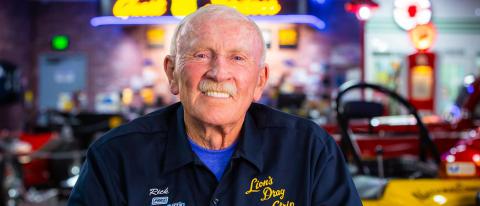
Rick Lorenzen


Rick Lorenzen, founder of the Lions Automobilia Foundation in Rancho Dominguez, California, has passed away. 

In 2019, Lorenzen established the non-profit foundation and museum—which today encompasses nearly 100,000 square feet—to celebrate and preserve Southern California's unique car culture and motorsports history. 

The organization shared the following statement: 

It is with a heavy heart that we share the news of the passing of our beloved founder, Rick Lorenzen. Rick passed away peacefully on Sunday evening surrounded by family. 

Rick's vision was the guiding light in the creation of the Lions Automobilia Foundation [through] his leadership and steadfast commitment to preserving and sharing with others what he referred to as a "simpler time." Rick enjoyed telling stories about watching the races at Lions Drag Strip as a young man with his friends, and later meeting so many legends as they visited his treasured museum.  

"As we navigate this challenging period, please know that I am committed to continuing Rick's vision and values. My dedication will ensure that we remain strong and united, honoring Rick's legacy in every step we take," said Tami Lorenzen-Fanselow, daughter of Rick Lorenzen and treasurer and CFO of Lions Automobilia Foundation. 

Rick's passion, commitment, and hard work have left a mark on all of us, and his legacy will continue to inspire us. 

For more information, visit lionsautomobilia.org.  

Image courtesy of the Lions Automobilia Foundation. 

June 2024

Kyle Petty Charity Ride Across America Raises $1.8 Million for Victory Junction

Submitted by ajh on Tue, 06/18/2024 - 10:41
Kyle Petty Charity Ride


The Kyle Petty Charity Ride Across America raised nearly $1.8 million for Victory Junction, a camp in Randleman, North Carolina serving children with chronic medical illnesses.

Funds from the 28th annual ride, which took place May 4-10, 2024, will support summer camperships, building projects, and maintenance programs, including the building of the new Kyle Petty Charity Ride Water Park.

Former NASCAR driver and racing analyst Kyle Petty led 150 motorcycles across nine states on a seven-day trek, covering more than 2,100 miles and stopping at iconic American landmarks along the way. The Ride began in Deadwood, South Dakota, and ended in Greensboro, North Carolina, and included stops at Mount Rushmore National Monument, the Indianapolis Motor Speedway, Churchill Downs, the National Corvette Museum, and more.

For more information, visit kylepettycharityride.com.

June 2024

Road to the PRI Show: Attendee Registration Opens Tuesday, July 16

Submitted by laurap on Mon, 06/17/2024 - 17:41
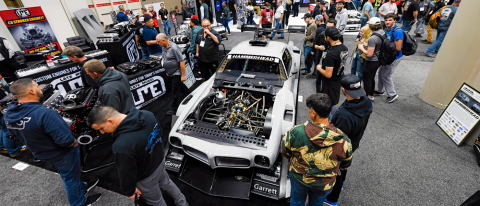
PRI Show LME booth Hammerhead and engine


Attendee registration for the 2024 PRI Show, December 12-14, at the Indiana Convention Center in Indianapolis, opens next month on Tuesday, July 16. This year's event will once again offer an attendee experience like no other motorsports trade show on the planet, focusing on the present and future of racing.

The PRI Show is the most influential business event in racing, featuring the newest parts and technology, access to countless manufacturers and service providers, and virtually unlimited opportunities to network face-to-face with industry leaders and professionals. Attendees can get excited for the Featured Products Showcase, the Grand Opening Breakfast (keynote speaker set to be announced at a later date), the world-famous Machinery Row with live demonstrations, the PRI ESports Arena, the EV & Alt. Racing Zone, the PRI Paddock & Podcast Studio, the T.O.P.S. HQ and much more. Relive last year's event with the YouTube video below!


Before registering next month, PRI Show organizers recommend attendees book their hotel rooms now to start planning the best PRI Show experience possible. 

In addition, prospective attendees should also renew their PRI Membership, which is required to attend the Show. Renewing your membership today ensures a seamless registration process when it opens next month. Not yet a member? In addition to joining forces with the racing community, PRI Members receive several exclusive benefits, including complimentary access to the PRI Show for qualified motorsports professionals. Visit performanceracing.com/membership/individual for more details and to sign up.

June 2024

IMSA GTP Race Car Homologations Extended Through 2029

Submitted by ajh on Fri, 06/14/2024 - 15:11
IMSA Logo


Officials from the International Motor Sports Association (IMSA) and the Automobile Club de l’Ouest (ACO) have confirmed that the homologations for the Le Mans Daytona h (LMDh) and Le Mans Hypercar (LMH) prototype race cars have been extended through the end of the 2029 racing season.

The platform made its competitive debut during the 2023 Rolex 24 At Daytona. LMDh regulations developed jointly by IMSA and the ACO call for each manufacturer to use chassis from one of four approved constructors–Dallara, Ligier, Multimatic, and ORECA–and a common hybrid powertrain that includes a Motor Generator Unit (MGU) supplied by Bosch, Xtrac gearbox and batteries from WAE Technologies.

Additionally, the current generation of Le Mans Prototype 2 (LMP2) race cars, which debuted in 2017, will continue through the end of the 2027 IMSA WeatherTech Sportscar Championship season. The LMP2 class also competes at the 24 Hours of Le Mans, the European Le Mans Series, and the Asian Le Mans Series. It was discontinued in the FIA WEC at the end of the 2023 season.

The next-generation LMP2, with new chassis and engines to be selected, is now expected to debut in 2028 instead of the originally planned 2026.

For more information, visit imsa.com.

June 2024

Lucas Oil's Corydon Facility Achieves ISO 9001:2015 Recertification

Submitted by ajh on Fri, 06/14/2024 - 14:54
Lucas Oil logo


The Lucas Oil production facility and laboratory in Corydon, Indiana, has met all the standards for recertification as ISO 9001:2015-Quality Management Systems.

The audit process of an ISO 9001:2015 certification consists of a detailed and thorough evaluation of an organization's entire quality management system in two stages. The first audit stage is a document review to examine a company's quality policies, scope statement, testing and evaluation processes and procedures, and record keeping. The second audit stage evaluates how the quality management system is conducted by employees to verify it matches the process outlined in the document review. This is done through employee interviews, by observing employee activities, and by reviewing sample records to ensure everything matches, the company said.

"The recertification of ISO 9001:2015 reflects the world-class facilities, technologies, teams, and processes that deliver products that boost power, fuel efficiency, and engine longevity for customers all around the globe with our proprietary science," said Matt Conrad, general manager of Lucas Oil. "We're proud to have been manufacturing the very best oils, additives, and lubricants for more than 30 years, and this certification validates the hard work being done by our entire team. This globally recognized standard exemplifies excellence exhibited by the entire organization and our unwavering commitment to customer satisfaction."

For more information, visit lucasoil.com.

June 2024

Holley Performance Brands Names Charan Mann CIO

Submitted by ajh on Fri, 06/14/2024 - 14:41
Charan Mann


Holley Performance Brands, the performance solutions provider based in Bowling Green, Kentucky, has named Charan Mann as its new chief information officer (CIO).

Mann will oversee the direction of the Holley Performance Brands information technology (IT) strategy. She will develop and execute a technology roadmap to elevate the online experience for Holley's retailer and distributor network, and enthusiasts.

In her most recent role at OneAmerica, Mann led IT operations across all IT disciplines. Before OneAmerica, she held various leadership positions at Zeta Interactive, Selligent, and Cummins.

For more information, visit holley.com.

June 2024