USAC will celebrate the Hall of Fame Class of 2024—which includes photographers Gene Crucean and John Mahoney; car owners the Hoffman Family; champion drivers Rickey Hood and Levi Jones; promoter Tom Marchese; and mechanic/car owner Jud Phillips—during an induction ceremony set for Friday, September 27, at the sanctioning body's headquarters in Speedway, Indiana.
The induction ceremony will be held the same weekend as the Driven2SaveLives BC39 for the USAC NOS Energy Drink National Championship at The Dirt Track at Indianapolis Motor Speedway.
A luncheon starts at 12 p.m. EDT, with the Hall of Fame ceremony slated to begin after the luncheon at 1:30 p.m. The ceremony is open to the public. A ticket will be required for the luncheon.
For more information, or to purchase tickets, visit usacracing.com.
The International Motor Sports Association (IMSA) and NBC Sports have agreed to a multi-year extension of their media rights agreement, keeping NBC Sports as the home of the flagship IMSA WeatherTech SportsCar Championship and other IMSA-sanctioned series.
As part of the agreement, NBC Sports will present 17 hours of IMSA WeatherTech SportsCar Championship coverage on the NBC broadcast network annually, nearly a 50% increase of broadcast network coverage per year from the prior agreement. Additionally, all WeatherTech Championship coverage will stream live on Peacock.
"Our partnership with NBC Sports has produced viewership increases for the IMSA WeatherTech SportsCar Championship every year from our first year in 2019 through last season," said IMSA President John Doonan. "We also have managed to deliver impressive audience growth on Peacock, which is an especially valuable platform for delivering live, flag-to-flag coverage of endurance races to our domestic race fans. We are thrilled to confirm not only an extension of our relationship with NBC Sports, but nearly a 50 percent increase in the number of hours on the NBC broadcast network beginning next year."
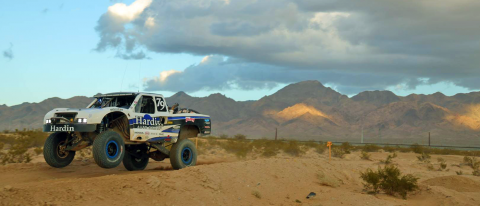
The California 300 off-road race, which returns to Barstow, California, for the third annual event, will be broadcast worldwide via a dedicated live stream.
Produced by Mad Media--the team behind the Mint 400 production--the livestream will include multiple ground cameras, drone footage, and in-car coverage via Starlink for several vehicles. It will also include commentary from off-road racing personalities Jim Beaver, Tiffany Stone and Jim Marsden, along with special guests.
"With two years of exceptional social media coverage under our belt for The California 300, our sponsors' support has enabled us to broaden our reach and livestream the event globally at no cost," said Matt Martelli, CEO and co-owner of Unlimited Off-Road Racing. "Our viewers can enjoy the full-throttle coverage they expect from our Mad Media team without a paywall. We're committed to showcasing the thrilling door-to-door off-road racing action to an international audience and applying our extensive live-streaming experience from The Mint 400 to enhance all our future events."
Gene Haas, founder of Haas Automation and co-owner of Stewart-Haas Racing, will continue to field a NASCAR team in 2025 with the new Haas Factory Team.
Stewart-Haas Racing, which Haas owns with NASCAR Hall-of-Famer Tony Stewart, is closing at the conclusion of the 2024.
Haas Factory Team will retain one NASCAR Cup Series legacy charter from Stewart-Haas Racing and operate a two-car NASCAR Xfinity Series team. Joe Custer will be the president of Haas Factory Team and it will operate out of the existing Stewart-Haas facility in Kannapolis, North Carolina. Drivers and team partners will be announced in the lead up to the 2025 NASCAR season.
"My commitment to motorsports hasn't changed, just the scope of my involvement," Haas said. "Operating a four-car Cup Series team has become too arduous but, at the same time, I still need a platform to promote Haas Automation and grow HaasTooling.com.
"Maintaining my presence in Cup allows Haas Automation to compete at NASCAR's highest level, which is important to our customers and distributors," Haas continued. "The Xfinity Series program provides a full weekend experience for our guests, and it delivers added depth and scale to our overall operation."
NASCAR has improved at-track inclusivity with the introduction of its new NASCAR Mobility Pit Box.
Developed in collaboration with Toyota, the pit box was designed to ensure that all fans, regardless of physical abilities, can enjoy race-day action up close.
The pit box features an integrated ramp and lift system, facilitating smooth and safe entry for guests using wheelchairs or other mobility aids, and can accommodate three guests in mobility aids and their companions.
For more information, including a look at the new Mobility Pit Box, visit nascar.com.
Teams in the NASCAR Cup series have traditionally cycled through cars at a rapid rate, opening the door for feeder
and historic series to create groups for these formerly retired machines to run in. Car counts are booming.
When NASCAR unveiled the seventh-generation “Next Gen” Cup car in May 2021, it represented a sea change for the series and the teams that race in it. Outfitted with a new chassis and body design, a five-speed sequential gearbox, and an independent rear suspension, the latest Cup car is a significant technological step forward from its predecessors.
“Nothing on the Gen 7 car transfers over from the previous Cup cars,” noted Danny Puchala of Stock Car Surplus in Gaffney, South Carolina. “That car is a beast all unto itself. I’ve built four of them from the ground up, and there isn’t a nut or bolt that’s common between the old car and the new one.”
For teams competing in the series, the changeover effectively made their sixth-generation cars obsolete. But as we discovered, the end of a car’s Cup series career isn’t necessarily the end of its racing days. While some with significant race history have gone on to live pampered lives in collections, more and more of them are getting back on track to mix it up in wheel-to-wheel competition once again.
The ARCA series is one of the most popular options for those looking to get a fourth- or fifth-generation Cup car back on the track. Here, two Gen 5 chassis fight for the win at Kansas Speedway, with Connor Mosack winning the battle in the Pinnacle Racing Group No. 28 over Joe Gibbs Racing’s Tanner Gray. Photo courtesy ARCA.
A Brief Window Of Cup Series Viability
While the introduction of the Next Gen Cup car ended its predecessor’s reign in the series, the replacement of fourth-, fifth-, and sixth-generation chassis during their respective eras in the series was shockingly rapid relative to the turnover rates seen in other series and racing disciplines.
“With the sixth-generation car, teams would often run them for five or six races and then get rid of them,” explained Jim Barfield of Vintage Racecar Restorations, Lafayette, Georgia. “The teams are always trying to build a better mouse trap. They were constantly building new cars with the thinking that the next car would be better than the last one. With the Cup guys, money is no object. Some of these teams have hundreds of employees, and those folks need something to work on. So unless a particular car was just going out there and kicking everybody’s butt, the thought was that whatever they were going to replace it with would be faster.”
Charles Krall of the ARCA series in Temperance, Michigan, also pointed out that the specialized nature of older Cup cars meant that a particular chassis might only see a handful of races over several seasons of racing. “With the Gen 5 car, I think most teams built their cars with the expectation that they’d run it for an entire season, if not longer,” Krall said. “But this was back in the day when some Cup operations would have 15 or 16 cars for 36 races. And some of the cars were very application specific. Some teams might’ve had a car that just raced at Kansas and Chicagoland. That’s just a couple of races over the course of a season, and that may very well have been that car’s expected life cycle.”
Carlus Gann of the Historic Stock Car Racing Association (HSCRA) told us that other cars have seen much longer stints in Cup series racing. Top-tier teams would sell their cars to others in the series after moving to a newer chassis, and those teams would in turn campaign that same car for several more seasons. “That’s common for the lower teams—they’d use one car regardless of whether they were racing at a road course or a super speedway.” But as NASCAR’s rulesets have evolved over the years, that has become a less attractive proposition. “For a period of time they kept changing the rules, requiring more steel to be put into the chassis in different areas. Eventually it’s just not cost effective to do that much work to an older chassis, and teams would have new chassis built instead.”
Puchala also said that safety concerns affected chassis’ Cup series viability in other ways. “Teams have an ideal weight that they want their cars to meet. With the Gen 6 cars, we’d have a chassis, floor pan, firewall, and fuel cell area sheet metal that could weigh as little as 725 pounds. But once you start cutting them up, it becomes a problem. For example, if a team has a crash and they repair the car, the repairs can add as much as 45 pounds to the car because of the materials that were required to get everything lined up and back together properly. So for many top-tier teams, if a car has been in an incident, they are done with it.”
Not The End Of The Road
Despite relatively brief service lives in Cup racing, many older cars have gone on to find long-term homes in other series. Today, the ARCA series is one of the most popular options for those looking to get a fourth- or fifth-generation Cup car back on the track.
“Some of these series are specifically used for driver development now,” Gann said. “It gives young drivers the ability to get up to speed and climb the ladder to get to the Cup series. Today, ARCA is the first step in that process.”
The end of a car’s (or truck’s) competition career isn’t necessarily the end of its racing days. More and more of them are getting back on track with various vintage racing organizations to mix it up in wheel-to-wheel competition once again. Photo courtesy Stock Car Surplus.
Krall said that while the majority of ARCA fields are fourth-generation Cup cars, the number of fifth-generation cars is growing. He added that ARCA’s approach to rules emphasizes driver skill over lofty budgets.
“Our front-line teams have at least one engineer on staff, if not more. But they’re not going in there and redesigning the chassis to make it go fast. We run spec bodies, so teams aren’t looking for millimeters in the wind tunnel, and the LS-based 396-cubic-inch engines come sealed from Ilmor Racing. So the development focus is really on the suspension more than anything else. The idea here was for the driver to make the biggest difference.”
Puchala said that while drivers campaigning Gen 5 cars in the ARCA series are awarded a weight break to achieve parity with the Gen 4 cars in the field, other modifications that are required of the Gen 5 cars have encouraged many teams to stick with its predecessor.
“The ARCA series has a composite body that more or less mimics the Gen 6 cars,” Puchala explained. “The problem is that the body doesn’t just fit over the Car of Tomorrow [fifth-generation] chassis. What teams have found is that they had to cut off the front clip and raise it 2 inches because the cowl height and splitter height were different. Teams would typically have to go to a chassis builder to have the front clip raised and have new down bars and a new sway bar tube put on it. That’s a $7,500 to $8,500 investment to do that, and it has encouraged a lot of the teams to put more miles on the older Gen 4 chassis.”
Xfinity is another NASCAR series where older Cup cars get a new lease on life. Xfinity is considered the next rung on the ladder from ARCA toward the Cup series, allowing drivers to further develop their skill sets before making the jump to NASCAR’s premiere series.
Historic Sportscar Racing (HSR) has opened a number of classes to bring stock cars into its racing programs. Eligibility goes back to pre-1980 NASCAR Grand National and early Winston Cup cars up to Nextel/Sprint/Car of Tomorrow entrants with chassis and bodies through 2017. Photo courtesy of Historic Sportscar Racing.
“At one point the Xfinity series was limited to 105-inch wheelbase, but because of the surplus of Cup cars, NASCAR opened it up to allow the 110-inch wheelbase of the Cup cars,” Gann said. “The cars had to have the bodies removed and have a Five Star fiberglass body installed. It’s also a different engine package, as Xfinity still uses a carburetor rather than EFI, but the transmission and everything else is pretty much the same.”
Other Avenues
The development track offered by the ARCA and Xfinity series provides young drivers with a clear path toward their motorsports goals, but they’re not the only places where older Cup cars are seeing action. Sports car racing clubs like the SCCA allow older Cup cars to run alongside Trans Am racers in the SPO class, but it’s vintage racing organizations that have seen the biggest influx of these cars outside of NASCAR’s own series.
“The car counts at vintage stock car races are getting way bigger,” Barfield said. “On the East Coast, the numbers have tripled in the past three years at the HSCRA events. We get a lot of folks coming to stock cars for safety. There is no safer race car than a stock car. Cost is also part of it. A ready-to-go, well-prepared stock car will cost you about a hundred grand. That’s not cheap, but you could easily spend $250,000 on a production-based Porsche. This is a lot of car for the money.”
HSCRA has also been running races alongside several NASCAR series events, and the reaction from fans has been overwhelmingly positive. “The growth of our series eventually caught NASCAR’s attention, so in 2023 they asked our Historic Stock Car group to participate in part of the NASCAR weekend at Watkins Glen,” said HSCRA’s Chris Evans. “The fans really loved it, so NASCAR asked us to participate at two events for the 2024 season, and we’re in discussions about bumping it up to four events for 2025.”
The majority of the vintage stock cars ARCA fields are fourth-generation Cup cars, though the number of fifth-generation cars is growing. Charles Krall doesn’t foresee adding seventh-generation cars anytime soon. “There are enough of those older Gen 4 and Gen 5 cars out there to handle the demand,” Krall observed. Photo courtesy of Stock Car Surplus.
While HSCRA’s ruleset requires modern safety equipment, the cars are otherwise built with period correctness in mind rather than outright pace, and organizers will allow racers to build clones of original cars that can’t be found in the wild.
“The goal is to get the cars to represent those timeframes as closely as possible,” said Gann. “And while it’s not a contact sport, we race hard, and we race fast. So while we do our best to keep them mechanically in-period, we have to update them to current safety standards. You don’t want to be running the safety equipment they had in the 1980s—you want a full containment seat with a HANS device. It might upset some people to see an older car with a containment seat in it, but we want these cars to be as close to modern safety standards as possible.”
Barfield said that HSCRA encourages racers to otherwise set their cars up to be as in-period as is feasible. “We do kind of police ourselves, and we have an experimental class that racers can end up in if we see that things are getting out of hand. If your car had a C3 Ford motor in it originally, that’s what your car has to have in it. You can’t go and put an RF9 in a 2000 Taurus and expect to race with the main group. That’s not what it had back in the day.”
Puchala cited Sportscar Vintage Racing Association (SVRA) and Historic Sportscar Racing (HSR) as other organizations that have provided classes for older Cup cars to run in as well, though he said that these races tend to take on a different vibe than ARCA and Xfinity events.
“There’s a bit of a parity issue at some of these SCCA and SVRA races, but it’s because of different levels of experience,” he said. “I’ve sold cars to doctors and lawyers, racers who have great income streams, but they’re buying more car than they’re ready for. They want some like a Hendrick Performance Track Attack car—a 900-hp stock car. And they may have never driven a Mazda Miata on a race track before.”
Organizations like the Grand National Super Series land somewhere in the middle, he said. “This series was started by Bob Schacht, who is a former ARCA driver. They race Gen 4 and older cars, and they have a whole balance-of-performance system based on the power plant that you have in the car. You can run everything from a dry-sump small block Chevy to a Toyota Phase 11 or a Dodge R5, and they’ve got weight breaks to keep things competitive regardless of budget.”
Looking at ARCA’s long-term prospects, Krall said that he expects to stay on the established course for the foreseeable future. That means the series won’t be making the jump to the current seventh-generation Cup car anytime soon.
“I think there are enough of those older Gen 4 and Gen 5 cars out there to handle the demand, and they’re still building Gen 5-style cars for Xfinity series use. We’ll stick with this platform for as long as we possibly can.”
Vintage series are enjoying record car counts as interest continues to climb at a steady rate.
While some disciplines are still struggling to find their footing in a post-pandemic motorsports landscape, vintage racing is decidedly firing on all cylinders. Considering the inherent expense involved in sports car racing, and the additional premiums that are typically attached to anything deemed “vintage,” the strength of the segment may come as a surprise to some. And given that vintage racing isn’t an obvious path for sportsman racers looking to ascend through the ranks in pursuit of a professional career, this success story may seem even more improbable at first glance. But the numbers don’t lie.
“Globally, it’s on an upward trajectory right now,” explained Chris Ward of Historic Sportscar Racing (HSR), Daytona Beach, Florida. “Like everybody in the live event industry, there were some resets needed—some because of the business case, and some because of the customers’ needs and wants. We are seeing a very positive trend emerging. There’s a distinct resurgence in interest in vintage and historic sports car racing. Our first two events of 2024 were record breakers for HSR. Our season opener—the Sebring Spring Fling—brought in 85 cars in 2023. This year, it was 130. Last year we had 233 cars at the Mitty, and we have 282 entries this year.”
Ward cited a pronounced upswing in interest in the organization’s Group 2 and Group 3 categories (1950s and 1960s vintage production cars, and mid-1960s through 1980s small-bore historic production cars, respectively), but the sentiment is consistent throughout vintage racing at large. Yet as we discovered during our discussions with organizers, there isn’t one specific formula for success. Instead, these associations have taken a tailored approach to their formats and events that reflects the expectations of their racers and the shops that support them. That, in turn, has created factions within vintage racing with distinctively unique approaches to the concept.
Defining Vintage
For many, vintage motorsports conjures up mental images of vehicles from those aforementioned categories: race-prepped Lotus 7s, MGs, Alfa Romeos, and the like. But organizations like HSR actually take a much broader approach to the term.
“Our philosophy is that a vintage car or historic car which fits into one of the groups within HSR is eligible to race once the homologation of that vehicle is more than five years old,” said Ward. He explained that while some organizations look at the mid-1970s as the spiritual cutoff for vintage race cars, HSR’s definition offers some key advantages.
“When Historic Sportscar Racing was acquired by IMSA two years ago, it created an alignment of the groups and classes in a number of instances between HSR and IMSA competition from years prior. For example, the wonderful DPi [Daytona Prototype international] cars that only finished IMSA competition two years ago. We have half a dozen of those running with HSR now. If we didn’t have this ruleset, those cars would probably be shuttered away in collectors’ warehouses because they’d have nowhere to race.”
That perspective is shared by Ron Hurst of the Vintage Auto Racing Association (VARA) in Chino Hills, California. Although VARA generally serves a more grassroots portion of the market, in recent years the organization has been turning its attention to newer platforms for many of the same reasons.
“Historically, the cutoff has been 1974 for vehicle eligibility; essentially the pre-smog era,” he said. “I think that had a lot to do with the point in time when the vintage segment really got its start. But today, even a ’94 Miata is 30 years old. So we’ve been updating our definition of what a vintage car is in order to reflect that.”
Hurst also pointed to the skyrocketing values of many 1950s and 1960s sports cars, a trend that has made these vehicles a prohibitively costly proposition for a large portion of would-be racers.
The HMSA puts an emphasis on period correctness, said Cris Vandagriff. “We don’t want modern aero devices on the cars and things like that.”
“You have to ask yourself how you are going to keep participation up as many of those cars become too expensive to race,” he said. “What we found is that many of the cars that were raced in the SCCA 20 years ago—Miatas, A Sedan cars like Camaros and Mustangs, and so on—are no longer competitive within the classes that they were running in. So a lot of those cars were left without a home. If you’re a very strict vintage club that only accepts ’50s and ’60s sports cars, I think you’re quickly going to run into trouble because those cars are drying up. You’ve got to think farther forward.”
In recent years, VARA has opened up competition to not only former Spec Miata cars, but also fourth- and fifth-generation Corvettes, ’80s and ’90s BMW 3-Series, and other more modern platforms that would otherwise not have a place to race today.
Meanwhile other organizations, like the Montrose, California-based Historic Motor Sports Association (HMSA), have chosen a different tack. “For production-based cars, our world stops in 1966,” said Cris Vandagriff. “It’s a bit of a sliding scale, though. We’re fans of Can-Am cars, which go until ’74, and the same thing goes for Formula 5000. With Formula 1 cars, we go up to the end of ’84.”
The traditional concept of historic racing—featuring sports and racing cars of the 1950s and 1960s—is changing, as many organizations are opening their roles to newer competition vehicles in an effort to keep historic cars on track and broaden their competitor base.
Vandagriff noted that HMSA takes a more faithful approach to the vintage racing concept than some other organizations. “Our rules are really simple: Prepare the car as it was originally prepared. We don’t want modern aero devices on the cars and things like that.”
He also told us that tentpole events like Velocity Invitational—held annually at Sonoma Raceway—and the Rolex Monterey Motorsports Reunion—held annually at WeatherTech Raceway Laguna Seca—have brought greater visibility to the vintage segment for a group of enthusiasts that essentially mirror HMSA’s own clientele and champion its mission.
Vandagriff emphasized HMSA’s commitment to period-correctness, but added, “It’s difficult to stay true to your principles and make the bottom line work at the same time.”
Much like HMSA, the New Britain, Pennsylvania-based Vintage Sports Car Club of America (VSCCA) prizes the historic importance of the cars competing as much, if not more so, than the racing itself.
“One thing I try to instill in people is that we are not a vintage racing club,” said JR Mitchell. “We are a car club that is dedicated to the preservation and history of sports cars in general. We’ve always sought to preserve rather than to get the latest and greatest trick thing on the cars. So our log books are stricter than most others, and the same goes for the rules.”
Mitchell said that while these cars can require a significant upfront investment, VSCCA’s approach significantly reduces another large expense: development costs.
“That’s probably the most expensive part of running a modern car—the constant development that’s required in order to keep up. But these cars are essentially frozen in time, as far as development is concerned,” Mitchell explained. As a result, organizations like VSCCA and HMSA also tend to attract a different type of competitor.
“Generally speaking, these folks aren’t looking for a career in racing, or a return on investment,” he continued. “These people are doing it because they enjoy it and it’s fulfilling to them. The only people who are really making money in vintage racing are the shops. There’s no prize purse involved, and that tends to bring in a different mindset.”
A fairly unique demographic comes along with it. “It’s doctors, lawyers, and Fortune 500 people,” said Vandagriff. “This is the type of thing where you could be sitting in the grandstands and think, ‘Hey—I could do that.’ And then actually go do it.”
A Different Vibe
Without prize money and the prospect of a career in motorsports on the line, vintage events also tend to avoid some of the pretense that’s pervasive in many other racing segments.
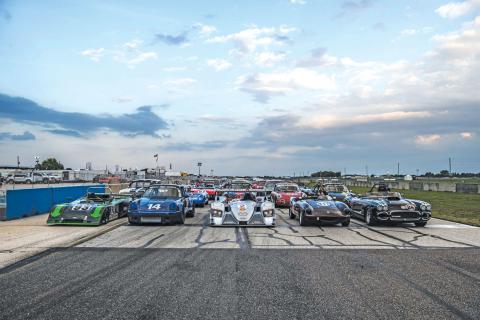
HSR’s Chris Ward sees growth in the historic racing segment. “Our season opener—the Sebring Spring Fling—brought in 85 cars in 2023. This year, it was 130. Last year we had 233 cars at the Mitty [seen here], and we have 282 entries this year.”
“Without taking anything away from the level of competition that we see in HSR, because it is very competitive, it is different from what we typically see in those types of series,” said Ward, who formerly served as head of motorsport operations for Lamborghini North America. “When the teams get set up on load-in day, the lights aren’t on past midnight with crews doing final tweaks to the cars in preparation for a session the following morning. It’s not that. On load-in day, everyone wants to finish their setups so they can enjoy the social aspect of being in the paddock. It’s a different atmosphere. It’s one of the wonderful things about vintage and historic racing, really.”
Hurst said that, in the vintage segment, the racing itself is the end goal. “Generally speaking, these people have the means to sustain their racing programs regardless of their finishing positions. These folks tend to look at this more as a hobby. The reward is getting to race the car.”
Staying On-Throttle
While social media and livestreaming have been areas of promotional focus for many vintage racing organizations over recent years, most agree that word of mouth continues to be the biggest driver of interest and participation.
“Prior to the pandemic, there used to be a Friday night paddock social at HSR events,” said Ward. “Of course, during the pandemic and the years following, the paddock social disappeared, but we just re-introduced that at the annual Mitty event at Road Atlanta this year. It’s a small world, and when people are having fun, word tends to spread quickly in circles like these. I think that because of this dynamic, we have to make sure that the off-track presentation is as good as how we conduct ourselves on-track. That extends to branding, paddock layout, and these social aspects, which are incredibly important.”
At HMSA, “for production-based cars, our world stops in 1966,” said Cris Vandagriff, though he added that the year cut-offs are on a “sliding scale” for other types of competition cars, including Can Am and Formula 5000 (1974), and Formula 1 (1984).
For organizations like VARA, the strategy is focused on finding new ways to expand its reach and get more racers on track. “Every year in January we run a two-day racing school,” said Hurst. “It’s very intensive—8 a.m. to 5 p.m., with classroom instruction, on-track sessions, along with skid pad, braking, and slalom exercises. We take race-prepared cars for people who are working toward a competition license; at the end of the school, graduates are awarded a provisional racing license, and the school counts as two race weekends toward their full competition license. We also offer several levels of high-performance driving instruction for those who bring street cars, and the school provides a great introduction into the world of racing for those folks. Every year we have between 100 and 120 students, and it commonly sells out.”
At $575 for would-be racers and $250 for HPDE (high-performance driving event) students, the school provides a taste of sports car competition for a surprisingly modest fee.
“The first step in getting somebody into a race car is getting them to a race track,” Hurst said. “If you get them on the track and let them experience a little bit of what it’s like to race, they’re hooked.”
A vintage or historic car that fits into one of HSR’s run groups is eligible to race once the homologation of that vehicle is more than five years old, said Chris Ward. “If we didn’t have this ruleset, those cars would probably be shuttered away in collectors’ warehouses.”
For organizations like VARA, which is effectively using a rolling timetable for vehicle platform eligibility, there’s a sense that as long as people want to race, there will be cars and components available for them to do so. The situation seems more tenuous for outfits that have shied away from moving those goalposts forward, but when asked about concerns regarding vintage parts availability in the future, Mitchell remained optimistic about VSCCA’s prospects.
“The situation isn’t as dire as it used to be. At this point we can simply fabricate parts if we need to. That’s something that we do on a regular basis these days. We’ve made wheels, uprights, bellhousing adapters—virtually whatever there’s a demand for, we can make. In a way, it’s actually getting easier as time goes on. We can scan a part, 3D print it, and CNC it from there. As a result, there’s a lot more stuff available today than there was just a few years ago.”
The right guidance goes a long way toward creating tomorrow’s racing stars.
Driver development programs are not a new concept, although in recent years, it seems the number of such programs has exploded. Part of that perception stems from high-profile efforts with the full backing of sanctions, auto manufacturers, and sponsors, such as the NASCAR Drive for Diversity Program operated in conjunction with Rev Racing.
The goals of Drive for Diversity and similar programs are fairly straightforward: to increase participation from traditionally under-represented groups, while attracting an expanded, younger demographic of fans along the way.
But the new wave of driver development programs is coming at the issue from a lot of different directions, with a variety of motivations behind the programs. Whatever the reasons behind establishing these pathways to success, all are dedicated to creating opportunities for the next generation of drivers. Some of these programs are even dedicated to developing entire race teams or offering a leg up to experienced racers looking to jump to the next level. Our sources offered insight into what it takes to put drivers on the winning path, and their own reasons for launching their programs.
AB Motorsports’ Accelerate program isn’t just for up-and-coming drivers. Antron Brown (right) also helps experienced racers with the transition into different series. In the seat is veteran Pro Stock Motorcycle racer Angelle Sampey, who is moving into A/Fuel Dragster.
Motivated Drivers, Motivated Programs
JCM Racing in Brownsburg, Indiana, is a multi-car NHRA team that established the JCM Racing Driver Development Program in 2023. “Basically, the intent of the program is to try to develop young people into better people, for one thing, and also give those that have a little passion for racing the opportunity to race,” said team owner Joe Maynard. “So what we decided was, we’d try to find one driver in each division and help them financially and give them access to our professional drivers—Tony Schumacher— crew chiefs if they need input on that kind of stuff, just the opportunity for them to talk, meet, see, pick up a phone, and call. We now have Ida Zetterström [2023 FIA Top Fuel World Champion, and current NHRA Top Fuel competitor] on our team. She works very well with some of the females. She’s already had good conversations with them.”
The Kulwicki Driver Development Program (KDDP) in Concord, North Carolina, was established in honor of the late Alan Kulwicki, the 1992 NASCAR Winston Cup champion and NASCAR Hall of Famer. “The whole beginning of the program could be traced back to around 2013, when Thelma Kulwicki, Alan’s stepmom, was looking around trying to figure out what she could do with the money that was left over in his estate,” said Tom Roberts, executive director of KDDP and a personal friend of Alan’s. “She wanted to do something that would continue his memory and legendary status by assisting in some way a grassroots racer or racers.”
The KDDP program was up and running in 2014. In honoring Kulwicki, the number 7, his racing number, plays a prominent role. “The seven finalist drivers get a $7,777 stipend. We compete for seven months, April 1 through October 31. The irony of that is that the first day of our annual competition, on April 1, is also the same day that we lost Alan. I didn’t think about that at first, but it’s almost like an annual, perpetual reawakening of Alan through his drivers through the years.
“Those seven drivers then compete for the grand prize, the Kulwicki Cup, which is seven times the finalist stipend—$54,439,” continued Roberts. “Plus, support for PR, business networking, even a priest if you need him.”
Antron Brown, three-time NHRA Top Fuel champion, launched the AB Motorsports Accelerate program in 2023, although he had been advising up-and-coming racers long before that. For Brown, his own experiences in breaking into racing were still fresh on his mind. “I created it because I know how hard it was when I first started,” he said. “We have driver development underneath our Accelerate program, but it’s actually a program to do a lot more than just develop drivers. It actually helps to develop race teams, to help people out on the marketing side, to help people put sponsorship decks together. We work with different race teams and people on all different levels to help them develop their social media.
“We had all these different assets I’d invested in,” continued Brown. “I thought, ‘You know what? We developed all this that we can use to help other people out on multiple levels.’ On the driver side, I can help drivers on their mindset, their driving. I’ve been doing it for years. And then I can help other race teams out on the sponsorship side. Not just to help them get sponsorship, but to help them retain and keep the sponsorship relationship healthy. A lot of people get sponsors and can’t keep them because they don’t know what it takes to keep them. We help on all those facets. Everybody’s got driver development programs, putting people in cars. We’ve got that, but our program is so much more. You come here and we help people on all different levels to accelerate them in the direction they want to get accelerated in.”
Waylon Bennett (right, fist-bumping with Joe Maynard) represents JCM Racing’s Driver Development Program for NHRA Division 2. Bennett recently won the NHRA Summit Jr. Drag Racing League National Shootout at zMAX Dragway.
For Venturini Motorsports in Concord, North Carolina, the origins of its ARCA-focused driver development program began out of necessity. “We were more like a mom-and-pop type race team from pretty much when my dad [Bill Sr.] drove, when I drove, right to the end of my career,” said Billy Venturini. “I kind of had to come to the realization I wasn’t going to be a Cup driver. Our funds were tight, and we got to the point we were just extended too much to try to keep racing.”
Fortunately, his friendship with JD Gibbs opened doors to shifting the business to driver development. Joe Gibbs Racing had one of the early diversity programs and was looking to expand its reach into ARCA. The Venturini family’s deep racing experience in ARCA proved just the right fit, and the driver development program was born. The early years weren’t easy, but the program’s big breakthrough occurred in 2008, when it fielded Joey Logano at Rockingham.
“That’s the day, without a doubt, that put us on the map in driver development. That race was super-hyped. It was the reopening of Rockingham,” Venturini recalled. “It was the highest paying race they’d ever had in ARCA. It paid something like $34,000 to win. We were down there with Joey and honestly, we killed them. We were fastest in practice, we sat on the pole, led 260 laps, and at one point lapped the entire field but one car. So not only did we win, but we got style points. It was such an ass-kicking that you couldn’t deny what you saw. We were immediately on the map.”
Lessons Learned
Typically, there are two major facets of driver development: on-track development, and navigating off-track relationships with sponsors, fans, and media. How each of these is weighted varies from program to program. Some programs are conducted in-house with specific training regimens, while others offer financial and equipment assistance to existing family race teams along with access to accomplished drivers, experienced pit crews, and marketing pros.
Venturini Motorsports serves as Toyota Racing Development’s (TRD) official driver development program in the ARCA series. They sometimes funnel drivers into the Toyota Driver Development (TD2) program, and Toyota frequently sends drivers to Venturini Motorsports for stock car experience. The resources available from a major manufacturer like Toyota can make a huge difference for a driver climbing the competition ladder.
“Once they are involved with us, if they run half the season or more, they end up getting a lot of Toyota development perks,” Venturini said. “With Toyota we have trainers, nutritionists, a whole training facility with heat rooms, and different analytics we run through like breathing tests, things like that. They can tell you how many calories to eat for how many your body is burning. There’s all kinds of stuff they monitor. It’s really high-tech stuff.
“With the simulator, we can break down their driving so well. I can talk about angles of entry, and we’ve got brake pressures, lifting points, and steering wheel angles. I’ve got an engineer who basically runs computer stuff for us all the time. And we can break everything down and really show them exactly.
“These drivers have never had tools like this until they’ve been here. Now we can hone their skills,” Venturini continued. “It’s not only a driver simulation, it’s a car simulation. My race car is the race car you’re running in there. All my stuff is measured by Toyota, and all my pieces that go on the car are serial numbered and measured, and then the computer literally puts the car together for us in the program. Then we can make changes to the car. They’re driving our race car in the simulator, the exact race car they’re going to drive.”
The driver development program started by Billy Venturini (left, receiving NASCAR’s Diversity Award) is now TRD’s official development program in the ARCA series. The resources available from a manufacturer like Toyota can make a huge difference for a driver climbing the competition ladder.
AB Motorsports’ Accelerate program includes young drivers breaking into the sport, but Brown has cast a wider net to include experienced racers looking to move to different series or start their own teams, even athletes in other sports. Among the people Brown has advised are Pro Stock Motorcycle racer Angelle Sampey as she shifts to A/Fuel Dragster competition, and Shawn Reed as he started up his Top Fuel team.
“It’s different for everybody,” Brown said, “You have a lot of people out there already doing it, but then they’re looking at how to go to the next level. To go to the next level, they don’t know what it takes, they don’t even know what kind of budget it takes to do it. They have a set price in their mind. Then when they see it, they go, ‘Oh, I didn’t even realize. I didn’t realize this; I didn’t realize that.’ And there’s no standard. There’s no place to go. There’s no ‘Racing for Dummies’ out there, there’s no ‘CliffsNotes’ for you to go do it. That’s kind of what the AB Accelerate program was all about, bringing that so we could make a lot of people successful in motorsports.”
Off-track guidance plays a crucial role in driver development, particularly for younger drivers in the age of social media. “We’ve had some things maybe that the look wasn’t correct, or their social media wasn’t becoming to them, or not reflective of what they want to be or what we want them to be,” Maynard said. “Those have been the biggest challenges, my social media folks getting with people and saying, ‘That photo is not what you want out there, or you need to change your look, your talk, your feel.’ Those kinds of things. Most of these kids are great kids, and their parents are good people.”
Mindset is often just as important, if not more so, than mastering the nuts and bolts of race car operation. “I feel like I’m probably as much a sports psychologist as I am a team owner, or ex-crew chief, or ex-driver,” Venturini said. “Just teaching them about all the trials and tribulations that go into this, teaching them what really needs to be done for it. We talk about the fear of failing. What holds drivers back? Honestly, most drivers that fail, they stop themselves. They can’t get out of their own way because they get worried about not making it. So we openly talk about it. Because that’s so taboo, no other place wants to even talk about it. We talk about the dream of being a race car driver and how being fearful of failing is probably going to make sure you fail.
“We try to keep them loose, try to keep them in the right mind of processing their situations, not letting the moment get too big,” Venturini added. “Every now and then they need to be told to get out of their own head. They’re young drivers and they want this so bad.”
Tomorrow’s Stars
Although driver development programs work to create tomorrow’s racing stars, it usually doesn’t take long to see the results. In many cases, tomorrow is here today.
Waylon Bennett represents JCM Racing’s Driver Development Program for NHRA Division 2. As this was being written, he won the NHRA Summit Jr. Drag Racing League National Shootout at zMAX Dragway on April 28.
Levon Van Der Geest, who at age 15 was the youngest winner ever at the Milwaukee Mile driving a Midwest Truck, was a Kulwicki Driver Development Program finalist in 2023. He has made a successful transition from trucks to super late models.
At KDDP, school alumni grabbed all the top positions at Slinger Super Speedway for the 2024 ASA Midwest Tour season opener. “Ty Majeski, who was our inaugural 2015 Kulwicki Cup Champion, he won the race, and of course, celebrated with a Polish victory lap in tribute to Alan,” Roberts said. “Finishing second was Max Kahler, who is a 2024 KDDP finalist. Finishing third was Luke Fenhaus, who was the 2021 Kulwicki Cup champion. Finishing fourth was Alex Prunty, who also established a new track qualifying record there. Alex was our 2016 Kulwicki Cup champion. Positions one through four were all Kulwicki Cup alumni or current drivers.”
Through the 2023 season, 41 drivers have gone through the KDDP program, competing in 1,260 races and recording 205 wins, according to KDDP.
Natural talent, of course, is a decisive factor in which racers make it to the top. But driver training can be the X-factor that levels the playing field. “At the end of the day, the driver still has to be able to do it. You can train all you want, but there are still some people who drive cars better than others. We can close that gap a whole lot better than they used to be able to,” Venturini said.
“You can tell when someone’s special,” he added. “We can make someone definitely really good, but to be what we would call ‘Sunday good,’ you can spot that the first day they walk in the door. Stalling out on Saturday isn’t getting all the way there. If you’re really going to be successful out of this place, you’re racing on Sunday.”
Signing Up
Not surprisingly, being accepted by a driver development program is a competitive endeavor. “We have a line of people calling us. We have way more people calling us than we have availability,” said Billy Venturini of Venturini Motorsports, Concord, North Carolina. “It’s a great problem to have. This is not like it was in the struggling times of yesteryear. We’re in high demand, but we do nothing but Toyota-affiliated drivers. Not every driver who comes in is Toyota affiliated, but if I find them, they become Toyota affiliated just by being with me.”
At the Kulwicki Driver Development Program (KDDP) in Concord, North Carolina, selection of the finalists is a detailed and involved process. “We do Zoom calls with our interviewing process for applicants. We will name 15 semi-finalists and deduce seven finalists from that every year,” KDDP’s Tom Roberts said.
“It’s all based on application and review,” he continued. “Each December we open up applications. People can apply online and then the board/voting panel will take all the applications and put them in spreadsheets. All the voters get to review the applicants. Then we have Zoom calls among the voters, and each of the seven voters submits their top 15 out of all the applications we receive, and then by virtue of that vote we establish 15 semi-finalists. Each one of them has a Zoom interview with the board. After that concludes, the voting panel reconvenes and votes again. That’s how we select our seven finalists.” —Steve Statham
Keith Kunz shares how he built Keith Kunz Motorsports into the midget racing powerhouse team it has become and why it’s also the “go-to team where everybody wants to have their product.”
Keith Kunz will be the first person to tell you that most drivers of midget race cars are hobbyists, just racing for fun and a few bucks at their local dirt tracks. At the most basic level, racing is fun, and people often get into it for a few years and then move on to different activities. But among all the weekend warriors there are young drivers with the promise of greatness, and Kunz has a sharp eye for the qualities that can carry a driver to the big time.
His record so far is impressive. It was Kunz who identified an 18-year-old Kyle Larson racing midgets at Perris Auto Speedway in California. Larson, of course, went on to become not only the 2021 NASCAR Cup Series champion with Hendrick Motorsports, but also was part of the winning driver lineup to earn the 2015 24 Hours of Daytona overall victory with Chip Ganassi Racing in sports cars. After Larson moved up the ladder from midgets, he was replaced by Christopher Bell, who now drives in the NASCAR Cup Series for Joe Gibbs Racing. The list of Kunz graduates goes on, culminating with Jade Avedisian, who won the 2023 Xtreme Outlaw Midget Series championship, becoming the first female driver ever to win a national midget series title.
We spent some time with Kunz to ask him for his secrets of success and his vision of midget racing as a farm system for producing great drivers.
Jade Avedisian won the 2023 Xtreme Outlaw Midget Series championship driving for Keith Kunz Motorsports (KKM). Kunz remains on the lookout for top talent in the micro sprint series, where Avedisian came up. “The sport is craving for a great female driver to come along, and Jade has filled that role,” he said.
PRI: Tell us a bit about yourself. How did you get to where you are today? Kunz: I grew up in Springfield, Illinois, and my family raced. My grandfather raced midgets; a couple of my uncles raced midgets. One of my uncles was Chuck Weyant, who raced Indianapolis back in the late 1950s when the road to that was through midgets and sprint cars. As my cousins and I grew older, we all started racing motorcycles and then eventually midgets. My dad was always going to the races with my uncles, and I just grew up around it.
I had a midget that I drove in 1986 and 1987 for about a year and a half. I wasn’t very good at it, so I was able to get other people to drive. Then in 1990, my brother Rusty came to me and said we should put all of our stuff together and buy one good car. We did that, and we were always able to get very good drivers. We still worked normal jobs and kind of did it as a hobby, but we really got to know people in the industry. Then in 1997, Pete Willoughby started a team back here in the Midwest, and he wanted to move up to the USAC national scene and hired me to come back here. We’ve been together ever since. PRI: What’s the attraction of midget racing? What keeps you interested? Kunz: I personally think it’s some of the best and most competitive racing there is. It really teaches a driver how to race. With a lot of racing, you’re at the mercy of the cars, but with midget racing you can showcase your talent, especially on the dirt side where the driver really has to adapt to changing track conditions. As a race goes on, the fast line could move top to bottom, and back to the top through the middle. It could move five or six times during a 30-lap race. It’s some of the most intense racing there is, and the skill set that they learn seems to apply as they move on. Midget racing teaches us some of the best car control ever, I believe.
Keith Kunz (center) said it can be difficult to hire team members due to the team’s demanding schedule. “Our schedule is around 80 races a year. So there are some two- and three-day weekends. Sometimes we’re gone on the road for three or four weeks. It’s really hard for people who have families to be gone like that.”
PRI: What’s the reason your team is so successful? Do you have a secret ingredient or secret sauce that you think gives you an advantage? Kunz: I think it’s knowledge. What we’ve built is unique because we do it for a living. This is a hobby for most midget owners. So they come and go quite a bit. But when Pete Willoughby and I started this team, we didn’t have anything. We just decided we wanted to go. We were into racing, and we decided we wanted to try to do this and this only. We didn’t have anything to fall back on, so we had to succeed. We’ve built this team over 25 years now. So I think what we have that other people don’t have is just the knowledge. I’ve been everywhere in the country racing midgets, and we really keep on top of the innovation in the sport, coming up with new stuff constantly. I think 99% of the people out there who race just buy off the shelf and put it together. We are the guys who really innovate and set the tone for what’s out there.
Most of the time we’re one step ahead of everybody because of our partnerships with a lot of the suppliers in the racing industry. For their products to be successful, they have to be on winning teams. We’re that go-to team where everybody wants to have their product. We’re always out in front of that, constantly trying new things and developing new things and trying to stay ahead of the competition before it comes out on the shelf and everybody else has access to it.
Whether that’s in chassis development or motor development or a little bit of everything, that gives us a little bit of an advantage. I have a hired staff of mechanics and crew chiefs, and we have lots of books and notes so we’re able to get up to speed very, very quickly with drivers. A lot of dads think they can do it themselves and do it a lot cheaper, but it takes a lot longer. It takes years to get knowledge and to be competitive, where here they can step in and be competitive and winning within a few races, if their kid is really, really good. That’s because we have the knowledge with the car and the setup, and it accelerates a person’s learning curve and development as a driver so much faster by coming through us. PRI: You won last year’s Xtreme Outlaw National Midget Series championship with Jade Avedisian, and you have other female drivers on the team. How do you think midget racing and motorsports generally can encourage more young women to compete at the national level? Kunz: A lot of our young kids are coming through the micro sprint series, which is from age six on up. We’re big believers in watching that series and helping that series because there are more and more female drivers who are trying to race as kids. You see more and more of them in that series, and then you’re able to see which ones are good. That’s where Jade came through.
It’s hard to say what you look for, but there’s just something you see when you have been around long enough that you can tell the ones who have talent. It’s usually the ones who overachieve in lesser equipment, and then just to give those girls a chance is huge. A girl actually has a financial advantage right now because of the push for diversity in the sport. The sport is craving for a great female driver to come along, and Jade has been the one who has filled that role.
I think the opportunity is there. It’s just a matter of finding the female drivers. I think they’re outnumbered by the boys who want to race as they go through their teenage years. But the ones who do stick to it and are determined to showcase what they have, those are the ones who get noticed if they get results. When you get these opportunities, you have to produce. If you can produce, they’ll keep moving you along because there is that need.
“Toyota has been interested and very helpful in anything that we need in development,” said Keith Kunz. “They have really seen the value in grassroots racing helping their development of drivers to go on through NASCAR.”
PRI: When you go to hire somebody to be on your team, are there any particular traits you look for? And on the other side of that coin, are there any deal breakers? Kunz: Yeah, it’s very demanding. Your time during our schedule is around 80 races a year. So there are some two- and three-day weekends. Sometimes we’re gone on the road for three or four weeks. It’s a very demanding schedule. To find crew guys who can do that, there’s a lot of things you have to look at. Number one, their knowledge, their background, and how long they’ve been around it. But also, we talk to them about their private life, about how tied down they are. It’s really, really hard sometimes for people who have families to be gone like that. Sometimes they’re okay with it, sometimes they’re not. So you just got to get that sense of all that and their background.
At the beginning of this year, we were looking for employees. We had three of our really good people move on. One of the big benefits of our team is that not only do our drivers move on, but our crew members move on. One of them, Jared Martin, who was one of our crew chiefs, moved on to go to work for Chip Ganassi Racing. Another kid started as a tire guy and moved up to crew chief last year. He’d been with us three years, and he went to NASCAR to a truck team. We have so many eyes on us that crew performance is also noted out there, and there are opportunities for our crew members to move on and do other things. We encourage that because that’s another great reflection on us. PRI: One big factor in your success is your relationship with Toyota. How did that develop? Kunz: I believe it was in 2005 when Toyota decided to get involved in the grassroots midget racing. They were teamed up with Steve Lewis at that time. Then in 2008, we won the USAC National Midget Series championship with Cole Whitt. And during 2008, Steve Lewis decided he was going to retire and quit racing. Toyota came to us and wanted us to take over that segment and have their house car with Cole Whitt as the champion.
It started out as Toyota helping us with one or two motors in our program. They were new to it, and they were struggling, and we struggled for two years. We never won a race. They struggled trying to find the kind of power that we needed. We were able to talk them into getting involved with Rick Long at Speedway Engines in 2010. Right at the end of the year they came out with a new motor for us at the Turkey Night Grand Prix at Irwindale Speedway. We ended up winning that night with Bryan Clauson. Right there, we knew we had something.
Then going into 2011, we needed a driver. I had spotted Kyle Larson late that [previous] year, and at the Chili Bowl he was there driving for somebody else. My partner and I went and watched him, and we knew instantly that he was our guy. We ended up hiring Kyle for the 2011 season, and things just kind of took off from there. All of a sudden, we had a great motor, we had a great driver, and we started winning races. Well, somewhere through that whole process, Chip Ganassi took a chance on him and signed him. Toyota recognized that they had Kyle Larson right here in their hands and they let him get away. David Wilson and Tyler Gibbs of TRD came to us and said that would never happen again. At the same time, that put a lot of eyes on our team within the upper echelon of TRD. We were able to find Christopher Bell, and he won the USAC National championship.
Since then, Toyota has been interested and very helpful in anything that we need in development. They have really seen the value in grassroots racing helping their development of drivers to go on through NASCAR. They created the whole ladder system around Christopher. They put him in the very best stuff. That really built our relationship, and Christopher was able to
get results in everything that he did. He took up that opportunity and produced results that got him to where he is today. The beginning was with those two, and it has continued on to today. Jade is now under their banner and doing some road racing. The goal is for her to be that girl who supersedes everybody else.
We’ve been very, very fortunate to have Toyota support. It’s not only everything that we talked about, but they offer the kids on our team a chance to come down to North Carolina, go through their training performance center, go through media school, go through their physical therapies. They have a weight training deal, they have a nutritionist, and they do concussion tests on them at the beginning of the year. All these kids get every opportunity to succeed, even if they don’t stick with Toyota and they’re able to move on to somebody else. But as they’re coming up, they teach the kids how to be successful in the sport.
Keith Kunz believes it is knowledge and experience that keep KKM on top. “We’ve built this team over 25 years now. I’ve been everywhere in the country racing midgets. We are the guys who really innovate and set the tone for what’s out there,” he said.
PRI: Sponsors are hard to get, harder to maintain. What do you do for sponsors that’s different from other teams? Kunz: I think our biggest asset in getting sponsors has been Toyota. We do have our affiliation with Curb Records. Mike Curb has been in the sport for a long time, and he has been one of our team sponsors. But Toyota has relationships with a lot of companies, and they use that connection and have sponsorship that they get to control.
Then again, how you keep a sponsor is you promote them. The big thing now is social media. We have our own media guy, Jay Drake, who does all the social media stuff. We keep on top of that and try to promote the sponsors with our drivers and through the media training stuff. That’s one side of it. The other side of it is the racing products, Eibach Springs, all the different manufacturers of parts that want to be a part of our team because of our success. Everybody wants to be a part of it. The biggest thing with any sponsor is being able to go out and win. PRI: Tell us about the KKM Give Back Challenge series. Kunz: Five seasons ago I came up with this idea to give away a ride for the Chili Bowl. We had an Outlaw Kart race at Millbridge Speedway in North Carolina, and the winner of that race had the choice of a Chili Bowl ride or some money. Well, after that first year we moved it into the micro series, and we still gave away a free Chili Bowl ride.
Then last year we decided to try to expand that into a couple more races. My whole goal right now is that micro racing is kind of regional, and most people stay in their areas and there is no series. They all have a big race now and then, but there’s no series that puts it all together. What I was able to do this year was put together a seven-race series called the KKM Challenge series. It ends at Port City Speedway in Oklahoma, and the Port City race is the Give Back Challenge. We got sponsors to put money in for a point fund for the series, and they’re all big races. All the races paid $10,000 to win. I was able to get some broadcast packages with FloRacing to show my KKM Give Back race at Port City, and then S2FTV.com does all the challenge series races. Now I’m trying to grow it into more and more races. But they are seven of the biggest-paying races in the country for micro racing. PRI: Where do you see midget racing going in the next five to 10 years? Kunz: I think it is getting stronger. The depth of it right now is probably the best depth that it has ever been. When you go to a race with the people who are following the National series, there are 15 drivers who are traveling nationally, which is huge. That’s as big as any open wheel series. The World of Outlaws started their midget series up about two years ago. That really helped raise the bar. They were able to bring a lot more money into the sport. They were able to get the other series, whether it was POWRi or USAC, to raise their purses.
With social media, the broadcasting of the sport has really taken off the last few years. So it’s growing. There’s a lot more eyes on it because NASCAR owners and manufacturers are always looking for the next talent out there. Kyle Larson and Christopher Bell have been a big help with that. I just think midget racing is still gaining traction right now. It’s probably the best it’s ever been.
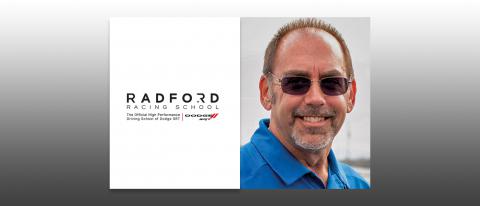
The new general manager of Radford Racing School has been a drag racer, mechanic, track director, and event producer. He got his start in motorsports watching his parents race.
Being born into a drag racing family has its advantages. That background is sure to help Chuck Sundstrom, the new general manager of the Radford Racing School in Chandler, Arizona, as he manages the school staff and operations on the seven-track campus.
Raised on Michigan’s Upper Peninsula, Sundstrom caught the racing bug early by watching his parents drag race. He began racing at age 16 and, over the last two decades, lived his racing passion as a driver, mechanic, and as race director of Spokane County Raceway in Washington and Firebird International Raceway in Arizona. (Firebird is on the Gila River Indian Community’s Wild Horse Pass property adjacent to the Radford Racing School.)
Radford Racing School, founded in 1968, is the largest driver training center of its kind in the world, according to its owners. It is also the Official High Performance Driving School of Dodge SRT. Current programs include drag, road, and open wheel racing, a Formula 4 program, high-precision driving, teen driving safety, and karting. The school maintains a fleet of about 100 race-prepped cars, SUVs, and open wheel formula racers, as well as gas-powered karts.
Before accepting his new role at Radford, Sundstrom had helped the school develop its drag racing program, which uses a fleet of Dodge SRT Challengers and Chargers, as does the road race program. He has worked behind the scenes with the NHRA and other sanctioning bodies. Most recently, he led an events business and security company that produced events at automotive venues around the country.
Sundstrom recently shared his plans for Radford Racing School with PRI.
PRI: Is there a memory from being in a drag racing family you would want to share? Sundstrom: I grew up in Michigan in an area where drag racing was not that popular. So it was unique to see both my mom and dad drag racing. We raced in Wisconsin, going to the drag strip every weekend. It was just an amazing way to grow up, a great thing to be involved in with family and friends. PRI: When hired by Radford, you said, “This is an exciting time to be a performance enthusiast.” What does that mean to you? Sundstrom: I’ve seen growth in motorsports just in the last couple of years from the younger generation with their interest in muscle cars and racing. We know within the next five to 10 years motorsports is going to be changing with the introduction of electric vehicles and all the different paths that it could lead into. Every manufacturer is coming out with an EV, and some want to have the fastest one. There are challenges, but I think it’s exciting to see where it’s going to go. PRI: As a driving school, what is Radford doing to transform its students into competitors? Sundstrom: The school has some of the world’s best instructors, with solid backgrounds in all types of racing. We increased all our programs and our variety, and we continue with our high-precision driving courses, open wheel, and Formula 4. We’re looking at adding some more purpose-built road race cars. It’ll again be a connection with Dodge and Direct Connection. We’re looking at adding a new karting program where we can start with a younger generation. [The current program starts at age 12, per the school’s website.] PRI: In addition to Dodge SRT, Radford lists numerous corporate sponsors, including Goodyear, Mecum Auctions, Hagerty Insurance, Petersen Automotive Museum, and more. Are you working through them to promote the track? Sundstrom: We are working a lot of new avenues, getting more involved with our sponsor-partners and how those companies tie into motorsports. We’re doing some displays and promotions with NASCAR, as well as displays and interactive activities with the NHRA, including some at international events. We’re going to have some cars and displays at lower-level road race events. Also, we have a great scholarship program with Goodyear for our Formula 4 cars and open wheel program. PRI: With your racing, track management, and entrepreneurial background, what would you say is the greatest strength you bring to this role? Sundstrom: I think it’s just the unique experience and the knowledge that I’ve gained that help me look at things from the viewpoint of both the racers and track managers. PRI: Is there a mistake that you’ve made in your professional life that you learned from and are applying those lessons today? Sundstrom: I’ve had many learning experiences, and I still learn every day, at every event. There have been things that I probably did wrong, or I could have done differently, but I learned from them, and they helped me to do a better job moving forward. PRI: Is there a piece of advice you have received, whether personally or professionally, that has greatly impacted your work? Sundstrom: Working for Charlie Allen, who owned Firebird Raceway, taught me a lot. I think the most important was to always be open-minded and look at both sides. Learn from your experiences every day, good and bad.
CHUCK SUNDSTROM
TITLE: General Manager ORGANIZATION: Radford Racing School HOMETOWN: Queen Creek, Arizona FAST FACT: When he is not working at the track, Chuck Sundstrom enjoys getting outside for kayaking and hiking—“the total opposite of my racing life,” he explained. “But my favorite thing is traveling and learning about different people and places around the world. I am very passionate about that.”
 MEMBERSHIP LOGIN