Special Report: 2024 State of the Racing Market Report

Submitted by johnc on Tue, 07/16/2024 - 15:05
image 1


PRI’s inaugural industry report reveals sales trends, product demand, and the real business-oriented effects from the pandemic.

Sales of track-use only parts for motorsports accounted for $8.04 billion in 2023, according to the inaugural State of the Racing Market Report by PRI, which is available free to PRI Business and Individual members. Other highlights in the report: Just over three-quarters of racing businesses see racing as stable or on the rise, more than half of racing businesses see the industry as steady, and two-thirds of race teams plan to run more than 10 races this year.
The report was generated by the PRI Market Research Team, led by Gavin Knapp. Starting in the fall of 2023, the team compiled approximately 500 responses from PRI members and non-members, seeking factors that most affect motorsports businesses. The types of businesses polled included manufacturers, racing retailers, engine builders, tuners, fabricators, race tracks, race series, and sanctioning bodies.
This report was designed to help readers identify:
• Key industry trends and business metrics that companies can use for benchmarking purposes.
• Estimates on how sales have changed over the last year.
• Information on how the racing industry buys and sells parts for racing vehicles.
• Industry trends and outlook, as well as insights into the racing industry’s recovery and supply chain challenges.
Commenting on this report, PRI President Michael Good said, “I was glad to see the overall trend is continuing to improve post-COVID-19. All the groups represented (manufacturers, resellers, engine builders, and race tracks/associations) expressed positive momentum. For example, 68% of tracks expect to run as many, or more, races in 2024 than in a typical year. Viewership is up as well—an average of 4.92 million viewers for the 2023 Indy 500, up 2% versus the 2022 Indy 500. And although it’s not in this report due to timing, the 2024 Indy 500 had an average of 5.34 million viewers.”
“We all know that there has been a lot of uncertainty with the economy, with recovery from COVID, and so on, so it is really nice to see racing businesses are remaining generally positive on where racing is in return from the lockdowns, the current state of motorsports, and where we are going looking forward,” observed Knapp.
“This PRI Racing Market report is a great tool to help businesses understand the sentiments and trends in the market and benchmark their own results against them,” Knapp continued. “Companies can look at what results others in their market are seeing and compare how they are doing. The report helps businesses to understand what companies across the racing eco-system are feeling, so a parts manufacturer can see how retailers or race tracks are doing. The report can also help businesses identify new markets or expansion targets and evaluate those opportunities.
“It’s not always easy to find data on the racing market, so we at PRI needed to fill that void to help our members’ businesses,” Knapp added. “Each year, we will refine the PRI State of the Racing Market report to provide the best info we can to help the community prosper.”
The following are some of the highlights of key findings found in the 64-page report. To view the entire report, which is available free to PRI Business and Individual members as a membership benefit, visit performanceracing.com/membership, log in, and then click on “My Benefits.” Let’s dig into some of the findings.

Sales Growth

“As stated in the report, overall sales were largely positive or remaining stable for those selling racing parts over the last year,” observed Good. “Despite some slowing growth compared to previous years, most businesses are expecting an increase in sales for their business in the next year. I believe this optimism is validated by what we are seeing and is an accurate perspective of the current landscape.”
Mike Dicely of Hyper Racing Products in Lewisberry, Pennsylvania, supported this observation, noting his company’s sales stayed the same in 2022 and 2023, but so far 2024 sales are up, which he expects to continue the rest of the year.

image 2


Hyper Racing’s market is focused on 600cc sprint cars, and Dicely said, “The 600cc sprints continue to grow across the US, and we are the largest player in that market. As the class grows, so does Hyper Racing.
“For the industry as a whole, it seems things are cooling off after the boom COVID created,” he continued. “But the good news is I don’t see any recoil. The strong economy, and the desire for people to create experiences over consumption, have really helped motorsports. We are thankful!”
Sales at Leary Racing Products in Denver, Colorado, increased slightly in 2023, according to Mike Leary, mostly from the less expensive racing divisions, which brought increased participation. He is hopeful 2024 sales will continue an upward trajectory, and he is developing a new company website to increase market presence. However, Leary did admit, “I feel the market will decrease due to the loss of race tracks around the country, with no new tracks being built in the near future.”

Racing Segments

Drag racing was noted as having the most participation from the businesses that participated in the survey, at 47%, and from support organizations such as sanctioning bodies, tracks, and associations, at 56%. Other popular forms of motorsports include street/strip, road course racing, vintage, oval dirt, and oval paved.
As an interesting note, oval tracks make up the majority of race tracks in the US. National Speedway Directory reported 610 dirt oval tracks and 205 paved ovals in 2019, while 268 drag strips were counted that year of the total 1,546 race tracks.

image 3

Parts Sales

The report found that 2020 was difficult for race tracks, while businesses that make and sell racing parts saw demand for their products hold surprisingly strong as racers and teams continued to make purchases and work on their vehicles anticipating racing’s return.
As tracks reopened and races resumed in 2021 and 2022, companies saw continued strong sales growth to cater to pent-up demand. The overall environment changed in 2023, with some seeing a downturn amidst recession and inflation concerns.
Some manufacturers felt a negative impact—including just over one-third that reported sales in fall of 2023 decreased compared to 12 months prior—but many companies, particularly resellers and race tracks, continued to see improvement, at 47% and 54%, respectively.
The majority of parts sales in the racing market were classified under the following categories: engine, intake/fuel/exhaust, suspension/brakes/steering/chassis parts, drivetrain, and engine electrical and ignition.

image 4


According to the report, numerous businesses were seeing a shift down from their previous upticks in 2022. Most businesses still expected their sales of racing parts to end up similar or higher in 2023, although a growing number expected weaker sales. More manufacturers and resellers were likely to expect their racing parts sales to finish lower compared to 2022, while businesses that customize products expected their sales to remain similar.
Leary Racing Products sells a large number of shocks due to the company’s customization services. Fiberglass sales increased in 2023 because Leary believes “customers had repaired their bodies for the last couple years, and even though body pricing increased, they decided they couldn’t wait and repair anymore.” He also cited a strong US Legend car count and parts for those cars as a significant portion of the company’s sales.
In the 600cc sprint car market, Dicely cited front and rear axle components as top sellers, as well as steering and pedal assemblies. “Wheels and tires are always up there, too,” he added. “One product that really caught on is our Jacobs Jacker for the midgets. It seems like every car has one on now. This product allows the driver to adjust the rear roll center height as he races. This helps them chase the track as conditions change throughout the race. We have had this product for five years, but only started selling in quantity in 2023.”

Car Counts

While many race tracks and racing organizations feel the industry is still recovering, the report found that they are significantly more optimistic about the near-term and longer-term outlook for racing than other business types. In particular, tracks are more likely to feel that track days, viewership, and the sport’s popularity with younger audiences are on the rise.

image 5
However, many track operators believe much is needed to get back to greater grandstand occupancy compared to pre-pandemic levels.
“We have seen a slow but steady increase in our car counts at virtually every race year-to-date, 2023 to 2024,” reported Charles Krall of ARCA, Temperance, Michigan. “At Daytona [in February 2024], we had 10 more entries than 2023, and even at Mid-Ohio [in June 2024], which has been on the low side since the pandemic, we had six more entries than we did last year. For some races, we have been up one or two, or even flat from last year, but the general trend since 2020 has been upwards.
“While we are pleased to see the growth from 2021 to 2024, we are not at all satisfied,” he continued. “We’re still working hard every day to create those relationships that will result in additional cars in the garage area and additional drivers on the track. While you could say we have returned to normal after the pandemic, there’s a new normal for a lot of it. For some teams that means fewer people coming to the track. For us, as a sanctioning body, it means streamlining processes and learning to do things with fewer people onsite. I am not sure we can say we’re back to pre-pandemic levels of normal, but perhaps we’ve found our new normal.”

Employees

Racing businesses maintained steady staff levels in 2023 and expected the same in 2024. A small segment noted that they expected to decrease their staff, with most planning to maintain or increase staff in the near future.
“Our staffing at the track since 2021 has stayed very close to pre-pandemic levels, but we have definitely learned to do things in a more streamlined manner,” said Krall. “Some of that is due to advances in technology coming out of the pandemic. We were forced to learn to do things in a different way just to be able to race, and it turns out we learned things that helped bring us into that new normal.”
“I would say the toughest thing for us as well as the businesses we work with is finding employees that fit what we are looking for at a rate we can afford,” said Dicely of Hyper Racing. “The amount that we need to pay employees to keep them and to get new ones has gone up more than 25% in those two years. Whether that is from inflation or just the labor market being in short supply, I am not sure.
“For 2023, our labor force remained the same. For 2024, we have already had to increase our staff count by 7%. I expect that to level out at 10% through 2025,” he added.

image 6

Work Still Needed

Our report observed that many racing business owners believe there’s still work to do before the industry is back to pre-pandemic levels, though most believe the racing industry remains steady. While the COVID lockdowns may be in the past, the recovery has brought additional unexpected challenges with supply chain challenges, increasing inflation, and overall economic uncertainty. Prospects are certainly better than they were mid-2020, but some businesses are looking for additional improvement.
“The supply chain issues for Hyper Racing in 2023 have drastically improved since mid-2020,” reported Dicely. “There are only a very small amount of items that are now affected by supply chain issues. I would say for us it is back to pre-COVID levels.”
“Inflation has affected all things in the world, but it seems to have had more effect on the racing market, because it is perceived as more a luxury/hobby item, not a necessity,” added Leary. “The supply chain is better than it was in 2021/2022 but still has a ways to go to get back to pre-pandemic levels, especially with things like tires.”
To stay on top of these trends, PRI will make its State of the Racing Market Report a high priority to members. “While the 2024 version is the first iteration in the series, the PRI State of the Racing Market Report will be an annual benefit for the industry that we release in the first quarter of each year,” said Knapp.
“PRI will continue to evolve and innovate to bring vital information to the industry,” said Good. “For those outside of the industry, I would encourage you to not only take a look at the data but take in a racing event with your family and friends. It’s a tremendous industry centered on family and looking out for one another while pursuing speed, excitement, and safety, all at the same time.
“The motorsports industry is a vibrant, innovative industry that is continually changing and advancing,” added Good. “It will continue to be an industry of opportunity for the next generation to engage in, disrupt, and continue to advance.”
 

August 2024
By
Meredith Kaplan Burns

eNASCAR College iRacing Series Returns for 2024-25 Season

Submitted by ajh on Tue, 07/16/2024 - 14:21
eNASCAR College iRacing Series


The eNASCAR Collee iRacing Series, the product of a partnership between NASCAR, iRacing, and Playfly College eSports, will return for the 2024-25 season.

Slated to begin in September, the championship will again feature iRacing's top collegiate oval racers competing across nine events in NASCAR Xfinity Series and Craftsman Truck Series vehicles for their share of a $60,000 scholarship prize pool.

Additionally, the top two racers in the season finale at virtual Homestead-Miami Speedway will earn a guaranteed placement in a series on the path to the eNASCAR Coca-Cola iRacing Series.

Races will be streamed on NASCAR and iRacing Twitch channels and additional iRacing social media platforms.

For a full schedule and details regarding qualifying for the first eight events, visit iracing.com.

July 2024

Industry Insights: Kevin Savoree

Submitted by johnc on Tue, 07/16/2024 - 13:14
image 1


Successful race promotion requires attention to detail and the ability to capitalize on opportunities, which Kevin Savoree and his business partner Kim Green have utilized to produce some of North America’s most treasured race events. Regardless of the series on the bill, the promoter in him proclaimed, “Whatever it is, we will be around to sell a ticket to it.”

Kevin Savoree may be one of the most important people in American racing today, but he tends to stay out of the limelight. Together with his business partner Kim Green, he runs Green Savoree Racing Promotions, which may not ring a bell. However, most racing fans know Green Savoree events like the Firestone Grand Prix of St. Petersburg, Ontario Honda Dealers Indy Toronto, BITNILE.com Indy Grand Prix of Portland, and the Honda Indy 200 at Mid-Ohio. Additionally, the company promotes races from the NASCAR Xfinity Series and Craftsman Truck Series, ARCA Menards Series, and the FIA Formula E races in America. Finally, Green Savoree are the owners of Mid-Ohio Sports Car Course and its racing school.
This is all after Green and Savoree had an impressive career as team owners in IndyCar racing. Working together since 1993, the duo have won four IndyCar championships, three Indianapolis 500 races, and the 12 Hours of Sebring as team principals, and established the first IndyCar street race at St. Petersburg in 2004. We caught up with Savoree in advance of this year’s NASCAR Xfinity Series race in Portland to ask what it takes to be successful as a nationwide and international racing promoter.
PRI: Few people start their careers intending to become a racing promoter. How did you get here?
Savoree: I didn’t intend that! Kim Green and I both come from small farm communities, Kim in Australia and myself in Illinois. So it’s pretty crazy to think we are where we are, and we do what we do. Neither one of us ever thought this would be where life took us. But I think that’s part of what racing is about, is taking advantage of opportunities and whether it’s a pass on the race course or being successful on the business side of racing, whether it’s with a race team or race track or whatever. I tell everyone, I’m one of the lucky guys who gets to wake up every morning and do something that I love to do.
But as to how I got here, my parents died when I was young, and I ended up going to Eastern Illinois University and got a business
degree with a major in accounting. I always felt like that degree prepared me pretty well for business, and I eventually became a partner in a CPA firm. Literally the way I got into racing was that one of my clients was Jerry Forsythe. One day he gave me a call and said, ‘Hey, I’m going to get back in racing. I know how much you love that. I’d really like you to take care of it for me.’ That’s when I got involved with Team Green, and then Michael Andretti and Kim Green and I bought Team Green and went racing and had some great success.

image 2
Green Savoree Racing Promotions has permanent staff at Mid-Ohio that travels to the company’s other events, including the Ontario Honda Dealers Indy Toronto, seen here. “It’s important for us to improve the quality, clarity, and consistency of our product from venue to venue,” said Kevin Savoree. “Having a lot of the same team allows us to do that.”


Then in 2004, IndyCar was thinking about going road racing. Michael and Kim and I were sitting at breakfast, and the decision had come down. A lot of our sponsors really had an interest in St. Petersburg, Florida, but there was no promoter down there. I can remember Kim, like it was five minutes ago, saying, “Why don’t we do that?” The next thing you know, we approached IndyCar and they said, “Yes.”
Now, 20 years in it looks like a good decision, but it’s a very, very tough business with absolute demand for attention to detail. I think Kim Green and I bring that, and we enjoy the business, and we enjoy being hands-on owners. I think like anything, it’s about the organization and having great colleagues, and that’s what we are all about.
PRI: Do you think your accounting background helps you with the detail orientation when it comes to all of this?
Savoree: Absolutely. Whoever we have on our team, whatever they bring to the table, whether it’s a marketing background, a public relations background, a law degree, or the operations side of things, you have to have varied experiences and varied ways to look at how to attack and solve problems and make everything a success. I certainly think the accounting degree for me was a big part of that. Kim’s got a very mechanical background, and that brings a lot to the table, too, on how we approach certain things.
PRI: You’re about to host a NASCAR race, and then in four weeks we’ll be back here in Portland with Formula E, and then we’ll be back here with IndyCar, all under your umbrella. Can you tell us some of the challenges you face when working with all these different groups, or is it all more or less the same?
Savoree: They’re all championship level, championship caliber events, and they all have great teams and great organizations. We’re blessed to get to work with some of the best people on the planet from a series perspective. What we enjoy so much is just the show. Ultimately that’s what we have to think about. We’re here to entertain, we’re here to make everybody have a fun weekend. So whether that’s the guest experience coming in, or the kind of merchandise we have, or the kind of concessions we have, or the kind of video boards, or whatever that experience is, those are all challenges within each event. But the cars and the competition, they’re all very different.
In a way they’re all very similar in that there are great race car drivers and great teams. But for us, we try to talk about being in the festival business, and I think it’s one of the things we all try to focus on is bringing that atmosphere to life for the fans. When you look at the spectrum of fans, you have avid fans that know more about the cars and the drivers and the teams than any of us do. Then you have festival-goers who are just here to be entertained. I think these weekends provide that in a city, whether it’s Portland, Oregon, or St. Petersburg, Florida, or Toronto, Ontario, or our track in Ohio. That’s what we have a lot of fun doing.

image 3
Kevin Savoree, right, with 2023 BITNILE.com Grand Prix of Portland winner Alex Palou. The events his company promotes “are all very similar in that there are great race car drivers and great teams,” Savoree said. “But we talk about being in the festival business, and we try to focus on bringing that atmosphere to life for the fans.”


PRI: If someone told you they wanted to become a racing promoter, what advice would you give them? What qualities should they be working on in themselves? What experience should they be seeking out?
Savoree: It’s such a tough business. I would probably caution them to sleep on it and make sure that’s really the path they want to go down. But again, it’s such an exciting business. I think it’s always important to take a step back, take a breath, think it through, and really make sure you’ve really thought through why you think you can be successful at it. I would say that to anyone who’s going to enter into some kind of business enterprise, and maybe that’s my accounting nature. I think our secret sauce—and this is something I’m so proud of—Kim and I have done a great job hiring smart people. We really look at their work ethic and then their communication skills. If you have those attributes, you can probably make a go of it.
I think those are the same attributes that if you were going to try to jump into this business, just make sure you have that acumen. Then you need a tireless work ethic where you’re never going to say no and never quit. Then finally, you need to be able to communicate really well. If you have those attributes, you can probably make it work.

image 4
Kevin Savoree and his business partner, Kim Green, have worked hard to preserve the park-like feel of the Mid-Ohio Sports Car Course, which they purchased in 2011. “We felt like in that part of Ohio, preserving that look and feel was very important.” They have also spent millions of dollars to improve the course, including a repaving done last October.


PRI: How do you think we bring the next generation of kids up in racing to keep this business going?
Savoree: One thing is obviously the gaming aspect. A lot of young people thrive on that kind of sport or being able to participate in that way. I think fans also enjoy some of these reality shows. They enjoy getting to meet drivers and their spouses and their families and to see what they go through and what life is like on the road or on a race weekend, or just in their everyday life. That’s another great way for fans to get to know the sport in a way that’s not really the sport. Those are a couple of the things going forward that are probably going to be impactful as we try to create new fans. Then as much as anything, we need to create that festival environment where it’s about the whole event as much as the car race. As long as you can strike some balance there, I think that’ll be something that resonates with the younger fans as we move forward.
PRI: Mid-Ohio Sports Car Course is one of the most challenging race tracks in America, and it’s beautiful with a park-like setting. How does running that facility work with your promotional business?
Savoree: I’m thrilled to hear you use the word park because since 2011 when Kim and I bought Mid-Ohio, one of the things we felt strongly about is we want to preserve that park-like feel. We just felt like in that part of Ohio, preserving that look and feel was very important. Kim and I have spent millions of dollars to improve the safety of the race track and bring it up to a standard that we’re very proud of. We just repaved the track at the end of October last year. That’s literally a 20-year investment. Over the years we’ve done other improvements to try to enhance the look and the feel of it, but at the same time preserving the look and the feel that it’s park-like. That’s a tough balance, but hopefully we can stay true to that.

image 5
When interest began forming in bringing an IndyCar event to St. Petersburg, Florida, but no promoter was available in the area, Kevin Savoree and Kim Green stepped up with Green Savoree Racing Promotions. “Now, 20 years in it looks like a good decision, but it’s a very, very tough business with absolute demand for attention to detail,” said Savoree.


On the business side, we have a great team of permanent staff at Mid-Ohio. What we’ve done over the years is develop marketing, public relations, and operations skills on that team, and they actually travel to all of our events. It’s important for us to improve the quality, clarity, and consistency of our product from venue to venue, whether it’s St. Pete, Mid-Ohio, Portland, or Toronto. Having a lot of the same team allows us to do that. I think the incredible thing about Mid-Ohio is that from mid-March to mid-November, that facility is open. Whether it’s working with the Ohio Highway Patrol training, which is something that Kim and I feel really strongly about, or hosting lots of different driving schools and teen driving schools. We have so many letters and testimonials from parents and grandparents that a child or grandchild went to Mid-Ohio and took the course. That kind of training is something that we feel can be life-changing and life-saving. It was one of the first safety courses of its kind for young people, and we’re so very proud of that program.
Then obviously a lot of car clubs come there. They really have their weekends booked a year in advance, and we have the SCCA there a couple times a year. That usage of the facility is always so special. All that fits in with the major professional events that we have there, whether it’s IndyCar, MotoAmerica motorcycles, the ARCA Series, the Trans-Am Series, or the SVRA series. We have the largest motorcycle swap meet in North America with AMA, which actually is a fundraiser for the AMA museum.
PRI: What can a small series promoter do to raise their popularity and visibility and maybe land a support race at a major race weekend?
Savoree: That’s a tough ask. The things that all these series are looking for is, number one, being popular in the market that you are in, and then how that market may fit with their fan base and their TV base. Encouraging your fans to tune in or attend races or to be active on social media about how their markets fit for a series. Those are things that are always important. For example, we knew that there were a lot of fans in the Pacific Northwest, whether it was IndyCar or NASCAR. Promoters need to pay attention to detail in their facilities, about what they’re doing and how they’re doing it. People take note of that, and the series take note of that. I would say to be really good at all the little things and then the big things can happen.
PRI: You’re involved in promoting Formula E racing. What does the future hold for electric racing?
Savoree: Obviously, there’s such a debate about that. It’s come so far in 10 years from where it started to where it is today, and it’s continuing to grow and expand. I think the fans will dictate that. Also, manufacturers will dictate what series they want to be in. In a way, that question is over my pay grade. Who knows what the future holds? But whatever it is, we will be around to sell a ticket to it.
PRI: What’s inspiring you these days? Or what hills are left to climb?
Savoree: The thing that Kim and I feel so strongly about is that he’s got some family who are growing up, and hopefully we can get them involved in the business in a few years. It goes so fast; they’ll be through high school and through college, and hopefully they’ll want to come be a part of our family business. I’ve got a couple of sons who are involved in the business, and I think for me, there’s nothing that would make me more proud than to have that legacy going forward for the next generation and see what they can do with it.

August 2024
By
Jeff Zurschmeide

Ferrari Challenge North America Announces 2025 Schedule

Submitted by ajh on Tue, 07/16/2024 - 13:00
Ferrari Challenge North America


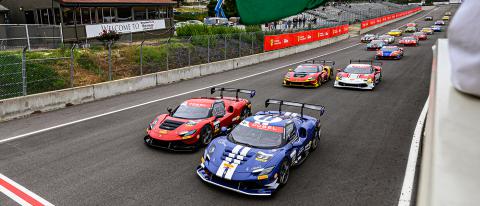
Ferrari Challenge North America, the one-make sportscar series, has announced its schedule for 2025.

In what will be the second year of competition for the Ferrari 296 Challenge car, the 2025 season will feature a six-round slate and a season-opening test at WeatherTech Raceway Laguna Seca.

Additionally, all six rounds will be eligible for the Club Challenge and Club Competizioni GT support categories, a first for the series.

See the full 2025 Ferrari Challenge North America schedule below:

Preseason Test – WeatherTech Raceway Laguna Seca – February 25-26

Round 1 – Sonoma Raceway – March 5-9

Round 2 – Daytona International Speedway – April 9-13

Round 3 – Miami Autodrome – May 14-18

Round 4 – Indianapolis Motor Speedway June – 18-22

Round 5 – Watkins Glen International – July 23-27

Round 6 – WeatherTech Raceway Laguna Seca – September 10-14

For more information, visit ferrari.com.

July 2024

DIRTVision to Launch Driver-Focused Docu-Series

Submitted by ajh on Tue, 07/16/2024 - 12:53
Driven to Dirt


DIRTVision, the World Racing Group broadcast provider, is launching a new docu-series that goes behind the scenes with the stars of the World of Outlaws.

The first installment of the new series will feature drivers from the World of Outlaws NOS Energy Drink Sprint Cars and World of Outlaws CASE Construction Equipment Late Models.

There will also be episodes dedicated to exploring some of the World of Outlaws' biggest events, such as the Knoxville Nationals at Knoxville Raceway, Prairie Dirt Classic at Fairbury Speedway, and World of Outlaws World Finals at The Dirt Track at Charlotte.

"We're excited to bring fans a new way to show them a side of the sport and drivers they rarely get to see," said Charlie Mellilo, chief media and marketing officer at World Racing Group. "Fans will get to see World of Outlaws drivers' lives away from the track, get to know their families, and hear their stories. This goes well beyond what's presented on a regular race weekend."

The first episode, featuring World of Outlaws Sprint Car driver David Gravel, will air exclusively on DIRTVision on Monday, August 12. New episodes will air each month through January 2025 with a mix of Sprint Car and Late Model drivers. The show is available with a DIRTVision FAST PASS subscription.

Click here to watch the trailer.

July 2024

Three Things to Know About J.D. Vance, Donald Trump's Pick as Running Mate

Submitted by laurap on Tue, 07/16/2024 - 12:44
J.D. Vance


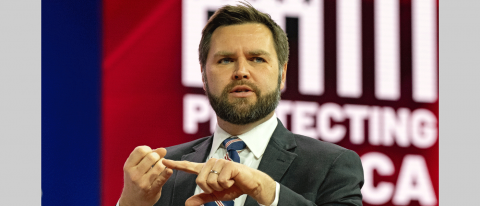
Former President Donald Trump selected U.S. Senator J.D. Vance (R-OH) on Monday, July 15, as his nominee for vice president, capping a lengthy audition process that will see Vance, 39, join Trump on the campaign trail immediately, particularly in the swing states of Pennsylvania, Michigan and Wisconsin.

Here's what SEMA and PRI members need to know about Sen. Vance as it relates to our industry:

  • Vance is an EV skeptic. In the Senate, Vance has actively sought to protect the nation's market for gas-powered motor vehicles, arguing that Chinese-manufactured electric vehicles (EVs) represent a risk to the American workforce, seeking to repeal the $7,500 clean-vehicle tax credit. Sen. Vance introduced the "Drive American Act" (S. 2962), a bill that would provide tax incentives for U.S.-made vehicles that run solely on gas or diesel. He's regularly sparred with the Biden administration on environmental and energy policy and is expected to align closely with Trump's positions on ethanol and biofuels.
  • He's a political newcomer. Vance first ran for elected office in 2022, winning a seat to represent Ohio in the U.S. Senate after gaining Trump's endorsement. Sen. Vance has developed a reputation for occasional bipartisanship, particularly on manufacturing and transportation issues.
  • Blue-collar roots. Sen. Vance rose to prominence as the author of the New York Times bestseller "Hillbilly Elegy: A Memoir of a Family and Culture in Crisis," the true story of his upbringing in poor, working-class America. His background surrounded by divorce and substance abuse in Rust Belt Ohio gives him first-hand perspective into the people of that area and the challenges they face and informs his self-described populist views on jobs, manufacturing and the economy. Sen. Vance served in the Marine Corps from 2003 to 2007 and is an Iraq war veteran. He is a graduate of The Ohio State University and Yale Law School.


July 2024
By
The PRI Washington, D.C., office

Newly Appointed: Joe Balash

Submitted by johnc on Tue, 07/16/2024 - 12:36
image 1


A NASCAR technical veteran from America takes on a new international challenge, crossing the Atlantic to become EuroNASCAR’s sporting and technical director.

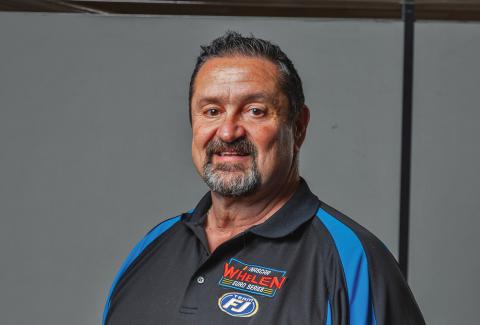
Joe Balash earned the respect of NASCAR racers and teams during 16 years with the sanctioning body. This year, he moved to Europe to bring his expertise to EuroNASCAR as its new Sporting and Technical director. Based in EuroNASCAR’s headquarters in Blois, France, he’ll travel with the NASCAR Whelen Euro Series to all seven weekend events in seven countries.
All tracks used for EuroNASCAR are road courses except the Raceway Venray oval in the Netherlands. The season concludes on October 12–13, at Circuit Zolder in Belgium.
Balash brings considerable NASCAR experience to his new role. Starting in 2004, he served for eight years as series director of the Xfinity Series and then eight more as international competition liaison, supporting NASCAR’s growth in Europe, Canada, and Mexico. Most recently, Balash worked as director of racing operations at Track Enterprises, where he helped develop the American Speed Association (ASA) Stars National Tour brand.
Balash, 61, has been around racing since he and his high school buddies would head to US 30 Drag Strip in Maryville, Indiana, once a top track for the defunct AHRA. After earning a degree in Industrial Arts, he started training in engine electronics and fuel injection for Allen Test Products. A leap to a job at MAC Tools led to helping the ASA train on fuel-injected engines, which ultimately resulted in Balash becoming senior vice president of operations.
Balash shared with PRI how his varied experiences support him in his new role.

PRI: How would you describe your new role at EuroNASCAR?
Balash: The way that we’re structured, I’m going to be focusing on both “sporting,” which are the regulations and the procedures for the series, and “technical,” the nuts and bolts and crew chiefs and the operational side of the business. Jerome Galpin, the owner, is focused on the business growth of the series.
PRI: What was your priority after taking this new position?
Balash: We’ve been working to make sure that first, we take care of the fundamentals, that the teams are treated as our customers, that we focus on making sure that the sport is healthy, and that we are putting a good product on the race track. We’re also making sure that our fans enjoy a great experience.
We continue to grow the sponsorship side of the business with the partners that we have while finding new partners to come and enjoy what we’re doing. We have a lot to offer on the sponsorship side, as far as B2B and hospitality.
PRI: Working with an international series, is language ever a barrier?
Balash: All our technical and written information for the series is in English because of all the different countries that participate. We have drivers from all over the world, including the US.
PRI: EuroNASCAR runs without factory support?
Balash: That’s correct. We currently don’t have any car manufacturer support. Whelen Engineering has been a multiyear title sponsor for the series. They’ve been a great partner and have really helped us while also helping them showcase their lighting products to different municipalities.
PRI: Are there any other big differences between the way the American and European businesses run?
Balash: In the NASCAR Whelen Euro Series, all teams use the same parts supplier. There are specific parts that teams must buy rather than manufacturing their own, which helps keep costs down. There is no “race within the race” to see who can spend the most money on developing parts.
PRI: Do cultural differences from American NASCAR play a role in series operations?
Balash: In the paddock, it’s pretty much the same as in America, but there is a difference you would notice when you go into the garages. The teams do a build-out in the garage that faces the race track. They bring in portable walls and signage and set up hospitality for their sponsors and guests. There’s more of a festive atmosphere that you don’t see in the US garages.
PRI: How does the racing differ between the US and EuroNASCAR?
Balash: We have a different format than in the US. On Friday, we do club racing, which allows people to experience the track and our type of car and the American style of racing. There is a time target, and you can’t go any faster or you get penalized. On Saturday, the car will practice in two sessions, qualify in two sessions, then race in EuroNASCAR PRO and then in EuroNASCAR 2. And then it’s back again on Sunday for two more PRO and 2 races.
PRI: Does the action on the track differ from the US?
Balash: There are some differences with how we manage track limits. For example, at Watkins Glen (New York), you can go five wide outside the white line in turn one. In the European racing, we have a stricter adherence to the track limits and the painted line. We spend a little more time managing that than we would at a US event. Our cars get a lot of use over the weekend, so we discourage the kind of contact you may see in US races. A car could race five times in three days with multiple drivers.

TITLE: Sporting and Technical Director
ORGANIZATION: EuroNASCAR
HOMETOWN: Blois, Centre-Val de Loire, France and Muncie, Indiana
FAST FACT: While looking forward to touring the central French countryside around EuroNASCAR headquarters, including its historic castles and vineyards, Balash can’t seem to get enough racing. “On a weekend off, I still ended up at the race track! After all the years working in the sport, I’m still a big fan. I still enjoy the atmosphere and watching the competition unfold.”

August 2024
By
Jim Koscs

Race Shop

Submitted by johnc on Tue, 07/16/2024 - 11:59
image 1


Be the go-to source for all the latest parts and services to enhance your customers’ motorsports programs.


DELUXE SUPER HI-FLOW BOTTLE VALVE

NITROUS SUPPLY
nitroussupply.com

image 2

Nitrous Supply in Huntington Beach, California, now offers an upgrade to its popular Super Hi-Flow bottle valve. The DeLuxe model of the Super Hi-Flow valve features a polished surface and premium chrome plating. On the inside are the same important features that deliver improved performance.
The 135-degree nitrous flow path was designed to offer better performance than standard designs with a 90-degree bend. Other enhancements include a 1/8 NPT gauge port and an AN-8 “racer safety port” that facilitates routing a pressure discharge outside of the vehicle. There is a 1/4 NPT port to facilitate use of a NANO-type pressurized assist. A 1/2-inch siphon tube is standard.
According to Mike Thermos, this valve’s “1/4-turn lever actuation enables racers to add a remote cable that could be used to shut off the flow of nitrous from outside the vehicle. It’s a definite safety benefit.”
Racers seeking optimum performance and safety can step up to Nitrous Supply’s exclusive Outlaw Power Valve, which is lever-actuated (instead of a screw handle) and can be attached to a pull cable to facilitate shutting off the nitrous from outside the vehicle. It also has a straight flow path and a big, 5/8-inch siphon tube.

PREMIUM GOATSKIN TIG WELDING GLOVES

DEFIANT METAL
defiantmetal.com

image 3

Defiant Metal in Clemmons, North Carolina, has developed a premium goatskin TIG welding glove designed by Justin Voss, a former NASCAR fabricator with 16 years of experience in the industry. Recognizing the need for a high-quality, versatile welding glove, Voss drew upon his extensive background in a high-stakes environment where precision and safety are paramount. His expertise drove the creation of a glove that addresses both the sensitivity required for intricate TIG welding and the durability necessary for light-duty MIG welding.
“The single-layered fingers of these gloves provide maximum tactile feel, allowing welders to maintain a delicate touch, crucial for precision work,” described Voss. “This feature is particularly beneficial in TIG welding, where the welder needs to manipulate the welding torch and filler rod with great accuracy. The double-layered palm rest offers enhanced protection, giving welders extra time to complete a weld without compromising safety. This design ensures that the gloves can withstand the heat and wear associated with prolonged use, making them a reliable choice for professionals.”
Crafted from premium goatskin, the gloves offer both comfort and durability. Goatskin is known for its softness and flexibility, which help reduce hand fatigue during long welding sessions. The double-row Kevlar stitching further enhances the gloves’ durability and resistance to wear and tear, providing an additional layer of protection without sacrificing the dexterity needed for detailed work.

EV ELECTRIFICATION KIT

LEGACY EV
legacyev.com

image 4

Legacy EV in Tempe, Arizona, has introduced the first complete EV electrification kit for under $10,000. Developed from the powertrain components of a Nissan Leaf, the kit repurposes the components of the first EV available to the mass market.
“The Legacy EV team created a straightforward, turnkey, and very affordable solution for those who want to embrace electrification,” said Rob Ward. “Our new kit utilizes a proven modern motor and battery combination that repurposes most of the existing Nissan Leaf powertrain, reducing cost and dramatically simplifying installation. And the price is simply unbeatable.”
In addition to using the Nissan components, the Legacy EV kit includes an aftermarket vehicle control unit that manages charging, motor control, brake lights, reverse lights, pre-charging, HV relays, and more. Installation can include the existing gearbox to run half-shaft axles for front-engine FWD or rear-engine RWD donor vehicles. Alternatively, it utilizes a TorqueBox for single speed gear reduction, or a manual transmission adaptor plate if owners want to retain the factory transmission.
“Legacy EV is breaking new ground with the development of kits to make electrification of ICE-powered vehicles simpler and more accessible,” added Mavrick Knoles. “This new Nissan Leaf kit allows us to accomplish two incredible milestones. First, we’re giving auto techs a new way to easily convert a vehicle at a low cost. We’re also extending the life of these classic EVs by repurposing their powertrains for aftermarket applications, which is a far more sustainable solution than sending them to a salvage yard.”
At a cost of $9,950, the Nissan Leaf kit includes a 6.6kW onboard AC charger and 46kW CHAdeMO DC-fast charge capable, 30kWh battery pack with internal BMS and pre-charge circuitry, 80kW EM57 Motor and inverter with pre-installed single speed gear box, DC-DC converter and power distribution module, CHAdeMO charge port and associated cables, Nissan Leaf accelerator pedal, and a Nissan Leaf water pump.
The Nissan Leaf motor specifications include nominal voltage: 360V; input voltage: 288–403V; max current: 250 amps; peak torque: 250Nm; peak power: 80kW; max speed: 10,400 RPM0.

ULTRA PORT LS EFI SYSTEMS

FITECH INJECTION
fitechefi.com

image 5

FiTech Fuel Injection in Riverside, California, has introduced the Ultra Port LS 750 HP EFI System with transmission control. With the capability to support up to 750 horsepower, this advanced system provides optimal fuel delivery, precise engine management, and seamless transmission control. Each system incorporates an external Retro Port LS ECU, known for its reliability and seamless integration.
Designed with a 4150 flange, FiTech’s new sleek throttle body fits on most intake manifolds, ensuring compatibility with a wide range of vehicles. Port injection enhances better fuel control and adjustability.
Each Ultra Port package comes complete with an intake manifold, fuel rails, injectors, ECU, sensors, a harness, and other supporting components. A handheld touchscreen monitor with a magnetic mount is also included, ensuring easy adjustments and monitoring.
The standalone ECU is designed for easy installation, compatible with various timing control setups. The system’s self-learning software and included handheld controller make for a user-friendly setup.

August 2024

Ask the Experts: Driver Safety Equipment Recertification

Submitted by johnc on Tue, 07/16/2024 - 11:39
image 1

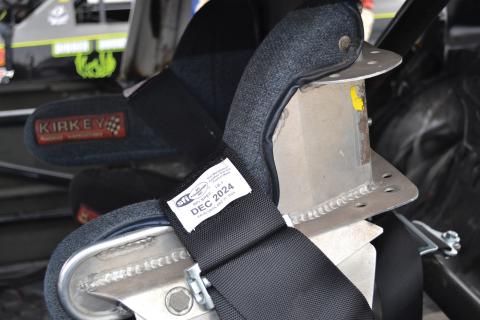
SFI issues manufacture date tags for harnesses twice a year, in June and December. The belts will need to be recertified two years after that date.


When applicable, recertifying can be a huge cost savings over replacement. Here’s how.

As part of its role in establishing quality assurance standards for performance and racing equipment, the SFI Foundation also sets what is essentially an expiration date for each piece of equipment it certifies. At the end of a set timeframe, typically between one and five years depending on the equipment in question, that gear either needs to be replaced or, in many cases, recertified by the manufacturer to ensure that it still functions properly and remains in compliance with SFI specifications. Many pieces of driver safety equipment qualify for the SFI’s recertification procedure; we spoke with Matthew Krick of Crow Safety Equipment in North Las Vegas, Nevada, and Eric Koup of Impact Racing in Indianapolis, Indiana, for details on how the process works and how racers can navigate it most effectively.

Racing Harnesses

“The SFI deems a seatbelt to be viable for two years,” Krick said, and the tags that Crow Safety (and other manufacturers) sew into the belts to indicate their manufacture date are issued twice a year.
“There are two different date ranges, June or December,” Koup said. “Belts made from January through the end of June will get a June tag, and those made from July through December will get a December tag. Recertification would be done two years from that timeframe.”
When it comes to harnesses, only the hardware is actually recertified. “The hardware gets checked over and analyzed to make sure there’s no corrosion, rust, or any other issues,” Krick said. “The belts are cut off and re-made to spec.”
Crow Safety doesn’t allow racers to switch out hardware for a different type, but there are certain options they can add, such as tapered shoulder belts for a head-and-neck restraint or sewn-in pads. Should Krick find any problems with the latches or other hardware, those are not repaired. “They just buy new belts.”
Turnaround for belt recertification can be two to four weeks, depending on the time of year. At Impact Racing, demand rises “as we get closer to the new dates coming out and the current tags running out, which would be June 30 or December 31,” Koup said.
For Crow Safety, “in the busy season, which is pretty much after Thanksgiving until April, it can take four weeks,” Krick said. “There’s no racing going on, so they can tear down the car, throw the belts in a box, and send them to us to recertify them. They won’t need them back for a bunch of weeks.”
In fact, Krick advised racers to wait as long as they can before sending in their belts. “Four weeks before their first race. Belts can be the last thing you put in a car. It might not be convenient, but the later you go in the year, the more apt you are to have the absolute newest date tag sewn on the belts.” Some of his customers have two sets of belts that they rotate, so there’s always a certified set of belts on hand while the other set is out for recertification.

image 2
Crow Safety can add certain options to harnesses during the recertification process, including tapered shoulder belts for head-and-neck restraints, as seen on this rotary cam-lock five-point harness.


The advantage to recertifying harnesses is budgetary. Krick said the cost of recertifying a harness is “about half the price” of a new set of belts, “or a third of the price with a cam lock.” Crow Safety will recertify belts multiple times “depending on their condition as sent in. It all depends on how they take care of their stuff.”
At Impact Racing, “a new set of belts is roughly $320, while the re-webbing process is $119.95,” Koup said. “So even with the cost of shipping, the racer is saving about $100 to $150 over the cost of new belts.” Impact will recertify harnesses “two to three times if they’re still in working condition.”

Driver Suits

SFI-rated 3.2A/10, 15, and 20 driver suits are made with a tag indicating the suit’s year of manufacture, and SFI allows them to be recertified every five years, starting with the year on the tag. Impact Racing begins the recertification process with a full inspection “to make sure they’re still in good working condition, that there are no tears within the fabric, and that they haven’t been involved in any type of fire,” Koup explained. “Tears we can patch over and repair, typically. But if there’s any sign that there has been any type of fire involved with the suit, it can no longer be recertified.”
Impact Racing’s recertification process for a suit can take two to three weeks, Koup said. A suit can be recertified only twice, and Impact will not recertify a suit made prior to 2012. “It’s a lifespan issue for the Nomex,” he explained. “After all those years of use, we don’t know how the Nomex would potentially react.”
Recertifying a driver suit has a big cost advantage over replacement, Koup said. “A custom SFI 15 or 20 suit can run $3,000–$4,000. Even an off-the-shelf suit can be $2,000–$3,000. The recertification for them is currently about $90. Ninety dollars to give the racers that additional timeframe is definitely a huge, huge, benefit.”
Koup advised racers to “reach out to the company that manufactured your gear to find out what their proper recertification processes are.” And though it sounds obvious, he reminded racers to “please include your contact information—your name, address, and phone number—when you send equipment to us. We have had people send stuff in that doesn’t have any contact information, which can definitely delay the process, as we have to wait for them to call us to note that it was their product.”

SOURCES

Crow Safety Gear
crowsafety.com
Impact Racing
impactraceproducts.com


August 2024
By
Drew Hardin

From The Executive Editor

Submitted by johnc on Tue, 07/16/2024 - 11:31
image 1

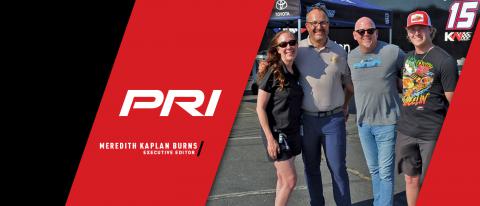
At Irwindale Speedway with ARCA PR Director Charlie Krall, veteran racer Randy Tolsma, and up-and-coming motorsports photographer Elijah Tolsma.


Now, during the heat of the racing season, is when so many engine builders, racers, mechanics, fabricators, and others working on race cars often think, “I wish I had (fill in the blank) to make this easier.” So the next time you think that, write it down (OK, I’m old-school as I still use pencil and paper) or make a note in your phone, and bring it with you to the 2024 PRI Show, December 12–14.
With that thought in mind as you walk up and down the aisles of the Indiana Convention Center (ICC) and Lucas Oil Stadium, you will see numerous innovations designed to either improve performance of race engines and cars or for working on them. And one top destination is Machinery Row. Located in the Yellow Hall of the ICC, the area is filled with exhibitors displaying the latest machinery from CNC machining centers, dynos, 3D printers, parts cleaning equipment, and balancing machines, to tools for cutting, grinding, deburring, drilling, and a host of many other fabricating duties. With so many innovations, you are bound to find the solution to solve that problem.
More than 100 exhibitors have already signed up to display their latest machinery, equipment, and tools on Machinery Row. Turn to page 46 for a list of companies you can expect to see in Indianapolis. We also provide a Machinery Row preview, beginning on page 38, which offers just a glimpse of the fascinating machinery innovations that will be on display to make your job duties easier.
Out & About: Always a treat to visit our local race tracks in So Cal (since there are only a handful), so when the ARCA Menards Series West put on two races at Irwindale Speedway over the July 4 holiday weekend—stock cars booked on the same ticket as Night of Destruction, count me in!—this reminded me of how absolutely critical it is to preserve the health of auto racing by supporting our local tracks. So my challenge to PRI readers is this: Before the 2024 race season concludes, bring someone new to an event. Someone who has never experienced live the thrill of a last-lap pass for the lead and the win, the smell of that lurking yellow nitromethane cloud in the drag race pits, or the gust of wind filled with sand stirred up from an off-road buggy or rally car that whizzes past only a few feet away. Let’s share the excitement and camaraderie we so cherish to continue the future of our sport.

August 2024
By
Meredith Kaplan Burns