Groups Seek National Approach For Defining 'Essential' Businesses
Submitted by Anonymous (not verified) on Thu, 04/02/2020 - 07:21
The Specialty Equipment Market Association (SEMA), in partnership with eight other automotive trade associations, urged the National Governors Association and Governors of all 50 states to standardize the definition of essential businesses and workers.

The announcement comes as inconsistent state rules hamper the supply of critical goods and services.

The groups recommend adoption of the U.S. Department of Homeland Security’s (DHS) March 28 directive, “Guidance on the Essential Critical Infrastructure Workforce: Ensuring Community and National Resilience in COVID-19 Response,” which identifies essential workers and business operations throughout the economy. DHS guidance clarifies that automotive repair, maintenance, and transportation equipment manufacturing and distribution facilities are “essential services” that are critical to ensuring the safe and ongoing operations of our nation’s transportation and logistics sector.

The organizations sending the letter represent companies that manufacture parts and supply services to help maintain the nation’s fleet of public and private vehicles during COVID-19—from cars, trucks, and buses to police and emergency vehicles.

The letter notes that Governors and local authorities have been making difficult decisions balancing “essential” commercial activities with “Shelter in Place” directives. It is important that states adopt the DHS Guidance, which provides a uniform national approach for protecting the country’s critical transportation and manufacturing needs.

The letter was signed by the Auto Care Association, Automotive Oil Change Association, Automotive Service Association, California Automotive Business Coalition, Motor & Equipment Manufacturers Association, Specialty Equipment Market Association, Tire Industry Association, Service Station Dealers of America and Allied Trades, U.S. Tire Manufacturers Association. A copy of the letter can be found here.

For more information, visit sema.org.
April 2020
TOP OF MIND

Submitted by danielk on Wed, 04/01/2020 - 15:18

Ever notice how when you’re shopping for a new car, you start seeing that model—or ones like it—everywhere? For example, about a year ago my wife and I were in the market for an SUV, and all of a sudden it seemed like every other vehicle on the road was an Explorer, or a 4Runner, or a Grand Cherokee. What was happening?

Best I can tell it was one of two things: Either the price of gas in Southern California had mysteriously fallen to 89 cents a gallon and millions of drivers collectively decided to splurge on midsize SUVs…. Or we were experiencing what’s known as “frequency illusion,” a phenomenon where something you recently learned, or noticed, or were told about suddenly appears everywhere.

Unfortunately for our net worth, it was the second option. But this did explain why we were seeing these particular vehicles more. It turns out that our brains—having been tuned into something new—decided to subconsciously start looking for SUVs on their own. So there weren’t necessarily more SUVs in Orange County, we were just noticing them more.

Funny thing is, once we made our purchase the number of Explorers, 4Runners, etc. in our area began to dwindle! Not really, but it sure seemed that way.

I’m guessing this has happened to you once or twice before. Or it will now that I’ve mentioned it. Ha! (For further reading, Google “Baader-Meinhof Phenomenon.”)

Now, you may be wondering how this all ties in to racing. Fair enough. Earlier this year, Ryan Newman sustained a pretty horrific crash on the final lap of the Daytona 500. And in the weeks that followed we saw countless stories, videos, and more on how he survived the initial and secondary impacts; or how quickly rescue crews responded to the scene, and how they managed to extinguish the resulting flames. In terms of informing and educating enthusiasts, fans, and even the general public on how racing has become safer, this was a good thing.

But it raises some bigger-picture questions: Namely, when it comes to safety in motorsports, is it possible that we experience a sort of frequency illusion, where our attention level spikes after a notable incident, and then drops off after a period of time? Do our brains naturally move on to new stimuli once the headlines fade? More pointedly, are we still keeping safety top of mind even when there isn’t a high-enough-profile event to refer back to?

For additional insight on the subject, I recently spoke with Kevin Shaw, co-owner of RaceDay Safety in Dallas, Georgia, who agreed that while racing safety is constantly improving, “unfortunately it improves at the greatest rate after a tragedy.”

He remained upbeat, however, noting that we are making headway and explaining that “as far as driver safety, just the general acceptance of the latest advances in safety equipment has been the biggest stride [we’ve made as an industry] over the past few years. Many drivers are still…under-protected, but many more drivers are now utilizing the full range of safety gear, even if it is not required by their rule book.”

Which brings us to this month’s edition of PRI Magazine, and the five-part package of articles, beginning on page 38, that examines different aspects of motorsports safety, as well as important developments taking place therein. Whether it’s the latest materials in SFI-rated fire suits, or new head-and-neck restraints by industry leaders like Stand21 and NecksGen, our writeup on drivers’ safety gear provides valuable insights into how manufacturers are working to bring next-generation technology to market. You’ll find equally informative content on vehicle safety, heat and fire protection, race track design, and cutting-edge advances in science and medicine.

Newman’s wreck wasn’t the inspiration for this issue, but it certainly helps illustrate how the various elements of safety—driver, vehicle, track, etc.—work together to save lives and ultimately move the category forward. We invite you to explore these topics in the following pages, as well as to continue the conversation with your customers on a regular and ongoing basis. I think we can all agree, it’s just that important.

April 2020
By
Dan Schechner

FIA Approves Regulation Changes In Response To Pandemic

Submitted by Anonymous (not verified) on Wed, 04/01/2020 - 10:31
The World Motor Sport Council has approved, by e-vote, a number of key changes to regulations to allow it to react more swiftly to the challenges currently posed by the global COVID-19 pandemic.  

Among the changes, the World Motor Sport Council has granted a delegation of authority to the president of the FIA to make decisions regarding the 2020 season, which may be required in a matter of urgency.

Any decision made by the President of the FIA shall be taken after consultation with the Deputy President for Sport, the Secretary General for Sport and the President of the relevant Sporting Commission, if applicable.

The World Council has also approved a number of changes to regulations for specific championships.

FIA Formula One World Championship:
Changes for the 2020 Sporting Regulations have been approved. This will be achieved by:

The addition of Article 1.3, in order to be able to change certain articles with 60% support amongst the teams, so as to increase flexibility during this difficult period. In any case, a subsequent approval by the World Motor Sport Council will be required.

The permission for the FIA and Formula 1 to change the calendar without a vote (deletion of Article 5.5)

Changes to testing (Article 10.5)

Addition of Power Unit Manufacturers shutdown (Article 21.10 and 21.11)

Changes to permissible Power Unit elements if the number of races reduces (Article 23.3)

The banning of aerodynamic development for the 2022 Regulations during 2020 (starting on Saturday, March 28).  

The World Council approved the previously-announced delay of the 2021 Technical Regulations to 2022 for cost-saving measures. Further measures will be introduced for 2021 following discussions with the teams. These will include the homologation of the Survival Cell (from 2020) and certain other components.

In addition, dual-axis steering systems (DAS) will not be permitted in the 2021 regulations as defined in Article 10.4.2.

FIA World Rally Championship:
The FIA launched an invitation to tender on December 19, 2019, to select a single hybrid supplier in the 2022‐2024 World Rally Championship for the new Rally1 class vehicles. The World Council approved the appointment of Compact Dynamics as the single supplier, as well as provisions for the Rally1 engine technical regulations to retain the same base engine as current but with measures to reduce costs and development.

For more information, visit fia.com.
April 2020

SCCA Launches #SupportMotorsport Initiative

Submitted by Anonymous (not verified) on Wed, 04/01/2020 - 10:13
SCCA, in partnership with Global Time Attack and Gridlife, has launched the #SupportMotorsport campaign in an effort to support the racing industry after weeks of uncertainty surrounding the COVID-19 pandemic.

“First, this effort should only come after we have been able to secure ourselves and those around us,” Heyward Wagner, SCCA Sr. Director of Marketing and Experiential Programs, said. “That said, support for motorsports, right now, can have a profound effect on the future of the sport. That can be done by buying apparel or tickets from your favorite track, entering events or joining organizations.”

The ultimate goal of the campaign is to ensure that the motorsports venues are protected and preserved. And there are a few key ways that this can be done, according to the #SupportMotorsport initiative:

Buy Tickets
Motorsports is historically a space where people wait before making a purchase, perhaps to see what the weather will be or to ensure there are no conflicting plans. Right now, however, an entry or a ticket sale is a vote for an event to actually happen and gives tracks, organizers and sanctioning bodies the confidence needed to keep events on the schedule and to keep tracks rented.

Get Gear
Whether it is a t-shirt from a track, a hat from a sanctioning body or poster from a team, merchandise purchases are a great way to show support for tracks and those who rent tracks. And, please remember, many states have specified that race tracks are not essential services, so shipping times will likely be delayed.

Join Clubs
Many motorsports participants enjoy and appreciate the work of clubs and organizations, both locally and nationally, but have not felt the call to join. Joining the local autocross group that you run with a time or two a year, or the national organizations that produce the rules and standards that events are run by helps these clubs plan events, make deposits with tracks and keep staff and volunteers supported and engaged.

These efforts are secondary to the immediate needs of yourself and your family, and may not apply to everyone. For those who are in position to, doing these things can and will make a real difference in ensuring that motorsports is here for the long term. Those who are not able to make financial contributions are encouraged to go to social media with links to the tracks and organizations you are passionate about to help spread the message that each of us has the power and opportunity to #SupportMotorsport.

For more information, visit scca.com.
April 2020

BREAKING: PRI Releases Coronavirus Updates & Resources Page

Submitted by Anonymous (not verified) on Wed, 04/01/2020 - 03:09
Performance Racing Industry (PRI) and the Specialty Equipment Market Association (SEMA), which are monitoring the evolving Coronavirus (COVID-19) outbreak and tracking what it means for our industry, have released a Coronavirus Updates & Resources page geared toward businesses in the racing industry.

The Coronavirus Updates & Resources page identifies best practices, including how to effectively protect employees’ health and prevent the spread of the virus. The page also features the latest news and updates from PRI/SEMA pertaining to the Coronavirus pandemic and will include messages from senior leadership as well as relevant business resources offered by PRI and through local, state, and federal offices.

PRI remains committed to hosting a successful PRI Show, scheduled for Dec. 10-12. PRI is also asking for feedback on how COVID-19 is affecting businesses.Those with questions should reach out to their account reps, or contact 949-499-541 or mail@performanceracing.com.

For more information, visit performanceracing.com/corona-updates.
April 2020

Power Test Acquires DYNOmite Dynamometer

Submitted by Anonymous (not verified) on Tue, 03/31/2020 - 11:09
Power Test Inc., the dynamometer and test system manufacturer located in Sussex, Wisconsin, has acquired the assets of DYNOmite Dynamometer, a 44-year-old business located in Manchester, New Hampshire.

“The acquisition of DYNOmite provides expanded product offerings, seasoned industry veteran sales and service staff, a loyal customer base and some advanced manufacturing technology,” Power Test CEO Alan Petelinsek said.

DYNOmite operations will remain in New Hampshire, and all existing staff has been retained. Peter Bergeron, son of the founder and longtime DYNOmite employee, will remain as the general manager of the Manchester facility. He will report to Rick Ruzga, president of Power Test.

This acquisition comes after Power Test acquired, moved, and integrated SuperFlow Technologies, formerly of Des Moines, Iowa, into its operation.

For further information, visit powertestdyno.com and dynomitedynamometer.com.
March 2020

Guest Column: How Our Motorsports Business Has Adapted To A Rapidly Changing Environment

Submitted by Anonymous (not verified) on Tue, 03/31/2020 - 07:11
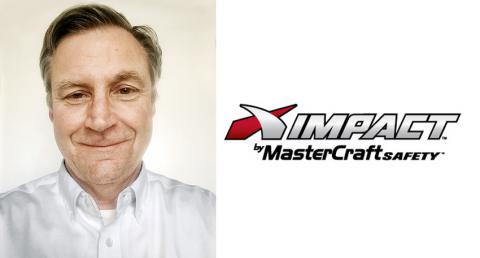
By Ben O’Connor, Impact Racing, Inc.

In an attempt to slow the spread of the novel coronavirus, or COVID-19, local, state, and federal agencies are implementing drastic measures aimed at “flattening the curve.” While critical to saving lives, the consequences of these actions have led to virtually every form of motorsports being put on hold.

With racing in an indefinite holding pattern, the revenue stream for most small businesses and manufacturers in our industry has been drastically reduced. This has left many companies unsure of what their future holds. But there is hope.

With a severe shortage of Personal Protection Equipment (PPE), medical professionals are in need of PPE assets such as masks, surgical gowns, ventilators, and face shields. In some cases, this has led to front-line workers resorting to makeshift solutions that are less than ideal. While major manufacturers have stepped up to fill the void, it is anticipated that there will still be shortages for many months to come. This opens up opportunities for businesses in the performance racing industry to provide a public service by supplying much-needed PPE while also keeping their workers employed.  

On March 20, the company I work for—Impact Racing, Inc.—started an initiative to do just that. As a manufacturer of safety equipment for motorsports, we too were experiencing a reduction in our revenue stream as racing came to a halt. Here we were, watching the events unfold around us and wondering what we were going to do to protect the jobs of Impact Racing employees, as well as how we could serve the community during these difficult times. It was clear that this shutdown was going to last a while, and the economic recovery could take several months or longer. Meanwhile, there were reports of PPE shortages increasing daily.

After a quick evaluation of our capabilities, we realized that we may have the equipment and ability to produce some of the PPE that were in short supply. We didn’t know anything about PPE or the medical industry, so this wasn’t without some trepidation. We knew how to manufacture driving suits, but we knew nothing about manufacturing face masks, hospital gowns, or face shields. We knew major manufacturers had made the transition, but wondered how a small, Indiana-based motorsports manufacturer could do the same.

Thankfully, we received an outpouring of support and offers to help from our existing suppliers, customers, and the racing community. We did some research and found guidelines published by the CDC and the FDA that were developed specifically to help companies like ours produce these much-needed PPE in a crisis. In addition, some of our existing suppliers had experience providing materials to the medical industry. They were very helpful in assisting us with information and tracking down the necessary materials. We also had offers of help from customers and other manufacturers. The overwhelming support we received allowed us to go from concept to the production of face masks in only four working days.

But then another challenge came up: How do you develop a contact base for an industry you have never been involved with in only a few days? We knew that hospitals, as well as local, state, and federal municipalities had a need for the items, but connecting with them was proving difficult. The channels of communication set up by hospitals and municipalities to deal with the crisis had not been established yet, or were so new that they weren’t easily identified. We started by aggressively working the connections that we had through our previous involvement in the defense sector and racing community. It was working, but we wanted to move faster.

We decided to put up a post on our social media pages explaining the challenge we were having making contact with the right people. The response was incredible. In a matter of days it had been shared over 300 times. The outpouring of support from the racing community in response to that post was truly remarkable. In less than a day we were being contacted by local, state, and federal agencies letting us know who to reach out to and where to go. Many of the people that contacted us said the connection came through their involvement in motorsports, or through a racing connection of theirs that had seen the post.   

It’s too soon to know how successful our initiative will be, but we weren’t satisfied with sitting on the sidelines waiting for the market to come back to us. My advice for others in the industry right now is to evaluate your capabilities and resources. Do your research to see what needs exist, and if possible, create a plan to fill those needs. You may be surprised to learn you have what it takes to fill a need in a market you never thought about.

I would also suggest that companies check to make sure they are not what the government considers an “essential business” before closing their doors due to locally or state-mandated shelter-in-place requirements. One issue we ran into during this project was that some of our suppliers had closed, not realizing that they were legally permitted to stay open. Here is a good resource from PRI & SEMA that lists each state’s definition of “essential” for automotive businesses.


Ben O’Connor is the vice president of sales and marketing for Impact Racing, Inc., with 35 years of experience in the automotive aftermarket.

March 2020

USAC Updates Silver Crown Body Rules

Submitted by Anonymous (not verified) on Mon, 03/30/2020 - 09:15
Officials from USAC Silver Crown Champ Car Series have updated the 2020 rulebook in regards to car construction and body regulations.

First, the 203.E rule has been removed. The rule previously stated: All cars must have an aluminum guard behind the driver extending from the front of the step in the tail tank to the floor pan. This guard must extend the full inner width of the frame.

In addition, the 203.K rule, covering engine side panels, has been revised. The revised version is as states, below.

Side panels covering the sides of the engine may not extend vertically any higher than a horizontal plane with the dash. Side panels cannot extend above any part of downtubes and must be the same height on the right side and left side.

For more information, visit usacracing.com.
March 2020

Port City Racecars Manufactures Portable Sneeze Guards

Submitted by Anonymous (not verified) on Mon, 03/30/2020 - 09:03
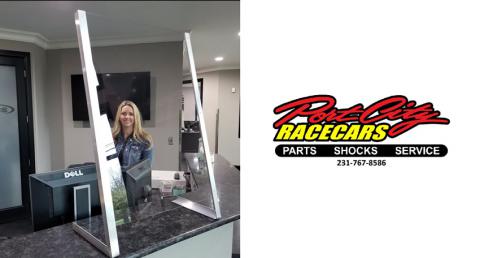
Port City Racecars, the race car chassis provider based in Mooresville, North Carolina, has started selling portable sneeze guards in response to the novel coronavirus (COVID-19).

The see-through guards are designed for point-of-sale locations at places like reception desks, grocery stores, gas stations, and more. The standard size is 24” wide and 32” tall, but custom sizes are also available.

In related news, Port City Racecars remains open during regular business hours, although its facilities are closed to the public unless an appointment is made. Those with questions can call 231-767-8586.

For more information, visit portcityracecars.com.
March 2020

Buffalo Wild Wings NOSA Sprints Sets 2020 Calendar, Opens April 24

Submitted by Anonymous (not verified) on Mon, 03/30/2020 - 08:47
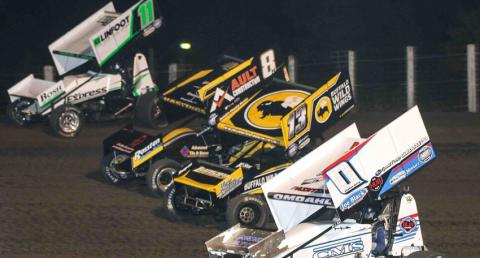
The Buffalo Wild Wings Northern Outlaw Sprint Association (NOSA) has released its 2020 schedule, which features 29 races and begins April 24, at River Cities Speedway, the 3/10-mile dirt track in Grand Forks, North Dakota.

The series is set to conclude at the same venue on September 11. In fact, River Cities will host 18 events on the NOSA calendar.

NOSA will also visit Buffalo River Race Park (Glyndon, Minnesota), Devils Lake Speedway (Doyon, North Dakota), Norman County Raceway (Ada, Minnesota), Casino Speedway (Watertown, South Dakota), Viking Speedway (Alexandria, Minnesota), Red River Valley Speedway (West Fargo, North Dakota), Jamestown Speedway (Jamestown, North Dakota), and Dacotah Speedway (Mandan, North Dakota).

The 2020 schedule is subject to change given the current circumstances with COVID-19. For more information, visit nosasprints.com.

Photo courtesy of Mike Spieker, NOSA Sprints
March 2020