MEMBERSHIP LOGIN

UNSUNG HEROES
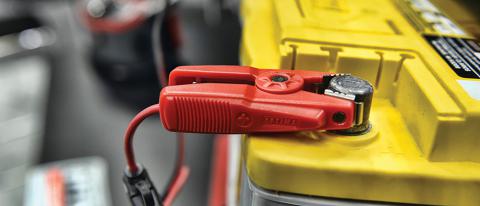
Aftermarket suppliers reveal what racers should know about batteries, alternators, and starters—but often don’t.
When racers invest in making their cars faster, engines, transmissions, and rearends receive much of the attention. Add stickier tires, a stiffer frame, and tunable suspension if the car corners. Then, during the season, factor in spares and wear items. Notably farther down the list are those components that get the engine started and keep it running.
“The battery is not going to make you faster, so it’s one of the more overlooked items on a race car,” said Kenny Pariza of Total Power Racing Batteries, Vista, California.
That said, if the car doesn’t start at a critical time, “that will cost you far more than the price of a battery,” noted Gary Savage of Braille Battery, Sarasota, Florida.
A car’s ignition and charging system—the battery, alternator, and starter—“is an area where money is well-spent,” said Ryan Salata of PROFORM Parts, Warren, Michigan.
There’s a well-known saying in racing that to finish first, you must first finish. But before any of that can happen, the car must start and continue to run, chores that are left to these unsung heroes of the electrical system. With that in mind, we recently polled a number of aftermarket manufacturers to find out what racers should know about these components, but often don’t.
BATTERIES
“Without a doubt the most common issue with a battery is improper charging, or more specifically not charging a battery,” said Brady Basner of XS Power Batteries, Knoxville, Tennessee. “A common misconception with a street/strip or collector car is that the car needs to be occasionally started for the benefit of battery maintenance. While there are definite benefits to starting and warming an engine occasionally, it actually does more harm than good for the battery. Typically, the biggest electrical draw on a car is starting the engine. When using what is likely a somewhat discharged battery to start an engine, the battery will pull down even deeper, and the alternator won’t put out enough amperage to properly charge it.”
“All lead batteries self-discharge, plus you have to factor in parasitic discharge,” said Savage. “If you don’t drive the car long enough, the battery’s charge gets lower and lower over time, and it never gets back to full charge. As a general rule, with a lead battery, when you crank the car over for a couple seconds, it takes 10 minutes of run time to replenish the battery’s charge, not including any parasitic draw or the discharge rate of the battery.”
Lithium batteries require proper charging, too, Savage said, “but a lithium battery charges five times faster, so a shorter drive will replenish the battery.” (See below for more on lithium battery technology.)
“If I’m a race car driver, I’m plugging my battery in after every race,” said Ian Blomgren of Fullriver Battery, Camarillo, California. “If the race car is sitting, it’s plugged in.”
Just make sure the charger is “appropriate for the battery type” in the car, said Basner. “AGM [absorbed glass mat] and gel batteries need a specific kind of charger, as do lithium batteries, and they absolutely cannot be interchanged.”
Even well-intentioned racers can get it wrong. Pariza described a drag-race customer who dutifully put his battery on a charger between each round. “But there were so many accessories running that [the car] would see a 32- or 34-amp demand to cool for the next round. He was hooking up a 15-amp charger to the battery, so it was going negative 17, 19 amps, and draining the battery. As the rounds progressed, he’d drain it that much farther.”
Jim McIlvaine of Optima Batteries in Milwaukee, Wisconsin, has seen the opposite problem, too. “If you have a 50-amp-hour battery and you roll in with a big charger of up to 200 amps, you could cook that battery in 10 minutes,” he explained. “Lots of people overcharge their batteries. They’re not using a smart charger or doing the math correctly.”
Pariza often hosts battery seminars at the PRI Trade Show. “One of my favorite things to ask is, ‘How much money do you have in your race car? A hundred-thousand dollars? Then why do you have a $29.95 battery charger?’ Racers will keep up with the technology to go fast, but not to maintain the heart and soul of their car, the battery.”

Turning our attention to power, a car battery does two things: supplies current to the ignition system and provides reserve capacity to help power electrical accessories (or all the power for those accessories if the engine is not running an alternator). Our sources said racers often do not pay enough attention to both sides of the power equation when choosing a battery.
“Most people, especially when looking at lithium, look only at cranking power,” said Savage. “You have to have enough energy in the battery to do all the work without fully discharging the battery. Make sure the reserve capacity is adequate, whether choosing lithium or an AGM battery. You can get away with a smaller battery for a motorcycle or a four-cylinder race car. But if you run too small of a battery with a big V8, it will fail. You want small and light but not at the expense of reliability and lifespan.”
Different forms of racing put “drastically different” demands on a battery, said Blomgren. “For example, in the short-course off-road sector, they just need the battery to start the car. There’s no gear on there that they need the battery to power, so they’ll use one of our smallest batteries just to start the car.
“But some cars need reserve capacity and run a battery to provide that,” he added. Cars competing in the King of the Hammers off-road race, Blomgren said, “use our battery in the stock location and two extra batteries to power accessories as opposed to running an alternator. A Hammer car may use three of our FT560 batteries, with 44 amp-hours each. That would dang near turn over a freight train in terms of cranking power.”
McIlvaine said the rules for Optima’s Ultimate Street Car Challenge require a certain amount of battery reserve capacity. “That way, if somebody has an electrical failure, we want them to be able to get off the track. It gives us more confidence to turn them out on a place like Road America, with its four-mile course.”
Optima simplifies the battery selection process by color-coding the tops of its batteries. The Redtops fall into the category of starting, lighting, ignition (SLI) batteries. “The Redtop is ideal for getting the car fired up, and then letting the vehicle’s charging system handle its electrical demands,” McIlvaine said. The Yellowtops don’t have as many cranking amps, but “they have deep cycle capacity,” he said. “The Yellowtop is for when you need a battery for more than starting the engine—if you have many accessories or you’re running the battery down between rounds. But it is a little heavier, so in the same group size a Yellowtop will weigh more than a Redtop.”
Is lithium the answer? That depends on the question, our experts say. Lithium battery chemistry is “the absolute biggest technological advancement in the battery world,” said Basner. “Even within lithium batteries there are several types and chemistries that can be used to build a specific output curve depending on electrical draw requirements. In other words, a lithium battery can easily be built to provide high cranking amperage or high amp hours, depending on requirements.”
“Lithium in general, for the same level of starting ability, is on average 65 percent lighter in weight” than a lead-acid battery, said Scott Schafer of Antigravity Batteries, Gardena, California. “That is a staggering difference. It would cost tens of thousands of dollars to lose 30 pounds with carbon fiber, titanium, or another lightweight material.”
As for starting capability, “on average a lithium battery of the same amp hours is two times as powerful as a lead-acid battery,” Schafer said. “As the amp hours go up, lithium’s power becomes about three times that of a lead-acid battery. That means for racing purposes you can use a much smaller lithium battery and lose massive weight, but still have the starting power of a much larger, heavier, lead-acid battery. You can also go up to the same physical-sized lithium battery as the lead-acid battery and have much higher power, and better starting for hard-to-start motors, by supplying a much fatter and stable spark while spinning the motor faster.”
Lithium has also enabled manufacturers to explore new battery technology beyond efficiencies of size and weight. Antigravity has developed a new Re-Start line of lithium batteries with “wireless built-in jump-starting,” Schafer said. “These batteries will put themselves to sleep just before going completely dead, but retain just enough energy to start the vehicle in the event that the lights, fans, or anything else was accidentally left on and drained the battery dead. This prevents those ‘dead-battery emergencies’ from ever happening again.”
A lithium battery’s lightweight, powerful package has made it popular among motorcycle and powersports racers. “They are absolutely dominant in motorcycle road racing,” said Blomgren, “and at the OE level they’re used in pretty much every dirt bike with a starter.”

“Lithium batteries have some unique benefits, but they also have unique challenges,” said McIlvaine. “There’s certainly a weight advantage, and lots of starting power in a smaller, more compact package. But the flip side of that is not every vehicle charging system is set up to charge and maintain a lithium battery. A lot of people have 30-year-old chargers in their garage that aren’t intended to charge lithium.”
Racers have also complained of short lifespans with lithium batteries. Some of that may have been due to improper charging—to McIlvaine’s point—but there is another factor at work: the lure of the tiny battery.
“Early on, a lot of lithium batteries were geared toward powersports,” Savage said. “They were small, with a lot of initial cranking power, but they weren’t designed as an automotive-spec battery. A battery that’s too small will discharge a ton of energy to start a car, then fail prematurely. They’ll only last a couple of years because they were used out of spec.”
Safety—and flammability—is another concern with lithium, fanned by viral videos of exploding cell phones and laptops.
“There are different lithium chemistries, and this is an important point,” said Schafer. “We use Lithium Iron Phosphate (LiFePO4), which is very stable and one of the safest formats of lithium. Other formats used in phones, computers, or RC hobby cars are Lithium Polymer or Lithium Cobalt, which can be very volatile and can easily go into thermal run-away and melt down, or catch fire if not charged properly or overheated. In the automotive world, these other chemistries are not viable and operate in a different voltage range.”
Antigravity also incorporates into its lithium batteries “a built-in circuit board that intelligently monitors all its operations,” Schafer said. “This battery management system (BMS) is the brains of the battery and only allows the battery to work within a set of variables programmed into it. For example, it does not allow the battery to be overcharged or over-discharged, and it has thermal and short-circuit protections on board. It also ensures the lithium cells within the battery are all discharging and recharging at the same rate, so the battery is being monitored to stay in its prime operating range for the longest possible life and best performance.”
And then there’s lithium’s cost. Blomgren provided this thumbnail snapshot of pricing: “For a powersports application, you’ll pay $60–$80 for an AGM or flooded-cell battery, compared to $150–$180 for lithium. But when you step up to something with 1,000 cold-cranking amps, it becomes $180–$260 for AGM versus up to $1,500 on the lithium side.”
A quick Internet search as of this writing showed one of Optima’s Yellowtop H6 AGM batteries (a new application for the company, said McIlvaine) retailed for just under $300, while an H6 lithium battery from Antigravity retailed for between $660 and nearly $1,000, depending on the amp hours chosen.
“Lithium batteries are a newer technology, and the costs associated from the raw materials as well as the electronics used inside our particular batteries are indeed higher, making the end cost more expensive,” said Schafer. “Additionally, the scale of manufacturing is much lower than lead, so across the board it costs more to manufacture a lithium battery.”
“Both lithium and AGM are commodity-driven items,” added Basner. “The cost of raw materials [for a lithium battery] is still quite high and contributes to the overall cost of the product. But the cost really isn’t much more considering their power output. For a lithium battery, you’re typically going to pay three times the cost for five times the battery.”
ALTERNATORS
“The importance of an alternator is often overlooked,” said CJ Jones of Jones Racing Products, Ottsville, Pennsylvania. “Every ignition system needs a fully charged battery to produce the hottest spark possible. Once the battery voltage drops, horsepower is lost. An alternator maintaining a battery throughout a race keeps more than four horsepower or more than a car without an alternator.”
Racers should choose “the smallest alternator possible with enough amperage for their needs,” said Salata. “Every pound matters to a race car driver.” He pointed out that PROFORM’s inventory includes a 50-amp alternator that “only weighs nine pounds.”
Jones Racing Products offers two mini one-wire alternators that tip the scales at between five and six pounds, depending on amperage.

CVR High Performance Racing Products in Arnprior, Ontario, Canada, also offers a 50-amp one-wire Denso race alternator that weighs less than six pounds.
But while weight is a key factor, “amperage is more important than weight in an alternator,” said Ron Thomas of CVR.
“The kind of racing and the electrical demands of the race car will dictate the kind of alternator a racer needs,” said Chris Donaldson of Powermaster Motorsports, West Chicago, Illinois. “It all comes down to current requirements. If a racer runs an electric fuel pump, CDI ignition, and an electric fan, the demands are well under 100 amps. If a car is running an EFI system, dual fans, lights, a water pump, or a higher output fuel pump, the current demands go up.” Take the time, Donaldson said, to “list the average current draw of each electronic component on the car and add them up to get an idea of their maximum current use.”
To help racers with those calculations, CVR put an amperage draw chart in its catalog, listing accessories from a trans brake and nitrous solenoid to brake and running lights.
Also consider amperage at idle, said Donaldson. “It may seem unnecessary, but this is important to maintaining the electrical system when staging or running caution laps.”
Proper alternator installation is important, too, Donaldson said. “Always consider alternator amperage needs before buying mounting brackets. We run into people daily who have a bracket designed for a specific alternator, then learn that the alternator is not up to maintaining their electrical system. Plan ahead and avoid putting yourself in a box on alternator selection.”
Other common mistakes include the use of “improper size charge wires and poor grounds,” he said. “A 200-plus-amp alternator is going to need a much heavier gauge charge wire than a 75-amp unit, especially at prolonged, racing rpm. The rule of thumb is 8-gauge for 100 amps, 6-gauge for 150 amps, and 4-gauge for 200 amps.” These would increase as the wire’s length increases, as with a trunk-mounted battery, for example.
Donaldson also advised grounding the alternator housing “directly to the engine block or common ground. You can’t rely on the brackets to provide a quality ground in racing applications.”
Pulley ratio—the relationship between the diameters of the crankshaft and alternator pulleys—is another bit of math racers need to do to not overtax their alternators, Donaldson said. A typical street car has a pulley ratio of 3:1; but at that ratio, when the engine is turning 6,000 rpm, “the alternator is spinning at 18,000 rpm! Too high of rotor rpm will overcome the efficiency of the alternator, resulting in increased heat, loss of output, and loss of the mechanical capabilities of the unit’s bearings and cooling capacity.” He recommended a 1:1 or 1:5 pulley ratio for the “sustained higher rpm and longer duration” of dirt-track racing, and a 1.75:1 ratio for drag racing.
Jones Racing Products offers “more than 50 alternator-pulley combinations to accommodate any rpm range in any drive situation,” Jones said. “All of our alternator kits are designed around our Radius Tooth HTD systems, which reduce the drag created by belt tension, conventional V-belt, and serpentine systems.”
“Don’t be afraid to really tighten the alternator belt,” Donaldson said. Check tightness by putting a wrench or socket on the pulley bolt. “If you can turn the pulley without the belt moving, it’s not tight enough.”
STARTERS
“The most common mistakes we see with starters are similar to those with alternators,” said Donaldson. They include “lack of a high-quality, stranded cable to handle the extreme current draw; poor grounds; and not following the installation procedure for checking clearances and alignment.”

“Undersized cables can be an issue, so the racer should use 00 gauge, not 1 or 2 gauge,” said Thomas. “Never use welding wire, and remember that the longer the cable, the greater the drop in voltage, which can lead to slow cranking.”
Salata said stock or OE-style starters are not up to the task of turning over “big-cubic-inch and high-compression engines. You will need higher motor output.”
Motor output, though, is measured in different ways by different companies. Some cite motor horsepower, some kilowatts. Powermaster quotes horsepower, kilowatts, and torque, believing that last measure “is the most important consideration,” reported Donaldson. Careful reading and comparison of the companies’ catalogs will help with proper starter selection.
Donaldson also made a distinction between high-torque and high-speed starters.
“Magnetos have become popular with Pro Mod and Extreme Street racing, and an engine running a magneto typically requires a starter that can spin the engine faster. We developed an Ultra High Speed starter that’s capable of handling the high-compression race engines, but it also spins the engine about 250 rpm faster, which makes it easier for the magneto to fire and get the engine started.”
Heat soak can present a problem with starter performance, as it “reduces current flow within the starter by adding resistance to the conductors,” said Thomas. None of our experts recommended using a heat wrap on a starter. CVR’s starters, with their aluminum housings, “eliminate the need for thermal wraps,” said Thomas.
Another heat-avoidance strategy is to look for a starter with multiple mounting bolt patterns “to move the solenoid away from the exhaust,” Donaldson said. “Some of our starters use our Infi-CLOCK adjustable mounting block technology, which provides an infinite amount of adjustment.”