Race Series, Organizers Update 2020 Schedules

Submitted by laurap on Tue, 08/25/2020 - 17:20
Photo courtesy of FIA WEC 

A number of racing organizations worldwide have updated their 2020 calendars in response to coronavirus (COVID-19), with some announcing plans to restart racing at later dates. View the running list, updated regularly, of operational changes made by major racing series and sanctioning bodies.

PRI and SEMA have also released a Coronavirus Updates & Resources webpage that includes information on federal aid, business resources, and the latest on lockdown restrictions. For more information, including a state-by-state guide to race track reopenings, visit performanceracing.com/corona-updates/, or contact mail@performanceracing.com.

In addition, many race tracks have announced plans to reopen their gates in 2020. View a lineup of race track schedule updates here.

All Star Circuit of Champions (ASCoC)
The Ollie’s Bargain Outlet All Star Circuit of Champions presented by Mobil 1 has resumed racing and is set to visit Grandview Speedway on Aug. 27; Williams Grove Speedway on Aug. 28; Lincoln Speedway on Aug. 29; and Bedford Speedway on Aug. 30. The series will then visit Attica Raceway Park on Sept. 4-5, followed by Port Royal Speedway on September 10-12. For an up-to-date schedule, visit allstarsprint.com/schedule/.

American-Canadian Tour (ACT)
Officials from the American-Canadian Tour (ACT) have announced its the Oxford Plains 150 is set for Aug. 28 at Oxford Plains Speedway, followed by the 42nd Labor Day Classic on Sept. 6 at Thunder Road Speedbowl. The Full Throttle 75 is set for Sept. 11-12 at New Hampshire Motor Speedway. 

ACT and PASS officials have also reached an agreement with Thompson Speedway Motorsports Park to promote multiple events at the Waterbury, Vermont-based oval track this season, including its Sept. 2 and Oct. 9-11 events. 

Officials have also announced that the debut season of the New England Late Model Challenge Cup presented by American Racer has been postponed to 2021. For more information, visit ACTTour.com.

American Drag Racing League (ADRL)
The American Drag Racing League (ADRL) has announced the US Drags race, Oct. 2-3 at Texas Motorplex, followed by the signature Dragstock event scheduled for WWT Raceway Oct. 23-24. For more information, visit adrltour.com.

American Sprint Car Series (ASCS)
The American Sprint Car Series has announced a five-race series through Kansas, Oklahoma, and Arkansas set for Aug. 11 at Lakeside Speedway in Kansas City, Kansas, and culminating at Diamond Park Spedway on Aug. 16. For more information, visit ASCSracing.com/.

American Rally Association
The American Rally Association has is set to race next at the Ojibwe Forests Rally on August 28-30. For an up-to-date schedule, visit americanrallyassociation.org/.

ARCA
The Automobile Racing Club of America (ARCA) has updated its 2020 calendar, most recently announcing events at Michigan’s Berlin Raceway and New Hampshire Motor Speedway have been removed from the 2020 ARCA Menards Series East slate, as has the ARCA Menards Series race at Indiana’s Salem Speedway.

In place of these events, a new ARCA Menards Series/ARCA Menards Series East race at Toledo Speedway has been added to the schedule on Saturday, September 12. For more information, visit arcaracing.com/schedule/.
 

British Touring Car Championship (BTCC)
Series Organizer TOCA has revised the provisional calendar for the 2020 Kwik Fit British Touring Car Championship, comprising nine events and a total of 27 races, all of which will be screened live and exclusively on the ITV network. For the latest information, visit btcc.net.


Dates                               Rounds                  Venue (Circuit)
August 8-9                       4, 5, 6                      Brands Hatch (Indy)
August 22-23                    7, 8, 9                     Oulton Park (Island)
August 29-30                    10, 11, 12               Knockhill
September 19-20              13, 14, 15               Thruxton      
September 26-27              16, 17, 18               Silverstone (National)
October 10-11                   19, 20, 21               Croft  
October 24-25                   22, 23, 24               Snetterton (300)
November 14-15               25, 26, 27               Brands Hatch (GP)

Carolina Sprint Tour
The Carolina RaceSaver Nationals originally scheduled for May 29-30, has been postponed to October 23-24. For more information, follow CarolinaSprintTour on Facebook.

CARS Tour
The CARS Tour will sanction the Old North State Nationals, set for October 17-18, at Orange County Speedway in Rougemont, North Carolina. The event will offer a $75,000 purse, paying $30,000 to the winner and $1,250 to start the feature on Sunday. If North Carolina remains in Phase 2, however, alternative plans will be announced. For an up-to-date schedule, visit carsracingtour.com/schedule/.

2020 CARS Tour schedule
August 29 – Langley Speedway – Hampton, VA (LMSC)
September 12 – Carteret County Speedway – Swansboro, NC (LMSC)
September 19 – South Boston Speedway – South Boston, VA (SLM/LMSC)
September 26 – Bristol Motor Speedway - Bristol, TN (SLM)
October 17-18 – Orange County Speedway – Rougemont, NC (LMSC)
October 23- 25 – Gresham Motorsports Park 

Champion Racing Association (CRA)
Birch Run Speedway officials have announced that the CRA event, scheduled for Saturday, August 29, has been canceled due to ongoing restrictions in the state of Michigan.

ARCA/CRA Super Series Powered by JEGS are set for Anderson Speedway on Saturday, August 15, followed by Winchester Speedway on September 6-7, for the World Stock Car Festival Championship Chase Race. 

The JEGS/CRA All-Stars Tour presented by Chevrolet Performance are scheduled for the FastLane Auto Exchance Shootout at Birch Run Speeday on August 29, followed by the World Stock Car Festival Championship Chase Race at Winchester Speedway. For the latest information, visit cra-racing.com.

DIRTcar
Makeup dates for the DIRTcar Summer Nationals Late Models and Summit Racing Equipment Modified Nationals have been determined. Both tours will visit the RICO Bullring on Monday, August 10. For more information, visit DIRTcarSummerNationals.com or ModifiedNationals.com.

FASTRAK Racing Series
The FASTRAK Racing Series powered by Chevrolet Performance has updated its 2020 schedule, including the 33rd annual Paul “Butterball” Wooldridge Memorial, which will pay $20,059-to-win and $575 to start on August 21-22, at Richmond Raceway in Kentucky. In related news, the new FASTRAK Racing Series Northeast season has been postponed to 2021. For the latest information, visit fastrakracing.com.

Ferrari Challenge North America
Officials have released the updated 2020 schedule for the single-make series, which is set to visit the Circuit of The Americas Aug. 28-30.

This year’s Finali Mondiali featuring Ferrari Challenge competitors from across the globe will wrap up the 2020 season at Yas Marina Circuit, the location of the Formula One Abu Dhabi Grand Prix.

For more information about Ferrari Challenge North America, visit races.ferrari.com/en/corse-clienti/north-america/ or IMSA.com.

FIA World Endurance Championship (WEC)
The FIA and the FIA WEC promoter have implemented a provisional calendar to conclude the 2019-2020 FIA WEC season.

Key changes include:
•   Eight races are maintained for 2019-2020 FIA WEC calendar
•   The WEC Season Nine will not start before 2021
•   There will be a new start time announced for 24 Hours of Le Mans in September

The provisional calendar is subject to further change, but the WEC’s Season Eight will restart with the TOTAL 6 Hours of Spa-Francorchamps on Saturday, August 15, the traditional prelude to the 24 Hours of Le Mans which, as previously announced by the Automobile Club de l’Ouest, will be held on September 19-20. Replacing the canceled 1000 Miles of Sebring will be the 8 Hours of Bahrain on November 14, which will close the season.

The calendar for Season Nine—originally 2020-2021—will be completely reworked, and officials believe "it’s reasonable... that it will not start before March 2021."

For the latest information, visit fiawec.com.

Formula 1
Formula 1 has most recently added Portimao (Portuguese Grand Prix), Nurburgring (Eifel Grand Prix in Germany) and two-day event in Imola (Emilia Romagna Grand Prix in Italy) to its 2020 race calendar. This brings the current number of confirmed GPs to 13. Officials have also confirmed there will be no competition in Brazil, the United States, Mexico, or Canada this year. The Italian Grand Prix scheduled for September 6 at Monza, meanwhile, will take place without specctators due to concerns about COVID-19. For the complete schedule, visit formula1.com/en/racing/2020.html. For the latest information, visit formula1.com or the F1 Coronavirus FAQ page.

Formula 2, Formula 3
Following Formula 1’s announcement of their opening eight races of the revised 2020 calendar, FIA Formula 2 and FIA Formula 3 have confirmed that their 2020 season will continue alongside F1. For more information, visit fiaformula2.com/.

Formula DRIFT
Formula DRIFT has announced a further revision to its 2020 championship schedule.  

World Wide Technology Raceway – PRO round 1 & 2, PRO2 round 1: September 4-6
Evergreen Speedway – PRO round 3 & 4, PRO2 round 2: September 25-27
Texas Motor Speedway  – PRO round 5 & 6, PRO2 round 3: October 16-18
Irwindale Speedway  – PRO round 7 & 8, PRO2 round 4: November 20-22
The 2020 Formula DRIFT PRO and PRO2 Championships kicks off on September 4-6 at World Wide Technology Raceway. For more information, visit FormulaD.com.

GT Celebration Series
The new, 12-race, six-weekend GT3 sports car campaign has moved its season opener to July 31-August 2, but will still be contested at Thunderhill Raceway Park. Officials are working to adjust the Sonoma Raceway event, originally scheduled for May 15-17. For the latest information, visit gtcelebration.com.

Historic Sportscar Racing (HSR)
HSR announced new dates for a pair of events at Michelin Raceway Road Atlanta. The HSR Atlanta Fall Historics has been pushed to October 8-11, 2020, while the 43rd running of the HSR Mitty has been moved to April 22-25, 2021. For the latest information, visit hsrrace.com.

Holley LS Fest 
Holley's LS Fest West event most recently scheduled for June 12-14, 2020, in Las Vegas has been canceled. LS Fest East is currently scheduled to take place in Bowling Green, Kentucky, on Sept. 11-13. For more information, visit lsfest.com.

IHRA
The International Hot Rod Association (IHRA) has adjusted its 2020 calendar, found at ihra.com/schedules/calendar.

IMCA
IMCA officials have announced updates to its 2020 schedule, and also released up-to-date information on its network of member tracks. For the latest information, visit IMCA.com or facebook.com/RaceIMCA/.

IMSA
IMSA has announced the realignment of several upcoming dates on its schedule, including shifting the Labor Day Weekend six-hour race from Watkins Glen Int'l to Michelin Raceway Road Atlanta, and the GT-only event from Lime Rock Park to the Charlotte Motor Speedway ROVAL. 

Michelin Raceway Road Atlanta will host the IMSA WeatherTech SportsCar Championship on Sunday, September 6, and the IMSA Michelin Pilot Challenge race will be held Saturday, September 5, featuring doubleheader races for the Porsche GT3 Cup Challenge USA by Yokohama and Lamorghini Super Trofeo.

The CMS Roval will host WeatherTech Championship GT Le Mans and GT Daytona on October 9-10. For more information, visit IMSA.com.

Indy Lights Presented by Cooper Tires
INDYCAR and Andersen Promotions announced that Indy Lights Presented by Cooper Tires competition will be deferred until 2021 following a joint meeting. Due to the COVID-19 pandemic and modifications to the INDYCAR race calendar, multiple companion events were canceled for the series, rendering the 2020 season no longer viable, according to a series press release. For more information, visit indylights.com.

Indy Pro 200 (Road to Indy) 
Indy Pro 200 and USF2000 are set to return to New Jersey Motorsports Park on Oct. 9-11, for the "Fall Thunder at Thunderbolt" as part of the Road to Indy presented by Cooper Tires 10th anniversary season. For more information, visit indypro2000.com.

INDYCAR
Events already scheduled on the NTT INDYCAR SERIES calendar will now become doubleheader weekends, including the race weekends at World Wide Technology Raceway (now Aug. 29-30) and the Indianapolis Motor Speedway Road Course (now Oct. 2-3) will become doubleheader weekends. 

INDYCAR and Mid-Ohio Sports Car Course have also agreed to postpone The Honda Indy 200 at Mid-Ohio scheduled for Aug. 7-9 until a date to be determined in September or October. This decision was made through communication with local health officials given the current environment.

In addition, the 104th Running of the Indianapolis 500 will take place on Aug. 23 without fans following careful consideration and extensive consultation with state and city leadership.

For the latest NTT INDYCAR SERIES schedule, visit indycar.com/schedule.

International Super Modified Association (ISMA)
ISMA Supermodifieds are set to visit Lee USA Speedway in New Hampshire on Friday, Aug. 7, followed by a visit to Seekonk Speedway on Wednesday, Aug. 12. For more information, visit ISMASupers.com.

King Of The Wing Series (KOTW)
The King of the Wing officials, in coordination with Colorado National Speedway and Intermountain Speedway promoters, have been forced to postpone the Central Tour. For more information, visit kingofthewing.net.

Le Mans Classic
Peter Auto and the Automobile Club de l’Ouest have decided to postpone the 10th edition of Le Mans Classic to July 1-4, 2021. For more information, visit lemansclassic.com.

Lucas Oil Late Model Dirt Series
The Lucas Oil Late Model Dirt Series officials have announced its August 2020 schedule, below. For more information, visit LucasDirt.com/events/schedule.

Aug 12; Florence Speedway; 34th Annual Ralph Latham Memorial; Union, KY 
Aug 13; Florence Speedway; Sunoco North/South Shootout; Union, KY
Aug 14 - 15; Florence Speedway; 38th Annual Sunoco North/South 100; Union, KY   
Aug 20-22; Batesville Motor Speedway; 28th Annual COMP Cams Topless 100; Batesville, AR    
Aug 27; Port Royal Speedway; The Rumble by the River; Port Royal, PA
Aug 28 - 29; Port Royal Speedway; Dirt Track Throwback; Port Royal, PA

Lucas Oil Off Road Racing Series
The Lucas Oil Off Road Racing Series presented by GEICO 2020 season is set to visit Lucas Oil Speedway in Missouri on Aug. 21-23, followed by a visit to Wild Horse Pass Motorsports Park on Sept. 18-19. For more information, visit LucasOilOffRoad.com.

Must See Racing
Must See Racing (MSR) has adjusted its 2020 calendar. Next up is the August 7-8 event at Golden Sands Speedway featuring two full shows over two days. Fans may live stream events at https://mustseeracing.tv/. For the latest information, visit MSRXtreme.com.

National Auto Sport Association (NASA)
Officials with NASA have announced the 2020 NASA Championships Presented by Toyo Tires, which were scheduled to take place Sept. 10-13 at Utah Motorsports Park, has been canceled.

NASA Nor Cal has also chosen to reschedule the 2020 25 Hours of Thunderhill Raceway presented by Hawk Performance Products. For more information, visit thunderhill.com. For an up-to-date schedule, visit NASAProRacing.com/events.

NASCAR
NASCAR officials have announced the final installment of its 2020 schedule, including the full Playoffs schedule for all three national series. The NASCAR Cup Series continues with a pair of races this weekend, Saturday, Aug. 8 and Sunday, Aug. 9, at Michigan International Speedway. For the updated 2020 schedule, visit nascar.com/nascar-cup-series/2020/schedule. The debut of the Next Gen car has also been delayed until 2022. For the latest information, visit NASCAR.com.

NASCAR Pinty's Series
NASCAR Pinty's Series officials have postponed upcoming races as Jukasa Motor Speedway (Ontario, Canada) and Quebec's Autodrome Chaudiere. In addition, the western portion of the calendar previously scheduled at Edmonton Int'l Raceway (Alberta, Canada) and Wyant Group Raceway in Saskatchewan have been canceled.

It was previously announced the season opener at Canadian Tire Motorsport Park has been postponed, and the Grand Prix de Trois-Rivieres has been canceled. For the latest information, visit NASCAR.ca.

NASCAR Whelen Euro Series
The NASCAR Whelen Euro Series (NWES) has updated its 2020 schedule, which kicks off September 12-13, at Vallelunga, Italy. The revised schedule is below. For the latest information, visit EuroNASCAR.com.


September 12-13 | Vallelunga, Italy
October 3-4 | Zolder, Belgium
October 17-18 | Hockenheim, Germany
November 14-15 | Most, Czech Republic
December 5-6 | Valencia, Spain
TBD | Brands Hatch, UK

NASCAR Whelen Modified Tour
The 2020 NASCAR Whelen Modified Tour will visit White Mountain Motorsports Park on August 1 for the White Mountain Showdown 200. In addition, the series will visit Jennerstown on Saturday, August 22, followed by a visit to Monadnock Speedway on Aug. 29. For the latest information, visit hometracks.nascar.com or hometracks.nascar.com/whelen-modified-tour/schedule-results/.

National Hot Rod Association (NHRA)
NHRA officials have updated its 2020 schedule, available at NHRA.com/schedule/2020. The Lucas Oil Drag Racing Series will continue to be contested at each Mello Yello Series event. The Menards NHRA Heartland Nationals presented by Minties at Heartland Motorsports Park, scheduled for Aug. 21-23 in Topeka, Kan., has been postponed until the fall with an exact date to be determined. In addition, the NHRA Southern Nationals at Atlanta Dragway, scheduled for August 28-30, has been canceled. For the latest information, visit NHRA.com or NHRA's FAQs webpage at NHRA.com/news/2020/frequently-asked-questions.

Newsom Raceway Parts Weekly Racing Series
The 15th Newsome Raceway Parts Weekly Racing Series season has been updated. For more information, and the complete schedule, visit crateracinusa.com.

NMCA/NMRA
ProMedia Events & Publishing have made changes to the NMCA and NMRA schedules, detailed below. In addition, the NMRA/NMCA All-American Nationals will be contested at US 131 Motorsports Park (Martin, MI) on August 27-30, 2020, while the Super Bowl of Street-Legal Drag Racing event, set for July 30 through August 2, has been moved to World Wide Technology Raceway outside of St. Louis (Madison, Illinois). For the latest information, visit nmradigital.com and nmcadigital.com.

Nitto Tire NMRA/NMCA Super Bowl of Street-Legal Drag Racing Presented by Nickey Performance
Route 66 Raceway, Joliet, IL
July 30–Aug 2, 2020

NMRA/NMCA All-American Nationals
Summit Motorsports Park, Norwalk, OH
August 27-30 2020

NMCA World Street Finals Presented by Chevrolet Performance
Lucas Oil Raceway at Indianapolis, Indianapolis, IN
September 24-27, 2020

Nitto Tire NMRA World Finals + Holley Intergalactic Ford Festival
Beech Bend Raceway Park, Bowling Green, KY
October 1-4, 2020

Northwest Super Late Model Series
Officials with the Northwest Super Late Model Series have adjusted the 2020 schedule, below. For the latest information, visit facebook.com/NWSLMS/.

August 1 - South Sound Speedway
August 15 - Yakima Speedway
September 6 - Hermiston Raceway
September 26 - Wenatchee Valley Super Oval

OPTIMA DriveAutoX Series
The OPTIMA’s DriveAutoX Series has resumed its 2020 schedule, below. Its UMI Motorsports Park event has already taken place, and one series winner will take home a grand prize of $10,000. For more information, visit DriveAutoX.com.

Aug. 1–2 – NCM Motorsports Park in Bowling Green, KY
Aug. 29–30 – Grissom Air Park in Peru, IN

Pikes Peak International Hill Climb
The Board of Directors of the Pikes Peak International Hill Climb has announced the 98th running of the race will is slated to take place on Sunday, August 30, without fans in attendance. Fan Fest, which annually attracts more than 30,000 race fans in downtown Colorado Springs, has been canceled. For the latest information, visit PPIHC.org.

POWRi
POWRi has adjusted its several series' calendars through August, which can be found at powri.com/news/?i=84835.

Officials have also announced new dates for the Speed Weekend featuring the POWRi Lucas Oil National/West Midgets and the POWRi Engler Machine & Took Micro League. The event will now be held in Illinois on August 21-23, at Lincoln Speedway (Aug. 21), Macon Speedway (Aug. 22), and Jacksonville Speedway (Aug. 23).

Originally scheduled for September 5-6, the 16th annual Charlene Meents Memorial will now be held at Creek County Speedway in Sapulpa, Oklahoma, as part of the POWRi Season Championship Weekend on October 16-17.For more information, visit powri.com.

Professional Drag Racers Association (PDRA)
The PDRA Racing series has canceled its Maple Grove Raceway PDRA Northern Nationals event (orig. Aug. 20-22) due to Pennsylvania state restrictions. PDRA also added a visit to Virginia Motorsports Park on August 27-29, for the PDRA Summer Shootout presented by Callies Performance Products. PDRA DragWars at GALOT Motorsports Park (Oct. 8-10) and the PDRA Brian Olson Memorial World Finals at Virginia Motorsports Park (Oct. 22-24) are still on schedule. For more information, including its updated rules, visit pdra660.com or Facebook.com/PDRAracing/.

Rally DirtFish
Rally DirtFish, set for Otepaa, Estonia, will run two weeks later than originally planned, switching to a new date of August 7-8. For more information, visit dirtfish.com.

Schaeffer's Oil Spring Nationals Series
The Schaeffer’s Oil Spring Nationals Series presented by Sunoco Race Fuels has adjusted its 2020 schedule. For the latest information, visit southernnationalsseries.com.

SCORE International Off-Road Racing
SCORE International has announced that the 52nd SCORE Baja 500 will not take place as scheduled from July 14-19. Officials will announce an updated schedule at a later date.

In addition, the second SCORE Baja 400 will not take place in 2020, and the SCORE Baja 1000 will move from a point-to-point race to a single loop race, as announced by SCORE President and Race Director Jose A. Grijalva. For the latest information, visit score-international.com.

Short Track Super Series (STSS)
Officials from the Bob Hilbert Sportswear Short Track Super Series (STSS) Fueled By Sunoco have announced new changes to its August schedule. Due to prolonged restrictions in New York state, the Hustlin the High Banks race at Woodhull Raceway, originally scheduled for Tuesday, August 11, has been postponed. The date, however, will now be filled by the rescheduled Diamond State 50 at Delaware International Speedway om Delmar, Delaware. For the latest information, visit shorttracksuperseries.com.

SPEARS Southwest Tour Series
The SPEARS Southwest Tour Series will visit All American Speedway on September 15 and September 26, followed by a Saturday, October 24, visit to Kern County Raceway. For more information, visit srlsouthwesttour.com/schedule/.

Sportscar Vintage Racing Association (SVRA)
Sportscar Vintage Racing Association (SVRA) has updated its 2020 schedule, some of which will host the Miata Heritage Cup, which now runs the first two generation Miatas (1990-2005; NA & NB). In addition, SVRA and the Seattle-based Society of Vintage Racing Enthusiasts (SOVERN) have rescheduled the Portland Vintage Racing Festival at Portland International Raceway to Labor Day weekend. The weekend will also include the Trans Am Series presented by Pirelli West Coast Series. 

SVRA’s end-of-season awards banquet is scheduled for the first race weekend of the 2021 season at Sebring International Raceway. SVRA offers free live digital streaming for most of its events. For more information, visit svra.com.

Watkins Glen International U.S. Vintage Grand Prix, September 9-13
Virginia International Raceway Heacock Classic Gold Cup, September 24–27 (Miata Heritage Cup)
Lime Rock Park Festival, October 16–17 (Miata Heritage Cup)
COTA U.S. Vintage National Championship, November 5–8 (Also site of Spec MX-5 Challenge Championship)
Michelin Raceway Road Atlanta Grand Prix, November 19-22 (Miata Heritage Cup)
WeatherTech Raceway Laguna Seca Trans Am Speedfest, December 3-6

Southeast Gassers Association (SEGA)
The SEGA has resumed racing, and will visit Lassiter Mountain Dragway on August 22. For the latest information, visit southeastgassers.com.

Sports Car Club of America (SCCA)
The SCCA has resumed racing and is set for for the 2020 Tire Rack Peru CAM Challenge on Aug. 7-9 at Grissom Aeroplex in Peru, Indiana, followed by the 2020 DirtFish SCCA RallyCross Nationals on Aug. 14-16 at Heartland Motorsports Park in Topeka Kansas. Additional featured events include the Oscoda ProSolo (July 31-August 2) at Oscoda-Wurtsmith Airport.

SCCA officials have also announced the cancellation of the 2020 Tire Rack SCCA Solo Nationals, set for Lincoln, Nebraska, September 7-11. For more information, visit scca.com.

SRO Motorsports Group America
SRO Motorsports Group America has resumed racing. Its updated schedule is below. For the latest information, visit sro-motorsports.com.

August 7-9 - Sonoma Raceway 
August 28- 30 - Road America
September 18-20 - Watkins Glen International 
October 2-4 - Indianapolis Motor Speedway

Super DIRTcar Series
The extension of New York State’s Executive Order regarding COVID-19 has forced the postponement of the Super DIRTcar Series races at Thunder Mountain Speedway on Tuesday, Aug. 4, and Land of Legends Raceway Thursday, Aug. 13. In addition, the Gerald Haers Memorial scheduled for Aug. 13 at Land of Legends Raceway will now take the place on the originally scheduled Sept. 19 Super DIRTcar Series race at the track. For the complete schedule, visit SuperDIRTcarSeries.com/schedule/.

Supercars (Australia and New Zealand)
Supercars officials have updated the 2020 Virgin Australia Supercars Championship calendar, which can be found at supercars.com/calendar. It's next race, the Truck Assist Sydney SuperSprint, is the BetEasy Darwin Triple Crown at Hidden Valley Raceway on August 8-9.

Trans Am
Following the cancellation of the Detroit Grand Prix, the new Trans Am Series presented by Pirelli 2020 amended calendar will accommodate all the event dates that were postponed, extending the 2020 season to December. For more information, visit gotransam.com.

Revised Trans Am Championship presented by Pirelli 2020 Schedule

Aug. 6-8 - Road America, Elkhart Lake, Wis. (with NASCAR)(NC)

Sept. 11-13 - Watkins Glen International, Watkins Glen, N.Y. (with SVRA) (NC)

Sept. 25-27 - VIRginia International Raceway, Danville, Virginia (with SVRA) (SC)

Oct. 16-17 - Lime Rock Park, Salisbury, Conn. (with SVRA) (NC)

Nov.6-8 - COTA, Austin, Texas (with SVRA) (SC)

Nov. 19-22 - Michelin Raceway Road Atlanta, Braselton, Ga. (with SVRA) (SC)

Dec. 4-6 - WeatherTech Raceway Laguna Seca, Monterey, Calif. (with SVRA)

SC- Southern Cup Event/ NC- Northern Cup Event


Trans Am West Coast Championship by Pirelli 2020 Schedule

Aug. 1-2 - Thunderhill Raceway Park, Willows, Calif. (with NASA)

Aug. 21-23 - Sonoma Raceway, Sonoma, Calif. (with NASA)

Oct. 9-11 - Sonoma Raceway, Sonoma, Calif. (with NASA)

Nov. 6-8 - COTA, Austin, Texas (with SVRA)  

Dec. 4-6 - WeatherTech Raceway Laguna Seca, Monterey, Calif. (with SVRA)

Tri-Track Open Modified Series
The Tri-Track Open Modified Series has adjusted its 2020 calendar. For the latest information, visit the Tri-Track Open Modified Series Facebook page at facebook.com/tritrackmods/.

TUNDRA Super Late Models
The TUNDRA Super Late Model Series Powered by Wisconsin Potatoes in conjunction with officials from Wisconsin International Raceway have postponed the series' visit to the half-mile. The event has moved to Sunday, September 20. For the latest information, visit tundrasuperlates.com.

Ultimate Super Late Model Series
The Ultimate Super Late Model Series had adjusted its 2020 calendar. For the latest information, visit ultimatesupers.com.

Ultra4
Ultra4 has announced a points race is set for Lasernut in Rena, Nevada, on September 17-19. The Nitto Tire Ultra4 National Championship is set for Crossbar Ranch, Oklahoma, October 22-24. An inaugural Ultra4 Jamboree is also set for San Felipe, Mexico, on November 24-28. This non-competitive event will be for fan and racer engagement.

For the latest information, including qualifying information for the 2021 KOH 4400 Race, visit ultra4racing.com.

USF2000 (Road to Indy) 
Indy Pro 200 and USF2000 are set to return to New Jersey Motorsports Park on Oct. 9-11, for the "Fall Thunder at Thunderbolt" as part of the Road to Indy presented by Cooper Tires 10th anniversary season. For more information, visit usf2000.com.

POWRi United Rebel Sprint Series (URSS)
The Lucas Oil POWRi United Rebel Sprint Series presented by Mel Hambelton Ford Racing had adjusted its 2020 calendar. For the latest information, visit powri.com.

United States Auto Club (USAC)
The USAC Silver Crown Champ Car Series is set for the Hoosier Hundred at the Indiana State Fairgrounds on Sunday, August 23. For more information and USAC's complete schedule, visit usacracing.com.

United States Modified Touring Series (USMTS)
USMTS has adjusted its 2020 calendar. For the latest information, visit usmts.com.

United States Racing Association (USRA)
USRA has adjusted its 2020 calendar. For more information, visit usraracing.com.

W Series
W Series announced that it will not stage on-track races until 2021. For more information, visit wseries.com.

WISSOTA
Several WISSOTA tracks have reopened for competition. For a complete list, visit wissota.org. In addition, the 2020 Speedway Motors WISSOTA 100 is set for September 16-19. For more information, visit wissota.org.

World Of Outlaws 
The World of Outlaws Morton Buildings Late Model Series has officially cancelled a number of events that were postponed earlier in the season due to COVID-19 restrictions. 

The Illini 100 at Farmer City has been rescheduled to April 2021, while the inaugural Hawkeye 101 at Boone Speedway and Wayne County Speedway, originally scheduled for May, has been canceled. In addition, events at Cherokee Speedway in March, Cochran Motor Speedway, Moler Raceway Park, Jacksonville and Tri-State Speedway in May, and Stateline and Genesee Speedway in June have all been canceled.

Remaining 2020 World of Outlaws Late Model Series Schedule:Friday, September 4 - Lavonia Speedway (Lavonia, Ga.)
Saturday, September 5 - Lancaster Motor Speedway (Lancaster, S.C.)
Friday, September 25 - Thunder Mountain Speedway (Knox Dale, Pa.)
Saturday, September 26 - Thunder Mountain Speedway (Knox Dale, Pa.)
Friday, October 2 - Cherokee Speedway (Gaffney, S.C.)
Saturday, October 3 - 411 Motor Speedway (Seymour, Tenn.)
Wednesday, October 23 - Kokomo Speedway
Thursday, November 5 - The Dirt Track at Charlotte (Concord, N.C.)
Friday, November 6 - The Dirt Track at Charlotte (Concord, N.C.)
Saturday, November 7 - The Dirt Track at Charlotte (Concord, N.C.)

The World of Outlaws NOS Energy Drink Sprint Car Series, meanwhile, will visit Knoxville Speedway on Aug. 13-15 for “The ONE and Only” featuring a unique format and more than $400,000 in prize winnings. The series will also visit Lake Ozark Speedway on Saturday, October 17 for the Jason Johnson Classic presented by FK Rod Ends.

For the latest World of Outlaws Morton Buildings Late Model Series schedule, visit here. For the latest World of Outlaws NOS Energy Drink Sprint Car Series schedule, visit here.

Photo courtesy of FIA WEC 
August 2020

Knoxville Raceway Cancels Remainder of 2020 Racing Season

Submitted by laurap on Tue, 08/25/2020 - 17:14
Knoxville Raceway logo


The Marion County Fair Association, in cooperation with Knoxville Raceway, has voted to cancel the remainder of the 2020 racing season.

“The health and safety of our fans, competitors and employees is our top priority,” Marion County Fair Association President Brian Bailey said. “Several individuals tested positive for COVID-19 following our most recent race. In light of that information, we feel that returning to racing this weekend would be premature. Additionally, a large-scale event like the Lucas Oil Late Model Knoxville Nationals won’t be in the best interests of the track or the community at this time.

“None of us like to see the race season end this way, but we’re confident this is the right decision for all parties.”

The following events will be canceled for 2020:
• August 28 – Busch Light Night
• August 29 – Iowa Corn Growers Association Districts 5 & 9 Night
• September 17-19 – Lucas Oil Late Model Knoxville Nationals
• September 25 – Knoxville Championship Series
• September 26 – Knoxville Hospital & Clinics/Slideways Night

Tickets and camping for the Lucas Oil Late Model Knoxville Nationals will be automatically refunded. For more information, call 641-842-5431.

The 2021 Knoxville Raceway season is scheduled to begin with the Pella Motors/Kraig Ford Season Opener on Saturday, April 17, 2021.

For more information, visit knoxvilleraceway.com.

August 2020

NASCAR President Steve Phelps Named To Board Of Directors

Submitted by laurap on Tue, 08/25/2020 - 16:46
NASCAR President Steve Phelps courtesy of NASCAR


NASCAR Chairman and Chief Executive Officer Jim France announced the appointment of NASCAR President Steve Phelps to the Board of Directors. 

Phelps becomes the fifth member of NASCAR’s Board of Directors, joining France; Lesa France Kennedy, Executive Vice Chair; Mike Helton, Senior Advisor to NASCAR; and Gary Crotty, Chief Legal Officer.

“Steve’s unwavering leadership and dedication to growing our sport through even the most challenging times has been remarkable,” said Jim France.

“I am incredibly honored to be appointed to the Board of Directors,” said Phelps. “As a lifelong fan of the sport, I feel a great sense of pride and duty in our work to position the sport for long-term success. I am grateful for the leadership and example set by the France family and am genuinely humbled by their continued trust in me.”   

Phelps has served as NASCAR president since 2018 and has been with the sanctioning body in various roles, including Chief Operating Officer, since 2005. He is only the fifth person to hold the position of NASCAR president. 

During his tenure as president, Phelps has pioneered important growth initiatives, oversaw the landmark merger and integration with ISC, instituted a Premier Partner model for the NASCAR Cup Series, and spearheaded a number of innovative changes to enhance the competition on track.

For more information, visit nascar.com.

Photo courtesy of NASCAR

August 2020

DATA PROJECTION

Submitted by ashtonr on Tue, 08/25/2020 - 15:47


Gain valuable insight into when and to what extent sensors should be upgraded or replaced on a race car.

In the early days of motorsports, it was the duty of master mechanics and crew chiefs to get a “feel” for how the engine was running and tune it to the best of their abilities. These pioneers of the sport often relied on their own senses of sight, touch, and sound to get the most horsepower out of the engines they worked on in order to propel both car and driver into the winner’s circle.

In addition to their tuning skills, these technicians would often conduct extensive tear-downs in an attempt to “read” what was going on inside their engines. In this manner, they could verify if a tune-up was spot on, or see if there was room for improvement as evidenced by breakage, wear, or fuel/oil deposits on any of the various components.

Of course, the industry has changed considerably since then, and high-tech advancements are now made on a continuing basis. Today, race cars are controlled by sophisticated electronics and computers using highly sensitive sensors to provide feedback to help precisely control and measure the air/fuel mixture, suspension position, and timing, among other functions.

Indeed, proper usage, diagnosis, and replacement (when required) of these sensors can mean the difference between coming up just a few inches short and gaining that critical 0.001 of a second needed to qualify for the next round. Conversely, how do you know when your car’s current sensors aren’t getting the job done? Fortunately, our expert sources have the answers.

sensor1
Material selection determines how precise of a reading sensors can achieve, as noted by a source from AEM Performance Electronics. “Upgrading from our brass type to stainless sensors are recommended for accuracy when you are using them for tuning and data analysis. We like to say it’s the equivalent of the difference between using a ruler and using a caliper to measure something. Both will measure, but one will measure with a higher degree of accuracy,” he said.

WHEN TO UPGRADE

Racers who already utilize sensors may not realize the benefits to upgrading these small yet important components, or how additional or better sensors can help collect more or better data.

“A customer should consider upgrading their sensors when the use of forced induction is introduced, when improvement in overall engine performance is desired, and/or failures are prevalent,” said Jeff McCants of Smith Systems, Brevard, North Carolina. “We certainly recommend at least upgrading from the plastic OEM sensors to stainless steel versions of most sensors when reliability and performance are essential.”

Transitioning from one material to another can deliver more precise readings, too, as Lawson Mollica of AEM Performance Electronics in Hawthorne, California, explained: “Upgrading from our brass type to stainless sensors are recommended for accuracy when you are using them for tuning and data analysis. We like to say it’s the equivalent of the difference between using a ruler and using a caliper to measure something. Both will measure, but one will measure with a higher degree of accuracy. While our brass pressure sensors are great for looking at something like boost/vacuum on a gauge, you want a stainless MAP sensor when you are using that data for engine tuning.”

According to Skylar Drake of Holley Performance Products in Bowling Green, Kentucky, whose brand lineup includes Racepak Data Systems, “It really comes down to when are they needing more data…. Making the jump from 20 Hz to 100 Hz increases the amount of information recorded significantly (especially if monitoring multiple channels). If moving to a more powerful combination with power adders, it may be a good idea to add a few additional sensors to make sure everything is playing well with one another.”

However, knowing when to upgrade a sensor versus straightforward replacement requires a bit of savvy, according to Todd Paton of Performance Data Systems in Rancho Santa Margarita, California. “In my experience, customers will upgrade sensors once they understand the basic information they are receiving from the sensors and want to look deeper into the information they are receiving,” he said. “A common application of this has been when a customer uses a single air/fuel ratio sensor on the engine to determine if the overall tune-up is rich or lean. Once they start tuning each individual cylinder, they will upgrade from a single air/fuel sensor to a set of four, six, or eight, depending on the type of engine they are tuning.

“We also have customers that start out monitoring the suspension travel of the right rear wheel of their suspended drag race vehicle,” Paton added, “and then call back shortly thereafter to order additional sensors for the other three wheels to help paint a more complete picture of what their car is doing.”

“If the racer is not satisfied with the data observed, or does not see a significant event well-reported on screen, then perhaps newer or faster responding sensors are in order,” offered Dennis Lawler of Exhaust Gas Technologies, Chino, California. “In temperature measurements, the exhaust gas temperatures are paramount to crew chiefs. The closer the cylinder temperatures are, the happier the motor.

“[For example], NASCAR likes to see +/- 50 degrees between cylinders,” Lawler continued. “In drag racing, the fastest exposed tip thermocouple is golden and offers a response time of better than 0.03 seconds. Many teams in the gasoline fuel classes have re-instrumented and use air/fuel ratio measurements and fuel mapping to achieve greater performance.”

POPULAR ENHANCEMENTS

Sensor upgrades run the gamut, but a handful stand out among the crowd, according to our sources.

sensor2
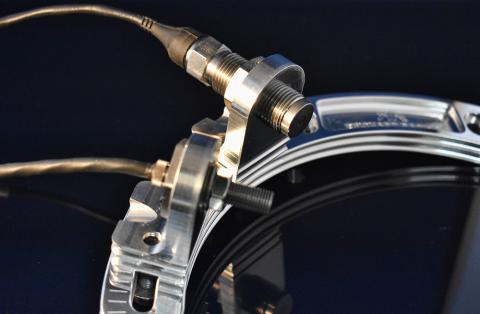
When it comes to temperature measurements, the fastest responses typically come from sensors with exposed tips and small gauge elements producing outstanding graphs, according to our source from Exhaust Gas Technologies. Pictured here is the company’s Super Series sensor designed for Top Fuel applications.

“For tuning, our wideband sensors are a must-have,” stated Mollica, who cited AEM’s X-Series widebands for their especially rapid response time, which “allows tuners to ‘see’ changes that other sensor controllers may miss to create the most accurate tune. It has analog, serial, and CAN bus outputs, too, so it can be adapted for use on many different types of engine management systems, from open source to full standalone units. It also has the ability to use the Bosch 4.9 sensor’s factory resistor calibration, but also free-air calibrate the sensor if you want to. This is a great feature when you have an older sensor and are at the track because you can free-air calibrate the sensor to ensure accurate readings until you can replace it with a new one.”

Most motorcycles and cars come from the factory with narrow-band O2 sensors, according to David Carter of Daytona Sensors, DeBary, Florida, so his upgrade of choice is a wideband O2 sensor.

Paton noted that many of his customers want better monitoring of their suspensions, so they frequently add vehicle ride height sensors. “In cars without a suspension, like Funny Cars and Top Fuel dragsters, we use load cells to monitor pressure on the wheelie bar as well as the front spindles on the chassis, in addition to ride height sensors,” he explained. “There is a fairly recent trend of monitoring tire temperature and track temperature using our infrared temperature sensors as well. We also have many customers looking at monitoring what the driver is doing by adding throttle position, brake pressure, and even heart-rate monitors to their data acquisition systems.”

For temperature measurements, Lawler told us the fastest responses come via “sensors with exposed tips and small gauge elements producing outstanding graphs. They will report a single misfire at 8,000 rpm, and will also tell the crew if the misfire was caused by a loss of ignition or loss of fuel just by analyzing the analog data graph.

“Another important upgrade is intake air temperature,” he added. “By mounting a small 0.092-inch diameter T/C at the top of the carburetor, or air intake on injected motors, or mounted just below the blower, [you’ll get] reliable readings that point the way in fuel mapping. These readings will vary through the day into the evening. The cooler the readings, the more oxygen per cubic foot are revitalized.”

According to McCants, one common—and highly effective—upgrade involves the addition of a crank trigger sensor in coordination with a traditional ferrous reluctor wheel or flying magnet wheel. “This is a great addition when accurate and stable timing is desired. This upgrade can increase performance greatly.”

Other sensors to consider upgrading, according to McCants, are those with open tipped housings, where the coil and magnet are exposed, “due to fluid and or dirt intrusion. Because a vehicle or bike can be subject to many harsh conditions during competition or street use, upgrading to a closed (‘blind’) tipped sensor is a great way to prevent internal damage due to fluid/dirt intrusion. Just a simple change from an open tipped sensor to a blind tipped sensor can make a world of difference when it comes to winning and losing.

“In the case of a turbocharged induction system, users may also find it useful to upgrade their turbocharger by introducing a speed sensor to their unit,” McCants added. “These sensors used in conjunction with an ECM will prevent rpm (over spin), thereby preventing damage to the turbo and/or the engine.”

MAINTENANCE AND REPLACEMENT

So, how to tell when it’s time to replace those helpful measuring tools? What are the early warning signs that precede replacement? And by extension, what sensors should retailers have on hand for immediate sale?

“Most sensors will work until they don’t, so it’s a good idea to carry spares of the important ones you rely on at the track in case they fail,” advised Mollica. “For instance, our stainless sensors have a full 360-degree welded wetted area that makes them impervious to automotive fluids, and their failure rate is a fraction of one-tenth of 1%, but if it happens you will be glad you made the investment in having the spare on the trailer. That said, before you toss the sensor, it’s a good idea to check the connector pins and wiring to make sure they weren’t cooked off or came loose before writing the sensor off.”

sensor3
Interference on the sensor itself can affect data logging, so moving to remote mount sensor blocks may help avoid harmonics. “Subjecting your sensor to [vibration] will cause false readings and lead to a premature failure. Routing sensor wires away from high-powered ignition components is a must,” our source from Holley told us.

Pointing to AEM’s Infinity ECU and four-channel wideband UEGO controller, Mollica noted the ability to warn users if there are problems with a sensor. “The Infinity has this capability built into the software and you can program it to alert you,” he said, “and the four-channel wideband controller has status LEDs to alert you to a fault condition so you can check the connection to determine if the issue is there or with a sensor that has reached the end of its life.”

Big-picture, McCants told us that key indicators are the system for which sensors are being used and what exactly is being measured: “The broad answer is that a bad sensor will always produce odd readings, [thereby] failing to alert the user of an impending problem and with poor performance soon to follow. Oftentimes your ECU program interface will show undesirable curves, lower or higher than acceptable numbers. In the case of a bad or improperly installed variable reluctance sensor, the sine wave signal will be very weak or nonexistent. The same principle applies when dealing with a bad or improperly installed Hall effect sensor. The square wave will be weak or nonexistent.

“Just to touch on improper install a bit more,” he added, “oftentimes a sensor’s alignment to the target plays a very key role in its performance. Improper air gap can also lead to performance problems.”

Erratic readings, Drake said, such as noise (interference) on the sensor itself can absolutely affect data logging, so the team at Holley recommends moving to remote mount sensor blocks to avoid engine vibration and various harmonics. “There are a large amount of minor vibrations happening in your engine bay, and subjecting your sensor to them will cause false readings and lead to a premature failure. Routing sensor wires away from high-powered ignition components is a must, as plug wires and coils can emit electronic interference that can create skewed data on that particular sensor.

“Don’t forget about heat and its effect on components,” he added, because “heat shielding and wire loom can make all the difference. You are relying on them to tell you what’s happening inside your race vehicle, so treat and mount them like the precision tools they are.”

Carter also advised keeping an eye out for odd readings. “For instance, not responding as quickly as it used to, or not being able to calibrate to free air, or not responding at all to engine change,” he said. “A few signs that the sensor is ready to be replaced would be as follows: Sluggish response from the sensor with engine rpm change, or the sensor is not able to go all the way up to free air (19.5 AFR). We have seen the sensor not even move at all, basically saying the sensor is clogged. You can also test to see if the sensor is heating up properly. About 30 seconds after power-up the sensor should start to feel warm to the touch. After about one to two minutes the sensor should be hot, almost hot enough to not be able to hold in your hand.”

“Yes, in many cases they will get ‘odd readings,’” agreed Paton, “but it depends on the type of sensor, and the failure mode. In the case of thermocouples, we see either erratic ‘jumps’ in the temperature readings if there is damage to the insulating material or the wire leads going to the hot end of the probe, or the reading will be ‘flat’ or steady value if we are getting no output from it whatsoever.

Other sensors fail in similar ways, he explained, noting that shock travel sensors can provide erratic readings if there is damage or debris in the sensing mechanism. “Or [they] may provide no output at all, resulting in a ‘flat’ reading at a certain value,” Paton continued. “Air/fuel sensors may become slower to react or may give a negative value, which is used to determine the source of the failure. RPM sensors usually just return a reading of ‘0’ if they require replacement, while most of our pressure sensors will return a negative value, such as a reading of -15 psi on a sensor that has a range of 0–60 psi.

While Performance Data Systems’ core competency is assisting customers with troubleshooting based on the readings from their data, Paton told us that racers often misinterpret that data as a failure of the sensor, rather than a problem with the component or system itself.

sensor4
Daytona Sensors’  WEGO systems are designed with a built-in calibration function. “If the sensor is used on regular pump gas, it is possible to get up to 10 years of use out of it. Although we’re more likely to see anywhere from three to six years on average,” a company source told us.

“One of my biggest observations when I started working in the field of data acquisition was how customers install a data system to see if there are any problems on their vehicles, and the minute they spot something, they assume the reading is incorrect,” he said. “Basically, they install the system to find a problem, and once a problem appears, they blame the data system.”

Referencing temperature circuits, Lawler noted a common problem referred to as “multiple or secondary junctions.” A thermocouple, he said, “relies on the single junction at the tip of the sensor only to report true data. Another short in the cable, even a ‘high-resistant short,’ will cause the readings to wander downscale. This problem will show in lead wire twists, pinches, burns, or mild shorts caused by the cable [being] crushed under a clamping device, or pinched under another car component.”

Another question frequently asked of our sources was whether racers should replace certain sensors after replacing specific components. The answer, we discovered, depends on both situation and application.

“Most of the time we’ve encountered individuals, teams, companies, etc. who’ve equipped their cars or bikes with the top-of-the-line, biggest, best, and [most] reliable performance equipment and neglect to upgrade their sensors and cabling,” McCants said. “Typically, when performance upgrades are made, we like to recommend upgrading your sensors as well with sensors that use superior components. Ultimately, this can prevent damage and untimely failures when it counts the most…preventing losses on the track and in the wallet.”

Drake added that replacement may just be the optimal approach in certain cases, such as when sensor wiring melts or gets pinched: “Oxygen sensors can wear over time and prematurely fail when exposed to extreme heat. Whenever possible, remove mount pressure transducers and other sensors to prolong their lifespan.”

Paton clarified that replacing sensors doesn’t necessarily go hand-in-glove with replacing components—that is, “unless it is either financially beneficial, or simply easier to access during the replacement of a particular component.” One example he cited was exhaust sensors, as they are a fairly common replacement when racers swap out the exhaust manifold. “Many professional drag racing teams have a set of temperature probes installed in each of their sets of exhaust headers to help facilitate the quick service between rounds. Often, our customers will replace their driveshaft rpm sensors when they service the rearend in their cars, as the sensors can be hard to access once the center section is reinstalled. Otherwise, I recommend waiting until a slight variation from typical readings is observed.

pf

“The only exception to this is usually when a customer is changing to a new car from another,” Paton continued. “It may seem like a good cost-saving idea to keep the same sensors from one vehicle to the next, but unless great care is taken, the sensors and related cables either get damaged or installed incorrectly on the new vehicle, while the old vehicle gets sold without any of the sensors that, in most cases, helped make it a competitive vehicle.”

Carter pointed to Daytona Sensors’ WEGO systems, for which it carries a line of replacement parts and service options. These units, he said, have a built-in calibration function, and “if the sensor is not able to complete the calibration, then it is either faulty or worn out to the point it cannot be calibrated anymore. This can be caused by several [factors]: dirty gas, race fuels—pretty much any fuel with lead will cause the sensors to not calibrate within just a few hours of use. If the sensor is used on regular pump gas it is possible to get up to 10 years of use out of it. Although, we’re more likely to see anywhere from three to six years on average.

“Leaded fuels are the worst for them,” he noted, “and can take them out in as little as a few hours. We recommend if you are going to use them in a leaded race fuel environment, to just put them in to tune the engine then take them out.”

A WORD ON UPKEEP

Proper care and maintenance of sensors should never be overlooked, as Lidio Patrizio of AvioRace, a sensor and electronic products supplier based in Vignola, Italy, reminded us. “Each sensor has a particular maintenance procedure according to the specific application, what normally requires simply a general check—visual inspection or data acquisition—or directly at the end of each race track session. Obviously, there are measures to prevent malfunctions,” he said. “Let’s consider a linear potentiometer as an example; it’s necessary to clean the stem to prevent dirt residue from affecting the resistive internal tracks’ operation. Another example is the infrared temperature sensor, used for tire temperatures. Here too, cleaning is fundamental to keep the measurement spot efficient.”

He went on to explain that a strategic sensor requires periodic checks and even greater care than an optional sensor. Customers tend to replace a sensor more often if it hinders vehicle performance and functionality, he said, unlike optional sensors, which are more often repaired or substituted upon failure.

“For strategic sensors, a scheduled replacement is based on a ‘usage time’ or ‘mileage,’ although usually defined on statistical data is preferred,” Patrizio said. “Accuracy or reliability upgrades are suggested when customers want to improve the performance of the data acquisition and/or the reliability of the products. For example, to measure the ride height, it is possible to use ultrasonic sensors or laser sensors. These are different technologies for the same purpose; the first ones are less accurate but much cheaper. Accuracy expectation and budget availability are key factors to choose the right product.”                               

SOURCES

–

AEM Performance Electronics
aemelectronics.com
AvioRace
aviorace.it
Burns Stainless
burnsstainless.com
Daytona Sensors
daytona-sensors.com
Exhaust Gas Technologies
exhaustgas.com
Holley Performance Products
holley.com
Performance Data Systems
racepds.com
Smith Systems
smith-systems-inc.com
September 2020
By
DANA FORD

MANIFOLD CHOICES

Submitted by ashtonr on Tue, 08/25/2020 - 13:16


Every racer will eventually face the decision: off-the-shelf or custom? Fortunately, our expert sources are here to help retailers and engine builders point customers in the right direction.

Assembling a racing engine is always a series of choices and compromises. Some parts, either because of the rulebook, deadlines, or budget constraints, are bound to be readily available off-the-shelf items. For other parts, only custom pieces will do.

To examine those trade-offs, consider the intake manifold. Every engine needs one, and the variety in the market is staggering. The manifold is one of those engine parts that perfectly illustrates the factors that must be considered when deciding between off-the-shelf or custom. Both types of intakes have their plusses and minuses, and helping retailers and engine builders guide racers to the right choice is no small challenge.

There are several steps along the way to piecing together the optimum induction package. Asking the right questions is the start. “The biggest or first question that I normally try to get our guys to ask is drivability—what style of driving they’re going to have,” said Mark Fretz of Brodix, Mena, Arkansas. “If it’s going to be a stoplight-to-stoplight, pump gas, power brakes-type engine, or is it going to be something that they’re going to rip on a little more? Or is it an all-out drag race car, or circle track car, or road race car? Try to get the style of driving that they’ll be judging the performance from. And at that point, then get them the style of manifold, or fine-tune it down to which exact manifold will work best for them.

intake1
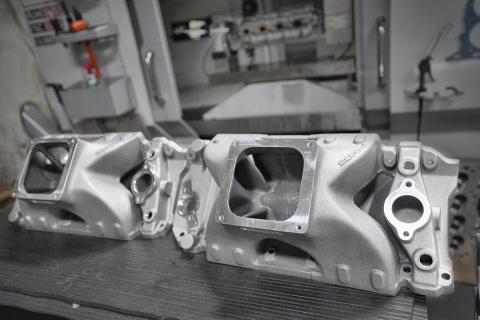
A key selling point for some of Brian Tooley Racing’s newest manifolds is their provision for maximum hood clearance. “Where our product really shines is hood height,” said a company source. “There’s a lot of people who don’t want to cut up their cars to install an intake manifold.”

“The main thing is, you can build two identical engines, and two guys are going to evaluate them completely different if they have two different driving styles,” Fretz continued. “If one guy gets in and wants to drive it to the grocery store or drive it to the drive-in diner to go get a milkshake, he’s not looking for power at 7,000 rpm. He’s wanting power from off-idle to 4,500 rpm. Where, put his grandkid in it and he wants to go show off to his buddies, all he wants to do is see how far he can spin the tires. And they’re going to evaluate it differently.”

At Frankenstein Engine Dynamics in Weatherford, Texas, Jesse Meagher noted that ultimate performance is not always the deciding factor. “Every engine combination is unique in one way or another, so a custom manifold will almost always outperform an off-the-shelf version,” he said. “When we design a new manifold, we factor in induction type, cubic inches, rpm range, fuel delivery, and a few other things. The only real difference between one of our higher volume production manifolds and a custom piece is how wide the range of those factors is we accommodate to. In practice, however, that advantage can be negligible, and often budgetary concerns outweigh small performance gains.”

M&M Competition Engines in Franklin, Indiana, mostly offers custom manifolds, and knows well the considerations racers take into account. “Correct intake manifold choice results from a combination of several key factors,” said Scott Patton. “The questions a retail sales staff and engine builders alike need to ask include, but are not limited to, what type of racing will the end user be participating in? What cylinder head is being utilized? What size is the engine? What are the horsepower goals of the combination? What is the budget of the end user? What type of fuel delivery system will be required (EFI, single carb, dual carb, mechanical fuel injection, etc.)? Are there any rules that govern the use of a cast intake versus a sheet-metal intake?

“For example, a bracket racer that is wanting to make 200–300 passes per year would be fine with an off-the-shelf intake manifold in most instances because budget and simplicity are the driving principles behind intake choice, not all-out horsepower,” Patton said.

OFF-THE-SHELF (MOSTLY)

Buying a manifold that’s a regular catalog item has several advantages that will strike most people as obvious. For one, it arrives quicker than waiting for custom work. For another, it’s usually less expensive.

But there are plenty of reasons racers choose an off-the-shelf intake manifold that aren’t always as apparent. “One thing that’s going on in the manifold world, at least for our product, where our product really shines, is hood height—cutting the hood, cutting the cowl,” said Brian Tooley of Brian Tooley Racing, Bardstown, Kentucky. “There’s a lot of people who don’t want to cut up their cars to install an intake manifold. And a lot of the intake manifold choices out there would require cutting a hole in the hood, or getting a custom hood, or at minimum, cutting the cowl with a custom hood. A lot of guys don’t want to do that to their car.

“You have so many customers running boost now, whether it’s a centrifugal supercharger, turbo, twin turbo—boost just gets cheaper and cheaper, and easier and easier,” Tooley said. “So a lot of those guys want something that is going to make power up over 7,000 rpm, and they don’t want to cut their car up.”

The sanctioning body rulebook often plays a role in limiting custom pieces. “Some classes say, ‘No billet or sheet-metal intakes,’ simply from a cost perspective,” Tooley said. “So it must be a cast-aluminum intake. From that perspective, our cast-aluminum intakes fit the bill there.”

Intake manifolds, of course, have to work in concert with carburetors or fuel-injection systems, as well as cylinder heads. It’s not unusual for high-volume off-the-shelf intakes to have been designed to work in concert with popular, readily available parts both upstream and downstream of the manifold. Collaboration between companies is common in the industry.

“We do a lot with APD (Advanced Product Design) up in Ohio,” explained Fretz with Brodix. “As they develop carburetors, they work with us on intake development as well.”

intake2
The new LSXHR from Fuel Air Spark Technology (FAST), which is billed as the industry’s first polymer, tunnel-ram style manifold, features replaceable stacks that come in different lengths, “So you can have a short-runner for very high rpm, a mid-length runner for something intermediate, and then we have the longest runner, which really is optimized up to about…7,200 to 7,500 rpm,” our contact noted.

Brodix manufactures its own cylinder heads, and updates and optimizes its intake manifolds to maximize package options. “When we do an intake manifold, the design we’re looking for is to get optimal power for a specific style of engine, or specific size of engine range,” Fretz said.

“And then once the cylinder heads become better and better over the years, then the demand outgrows what intake manifolds we have. And then we look, and we try to redesign and get ahead of the game again with the manifold. We start with an existing manifold that we have and then evaluate, and then engineer what we think it needs to do.”

COMP Performance Group in Memphis, Tennessee, is a manufacturer with many brands in its portfolio, such as COMP Cams, Racing Head Service (RHS), and Fuel Air Spark Technology (FAST). Intake manifolds from FAST have been engineered to work with other COMP Performance Group parts, making it easy to put together a well-matched package. “Those products have all been tested together,” said Matt Patrick.

“Any new manifold is always designed as a kit, working in conjunction with the throttle bodies, fuel rails, airhorns, mechanical or electronic actuation,” added Mike Jenvey of Jenvey Dynamics in Bridgnorth, Shropshire, United Kingdom. “Jenvey throttle bodies are modular in design, allowing engine builders to fine-tune intake systems to best match their engine specification.”

To say that a product is “off-the-shelf” doesn’t mean it’s a pedestrian item, or a second-best choice. Modern tools and design processes mean that many off-the-shelf manifolds are not far off from what was a leading-edge custom just a few years ago, capable of hitting a performance bullseye in many racing applications.

intake3
Frankenstein Engine Dynamics makes readily available intake manifolds that appear custom and can be tailored for specific applications. “With the Freakshow (pictured here)…we increased the plenum volume and runner length significantly to work better with larger, more powerful engines,” a source said.

At Brian Tooley Racing, the latest generation of manifolds are the Equalizer 1, for the GM LS1 series, and the Equalizer 3, for the LS3 family.

“We call them our Equalizer series because of how the air is introduced low, below the runners, and flows up into the plenum,” Tooley said. “When you look at most of the race intakes out there, you have the runners running up into the plenum, the throttle body is affixed right to the front of the plenum, and the air from the throttle body runs right across the opening of those runners. And what most people assume is the front runners are going to get the most air, and the rear runners are going to get the least. What actually happens is just the opposite. As the air rushes past those front runners, it actually kind of shears some of the airflow off the front runners. The airflow then basically stacks up in the rear of the plenum, and feeds more air to the rear cylinders. We have eight wide-band O2 sensors on our engine dyno, so we’re able to look at that air/fuel ratio per cylinder,” citing the air/fuel ratio per cylinder at 7,500.

At the COMP Performance Group, FAST’s new LSXHR manifold straddles the line between off-the-shelf and custom capabilities. “[This] intake manifold took us a full three years to develop,” Patrick said. “A tremendous amount of R&D went into it. It is the industry’s first polymer, tunnel-ram style manifold that has some key features. One, it’s really rated for boost. This product works great for naturally aspirated applications, but the boosted market was first and foremost in our minds. It’s very strong, very heavy-duty, very thick polymer. It’s rated for 45 pounds of boost continuous. It’s a very strong structure. From the beginning, from the clean-sheet design, it was designed for boost. There’s a lot of reinforcement, and a lot of material thickness to make it very strong.

“It’s got replaceable stacks that come in different lengths,” Patrick continued. “So you can have a short-runner for very high rpm, a mid-length runner for something intermediate, and then we have the longest runner, which really is optimized up to about, I would say, 7,200 to 7,500 rpm.”

Citing additional “neat features,” Patrick told us the fuel injectors were “very strategically aimed…and it’s really a compound angle. Much like the OE intake, ideally you want your pencil-stream injectors to aim right at the back side of the intake valve. It’s a very hot surface, and it’s a really nice way to get really solid fuel atomization.” 

That ability to “custom outfit” an off-the-shelf manifold has become increasingly easy to find. “Jenvey specializes in cast-aluminum manifolds. All design work is completed in Solidworks with CNC machines dedicated to creating patterns (moulds) for the on-site foundry. All subsequent machining is carried out in our CNC shop,” Jenvey said. The company’s newest MF20 Ford Coyote downdraft manifold was designed for use in rear-engined Sports Prototypes, as well as cars such as front-engine Cobra replicas, requiring maximum flexibility.

“A number of customers approached us about supplying a downdraft manifold for the Ford Coyote engine,” he continued. “This is our own product, but careful consideration was given to performance and allowing fine-tuning of the system length as well as offering multiple injector positions, one of which can allow the use of the original loom. Using our modular components, it is possible for engine builders to specify the system to their own requirements.”

Frankenstein Engine Dynamics makes readily available intake manifolds that pack the visual punch of a custom, along with multiple options to tailor them for specific applications. “With the Freakshow, we wanted to build a manifold better suited to either larger cubic inch engines or high-boost forced-induction applications. Freed from the tight constraints of our LowPro manifold, we increased the plenum volume and runner length significantly to work better with these larger, more powerful engines,” Meagher said.

“As for the Iceman, it was all about packaging with a bit of cool factor thrown in for good measure. We weren’t the first to come up with the idea, but instead of adding the intercooler as an afterthought to an existing manifold, we decided to design one from scratch without compromise, and using the largest air-to-water core we could,” Meagher added.

CUSTOM TAILORED

Any number of factors could trigger the need for a custom intake manifold—moving the ports in a cylinder head, dialing in power in a particular rpm range, or simply seeking a competitive edge, to name a few.

intake4
Sheet-metal intakes, like the one pictured here from M&M Competition Engines, can be purpose-built to customers’ needs. “All components are made in-house, and are designed and machined once all of the engine specifications and customer desires are finalized,” a company source said.

A racer may have to search a bit to find the ideal source for a custom manifold, but the options are plentiful. “We specialize in prototype and low-volume production, one to 500 parts a year,” said Mike Miller at Cunningham Precision Group, Columbus, Indiana. “We do this with tooling that is a reasonable price range for the normal racer or smaller speed shop to afford. Most foundries are not interested in these low quantities, and their tooling is very expensive. It is hard for a customer to find a casting house that’s interested in making low volume; however, a lot of customers have unique designs and applications that do not lend themselves to high production. This is our niche.”

Cylinder head evolution drives a good part of Cunningham’s manifold business, Miller said. “In today’s industry, intake manifold designs are not keeping pace with the cylinder heads they complement,” he explained. “Cylinder heads are becoming much more advanced and are capable of producing more horsepower than ever before, and they are doing so at a rapid pace. Unfortunately, the intake manifolds that are available for said heads are not allowing the racers to take full advantage of the advancements made in the high-end cylinder heads they purchase.”

This is a trend the team at M&M Competition Engines has also encountered. “Most of what we offer the market from an intake manifold perspective is custom, whether it be our sheet-metal or cast-intake programs,” said Patton.

“Our sheet-metal intakes are purpose built for the customer’s specific needs,” he continued. “All components are made in-house, and are designed and machined once all of the engine specifications and customer desires are finalized. We have the unique ability to go as far as making our own dies for our die-formed runner sheet-metal intakes.

Patton further noted that “even the cast intakes we sell are what we would consider custom. They are not custom from the same standpoint that our sheet-metal program is, but all of our cast intakes are derived from a void in the marketplace. With the sudden spike in cylinder head development in the past several years, the availability of improved cast intake manifolds has not progressed along with them.”

At M&M, the process involved in a new intake manifold casting project “typically begins with us heavily modifying an existing cast intake manifold (so much so at times that it does not even resemble what it began life as),” Patton told us. “There could be many factors that lead to us producing a new casting, but they all stem from there not being anything in the market that fills that specific need. For example, it could be something as simple as current intakes not being able to fit various deck heights, to something as complex as designing an intake with the correct runner taper, runner length, port entrance angles, plenum volume, line-of-site variables, etc. What it simply comes down to is that if we cannot drastically improve upon an existing platform or application, then we just do not go to the financial or time-consuming expense to produce a new casting. Why make something that someone else already makes? We do not just make intakes to make them. If there is not a true superior design advantage to be had in making a new product above and beyond what is already offered in the marketplace, we do not manufacture it,” Patton said.

Creating a custom or hybrid intake manifold based on off-the-shelf raw material is also common in the industry. “A popular class we have done a lot of work for lately is Ultra Street,” said Frankenstein’s Meagher. “This class requires a mass-produced cast manifold, but significant modifications are allowed. We often begin with a cast carburetor-style manifold, then whack the top off and build a billet elbow to allow for better airflow and distribution, along with larger throttle bodies and charge pipes.”

intake5
The latest generation of advanced tooling has accelerated the process of producing low-volume manifolds. At Cunningham Precision Group, these tools have led to some remarkable developments in both custom and regular production components.

The new generation of advanced tools accelerates the process of producing low-volume manifolds. “We have our own 3D laser scanner where we can actually reverse engineer a customer’s manifold that they have modified an off-the-shelf manifold to their own design,” said Cunningham’s Miller. “This technology speeds the process up greatly and eliminates a lot of hand work to produce the foundry equipment.”

Those tools have led to remarkable advances in both custom and regular production intake manifolds. “By far the biggest improvement to manifold design has come from CAD. Long gone are the days of cutting and trimming and welding together pieces to get everything to fit, even the first time,” said Meagher. “Now a complete manifold can be designed, fit, tested, and even placed on an engine or in a car virtually before the part is made. The other, possibly more significant technology to revolutionize manifold design is Computational Fluid Dynamics (CFD) and Finite Element Analysis (FEA). CFD allows us to not only refine the shape by dynamically simulating the conditions of a running engine including airflow and distribution in relation to compression, vacuum, cam timing, etc., but also simulate heat exchange, and other factors such as intercooler efficiency on our Iceman. FEA can then be used to make sure the manifold can deal with the physical stresses of heat, pressure, and vibration that could lead to premature failure of the manifold.”

At some point, every racer will have to choose between custom and off-the-shelf. Fortunately, in today’s market, good choices are everywhere.                                     

SOURCES

–

Brian Tooley Racing
briantooleyracing.com
 
Brodix
brodix.com
 
COMP Performance Group
compperformancegroup.com
 
Cunningham Precision Group
cunninghamprecision.com
 
Frankenstein Engine Dynamics
frankensteined.net
 
Jenvey Dynamics
jenvey.co.uk
 
M&M Competition Engines
mmcompetitionengines.com
September 2020
By
STEVE STATHAM

CRANKED FOR PERFORMANCE

Submitted by ashtonr on Tue, 08/25/2020 - 12:51


Crankshaft technology is focused on quality control, meeting specific builders’ needs, and keeping race engines humming—no simple task considering today’s almost limitless applications.

As the simplest, yet perhaps the most robust component in a race engine, the crankshaft may still not have reached its technological paragon. Still, with no clear design breakthroughs on the horizon, manufacturers are doubling up on quality control and working directly with builders to provide the appropriate product—since the wrong choice usually leads to disaster.

crank1
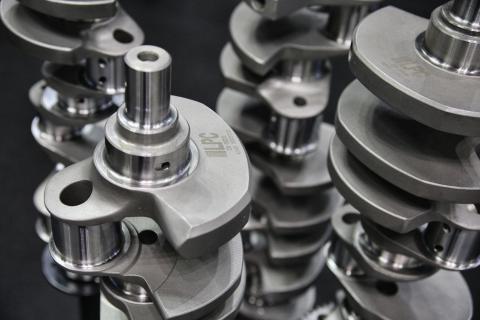
Crankshaft manufacturers rely on the latest CNC technology for product development, which continues to improve each year. “They can blow through holes and keep a better surface finish on the inside of those oil holes,” our source from Callies Performance Products said.

“We haven’t changed much in the past five years,” said Peter Harris of Crower Cams & Equipment Co., San Diego, California. “It’s attention to detail, making sure the grinds are right.”

“Crankshaft and rod technology have sort of peaked, to some degree,” added Tom Molnar of Molnar Technologies, Kentwood, Michigan. “You make a crankshaft…. It’s got to fit in the block and clear everything. The stroke and indexing have to be right. There are some people doing funny things to cranks to make them appear to be better from a marketing standpoint. Is it a better crank? Maybe, maybe not. But nobody is coming out with something revolutionary.”

Driving basic improvements in the crankshaft market are the surge in horsepower levels, increased rpm, and specialization.

“A lot of this stuff has now become niche markets,” explained Tom Lieb of Scat Enterprises, Redondo Beach, California. “You have guys that specialize in Ford FE engines, and those that specialize in LS engines. It’s not a general marketplace, like it used to be 10 or 20 years ago. You go into an engine shop back then, and there would be 10 or 15 different types of engines. Although there are still some shops like that, an awful lot of shops now specialize in certain things. So, that can dictate that we have whatever they need.”

That’s not to say there aren’t blue-sky aspirations to revolutionize crankshafts. It wasn’t that long ago that non-twist forgings became the industry standard. Originally, forged cranks for V8 engines were pressed out in a single plane by multi-ton presses, then the second and fourth main journals were re-heated and twisted 90 degrees to correctly position the second and third crankpins. Modern tooling dies and manufacturing processes now forge crankshafts with the rod pins in the correct position in a single operation to achieve a stronger product.

COUNTERWEIGHTS

Racing crankshafts in the future may be assembled, not unlike some types of crankshafts found in radial engines. Formula 1 teams have experimented with designing crankshafts piece by piece and then welding them together. The benefits could never cover the cost and complexity of such a move, so the idea was reportedly scrapped. Today, however, some high-end race engines will use bolt-on counterweights—often made of heavier metals than the rest of the shaft—to achieve the delicate balances desired for high-rpm operation.

The topic of counterweights, however, is still very much alive today, as more V8 engine builders request fully counterweighted crankshafts, or those crankshafts designed with eight counterweights instead of the conventional six.

“Anytime we can get a forging with center counterweights, we push the customer that way,” said Brook Piper of Callies Performance Products, Fostoria, Ohio. “We’re seeing more and more demand with all the high-rpm engines going on now.”

While machining a fully counterweighted crankshaft from billet stock is rather straightforward, an eight-counterweight forging requires considerably more investment in tooling.

“It takes a really big press to twist a center-counterweighted forging,” noted Piper. “There are limited guys out there with presses big enough. Everyone started with a six-counterweight die. To change dies, you’re looking at hundreds of thousands of dollars. That’s why there might be some hesitation to do it.”

Nevertheless, racing dynamics and market demand are encouraging manufacturers to offer these crankshafts.

“As power numbers continue to rise to levels thought unimaginable 10 years ago, the need for stronger, more stable crankshafts has been a result,” said Alan Davis of Eagle Specialty Products, Southaven, Mississippi. “Center counterweighting is one of many ways a crankshaft can be made stronger and more stable at higher loads and rpm. We are seeing a shift from large-displacement engines to more moderate displacement with forced induction. We have had requests for center-counterweighted, shorter-stroke crankshafts for these applications. They have been engineered and should be hitting the shelves soon.”

“We are certainly seeing more requests for eight-counterweighted crankshafts,” added Mike Sanders of Dart Machinery, Troy, Michigan. “When rpm and power levels rise, the crankshaft starts to flex and destabilize in the middle. Think of it like a jump rope. You have your flywheel and clutch-pack weight on one end and your balancer, pulleys, and timing-component weight on the other end. Under rpm, the crank will start to flex in the middle like a jump rope, so you need to add weight back to the middle to counterweight the effect.”

Most emerging trends in motorsports come with a word of caution, and eight counterweights is no exception.

“Eight counterweights make everybody’s dampers’ lives easier,” noted JC Beattie Jr. of ATI Performance Products, Gwynn Oak, Maryland. “I’ve always been a proponent of fully counterweighted crankshafts. Some people have different concepts of what that means. They think anything in the center means fully counterweighted.”

Meantime, Molnar warned us that some eight-counterweight cranks on the market today “are just simply wrong. They are putting eight counterweights on so they can be marketed as an eight-counterweight crank.

“In fact, there are cases where a good six-counterweight crank is better at reducing the bending of the crank than some of these eight-counterweight cranks I’ve seen.”

Improving crankshaft durability and lifespan are certainly goals when considering a fully counterweighted crank. It’s a topic that can puzzle even savvy industry veterans.

crank2
Boosting crankshaft durability and lifespan are among the main goals when considering a fully counterweighted crank. “We make adjustments based on input we receive from engine builders and race teams using our cranks,” said our source from Dart Machinery. “For instance, we adjusted counterweight placement and added material in critical areas to improve overall strength.”

“One of the most interesting things I’ve learned with crankshafts is the different life requirements for some race classes,” said Christoph Wachmann of Pankl Racing Systems, Kapfenberg, Austria. “For example, if you expect a crankshaft in NHRA Top Fuel to last 15 races at four seconds each, this would mean approximately only 10,000 full-load cycles for the total crankshaft life. In most of the other race classes as well as OEM engines, the minimum cycle target is 10 million cycles, which is 1,000 times more than the Top Fuel. The big difference is the load acting on the crankshaft. In a nitro engine with peak cylinder pressure in the 1,000- to 2,000-bar area, it’s extremely high. We would call that ‘low-cycle fatigue,’ and this understanding requires a completely different approach in design and manufacturing processes.”

“We make adjustments based on input we receive from engine builders and race teams using our cranks,” said Sanders. “For instance, we adjusted counterweight placement and added material in critical areas to improve overall strength.”

CRANKSHAFT GRINDS & REPAIRS

Specialty crankshaft grinding is another area of growing interest. There are subtle tricks that can be applied to crankshafts that take advantage of certain class rules.

“In NHRA Super Stock, they allow up to .015-inch longer stroke,” said Dave Olsen of Mile High Crankshafts, Denver, Colorado. “We’ll have guys send us a crank and we will grind the strokes to achieve that. We can modify the counterweights if there’s a clearance issue with the pistons hitting, or do profile cutting on the counterweights.”

“For example, you can’t center gun-drill a Stock crank, but you can a Super Stock crank,” added John Partridge of Bullet Racing Cams, Olive Branch, Mississippi. “You can’t do excessive lightening on a Stock crank, but we can lighten the Super Stock to whatever weight we want it to be. Another thing: In Super Stock we can run any journal size.”

Precision repairs are also in high demand from these specialty shops.

“We are not a rebuilder shop. Our stuff is all done in a specific fashion for race cars,” continued Partridge. “I have one really talented guy that grinds the crankshafts, and he’s done nothing but racing crankshafts. We have a special welding process that when we get through, the journal is harder than it was originally. We can repair one journal and not have to re-heat-treat the whole crank.”

Preventative medicine can help keep a crank out of the repair shop, and Olsen reminds racers to watch their tune-ups, even if it may confront their egos.

“There are times when guys have bearing issues. The one thing that is really kind of difficult to do is suggest that they have got a problem with their tune-up—like it’s detonation that’s creating this problem,” explained Olsen. “It can get the guys to thinking that, ‘Yeah, they did switch fuel.’ The other thing is guys that might run components like harmonic balancers longer than what they should, and that can create crankshaft problems.”

QUALITY CONTROL

While crankshaft design hasn’t changed much in the past few years, manufacturing and choice of materials are improving to keep up with power demands and quality control.

“In racing, we have introduced the use of highest-strength steel alloys with deep nitriding up to one millimeter,” said Wachmann, whose company supplies crankshafts to NASCAR, IndyCar, and IMSA teams along with select vintage racers and high-performance tuners. “And for the OEMs, we have introduced technologies such as the combination of induction hardening with overlaid fillet rolling in the crankshaft radii for higher strength at a lower cost.”

crank3
While crankshaft design hasn’t changed much in recent years, manufacturing and choice of materials are improving to keep up with power demands and quality control. “It’s attention to detail, making sure the grinds are right,” said our source from Crower.

“The 4340 specification leaves a little wiggle room, and we have found that holding tighter specifications for some alloying elements has resulted in a fairly significant increase in strength and other material properties,” said Davis. “Thankfully, we have established a terrific relationship with the foundry we work with, and it has enabled us to make specific requests such as tailoring more exact amounts of alloying elements when we order our steel. Eagle’s steel, while still technically 4340, performs much better than ‘typical’ 4340 steel.”

“CNC technology has come a long way,” claimed Piper. “It’s just like computers; it changes daily. The profiling you can do to the counterweights, the drilling of the oil holes—they can blow through holes and keep a better surface finish on the inside of those oil holes. There are some materials that guys are starting to play around with that are coming to make better crankshafts. The jury is still out on if they’re going to be that much better versus the cost, that’s the big thing. You can spend a lot of money on the material, but at the end of the day is it really worth it that you really gain that much more strength out of it?”

If there’s one big concern industrywide, it’s the reliance on offshore sources for forgings. The majority of forgings come from China. And some companies bring in finished product from China, while others import the raw forgings and handle all the machining, heat-treating, and finish prep in their shops.

For example, Callies has the budget-minded CompStar line of cranks that is fully produced in China but polished, balanced, and finish-inspected domestically. “We actually put our hands on them before they go out the door,” said Piper.

How a company works with China-based suppliers and oversees the machining and finish treatments will dictate the resulting quality.

“We started in China in 1990, 1991, so we have had relationships for all that time with our suppliers. We have only switched factories a handful of times. But basically, the people in China that we deal with, we’ve brought them up through the system,” explained Lieb. “We do not expect a good finished part because we take care of that here. The part of the good finish is the QC on the material, and the QC on the material is the fact that we heat-treat here.”

However, some available products proudly claim, “made in the USA.”

“The best selling point is that our crank is fully American made,” said Harris of Crower. “Forged here and manufactured here. A lot of people really like that. Not a lot has changed in the past five years. It’s just attention to detail and making sure the grinds are right.”

The Callies Magnum and Magnum XL lines start with US forgings. “They’re made 100 percent here in Ohio,” stated Piper.

Forged crankshafts make up the majority of racing cranks; yet, there is still a market for cast crankshafts—which are less expensive to manufacture but don’t embrace the same strength qualities as forging.

“While we don’t recommend using cast cranks in competition applications, it is still common. Most applications we’ve seen are claimer engines in dirt track racing,” said Davis. “You can improve the strength and performance of a cast crankshaft—simple design changes such as larger fillet radiuses, slight counterweight changes, journal polishing, and our ESP Armor process can reduce bearing shear friction and windage to free up some power.”

“The cast-crank market has always been racing, as well as street and hot rodding. We see the market as strong as it’s ever been,” said Lieb. “It isn’t increasing, but it’s not decreasing either. When we look at the numbers, the percentage of cast and forged and billet and so forth, our business model is pretty much the same as last year. It has not changed much.”

crank4
Thanks to niche markets, specialized crankshafts have become more prominent of late. “It’s not a general marketplace like it used to be 10 or 20 years ago. An awful lot of shops now [focus on] certain things. So, that can dictate that we have whatever they need,” one industry source said.

Billet cranks are favored mostly by racers with unique setups, or those who need special features on a crankshaft.

“When we ask an engine builder their application, we would try to steer more toward a forging, unless the application [is] so unique that you have to make it out of billet—such as a 5.3-inch bore spacing,” said Piper. “Nine times out of 10 a forging will do the job because the forging is going to be stronger.”

 “The big push for us is the Reaper billet line,” said Eric Bolander of Howards Cams, Oshkosh, Wisconsin. “They’ve been surprisingly good and taken a lot of abuse. We’ve had customers really lean on them.”

Currently the Reaper line is limited to big and small block Chevy, with the next target market being the LS customer.

“They’re made overseas, and that’s the easy part. Getting them shipped here is the problem,” added Bolander. “The new offerings have been evolving.”

“The increasing popularity of high-boost systems and high-rpm builds make it even more important that our crankshafts are built to the most exact standards using the best possible materials, heat-treat, and surface finishes,” said Sanders. “With this in mind, we use 4340 billet machined from solid bar stock and incorporate full counterweighting for added strength and stability.”

Providing a range of crankshafts is helping manufacturers meet the budget needs of some racers. Lunati of Olive Branch, Mississippi, uses 4340 forgings for both the Voodoo and Signature Series, but separates them by price and strength through different heat-treatments.

“The Voodoo is nitrided. The Signature series is pulsed plasma heat-treated, which goes deeper for a stronger crank,” said Will Vance. “Also, the Voodoo has what is known as bull nose cut on the front edge of the throws, while the Signature is finished with our exclusive wing cut to better cut through the oil and reduce windage. The main customer for the Voodoo is the average guy wanting a good crank at a reasonable price up to a racer who needs a solid bottom end. The Signature customer is the top engine builder trying to make as much power as possible.”

NEW MARKET TERRITORY

For the future, many manufacturers are looking into new markets.

“I could see expanding into the diesel tractor market, but it would be a huge investment. These are really large crankshafts, and they’re larger than the machinery we have here,” said Harris, adding that he recently received a phone call asking about cranks on the other end of the size spectrum. “Snowmobile engines. It’s something smaller than maybe I want to deal with.”

Scat is also looking at big tractor crankshafts to expand into the pulling market. However, there are challenges to developing a racing crankshaft for an engine originally designed to putt around a farm field.

“Tractor engines are designed to operate at a certain low speed 10 or 15 hours a day. Now they’re taking them from 1,700 rpm to over 6,500 rpm. And they’re taking tremendous torque from the low end to the upper end,” said Lieb, noting that counterweight design and material choices become increasingly critical. “It’s all about keeping it together.”

Whether it’s for a John Deere tractor or an Outlaw 275 Camaro, racers will need a solid block-and-crank foundation to support their massive power goals.

“The future will always see more racers pushing the limits of what’s possible and playing that balancing game even tighter than they ever have,” said Davis. “The margin for error will shrink, and we must keep pressing for better ways of doing things: better materials, better manufacturing processes, better quality control, all while keeping costs reasonable.”              

SOURCES

–

ATI Performance Products
atiracing.com
Bullet Racing Cams
bulletcams.com
Callies Performance Products
callies.com
Crower Cams & Equipment Co.
crower.com
Dart Machinery
dartheads.com
Eagle Specialty Products
eaglerod.com
Fluidampr
fluidampr.com
Howards Cams
howardscams.com
Lunati
lunatipower.com
Manley Performance Products
manleyperformance.com
Mile High Crankshafts
milehighcranks.com
Molnar Technologies
molnartechnologies.com
Pankl Racing Systems
pankl.com
Scat Enterprises
scatcrankshafts.com
TCI Automotive
tciauto.com


Dampers: Harm Reduction

“A damper can’t fix a major underlying problem,” stressed JC Beattie Jr. of ATI Performance Products, Gwynn Oak, Maryland. “It can be a Band-aid, but eventually every Band-aid will fall off.”

Dampers—sometimes referred to as harmonic balancers—are designed to reduce harmful harmonics generated by crankshaft bending and twisting during operation. Currently, there are four types of dampers common in the automotive racing industry: elastomer, viscous, pendulum and friction. All have their pros and cons, and today’s damper manufacturers are not only improving and expanding their lines, they’re locked in an informational campaign to explain the technologies behind their products.

sidebar1
Today’s top damper manufacturers are locked in an informational campaign to explain the technologies behind their products. “It’s really education about torsional vibration control and how we can improve the efficiency in the durability of the engine,” said our source from Fluidampr, which offers a viscous-style damper.

“It’s really education about torsional vibration control and how we can improve the efficiency in the durability of the engine,” said Brian LeBarron of Fluidampr, Springville, New York. “Once we educate the science behind it, some of the dampers are pretty straightforward.”

Fluidampr promotes a viscous-style damper, and its suitability for high-rpm is often a misconception associated with that product. “That’s just not true anymore. We’re up over 11,000 rpm with Cosworth. So the ability to make a viscous damper that works on high-rpm, high-performance engines is certainly there—and we’re supplying at the OE level,” said LeBarron, adding that viscous dampers are noted for durability, especially in high-temperature situations.

sidebar2
ATI has 450 different part numbers for components that can be used to build an elastomer-style damper. “We can engineer it to fit all the different engine packages, such as diesel, race, show, and so on. We can change it on the fly and still get the best performing damper,” a company source said.

TCI Automotive in Ashland, Mississippi, builds a pendulum-style damper that may be a little heavier than other styles, but also has unique selling points.

“It is a true vibration absorber,” said Scott Miller. “Others on the market are dampers, which only reduce the vibrations. The Rattler absorbs the vibration within itself, thereby extending the life of engine parts.”

Very little has changed about the TCI damper since its introduction, and its top selling point is long-term cost savings. “The initial testing took several years because we wanted to make sure that every aspect of engine vibration was looked at. We wanted to make sure that it was 100% perfect before releasing it for sale,” added Miller. “Even though it might cost a little more, you will save money because you can see longer intervals between engine freshen-ups.”

ATI is another company that hasn’t changed its elastomer-style damper in recent years, but rather has promoted the product’s modular benefits.

“It’s hard to change something that already works well and does exactly what we say it will,” said Beattie, noting that there are 450 different part numbers for the components that can be used to build an ATI damper. “We can engineer it to fit all the different engine packages, such as diesel, race, show, and so on. We can change it on the fly and still get the best performing damper while working with that particular engine package.”

Educating the consumer is also a priority for ATI, as its damper has a reputation for working only in high-rpm applications.

Beattie said, “When we first came out, we were fixing OEM dampers that failed at high rpm. A lot of people thought it was just for that, but it works through the full rpm range.” —Mike Magda

September 2020
By
MIKE MAGDA

New Coalition Calls For Safe Reopening Of NY Race Tracks

Submitted by laurap on Tue, 08/25/2020 - 12:43


A new group, the New York Motorsports Coalition (NYMC), has been formed to raise awareness for the motorsports industry and advocate for racing in the state. Supported by Performance Racing Industry (PRI) and owners and operators of motorsports facilities, the coalition is committed to helping race facilities reopen and operate safely.

Under Governor Andrew Cuomo’s current New York Forward reopening plan, motorsports facilities may not open doors to spectators. As a result, New Yorkers must travel to neighboring states to enjoy racing, resulting in lost revenue for race tracks in the Empire State. In response, NYMC members have formulated a three-step plan to reopen racing to the public in New York.

The NYMC’s plan, which calls for a phased approach to reopening race tracks beginning this month, begins with 40 percent of a venue’s total capacity and reaches 100 percent by January 1, 2021. The full plan can be found here.
 
State of New York Motorsports Opening Plan Summary

  • Beginning August 28, race tracks will be permitted at 40% of the total venue capacity for spectator events. Masks and social distancing practices for participants and spectators.
  • Beginning September 19 through the 2020 season, race tracks will be permitted to reopen at 70% of the total venue capacity for spectator events. Masks and social distancing practices for participants and spectators.
  • Beginning January 1, 2021, race tracks and entertainment venues will be permitted to reopen at 100% of the total venue capacity for spectator events. Social distancing practices for participants and spectators.


PRI is encouraging racing enthusiasts and impacted businesses to contact Governor Cuomo in support of NYMC’s proposal here. 

“The safe resumption of racing with spectators would provide desperately needed economic stimulus to New York and a morale boost to its residents,” said PRI President Dr. Jamie Meyer.  “As a New York native, I’m especially vested in working with PRI and the New York Motorsports Coalition to get the Empire State back on track and racing again.”

To contact PRI, interested members of the racing community are encouraged to visit performanceracing.com or contact mail@performanceracing.com.

August 2020

Williams Grove, Selinsgrove Team Up For Sprint Car Challenges

Submitted by laurap on Mon, 08/24/2020 - 16:46
Williams Grove Speedway, Selinsgrove Speedway logos


Williams Grove Speedway and Selinsgrove Speedway have joined forces to offer the “Back-To-Back-For-Jack 410 Sprint Car Bonus Challenges,” set for Friday and Saturday, August 28-29, in conjunction with each oval’s Jack Gunn Memorial races.

A native of Hancock, Maryland, the late promoter Jack Gunn held tenure at both facilities during the 1960s and '70s. Both historic venues have staged memorial races in honor of Gunn for since the 1980s. 

"When fate found both Williams Grove and Selinsgrove Speedways planning to stage their annual Gunn Memorials on back-to-back nights in 2020, the two-night races seemed to call for a little extra promotion, just as Gunn would have done," a track release stated.

On Friday, Williams Grove will host twin 20-lap mains paying $4,000 each, while Saturday’s Selinsgrove show offers a 30-lap main paying $5,000 to the winner. 

The “Back-To-Back-For-Jack-Bonus-Challenge,” sponsored by Hoseheads.com and Modern Heritage of Mifflinburg, will give drivers the chance at thousands of dollars in bonus cash. 

Fans will be permitted at both events. 

For more information, visit williamsgrove.com and selinsgrovespeedway.com.

August 2020

Nashville Superspeedway Announces Erik Moses As President

Submitted by laurap on Mon, 08/24/2020 - 16:18
Nashville SuperSpeedway logo and Erik Moses


Dover Motorsports, Inc. officials have announced Erik Moses, a sports executive and seasoned venue management veteran, as the new president of Nashville Superspeedway in Lebanon, Tennessee. Moses will oversee NASCAR Cup Series' return to the track in 2021.

Moses, a longtime veteran in the mid-Atlantic sports and entertainment industries, most recently served as the founding president of the XFL’s DC Defenders (2019-20).

“I am excited to join the team at Dover Motorsports to lead the reopening of the Nashville Superspeedway and bring the excitement of Cup Series racing to Middle Tennessee,” Moses said. “I have long admired NASCAR for its commitment to the fan experience and am thrilled to have the opportunity to create the optimal race day experience that NASCAR fans deserve in a market that has such a rich history with the sport.

“Nashville is one of the hottest markets for sports, entertainment and live events in the entire country and I look forward to working with local stakeholders and partners to leverage that momentum to establish the Superspeedway as a premier live events venue serving the greater Nashville region.”

Prior to his position with XFL, Moses also held positions with Events DC, DC Sports & Entertainment Commission, and the D.C. Department of Small & Local Business Development. Moses is a graduate of the University of North Carolina and Duke University School of Law. 

For more information, visit nashvillesuperspeedway.com. 

August 2020

SHAKE, RATTLE & ROLL

Submitted by ashtonr on Mon, 08/24/2020 - 15:11


Reaching new records to rival their gas-powered counterparts, diesel motorsports has established a powerful niche that pulls in more customers year after year.

Traditionally, most racers would use a diesel engine to pull their race car to the track, and a gas engine to race. But times have changed…in a major way. Diesel motorsports now represents a large and enthusiastic market, with a wide variety of engine builders, aftermarket providers, and sanctioning bodies providing products to racers and a great show for fans.

The majority of diesel racing happens at drag strips, with a strong second presence at pulling competitions. Diesel has also found some surprising success in sports car racing, when Audi proved that a diesel-powered prototype could compete at the highest levels. In fact, Audi’s R10 TDI prototypes won the prestigious 24 Hours of Le Mans three years straight, from 2006–2008.

That said, the mass market for diesel motorsports in America remains almost entirely limited to straight-line power contests.

“We get to see heads turn when our competitors go down the track and click off four-second passes,” said Gregg Jolly of the Outlaw Diesel Super Series (ODSS), Terre Haute, Indiana. “Most people are amazed at what these diesel-powered vehicles can do. We are sometimes almost twice the weight of our gas-powered counterparts. It speaks volumes for the technology involved in today’s racing scene.”

diesel 1
When racers rely on their diesel trucks for daily driving or use them to get to the track, it’s fair to say they may eventually end up on the drag strip. “We have fun doing what we do because people love their trucks,” said our source from DIESEL Motorsports.

FROM STREET TO TRACK

Diesel motorsports makes sense in the larger context of racing. When racers rely on their diesel trucks for daily work and pleasure driving, then use them to get to the track, it’s just a matter of time before they end up on the strip.

“It has always been about the street truck,” said Ron Knoch of DIESEL Motorsports, Kansas City, Missouri. “Who doesn’t want a big bad diesel truck driving down the street? That’s Americana! We have fun doing what we do because people love their trucks.”

The recognition of diesel’s racing potential starts with the home-based racer. “The diesel racing market is driven by grassroots enthusiasts,” declared Brian LeBarron of Fluidampr, Springville, New York. “There’s still this incredible time-honored tradition that you can innovate, fabricate, and go compete on Saturday night with your friends. Best of all, most pro teams are very approachable, welcoming, and willing to share their knowledge for the benefit of growing the sport.”

TRUCKS ARE KING

While diesel-powered vehicles appear in a variety of motorsports, including autocross, road racing and rally, the bulk of diesel motorsports happens in trucks, mostly in drag racing and pulling.

diesel 2
As diesel competitors find more horsepower, aftermarket companies must produce stronger parts to withstand the power these machines put down. “All parts—from drivetrain to suspension—will have to be constantly evolving,” our source from Scheid Diesel Service said.

“Diesel trucks are unique because they’re so versatile,” LeBarron said. “You don’t take a circle track car down the drag strip, but with a diesel truck you could modify the same vehicle for drag racing, sled pulling, or dyno competition. The Ultimate Callout Challenge is wildly popular because it pulls all three together in a single weekend competition. Competitors are required to use the same truck for each segment. Engine and drivetrain swaps are permitted. It requires an incredible amount of prep, skill, and grit for teams to survive the event. The fans love it.”

As noted, many amateur competitors still drive their heavily modified diesel trucks every day. “If someone told me 10 years ago that they daily-drove something that made 1,200 horsepower and it was a diesel, we’d look at them somewhat sideways,” stated Blake Carter of SunCoast Converters, Fort Walton Beach, Florida. “Today that’s something that you can do. To see people crack four digits on a vehicle they drive to work every day is not uncommon.”

MAKING DIESEL POWER

Engine builders are central to diesel motorsports, and many builders specialize in a particular line: Cummins, Duramax, or Power Stroke. Meantime, diesel performance business owners see automakers developing a range of new diesel engines and quickly move to augment those developments with their own high-performance parts.

“We are committed to advancing the use of the GM Duramax engine platform in competition,” declared Guy Tripp of SoCal Diesel, Valencia, California. “That includes the various 6.6-liter V8 engines as well as the 2.8-liter four-cylinder and the latest 3.0-liter inline six-cylinder model. The latest V8 offering from GM is the Duramax L5P engine. It is a significant departure from previous platforms.”

SoCal Diesel manufactures parts and components, and also creates fully prepared competition engines.

“Over the last 15 years we have tried to stay up to date with the latest technology, whether in the front office or on the production floor,” Tripp said. “We have introduced the diesel racing community to the EFILive tool, CNC-ported cylinder heads, billet stroker crankshafts, and alternative firing order camshafts, just to name a few things. Among the many racing components we have already developed and put into production for the new L5P engine are ported heads, camshafts, and billet crankshafts. We will continue to develop and explore that engine platform in the future.”

Scheid Diesel Service Company in Terre Haute, Indiana, has tabbed Cummins as its brand of choice. “Our niche would be working with mechanically injected Cummins engines in diesel drag racing as well as sled pulling,” said Gregg Jolly, also with ODSS. “We work on multiple facets of high-horsepower diesel engines from building pumps, injectors, turbos, to machining solid billet aluminum engine blocks in-house.

arp

callies 1

callies 2

carillo

crower

diesel motorsports

We have a bit of a diversified list of things we do day to day, whether it’s keeping the family pickup on the road, repairing injection systems on the farm tractor, or giving that weekend warrior a few more ponies under the hood. We are constantly trying to find the limits of performance parts on and off the track, and we work on anything diesel.”

diesel 3
Fluidampr, which has assumed a place in the diesel racing market with a line of high-performance harmonic dampers, utilizes engine vibration analysis, engineering, and advanced manufacturing for proper damper selection.

Both Jolly and Tripp see opportunities for future growth in this segment in the form of new products from automakers and demand for aftermarket solutions.

“Performance enthusiasts are always looking to compete with the latest and greatest offering from the various OEMs,” Tripp said. “GM continues to offer exciting new diesel engine platforms, which will assuredly make their way into competition.”

“I believe the aftermarket segment is going to have to push innovation,” Jolly added. “We have seen numerous class records shattered over the last two years. All of this is going to force chassis builders, shock, tire, and transmission companies to figure out how to get all the power to the ground.”

IT’S NOT JUST DIESEL ENGINES

As Jolly stated, the opportunities in diesel motorsports are not limited to engine builders. For every engine built, there’s a transmission and potentially a transfer case that has to handle the increased power. There’s also at least one axle that has to get that power to the ground.

The chance to become part of the diesel performance market extends to all parts of the motorsports industry.

“I think the strongest segment for the drag racing world is our aftermarket suppliers,” Jolly said. “As these racers find more and more horsepower in their engines, it is going to force our aftermarket companies to produce stronger parts to withstand the torque that these machines put down. All parts—from drivetrain to suspension—will have to be constantly evolving.”

For example, Hot Shot’s Secret in Mt. Gilead, Ohio, specializes in formulating high-performance lubricants, including racing oils for diesel engines, transmissions, and axles. The company also provides specialized fuel and oil additives for diesel drag racing, and products for street use.

diesel 4
Our contact at high-performance transmission manufacturer SunCoast Converters told us the business has “gotten better at things like distribution. We’ve opened up distribution with companies like Transtar and WIT Transmission Parts. The everyday shop is now a client base.”

“Aside from the racing vehicles in particular, it is also very common for the race teams to haul their race vehicles and gear to and from race tracks using diesel trucks and pushers, which are also large consumers of our diesel oils and additives,” noted Kyle Fischer. “We are proud to manufacture racing oils for all three of the major diesel powerplants. Our gas and alcohol drag racing friends are now recognizing what these diesel drag racing teams are achieving.”

SunCoast Converters manufactures high-performance transmissions, and its reputation is growing in the diesel world, according to Carter. “SunCoast is synonymous with racing because we’ve had great success in diesel racing and we’ve won many records, and we still hold a lot of world records,” he said. “We manufacture components for both the transmissions and torque converters within the diesel and now gas industry. We’re more than a transmission assembler and manufacturer. Of the 47 employees who work here, only five of them actually build transmissions. The rest are in engineering, quality control, and in the machine shop and in our parts department, and of course, our sales staff as well.”

erson

fluro

fluidampr

hamburgers

hot shots

hypermax

Fluidampr has assumed its place in the diesel market with a line of high-performance harmonic dampers. “In terms of the diesel racing market, we’ve been seeing engine builders set new records every year,” LeBarron said. “With new records comes the opportunity to create more reliable and durable engine components. We work with diesel engine builders and teams as they continue to achieve new limits. This includes engine vibration analysis, engineering, and advanced manufacturing to produce the best harmonic damper to help them sustain durability at incredible power levels.”

INVADING THE GAS-POWERED RACING WORLD

Some diesel motorsports businesses have found opportunities for growth by competing in races that have traditionally been gasoline-powered.

“As the fastest classes in diesel drag racing continue to break records, I believe you will start seeing more diesel-powered race cars running in traditionally gas-only races,” Fischer said “The gap between gas and diesel has closed dramatically over the last couple of years and we are beginning to see more diesel-powered vehicles race and win in gas-dominated fields with no handicap. It is awesome to see a diesel truck quickly become the crowd favorite when outperforming a gas or alcohol-burning race car. I expect to see some exciting gas versus diesel drag racing action in the future.”

Additionally, diesel trucks are still among the most popular choices for work and recreation purposes, so the street-legal side of the diesel performance market continues to expand. Companies are also branching into the gas-powered performance space.

Carter noted that SunCoast Converters “realized pretty quick that we had some success manufacturing for gas engines as well as private label components. We do some work for ProTorque and some of the other companies that we manufacture for. We’ve also had a marketing campaign the past couple of years toward targeting the recreation segment. That’s directed at the guy who’s towing a fifth wheel, who maybe only has 600 or 700 horsepower.

“We’ve also gotten better at things like distribution,” he added. “We’ve opened up distribution with companies like Transtar and WIT Transmission Parts. The everyday shop is now a client base.”

SURVIVING, THRIVING IN THE COVID ERA

With racing limited throughout much of 2020, many diesel motorsports businesses have not only been forced to find a way to survive, they’ve also learned how to thrive in the face of a challenging economy.

“Fortunately for us, a large part of our business is with those who have been deemed essential workers, who are continuing to work every day during this current situation,” Fischer said. “This includes many types of fleets, such as first responders in police, fire, and medical, as well as over-the-road truckers in shipping and logistics.”

Beyond pivoting to serve essential fleets, Hot Shot’s Secret repurposed some of its own manufacturing capacity. “The largest step we have taken to keep our business together has been the conversion of some of our bottling lines to start manufacturing hand sanitizer,” Fischer revealed. “Due to the current nationwide shortage, Hot Shot’s Secret was approved by the FDA to use our bottling resources to produce hand sanitizer. We initially bottled a few hundred gallons simply to donate to our fleets, local hospitals, and elderly homes, but we have since expanded to help fulfill the national demand, which has been a blessing to keep our bottling line employees working full time while also helping out those in need.”

kill

mahle

green

ppe

ross

SCS

Other diesel motorsports businesses have taken a variety of actions to keep their employees productive and the bottom line in shape. Scheid Diesel Service has focused on agricultural and street-legal business, as well as stocking up on race parts.

“We are trying to support our local farmers and businesses to keep everyone running, as well as keeping our customers’ vehicles going down the road,” said Jolly. “We have also been keeping our machine shop busy producing shiny new billet components for our race program. We’re just doing everything we can to get through this tough period.”

Businesses like SoCal Diesel and Fluidampr found they were able to adapt to the new working requirements.

“Over the last 15 years we have tried to stay up to date with the latest technology, whether in the front office or on the production floor,” Tripp said. “Doing so put us in a unique position when the COVID-19 pandemic occurred. Our sales staff was already set up to work remotely. We were also able to stagger shifts on the production floor. We recently doubled the size of our facility, so maintaining a greater distance between employees than was recommended is very easy to do.”

“Most of Fluidampr’s sales and tech support staff are remote,” LeBarron said. “Social distancing and additional sanitizing measures per OSHA and CDC guidelines have been implemented at our manufacturing facility. However, we remain hopeful for large spectator events in the future. Racing has a way of bringing people together and inspiring us.”

LOOKING FORWARD

Despite the economic downturn, several diesel motorsports sources predict a bright future, and continued opportunities for growth across the segment. Race organizers are predictably eager to get back to holding events.

diesel 5
Despite the economic downturn, several of the diesel motorsports insiders we spoke with predicted a bright future and continued growth opportunities across the segment. “[D]iesel motorsports is garnering attention and attracting new fans each and every year,” one source told us. Photo courtesy of DIESEL Motorsports.

“Reports I have received show social media activity levels have risen as much as 300% to 400% while people have been at home during the pandemic,” Knoch said. “Online sites have reported larger sales through this period from people at home working on their trucks in the garage. I think people are taking the time to work on their vehicles so they can come and enjoy the sport once they can get out again.”

“Just within our series we have seen steady growth over the last five years,” Jolly said. “We have gone from just over 100 competitors in our first year to just over 500 in our fifth season. It is great to see the new faces at each race. Once they get behind the wheel and go down the track, that’s all she wrote! They have been bitten by the racing bug. It’s rewarding for me to watch the racers go through each of our classes and watch their progression as they modify their trucks to go faster and faster.”

Engine and parts makers also see an upward curve trending into the future.

summit

wehrli

“I think the functional market’s going to be the largest portion,” Carter said. “The dual-purpose vehicle is always going to be what the young kids gravitate to. They’re working their tails off, getting all the overtime they can, and everything goes back into the truck. Those guys are all about performance, just like we were at that age.”

“There has been steady growth in the last few years,” Jolly agreed. “It has pushed the aftermarket to constantly evolve and produce better parts to take the punishment we are asking them to withstand.”

Business managers in the diesel racing market are quick to express their own optimism, noting that consistent performance increases continue to invigorate the segment.

“I absolutely think the diesel racing market will continue to expand in the future,” Fischer stated. “Compared to gasoline-based racing, it is now far more common to see record achievements being blown away by leaps and bounds in the diesel racing market. We are now seeing diesel drag racing world records being extended by full tenths of a second, multiple times per season. We hope to see the first ever three-second diesel-powered pass this year. That’s something that most people did not think was possible even just a couple of years ago. This excitement coming from diesel motorsports is garnering attention and attracting new fans each and every year.”

SOURCES

–
ARP
arp-bolts.com
Callies Performance Products
callies.com
CP-Carrillo
cp-carrillo.com
Crower Cams & Equipment
crower.com
DIESEL Motorsports
dieselmotorsports.us
Erson Cams
pbm-erson.com
Fluidampr
fluidampr.com
FLURO-Gelenklager GmbH
fluro.de/index.php/en/
Hamburger’s Performance Products
hedman.com/hamburgers-performance
Hot Shot’s Secret
hotshotsecret.com
Hypermax Engineering
gohypermax.com
Kill Devil Diesel Machine & Speed
killdevildiesel.com
MAHLE Motorsport
mahlemotorsports.com
Mean Green
mean-green.com
Outlaw Diesel Super Series
outlawdieselss.com
PPE
ppediesel.com
PurePower Technologies
purepowertechnologies.com
Ross Racing Pistons
rosspistons.com
Scheid Diesel Service
scheiddiesel.com
SCS Gearbox
scsgearbox.com
SoCal Diesel
socaldiesel.com
Summit Racing Equipment
summitracing.com
SunCoast Converters
suncoastconverters.com
Wehrli Custom Fabrication
wcfab.com
August 2020
By
JEFF ZURSCHMEIDE