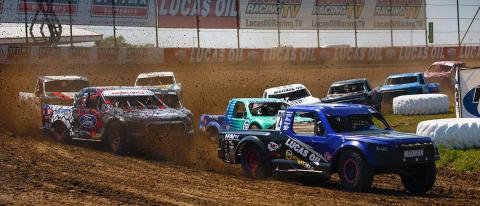
The Lucas Oil Off Road Racing Series (LOORRS) presented by GEICO has announced an update to the current championship schedule that will ultimately condense the remaining events on the calendar into back-to-back tripleheaders.
Each of the next two events—September’s visit to Arizona’s Wild Horse Pass Motorsports Park and October’s visit to Southern California’s Glen Helen Raceway—will expand from weekend doubleheaders into three-day affairs.
The expansion of the events means the originally scheduled November race at Wild Horse Pass will no longer take place, according to series officials.
“There were several factors that went into this decision, but ultimately our goal was to provide the Lucas Oil Off Road Racing Series with as clear a path as possible to successfully completing the 2020 season,” said Lucas Oil Off Road Racing Series Director of Race Operations Ritchie Lewis.
With the updated schedule, the race at Wild Horse Pass Motorsports Park will now take place on September 18-20. The new season finale at Glen Helen Raceway will occur one week later than originally scheduled and will now commence on October 16-18. The final day serves as the Lucas Oil Challenge Cup, which annually brings each season to a conclusion.
In accordance with local health and safety guidelines related to COVID-19, each of these remaining races will be run as competitor-only events, with no spectator access permitted.
Motion Industries, Inc., the distributor of maintenance, repair, and operation replacement parts and a wholly-owned subsidiary of Genuine Parts Company, announced that it has completed the acquisition of Applied Machine and Motion Control, Inc. (AMMC). AMMC is a supplier of motion control and automation products and services.
Founded in 1995, AMMC is headquartered in Park Hills, Kentucky, outside of Cincinnati, and serves the surrounding markets in Indiana, Kentucky, Michigan, Ohio, Western Pennsylvania, and West Virginia. AMMC’s customer base consists primarily of OEMs, plus a number of end users.
“We are very excited to join the Motion team,” said David Locke, AMMC President and Founding Partner/Owner. “The cultural fit and our common goals make it an ideal match, and we look forward to contributing to the company’s growth. Through Motion, we will have access to even more products and capabilities to enhance our value proposition and level of service to our customers.”
Motion Industries has over 550 locations, including 15 distribution centers in North America. For more information, visit motionindustries.com.
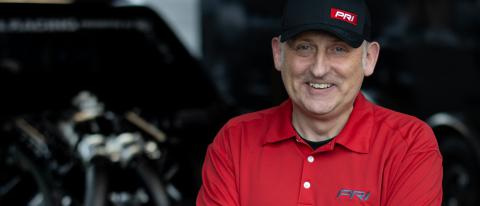
PRI’s first-ever president brings knowledge, experience, and vision to his new role as head of the industry’s premier events, media, and advocacy organization tasked with promoting and protecting the interests of the motorsports community.
In late 2019, Performance Racing Industry announced the establishment of a new office and permanent presence in Indianapolis, and the creation of a new position: president of PRI. That destiny was fulfilled in May with the announcement that Dr. Jamie Meyer had accepted the role of president and would be relocating from Michigan to Indianapolis.
A lifelong racing enthusiast, Meyer’s formal motorsports involvement began in upstate New York in 1994 when he formed MOMS (Mustang On Mustang Shootout) Racing, a non-profit entity with the goal of educating and relocating street racers to the much safer alternative of their local drag strip. It was the beginning of a never-ending passion for motorsports, as well as an accomplished career.
In subsequent years, Meyer held several key positions in motorsports media and event production. He was the first editor of Race Pages magazine, the official publication of the National Mustang Racers Association (NMRA), and he contributed to a number of other auto enthusiast magazines as a freelance writer as well. His resumé also includes calling races for multiple sanctioning bodies, along with racer relations and promotions.
More recently, Meyer served in key management positions at General Motors, where he led efforts to revive the COPO Camaro in addition to projects such as the E-ROD crate engine and the LSX race block and engine family. His organizational skills led to his involvement with events such as the Chevrolet Performance US Nationals, LSX Shootout, and sponsorship of the NMCA series of drag races. Meyer also led the development of a multi-faceted digital presence and social media strategy for Chevrolet Performance.
Meyer’s new role at PRI comes in the midst of an important era, as the company looks to increase its engagement and support of the motorsports industry through enhanced programs and services—all while navigating through the COVID-19 pandemic. It’s a decisive time for PRI, and Meyer recently took time to visit with Industry Insights to discuss his new role.
PRI: You’re joining PRI at a time when our industry faces a number of challenges. What do you see as the most pressing challenge for the motorsports industry?
Meyer: As we talk about this in mid-summer of 2020, these are unprecedented times for our country. We are in the middle of a pandemic that has affected everybody. So our immediate action is to help get our race tracks back up and open, and get our racers active and help our manufacturers and all other members of the industry. We have launched a new website full of information for the racing industry, we have legal support standing by 24/7, and we recently launched the PRI Ambassador program with Tom Deery, Gene Bergstrom, and Frank Hawley working with individual track owners and operators.
There are many challenges to our industry. One of the projects I will take on as we work through the immediate COVID-19 challenge is a membership program for the racing industry. We want to expand on our organization so that we can work together to build this industry and fight for the rights of racers. There are several constituencies, several membership levels if you will, in that discussion. It goes from the largest sanctioning bodies and manufacturers through local speed shops to mom-and-pop-owned race tracks, all the way to the end racer and the racing fan. Every member in that community is looking for something different, and PRI seems like the most logical place to bring them together. We really want to grow the industry of racing and motorsports.
Dr. Jamie Meyer was voted onto and served on the 2019–2020 SEMA Board of Directors before he was named president of PRI. “I’m looking forward to working with the leaders of SEMA, as well as everybody on the SEMA board and the advisory committee, to do some truly great things for the racing enthusiasts,” Meyer said.
PRI: In recent months the COVID-19 crisis has consumed nearly all of the industry’s attention. Do you foresee COVID-19 having a long-term effect on motorsports?
Meyer: There will be long-term effects of this pandemic. We are seeing it already with tracks closing, manufacturers having to shut down, and people being put out of work. PRI is working to get the tracks open—leveraging our D.C. office of lawyers and lobbyists to position race tracks in a favorable light. Some areas of the country are back open, but even then it’s with a very limited crowd. Plus, this still isn’t over. We are seeing a second wave or flair-ups of hot spots in parts of the country that were not hard hit initially. The industry is learning quick and adapting quickly. Some retailers are experiencing tremendous years thanks to strong digital marketing and eCommerce solutions. If there’s an upside to this, new technologies are being tested and adopted quickly. Tracks are looking at a number of touchless technologies to help keep people safe and streamline their business. Long-term effects, yes, and PRI will try to help lessen the damage and help find a way through this with our industry partners.
PRI: On the flip side, there are opportunities in our future. What was it about this position, Jamie, that appealed to you?
Meyer: I have been a fan of the PRI Trade Show for over 20 years. The team has done an amazing job to bring racing technology and the racing community together every December. Extending that with the magazine, and the social presence, there is a great team at PRI that I am joining. Eight years ago, SEMA purchased PRI; Scooter Brothers was the chairman at the time, Chris Kersting was CEO, and George Afremow was CFO. That board made a great decision to unify the motorsports trade shows. Buying PRI and strengthening it, buying IMIS, and bringing everything back to Indianapolis—all those were great signs for me. And then, getting really behind the curtain [to] what really runs the industry, you look at the SEMA Board of Directors, anchored by Tim Martin and James Lawrence, who is the chair-elect. Wade Kawasaki had started the PRI task force; initially when PRI was purchased it was managed as a do-no-harm activity. Wade wanted to pick up the pace, wanted to make racing much more prominent. Tim and James supported those efforts 100%.
And there is a vision to do more at PRI than “just a trade show in December.” That is very compelling to me. So I’m really excited to have this position, really excited about the team PRI already has in place. I am looking forward to working with the leaders of SEMA, Chris Kersting and Bill Miller, as well as everybody on the SEMA board and the advisory committee, led by Chris Douglas, to do some truly great things for the racing enthusiasts.
And that includes everybody, Dave. That statement includes the top team owners such as a Rick Hendrick, all the way to the grassroots sportsman racers where I grew up. I am looking forward to doing my best in this new role.
Prior to joining PRI, Dr. Jamie Meyer served in key management positions at General Motors, where he led efforts to revive the COPO Camaro. Meyer is pictured here at the COPO Build Center in Michigan with Chevrolet’s Rich Rinke, center, and COPO owner George Lyons.
PRI: PRI has been active in recent years to support initiatives such as the RPM Act and Saving the Bonneville Salt Flats. Do you envision PRI taking on a greater role in advocacy, legal support, and legislative action?
Meyer: Yes, my short answer is that we have to. And we already are. Look, there are threats to the racing industry, political threats to the racing way of life. You gave a couple of good examples there. There are folks who don’t support the racing lifestyle. The challenge in our industry is much larger than just getting tracks open and making sure we have a great time when we go racing. There are threats to this way of life that would keep us from modifying vehicles and keep us from enjoying motorsports. PRI is an advocacy group, leveraging the learnings from Chris Kersting and the SEMA staff, and Dan Ingber and Christian Robinson in the Washington D.C. office. Immediately, we are working with state and local officials to help as an advocacy group to get through the COVID-19 pandemic. So there are ways to show racing in a better light, a safer light.
And a lot of it, Dave, is often just the positioning of the industry. When you talk about economic impact, of people’s lives that racing brings joy to, the American tradition of going out to the races; those simple reminders are often all it takes to get a little bit of movement in a political stance. You are going to see PRI more active there. This is really day-by-day; my first two months in this position has been almost 80 to 90 percent advocacy and working to turn political opinion or an individual politician’s opinion of the sport. Just to be sure we are there, fighting for the interests of the racer and the track owner.
As PRI’s new president, Dr. Jamie Meyer will focus efforts on helping race tracks reopen and keeping racers active. A lifelong enthusiast, Meyer is pictured here in 2015 with his Corvette Stingray and, at left, Kirk Senko, then-chief transmission calibration engineer on the Demon.
PRI: PRI has long been known for its successful Trade Show, along with the monthly magazine. How do you see these core businesses evolving in coming years?
Meyer: I will take those topics separately. The Trade Show, the word we need to get out is that everybody at PRI and everybody at SEMA is watching out for individual safety, attendees’ safety, staff, everyone. We are working with local and state regulators to make sure that when you come to the 2020 PRI Show, that every provision has been made to keep people safe. We are working closely with Leonard Hoops, Daren Kingi, Nicole Perry, and Morgan Snyder from the Visit Indy team. The relationship with the city of Indianapolis is key if we are to have a 2020 PRI Trade Show. Right now, we are planning for the Trade Show to go on; our initial booth sales numbers indicate that it’s going to be 90 percent or more of the same PRI Trade Show that everyone knows and loves, which is amazing in itself. And then we grow from there. I am very open to what the PRI Show has been and what it can be, and how it can serve our community better.
As far as the magazine, I think it is a wonderful trade publication. (Editor) Dan Schechner has done a great job with his staff and a group of talented freelancers, and (Senior Art Director) Danny Kim is doing a great job bringing creative artwork to the forefront of the industry. But everything can be improved, and the team is looking at ways to do so. Really, they are asking themselves those questions. How does the magazine become more compelling; how do we share more data about the industry; how do we help our manufacturers learn what’s going on and run their business more effectively? I would like to see PRI Magazine become even more compelling for the end consumer. Racing fans, racers themselves—what are they looking for in a magazine? And we are working on sharing more of Dan’s great content on our social channels—PRI is going to be more places for everyone to find. As you know, the print magazine industry is in a state of flux today, and I think PRI can serve people better there with a publication that they are really excited to receive every month, something they want to hold onto for a long, long time.
PRI: Your marketing work in recent years provided an opportunity to learn extensively about consumers who are interested in automotive performance and motorsports. What did you learn along the way about that consumer, and how do you best reach them?
Meyer: Marketing today is really complicated. When you look at when the PRI Show started, magazines were it. Maybe television for some brands. But I think social media and the Internet are here to stay—joke intended. I started every social media channel at Chevrolet Performance, recruited the right people and worked with the agencies to grow our social media efforts. We have to emphasize all of the social media channels because that’s where people are today. They are on Instagram, they’re watching YouTube videos, they’re following folks on Facebook. You can point to the White House to how effective Twitter can be—or ineffective, depending on your political alliance—but that’s where the eyeballs are. If you’re going to be a great marketer, you have to know where your consumer is and where your market is; they are flat-out on social media, 24/7. You’re going to see a huge ramp-up in the social media efforts for the PRI brand.
For folks reading this who want to be great marketers, my advice is that this is the evolution of content on social media. They used to say that content is king; I would say today that great content is king. Great, compelling content. And, what is your kingdom? Meaning, how do you get the distribution? I see a lot of channels that put out super compelling content, but there is nobody watching.
So you’re going to see PRI leverage this big family to bring in racers, manufacturers, influencers, and we’re going to start sharing racing content globally. It is not just in the racing industry, because the attention for racing isn’t just within this community; it’s outside as well. For the manufacturers, you have got to be thinking about what options people have other than to go racing on Friday night and Saturday night and the weekend. And it is a lot, right? You can go see professional sports, you can sit home watching Netflix, you can go to a movie. So, we’ve got to elevate the presence of racing. We have got to show what incredible things are going on in our industry. It starts with great content, and I think it starts with the PRI team.
When reflecting on mentors in the racing industry, PRI President Dr. Jamie Meyer, right, mentioned a host of racers, including DSR champion drag racer Antron Brown, left. “I always bounce ideas off them,” Meyer said of his extensive motorsports network.
PRI: Our industry could benefit from the knowledge and technical expertise of many people outside our industry. How can we reach out to people outside motorsports to become involved?
Meyer: That is a really insightful question. And it goes to my last point about what kind of attention can we garner as an industry. Let me give you a couple of examples. I have got four nephews ages 18 to 22, and I know those kids extremely well because once or twice a month I’ll play Call of Duty with them. There is an entire community of folks who race, and they race on video games. It was interesting to watch what NASCAR did with iRacing, putting simulators at the forefront of the racing industry. I am looking for PRI to reach out to the millions of people who are racing every week on their game consoles and invite them into our industry. For example, think about how exciting it would be for a kid who has only raced in video games to go spend a day with Antron Brown at an NHRA race. Another community would be drone racing, and the competition of that sport. Do those people evolve into circle track racers or road racers? So, there are a bunch of communities that we are looking to reach out to. You will see that coming soon. And if people have ideas in this area, we would love to hear from them. Yes, there is a lot of racing that is going on that is not the traditional form, but we need to welcome those folks into our industry.
PRI: I suspect you have had a number of mentors along the way as your career progressed. What are some of their lessons that impacted you the most?
Meyer: My mentors immediately start with my family. My grandfather was a heavy influence in my life. He was a big NASCAR fan and sponsored a local late model stock car team. We often went to the races together. He encouraged my love of cars. So, I draw on his passion, and it is something I was raised with. My mom has been a huge influence in my racing life. She was racing go-karts with my grandfather as a kid and always had the fastest car in the family and in the neighborhood. My dad, I always joke that he was the smart one who told me to study and not get into cars. But eventually he started helping me go to the drag strip, putting cheater slicks on my Mustang to go racing.
After that I got into freelance writing and was surrounded by some great people. I wrote early on for James Lawrence and Steve Wolcott when they were at 5.0 Mustang magazine. They went on to form NMRA, and I was the first editor of the NMRA Race Pages magazine. I was super engaged there and met a lot of great people. Steve Turner comes to mind; he was running 5.0 Mustang after Steve and James had left. Steve Turner has an incredible strategic mind for the industry and I always borrowed from him.
There are endless numbers of racers like Uncle Robin Lawrence, John Urist, Manny Buginga, Carlo Catalanotto, Antron Brown, Daren Poole-Adams—I always bounce ideas off them. The late Jim Summers from ASSC Racing was also very influential in how I think about cars. Professional mentors also include Rick Hendrick, as well as Jeff Leonard from Classic Industries.
At General Motors, an incredibly talented group of people there taught me how to build cars from the manufacturer’s level. Great designers like Tom Peters, who designed the last three generations of the Corvette, is quite an influential guy. And then you talk about the senior executives at GM, led by Mark Reuss, quite a visionary with product. Jim Campbell, who heads up all the Chevrolet efforts in racing. It was great to see how Jim carried himself as a leader, how he looked at racing from a manufacturer’s standpoint, and how to leverage racing from a marketing standpoint. Those are things you can’t learn in a textbook. You just have to watch great people do it.
I am trying to bring all of that to the table, and more. I want to be a leader who brings great value to the lives of our constituents. I will always make time for members of the PRI community and want to give back at every chance I can.
Dr. Jamie Meyer has spent much of his time on advocacy efforts since taking over as president of PRI earlier in the year. “When you talk about economic impact, the American tradition of going out to the races; those simple reminders are often all it takes to get movement in a political stance,” he said. Meyer is pictured here in the ZR1 Indy Pace Car at the 2013 Hot Rod Power Tour.
PRI: We will wrap it up with this, Jamie. Fast forward 12 months, when you have had one full year in your new position. Is there one objective, one goal that you most specifically want to accomplish at PRI in this first year?
Meyer: First, we need to help navigate this industry through an unimagined pandemic. There are so many people in the racing community that have been negatively impacted—PRI has to help them work through this downturn. This is going to be a team effort—I will be helping the PRI team help this larger community of racers and tracks. That is priority number one. Then, we must deliver the very best PRI Trade Show that we possibly can. It is critical that the PRI Show go on so our industry can come together, share new ideas, put business opportunities together, and continue racing into the future.
PRI: Thank you for sharing some time with us, Jamie. We wish you the best in your new position here at PRI.
Meyer: Thank you, Dave. I am looking forward to the months to come.
The Matriarch Of MOMS
Some 26 years later, Patricia Meyer recalls that pivotal moment back in 1994. Her son Jamie had returned one evening from Syracuse, where the longtime racing fan and Mustang aficionado had witnessed a street race.
“Jamie talked about watching that race and realizing how dangerous the situation was for the spectators and drivers and the traffic on the road,” she said. “Right then and there, Jamie said something needed to be done to attract those street racers to a legitimate drag strip.”
It was a fateful moment, as it was the catalyst that kick-started Jamie Meyer’s long and wide-ranging career in motorsports, culminating in his recent appointment as president of PRI.
“Jamie reached out to Bob Metcalfe of New York International Raceway Park (today known as Empire Dragway) and asked what he thought about hosting a group of Mustangs at his drag strip,” she continued. “Bob had seen many groups try and fail to organize events, but he encouraged Jamie to give it a try.
“Jamie put together some rules and I rounded up a bunch of volunteers and we offered five classes, allowing a racer to put a car in any class. All Mustangs. We volunteered the first $50 for trophies and another guy put up another $50, and MOMS Racing was started with that $100,” she added.
Patricia is quick to point out that Jamie did not name the group after his mother. “MOMS stands for Mustang On Mustang Shootout,” she said. “It definitely wasn’t named after me.”
After witnessing a street race in 1994, Dr. Jamie Meyer launched the Mustang On Mustang Shootout (MOMS) with his mother Patricia and a group of volunteers. “We had so much fun working with people through the years,” Patricia Meyer said. Pictured from left to right are Melanie Gallo, Patricia Meyer, and Andy Gallo.
For the next two-plus decades, MOMS was a fixture at Metcalfe’s track. While Jamie led the early efforts, he eventually stepped away as he pursued his scientific research postdoctoral fellowship at the University of Cincinnati college of medicine. But mom—Patricia—stepped up with other volunteers to keep MOMS Racing going. At each race meet you’d find her in registration, or circulating through the pits, encouraging the racers and the crew, building a series that can only be described as family.
“We had a lot of beautiful cars through the years and we were always very proud of them,” she said. “It was friendly competition, and you would see the cars improve as people went to work on them, trying to get faster. We got to the point where some cars were running in the 7s.
“The most cars we ever had at one meet was 102,” Patricia said. “Can you imagine that, 102 Mustangs! That flabbergasted Bob Metcalfe, because he had never seen anything like that happen before.”
Although the Mustang On Mustang Shootout (MOMS) ceased operations two years ago, the series attracted healthy car counts in its heyday. “The most cars we ever had at one meet was 102,” Patricia Meyer said. “That flabbergasted Bob Metcalfe [of New York International Raceway Park at the time] because he had never seen anything like that happen before.”
Patricia laughs easily as she recalls her role with the group, and clearly relishes those many nights spent at the drag strip. “Many of the competitors didn’t know I had a name; I was just ‘Mom’ to everyone,” she said. “We had so much fun working with people through the years.”
Alas, dwindling car counts led to MOMS Racing ultimately ceasing operations two years ago. Patricia said that was a very sad conclusion. “We just had a lack of cars,” she lamented. “It got to the point where there weren’t enough cars being built in this area. We tried all kinds of things, changed the rules and the requirements, but we just couldn’t get the cars out.
“It was very sad to see it stop,” she continued. “We had all become such close friends. It was very competitive, but racers would help each other. One night a guy was looking for some duct tape and I had some, and I’ll be darned if he didn’t go on to win the race!”
But, in these digital times, the legacy of MOMS Racing lives on. “I get requests all the time on Facebook to get everyone together for a reunion, and maybe we’ll do that sometime,” she said. “The racers, their families, the volunteers…it was a special group of people. I’ve often said to Jamie how proud I am that a lot of our guys graduated to the big time. That was really good.” —Dave Argabright
While Internet-based sales had been trending upward for years, the impact of COVID-19 has shifted an even greater percentage of racing and performance parts purchases online.
Among the tumult that has defined 2020, one of the overriding takeaways is that the ability to adapt to change is crucial to success. Life has a tendency to throw curveballs when we least expect them, and COVID-19 has forced us to reassess how we interact with one another on the most fundamental level. And that, in turn, has made a substantial impact on how we conduct business.
“In recent years, it’s become a well-known fact that shoppers do a lot of online research about products, but there’s a comfort level involved in walking into a store and speaking to someone more directly about that product for their specific vehicle or application,” explained Gigi Ho of the SEMA Data Co-Op, Diamond Bar, California. “But what the pandemic has demonstrated to everyone—resellers and consumers alike—is that folks are perfectly okay with buying a product online, without that in-store experience.”
It’s an assertion that’s supported by Hedges & Company, a market analysis firm in Hudson, Ohio, that tracks weekly eCommerce activity in the automotive aftermarket, including performance and racing parts. Their data shows that performance and racing parts purchased online increased by 26% during the week of May 3–May 9, in comparison to March 1–March 7, an increase that further expanded to 59% by May 24–May 30 (the most recent period for which data was available at press time). While part of that growth can be attributed to unexpected windfalls—in the form of stimulus checks—Jon Hedges told us online shopping in this segment has been on an upward trajectory for some time now.
“It’s not a new trend, really—it goes up every year,” he said. “But what we’ve seen in the last few months is that eCommerce has picked up several years’ worth of growth, in terms of market share. Today, eCommerce is where we originally forecasted it to be in 2023.”
And yet despite this, PRI’s annual Racing Business Survey (see March 2020 PRI Magazine) indicates that motorsports businesses have been a bit slow on the uptake, with fewer than half of our respondents indicating that they have a website, let alone an online storefront.
But is this substantial uptick in online commerce simply a passing fad? Let’s dig into the data a bit deeper to get a better sense of how the coming months and years are expected to unfold, and get some fact-based tips on how businesses can enter the online space.
According to a 2020 market report by Hedges & Company, performance and racing parts purchased online increased by 59% from May 24–May 30 (the most recent period for which data was available at press time).
Turning Challenges Into Opportunities
“The habits and hobbies of racers haven’t stopped,” said Ho. “They still want to go racing, and they still have projects in the garage that they might have been wanting to work on for a while, and now they likely have more time to do so.”
That sentiment is backed by strong sales numbers reported by Primus Racing Parts of Pawleys Island, South Carolina, in recent months. “There’s definitely been a lot more people using the online store,” said Derich Cutshaw. “And our targeted marketing on Facebook has seen more engagement recently as well. Everybody’s sitting at home a lot right now and the car is in the garage, waiting to be worked on, so in general a lot of people have been using the website to order parts.”
And Hedges noted that eCommerce interest has increased despite the fact that many auto parts stores have remained open throughout the pandemic as essential businesses. “As shutdowns continued and as people became more apprehensive about shopping in a brick-and-mortar environment, we started to see those sales shift online rather than go away entirely. And then we saw a huge spike in eCommerce sales when the stimulus payments started hitting.”
But some sources believe that sales have been fluctuating rather than simply rising. “February and March were particularly busy,” said Bob Mazzolini of Bob Mazzolini Racing, Riverside, California. “I think everybody was home and they were working on their cars, but more recently it’s leveled off a bit. Now maybe they’re getting back to work, or they have less disposable income to devote to their projects.”
It’s a similar story for TC Race Cars in Frostburg, Maryland. “We don’t do too much web stuff,” said Chuck Clise. “Use of the online store has actually gone down since February.”
NO Flash In The Pan
Current economic circumstances undoubtedly have a profound impact on which way the sales pendulum swings, whether buyers shop online or head into physical retail stores. But regardless of any spikes or valleys along the way, Hedges contends that the shift toward online purchasing is likely to be a lasting one.
“I think that as people become more comfortable with shopping in brick-and-mortar stores again, some of that online share may drop, but I don’t think that it’s going to cancel out the change that we’ve seen over the past few months,” he explained. “In general, I think the shift toward online shopping will be permanent.”
Ho agreed. “Even when we start to return to ‘business as usual,’ I expect that online sales will remain well above previous indexes,” she said. “I think the new normal is going to be 20%–30% stronger than it was before all this. Shoppers are getting used to the convenience of clicking that ‘buy’ button. And ultimately, whatever their experience is with a particular reseller is going to play a big role in who they choose to continue shopping online with in the future.”
The habits of racers haven’t stopped during the pandemic, driving a need for parts. “They still have projects in the garage that they might have been wanting to work on for a while, and now they likely have more time to do so,” one source told us.
Winning Formulas
Ho’s hypothesis is backed by a recent report by the Chicago, Illinois-based financial services company Hilco Global, which contends that the eCommerce transformation that has been taking hold in the automotive aftermarket industry has been driven in large part by big players like Amazon. Having a web presence simply isn’t enough to incentivize the use of an online storefront—the shop itself must be intuitive to use and provide enough incentive to make the purchase at that particular site rather than another web store or a brick-and-mortar option.
“Maybe returns are low-cost, or at no cost,” she said. “Maybe a store’s expedient shipping prices are lower than their competitors. There are a number of different ways businesses are changing their eCommerce strategies to meet the challenges of this time.”
And much of that starts with consumer trust. For instance, Bob Mazzolini Racing’s storefront operates on the Ecwid software platform, but Mazzolini also designed an extra layer of consumer security into the company’s storefront. “You have the option to pay through PayPal on the site,” Mazzolini said. PayPal not only offers purchase protection for buyers and highly secured transactions, it also provides the convenience of faster checkouts that don’t require re-entering payment information each time a purchase is made. “And, of course, we do our best to keep up with product pricing as it changes.”
Clise pointed to social media as another way of incentivizing the use of TC Race Cars’ online store. “We’ll post about new items or specials through our Facebook page,” he said. “And any promotions we’re running will go there as well.”
Social media has proven to be an effective tool to promote race shops’ online stores. “We’ll post about new items or specials through our Facebook page. And any promotions we’re running will go there as well,” a source from TC Race Cars told us.
Facebook is also the social media platform of choice for Primus Racing Parts. “We’ve noticed that the majority of our audience uses Facebook more than other social media platforms, so we’ve focused our efforts there,” Cutshaw said. “Of course, we use it to create posts with product links that take you straight to the website, but we’ve also set it up so there’s a button on the page that you can use to sign up for our mailing list. We use that list to send out emails about sales, coupons, and various specials like that. It’s been a good tool to collect customer information so we can get relevant information directly to them.”
Promotions play a big role in incentivizing eCommerce use, Ho said. “Shorter time scales create urgency—the buyer needs to act,” she explained. “It used to be ‘50% off for the next two weeks only,’ now it’s ‘50% off for the next 48 hours.’”
Cutshaw said that Primus Racing Parts uses 3DCart, an eCommerce platform that integrates with financial software like QuickBooks to keep bookkeeping simple. “But we mainly chose it because we wanted to expand our reach,” he reported. “SEO integration is an additional service that they offer—you can choose specific keywords that you want to use to improve the site’s visibility in Google searches and that sort of thing. We also made a point of including a detailed history of the company on the site to give folks some peace of mind that they’re not dealing with some fly-by-night operation.”
Hedges said that effective online storefronts also take the concerns of the customer into account whenever possible. “There’s no law that said shipping or returns have to be free,” he quipped. “There is, however, an expectation on the part of the consumer that they will know ahead of time what that process looks like. So if a consumer is going to buy from an online retailer, that consumer is going to want to know what their options are if they don’t like something that they’ve bought. I think it’s really important to spell all of that out up front in a very clear way.”
It may seem like a somewhat trivial component of online commerce, but as Internet purchases become more prevalent, these processes have become a bigger item of contention. “Our biggest issue is just people mistakenly ordering the wrong product,” Clise said. “If you’re talking to somebody in person or on the phone, sometimes you notice that they’re ordering the wrong stuff. When they order it online, you’ve got no idea what they’re doing with their project, so it’s impossible to catch something like that.”
And that leads to frustration on both ends. But Ho said that one of the most effective ways of combatting the issue is through effective website design. She cited three main areas of consideration for any retailer or manufacturer selling products online.
“The first is pictures and videos,” Ho explained. “Amazon requires five or six images or videos for each product listing as a minimum. If you’re seeking out something specific for a particular application, the number of pictures you can look at for a given product listing definitely plays into the satisfaction of that purchase. And if a picture is worth a thousand words, a video is worth a million.”
The second is a concise, up-front list of the product’s features and benefits. “You can get really detailed in your product description, but people have short attention spans,” she said. “And that’s why features and benefits need to be front and center. They want to know why this product is better, what it’s going to do for them, and why they should care.”
And the third is product attributes or specifications. “That’s information like measurements, what’s included and what isn’t, the materials used—any aspect of the product information that is important and that the shopper is going to need in order to ensure that the product is going to work for their application.”
Successful online storefronts take customers’ concerns into account whenever possible, including clearly stating shipping costs and return policies. “I think it’s really important to spell all of that out up front in a very clear way,” one source explained.
She also emphasized the importance of effective product titles. “An ideal title should be no more than 200 characters, including spaces, and it should include as much relevant information about that specific product as possible. Fitment is key—is this shock absorber just for WRXs, or does it fit something else, too? That should be in the title, along with year ranges, part numbers, etc. You really want to consider the key words that shoppers are typing into the search bar,” Ho concluded.
Hedges said that consumers in the automotive aftermarket tend to be obsessed with online research, and that’s something that companies should attempt to capitalize on regardless of how the majority of their sales are made. “One thing these companies need to be keenly aware of is digital influence. More than nine out of 10 consumers in the aftermarket will actively research a product before buying it through the manufacturer, an eCommerce site, or a brick-and-mortar store. They’re going to research those brands and products that they’re considering, and what they find online is going to influence their buying decision through any channel.”
Dave Furst, the television sports director from WRTV Channel 6 in Indianapolis, has been named the NTT IndyCar Series Vice President of Communications.
"We're excited to add Dave's valuable experience, strong work ethic, and tremendous passion for IndyCar racing to our team. We expect his contributions and leadership will be extremely beneficial as we work to raise the profiles of our drivers and teams and generate even more momentum for the NTT IndyCar Series," IndyCar stated in a release.
Furst, a native of Newburgh, Indiana, has been with the ABC-affiliate WRTV Channel 6 since 1997 and was promoted to the position of sports director in 2002. During his tenure, the station received several awards and nearly two dozen Emmys, many for its Trackside 6 coverage from Indianapolis Motor Speedway during the Month of May.
Furst also works with the Pennzoil IndyCar Radio Network.
NASCAR will return to Memphis International Raceway (MIR) on Saturday, September 26, with the inaugural Sioux Chief Showdown championship event for the ARCA Menards Series.
Shelby County (Tennessee) Health Department worked with MIR to permit a limited number of spectators to attend the event at the 3/4-mile paved oval track. Tickets can be purchased in advance online or by calling the MIR ticket office.
Per order of the Shelby County Health Dept., face coverings must always be worn, and seating sections are limited to six people per group.
Top teams from the ARCA Menards Series, the ARCA Menards Series East, and the ARCA Menards Series West will battle it out to determine the inaugural champion of the ten-race ARCA Sioux Chief Showdown Series.
“We are excited to welcome fans back to Memphis International Raceway for the ARCA Menards Series race,” said Memphis International Raceway General Manager Justin Kamm. “Our dedicated team will create a safe and socially distanced event adhering to Shelby County Health Department guidelines. We look forward to crowning the Sioux Chief Showdown champion in front of our fans.”
For more information, visit racemir.com or call 901-969-7223.
Offering the best of both worlds, street/strip builders profile some of their more enticing projects.
Versatility. That’s always been the key to street/strip machines. Drive to the track, make a few passes, and drive home. No trailer needed. It makes a lot of sense when compared to a dedicated race car that sees limited track runs because the owner just doesn’t have the time for race car maintenance or track outings. Today’s street/strip cars can motor to the track, cut times formerly in the realm of Super Stocks, and drive home without changing a thing.
While the COVID-19 pandemic has contracted or outright shut down many segments of the economy, street/strip performance work is booming as performance fans find more time to devote to their rides.
Among the prevailing trends in street/strip today is updating technology in older cars: swapping fuel injection/engine management systems for carburetion, upgrading wiring, suspension, and brakes, and bolting on power adders—superchargers, turbos, and nitrous to satisfy street/strip customers’ seemingly insatiable appetite to go faster.
On the following pages we will profile several street/strip transformations.
This Shelby GT350 came to the shop already modified by Hennessey Performance with its HPE850 package. “We dyno’d it and saw 670 hp at the wheels,” said Ben Stoner. The HPE850 package included a 3.0L supercharger system on the 5.2L V8, and high-flow injectors and throttle body.
But Stoner said the customer wanted more. “He wasn’t happy with the performance, he wasn’t happy with the sound, he wasn’t happy with his experience overall and he wanted something—something faster, something better, and something that sounded better,” Stoner recalled. So they steered the customer to Fathouse’s 1400R twin turbo package. “This build is special, as it is our ultimate performance setup for the GT350. This includes a built motor, trans, drivetrain, and upgraded fuel system.”
Getting into specifics of the 1400R build, the Fathouse Stage 3 engine upgrade includes swapping in a Coyote crank, and Manley pistons, and billet 300-mm rods. “We go with Ferrea valves and springs for their performance and durability,” added Stoner. ARP provides upgraded fasteners, but Stoner stayed with the stock GT350 cam setup and heads. “The heads come CNC-ported from the factory. They flow really well, so there was no need to change that.”
The heart of the build is the twin-turbo setup. “We favor Xona turbos,” said Stoner. “They use a splitter-design wheel that flows like a larger wheel but without the inertia-induced turbo lag. We installed 62-mm turbos, but those will be upgraded to 72 mm.” The complete turbo kit, stainless steel headers, intercooler, piping, and full custom three-inch exhaust are all fabricated in-house.
“We do a mid-mount turbo set down by the transmission, so it keeps all the heat out of the engine bay,” Stoner explained. “We don’t modify any of the factory systems, so once the turbos are installed it looks like factory. We run a full exhaust with no mufflers, as the turbos act as a sound buffer.”
Fathouse’s 1400R twin turbo package under the hood.
In addition, the plastic factory intake was swapped for a Plazmaman billet aluminum piece. “We’re pushing almost 30 PSI boost and we didn’t want to blow the plastic,” said Stoner. The manifold supports a Nick Williams Performance drive-by-wire throttle body; Injector Dynamics supplied its 1700cc injectors, plus a new brushless fuel pump system. “It supplies a ton more fuel than we had previously with three Walbro pumps, which ran out of fuel at 1500 hp. We should now be good to handle 1700 hp.”
Ignition remains stock, although GT500 coils are used. “It gives us a hotter spark so we can open the gap on the plugs a bit,” explained Stoner.
Mid-mount twin turbos set up near the transmission.
A MoTeC M150 ECU with custom firmware controls the engine and some chassis functions. And steering wheel controls enable settings for E85 or pump gas. “The system provides dynamic traction control, advanced launch control, closed loop boost control, and data logging,” said Stoner. “It allows the car to be driven safely on the street, as the driver can adjust the power level anywhere from 900 to 1400 hp via the steering wheel buttons.”
The transmission is a Level 7 Tremec T56 Magnum manual six-speed working through an RPS carbon triple clutch, with power then going back via a carbon fiber driveshaft to a Ford Super 8.8 spinning 4.09s and Level 5 axles.
Chassis-wise, the Shelby received the full complement of components from BMR Suspension, including subframe connectors and a rear control arm package for improved launch control and handling. The front suspension remains stock.
With over 1400 hp on tap, the Shelby ran 9.0 at 165 mph at the drag strip.
Level 7 Tremec T56 Magnum manual six-speed transmission.
1964 FORD GALAXIE PRESTIGE MOTORSPORTS
CONCORD, NORTH CAROLINA
This Ford street/strip car with a 1960s NASCAR theme was an interesting project as the customer, an older fellow, wanted to direct the restoration/performance upgrade process all the way through. “We had to gently but firmly guide him to keep the build from going off the rails,” said Mark Moses. “The direction has changed quite a few times.” One example, noted Moses, is ride height and rake. “The customer initially wanted a heavy rake, because that’s what they did with these cars back in the day. But a nose-down attitude compromises handling, so we had to steer him in a different direction.”
Prestige Motorsports customer’s 1964 Ford Galaxie.
The Galaxie rolled into the shop stock with the factory 390 under the hood. The stock frame wasn’t adequate to handle the planned extensive modifications, so Prestige worked with the Roadster Shop in Mundelein, Illinois, for an entirely new chassis. “They constructed a square tube frame and a front suspension with tubular control arms and a rack and pinion, which is a proprietary piece from them,” explained Moses. Handling is helped by a 1 1/2-inch swaybar and Aldan coil-overs. Prestige tackled the mounting configuration.
All-aluminum 482 Ford FE block from Bear Block Motors in engine built by Prestige Motorsports.
“Out back is a four-link setup with a track locator and coil-overs that came from Strange Engineering,” said Moses. Strange Engineering fabricated the nine-inch rear housing that spins 4.30 gears, and also supplied the axles.
The transmission is a Tremec Magnum six-speed manual that works with a McLeod hydraulic clutch. Fifth and sixth gears are overdrive. Baer supplied the brakes.
Under the hood is an all-aluminum 482 Ford FE block from Bear Block Motors in Chatsworth, California. Prestige Motorsports then did all the machine work on the block in-house. “This piece, with siamesed cylinder walls, is more robust than the OE block and offers greater bore options,” said Moses. “We always go completely through the oiling system and chamfer all the oil holes. All boring and final machining are done here in-house.” The 10.5-to-1 motor is beefed up with an Eagle crank and rods, and DSS racing pistons.
Baer supplied the brakes.
Cylinder heads and aluminum tunnel port style intake also came from Bear Block Motors. “The intake manifold is not designed for fuel injection,” explained Moses. “We modified a (carbureted) dual-quad intake manifold by machining it to accept bosses for the injectors, and support dual 1000 CFM throttle bodies.” The entire arrangement, including the Holley CAN-bus gauges, is controlled by a Holley Terminator X EFI system.
“One of the things we wanted to do with the car is obviously get the chassis low, and to get the engine as low in the chassis as possible. We didn’t have a lot of oil pan clearance,” Moses continued. “We ran a belt-driven dry sump, and built our own external reservoir and pump mounts. A Stef’s low-profile oil pan maximizes ground clearance.”
The Galaxie will be driven over 90% on the street, but is track-ready. No times have yet been recorded.
Prestige Motorsports used a Stef’s low-profile oil pan to maximize ground clearance.
The Skylark featured here is an interesting build, as the customer wanted to keep it all Buick. “I suggested the quick and easy upgrade of swapping in a big block Chevy and be done with it. But the customer would have none of that,” said Jason Rollins.
The Skylark came in with the 455 Buick motor—.030 over, stock crank and rods, and would be built for 90% street driving. “The customer wanted to drive the car to the track, buzz off low 10s/high 9s, drive home without changing anything, and give Hellcats a run for their money on the street,” said Rollins.
Rollins Automotive customer’s 1971 Buick Skylark.
The customer also wanted nitrous, so Rollins went with Sealed Power forged pistons and modified the “notoriously bad” Buick oiling system, increasing flow and converting to through-pushrod oiling. “The oil pump is located in the timing cover, so we went with a TA Performance cover to eliminate any issues there,” noted Rollins. A booster plate was added to the oil pump, which was converted for an adjustable oil pressure regulator.
The Edelbrock heads received minor port work in-house.
Then, Edelbrock heads received minor port work in-house. “We installed a dual spring with damper from COMP Cams,” stated Rollins. COMP Cams also supplied a custom grind flat tappet stick, and its small block Chevy Ultra Pro Magnum rockers and 3/8-inch pushrods.
The nitrous system is a 150-hp shot Saturday Night Special plate kit from Induction Solutions. “We’re using a Holley 4150 Sniper Stealth EFI system—something new from Holley. We have the eight 800 lb/hr injector configuration, and an Aeromotive 1000 fuel pump that supports up to 1250 hp on boosted applications,” Rollins explained. The system controls everything from nitrous to timing to trans brake launch, and provides data logging as well.
A Holley 4150 Sniper Stealth EFI system was chosen.
Backing the 455 is a THM400. “It’s one of our entry-level race transmissions,” said Rollins. “It has an FTI trans brake, full manual valve body, and 4400 rpm-stall converter.” He noted a THM350 or ’Glide would have made the car a second slower than the 400. “Besides,” Rollins added, “the customer previously blew up one of our THM350 transmissions, and a Powerglide really isn’t suitable for the street.”
A 3.31-geared 12-bolt Chevy out of a 1972 Chevelle brings up the stock housing rear, while 33-spline Strange axles spin the wheels.
The front suspension is pretty basic with Moroso Trick springs, stock control arms, and Lakewood 90/10 non-adjustable shocks. “The rear is where the customer spent the money,” Rollins noted, pointing out that the factory four-link uses TRC double upper and lower control arms. “We welded BMR Suspension lower control arm relocations brackets to the housing to correct the instant center,” he added. QA1 braces mount on the housing to connect both sections of the frame for high-rpm trans brake launches. And stock replacement coil springs are damped by QA1 single adjustable shocks.
Stock replacement coil springs damped by QA1 single adjustable shocks.
1968 CHEVROLET CAMARO PMR RACE CARS
RANCHO CUCAMONGA, CALIFORNIA
This Camaro came into the shop pretty much as a bare car. “One of the first things I determine on a street/strip car is the percentage of street driving versus drag racing,” said Tony Mandella. “That sets the direction of the build.”
A major decision on any street/strip car is the rearend. “There is no such thing as a perfect hybrid third member,” explained Mandella. “For drag racing you want a spool, pro gears, and 40-spline axles. But a spool is not great for street driving—especially on wet roads.” This Camaro was geared more for the strip, which favored a spool.
PMR Race Cars customer’s 1968 Chevrolet Camaro.
“The same could be said for the transmission,” said Mandella. “We went with a Turbo 400 versus a 4L80. It’s still good for the street but lacks overdrive. We expect more performance from that trans.”
The brand of parts selected for the build is based on Mandella’s own experience. “I stay away from components that have failed in the past,” he said.
The 416-cubic-inch motor is based on the LS3 block.
The customer wanted no power adders, so Mandella put together a combination geared more for the strip, and with solid dependability on the street.
The 12-to-1 pump gas bored and stroked 416-cubic-inch motor is based on the LS3 block topped with Trick Flow GenX 255 heads. “The heads come ready to go and require no additional machining,” Mandella noted. The robust reciprocating assembly uses Callies Comp Star crank and rods swinging Racetec flat top slugs.
Atop the block are Trick Flow GenX 255 heads.
For the intake they went with a FAST LSXR manifold with high-hp runner kit and FAST 102-mm throttle body. It’s all controlled by a Holley HP EFI ECU. Custom-built REF Unlimited headers flow into a custom three-inch exhaust with Borla mufflers. “The engine made 665 hp on the dyno,” noted Mandella.
The THM400 transmission was built by Remac Transmissions and runs a 4500 stall converter from Edge Racing Converters.
“To get the car to hook, we went with a Chris Alston Chassisworks ladder bar suspension with adjustable shock mounts and Strange double-adjustable rear shocks with Hypercoil springs,” said Mandella. PMR OE-style mini tubs allow for big Hoosier radial race slicks.
The third member is PMR Ford nine-inch housing with a Strange aluminum HD case center section packed with 4.30 gears, lightweight steel spool, and Mark Williams axles.
Instrumentation upgrades include a Racepak IQ3S street dash.
“Up front we stayed with basically a stock-type front sub frame, and we reworked the whole front suspension,” said Mandella. “We went with Global West upper and lower control arms, and AFCO low-friction upper and lower ball joints.” AFCO double-adjustable non-coil-over shocks work with Landrum coil springs.
In the cabin, PMR installed a custom 4130 chromoly roll cage with swingouts. Instrumentation is updated with a Racepak IQ3S street dash.
“The car is typically driven to the track on weekends, where it has turned a best of 10.18 seconds at 131 MPH with a 1.37 60-foot,” Mandella told us. “It is street driven the rest of the week.”
Late Model Engines in Houston, Texas, does not work on vehicles—rather, they specialize in custom LS- and LT-based street/strip-style packages. “We build engines and provide those packages for a majority of the high-performance shops in Houston, as well as the big names around the country, such as Vengeance Racing and Late Model Racecraft,” explained Bryan Neelen.
The company’s street/strip engines range from an LS3 416-cubic-inch small block that makes 650-plus horsepower up to its 2,000-plus horsepower street engine.
Late Model Engines specializes in custom LS- and LT-based street/strip-style packages.
“Currently, most of our engines are for swaps—everything from a 1966 Nova to a 1968 Camaro to the Cadillac V3 CTS-V, ZL-1 Camaro, and LS-powered trucks. But the bulk of our business is the C7 Corvette,” said Neelen.
“Our most popular street/strip package is our 416-cubic-inch LTX—a 10.5-to-1 compression motor designed for boosted applications, the most prevalent being the 2650 Magnuson supercharger,” he continued.
The LSX engines are available in sleeved or un-sleeved versions depending on horsepower, and are delivered naturally aspirated rated 650–700 hp, depending on camshaft selection, and can withstand boost up to 1500 hp.
Build highlights include decking the block and deleting the active fuel management. The cylinder heads come in as raw castings and are fully machined. “We design them a bit different from the standard LT head,” said Neelen. “We use a straight exhaust port versus the standard dogleg shape. We’re flowing right at 400 CFM on the intake and 300 CFM on the exhaust We run a 2.180-inch intake valve and a 1.630-inch exhaust.
The reciprocating assembly starts with a Callies Magnum eight-counterweight forged crankshaft, and Callies Ultra Enforcer I-beam rods. “We run a Diamond custom piston to our spec that is based off of their 2k forging,” explained Neelen. “It’s a fully boxed forging with great strength and rigidity in the pin boss area. Typically, you’d need a billet piston to get those features.”
The wrist pin is a Trend 225 tool steel. Cam Motion supplied the camshaft. “We run the 33% fuel lobe, which increases the lift of the fuel pump for higher fuel pressure, and we use an upgraded Cloyes timing chain,” noted Neelen.
Callies Magnum eight-counterweight forged crankshaft.
A unique piece that LME machines in-house is the VVT-delete billet front that deletes the factory phaser unit. “At higher boost levels, higher rpm, higher spring pressure, there’s fluctuation issues with the phaser, and cam timing becomes unstable,” said Neelen. The phaser is replaced by a solid cam gear. Because the gear that mates up to it has a different dowel location, they modify the gear so the cams degree in as they would with the factory phaser unit.
Additional highlights include LT head gaskets and a copper O-ring setup for the heads to withstand high boost, Johnson hydraulic lifters, Manley 3/8-inch pushrods, and a T&D Machine Products billet steel roller rocker.
“Essentially, this is an 8000-rpm engine,” Neelen concluded.
For as long as I can remember, PRI has made a habit of regularly checking in with our industry friends, whether it’s parts manufacturers, WDs, retailers, engine builders, sanctioning bodies, or track owners.
These year-round calls and emails help keep us connected with our clients and partners who, in addition to providing updates on how business is going, often let us in on new product developments, emerging technologies, innovative solutions, and which market trends are worth following. I don’t mind saying, we’ve gotten some pretty compelling story ideas in the process.
This practice hasn’t stopped amid the COVID-19 pandemic. If anything, the current crisis has caused us to ramp up our efforts, as we feel these communications are more important now than ever—if for no other reason than to let folks know we’re here and ready to assist if needed.
Unsurprisingly, between March and April a common theme had emerged in response to our outreach. Many businesses had adopted new safety measures—requiring masks, providing hand sanitizer, spacing out employees, implementing split shifts, taking retail customers by appointment only, etc. And while most of these arrangements that began some months ago remain to this day (in accordance with local health department mandates), there was something else happening around that time, something unexpected: We started getting reports of motorsports parts suppliers who were actually…doing well.
It began with a performance exhaust company whose owner told us their DIY, at-home build projects had increased; and their retail sales were up, as were their auto sales for non-race parts. Another manufacturer, this time a maker of race safety gear and equipment, reported one of their 10 best months ever in June.
These weren’t isolated incidents, either: “We’re busier than ever,” noted one builder of transmissions and torque converters. Followed by a driveline components manufacturer who revealed that summer 2020 had produced “some of our best months,” while another trumpeted “record sales” in July and August.
As still more accounts emerged, our duty to report became clear. There are good stories out there—real wins happening in this industry—and it’s important not only to acknowledge them, but to share how these businesses are making hay through challenging times. So that’s what we’ve done. And the first of what will be a regular series of articles on the subject, “Success Stories,” begins on page 26.
Representing one of the companies featured in this month’s report, Jason Bruce spoke glowingly about the resilience of Holley Performance Products’ workforce in a time of uncertainty—particularly after a brief drop-off in early April. Despite not knowing what was next, Bruce told us he was humbled by the “outpouring of support from our staff at every level, that whatever needed to be done, we would do… Everybody just knuckled down.”
Once the dust had settled and sales rebounded—well beyond pre-pandemic levels for a number of the company’s brands, in fact—Bruce relayed that “every employee at Holley was standing tall. It was very gritty, very racer.”
A definite victory, one worth saluting. And a notion we’ll be reinforcing today and into the future: Namely that it’s OK to feel good when good things happen. Especially now. Not that you need anyone’s permission, but go ahead.... Whenever you can, celebrate the wins.
How motorsports companies are thriving—often exceeding pre-2020 levels—despite uncertainty in the global economy.
By now you’ve undoubtedly grown weary of hearing about how unprecedented these times are. But whether or not we want to embrace this new reality, the fact is that things have changed on a global scale in a way we haven’t seen in more than a century, and there’s no magic solution that will flip the switch back to the normalcy we enjoyed not long ago.
COVID-19’s impact on our daily lives and the economy at large is a burden we share collectively, but how we conduct ourselves under those circumstances is something each of us must adjust to on our own. To that end, we wanted to share with you some stories of businesses that are continuing to succeed despite the significant headwinds we’re all facing. Although there’s no one-size-fits-all solution that can ensure prosperity in such a fluid situation, there are some key takeaways here that, in our opinion, have universal and lasting value.
“You can’t stick your head in the ground,” said Tom Lieb of SCAT Enterprises, Redondo Beach, California. “The economy has to survive—there’s a light at the end of the tunnel. We don’t know exactly how long that tunnel is going to be, but you’ve got to dig your heels in, be tough, and make it happen.”
Proactive, Not Reactive
While no one could have predicted the coronavirus sucker punch, steps taken back in 2019 helped soften the blow for Aeromotive in Lenexa, Kansas. “We were ready for this,” said Johnson Barrick. “Last October we brought in Kahn Media to help us out with our sales and marketing, and they’ve been amazing. For a smaller company like us, we just didn’t think we could do everything on our own if we wanted to continue to grow. So we made a huge digital push—Google Adwords, improving the website—just improving everything we do online, really.”
And those efforts created momentum that put the company in a strong position going into March of this year, he said. “We were down a little in April, but I think because we already had these elements in place, we were already kind of ahead of this when everyone went online. So we really never took our foot off the pedal, and the last three months have been the best in the company’s history,” he stated.
Timing was a factor for AEM Performance Electronics in Hawthorne, California, as well. “The headlines were definitely scary,” said Kirk Miller.
“Suddenly everything’s locked down—no one can go to work, and all of these mandates were put in place. That was obviously alarming for us because events were on hold, and a big part of what we do is race support and event support. But what was right in step with that, for us, was that all the big warehouse distributors and big mail-order companies that maintain inventories were stocking up for the season. January, February, and March are historically big load-in months for most companies. So we had a scenario where there was a little bit of a coast, but the consumer demand held strong enough to where the distributors, in a somewhat short period of time of a month or so, started to re-order. So we saw a dip, but it came back rather quickly.”
The trough caused by an early spring shutdown was relatively short-lived for Bowling Green, Kentucky-based Holley Performance Products, too. According to Jason Bruce, the company had just wrapped up a strong first quarter when the effects of COVID-19 became evident. Thankfully, he recalled, the resulting slowdown lasted only a few weeks. “From there,” he said, “we were back to normal weekly sales volumes—and soon to be much higher than pre-coronavirus order levels weekly.”
Why the dramatic turnaround, and at a time when so many companies were struggling? First, Bruce addressed the uptick in demand: “Americans tend to get overwhelmed with ‘stuff,’ whether it’s work, the kids, social media, whatever. So this particular situation basically caused everyone to stop, slow down, and breathe. Now you’ve got folks who could work from home—and yes, some were furloughed and laid off, and some even made more money that way (via $600 weekly unemployment checks). But if they’re not able to spend that money and do those other things, well, I think this situation we’re in caused more people to fall back in love with working on their cars.
Aeromotive took steps last fall to enhance its digital footprint, and the effort paid off “when everyone went online,” a company source told us in July. “So we really never took our foot off the pedal, and the last three months have been the best in the company’s history.”
So we saw lots of people calling into our tech lines and telling our salespeople, ‘Man, I’ve been wanting to do this fuel injection thing for three years and haven’t gotten around to it, and now I’ve got time.’”
Bruce noted, too, that Holley’s business was intentionally set up to be “as recession-proof as possible. What has helped lead us through our periods of growth has been a massive dedication to new product development. And over the last several years we’ve continued to launch product at a pretty ridiculous pace…. You’ll hear the term ‘new products are the lifeblood of a company,’ and for Holley that’s very true. So we really work hard at offering and releasing compelling new products to the market.”
That approach has helped sustain year-over-year growth across the vast majority of Holley’s brands, with MSD, Flowmaster, and Holley EFI leading the way, according to Bruce. And it helps explain why, over the last few months, sales have far outpaced—in many cases by double-digits—even pre-COVID levels.
“That growth was happening ahead of the coronavirus anyway,” Bruce said, “because we had several sexy new product launches, excellent price points, and excellent inventory levels. That’s why we feel like we had a strong business model that allowed us to crush through this pandemic a little quicker.”
While it didn’t hurt that Holley was deemed an essential business early on and allowed to keep its doors open, the company never stopped product development or engineering. “We didn’t even slow down,” Bruce said. “That philosophy of product first has allowed us to weather some of these types of storms better than most.
“On balance,” he added, “this is a blend of macroeconomics plus Holley as a company doing a lot of the good things over the last five or so years to put us in an advantageous position when our customers decided to work on their cars.”
A Diverse Portfolio
Miller cited AEM’s support of a wide range of disciplines as a potential component driving the continued demand for their products, among other factors. “The challenge is to determine what’s behind that demand. Do our competitors have gaps in their supply? Is it the stimulus assistance that’s helping people make purchases? Is it that AEM supports a lot of different types of motorsport—are we reaping the benefit of being a racer’s brand, and since they can’t go racing, they’re spending that money to improve their race cars? Or even their street cars that would incorporate our products? My speculation is that it’s the sum of all.”
Lieb noted that SCAT’s varied list of clients has played a crucial role in the company’s continued growth. While SCAT is best known in the aftermarket industry for its high-performance rotating assembly components and other motorsports-specific parts, they also work with OEMs as a supplier and development partner, and support the USPS’s fleet of 91,000 postal trucks, among other ventures.
Consumer demand for AEM Performance Electronics’ products held strong enough in early spring to where “the distributors, in a somewhat short period of time of a month or so, started to re-order,” said a company source. “So we saw a dip, but it came back rather quickly.
“If we were strictly in race parts we’d likely be hurting right now, but we’re not. We do a lot of that, of course—we make some pretty spiffy crankshafts, and we continue to do that. But that’s just a small portion of the business in comparison to all the things that we do. Some of those things never stopped, so we never shut down.”
And that’s particularly remarkable when you consider the situation that Lieb and SCAT Enterprises’ CFO Craig Schenasi faced early in 2020. “We have three factories in the Hubei province of China, where Wuhan is, that furnish us with either forgings or castings,” he explained. “I’ve been going there at least once a year since 1991. Just before last Christmas last year, we had two people from one of those factories visit here. Craig got sick subsequently after that, but he didn’t get anywhere near what I did—I ended up in the hospital on a ventilator. But I came out the other side. I still have things to do.”
A broad portfolio—including work with OEMs as a supplier and development partner—has helped lift SCAT Enterprises’ business in 2020, as a company source noted, “If we were strictly in race parts we’d likely be hurting right now, but we’re not.”
Staying Lean And Mean
Years of consistently strong economic conditions can often lead to inefficiencies over time. For Aeromotive, the dramatic swing of the pendulum was a catalyst for the company to reassess every element of how they were operating. “We got a lot smarter,” said Barrick. “Toward the end of March, we slowed down our purchasing and scaled back on inventory while we waited to see where things were going to go. Then, once we started ramping back up, we saw where we could make improvements in how we did our purchasing—we saw that we could order a lot less and simply be smarter with how we worked with our vendors.”
He pointed to stronger communication within the company as another element that’s helped the business run more effectively. “Our staff has been so important here,” Barrick added. “I think a lot of times sales is running in one way while engineering might be going in another, so we made a point of working together more cohesively, communicating more, and making sure everyone was on the same page. We basically have 10 30-second meetings a day now. I think that’s brought us all closer, and will make us more efficient because of it.”
Bruce offered a similar assessment at Holley, where he’s observed senior executives—managers, directors, and VPs—who tended to be more data-driven and often lower on the emotional connection scale adjusting their communications “in a much more intimate way.”
“What’s been interesting to me is watching Holley management team members really stepping up their game from a relationship standpoint with their staff, customers, and vendors,” Bruce said. “And I think that growing relationships with our customers, resellers, teammates, and vendors will improve our business for the long haul.”
Miller said that while much of motorsports has been in a holding pattern this year, AEM has spent more time and effort in areas where they can still connect with their customers. “We’ve been putting a lot of focus on education—a lot of the videos we’re doing right now are tutorials. We’re making some assumptions that people are working from home, and if someone’s got a race car or a project vehicle and they’re putting our digital dash in, for instance, it might be the first time they’ve ever used a programmable dash. We have probably 40 or 50 different videos on the AEM YouTube channel at this point. We’ve been doing this for a while now, but this year we’re really making a push. Our goal is to launch one technical video per week.”
Meanwhile, he also remains optimistic about the racing industry’s prospects looking into the not-too-distant future. “As these issues we’re dealing with get in the rearview mirror, I think the market is going to take off a little bit quicker than a lot of people expect.”
PRI Editor Dan Schechner contributed to this report.
Series officials have released the opening slate of the 2021 World of Outlaws Morton Buildings Late Model Series calendar, featuring 14 events from January to the first week of April.
The events range from Florida to Illinois, with stops in Tennessee and South Carolina. Highlights include seven nights at Volusia Speedway Park, along with a $20,000-to-win special at Cherokee Speedway, and the celebrated Illini 100 at Farmer City Raceway.
Tentative 2021 World of Outlaws Morton Buildings Late Model Series Opening Schedule:
Thursday, January 14 - Sunshine Nationals at Volusia Speedway Park (Barberville, Fla.)
Friday, January 15 - Sunshine Nationals at Volusia Speedway Park (Barberville, Fla.)
Saturday, January 16 - Sunshine Nationals at Volusia Speedway Park (Barberville, Fla.)
Wednesday, February 10 - DIRTcar Nationals at Volusia Speedway Park (Barberville, Fla.)
Thursday, February 11 - DIRTcar Nationals at Volusia Speedway Park (Barberville, Fla.)
Friday, February 12 - DIRTcar Nationals at Volusia Speedway Park (Barberville, Fla.)
Saturday, February 13 - DIRTcar Nationals at Volusia Speedway Park (Barberville, Fla.)
Friday, March 5 - Duck River Raceway Park (Wheel, Tenn.)
Saturday, March 6 - Smoky Mountain Speedway (Maryville, Tenn.)
Friday, March 26 - Cherokee Speedway (Gaffney, S.C.)
Saturday, March 27 - Cherokee Speedway (Gaffney, S.C.)
Thursday, April 1 - Illini 100 at Farmer City Raceway (Farmer City, Ill.)
Friday, April 2 - Illini 100 at Farmer City Raceway (Farmer City, Ill.)
Saturday, April 3 - Illini 100 at Farmer City Raceway (Farmer City, Ill.)
 MEMBERSHIP LOGIN