Hot Shot's Secret Launches Influencer Program

Submitted by ajh on Thu, 04/30/2026 - 14:44
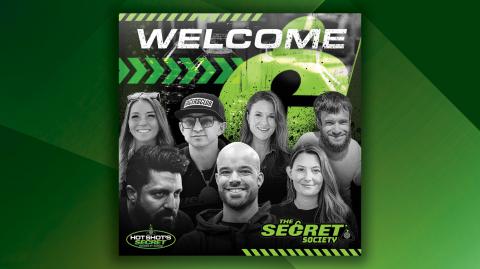
The members of Hot Shot's Secret Society influencer program.


Hot Shot's Secret, manufacturer of high‑performance lubricants and additives for diesel and gas-powered vehicles, has launched a new influencer program: The Secret Society.

The new program brings together seven influencers from the world of drag racing, custom-build fabricators, heavy-duty mechanics and compelling storytelling.

"The Secret Society is our inner circle," said Hot Shot's Secret Influencer Marketing Manager Matt Ryce. "Our goal was to bring together the builders and racers who are actually putting in the work. The 'Founding Seven' were selected not just for their reach, but for their grit. These creators are the ones turning wrenches, chasing championships and solving real-world problems."

The Secret Society program, a first for Hot Shot's Secret, comprises seven creators that will serve as official ambassadors: Don Abenante, Devin Henry, Mickayla VanBuren, Jake Hopkins, Jimmy Dale, Emily Reeves and Morgan Evans. 

  1. The Engineer | Don Abenante - Don isn't just turning wrenches; he's analyzing the "how" and "why."
  2. The Wildcard | Devin Henry (AKA Super Dwarf) - Fueling the chaos with equal parts Dr Pepper and high-octane adrenaline, Devin represents the raw, "all gas, no brakes" spirit of the Society. 
  3. The Field Op | Mickayla VanBuren -  Mickayla brings the Society to the front lines. As a diesel mechanic taking on roadside calls and shop floors across the country, she is the ultimate problem solver, proving that Hot Shot's Secret is built for the rigors of the real world.
  4. The Catalyst | Jake Hopkins - With a focus on fuel systems and high-cetane energy, Jake is the Society's pulse. If it's lifted, loud, or pushing four-digit horsepower, Jake is there ensuring the heartbeat of the machine is cleaner and stronger than the rest.
  5. The Enforcer | Jimmy Dale - Built different and fueled by competition, Jimmy is the Society's representative at the staging lights. A drag racer who lives for the "grit and no quit" lifestyle, he proves that under pressure, the right chemistry wins races.
  6. The Visionary | Emily Reeves - Emily turns the "what if" into "what is." A master dream chaser, she represents the creative soul of the Society, bringing custom builds to life with a level of passion that defines the modern maker.
  7. The Rising Star | Morgan Evans - A back-to-back Woodward Avenue champion, Morgan is the Society's proof of concept. From rescuing rusty trucks to dominating the drag strip, she embodies the cycle of restoration and racing that drives the industry forward.


Hand-picked by Ryce, Hot Shot's Secret director of field marketing and partnerships, Kyle Fischer, and Hot Shot's Secret social media coordinator, Lindsey Corcoran, this initial Secret Society will have unprecedented access to the brand's research and development lab in Mt. Gilead, Ohio. Hot Shot's Secret Brand Manager Josh Steinmetz adds, "We recognize that our audiences come from many different backgrounds--custom car builders, motorsports, daily drivers, agriculture, semi drivers and more. We formed The Secret Society so they will more effectively understand the 'science' that powers our problem-solving solutions and be able to explain how they function in ways that resonate with their audiences."
 

Images courtesy of Hot Shot's Secret | Shutterstock - Mohollis Taufi
 

April 2026

Free Track Incident Response Training at Eldora Speedway

Submitted by ajh on Thu, 04/30/2026 - 14:15
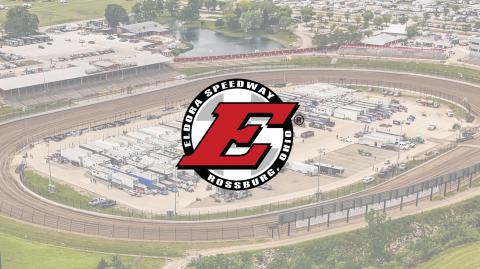
An aerial view of Eldora Speedway


Spots are still available for the upcoming comprehensive SFI Track Incident Response Class at Eldora Speedway, Rossburg, Ohio, on Saturday, May 16, and Sunday, May 17, 2026. Presented by Simpson and endorsed by both the World of Outlaws and USAC Racing, the free event is designed to provide hands-on safety training for track personnel.

The program features eight practical learning stations focused on critical emergency scenarios:

  • Helmet and HANS device removal
  • Spinal immobilization
  • Driver extraction
  • Hydraulic and non-hydraulic cutting and moving
  • Airway management and hemorrhage control within a chassis or tub
  • Driver/medic interaction with driver in car
  • Roll-over controlled movement and driver removal
  • Pathway to Life and fire suppression


The training runs from 8:00 am to 4:00 pm each day, and participants only need to attend one session to complete the full curriculum. In addition to the free instruction, lunch will be provided for all attendees.

This initiative aims to instruct track workers on how to respond safely and appropriately to on-track emergencies through realistic, hands-on study. Participants will also have the opportunity to earn a Track Worker Certification following the training.

Interested parties can register or submit questions by emailing TrackServices@EldoraSpeedway.com.

Flyer for the SFI Eldora track incident response class.


Image courtesy of Eldora Speedway - Facebook


April 2026

Anderson (IN) Names New President and New VP of Operations

Submitted by laurap on Wed, 04/29/2026 - 15:16
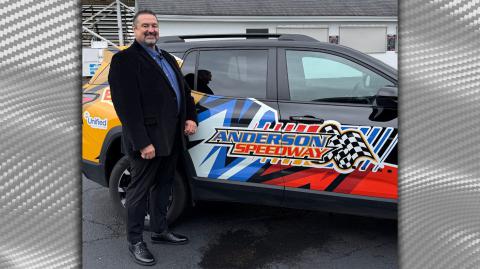
An image of Joe Balash at Anderson Speedway.

Joe Balash, pictured, is the new vice president of operations at the historic oval track in Anderson, Indiana.


Anderson Speedway––the historic high-banked quarter-mile oval track in Anderson, Indiana––has announced the appointment of Joe Balash as vice president of operations.

With the announcement, the former vice president of operations, Jared Owen, has been elevated to president of Anderson Speedway.

In his new role, Balash will primarily oversee all race-related operational aspects of Anderson Speedway, working to enhance the race day experience for fans and drivers, strengthen partnerships and continue the track's long-standing campaigning of grassroots motorsports.

A highly respected leader in the motorsports industry, Balash brings decades of experience at the highest levels of racing, including key leadership roles within NASCAR's Busch Series (now the O'Reilly Auto Parts Series) and, most recently, the NASCAR Euro Series.

"I'm honored to be part of such a historic facility," Balash said. "Anderson Speedway has a rich legacy in short track racing, and I look forward to working with the team to build on that foundation while delivering an exceptional experience for competitors and fans alike."

Owen, meanwhile, has been with Anderson Speedway across several roles, beginning as the track promotions intern in 2015 before being promoted to the executive assistant to the president in 2016, followed by his promotion to VP of operations in 2017. 

For more information, visit andersonspeedway.com.


April 2026

USAC CRA Sprint Cars Return to Ventura on May 2 for 550th Event

Submitted by laurap on Tue, 04/28/2026 - 17:52
USAC Racing logo.


Ventura Raceway is the place to be this Saturday as the Avanti Windows & Doors USAC CRA Sprint Cars will take center stage at the seaside oval.

The May 2 showcase is the 550th event in series history and will also feature the Avanti Windows & Doors USAC Western States Midgets, VRA Hobby Stocks, IMCA Sport Compacts, and VRA Junior Classes.

Located at the Ventura County Fairgrounds at 10 West Harbor Blvd. in Ventura, California, the pit gates will open at noon; front gates open at 3:00 p.m. PT; and racing is scheduled for 5:30 p.m. PT at "The Best Little Dirt Track in America."

For more information, visit usacracing.com or venturaraceway.com. 


April 2026

Mustang Cobra Jet 2200 Becomes Fastest EV in Quarter-Mile

Submitted by laurap on Tue, 04/28/2026 - 17:43
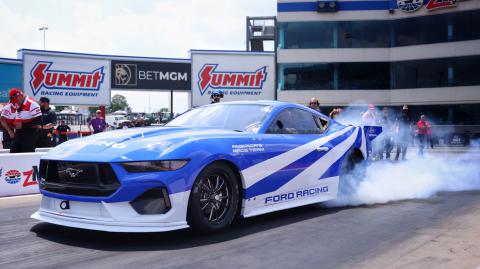
An image of the Mustang Cobra Jet 2200 EV on track.


The evolution of electric drag racing reached a defining moment at the 2026 NHRA 4-Wide Nationals as the Ford Racing Mustang Cobra Jet 2200 established itself as the quickest and fastest electric car in the quarter-mile. 

In front of a packed crowd at zMax Dragway, the latest Cobra Jet program didn't just continue Ford's legacy, it rewrote the benchmark entirely. Building on the foundation of the Cobra Jet 1400 and the Super Cobra Jet 1800, the Cobra Jet 2200 has taken a decisive leap forward. 

Early in the weekend, the car recorded a series of blistering passes, culminating in a quickest of 6.766 seconds elapsed time over the quarter-mile distance and a fastest trap speed of 222.36 mph — numbers that firmly place it at the top of electric drag racing performance worldwide. 

Electric drag racing is not without its pioneers. "Big Daddy" Don Garlits helped bring credibility to the segment with an electric dragster effort that reached more than 186.60 mph, while Steve Huff pushed the envelope even further, eclipsing the 200-mph mark in his electric dragster. Garlits and Huff even gave NHRA fans a taste of EV drag racing together at the 2022 NHRA Gatornationals. Those milestones proved that electric propulsion could compete at a high level. 

But what the Cobra Jet 2200 has accomplished is different. It hasn't just joined that conversation; it has taken control of it. By combining cutting-edge battery architecture, advanced motor technology, and an innovative drivetrain featuring a patented clutch technology coupled to a multi-speed transmission, the Cobra Jet 2200 delivers unmatched elapsed time and top-end speed in a single, cohesive package. 

The significance of that achievement was not lost on the fans at zMAX. Each pass was met with anticipation, followed by the unmistakable realization that they were witnessing a new era unfold in real time. Ford’s commitment to the program was equally visible. With engineering staff on-site throughout the event and the car making multiple exhibition runs across all three days, the Cobra Jet 2200 wasn’t just a showcase--it was a statement of intent. 


An image of the Mustang Cobra Jet interior.


"Super proud to be out here with this car," said Jake Powers, electrification, hardware supervisor for Ford Racing. "We've been working on it for so, so long. The team has put in a huge effort over the last couple of years. We came out here, and I think we exceeded not just others expectations but our own with this car. Going 222 miles an hour in a quarter is just phenomenal. And to push the boundaries of technologies, we've learned so much from this car. It is unreal to finally be here, show it to the public and share it, and get so much positive feedback. People are out here just loving this car. They love to see what we were able to do with it. And it's been a very special weekend for the whole team.”

"All of the props to the wonderful engineers at Ford who put in a ton of effort to not only deliver the car but to deliver it consistently across the whole weekend," said Nick Kuhajda, demonstrators program supervisor at Ford Racing. "I mean, over 12 runs, 9 passes below 7 seconds and above 200 miles an hour. The consistency of this car would not be possible without this team and its knowledge, and all of the talent we have there in that building at Ford.” 

"Within the NHRA Technical Department, we work to understand new and emerging technologies through research and collaboration with industry experts and OEMs, said Clinton Snead NHRA, director of engineering. "That understanding is critical to helping keep racers, track officials, and spectators safe while also maintaining fair competition. The Mustang Cobra Jet 2200, and our collaboration with Ford engineers, is a great showcase of EV technology and the level of performance these vehicles can produce. Given the progression of EV technology over the past decade, it’s exciting to think about what may be on the horizon as battery systems, electric motors, and controls continue to improve. We look forward to continuing our relationship with Ford and other OEMs as that progression continues." 

In a sport defined by speed, numbers matter. And right now, no four-wheeled electric drag racing vehicle on the planet can match what the Ford Racing Mustang Cobra Jet 2200 has achieved.

For more information, visit nhra.com or visit the Ford From the Road blog.


Images courtesy of Ford


April 2026

IHRA Acquires Empire Dragway (NY)

Submitted by ajh on Tue, 04/28/2026 - 09:33
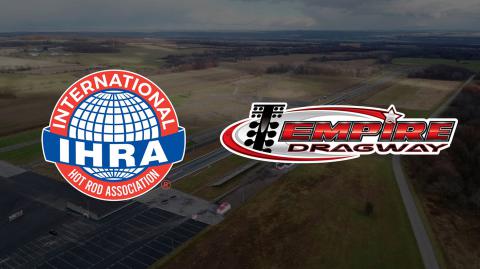
Photo of Empire Dragway with the IHRA and Empire Dragway logos.


The IHRA has acquired Empire Dragway in Leicester, New York, the sanctioning body announced.

Empire Dragway has long been a staple in the Northeast racing community, known for its rich history, passionate fan base and competitive racing environment, IHRA officials said. Under IHRA ownership, the facility will undergo strategic enhancements focused on racer experience, fan engagement and long-term operational sustainability.

"This is exactly the kind of facility we want to invest in," said Darryl Cuttell, owner of IHRA. "Empire Dragway has a strong foundation and a loyal racing community. Our goal is to build on that momentum--bringing more opportunities for racers, bigger events for fans and ensuring this track continues to thrive for years to come."

"Empire Dragway has meant so much to me and to this community over the years," said Jerry Scaccia, former owner of Empire Dragway. "I'm proud of what we've built here, and I truly believe IHRA is the right group to take it to the next level. Their vision for the future of the sport and commitment to racers gives me full confidence that Empire is in great hands."

Empire Dragway will host the Outlaw Nitro Series and Small Tire BRATZ Series on July 23 to 25. Under IHRA ownership, that momentum will continue to build with expanded programming, enhanced amenities and greater opportunities for racers and fans alike, IHRA officials said.

Fans and racers can expect upgrades to infrastructure, enhanced safety measures and a renewed focus on delivering a top-tier race day experience. The IHRA said it will work closely with local organizations, teams and the racing community to ensure a seamless transition and continued success of the venue.

For more information, visit ihra.com.

April 2026

FIA Formula Regional European Championship Opens in Austria

Submitted by laurap on Mon, 04/27/2026 - 16:43
FIA logo.


Taking over from the Formula Regional European Championship by Alpine (FRECA), the FIA Formula Regional European Championship (FIA FREC) has announced its inaugural schedule covers eight weekends from April to September, with five FIA Formula One World Championship venues included.

The 2026 FIA Formula Regional European Championship calendar takes place over eight weekends as follows: Red Bull Ring, Austria (24-26 April); Zandvoort, Netherlands (22-24 May); Spa-Francorchamps, Belgium (29-31 May); Monza, Italy (19-21 June); Hungaroring, Hungary (3-5 July); Paul Ricard, France (17-19 July); Imola, Italy (4-6 September); and Hockenheim, Germany (11-13 September). Pre-season tests took place at Hockenheim, Paul Ricard and Red Bull Ring.

Positioned one step above Formula 4 in the FIA Single-Seater Pyramid, FIA FREC caters exclusively for the second-generation Formula Regional Tatuus T-326. All-new for 2026, the car has been developed by the Italian constructor in partnership with the FIA and follows the aerodynamic philosophy deployed in Formula 1 to encourage closer racing. Its design also represents another step in terms of performance and safety.

Ten teams have been successful in securing entries for the 2026 season, with each fielding three up-and-coming racers for a 30-car line-up: ART Grand Prix, CL Motorsport, G4 Racing, MP Motorsport, Prema Racing, R-Ace GP, Rodin Motorsport, RPM Motorsport, Trident Motorsport and Van Amersfoort Racing. All teams use Pirelli tires.

Drivers contesting the inaugural FIA Formula Regional European Championship in 2026 will be able to utilize Race Mode in their pursuit of on-track success.

The new Race Mode push-to-pass system allows drivers to trigger full engine performance for a period of time when activated by a button from inside the cockpit. Its introduction for the 2026 FIA Formula Regional European Championship season is the result of extensive research and development managed by the FIA.

Experts from the FIA's technical department oversaw simulations of Race Mode in conjunction with the FIA's Formula 1 aerodynamicists, while Tatuus, the constructor of the second-generation Formula Regional Tatuus T-326, and engine supplier, ATM, managed the software upgrading and validation process.


April 2026

Early Release of 2027 HSR Schedule

Submitted by laurap on Mon, 04/27/2026 - 16:36
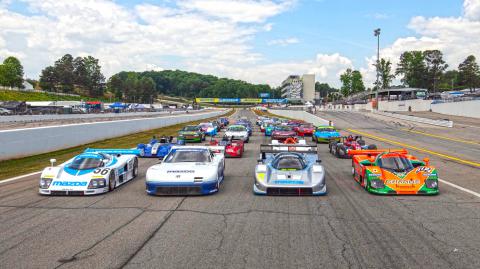
Image of HSR cars.


Building on a tradition of stability and foresight established by parent company IMSA, Historic SportsCar Racing (HSR) is releasing its 2027 race schedule at a record early date, giving HSR competitors, corporate partners, suppliers and fans an unprecedented amount of time to prepare for the seven-event campaign.


2027 Historic Sportscar Racing (HSR) Race-Event Schedule*

  • January 28 – 31: HSR IMSA Classic – Daytona International Speedway, Daytona Beach, Florida
  • February 10 – 14: HSR Sebring Classic 12 Hour, presented by Mission Foods, and the HSR Sebring Historics – Sebring International Raceway, Sebring, Florida
  • April 22 – April 25: 49th HSR The Mitty presented by Hagerty – Michelin Raceway Road Atlanta, Braselton, Georgia
  • June 10 – 13: HSR Watkins Glen Classic 6 Hour, presented by Mission Foods, and The HSR Watkins Glen Historics – Watkins Glen International, Watkins Glen, New York
  • September 17 – 20: HSR Road Atlanta Classic 10 Hour, presented by Mission Foods, and the Fall Historics – Michelin Raceway Road Atlanta, Braselton, Georgia
  • November 3 – 8: HSR Daytona Classic 24 Hour, presented by Mission Foods, and the HSR Daytona Historics – Daytona International Speedway, Daytona Beach, Florida
  • December 3 – 5: HSR Sebring Pistons and Props, presented by the Alan Jay Automotive Network – Sebring International Raceway, Sebring, Florida


As HSR approaches its 50th anniversary, it continues to visit the most venerated road courses in America for full weekends of dawn-to-dusk on-track activity, or at the HSR Daytona Classic 24 Hour presented by Mission Foods, twice around the clock.

For the first time, the schedule will expand HSR’s ‘Featured Marque’ concept to three events. The 49th HSR The Mitty Presented by Hagerty at Michelin Raceway Road Atlanta will feature a British Car Celebration; the HSR Watkins Glen Classic 6 Hour presented by Mission Foods puts the spotlight on the open-wheel Grand Prix Classics group; and the HSR Classic Road Atlanta 10 Hour presented by Mission Foods highlights the history of the SCCA Runoffs at the legendary Georgia circuit that has hosted the SCCA National Championships a record 24 times since 1970.

"Taking a page from what we have successfully achieved at IMSA, we're proud to unveil the 2027 Historic Sportscar Racing schedule several months earlier than ever before,” said John Doonan, president of IMSA and HSR. "Consistency of venues and dates is vital for promoters and competitors, and finalizing the schedule well in advance helps every constituent invested in HSR in terms of their planning and preparation. We’re proud that HSR continues to offer vintage sports car racers the maximum amount of track time at road courses that drivers dream of competing on, in cars that stir every race fan’s soul. Expanding 'Featured Marque' to three events will shine a wider light on some of HSR's most popular classes and cars and we’re excited to continue to grow that concept. Plenty of racing remains in 2026, but we're pleased to help everyone get a head start on 2027."

The slate kicks off with the third running of the HSR IMSA Classic at Daytona International Speedway, a select invitational event that features significant historic cars that competed over the past 65 years at Daytona. The HSR IMSA Classic will be run in conjunction with the 65th running of the Rolex 24 At Daytona, January 28-31. The specific era or genre for 2027 will be announced at a later date.

The opening points-paying round of the year occurs over Valentine’s Day weekend with the 13th running of the HSR Sebring Classic 12 Hour presented by Mission Foods at Sebring International Raceway, which returns to an early-season date and serves as an important promotional vehicle for the 75th Anniversary running of the Mobil 1 Twelve Hours of Sebring, set for March 20, 2027.

The Sebring meeting is the first of four "HSR Classic" event weekends that feature the HSR Classic Endurance Championship presented by Mission Foods, North America’s first major endurance racing series for historic prototype sports cars retired from contemporary competition.

Next up is the 49th running of HSR The Mitty presented by Hagerty, April 22-25, and the first of two rounds at Michelin Raceway Road Atlanta. The 2027 Mitty will be highlighted by the celebration of British Sports Cars.

The HSR Classic Endurance Championship returns at Wakins Glen International June 10-13, the traditional date for the HSR Watkins Glen Classic 6 Hour presented by Mission Foods. A celebration of open-wheel Grand Prix Classics has been added to The Glen bill this year as well, an appropriate honor for the track that hosted the Formula 1 United States Grand Prix from 1961 to 1980.

Teams and drivers can then enjoy an annual summer competition break when HSR lends its operational and sanctioning expertise to the Rolex Monterey Motorsports Reunion and Pre-Reunion weekends at WeatherTech Raceway Laguna Seca for the seventh consecutive year in August.

The 2027 HSR championship season resumes with the return to Michelin Raceway Road Atlanta for the HSR Road Atlanta Classic 10 Hour presented by Mission Foods, set for September 17-20, the third of four appearances for the HSR Classic Endurance Championship. The meeting highlights the history of the SCCA National Championship Runoffs, which return to the famed circuit in 2027 and 2028.

Now into its second decade, the HSR Classic Daytona 24 Hour presented by Mission Foods brings HSR back to the World Center of Racing, November 3 – 8, for the second time in 2027, with a unique around-the-clock format that creates virtually non-stop action. The HSR Classic Daytona 24 is also the final round of the HSR Classic Endurance Championship presented by Mission Foods, as well as the championship finale for the HSR/VSCDA North-South GT Challenge.

The 2027 campaign wraps up December 3-5 as HSR Pistons and Props presented by the Alan Jay Automotive Network, which reverts to a season-closing date.

The HSR Classic event weekends at Sebring International Raceway, Watkins Glen International, Michelin Raceway Road Atlanta and Daytona International Speedway share the card, respectively, with the Sebring Historics, the Watkins Glen Historics, the Fall Historics and the Daytona Historics. All four events are key rounds of HSR’s season-long championships and include races for all season-long HSR run groups and its expanded lineup of racing series.

The 2027 schedule announcement was made during this weekend’s running of the 48th HSR The Mitty presented by Hagerty that takes place through Sunday afternoon at MRRA. For complete information on the 48th HSR The Mitty Presented by Hagerty race weekend, including the event schedule, entry lists and ticket information, visit the official event page at hsrrace.com/the-mitty/.


*Event schedule subject to change and additions


Image courtesy of HSR, Facebook


April 2026

The Race for a Spot on the 2026 PRI Show Floor Is Heating Up

Submitted by ajh on Mon, 04/27/2026 - 16:05
A blurry INDYCAR on the PRI Show floor.

 
The race to the PRI Show is underway! Exhibitors can secure their booth space now for the 2026 PRI Show, set for December 10-12, in downtown Indianapolis. 

Motorsports brands planning on exhibiting at the PRI Show must submit an exhibitor space reservation agreement and deposit by May 15 to participate in the initial round of booth plotting.

A red button with the text "RESERVE A BOOTH."


Motorsports professionals––from buyers and decision-makers to media and influencers––travel from all 50 states and more than 35 countries to source new parts and products. For companies looking to grow their reach, exhibiting is essential. Learn more about why to exhibit. 

A NEW, EASIER PROCESS FOR PRI SHOW EXHIBITORS


The process to submit an exhibit application is a little different this year. PRI has launched a new customer management system powered by Salesforce to better serve its exhibitors year-round.  

Those who have not submitted the Exhibit Space Rental Application (ESRA) for the 2026 event, December 10-12, Indianapolis, are encouraged to do so as soon as possible to be included in the initial plotting of the floorplan.

Returning and new exhibitors must activate a new account in the system this year. 

Once this one-time step is complete, exhibitors can secure their spot on the PRI Show floor, download invoices, complete online payments and access free resources to plan a successful booth.

Getting set up in the new PRI Show exhibitor platform is simple:

  • Visit exhibitor.performanceracing.com. 
  • Returning exhibitors: Enter the email previously used to purchase a PRI Show booth. A "password reset link" will be sent to your inbox. Follow the link and create a new password.
  • New exhibitors––or returning exhibitors using a new email: Click "New Exhibitor," and complete the form to create an account.


Booth space is in demand, so now is the time to submit your PRI Show exhibit application and lock in your place on the 2026 show floor.

Note: Updating an account email address does not affect exhibitors' account history or PRI Show seniority. To participate in the initial booth selection and floor planning process, exhibitors must submit a signed booth agreement and deposit by May 15, 2026.

Run into roadblocks? The PRI Show team is ready to help:


April 2026

Silent Breakthroughs: Upgrades in Valvetrain Components

Submitted by ajh on Mon, 04/27/2026 - 15:30


While power adders and wickedly high-horsepower numbers are drawing all the headlines today, aftermarket valvetrain companies are quietly creating a significant performance impact in motorsports. Valvetrains can now consistently survive at higher rpm and cylinder-pressure levels, as opposed to just holding out at peak power once or twice. Manufacturers are moving engine builders toward valvetrain combinations that are selected as a tuned system, in contrast to ordering a pile of what appear to be brawny and sturdy parts. New or proprietary materials are often driving this progress.

"As boost levels climb and rpm limits continue to rise, Jesel remains focused on material advancements, coatings, and heat-treatment refinements, many of which remain proprietary," said Bob McDonald of Jesel, Lakewood, New Jersey.

"The materials that we use are a little bit more expensive and engineered specifically for the job. That's compared to just getting any kind of material from a supplier. I went and got the material I wanted," added Claude Holguin of CHE Precision, Thousand Oaks, California. "It's a proprietary material, something that I developed over many years of working with a good chemist who was also a motorhead. All our valve guides are made out of that material. Some of our valve seats are made out of that material. It depends on the application."
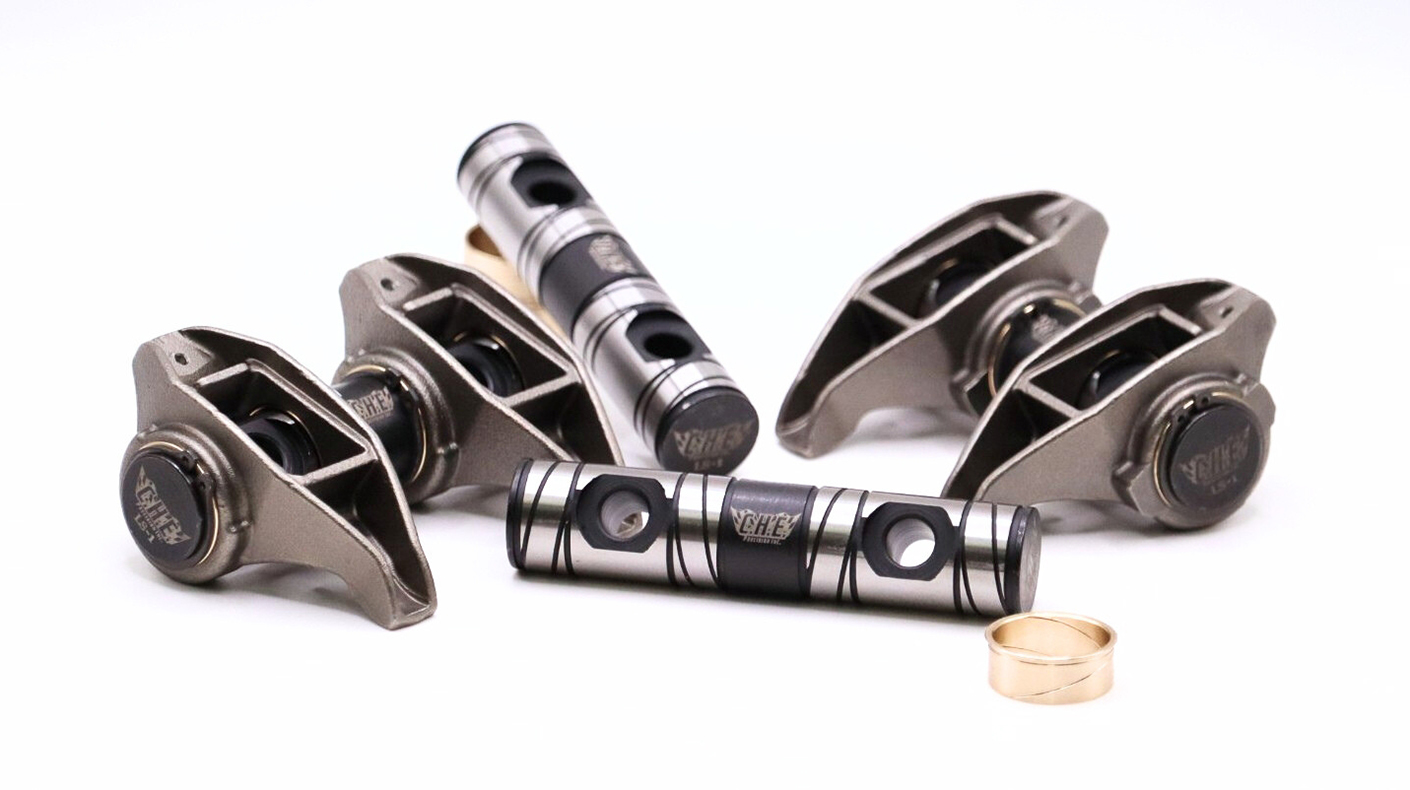
The CHE Precision shaft-mount LS trunnion kit.


The CHE Precision shaft-mount LS trunnion kit features 32 full-floating bronze bushings and is designed to ensure rigidity and minimize rocker-arm movement.


For years now, racers have known that thicker, stiffer pushrods reduce deflection, which results in more consistent valve-event timing. Some of that strategy is being leveraged in the development of other products. Breakthrough changes in recent years include bushed roller lifters that eliminate needle bearings and more robust lifter bodies that survive high spring loads. Racers are now seeing the benefits of replacing aluminum rocker arms with shaft-mounted steel models to survive boost pressures in drag-and-drive situations. Finally, better alloys, unique designs, and upgraded manufacturing have resulted in much-improved valve-spring durability and performance.

Basically, the valvetrain is an energy management system since every component stores and releases energy at some point in the combustion cycle. That's why manufacturers use Spintron testing and advanced computer modeling to develop coherent systems that control these actions more efficiently to improve performance and survive the increased stress on the individual but compatible components. And manufacturers are even more precise by applying these design principles to specific applications.

"Our 4.9 Noonan Pro Steel rocker system is built on decades of proven materials and valvetrain design experience," explained McDonald. "The system was engineered specifically to improve stability and durability at engine speeds approaching 11,000-plus rpm. And it was developed in collaboration with racers transitioning to the Noonan cylinder-head platform. This rocker system quickly earned its place on some of the fastest cars in the country."


Valves
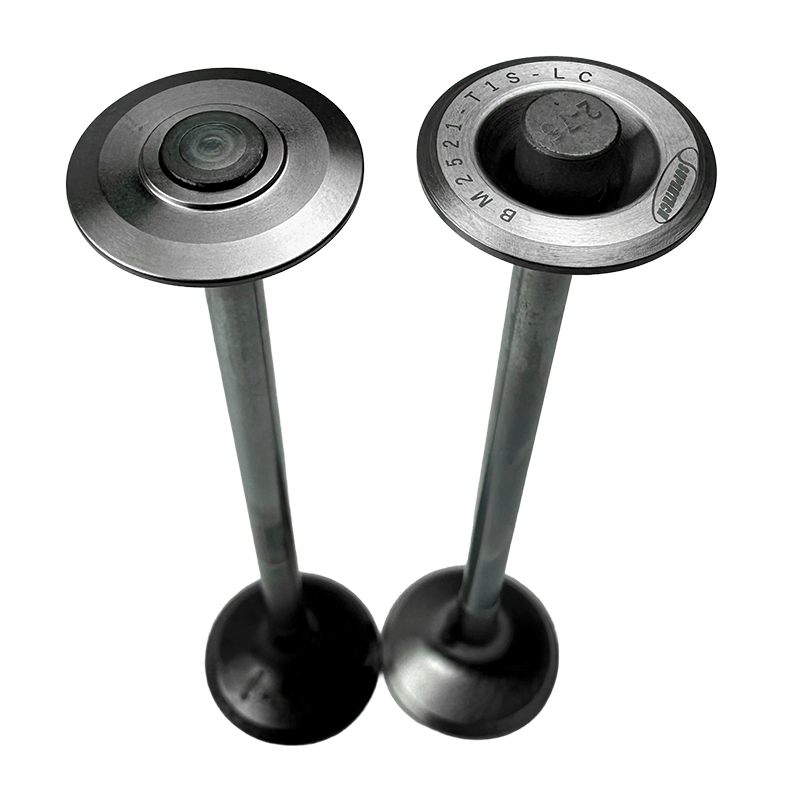
Supertech valves.


For another solution to the lost BMW factory shims, Supertech eliminated the shim and developed two different versions of a kit that uses a lash cap.


Over at Supertech Performance in Morgan Hill, California, engineers noticed that on certain BMW and Audi turbocharged applications, the adjusting shim on the top of the exhaust valve would be kicked out at high rpm or with high-lift camshafts.

"To solve this issue, we have come up with two different solutions, depending on the application," explained Willy Tagliavini. "For engines running bucket-type cam followers, we developed a bucket with the shim inside the bucket. For engines running rocker arms, we developed a kit that eliminates the shim and replaces it with a lash cap that is much more stable."

Tagliavini also noted these engines may have another weakness if there are three lock grooves on the valve. "It's the weakest and thinnest part of the valve and is prone to failure in aggressive applications," he said. "So, we've converted to single-groove lock."

As for boost applications, Tagliavini said adjustments have been made to the exhaust side to achieve more endurance at high temperatures. That may require a heavier or more robust material. "In some other cases, we've resorted to a hollow, sodium-filled exhaust valve with good success," he added.


Valve Springs
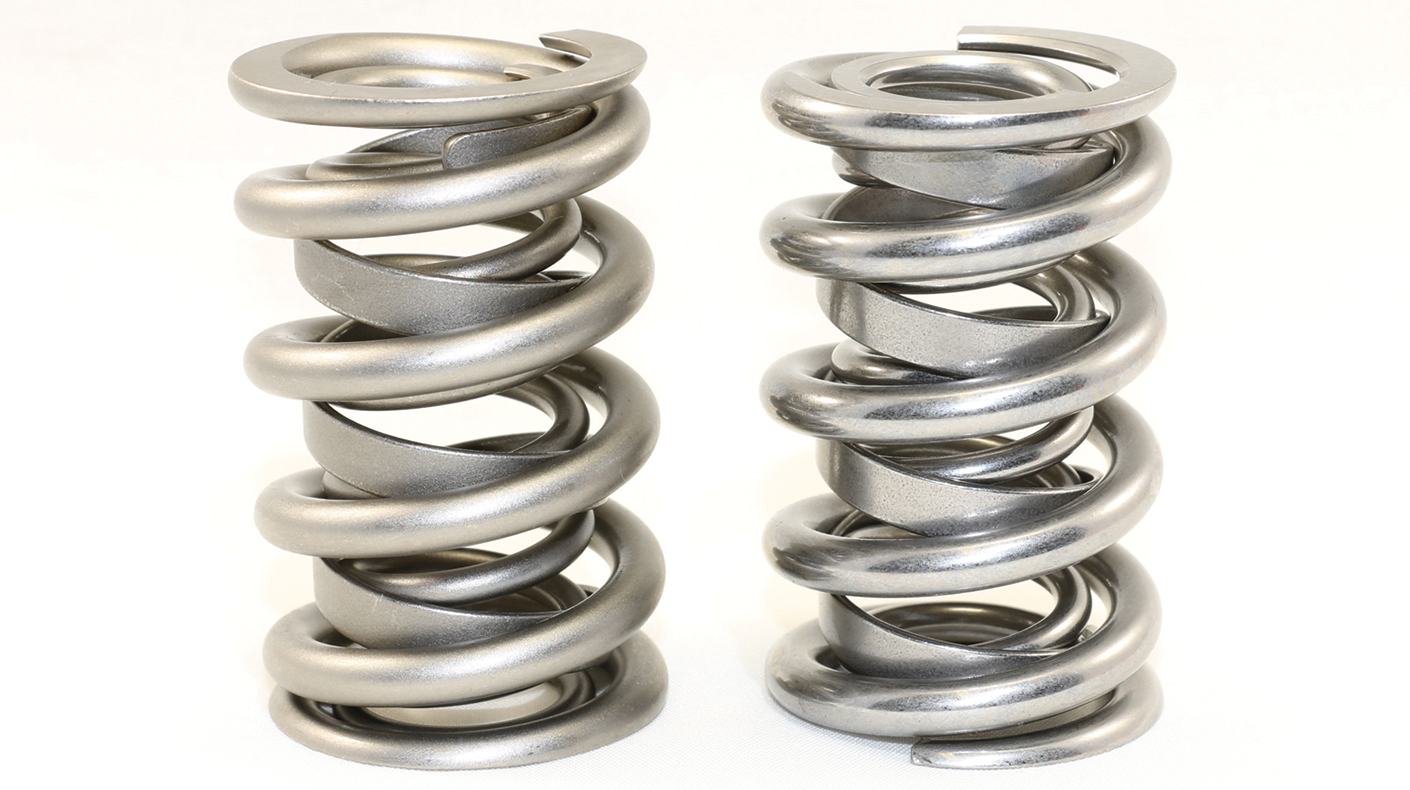
Isky Racing Cams Max-Life dual valve spring.


Isky Racing Cams' Max-Life dual valve spring with a damper is available in different heights and with different ratings for seat and open pressure.


Valve springs have arguably been the key to improved performance over the past couple of decades. Springs were made stronger, yet heavier, to work with higher rpm and high-lift camshaft lobe profiles. This included Pro Stock engines, where the total valve lift exceeds 1.250 inches. Lately, new materials and camshaft profiles are reversing the trend, allowing smaller-diameter and lighter valve springs without losing valvetrain control.

"We're going to an ovate wire on some of the designs and then using a super-clean wire with different finishes, different heat-treats," said Nolan Jamora of Isky Racing Cams, Gardena, California. He noted the super-clean wire material is sourced from Japan or Sweden. "The super-clean wire doesn't have any inclusions, and that is what can lead to cracks."

The new wire allows smaller-diameter and lighter springs without giving up durability. The smaller spring uses a smaller retainer, which results in less weight on the valves and allows higher rpm operation. Jamora also noted that the endurance lessons learned in circle-track racing have filtered down to today's drag racing as drag-and-drive events gain popularity.

"It's a combination of high open pressures that will take the loads for hundreds of miles. That's where the polishing, enhanced surfacing, and finishing all come in. And really, old track and endurance racing is where it started. Now it's drag-and-drive," said Jamora.

While it may be considered somewhat of a curious approach, some engine builders are starting to design their engines around the valve spring. "Yeah, you can do that," added Jamora. "Then you figure out what mass your valve needs to achieve a certain rpm. Then you figure out how aggressive or smooth the lobe profile has to be for that type of spring. But that's really over-simplifying the equation."


Going 'Old School'
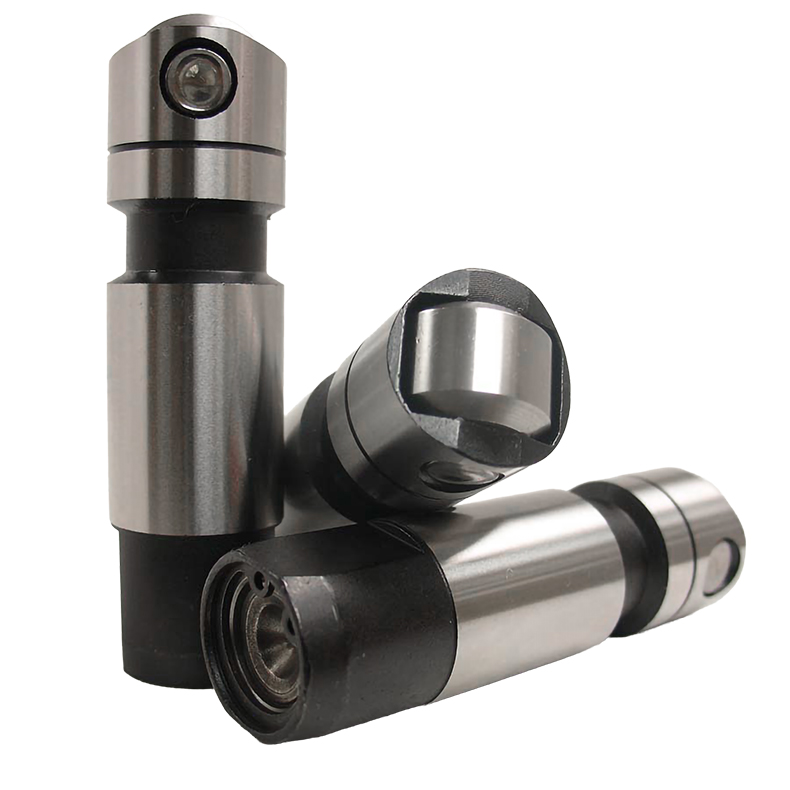
HyLift Johnson lifters.


HyLift Johnson lifters designed for Gen III Hemi applications feature tighter tolerances for slower leakdown, direct oiling to the needle pins in the roller, and a hardened black-oxide finish.


Upgrading vintage muscle car engines is also a hot topic these days. Isky has developed hydraulic-roller conversion kits for engines popular in the 1960s and 1970s, including those that came with solid flat-tappet cams from the factory.

"We're doing a lot of hydraulic roller lifters for old engines like Chryslers and Pontiacs," said Jamora. "Some of the guys still want to run older engines, but they don't want to deal with flat tappets, either hydraulic or solid. It's hard to get flat-tappet cores and lifters these days. The price just keeps going up, so there's a crossover point where it's worth it to buy a hydraulic roller kit. You have to go to a shorter pushrod, but spring pressure and rocker arms all stay the same."

Another company offering hydraulic roller upgrades or conversions is Hylift Johnson, which is a subsidiary of Topline Automotive Engineering in Muskegon, Michigan. But it also caters to the hardcore enthusiast who wants to keep the factory setup.

"A lot of '60s and '70s cars survived, especially in the South and out West, and they had flat-tappet cams," said Dave Ewert. "We still offer flat-tappet lifters to guys who are keeping their matching-numbers engines and so on." He said the company is also busy with motorcycle, tractor, and even small-engine applications. "The thing about our flat tappets, the quality is there. The crown is there, the internals are right, and the material is right."

Ewert explained that the choice often comes down to cost. A set of new flat-tappet lifters can be around $200, while a conversion kit that includes the cam, tie-bar lifters, and pushrods can easily exceed $1,000. "And there are a lot of circle-track motors that have rules requiring flat-tappet lifers," he said.

Hylift sells only lifters, so a full conversion kit with the cam, springs, etc., isn't available. "We let our larger customers and distributors put those together with our lifters included," said Ewert.

With the stock replacement lifters, Hylift maintains a factory durability standard, basically a Rockwell hardness of 56 to 57 in the materials, according to Ewert. There's also an upgrade to a material with a 59 to 60 Rockwell rating that features more nickel and molybdenum in the alloy. "A lot of circle-track racers like that, and it's peace of mind to someone building a really expensive street engine."

For those using the roller lifters, Hylift has patented a Direct Shot oiling feature that directs lubricant to the needle bearings in the roller wheel. The oil-supply hole is located away from the engine oil-supply gallery to help prevent debris from clogging the small oil-supply holes in the lifter. These lifters are also assembled with a performance C-clip retainer.


Rocker Arms
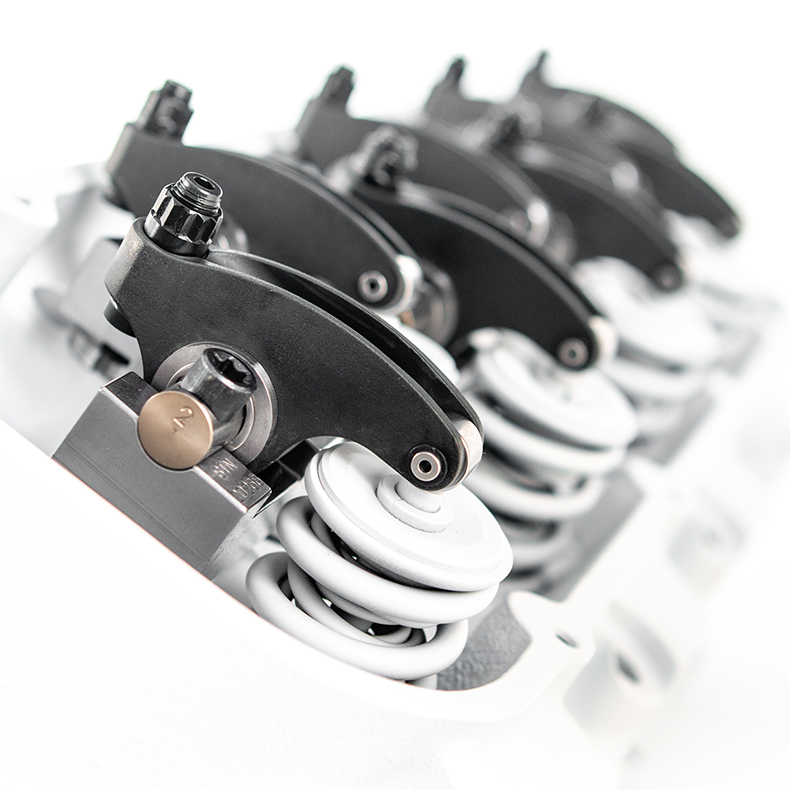
Jesel Sportsman series for big block Chevy V8.


More racers are moving toward steel rocker arms, according to our article sources. Show here is Jesel's Sportsman series for a big block Chevy V8.


As for rocker arms, there is a shift toward rigidity and extended lifecycles. Lightweight aluminum rocker arms were all the rage years ago, but fatigue issues in endurance and high-rpm applications are leading engine builders to consider using steel rocker arms. As mentioned earlier, rocker arms are being designed for specific applications as new and different types of cylinder heads are introduced to the racing market. Most of these require shaft-mounted rocker arms to withstand today's high-horsepower levels, but it can be complex to achieve the correct valvetrain geometry with those designs.

"With every new engine block and cylinder head introduced to the market comes the need for a compatible belt drive, lifter, and rocker system--and keeping pace with those releases is a full-time job for Jesel's engineering team," said McDonald. He noted that while the valvetrain starts with the camshaft, the camshaft is dependent on the timing set. "Among Jesel's most notable recent advancements is the redesign of its LS camshaft belt-drive for standard cam height blocks. While the original version required block machining, the newer Direct-Fit system eliminates that step."

Jesel has also expanded its Sportsman steel rocker-arm line. "It's become a go-to solution for boosted and nitrous-assisted combinations. Its durability and longevity have made it especially popular in high-load environments, including marine applications," added McDonald, noting that the next step is the Pro Series, which is manufactured from proprietary custom forgings and finished with needle-nose rollers. "As boost levels climb and rpm limits continue to rise, Jesel remains focused on material advancements, coatings, and heat-treatment refinements, many of which remain proprietary.

"While aluminum rockers remain widely used, the durability demands of today's high-end builds--particularly in applications involving turbochargers, blowers, and nitrous--have pushed many racers toward steel," continued McDonald. "From Pro Stock and Pro Mod to Top Fuel, sprint cars, circle track, endurance racing, diesel platforms, monster trucks, and marine applications, steel has become the standard for extreme performance."

PRW Power of Perris, California, offers a good, better, and best lineup of rocker arms to support street performance and many racing applications. First, there's a standard pedestal design called the Sportsman, followed by the pedestal/rocker stud that is the Pro Series. Finally, the company offers the Elite shaft-mounted rocker setup.

"The Sportsman is basically stock replacement, and the next level is our Pro series. It's aluminum with the ability to go up to 650-pound open spring pressure," explained Cary Redman. "The best is the Elite, which is a stainless-steel rocker that can work up to 1,000-pound open-seat pressure."

Even though the Sportsman is the base rocker, it offers racer-inspired design and manufacturing features. "Some racers are required to run a stamped- or cast-steel rocker--that's their limiting factor under the sanctioning body rules because they can run a camshaft that's only so big," noted Redman. "What makes ours unique on those specifically is that when you are at high rpm, typically what happens is that the oil pressure is high and the oil is shooting over the pivot ball, which is where it's critical and where you need it the most. Our rocker arms actually deflect the oil down into the pivot ball."

PRW worked with a racer who was welding a small flat tab to the back of the rocker where the oil comes up through the pushrod. The objective was to deflect the oil into the base area to better lubricate the pivot ball.

"That welding really turns into an expensive set of rockers," said Redman. "Ours have that tab cast in, so you don't have to worry about the welding wire or other debris flaking off."

As for pushrods, PRW offers an "industry standard" 0.080-inch wall thickness in 5/16- up to 3/8-inch, which handles much of the market that supports flat-tappet camshafts.

Moving forward, manufacturers continue to analyze failures and develop improved valvetrain components through design and materials. "We are definitely working on the next generation of product," concluded Jamora.

To read the full article, plus hundreds of other articles like it for free, sign up for a digital subscription to PRI Magazine on Zinio here.   

Once you download the Zinio mobile app or are logged into Zinio on a desktop browser, you will gain immediate access to more than a year's worth of content, including "Silent Breakthroughs: Upgrades in Valvetrain Components" here and additional coverage in the May/June 2026 issue here.


Sources

CHE Precision

cheprecision.com

Isky Racing Cams

iskycams.com

Jesel

jesel.com

PRW Power

prwpower.com

Supertech Performance

supertechperformance.com

Topline Automotive Engineering (Hylift Johnson)

toplineauto.com

 

April 2026
By
Mike Magda