 MEMBERSHIP LOGIN
Silent Breakthroughs: Upgrades in Valvetrain Components
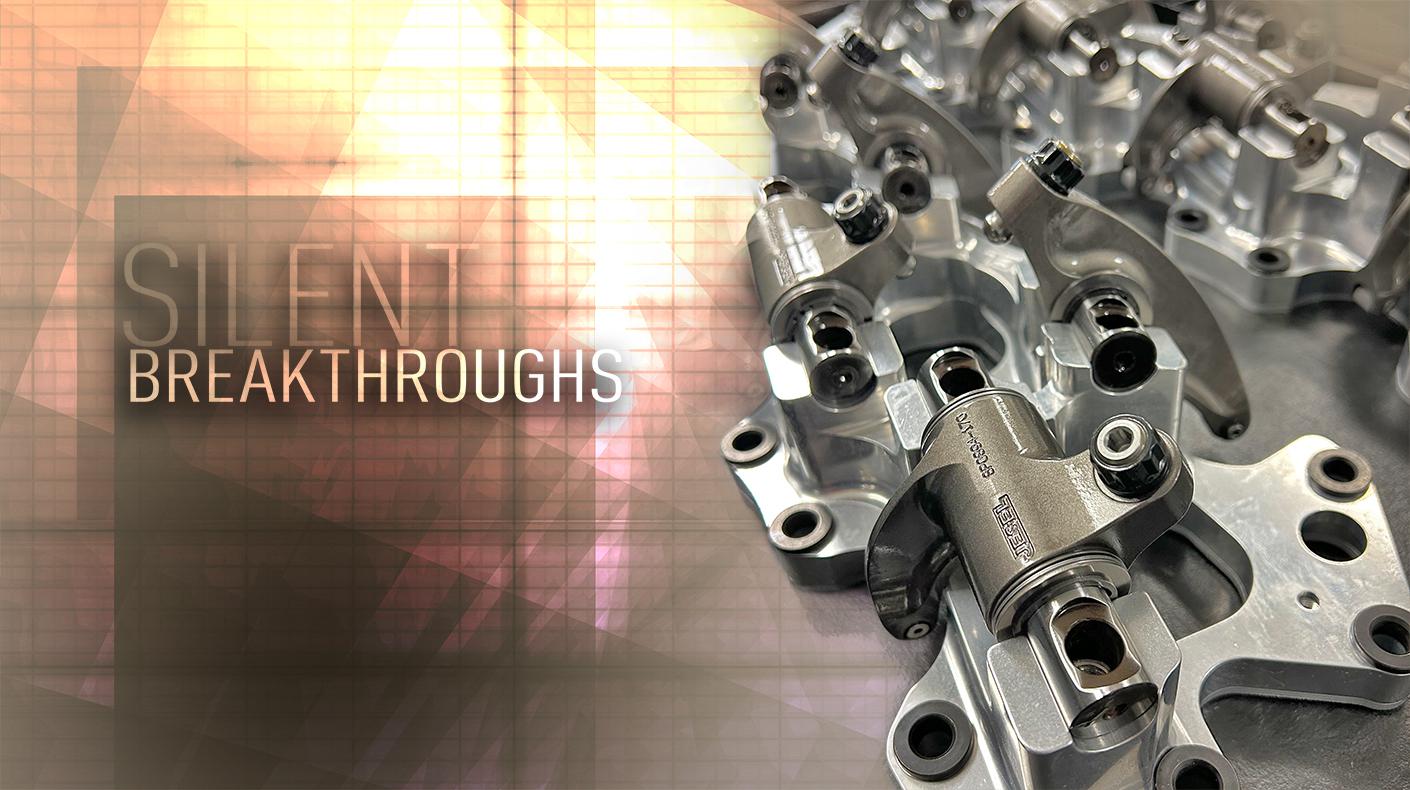
While power adders and wickedly high-horsepower numbers are drawing all the headlines today, aftermarket valvetrain companies are quietly creating a significant performance impact in motorsports. Valvetrains can now consistently survive at higher rpm and cylinder-pressure levels, as opposed to just holding out at peak power once or twice. Manufacturers are moving engine builders toward valvetrain combinations that are selected as a tuned system, in contrast to ordering a pile of what appear to be brawny and sturdy parts. New or proprietary materials are often driving this progress.
"As boost levels climb and rpm limits continue to rise, Jesel remains focused on material advancements, coatings, and heat-treatment refinements, many of which remain proprietary," said Bob McDonald of Jesel, Lakewood, New Jersey.
"The materials that we use are a little bit more expensive and engineered specifically for the job. That's compared to just getting any kind of material from a supplier. I went and got the material I wanted," added Claude Holguin of CHE Precision, Thousand Oaks, California. "It's a proprietary material, something that I developed over many years of working with a good chemist who was also a motorhead. All our valve guides are made out of that material. Some of our valve seats are made out of that material. It depends on the application."
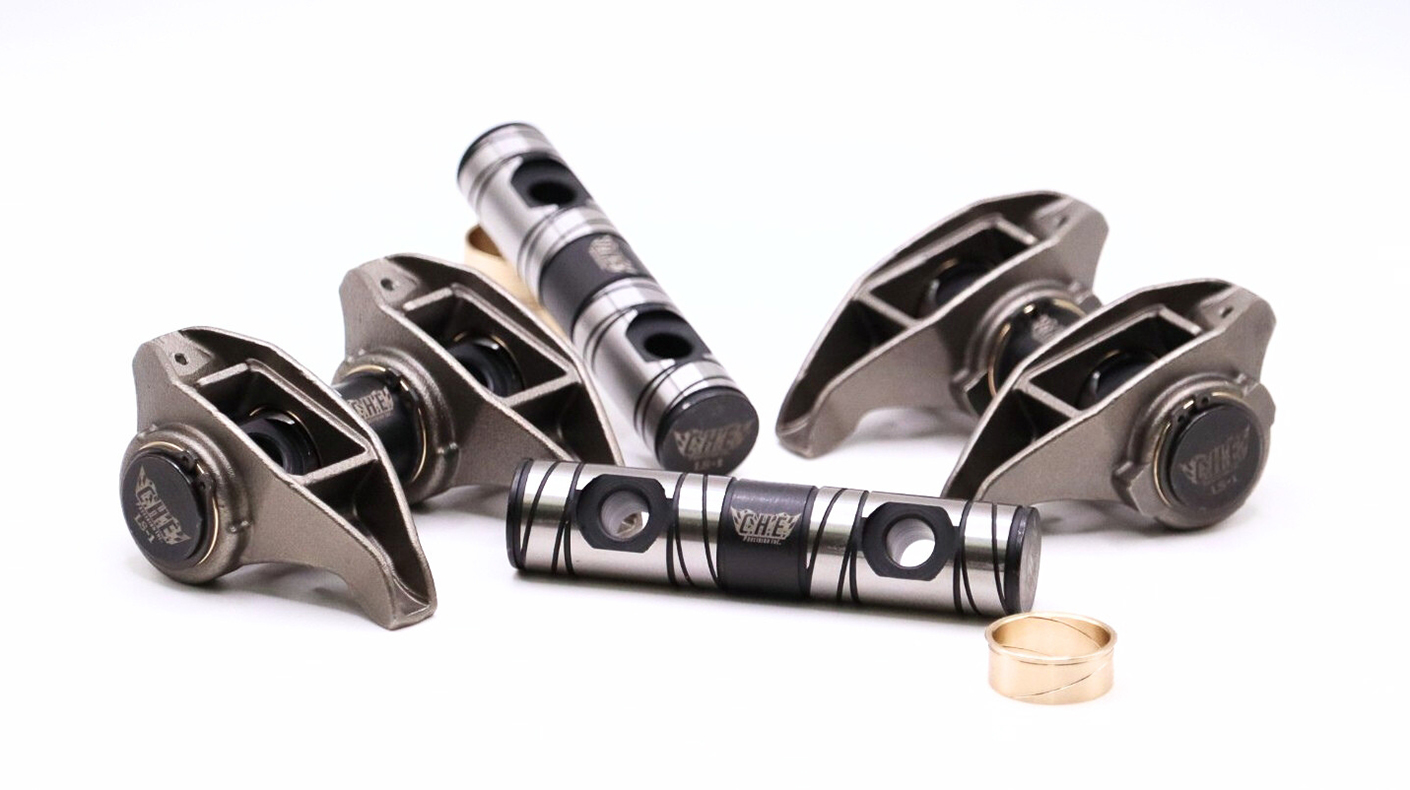
The CHE Precision shaft-mount LS trunnion kit features 32 full-floating bronze bushings and is designed to ensure rigidity and minimize rocker-arm movement.
For years now, racers have known that thicker, stiffer pushrods reduce deflection, which results in more consistent valve-event timing. Some of that strategy is being leveraged in the development of other products. Breakthrough changes in recent years include bushed roller lifters that eliminate needle bearings and more robust lifter bodies that survive high spring loads. Racers are now seeing the benefits of replacing aluminum rocker arms with shaft-mounted steel models to survive boost pressures in drag-and-drive situations. Finally, better alloys, unique designs, and upgraded manufacturing have resulted in much-improved valve-spring durability and performance.
Basically, the valvetrain is an energy management system since every component stores and releases energy at some point in the combustion cycle. That's why manufacturers use Spintron testing and advanced computer modeling to develop coherent systems that control these actions more efficiently to improve performance and survive the increased stress on the individual but compatible components. And manufacturers are even more precise by applying these design principles to specific applications.
"Our 4.9 Noonan Pro Steel rocker system is built on decades of proven materials and valvetrain design experience," explained McDonald. "The system was engineered specifically to improve stability and durability at engine speeds approaching 11,000-plus rpm. And it was developed in collaboration with racers transitioning to the Noonan cylinder-head platform. This rocker system quickly earned its place on some of the fastest cars in the country."
Valves
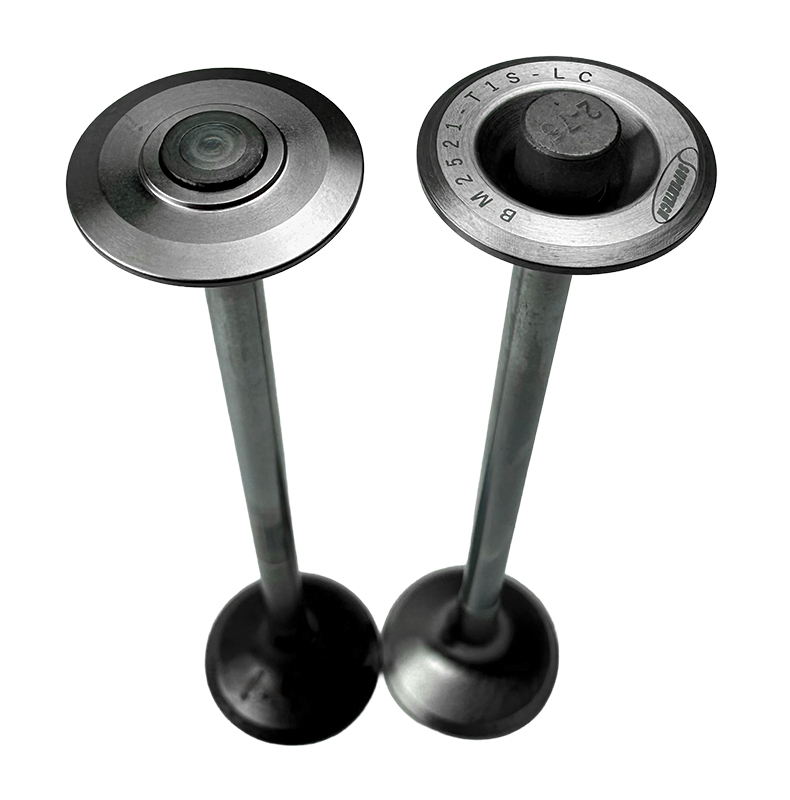
For another solution to the lost BMW factory shims, Supertech eliminated the shim and developed two different versions of a kit that uses a lash cap.
Over at Supertech Performance in Morgan Hill, California, engineers noticed that on certain BMW and Audi turbocharged applications, the adjusting shim on the top of the exhaust valve would be kicked out at high rpm or with high-lift camshafts.
"To solve this issue, we have come up with two different solutions, depending on the application," explained Willy Tagliavini. "For engines running bucket-type cam followers, we developed a bucket with the shim inside the bucket. For engines running rocker arms, we developed a kit that eliminates the shim and replaces it with a lash cap that is much more stable."
Tagliavini also noted these engines may have another weakness if there are three lock grooves on the valve. "It's the weakest and thinnest part of the valve and is prone to failure in aggressive applications," he said. "So, we've converted to single-groove lock."
As for boost applications, Tagliavini said adjustments have been made to the exhaust side to achieve more endurance at high temperatures. That may require a heavier or more robust material. "In some other cases, we've resorted to a hollow, sodium-filled exhaust valve with good success," he added.
Valve Springs
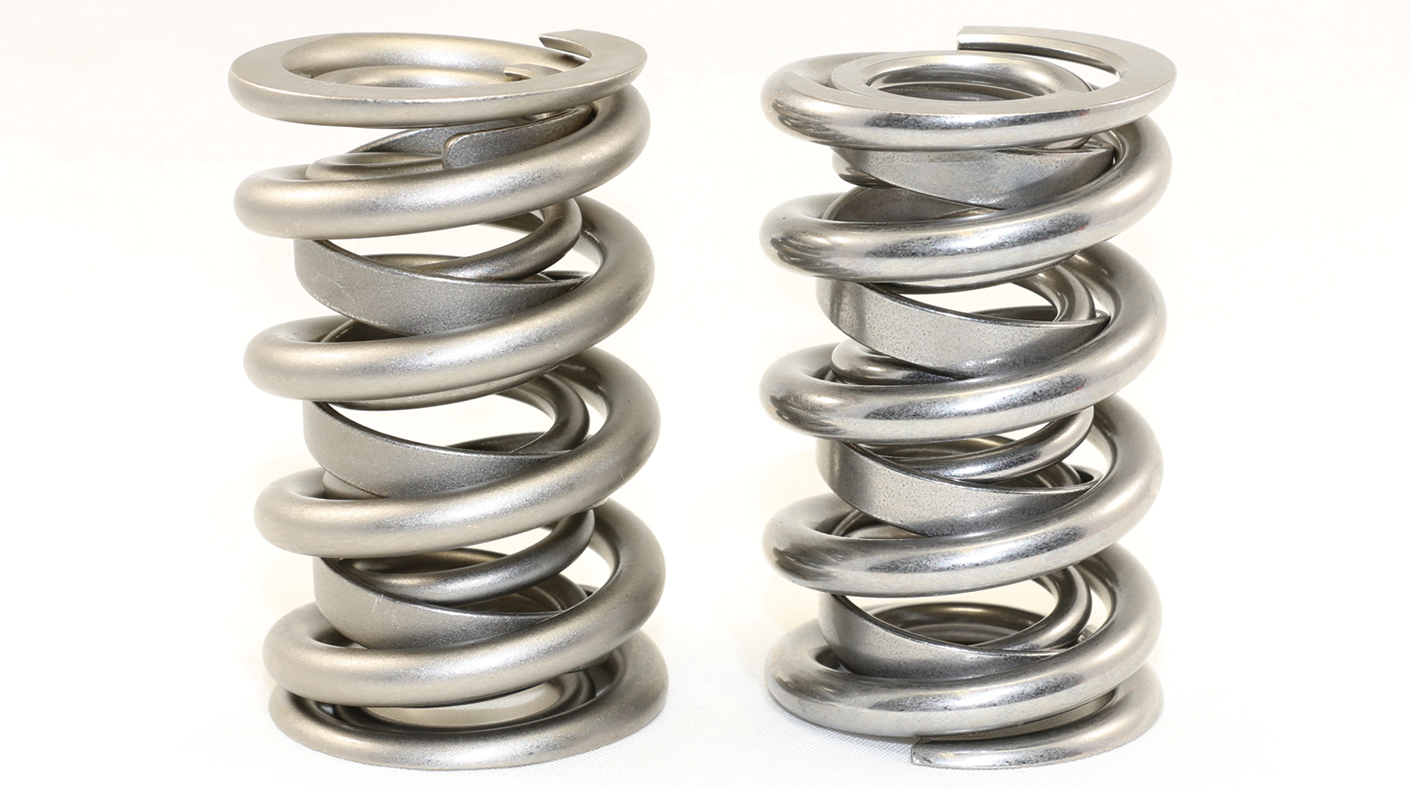
Isky Racing Cams' Max-Life dual valve spring with a damper is available in different heights and with different ratings for seat and open pressure.
Valve springs have arguably been the key to improved performance over the past couple of decades. Springs were made stronger, yet heavier, to work with higher rpm and high-lift camshaft lobe profiles. This included Pro Stock engines, where the total valve lift exceeds 1.250 inches. Lately, new materials and camshaft profiles are reversing the trend, allowing smaller-diameter and lighter valve springs without losing valvetrain control.
"We're going to an ovate wire on some of the designs and then using a super-clean wire with different finishes, different heat-treats," said Nolan Jamora of Isky Racing Cams, Gardena, California. He noted the super-clean wire material is sourced from Japan or Sweden. "The super-clean wire doesn't have any inclusions, and that is what can lead to cracks."
The new wire allows smaller-diameter and lighter springs without giving up durability. The smaller spring uses a smaller retainer, which results in less weight on the valves and allows higher rpm operation. Jamora also noted that the endurance lessons learned in circle-track racing have filtered down to today's drag racing as drag-and-drive events gain popularity.
"It's a combination of high open pressures that will take the loads for hundreds of miles. That's where the polishing, enhanced surfacing, and finishing all come in. And really, old track and endurance racing is where it started. Now it's drag-and-drive," said Jamora.
While it may be considered somewhat of a curious approach, some engine builders are starting to design their engines around the valve spring. "Yeah, you can do that," added Jamora. "Then you figure out what mass your valve needs to achieve a certain rpm. Then you figure out how aggressive or smooth the lobe profile has to be for that type of spring. But that's really over-simplifying the equation."
Going 'Old School'
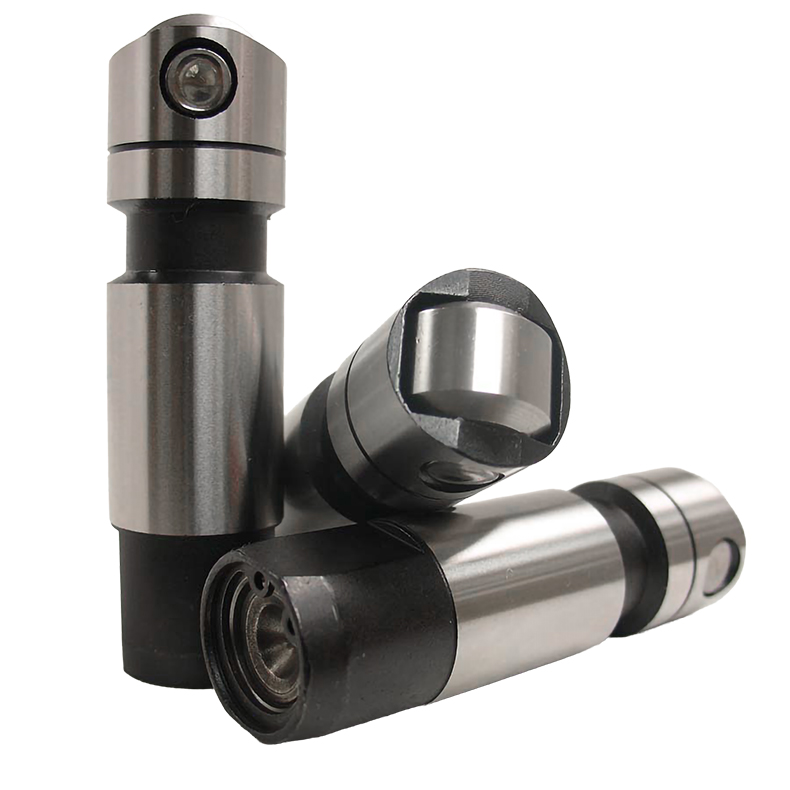
HyLift Johnson lifters designed for Gen III Hemi applications feature tighter tolerances for slower leakdown, direct oiling to the needle pins in the roller, and a hardened black-oxide finish.
Upgrading vintage muscle car engines is also a hot topic these days. Isky has developed hydraulic-roller conversion kits for engines popular in the 1960s and 1970s, including those that came with solid flat-tappet cams from the factory.
"We're doing a lot of hydraulic roller lifters for old engines like Chryslers and Pontiacs," said Jamora. "Some of the guys still want to run older engines, but they don't want to deal with flat tappets, either hydraulic or solid. It's hard to get flat-tappet cores and lifters these days. The price just keeps going up, so there's a crossover point where it's worth it to buy a hydraulic roller kit. You have to go to a shorter pushrod, but spring pressure and rocker arms all stay the same."
Another company offering hydraulic roller upgrades or conversions is Hylift Johnson, which is a subsidiary of Topline Automotive Engineering in Muskegon, Michigan. But it also caters to the hardcore enthusiast who wants to keep the factory setup.
"A lot of '60s and '70s cars survived, especially in the South and out West, and they had flat-tappet cams," said Dave Ewert. "We still offer flat-tappet lifters to guys who are keeping their matching-numbers engines and so on." He said the company is also busy with motorcycle, tractor, and even small-engine applications. "The thing about our flat tappets, the quality is there. The crown is there, the internals are right, and the material is right."
Ewert explained that the choice often comes down to cost. A set of new flat-tappet lifters can be around $200, while a conversion kit that includes the cam, tie-bar lifters, and pushrods can easily exceed $1,000. "And there are a lot of circle-track motors that have rules requiring flat-tappet lifers," he said.
Hylift sells only lifters, so a full conversion kit with the cam, springs, etc., isn't available. "We let our larger customers and distributors put those together with our lifters included," said Ewert.
With the stock replacement lifters, Hylift maintains a factory durability standard, basically a Rockwell hardness of 56 to 57 in the materials, according to Ewert. There's also an upgrade to a material with a 59 to 60 Rockwell rating that features more nickel and molybdenum in the alloy. "A lot of circle-track racers like that, and it's peace of mind to someone building a really expensive street engine."
For those using the roller lifters, Hylift has patented a Direct Shot oiling feature that directs lubricant to the needle bearings in the roller wheel. The oil-supply hole is located away from the engine oil-supply gallery to help prevent debris from clogging the small oil-supply holes in the lifter. These lifters are also assembled with a performance C-clip retainer.
Rocker Arms
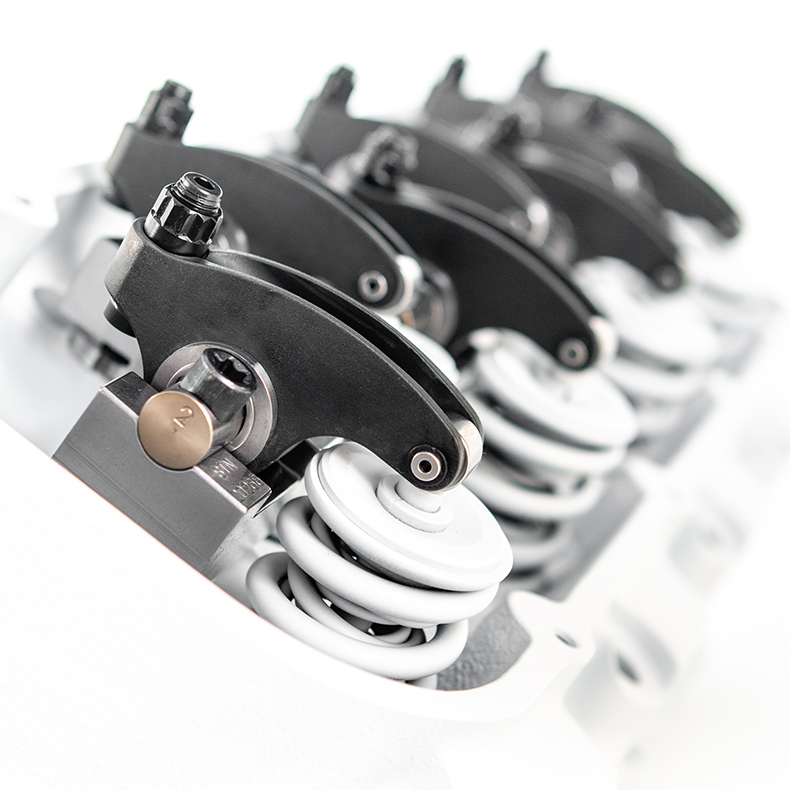
More racers are moving toward steel rocker arms, according to our article sources. Show here is Jesel's Sportsman series for a big block Chevy V8.
As for rocker arms, there is a shift toward rigidity and extended lifecycles. Lightweight aluminum rocker arms were all the rage years ago, but fatigue issues in endurance and high-rpm applications are leading engine builders to consider using steel rocker arms. As mentioned earlier, rocker arms are being designed for specific applications as new and different types of cylinder heads are introduced to the racing market. Most of these require shaft-mounted rocker arms to withstand today's high-horsepower levels, but it can be complex to achieve the correct valvetrain geometry with those designs.
"With every new engine block and cylinder head introduced to the market comes the need for a compatible belt drive, lifter, and rocker system--and keeping pace with those releases is a full-time job for Jesel's engineering team," said McDonald. He noted that while the valvetrain starts with the camshaft, the camshaft is dependent on the timing set. "Among Jesel's most notable recent advancements is the redesign of its LS camshaft belt-drive for standard cam height blocks. While the original version required block machining, the newer Direct-Fit system eliminates that step."
Jesel has also expanded its Sportsman steel rocker-arm line. "It's become a go-to solution for boosted and nitrous-assisted combinations. Its durability and longevity have made it especially popular in high-load environments, including marine applications," added McDonald, noting that the next step is the Pro Series, which is manufactured from proprietary custom forgings and finished with needle-nose rollers. "As boost levels climb and rpm limits continue to rise, Jesel remains focused on material advancements, coatings, and heat-treatment refinements, many of which remain proprietary.
"While aluminum rockers remain widely used, the durability demands of today's high-end builds--particularly in applications involving turbochargers, blowers, and nitrous--have pushed many racers toward steel," continued McDonald. "From Pro Stock and Pro Mod to Top Fuel, sprint cars, circle track, endurance racing, diesel platforms, monster trucks, and marine applications, steel has become the standard for extreme performance."
PRW Power of Perris, California, offers a good, better, and best lineup of rocker arms to support street performance and many racing applications. First, there's a standard pedestal design called the Sportsman, followed by the pedestal/rocker stud that is the Pro Series. Finally, the company offers the Elite shaft-mounted rocker setup.
"The Sportsman is basically stock replacement, and the next level is our Pro series. It's aluminum with the ability to go up to 650-pound open spring pressure," explained Cary Redman. "The best is the Elite, which is a stainless-steel rocker that can work up to 1,000-pound open-seat pressure."
Even though the Sportsman is the base rocker, it offers racer-inspired design and manufacturing features. "Some racers are required to run a stamped- or cast-steel rocker--that's their limiting factor under the sanctioning body rules because they can run a camshaft that's only so big," noted Redman. "What makes ours unique on those specifically is that when you are at high rpm, typically what happens is that the oil pressure is high and the oil is shooting over the pivot ball, which is where it's critical and where you need it the most. Our rocker arms actually deflect the oil down into the pivot ball."
PRW worked with a racer who was welding a small flat tab to the back of the rocker where the oil comes up through the pushrod. The objective was to deflect the oil into the base area to better lubricate the pivot ball.
"That welding really turns into an expensive set of rockers," said Redman. "Ours have that tab cast in, so you don't have to worry about the welding wire or other debris flaking off."
As for pushrods, PRW offers an "industry standard" 0.080-inch wall thickness in 5/16- up to 3/8-inch, which handles much of the market that supports flat-tappet camshafts.
Moving forward, manufacturers continue to analyze failures and develop improved valvetrain components through design and materials. "We are definitely working on the next generation of product," concluded Jamora.
To read the full article, plus hundreds of other articles like it for free, sign up for a digital subscription to PRI Magazine on Zinio here.
Once you download the Zinio mobile app or are logged into Zinio on a desktop browser, you will gain immediate access to more than a year's worth of content, including "Silent Breakthroughs: Upgrades in Valvetrain Components" here and additional coverage in the May/June 2026 issue here.
Sources
CHE Precision
Isky Racing Cams
Jesel
PRW Power
Supertech Performance
Topline Automotive Engineering (Hylift Johnson)