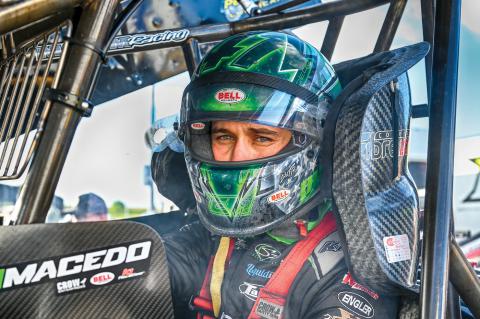
The High Limit Sprint Car Series has finalized the acquisition of the All Star Circuit of Champions. NASCAR Cup Series champion Kyle Larson and four-time World of Outlaws Sprint Cars champion Brad Sweet will take over ownership of the regional series owned by three-time NASCAR Cup Series champion and Eldora Speedway owner Tony Stewart.
"Sprint car racing is in a better place today because of the contributions Tony has made, including his ownership of the All Stars," said Larson, co-owner of the High Limit Sprint Car Series. "His commitment to giving back to the sport has been an inspiration to me, personally. Brad and I share his passion for making the business side of the sport better for teams, drivers and sponsors and we're thankful for Tony's trust in us to carry on what he started."
Stewart purchased the All Star Circuit of Champions in 2015, adding to his long list of legendary contributions to motorsports. As just the fourth different owner since the series' creation in 1970, Stewart grew the All Star Circuit of Champions by expanding its footprint in the country, increasing purses for its teams and raising the series visibility by partnering with FloRacing in 2020.
In 2023, Larson and Sweet introduced the High Limit Sprint Car Series with an inaugural schedule that featured 12 midweek events. Like Stewart, their goal is to elevate sprint car racing and turn their passion for the sport into a positive for fans, drivers, teams and race tracks.
"We've learned a lot throughout our inaugural midweek season this year," said Sweet, co-owner of the High Limit Sprint Car Series. "We have a strong desire to expand on what we've learned and continue to contribute to and grow sprint car racing. Kyle and I, like Tony, believe in this sport and want to provide more opportunities for teams, drivers and tracks. We're looking forward to more announcements coming soon."
Information regarding the 2024 schedule and team roster is forthcoming. For more information, visit allstarsprint.com.
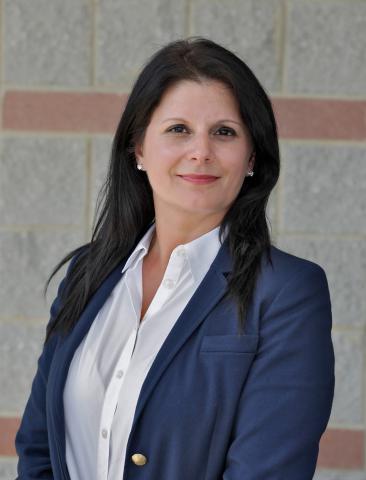
As chief experience officer, Jessica Fickenscher’s role is to see the sport through the fans’ eyes. So she makes sure that everyone has a good time at Speedway Motorsports facilities, and that’s good business.
When someone goes to a racing event—or any event—the totality of the experience is the single biggest factor in determining whether or not that person comes back. Sometimes just one thing can ruin an otherwise entirely positive day, and that can influence an overall impression. That’s why it’s smart business to have someone whose job is to ensure that the customer experience is as good as it can be, from the parking lot to the social media reach.
Jessica Fickenscher has the unique job title of chief experience officer at Speedway Motorsports. The company, founded by Bruton Smith, owns and operates 11 notable tracks such as Charlotte Motor Speedway, Sonoma Raceway, Texas Motor Speedway, Las Vegas Motor Speedway, and Dover Motor Speedway, among others. Her job is to, as she puts it, “oversee anything that the fan would touch.”
In practice, Fickenscher helps deliver the company’s best-in-class fan experiences by keeping her eyes and ears on every track, every initiative, and every big event. She crosses all boundaries and represents the customer within the company. As if all that wasn’t enough, Fickenscher is the managing director of the non-profit Speedway Children’s Charities. She graduated from Belmont Abbey College in 1998 with a degree in Sports Management and Business Administration. We caught up to ask her how she makes Speedway Motorsports events special.
PRI: As simply as you can put it, what does a chief experience officer actually do?
Fickenscher: I oversee anything that the fan would touch when they get on our property. That can be from the time they’re in the parking lots to enter up to the time they leave the parking lots, and everything in between. The ticket buying experience, the getting here experience, what to know before they get here, and what to do once they’re here. Food and beverage is a big part of that as well. Pretty much anything the fan touches, I’ve got my hands in somehow.
PRI: That has to be a challenge with all the different kinds of speedways all over the country and then Sonoma Raceway. The experience at these different places is going to be very different.
Fickenscher: Absolutely. It is definitely a different experience at each track. Each track is obviously unique to their area, and they’ve all got something special. For example, New Hampshire has a lot of race fans, and that’s one of our biggest areas in terms of camping. So the camping experience has to be spot-on. At New Hampshire, you’re in a little bit more remote area as opposed to Las Vegas, Atlanta, Dallas, where you’re in more urban city areas where there are things to do at night. So there’s a lot of programming that will go on at New Hampshire Motor Speedway for example, and the campers love all the stuff that we do for them. Once the racing’s over, we do a lot of fun things.
PRI: How do you create an experience that really resonates with different generations, or is there any difference at all between older and younger fans?
Fickenscher: There’s definitely a difference, and we definitely see a lot of things where people are coming with their grandparents and their parents because they came with their parents a generation ago. So we do have something for everybody. We try to activate a great kid zone for people who have younger kids. The music that we do, we try to entice the 40- to 60-year-olds, so there’s definitely something for everybody. A lot of our tracks have more social areas where college kids want to go and hang out and have fun.
We try to appeal to all the ages, and we try to keep the traditional things traditional for our longtime fans. They like their same seats; they like to sit next to the same people they’ve been sitting next to for 30 years. That might be the only time they get to see those people, so we definitely want to make sure there’s something for everybody.
PRI: Diversity is a huge topic whenever I’m talking to track managers or promoters. Is there a way that promoters or racing series or the tracks themselves can craft a welcoming experience where everybody feels like they have a place at a track?
Fickenscher: Yeah, absolutely. We definitely welcome all race fans. We want everybody to come and experience what we have to offer. We want people from all walks of life to experience the race, and we work really hard with NASCAR on that. They’ve got a dedicated diversity and inclusion group, so we partner with them to make sure we’re in lockstep and they get the same great experience at all the NASCAR tracks and not just one versus another. It’s really important for us to walk hand-in-hand with NASCAR in that area.
Jessica Fickenscher with race winner Kyle Larson and Marcus Smith, CEO of Speedway Motorsports, at the 2023 NASCAR All-Star Race at North Wilkesboro Speedway. At Smith’s request, Fickenscher spearheaded the project of holding the event at the formerly dormant track.
PRI: How do you measure your success? Can you put that into numbers?
Fickenscher: Success for us is people in the grandstands, and we had a good stretch where we had six sellouts in a row. Success for us is people renewing their tickets, and our renewals have been the highest that they’ve been since even before COVID-19. We work really hard on that, and if we can renew somebody, that is definitely how we benchmark success.
PRI: Speaking of putting people in seats, how did North Wilkesboro Speedway become the location for the 2023 NASCAR All-Star race?
Fickenscher: About a year ago we had Dale Earnhardt Jr. come out and race in this series that he now owns, called the CARS Tour series. The track had been dormant for a long time. It was absolutely amazing that we had people in that place, and I think NASCAR and Speedway Motorsports and my boss Marcus Smith thought we might have something here. We came to the decision pretty quickly. It seems like there’s something about nostalgia. People like everything that’s old right now, and NASCAR’s 75th anniversary is this year. We said, ‘Look, if we can get this track back up and operating and safe for the drivers, would you guys consider us having the All-Star race here?’ Without a doubt on NASCAR’s side, they said, ‘Absolutely.’ So we had about eight months to get ready, and that’s how it came about. It was pretty wild.
PRI: Do you have plans for North Wilkesboro in the future?
Fickenscher: We have a modified race coming up on September 30th. [Editor’s note: This interview occurred in late August.] We’ve got a car show coming up on October 21st, and then we have to do a repave. The track hasn’t been touched since the 1980s, and it’s definitely time for a repave. We’re going to do that in the early months. Hopefully, the weather will cooperate with us in the mountains, and then we are going to have a NASCAR race there next year. I don’t know the exact dates yet because we’re still working on the 2024 schedule, but that should be coming out soon. But North Wilkesboro is back and operating. We put a lot into it, and we’re ready to debut it to the world again.
PRI: In your career, you have spoken about the importance of asking for help to achieve a goal. Why do you think people may be reluctant to ask for assistance?
Fickenscher: I certainly am not reluctant to ask for help. Once we found out that we were having the NASCAR All-Star race, for example, our CEO came to me and said, ‘Hey, why don’t you head up this project?’ I felt like I had the first-round draft pick, and I just picked all the best people out of the company and said, ‘I need you on my team.’ I surrounded myself with the best in the business, and it was a success. It worked. I think people might be afraid to ask for help because they don’t want to seem like they can’t accomplish a job themselves and maybe it diminishes their value. I think that’s a silly way to look at it, but that’s probably one of the reasons why someone might not ask for help.
PRI: When you ask for help, there’s always the possibility that someone will say no. Is there a way to ask that produces results when you go and ask someone for help?
Fickenscher: We have a race that we do at COTA, and with the All-Star race, we take outside teams and we put them in to help execute the event. You need to make sure that they’ve got the bandwidth to do that. You don’t want to overwork somebody or stress them out. You have to work with their supervisors to make sure that they can do it, because they’re moving away from home for a few weeks or sometimes a month. So just making sure they’ve got that good work-life balance and making sure that they’re being taken care of while they’re working on these projects is a big thing.
PRI: You’ve talked about viewing the event through the fan’s eyes. How do you do that? How do you put yourself in the fan’s position?
Fickenscher: We take a ton of surveys with our fans, and I personally go through every single one we have. I mean, we have some that will have thousands of comments back, and we really go through them, and we listen to them, and we really do implement the changes that need to be made. So I personally feel like getting the fan feedback and acting on that feedback is the best way to go about it.
Jessica Fickenscher had just eight months to prepare North Wilkesboro for the NASCAR All-Star event. She “picked all the best people out of the company and said, ‘I need you on our team.’ I am certainly not reluctant to ask for help,” she admitted.
PRI: Do you ever get negative pushback from things like diversity, equity, and inclusion?
Fickenscher: No, not really. The biggest thing people complain about is traffic. Maybe food prices are a little high, and at Las Vegas they can’t bring in their coolers.
I think generally, no matter where you go, you’re going to hear complaints about food prices nowadays.
But like I said, the biggest thing is traffic. People want to get in and out a little bit easier. You also want to listen to what’s going really well, and what people like because you don’t want to take that away. For example, we know pre-race activities are super important. Having concerts is super important, so we want to make sure we keep enhancing those things.
PRI: Many promoters are bringing in music acts and other entertainment on top of racing, or even calling a race weekend a festival. What do you think is happening there? Is it that racing isn’t enough, or is it just that we’re so used to having these all-inclusive experiences that we just expect that now?
Fickenscher: I think going to a race is so much more than a stick-and-ball event as an experience. There are multiple days. You’ve got qualifying and practice and the Xfinity Series and Truck race and the Cup race, so there’s not a lot of downtime. I’ve been doing this for over 25 years, and there’s always been concerts. I think it’s just part of the whole experience. It’s definitely not something new. I think during COVID, we obviously didn’t do it so much and people missed it, but it’s definitely something that’s always been expected.
In addition to her work as chief experience officer for Speedway Motorsports, Jessica Fickenscher (third from left) is the managing director of the non-profit Speedway Children’s Charities, which provides funding for hundreds of non-profit organizations that meet the needs of children. The organization has distributed more than $65 million since 1982.
PRI: Did you have any mentors as you were coming up and learning to do this job? Or did you invent the whole chief experience officer thing from scratch?
Fickenscher: I definitely had a lot of good mentors along the way, but our CEO, Marcus Smith, saw some of the things that I was interested in and the things that I would gravitate toward, and some of the things I was already doing while I was vice president of special projects. I don’t know that he created it because I have seen the title in other places, but he decided to give me that title.
PRI: Can you point to a mistake that you made at any point in your career where you learned from it and eventually benefited and got some wisdom out of it?
Fickenscher: Every day. We always learn from our mistakes, but honestly a big one was thinking I could do things without asking for help. I can’t name one specific area, but I know there have been a couple times where I probably could have done a lot better job if I would’ve asked for help along the way. I think back in my earlier days, just not having good work-home-life balance, that definitely was a learning lesson for me, and I definitely have achieved that now.
PRI: Where do you think motorsports is going in the future?
Fickenscher: I think we’re in a really great spot. Our ratings have been fantastic. I know both the NASCAR tracks and Speedway Motorsports tracks are having great events. Most of them this year have been sellouts. I think the racing has been great. I’m excited about the future. I think the new car has been awesome. Then there are the different forms of racing. You’ve got the Supercross coming up here at Charlotte Motor Speedway, for example. We sold that out in a matter of minutes, so people are hungry for it, and it’s definitely not going away anytime soon.
PRI: What do you think will be different in 10 years, if anything?
Fickenscher: I think maybe video streaming and how you access racing could be different. I feel like the fan experience will be somewhat similar, probably with some new fancy ways to order food on your phone or do different things like that. But I think the biggest thing we’re going to see is the broadcasting and network side of it and the different streaming platforms where you’ll be able to view racing.
PRI: With Formula E we’re seeing FIA get into electric racing. Do you think that has a future in circle track racing?
Fickenscher: Yeah, I do. That’s very, very popular. Even some of the young drivers, that’s how they’re cutting their teeth, being in a simulator, and eSports is huge right now. I know that there have been rumblings about [stock cars going electric], and I have definitely learned to never say never. Honestly, I wouldn’t be surprised; NASCAR’s pretty forward-thinking.
PRI: What message would you want to leave with our readers?
Fickenscher: I think our sport’s great. I think it’s healthy. I think we’ve got the most talented people in the world working in it. That’s probably about it.
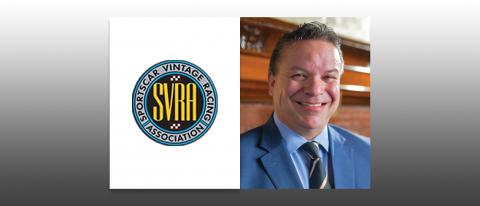
Less than a month after retiring from NASCAR, the former president of Watkins Glen International joined Parella Motorsports Holdings as the new president of SVRA.
Just before summer 2023, Michael Printup retired from nearly three decades with NASCAR, most recently in the role of president of Watkins Glen International. He and his wife were ready to leave their New York State home for one in South Carolina. Then Tony Parella, founder and head of Parella Motorsports Holdings (PMH), called and asked him to join his Sportscar Vintage Racing Association (SVRA) as president.
Printup told PRI the opportunity and the plans Parella outlined were too good to pass up. He joined the organization on July 17.
PMH owns five major road racing series: SVRA, the Trans-Am Series presented by Pirelli, Formula Regional Americas Powered by Honda (FR Americas), Formula 4 United States Championship Powered by Honda (F4 US), and Prototype Sprint Series Association. The company hosts racing festivals across the United States under the SpeedTour brand. The SpeedTour events combine racing, car shows, concerts, and other activities. The events often draw more than 25,000 spectators at major tracks.
PMH is primarily headquartered at Parella’s Romulus, New York, home but essentially operates virtually from its executives’ homes around the country. Printup had numerous interactions with PMH through his role at Watkins Glen. He recently shared his goals and thoughts with PRI on SVRA’s growth potential.
PRI: When you retired from NASCAR at Watkins Glen International, were you planning a full retirement, and if so, what was it about this opportunity that changed your mind?
Printup: I retired for a whopping three weeks. My wife and I had bought a house in South Carolina, and we were ready to go when [SVRA owner] Tony Parella offered me the job as president of SVRA. I’ve known Tony for years, so I accepted and knew it would be a fun adventure.
PRI: What are your immediate plans at SVRA?
Printup: The immediate goal is to understand the company financially, from a human resources and operations point of view. The team works remotely, so getting to know the staff has been critical for me. I’m also working on the budgets for next year. The long-term goals are to create and define better efficiencies in revenue and expenses.
PRI: SVRA has been in a growth mode since PMH acquired the organization. Where do you see continued growth coming from?
Printup: We want to grow this company exponentially, hopefully twice as big as we are today for later next year and going into 2025. We’re growing quickly. We are potentially looking at 27 events next year. That’s going to be the growth by additional events and capitalizing on what makes up our big events. Corporate sponsorship is one of the “big buckets” Kim McCullough and I are attacking already. [Kim McCullough, a vintage sports car collector and racer and formerly vice president of Marketing for Jaguar Land Rover North America, joined PMH as chief marketing officer last summer.]
PRI: Is there growing interest in vintage sports car racing among younger participants? How do you reach them?
Printup: When I came to Watkins Glen 15 years ago, many people thought that SVRA people were fading away and retiring. But that’s not true. You take that younger demographic, and then you start moving up into what has been traditionally 40s, 50s, and 60s age groups with SVRA. What we’re seeing now, and what Tony has developed with the complementary brands, has driven more interest because now we are live-streaming [on the SpeedTour TV’s YouTube channel], and then dubbing and delay-taping a lot of our races.
PRI: How does that media coverage help drive growth?
Printup: We’re the biggest in the country for promoting vintage racing. When we start thinking about corporate sponsorships, we’ve got a big base of demographics we can turn to. SVRA people are watching themselves on TV. That wasn’t happening five years ago. Corporate sponsors can see themselves on TV. We’ve got some big partners, including corporate jet and vodka companies. Why not have an official wine of SVRA? We need to match partners with our demographics and create more categories.
PRI: Are there any stand-alone SVRA events, or are they all part of SpeedTour events?
Printup: We have a few venues focusing on the vintage racing series. It depends on schedule and track, and on the financial models that we create as partners with race tracks across the country. We must be mindful of making sure SVRA’s entries and fans are taken care of, and I think Tony does a good job of that.
PRI: Can you name one recent mistake you’ve learned from in your professional career?
Printup: Early in my career, when I started learning the ropes of management, I was always trying to define the team. But I’ve learned that you’ve got to let the team develop you. That’s a better approach, and it’s been mine for the last 20 years.
PRI: Who has been most influential to you in your professional career?
Printup: I’ll choose two: Roger Penske, and the France family, which owns NASCAR. The lessons you learn in working with Roger’s organization are immeasurable! Structure, discipline, customer service, detail orientation, and doing things the right way. He personally taught me these principles and they have guided me my entire career.
The France family in working with ISC taught me more about strategic planning and financial acuity.
It’s strange how two billionaire families have a different guiding light but at the end the goals were the same.
PRI: Is there one piece of advice you have received, whether personally or professionally, that has greatly impacted your life?
Printup: Yes, ‘Do the right thing, and do it all the time.’ I love that statement. It’s an easy mantra, but you’ve got to do it all day long.
PRI: Excluding your cellphone/tablet/computer, what’s one thing you can’t live without?
Printup: My family. They drive me every day. I could write a book about what my wife and two boys in their 20s have taught me.
TITLE:
President
ORGANIZATION:
SVRA
HOMETOWN:
Horseheads, New York
FAST FACT:
Michael Printup proudly points to his Seneca Nation roots: “That’s something I don’t know enough about. My father grew up two hours from here in Salamanca, New York. We were never taught the language. At one point, I was the only minority track president in the country.”
A look at some of the country’s in-demand motorsports products and services by region and racing segment.
Motorsports retailers and service providers are constantly tracking the latest parts and trends to give their customers a competitive edge. For the latest on which products and services are moving the retail needle, we present the following sales snapshot from shops across the US.
Turn 4 Automotive and Performance
South Paris, Maine
Turn 4 Automotive and Performance not only sells speed parts, but it also sells speed by renting out race cars. Approximately 75–100% of its customers are racers, primarily in the New England region. Most of them race four cylinders and street-stock, entry-level circle track cars at its home track, Oxford Plains Speedway in Oxford, Maine. Its services for non-racers include exhaust systems and coilover suspension work.
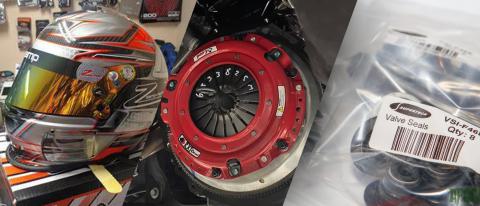
With such a large percentage of racing customers, Turn 4’s best “fast movers” are single-layer firesuits and carbon-fiber helmets from Zamp Racing. Other fast-moving parts are switches from Allstar Performance and tire gauges from Joes Racing Products.
Owner Bob Guptill said customers like these products because they get quality for the price without breaking the bank. This is important because, according to Guptill, “our guys are entry-level people, not high-dollar people. These are guys who are building stuff in their basement or in their own garage. They get these parts and are able to perform the function they’re meant to do.”
Apocalypse Performance
Mason, Ohio
The primary business of Apocalypse Performance is providing engines, engine parts, and driveline components for Mustangs, mostly of the modular and Coyote-powered variety. Its customers come from all over the US, as well as Australia, Kuwait, England, Canada, and Mexico. About 20% of its customers come from racing, with one-fourth of those being NMRA competitors.
Fast-moving sellers are Supertech valvetrain products, Diamond pistons, Molnar Technologies connecting rods, and custom camshafts. These products’ high sales rates can be attributed to giving customers the most bang-for-the-buck, said Todd Warren of Apocalypse Performance. That’s especially true of the cams, as they have proven to be quality performers. Currently those cams are used in the record-holding quickest NMRA Factory Stock two-valve engine and the quickest naturally aspirated 4.6 four valve in Modular Muscle. Other customers are consistently at the top of their class, Warren added.
Marketing for its products is mainly done by word-of-mouth and online via its Facebook page and numerous Mustang technical groups.
“The stocking/availability of parts has been an issue for about three years, especially when it comes to camshafts,” reported Warren. “We do a significant amount of them, and this puts a strain on the core supply.”
TAOS Performance
Raymore, Missouri
TAOS Performance is a shop that sells a wide variety of components and provides installation and build services for domestic drag racing vehicles, including Mustangs, Camaros, and trucks. Jared Johnston estimates about 90% of his company’s customers are racers, most of whom are local, but they also have many regional customers as well.
The fast-moving products sold by TAOS are oil pumps and gears for Coyote engines from Boundary Racing Pumps, ProCharger supercharger kits, Texas Speed and Performance camshaft kits, Turn 14 stainless headers, Hellion Turbo turbocharger kits, and McLeod clutches. These have been mainstays since the company began nearly eight years ago.
Customers like these products because of the commitment to each customer’s needs provided by Johnston and Brandon Webster, who run the business. “We always seek out first to make sure the customer is taken care of,” Johnston said. “What that means is that if they have an idea of something they want to do, but their expectations are ‘X,’ we try to make sure we provide the best possible products for that build. A lot of that recommendation comes from our advice and being the professionals we are, making sure they get exactly what they need. Or if they don’t know what they need, we recommend [what they need] for them to make sure they don’t have any problems.”
Webster added, “We want to make sure the car makes 900 horsepower for years, not months. That’s why we use the companies we use—for reliability.”
TAOS markets its parts through advertisements and posts on social media, but most of its sales come from the builds based on employees’ recommendations. Johnston explained the approach: “At the end of the day for us, it’s not just about selling parts. It’s to make sure the customer is taken care of and leaves with a smile on their face.”
This month’s special edition highlights new motorsports-related products that will be on display in the PRI Show’s Featured Products Showcase in its new Capitol Connector location, at the Georgia Street entrance to the Indiana Convention Center.
Razor MotoSweep Motorsport Sweeping System
FOD Control Corp. fodcontrol.com
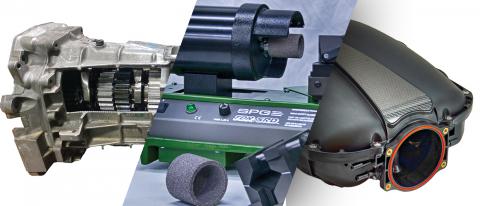
Having provided sweeping solutions to military and civilian airports for more than 40 years, the FOD Control Corp. in Garland, Texas, is leveraging that technology to help keep racing surfaces free of debris. The FOD-Razor MotoSweep system is a fast, affordable method of eliminating debris from paved surfaces.
“When you tow a FOD-Razor friction sweeper across paved surfaces, a series of custom engineered narrow panels, covered with nylon bristles, latches onto debris, and pulls the debris underneath the panels with the sweeper as it moves,” explained Pete MacGregor, adding that the debris is deflected up into a series of thermoplastic scoops where it can later be disposed.
MacGregor reported that there is a 95–98% capture rate in a single pass with the Razor. It’s efficient with small debris, such as sand, the smallest washers, screws, and safety wire. It also works well on pit road to clean up lug nuts and other such hardware. However, it is not designed for “bouncing” objects, such as soda cans.
Up to three Razors can be pulled behind a single truck to increase the sweeping capacity. A single Razor can cover just over a million square feet an hour when towed at 25 mph. A Razor weighs around 60 pounds and can be rolled up for easy storage.
XS Intake Manifold for LS3 Engines
Performance Design performancedesign.com
A GM LS3 intake manifold is already designed for significant power, and to improve that design means changing the plenum size and runner lengths. However, room in the engine bay is very limited. That challenge sent the engineers at Performance Design (PD) in Auburn Hills, Michigan, to the drawing board to develop a fresh approach.
“We needed to build a manifold that fit within the constraints of a factory hood,” Jason Harding pointed out. “The factory LS3 is hard to beat, so we moved the fuel rails into the plenum to package the runners we wanted.”
Basically, PD designed three staggered runner lengths and positioned the runners exactly where it wanted to maximize power and torque. However, the plenum walls were in the way. So, PD simply moved the walls outward and pulled the billet fuel rails inside the plenum. Custom seals were engineered to accommodate all the connections, including allowing the electrical wires inside.
The intake is constructed from molded glass-reinforced nylon and burst tested to 86 psi.
“We picked up 8–10 horsepower in certain ranges over a stock LS,” added Harding, noting that the intake will allow more aggressive cam and exhaust changes to boost power even more.
EQ Hybrid Performance CNC-machined Cylinder Head for LS3
EngineQuest enginequest.com
Designed for LS3, L92, and LQ4 engines, the EQ Hybrid aluminum cylinder head from EngineQuest in North Las Vegas, Nevada, boasts LS7-style intake ports for those seeking performance without busting their wallets.
“The goal was to help budget builders produce a hot-rod engine that could be competitive in the mid-level brackets or just be a nice street-car upgrade,” said Joe Cabral. “We started with the LS3 and introduced large LS7-type rectangular ports to that head.”
These CNC-machined alloy heads can be used on six-bolt blocks and will accept standard LS3 valvetrain components. The heads feature a 15-degree valve angle, have 72cc combustion chambers, and sport 2.165/1.600 valve sizes. Intake runner volume is 269cc, and the exhaust runner volume is 100cc.
To accommodate the rectangular ports, changes had to be made to the rocker-arm support structure. The heads now have integrated rocker support towers that require LS7 rocker bolts; however, the heads accept standard LS3 1.7:1 rocker arms.
The heads are targeted for larger displacement blocks (6.0L, 6.2L, 7.0L, and 7.2L) with bore diameters of 4.000 inches or larger. Most intakes designed for LS7 applications will work with the EQ heads, including EFI and carbureted models from Chevy Performance, FiTech, Holley, and FAST.
Mango II Set M
Shaviv USA shavivusa.com
Shaviv USA in Bolingbrook, Illinois, has been showing off its extensive line of deburring tools to NASCAR teams recently, and the response has been pretty much uniform.
“A lot of automotive guys don’t know about them,” said Nicholas Prohl. “They knew some of these tools existed, but not in the formats that Shaviv is making them. Everyone has seen a deburring tool, but there are a lot of different formats that we make.”
Consider the Mango II M two-in-one set from Shaviv USA that deburrs holes, slots, and edges. PN 90094 features the popular Mango II handle along with the versatile M holder that supports both B and E blades. Multiple blades are included in the kit: B10, B20, B30, E100, E111, and E200. This kit can also be used with the classic handle that many veteran machinists prefer.
“It’s the catch-all kit since it can hold both series of blades,” added Prohl. “Anyone who picks up the M set basically future proofs themselves for any deburring tool that is developed.”
The Mango II handle is well respected for its ergonomic design and comfort that affords the user excellent control and reduces fatigue. Both the B and E blades are made from high-speed steel to work with a broad range of materials.
Model 82-B Drill Sharpener
Service Precision Grinding drill-grinder.com
The Model 82-B drill grinder from Service Precision Grinding is designed to sharpen right-hand drills from 1/16 to 1 1/2 inch, and the left-hand option will work with drill sizes 1/16 to 1/2 inch.
“With additional equipment, there are options to sharpen taps and reamers,” explained Jess Lamphere, whose grandfather and uncle started the small Port Byron, New York, company in 1968. “It will also sharpen the end faces of end mills.”
The Model 82-B is constructed from cast iron, aluminum, and steel. It weighs 50 pounds and sits on a footprint of 10x16 inches. The fully enclosed Baldor motor runs on 110 or 230 volts. It’s designed to sharpen high-speed steel or carbide tooling. Racers will appreciate its precision and versatility.
“If you really want a drill to run on center, and if you want to drill the correct size instead of going oversize, then you need this product,” said Lamphere. “Also, say it’s Friday night and the car has to be ready to go on the trailer. You just burned up the last 1/4-inch drill bit. With the drill sharpener, it’ll take only a minute or two to get back to work.”
Engine builders also know that crankshafts are hard on drills. “With this grinder, you can customize the geometry of the drill point so that it will handle tough drilling much better,” added Lamphere.
Straight-cut Dog Engagement Gearset for Tremec 6-speeds
This straight-cut gearset from Speedtek Transmission Components in Melbourne, Victoria, Australia, is designed for Tremec T56, TR6060, and Magnum six-speed transmissions, and is capable of supporting 1,000 horsepower. These transmissions were factory equipment in many Ford, Holden, and GM performance vehicles over the years.
“We were constantly breaking the T56 and TR6060 transmission in drifting, so we had to do something about it,” said Aleksandar Kantarovski. “This kit is a low-cost alternative in comparison to other gearbox options available on the market and which typically require excessive amounts of customization. This is intended to be plug and play.”
All the parts are straight-cut dog engagement, including reverse. First- through sixth-speed ratios will be 2.416, 1.647, 1.250, 1.000, 0.869, and 0.703. All forks are machined from billet 4140 chromoly. This gearset is intended for rapid shifts and is quite different from the factory synchronized version. Speedtek recommends using its Race Spec lockout shifter to prevent the user from accidentally entering first gear.
“All the racers we have spoken to are really looking forward to using our T56, TR6060, and Magnum Dog Engagement Gearset,” said Kantarovski. “We are targeting drag racing, drifting, circuit, and street cars that are built to go fast.”
Mango II Ratcheting Countersink Deburring Tool
Shaviv USA shavivusa.com
One of the popular deburring sets offered by Shaviv USA in Bolingbrook, Illinois, is PN 90072, which features the Mango II ratchet and the F20-style countersink blade. It’s a popular tool for heavy-duty chamfering and countersinking hole edges. The kit includes the ergonomically designed Mango II handle, the FR ratchet holder, and the F20 20-mm countersink blades. The tool is designed to clean out the hole with one turn, which saves time and reduces user fatigue.
LS Head-stud Kits
EngineQuest enginequest.com
Head-stud kits for both early and late LS engine platforms are now available from EngineQuest in North Las Vegas, Nevada. These fasteners are constructed from SCM345 chromoly material, feature a silver Dacromet coating for rust prevention, and are rated up to 180,000 psi tensile strength. The kits are complete with studs, washers, 12-point flange nuts, and torque lube. One kit (HS294NA) is designed for 1997–2003 engines, while the other (HS294NB) is for 2004 and later LS applications.
Mango II Set L
Shaviv USA shavivusa.com
Designed as an outer edge deburring tool kit, the Mango II L from Shaviv USA includes the popular Mango II handle, the L holder, and L10 blades. The L holder features a rolling guide, and the blade has four cutting edges to remove burrs from external edges. The A side of the blade deburrs materials with spiral chips, and the B side is for powdery chips. The kit is also available with the classic holder.
Leaving a helmet in direct sunlight or near a hot engine can be harmful to the helmet, particularly its structure and overall performance, reported a safety equipment source. To protect the helmet, keep it secure in a cool location when not in use, especially during the hot summer months.
Industry experts offer some best practices that will keep racers’ safety gear up to snuff.
The annual lull between race seasons is a prime opportunity to look over safety gear, give it a sprucing up if needed, and get it tucked away properly. While cleaning, inspecting, and storing the car is a fairly straightforward proposition, safety equipment can require a more nuanced approach.
“One of the biggest issues we run into—particularly when it comes to Nomex-related safety gear—is damage created by improper care,” said Ben O’Connor of Impact Racing, Indianapolis, Indiana. “You have to be really careful with that type of equipment for a number of different reasons, but at the end of the day, it’s about ensuring that it will still do its job if it is needed.”
Helmets
Regularly cleaning the outside shell of a helmet is important maintenance not only for aesthetics, but because it allows the opportunity to inspect the shell for any signs of cracking or deep scratches that might compromise its effectiveness in the event of a crash. Since the shell is painted, typical non-abrasive automotive cleaning agents or just a damp cloth with mild soap will get the job done, but the shield may be a different story.
“You don’t want to use anything like glass cleaner, or anything with ammonia, on the shield,” said O’Connor. “If the shield has a tint or other treatments, those could ruin the finish. There are cleaners available on the market that are designed specifically for cleaning shields like those.”
Meanwhile JR Twedt of K1 Race Gear in Carlsbad, California, offered some suggestions on how to keep the inside of the helmet in good shape. “The interior padding is critical for comfort and fit, and it can also affect the helmet’s safety performance. Depending on the helmet’s design, some padding may be removable and washable, which makes it easier to keep it clean and fresh. However, for helmets that have seen a lot of track time and have worn-out padding, some helmet manufacturers offer interior padding replacement for a nominal charge. This is a great budget-minded option to ensure that the helmet maintains its original level of comfort and fit, as well as continued protection for the racer on the track.”
Twedt added that bad habits can lead to the premature degradation of a helmet, so it’s important to be mindful of where it is stored. “Leaving a helmet in direct sunlight or near a hot race car engine can have detrimental effects on the helmet’s structure and overall performance. To prevent damage, always store the helmet in a cool, dry place, away from direct sunlight and extreme heat sources. And avoid leaving it in the car or trailer—especially on hot days.”
Fire Suits
O’Connor pointed out that regularly inspecting a fire suit should be a part of any racer’s routine. “Inspect the zipper to make sure it’s functioning correctly, and if you find any tears or rips, obviously those will need to be addressed. Depending on the manufacturer, they may offer a repair service. It’s not something you want to take to a general tailor to have fixed because the threads are going to be specialized for a fire-rated suit. You also want to look for contamination—if something flammable got on the suit, it might need to be replaced, but it’s possible that the issue could be resolved with a thorough cleaning.”
Don’t use a product like glass cleaner, “or anything with ammonia, on the shield,” said Impact Racing’s Ben O’Connor. “There are cleaners available on the market that are designed specifically for cleaning shields like those.”
Twedt advised that racers avoid wearing their fire suits while working on the car, and regularly washing them in a typical household washing machine is a good idea. “When washing the suit, choose a delicate or hand wash cycle in cold or warm water, making sure not to exceed 30 degrees Celsius (86 degrees Fahrenheit). This gentle cycle ensures your suit gets clean without causing any harm to the fabric. Before tossing it in the washing machine, make sure to fasten all zippers, buttons, and hook-and-loop closures, then turn the garment inside out to ensure the fabric and embroidery are not shredded by the hook side of the hook-and-loop closures.” After washing, the suit should be tumble dried on a low setting for a few minutes to remove any excess moisture, then hung up to air dry.
O’Connor also recommends hanging the suit up afterward rather than cramming it into an equipment bag. “Treat it like a nice jacket or suit that you would wear in your everyday life. Store it in a climate-controlled environment. Using a garment bag isn’t a bad idea, either.”
Racing Harnesses
Although a helmet may be the single most important product a driver wears, Twedt noted that racing harnesses are arguably the single most important race car safety item. “The helmet, the frontal-head restraint, and the racing harnesses work in unison to protect drivers during a crash. So regularly inspecting the harness to ensure it remains in optimal condition is paramount.”
During the inspection, racers should carefully examine the entire harness for any signs of wear, fraying, or damage. “Pay close attention to the webbing, buckles, and mounting points,” he said. “Look for any cuts, tears, or abrasions on the webbing, as well as any loose threads or stitching. Check the buckles for any signs of cracking or stress marks. Inspect the mounting points to ensure they are securely fastened and not showing any signs of deformation or damage.”
Latches and camlocks should also be checked for solid engagement and disengagement, along with any signs of damage. “Corrosion isn’t really an issue with newer harnesses because of the coatings that are used by most manufacturers, but dirt and other debris can get into camlock mechanisms and cause problems,” O’Connor explained. “That can usually be handled with a brush, or something along those lines.”
If the harnesses need to be cleaned, O’Connor advised using a typical garden hose with a spray attachment, but he cautioned against leaving harnesses baking in the sun for extended periods of time. “When they’re installed in the car, you want to keep the car in the garage or in the trailer rather than outside, if you can,” he said. “And if it has to be stored on an open-air trailer, at the very least you should put some covers or other protection on the seat to keep the sun off of them.”
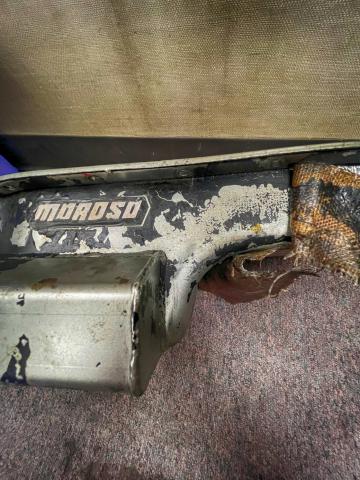
“We don’t turn our backs on people” when it comes to warranty returns, said Moroso’s Frank Thibodeau. Even in a case like this, where a customer sent back a pan that had been damaged during racing, “we will try to help, whether we repair it for a small amount of money or sell you a new one at a lower price.”
There’s the fine print. And then there’s reality.
Most product warranties in the performance automotive space are pretty clear when it comes to racing. According to the fine print (these days often found on a company’s website), parts may be warrantied against defects in material and workmanship for anywhere from 90 days to as long as the purchaser owns the vehicle. That warranty will disappear, however, if the product is installed on what companies refer to as “vehicles used for racing or competition purposes.”
The reality, though, can actually be more forgiving.
“Our standard warranty is one year,” said Mike Buca of Design Engineering, Inc. (DEI), Avon Lake, Ohio. “We just took it to two years on our new Gen 3 Titanium & Onyx Turbo Shields. However, we like to work with our customers. We don’t try to be hard-nosed about the warranty. It’s on a one-on-one, case-by-case basis, but we stand behind the stuff.” He pointed out that the thermal protection products DEI makes “are a consumable and only last for so long. So one of the things we’ll look at is how long the customer had it. If a guy calls us and has had a thermal shield on his car for four years, and it’s starting to show its age, that’s not a warranty issue, that’s more a lifespan issue.”
“We always want to help people out. We don’t usually just turn our backs on people,” explained Frank Thibodeau of Moroso Performance Products, Guilford, Connecticut. “Even if it’s an old part, we usually will try to help you out, whether we repair it for a small amount of money or sell you a new one at a lower price.”
“With a race car part or a high-performance part, things happen,” said JC Beattie Jr. of ATI Performance Products, Baltimore, Maryland. “We’re willing to work with people because we have these projects, and we race, too. We are also a family-owned business. We make it all here, and it’s good stuff. Very seldom do you get a flat-out ‘No, too bad’ from us.
“And sometimes we have an answer for you,” Beattie added. “Maybe we’ve heard about this problem before. We know what caused it. So some people are chasing a problem that’s not ours, and we send them in the right direction.”
Reggie Wynn, sales and marketing manager for both Precision Turbo & Engine and Turbonetics, in Crown Point, Indiana, noted that his companies’ products “are engineered and designed for racing. There are even turbos that are made to spec for various drag racing classes. So the beauty of our warranty is, racing doesn’t void it. It’s a one-year, no-fault, no-hassle, one-time, get-out-of-jail-free card.”
All he asks is that “when you call in, be honest. That goes a long way. There have been times I’ve bent over backwards to help out guys who were completely honest with me and said, ‘Hey, I messed this up. Is there anything you can do?’”
Beattie agreed. “Don’t start the process with any manufacturer by saying, ‘Hey, you guys screwed up.’ Being quick with a snap judgment starts everything off on the wrong foot. We’re all human. We all make mistakes, but we try to limit that as best we can.”
Voiding the Warranty
As lenient as these companies can be, there are circumstances where customers do void the product warranties. For example, ATI clearly states on its website that the use of hydraulic fluid instead of red ATF will void the transmission’s warranty. “Hydraulic fluid is not made to get sheared in a torque converter or run at the pressures or the rpm it does,” Beattie said. ATI also uses a lead seal on two pump bolts in its transmissions, “so if the pump bolts were taken out and the transmission came apart, the warranty is voided.”
“Most of the time, when you try to fix it yourself first, that’ll void the warranty,” confirmed Thibodeau. “Contact the manufacturer, or contact the person you bought it from, and get the process started to get the product back.”
As lenient as these companies can be, there are circumstances where customers do void the product warranties. ATI, for example, will void the warranty on a transmission if the wrong fluid is used or if the customer broke the lead seal on the pump bolts and opened the transmission.
“Typically, the issues we run into are when something’s been abused, like a turbo shield that’s been modified or cut,” said Buca. “We occasionally get calls where a guy says, ‘This turbo shield caught fire.’ They’ll send us pictures, and we can see it’s just totally soaked in oil, like there’s a leaking valve cover or oil line. The shield is made of materials that absolutely won’t burn, but if you get fluid on it, that fluid will burn. We can’t control that.”
And then there are the “catastrophic failures that weren’t caused by the product that you’re having the warranty issue with,” noted Thibodeau. “We do get this occasionally where a customer has an engine explosion, and a pan or a dry sump pump will get damaged. That wouldn’t be a warranty situation, even if it was within 90 days of purchase. You’re not going to send the oil pan back and say, ‘A rod went through the side of the pan.’ We didn’t build the motor, so it doesn’t really have anything to do with that side of it.”
Ultimately, no matter the circumstances, honest conversation with the manufacturer is the best way to resolve warranty issues.
“Sometimes, if we’re holding steady that it’s not under warranty, the customer will open up and start to explain what happened, and then life gets a lot easier for everybody,” Beattie said. “Everybody can get educated, and you’re not just pointing the finger. Everybody has to have a little responsibility in this deal. It’s not easy for the manufacturer. We’re not here just collecting money. We’re in the shop making parts, putting things together, sweating over them. We’re out racing with our race cars and guys who we sponsor and work with. We’re never trying to screw somebody. There’s a two-way street on a lot of this.”
NASCAR officials have announced the 16-race schedule for the 2024 NASCAR Whelen Modified Tour.
For the third consecutive year, the Tour will open at New Smyrna Speedway in Florida during NASCAR’s Speedweeks, racing under the lights on Saturday, February 10. The season will conclude at Martinsville Speedway in Virginia, which will host the Whelen Modified Tour’s season finale on Saturday, October 26.
“We have seen over the past two seasons how exciting it has been for our fans and competitors to open at New Smyrna and finish at Martinsville,” said Jimmy Wilson, Senior Director, NASCAR Whelen Modified Tour. “The mix of tracks on the schedule pays tribute to the Tour’s roots and sets up a competitive season from start to finish, demonstrated by how once again this year our fans are going to see the Whelen Modified Tour title decided at the finale.”
Other tour stops include Richmond Raceway and New Hampshire Motor Speedway, which return to the schedule as companion events alongside the NASCAR national series race weekends. North Wilkesboro Speedway will return in 2024, with a race date on Saturday, October 5. Other popular tour stops include a trio of races at Thompson Speedway Motorsports Park in Connecticut, and a pair of races at Riverhead Raceway in New York.
To learn more about the 2024 NASCAR Whelen Modified Tour schedule, see the full announcement here.
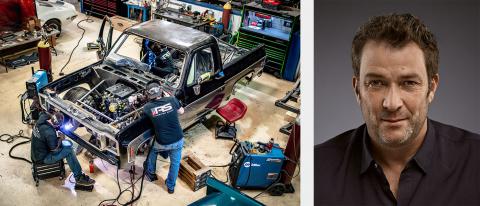
(Left image) Roadster Shop is based in a suburb of Chicago. (Right image) Laurent Potdevin, CEO of The Aeromotive Group, now known as Roadster Shop.
The Aeromotive Group and Roadster Shop have announced that the organizations have merged to create a new automotive aftermarket powerhouse. Now operating as Roadster Shop, the combined brands will drive the development of innovative products, services and content.
"As a lifelong enthusiast, I'm thrilled to announce this partnership between The Aeromotive Group and Roadster Shop," said Laurent Potdevin, CEO of The Aeromotive Group, now known as Roadster Shop. "As a result of this alliance, Roadster Shop can leverage The Aeromotive Group's portfolio of brands, its operational foundation, and access to new levels of capital for expansion."
Roadster Shop is a custom vehicle and chassis manufacturer in Mundelein, Illinois. Founded in the 1980s, the shop's primary focus was building chassis for prewar Fords, along with a handful of complete street rod builds before Jeremy Gerber, Phil Gerber and their father, Neal Gerber, purchased the company in 2004. Under their vision, the business now engineers and sells custom chassis and suspensions found under some of the top hot rods in the country.
"Our partnership with The Aeromotive Group gives us the opportunity to fuel accelerated growth and supercharge our expansion," said Jeremy Gerber, co-owner of Roadster Shop. "Over the past 20 years, we've become a household name in high-performance hot rods, muscle cars and trucks. Phil and I are very excited about the future here at Roadster Shop."
Roadster Shop has two facilities with full chassis production, metal fabrication and vehicle construction, along with a paint and body department.
The Aeromotive Group, now known as Roadster Shop, includes:
Holley Inc.--the Bowling Green, Kentucky-based consumer platform for automotive performance enthusiasts--is implementing a new organizational design to capitalize on growth opportunities across the company’s full brand and business portfolio. The strategic realignment establishes seven distinct market segments, with the goal of strengthening the company's ability to serve the classic vehicle market while also expanding its focus on aftermarket solutions for newer model vehicles.
"We continue to take actions to strengthen our customer focus and maximize the value of our robust portfolio of aftermarket products and brands," said Matthew Stevenson, President and Chief Executive Officer, Holley. "This new organizational design will deepen our connections with consumers in each segment, enhancing our ability to deliver the right mix of innovative products, services and aftermarket solutions that drive growth and meet emerging customer needs."
Holley is establishing dedicated segment teams focused on building the go-to-market strategy for the following seven vertical markets: Classic Truck; Modern Truck; Classic Muscle; Modern Muscle; Euro & Tesla; Asian Import; and Off-Road & UTV. Each segment team will work closely with the company's business units to develop a comprehensive portfolio of products for consumers in their respective segments.
As part of this new organization, Holley named Sean Crawford to the newly created role of chief product officer. In this position, Crawford will be responsible for overseeing Holley's newly established vertical market segments, including providing leadership for product strategy, pricing, channel strategy and product data management.
To learn more about Holley's strategic realignment and its new chief product officer, view the company's full announcement here.
 MEMBERSHIP LOGIN