Lucas Oil Products, based in Indianapolis, Indiana, has promoted Morgan Lucas to CEO and Katie Lucas to president of the company.
Morgan has served as the company’s president since May 2020 and was previously senior vice president of sales. Katie served as vice president of strategy and philanthropy before stepping into the chief administrative officer role in 2022.
As CEO, Morgan is responsible for the strategic direction and vision of Lucas Oil, as well as providing financial and operational leadership for the company.
In Katie’s role as president of Lucas Oil, she will manage the day-to-day operations and ensure all functional departments are working closely to support the strategic goals of the company. Katie will also continue to lead all of Lucas Oil’s philanthropic and community engagement endeavors.
Wharton Automotive Group (WAG), the Anaheim, California-based parent company of McLeod Racing, FTI Converters and Transmissions, Silver Sport Transmissions and other driveline brands, has acquired Competition Clutch.
Acquired from previous owner Chris Jewell, Competition Clutch is a provider of clutch kits, flywheel products and accessories for the sport-compact market. Effective immediately, the company will be based out of McLeod Racing's Anaheim manufacturing plant.
"I'm extremely excited to announce this important acquisition to the WAG family of high-performance driveline companies," said Paul Lee, owner of Wharton Automotive Group. "The Competition Clutch name and high-quality products have been number one in the sport compact world for years. We will continue to grow this brand and build on what Chris Jewell has built. The sport compact market is large with a loyal following and dedicated participants. I'm excited to service their driveline needs."
With major sanctioning bodies and many automakers now offering dedicated programs, high-performance driving events are becoming preeminent motorsports gateways.
For decades, autocross events have served as the starting point for the careers of countless racers. The format’s low operating costs and ability to cater to street-driven vehicles have made it
a natural entry point for drivers who are looking to better understand the dynamic limits of their car and improve their skills while doing so.
But with the influx of formidable factory-built performance vehicles produced in recent years, sanctioning bodies as well as the OEMs themselves have sought ways to give drivers another venue to explore the full capabilities of these machines.
This has ushered in the era of high-performance driving events, or HPDEs. These programs follow an ethos similar to grassroots autocross events and focus on minimizing the barriers to entry through low costs and basic car preparation requirements. And much like autocross events, participation in HPDE programs also provides an opportunity for these drivers to get connected to a motorsports-minded community of enthusiasts.
Held throughout the country, these programs vary in format and mission from one organization to another—and sometimes even from region to region within an organization. But one truth remains consistent throughout: A growing number of today’s racers are getting their start in high-performance driving events.
Sports Car Club of America
While the Sports Car Club of America (SCCA) in Topeka, Kansas, has long offered HPDEs during race weekends largely as a way of providing racers additional practice sessions in the lead-up to competition, the sanctioning body decided to take a more strategic and formalized approach to the concept when it introduced Track Night in America in 2016.
The nationally offered program provides enthusiasts of varying levels of experience the ability to push their street cars on some of the most famous race tracks in the nation. As the name implies, Track Night in America differs from most HPDE programs due to the fact that most of these events begin in the afternoon on a weekday rather than the traditional morning on a weekend.
The SCCA’s Track Night in America series expanded its traditional HPDE program by providing enthusiasts of varying experience levels the ability to push their street cars on some of the most famous race tracks in the nation.
“Access was the core concept,” explained the SCCA’s Dan Dennehy-Rodriguez. “We wanted to break down as many barriers to entry as possible so that whoever wants to pursue going on track in their car is able to do so in an enjoyable way. And a big component of that is scheduling. Doing this in the afternoon during the week allows someone to take a half-day from work rather than committing a full day or a weekend to it.”
The events typically consist of three 20-minute sessions on track, and instructors are onsite to teach participants the fundamentals of track driving. Dennehy-Rodriguez said that while some of the drivers who come back to participate in multiple Track Night events are mainly interested in experiencing the various race tracks that the program visits, others have used Track Night in America as a steppingstone into solo and wheel-to-wheel racing within the SCCA.
“There are so many stories of folks using Track Night as that pathway, but the one that immediately pops in my head is about my friend Alan,” Dennehy-Rodriguez explained. “He has always had an interest in cars and works in the industry, and when the Track Night program began, he started taking some of his show cars out to these tracks. After a while, he decided to take one of those cars—a late 2000s VW GTI—and convert it into a prepped race car. In 2021, he made his debut at the Runoffs at Indianapolis in the T3 class, driving something that had been a street car just two years prior.”
He said that while folks who bring late-model Corvettes and 911s may have the financial flexibility to invest in a dedicated race car and hauler, more often than not it’s the drivers who show up with the relatively inexpensive vehicles who are more likely to commit to a competitive effort down the road.
“In our experience, if someone wants to go road racing and they have the financial means, they tend to go straight to that destination,” he continued. “They might have a personal car that they take to HPDEs on occasion, maybe for additional instruction or to see new track layouts. Generally, what we see with folks who have these really fast cars is that they’ll quickly recognize the performance potential of the car and add safety elements to it, but then they’ll stop there. For us, it’s the person who shows up in a $5,000 hatchback. Those folks are more inclined to see that vehicle as a disposable item, and they’re more willing to cage it, track it, and race it as a result. We see that with a lot of early 2000s hatchbacks like the Volkswagen Golf and Honda Civic, along with more affordable sports cars like the Mazda Miata, Scion FRZ, Subaru BRZ. Older BMWs and Ford Mustangs are popular options as well.”
As drivers gain experience through Track Night program participation, they’re invited to share in-car video with SCCA partner Blayze to help improve their technique through online coaching. Track Night participants can also maintain a driver logbook that can track their progress if time trials or road racing is their end goal.
“This isn’t the logbook that goes with a race car,” he explained. “This is specific to the driver. Every time they go to a Track Night and they’re a good citizen at the event, they can go to an instructor and get signed off for that event. That shows us that this is someone who is playing by the book, wants to get a lot of experience, and is focused on developing as a driver. And when that driver wants to move into Time Trial, that logbook can be used to instantly upgrade them from a novice time trial license to an intermediate or even advanced license. The logbook provides evidence that they’re ready, and we can trust them in those groups. If they continue to do well in Time Trial and express the desire to go road racing, they can then go to a region’s competition school to take that next step.”
Hooked On Driving
Established in 2004 and expanded into a national program in 2007, Hooked On Driving in Copperopolis, California, focuses on getting drivers up to speed using the core principles of safety, fun, and learning.
“The line that is repeated in our drivers’ meetings is, ‘Hey gang, welcome to Hooked On Driving. Just remember, it’s not Hooked On Racing,” said founder David Ray. “There are so many highly capable road cars available now, and there’s nowhere to drive them. The goal here is to give these folks the opportunity to do that and provide an entry-level taste of track driving.”
Ray said that while some folks who come to Hooked On Driving events are content to settle into HPDEs as their pastime and focus on honing technique simply for the sake of their own gratification, there’s a percentage of drivers who eventually start eyeing motorsports as the next natural step.
NASA has a tiered HPDE program that starts drivers in HPDE 1 with an instructor in the passenger seat. “Here we introduce them to the fundamentals, and the joy of driving fast on a race track,” said Brett Becker.
“Events like these can provide a great primer for an SCCA or NASA competition school. They’re able to walk into those programs with a lot of the fundamentals already figured out. That means they’re able to focus more on learning the rules, protocols, and race craft.”
Ray cited an orthopedist who ran his Porsche Boxster Spyder at Hooked On Driving events for a number of years before moving into wheel-to-wheel competition with the SCCA. “Eventually he was running the car on Hoosiers, and I started to realize that he was probably the fastest driver in our advanced group despite the fact that there were potentially faster cars in the field. At a certain point I pulled him aside and said, ‘You really need to go racing.’ He was immediately dominant in Spec Miata, and now he’s dominant in Spec Racer Ford.”
While Hooked On Driving teaches safety and the basics of track driving, it will also suggest professional coaches to drivers at the higher levels of experience who are looking to take their abilities to the next level. “We like to focus on teaching the fundamentals—we’re really good at that,” Ray said. “At the higher levels, we’re going to give these drivers a list of coaches who do that for a living. That approach seems to work for us.”
Ray added that while OEM programs like the Cadillac V-Performance Academy and BMW Driver’s School are able to capture enthusiasts’ attention early on with track time that’s included with the purchase of a new vehicle, those programs tend to generate more interest in HPDEs rather than taking it away.
“On one hand, the manufacturer programs are reducing the number of days that are available to us at a given track,” he noted. “But on the other hand, we are inheriting people from those programs. The manufacturers are ultimately helping to create that long-term interest in HPDEs with these drivers.”
Porsche Club of America
It should come as little surprise that Porsche was one of the first automakers to recognize the value of a formalized owners’ club and the organization of performance-focused events for members to participate in. The brand’s strong ties to motorsports as well as a dedicated fanbase led Porsche Club of America (PCA) in Columbia, Maryland, to begin hosting enthusiast events way back in the mid-1950s.
By the 1990s, the Porsche Club of America was ready to take things a step further, establishing its own Club Racing series. Today, PCA Club Racing hosts more than two dozen races per season as competitors chase championship trophies in their respective classes. And as PCA Club Racing business manager Connor Henderson pointed out, many of the club’s competitors established their path toward the podium through the PCA high-performance driving events.
“The HPDE program is about giving these owners the opportunity to get these out on track. Motorsport is what the brand is built on, so it’s a natural step for a lot of these drivers,” Henderson said.
PCA’s high-performance driving events typically consist of five track sessions over the course of a day. Instructors accompany the students for the first three sessions, then the students run a fourth session by themselves. An instructor then hops back in for the final session to provide additional real-time feedback and coaching.
“That fifth session gives us a chance to discuss any questions that might have come up,” he told us. “Inexperienced drivers might not know where they can focus on improving, so that feedback is really important.” He said that while drivers join PCA and sign up for HPDEs for myriad different reasons, the overarching theme is a desire to do more with their cars.
“Some are the folks who have 20-year-old cars and finally have the financial freedom to do a track day. We also see a lot of father-and-son teams, but it’s all over the map. Last year we had a lady in her 70s who had watched a Formula 1 race and had decided it was time to get on track for the first time. It really takes all kinds.”
Founder David Ray said the goal of Hooked on Driving is to “provide an entry-level taste of track driving. There are so many highly capable road cars available now, and there’s nowhere to drive them.”
Once the basics are established, the program’s emphasis on coaching and feedback allows drivers to focus on ways to improve their performance. “That’s when you start to see the more in-depth questions,” Henderson said. “They start asking about how they can better prepare the car, and how they can better prepare themselves as a driver—what they need to do to be faster. And within that, there’s always a select group of drivers who want to be the best, and once they’ve achieved a goal that they’ve set out for themselves, they’re ready to move on to a bigger challenge through competition.”
As with sanctioning bodies like the SCCA and NASA, those seeking to make the transition from the HPDE program to PCA wheel-to-wheel racing must earn their provisional license by attending the PCA Club Racing school. Henderson said that while they often recommend that these folks consider starting in Spec Boxster—the club’s most popular racing class—some drivers are a bit more ambitious.
“We had this retired gentleman who brought a 911 GT3 to his first track day and immediately took to it. He told us about how much he enjoyed it, and we noted that if he was interested in doing so, he could pursue racing. Despite our initial recommendations, he bought a GT3 Cup car with a 997-generation 911 GT3 RSR engine shoehorned into it—a combination that was built for a Continental series. He hired someone to work on his car and a pro driver to coach him, and he ran it in our GTA3 class. Later he decided to move to a 991-generation Cup car and race it in our GTC7 class because it offered an even higher level of competition.”
PCA Club Racing events typically consist of sprint races as well as 60- to 90-minute enduro races, the latter of which allows for driver changes and more seat time. While that offers plenty of competition for most, Henderson said that a number of club members have also ventured out into grassroots endurance racing, IMSA, and other series.
Participants in the SCCA’s Track Night in America maintain a logbook that’s signed off at each event. “That shows us that this is someone who wants to get a lot of experience and is focused on developing as a driver,” said Dan Dennehy-Rodriguez. When that driver is ready to move into Time Trial, “that logbook can be used to instantly upgrade them to an intermediate or even advanced license.”
“Those tend to offer a different form of competition, and we fully respect that. A lot of times we see folks do that, and then later come back to race with PCA. At the end of the day, the camaraderie is the most important element of our Club Racing program,” Henderson added.
National Auto Sport Association
Las Vegas, Nevada-based National Auto Sport Association’s approach to HPDE notably is more structured than some others, focusing on progression through experience and offering well-defined pathways into auto racing for those who are interested in that pursuit.
“Our HPDE program has been essentially the standard of the industry ever since we established it back in the 1990s,” said NASA’s Brett Becker. “We start you off in HPDE 1 with an instructor in the passenger seat of your car, and typically you’ll have communication devices inside each of the helmets so they can talk to the drivers in a calm manner. Here we introduce them to the fundamentals, and the joy of driving fast on a race track.”
Becker reported that many of NASA’s HPDE program participants are enthusiasts who started off in drag racing or autocross and wanted more track time. In recent years, the sanctioning body’s partnership with Toyota has also provided an access point into the greater National Auto Sport Association ecosystem for those who may not have had formalized experience through those other disciplines.
“We established the Toyota GR Experience in 2019, and the program continues to expand,” Becker said. “Initially the buyers of new GR Supras received a one-year NASA membership and participation in a one-day NASA HPDE as part of that purchase. Now the program has been extended to buyers of new GR86s as well as new GR Corollas.”
There are driver meetings after each on-track session for all of NASA’s HPDE groups, which allows instructors to offer feedback based on what they observed during the previous session and provides participants with an opportunity to voice any concerns they may have. Once HPDE 1 drivers are up to speed on the basics, they have the opportunity to move up to HPDE 2, which allows participants to drive by themselves as they continue to hone their skills.
“HPDE 3 and 4 are where things start getting pretty quick,” said Becker. “If a driver doesn’t have the pace for these groups, they stay in HPDE 2 until they’ve developed it. HPDE 3 and 4 are also where drivers start to learn more advanced driving techniques that are essential to developing speed. For example, in HPDE 1 and 2, the students are taught to do all of their braking in a straight line and then steer the car into the turn. In HPDE 3 and 4, we start to introduce concepts like trail braking, where applicable. For drivers of all stripes, usually the last bits of speed that they can muster are found under braking.”
After drivers have completed HPDE 4, they are eligible to get their Time Trial license, or they can opt to get their racing license through NASA’s competition school if they so choose.
“I’m a product of that system,” Becker noted. “I used HPDE as a means to go racing. I progressed through the ladder system, and then went straight to competition school. But we’ve also had people who’ve come to us through the Toyota program who are now Time Trial drivers. One of the guys from our Northeast region got a Supra, came for the track day and fell in love with it, and now he’s driving that same car in TT. Over the years we’ve had a number of racers who started out with the intent of just sticking to HPDE. But of course, driving a car fast on a race track is intense, addictive, and very alluring. When the bug bites, it bites hard.”
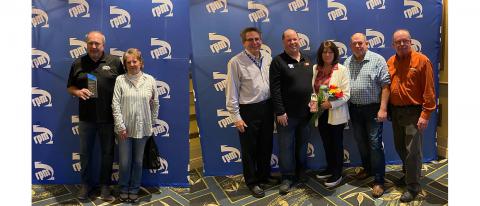
John McCoy, promoter at Knoxville Raceway in Knoxville, Iowa, received the Auto-Racing Promoter of the Year Award at the 51st annual RPM@Daytona Workshops in Daytona, Beach, Florida.
Additionally, Susan Deery, manager of Rockford Speedway in Rockford, Illinois, was presented with the Jody Deery Award, named after her late mother, for leading the track during its final season.
Other awards presented during the workshop include the RPM Outstanding Event of the Year, which was awarded to the Gerald Haers Memorial at Land of Legends Raceway in Canandaigua, New York, and the organization's Regional Promoter of the Year awards.
See the full list of regional winners below:
Region One: Brett Deyo from Utica-Rome, Fonda in New York, and Georgetown Speedway in Georgetown, Delaware.
Region Two: Wendall Durrance from All-Tech Speedway in Lake City, Florida.
Region Three: Kevin Gundaker from Tri-City Speedway in Granite City, Illinois.
Region Four: Doug Johnson, Huset's Speedway in Brandon, South Dakota.
Region Five: John McCoy, Knoxville Raceway in Knoxville, Iowa.
Region Six: Michelle Lackey-Maynor, Alaska Raceway Park in Palmer, Alaska.
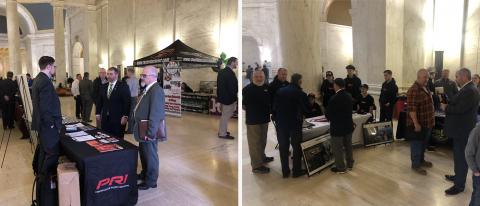
PRI's Washington, D.C., office is excited to invite you to the SEMA and PRI Washington Rally, taking place in Washington, D.C., May 8-9, 2024. The Washington Rally provides an opportunity for SEMA and PRI member companies to come together and advocate on behalf of the specialty-automotive aftermarket and motorsports-parts industries with members of Congress. Click here to register for the event.
By attending the Washington Rally, you will have the opportunity to meet with your members of Congress and their staff, discuss critical issues and advocate for policies that will benefit our industry. Your participation will help ensure that our industry's concerns are heard and that we can continue to innovate and grow.
Whether it's protecting the right to repair and modify vehicles with advanced technology, combating vehicle technology mandates that limit consumer choice or protecting motorized access to federal government lands, there are many issues facing SEMA and PRI members in the nation's capital. With the 2024 presidential election heating up and the balance of power in both the House and Senate up for grabs, it's more important than ever for SEMA and PRI members to come to Washington, D.C., to advocate for the industry!
SEMA and PRI have a limited number of rooms available at the Royal Sonesta Washington, D.C., Capitol Hill for $409 per night, plus tax. A link to book a room will be provided upon completing the registration form.
Below is a list of 2024 Washington Rally events (all times ET):
WEDNESDAY, MAY 8, 2024
5:30 p.m. - 7:00 p.m. -- SEMA-PRI PAC Reception* -- Royal Sonesta Capitol Hill, Sapphire Room and Terrace -- Penthouse level
*A PAC contribution is required to attend in the suggested amount of $250 per individual. If you have already contributed to the SEMA and PRI PAC in 2024, this event may be complimentary as a part of your PAC Membership Benefits. Please contact PAC Manager Alicia Steger at alicias@sema.org if you have any questions.
7:00 p.m. - 9:00 p.m. -- Washington Rally Congressional Dinner -- Royal Sonesta Capitol Hill, Crown Ballroom -- Penthouse level
THURSDAY, MAY 9, 2024
7:00 a.m. - 8:30 a.m. -- Breakfast and Welcome Briefing -- Royal Sonesta Capitol Hill,Crown Ballroom -- Penthouse level
9:00 a.m. - 12 p.m. -- Meetings with Congressional Representatives -- House & Senate Office Buildings
9:00 a.m. - 3:00 p.m. -- Cars at the Capitol Event -- Southwest side of the U.S. Capitol on Maryland Avenue (across from the Botanical Garden)
PRI is encouraging our member companies to take action by voicing your opposition to the implementation of ACC II. The motorsports industry needs your help! The U.S. Environmental Protection Agency (EPA) is accepting comments through February 27, 2024, on whether it should grant a waiver for anti-internal combustion engine (ICE) regulations to take effect.
The California Air Resources Board's (CARB) "Advanced Clean Cars II" (ACC II) regulations ban the sale of new ICE vehicles by 2035. ACC II requires that 35% of new cars, SUVs and small trucks sold in California must be zero-emissions vehicles (ZEV) starting in 2026. The regulation increases ZEV sales requirements by 6% to 8% annually through 2035, when 100% of new vehicles sold in California must be ZEV--eliminating the sale of any new gas-powered vehicles.
Before ACC II can be implemented, CARB must receive a waiver from the EPA for its regulation to take effect. PRI opposes ACC II because 17 states--representing nearly 40% of the American population--have previously adopted California motor-vehicle emissions laws. To date, nine states have already adopted ACC II; three states have adopted ACC II through 2032, which requires 87% of new motor-vehicle sales to be ZEV; and two states have started the regulatory process to adopt ACC II.
If the EPA grants California a waiver for ACC II, this too-fast mandate will reduce vehicle choice and force Americans to purchase more expensive vehicles. ACC II, if implemented, would also disrupt automotive industry supply chains, devastate small automotive businesses and eliminate large numbers of jobs in vehicle manufacturing, parts production and repair businesses.
It's urgent that industry members send a letter to the EPA opposing California's ICE ban at https://p2a.co/criacj9.
PRI's Washington, D.C., office is working around the clock to protect our industry's rights. Sign up for the latest SEMA Action Network updates here. For more information, visit semasan.com.
Motorsports industry professionals are invited to the 2024 Motorsports Day at the West Virginia Capitol on Friday, February 23. The event brings motorsports facilities and businesses together to educate, collaborate and grow the industry in the Mountain State.
The coalition of motorsports businesses will share the impact of the industry with West Virginia elected officials and state agencies and provide an opportunity to display your business or race track in the State Capitol Rotunda in Charleston, West Virginia (at no cost to the exhibitor).
For more information, view the event schedule and contact information below.
2024 West Virginia Motorsports Day Event Schedule: Thursday, February 22
5:00 p.m. to 10:00 p.m. EST: Optional social and meet and greet event at Recovery Sports Grill (inside Four Points Sheraton).
Friday, February 23
7:30 a.m. to 1:00 p.m. EST: Outside display of motorsports vehicles.
7:45 a.m. EST: Set-up in Capitol Rotunda.
8:00 a.m. to 1:00 p.m. EST: Display area opens, meet and greet elected officials, agency officials and peer discussions.
12:00 p.m. to 1:00 p.m. EST: Lunch break.
1:00 p.m. EST: Governors' Cabinet Conference Room open discussion and planning.
Legacy Motor Club, the NASCAR Cup Series team based in Statesville, North Carolina, is expanding into Extreme E competition with team co-owner Jimmie Johnson behind the wheel.
Johnson will partner with Gray Leadbetter, a championship-winning closed-course series winner, for the 2024 season of the all-electric off-road racing series.
With Johnson unable to contest the opening two rounds of the series due to the Daytona 500, Travis Pastrana will partner with Leadbetter for the upcoming Desert X Prix in Saudi Arabia.
The NXT Gen Cup, an all-electric junior touring car series, will serve as a support series for the Formula E World Championship during the 2024 season.
Subject to FIA approval, the NXT Gen Cup will appear at all four European race events of the Formula E season, including Misano, Monaco, Berlin, and its season finale in London.
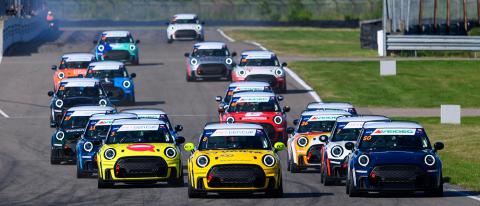
Launched in 2023, the NXT Gen Cup will have six European races and feature a 20-car grid with drivers ages 15-25. The single-make series runs an all-electric car developed and built by the Lestrup Racing Team, the LRT NXT1, based on an electric MINI Cooper SE road car.
ESPN, Fox and Warner Bros. Discovery have announced plans to launch a sports streaming platform later this year.
The streaming platform will include offerings from 15 linear networks: ESPN, ESPN+, ESPN2, ESPNU, SEC Network, ACC Network, ESPNEWS, ABC, Fox, FS1, FS2, Big Ten Network, TNT, TBS, and truTV.
In addition to a variety of other sports and leagues, the platform would include NASCAR broadcasts.
 MEMBERSHIP LOGIN