Driving Force Action, SEMA and PRI's Super PAC, is leading an independent expenditure campaign in the current presidential election on behalf of the specialty-equipment industry. It's a rare moment for a top industry issue like this to play such a significant role in a high-level, national political campaign. SEMA and PRI have been leading the charge over the past two years, promoting the policy that the government should remain technology-neutral when it comes to the future of vehicle technology.
The campaign released its latest ad this week with the intent of educating voters about the impact of the Biden-Harris policies. The ad highlights for viewers in four battleground states the human cost of federal electric-vehicle (EV) mandates and the grave threat such policies pose to thousands of small businesses nationwide. The ad is the fifth to be released this year by Driving Force Action and is running in the battleground states of Wisconsin, Pennsylvania, Ohio and Michigan. It features four small-business owners whose businesses will be severely hurt by what is effectively an EV mandate (or, otherwise considered, an internal-combustion engine ban) supported by presidential nominee Vice President Kamala Harris.
Retool your race program, refresh your knowledge, and reinvest in your business at the PRI Show, December 12–14, in Indianapolis, Indiana.
As the 2024 race season approaches its white flag lap, the offseason is around the final corner. While we’ll miss the bustling race tracks and roaring engines, the winter months offer a time of renewal for our entire industry.
From drag racers to drifters, engine builders to track promoters, offseason success will pay dividends throughout 2025. As any industry member can attest, all roads to offseason success go through the PRI Show on December 12–14, held at the Indiana Convention Center (ICC) and Lucas Oil Stadium in downtown Indianapolis, Indiana.
“The PRI Show features a cross pollination of disciplines and a pure business racing environment,” said Jim Liaw, general manager of PRI. “You don’t get this any other time of year or anywhere else. It’s important to be there.”
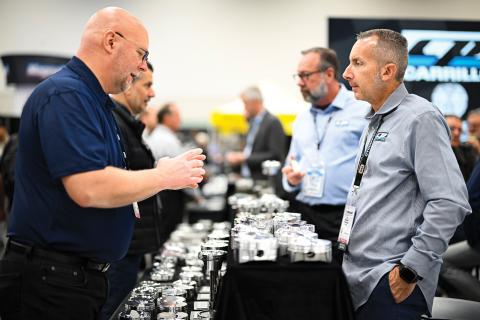
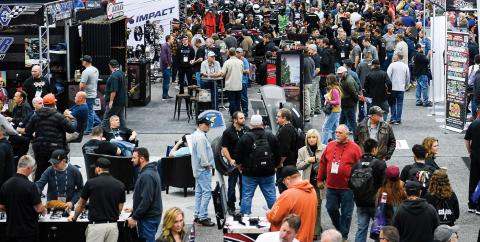
The most influential business event in motorsports, the PRI Show unites all disciplines of motorsports under one roof. In addition to educational programming and engaging activations, the Show floor will be buzzing for three high-octane days of dealmaking and networking.
With thousands of racing entrepreneurs in attendance from more than 70 countries, the 2024 PRI Show will include more than 1,000 companies and well over 3,500 booths exhibiting across 750,000 gross square feet of space. Buyers will have access to the newest race products, services, machinery, simulation and testing technologies, trailer exhibits, and much more.
For any motorsports-related business, there’s a good chance the PRI Show is already an annual tradition. If not, you’re missing out on the offseason’s best opportunity to retool your motorsports program, refresh your knowledge, and reinvest in your business.
Must-See Show Exhibits
Introducing new disciplines or ideas to our industry will always be important—more on those later—but our most popular features and exhibits simply can’t be missed.
For race teams, engine builders, and fabricators, Machinery Row is the place to be. Located in the Yellow Hall, this popular exhibit will feature more than 100 manufacturers, each demonstrating the capabilities of their latest precision automotive machining equipment. Buyers will be able to talk to company representatives, watch machines perform live demonstrations on actual race parts, and hopefully score a “show deal” on a new machine.
For racers looking to find a competitive edge, the Featured Products Showcase (FPS) is a smart place to start. Located in the ICC Capitol Connector near the Yellow Hall and Georgia Street entrance, the FPS is a great opportunity for buyers to learn about dozens of new race products and companies before even hitting the Show floor. Additionally, products included in the FPS will be considered for Featured Product Awards, which are determined by a panel of top racing industry professionals.
Lucas Oil Stadium is the place to see our newly expanded trailer exhibit. The perfect opportunity to comparison shop, the entire field area will be transformed into a massive display of state-of-the-art trailers, motorhomes, toterhomes, and more. The PRI Show is the best place to solve your race team’s transportation needs.
On your way back from Lucas Oil Stadium, swing by the PRI Paddock, located by the Hanging Race Car. Upgraded for 2024, the PRI Paddock will provide helpful information about the Show, while an adjacent live studio features a full schedule of popular motorsports podcasts.
Our popular opening day festivities—the Grand Opening Breakfast and the PRI Happy Hour—will both return in 2024. The Grand Opening Breakfast will officially open the PRI Show on Thursday, December 12, featuring a talk-show style interview between Ralph Sheheen and special guest Travis Pastrana. Meanwhile, the PRI Happy Hour will close out opening day of the Show with complimentary beer, appetizers, and live music in Lucas Oil Stadium.
(Sim) Racing into the Future
Sim racing has exploded in popularity in recent years, with everyone from amateurs to professionals embracing the possibilities of virtual racing. In 2023, sim racing made its debut at the PRI Show and was an instant hit.
“Anybody who walked into Lucas Oil Stadium last year to see the sim racing area could see that the energy, the traffic, and even the demographic was different,” said Liaw. “We had new exhibitors that came in, and it definitely proved that we need to continue to pay attention to, reinvest in, and focus on that area.”
If the PRI Show is not already an annual tradition for your racing business team, make plans today to view the newest in race parts and services in Indianapolis, December 12–14.
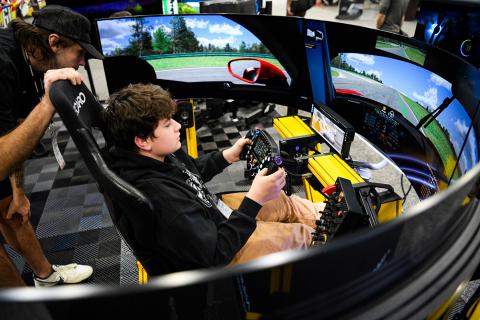
Drafting off that success, the 2024 PRI Show will expand the sim racing area to accommodate more exhibitors, more booths, and yes, more sim sleds that will be available to demo throughout all three days of the Show.
Beyond the exhibit area, attendees will also see a return of the PRI SIM Racing Arena presented by SRO Motorsports Group America. The Arena will feature daily invitational sim races on Assetto Corsa Competizione, the official simulator for Fanatec GT World Challenge powered by AWS, for sim racers and professional drivers. The feature races will provide 28 invitational slots in two sanctioned classes—Sim Pros and Real World Pros—with races streamed live to SRO and PRI’s livestream platforms.
It’s all part of our effort to introduce the broader industry to one of the fastest growing disciplines in motorsports. The racing may be virtual, but the competition and economic potential are very real.
“Sim racing is an area where we are seeing growth,” said Michael Good, president of PRI. “I’m personally excited about that, as I think it’s a great catalyst to bring the younger generations into the sport and give them a glimpse of what it’s like to be on a track.”
Beyond welcoming newcomers into motorsports, PRI also believes sim racing provides an exciting opportunity for traditional motorsports brands to engage in this emerging space.
“Sim racing provides an opportunity for brands at the PRI Show,” said Liaw. “Maybe not all, but a number of brands can get involved in the sim space because the more elaborate the software is, the more opportunity there is for brands to be involved from both a technical and branding standpoint. Once again, it’s about that cross pollination of disciplines.”
The PRI Show presents an ideal opportunity to talk with representatives from leading sim racing companies. Not only can this help traditional racers better understand what sim racing is about, but also if sim can help grow their business.
“Ultimately, the PRI Show is about trying to grow and elevate the industry as a whole,” said Liaw. “If there’s this discipline that provides benefits by building future motorsports customers, while also providing a medium for motorsports brands to promote their products, they should absolutely be incorporated as part of the Show.”
Learning Opportunities
If discovering new products and making valuable connections are two key pillars of the PRI Show, education is the third. To ensure attendees leave Indianapolis equipped with knowledge to go faster and grow their business, we’re offering 13 curated education sessions free of charge for attendees.
Several of last year’s most popular sessions will be returning but with new content, including Online Advertising Lessons from Bryan Robb of Digital Throttle, a Women in Motorsports panel moderated by Jeanette DesJardins of CarChix, and Sponsorship 101 from industry veteran Alex Striler. Other PRI Education sessions will cover topics ranging from simulators to social media, tuning techniques to torsional harmonics. A complete list of education sessions, times, and speakers can be found on PRI’s Map Your Show or visit online at bit.ly/PRIeducation.
Machinery Row will be filled with new machinery and equipment from approximately 100 suppliers for engine builders, race car fabricators, manufacturers, professional race teams, and more.
Beyond these PRI Education sessions, a variety of motorsports-related conferences will also be held in Indy in conjunction with the PRI Show. Notable conferences include the Race Track Business Conference (RTBC), the NHRA Member Track National Conference, the International Council of Motorsport Sciences (ICMS) Annual Congress, SFI Foundation Motorsports Forum, AERA EPIC Conference, and Women with Drive Summit IV presented by Women in Motorsports North America (WIMNA).
The Women with Drive IV Summit is an exciting addition for 2024, with hundreds of motorsports industry representatives expected to attend. The summit will take place Monday, Tuesday, and Wednesday, December 9–11, and feature three days of speakers, sessions, and networking. The goal is to provide resources, mentorship, coaching, and career connections for women across all disciplines of motorsports.
“We’re excited to have WIMNA and their team here for their big event,” said Good. “Executive Director Cindy Sisson is driving positive change and having such an impact across all of motorsports with WIMNA’s initiatives.”
Travis Pastrana will join Speed Sport’s Ralph Sheheen at the Grand Opening Breakfast on Thursday, December 12. Doors to the Sagamore Ballroom will open at 7 a.m. and the program will begin at 7:30 a.m. Arrive early to get your seat and a complimentary hot breakfast.
The RTBC, which will take place on Wednesday, December 11, features a full day of eight panel discussions with leaders covering all aspects of the industry. Both the NHRA and ICMS conferences will take place on Wednesday and Thursday, December 11 and 12. ICMS will also hold a Racetrack Safety Program on Friday, December 13—a hands-on training session open to anyone working in track fire and safety. AERA’s event will take place on December 11. Meanwhile, the SFI Foundation will host a detailed presentation on trends, learnings, and processes in SFI motorsports safety on Friday, December 13, in Room 210. It will be open to all sanctioning body leadership.
“These conferences also carry over to all the Show programming, workshops, seminars, Show floor, and feature areas,” said Liaw. “So if someone has the time, now they can come in on Monday, leave on Sunday, and have multiple days of programming that are beneficial to them.”
More conferences and registration details can be found at https://bit.ly/PRIevents.
Make Your Plans Now
The Show is fast approaching, and making a plan is the best way to maximize your time and resources in Indy.
Downloading the PRI Show App is the easiest way to ensure you can successfully navigate around the Show. Attendees can use the app to search exhibitors and products, navigate the floor plan, review conference and seminar schedules, obtain details on special events, and create a personalized Show agenda. Additionally, they’ll be able to reach out to exhibitors and request appointments—a great way to maximize your time in Indy.
Bryan Robb of Digital Throttle will present an updated version of Online Advertising Lessons, part of the 13 PRI Education sessions at the Show.
“The fact that the PRI App is at your fingertips, and you don’t have to worry about pulling out a big map, is nice,” said Karin Davidson, PRI Show director. “The app has all the current information, anything that you need to know about the Show—events, booths, exhibitors, sessions, and more.”
Finally, make sure to book hotel and restaurant reservations well in advance of coming to Indy. We’ve partnered with the Visit Indy Housing Bureau to ensure racers get the best possible deals on rooms during their visit to the Show. Further information regarding lodging and travel can be found at performanceracing.com/trade-show/hotel-travel.
Call it a reunion, call it a party, call it the biggest motorsports industry gathering of the year—the 2024 PRI Show offers something for everyone in our industry.
Winning the offseason starts in Indy. We’ll race you there.
T.O.P.S.
If race tracks are the thumping heartbeat of our industry, the promoters, track operators, and sanctioning bodies are the glue that keeps us charging forward.
To recognize their value and contributions to our industry, PRI ensures this essential group has their own “home” during the PRI Show, December 12–14, in the T.O.P.S. (track operators, promoters, and sanctions) Headquarters presented by MyRacePass.com.
Located in Rooms 130–136 in the 7000 hallway of the Indiana Convention Center, entry is free with a valid Show badge with race track or sanction affiliation.
“We understand the importance of track operators, sanctioning bodies, and promoters to PRI,” said Tom Deery, PRI track ambassador. “As their trade organization, PRI wants to make sure we’re there to service them.”
“On the Show floor, we’re talking about a lot of parts, technology, and hardware that’s involved,” said Jim Liaw, general manager of PRI. “But the other side of it is, where do those cars go racing? Tracks and promoters are part of our larger racing ecosystem, and their health is vital.”
The T.O.P.S. HQ was first introduced at the PRI Show in 2021. Deery explained it was a relatively simple idea to provide a “getaway space to get out of the hustle and bustle of the trade show floor.” However, the T.O.P.S. HQ education sessions and programming have grown quickly.
“We started out the first year with a couple sessions, and last year we had 18 or 19,” said Deery. “This year we’ll have probably 25 different meeting groups that will take place.”
The sessions will cover a wide range of topics including roundtable discussions about paved oval tracks, pulling groups, go-kart racing, dirt track, drag racing, road racing, and more. Beyond the roundtables, there will be various education sessions dedicated to website and social media marketing strategies, technology updates for ticketing and event management, updates about race tires and fuel, and more. A full schedule of T.O.P.S. sessions will be available online at performanceracing.com after November 15.
“One session will include the SCCA President Mike Cobb and IMSA President John Doonan,” said Deery. “They’re going to do a roundtable sit-down discussion about the nuts and bolts of road racing. They’ll be looking to really explore, share, learn, and meet the people who make road racing happen.”
Beyond the education and discussions, T.O.P.S. HQ will once again host BS and Brews Happy Hour on Friday night, December 13. “BS and Brews is becoming a bit legendary and is a great opportunity to kick back a little bit,” explained Deery. The event will offer complimentary beer, snacks, and plenty of networking opportunities for track operators and peers.
BS and Brews may be a fun highlight, but it also encapsulates the overall goal of the T.O.P.S. HQ: bringing race promoters together to learn, connect, and succeed.
“At one table we might have people from a drag strip, a go-kart facility, and a tractor puller,” said Deery. “But they’ll be talking and probably realizing they all have many of the same challenges or opportunities.” —Jack Haworth
The next generation has arrived, and here’s how our industry can adapt.
If you want to understand how to relate to Generation Z, there’s a quick answer.
“They want to know that it’s real. They want to know what’s true. It needs to be believable,” said Brandon Scarpelli, the founder and CEO of The BMS Brand, a social media management, content creation, and advertising firm based in Austin, Texas, that specializes in the automotive and motorsports industry.
Real. True. Believable. In short, that’s the starting place for relating to Generation Z—the population bloc of nearly 70 million Americans born between 1997 and 2012.
This generation has a new mentality, and it starts with authenticity. While pessimists insist kids can’t unglue from their phone screens long enough to bother looking through a windscreen, Gen Z is coming of age, and our collective success depends on them. With millions already in the workforce and more joining every day, the automotive industry needs to move quickly to capture Gen Z’s attention and steer them into car culture—from the track to the street—before it’s too late.
BeReal
Launched in 2020, BeReal is a new social media app that became popular with younger demographics due to its unfiltered, authentic content. Users receive a notification at a random time each day and then have two minutes to post a real-time photo of themselves—no filters, no editing, no ads. The appeal is the authenticity it provides.
A digitally native generation that has grown up with unlimited content at their fingertips is not one you’ll reach through traditional advertising strategies. Instead, connecting with them requires coming from an authentic and genuine place. You need to “BeReal.”
We can find an example of this in motorsports sponsorships, where Gen Z has forced a reckoning in the status quo.
Formula DRIFT star Matt Field lights the tires in Long Beach, California. Field and his team at The BMS Brand have leaned into the power of collaborative partnerships that are more authentic and “resonate best with Gen Z.” Photo courtesy of Larry Chen.
“Gen Z sees right through it, they are not part of the sponsorship world,” said Scarpelli. “So what we try to do is build partnerships.”
The two words may sound similar, but there are significant differences between sponsorships and partnerships. A traditional monetary sponsorship usually involves a company cutting a check and a team placing its logo on the car, but a partnership requires continual collaboration between both parties.
“The partnership is something that is a day-in, day-out collaborative effort to make sure both us and the partner maximize their ROI,” said Scarpelli. “When the effort comes from both sides, a lot more authenticity comes out of it, and that’s what resonates best with Gen Z.”
The rise of partnerships creates better opportunities for companies to work with drivers or teams that actually use their products. Scarpelli has found success deploying this partnership strategy for Matt Field, a top-ranked Formula DRIFT driver that the BMS Brand manages.
“The way we approach building out [Matt’s] program starts with all the companies and products that he would use even if there wasn’t a check there,” explained Scarpelli. “There’s a natural integration there, and that’s where you’re able to start signing multi-year contracts. The one-and-done [sponsors] are usually the ones we have to force.”
For companies nowadays, obtaining third-party validation is more important than ever. That’s why an active partnership, rather than a static sponsorship, is a much more valuable marketing tool for companies trying to reach younger demographics.
“You need to be touting how great your products are and how much different they are from your competitors,” said Scarpelli. “But it’s having that third party validation coming from a trusted source that seals the deal. When the other person starts saying positive things about your company, it just reinforces everything that you’re doing.”
When looking at segments of motorsports finding the most success with Gen Z, drifting is arguably at the top of the class. With two decades under its belt, Formula DRIFT is largely responsible for bringing drifting into the forefront of American motorsports, yielding consistent yearly growth both online and at the track. Smoking tires, quick runs, and a lively environment help fuel the success, but Scarpelli believes the biggest key is a relatable on-track product.
“Formula D has restricted the rules in certain areas so that for the most part, every car [on-track] and the parts that are on them, you can go buy and build,” he explained.
The Formula DRIFT paddock includes a wide array of cars, many featuring unique powerplant swaps and “Frankenstein-type” builds that give the sport an authentic, grassroots feel. The cars on track are the same cars you’ll see on the road.
“It makes that instant connection a lot easier for people because it’s no longer where [fans] are just rooting for the driver, they’re also rooting for the car,” continued Scarpelli.
Additionally, thanks to reasonable costs and a manageable licensing system, there’s a realistic path to getting on-track for anyone who puts in the effort, Scarpelli noted. “It’s somewhere in the three- to four-year range that you could literally go from making the decision to [be a pro Formula DRIFT driver] to being at the highest level of competition in the world. What other racing series can you do that?”
Evolution of the Experience
If drifting offers a quintessential example of how to attract a new generation demanding authenticity, NASCAR is facing a challenge that may sound familiar to many in our industry.
“There’s no issue with awareness or understanding what we do,” explained Pete Jung, chief marketing officer of NASCAR, Daytona Beach, Florida. “It’s just evolving so you’re relevant for the next generation of fans and sponsors.”
Now in its 76th season, NASCAR’s on-track product features purpose-built spec race cars and multi-million-dollar teams using highly specialized parts. While the racing is compelling, many people struggle to relate to stock cars built without many stock components.
“There’s been a perceived relevance gap in the past,” said Jung. “One of the areas that we’ve worked hard at is just making it more relevant and common in pop culture.”
This relevance gap has forced NASCAR to start thinking outside the track. “How Gen Z defines the NASCAR experience is much broader,” said Jung. “I think the biggest thing is not being so focused on the racing, but rather the community and the broader experience.”
NASCAR still puts lots of energy into the on-track action. In fact, the sanction overhauled its Next Gen Cup car for the 2022 season, integrating more relevant technology ranging from an independent rear suspension to a new transaxle. Nevertheless, NASCAR recognizes racing alone won’t be enough to sustain the sport in the future. It requires a multi-faceted and different approach.
“The biggest challenge is getting people to understand that it takes time, and how we present ourselves to younger audiences needs to be really authentic,” said Jung.
To better understand what younger audiences will be receptive to, Jung’s team partnered with Knit, an on-demand insights platform that provides NASCAR with valuable feedback, surveys, and focus groups from a community of thousands of Gen Z members. “This community guides a lot of what we do.”
Jung is pleased with the progress the sport is making. A self-described “culture of try and measure,” NASCAR is working to expand its reach off-track by leaning into fashion-focused merchandising deals, online sports betting, and sim racing. In fact, 2024 Daytona 500 winner William Byron got his start on iRacing, a leading sim racing platform that partners with NASCAR.
NASCAR is also making strides in the content creation department. It partners with social media influencers on various platforms including TikTok, several drivers and industry personalities now have weekly podcasts, it launched a five-episode Netflix series, and opened a new state-of-the-art production and content headquarters in Concord, North Carolina. The goal is to create “way more output of original content.”
From virtual sim racing competitor to 2024 Daytona 500 champion, William Byron’s path to NASCAR stardom is very different from the previous era of drivers. But embracing new ideas, career paths, and generations—that will be the key to our industry’s future success.
This evolution will take time, and while Jung admitted “there is no one silver bullet,” he believes NASCAR’s diversified approach to growing interest among younger demographics is working. “[NASCAR] is integrated in pop culture more than it was maybe 10 or 15 years ago.”
The most significant motorsports pop culture phenomenon belongs to Formula 1 and its smash-hit Netflix series, “Drive to Survive.” On a scale of relatability, the elite world of F1 would seemingly rank near the bottom. Nevertheless, there’s no denying that “Drive to Survive” struck a chord with younger demographics.
“‘Drive to Survive’ is giving people the access they’ve never had,” said Scarpelli. “They found the right stories to tell and then took the filters off and let these guys come to life.”
Good storytelling brings out the authentic personalities behind the drivers and teams of this otherwise ultra-exclusive motorsport. It’s worked for the sport by creating legions of new fans, dropping the average age of F1 viewers to 32, and nearly doubling female interest, according to a recent global study of more than 167,000 fans commissioned by Motorsport Network.
Gen Z’s growing interest in legacy motorsports like NASCAR and F1 is a good sign for the overall automotive aftermarket industry. However, it also suggests that success will require an evolution in how our companies create content, engage in partnerships, and ultimately, tell brand stories.
Embracing Change
The “win on Sunday, sell on Monday” mantra is mostly considered a relic of the past. However, motorsports remains a critical testing ground for everything from performance parts to marketing tactics.
The factors that drive interest in the racing sector offer valuable lessons and insight that all automotive-related businesses can utilize to their advantage. One of the key takeaways is that to gain Gen Z’s attention and business, companies will need to meet them at their interest points and car platforms.
“When you think about our industry across the board, especially at the shop level, it’s really about being open to what platforms these young kids can get into,” said Gavin Knapp, director of market research at SEMA, Diamond Bar, California. “The [cars] are likely going to be from the 1990s or 2000s, not from the 1950s or 1960s. Our industry needs to remember that and be looking to foster that growth into these other platforms.”
Twenty-four-year-old Jack Davis grew up playing with an RC drift car, now he’s working his way up to the top level of motorsports. He cites educational content as an effective way to “show these younger people that it is possible to build a cheap car and have fun.” Photo courtesy of Chris Story.
Since car prices are skyrocketing in recent years, and most classic cars are well out of the price range of younger generations, Gen Z is much more likely to be accessorizing a Civic rather than a Camaro. However, the most important factor is that they are still accessorizing.
In that regard, a recent SEMA Market Research report on youth interest in accessorizing cars found good news. Nearly one-third of young drivers (ages 16–24) accessorize their cars—one of the highest rates of any age group—resulting in $7.2 billion in annual spending. Expensive new cars may be out of reach, but accessorizing provides young tuners with the opportunity to personalize and improve their first rides.
“Our data says they still like cars, they like to personalize, and young people spend a huge amount in the industry,” said Knapp. “Young people are doing the most ambitious builds and buying those kinds of parts. That to me says our industry isn’t drying up.”
Beyond the typical bolt-on parts—wheels, tires, suspension, exterior mods—that have been staples of our industry forever, there are certain trends popular among youth. Jack Davis, a 24-year-old Formula DRIFT PROSPEC driver, has found “common modifications for younger tuners span a wide range, but one common practice is lowering the car’s suspension to achieve a sleeker, more aggressive stance.” Davis also touted the popularity of aftermarket wheels and tires as a means for “enhancing both the appearance and handling of the vehicle.”
Additionally, there’s another valuable data point moving in the right direction that deserves attention. Women make up a growing part of the market share, creating one of the biggest opportunities for growth. According to the SEMA report, women now make up nearly one-third of all young people who accessorize their cars.
“We’ve seen a lot more pickup of female car enthusiasm, and that largely starts in the youth market,” said Knapp. “If we can encourage that, it brings in a lot bigger opportunity than probably anything else we could do.”
Investing in the Future
The 70 million members of Gen Z now range from 11 to 26 years old. They are both the future and the present of our market.
“The reality is, even if more kids are slow at getting their own cars, the accessorization industry is still a young person’s game,” said Knapp. “When we look at the numbers, over half of what’s spent on accessories every year is done by people under 40.”
Most kids won’t start accessorizing until they reach their early 20s. Not necessarily due to a lack of interest, but rather a lack of funds. But even though it’ll be a decade until the youngest Gen Z members reach accessorizing age, millions of this generation have already reached that point. As for the youngest ones, now is a critical time to draw them into the automotive world and spark that interest.
A team of high school students tear down and rebuild an engine at the Hot Rodders of Tomorrow national championship at the 2023 PRI Show. Each team is sponsored by an aftermarket company, fostering new opportunities for youth to get involved in the motorsports industry.
“They see everything online, but they probably don’t have enough expendable money to start doing things to their car,” said Scarpelli. “You’re meeting them in that interest space.”
One company using motorsports and education to spark youth interest in the automotive sector is QA1, a Lakeville, Minnesota-based company that specializes in high-performance suspension and driveline products.
In 2018, QA1 approached a local school district to apply for SEMA’s Elementary Educator’s Grant, an initiative to help encourage students to get excited about the automotive customization hobby. After collaborating with teachers, they developed Engineered for Speed, a program team-taught by an elementary STEM teacher and QA1 engineer to 5th grade students at all eight elementary schools in the Lakeville Area School District.
QA1 provides a pinewood derby-style car kit to students, while their engineers use lessons from motorsports and the hands-on experience of building the car to teach students about complex subjects including aerodynamics, momentum, and friction.
“Kids at this age are very eager to learn, and they are always very excited about building and racing the cars,” said Chuck Olson, VP of engineering at QA1. “We can effectively use the fun of motorsports to teach topics that could otherwise seem boring.”
Using principles of motorsports, the students build cars to compete in a culminating event—The Race for Speed and Distance—for which winning carries major bragging rights on the playground.
“Many of my students chose to come in my room to work more on their cars, even during recess,” said Dawn Coats, a teacher at Lake Marion Elementary. “I think the more we can share with students about what possibilities are out there and teach the foundation for these possibilities, the more we will see motivation and excitement toward industries like motorsports.”
“We’ve seen a lot more pickup in female car enthusiasm and I think that largely starts in the youth market,” said Gavin Knapp, SEMA director of market research. Accessibility and authenticity, as is found here in the Formula DRIFT paddock, will go a long way toward furthering that trend.
The program has now reached more than 2,500 students, with the first class of students now in 9th grade. It’s a great example of how automotive companies can invest in education and plant the seeds of inspiration for the next generation.
“Essentially, all 9th grade students in Lakeville know about QA1, have met their engineers, and experienced the passion behind the automotive industry,” said Cindy Nolan, a Lakeville Area teacher who helped coordinate the program. “Next year, the majority of these students will enter the workforce.”
Tapping into education is one of the best marketing tools a company can use to attract younger demographics. In fact, education is high on the list of Gen Z’s interests.
“Gen Z in particular is big on education, how-to, and comparisons,” said Scarpelli. “I think it’s how you go about doing those things to educate that fan base, keep them excited, and keep them buying.”
Davis agreed, citing education as one of the most effective ways to appeal to his generation. Even more important, he explained that education also serves as motivation and inspiration for getting young people involved in racing or tuning.
“Providing accessible resources can empower enthusiasts to become more involved and knowledgeable,” said Davis. “Show these younger people that it is possible to build a cheap car and have fun. Show them you don’t have to be super wealthy or the best mechanic. I think anything is possible if you’re willing to learn and willing to fail.”
That last piece of advice is something we can all take stock in, especially when it comes to appealing to a younger generation. Gen Z is authentic, experience-driven, eager to learn, and most importantly, the future.
The passing of the torch is underway. It’s time our industry embraces it or gets left behind.
PRI today announced it will seek to mobilize voters in the grassroots racing community through its participation in Drive The Vote, a campaign by the Specialty Equipment Market Association (SEMA) to encourage participation in the 2024 general election.
SEMA launched Drive The Vote on September 9 to provide vetted resources on voter registration to its 7,000 member companies, as well as the millions of auto enthusiasts across the United States. PRI will amplify the campaign to its own members.
"Voting is the lifeblood of a healthy democracy, and it's critical that PRI members get off the sidelines by voting for the leaders who will represent our values in Washington, D.C., and in statehouses nationwide," said PRI President Mike Good. "We're proud to join SEMA's Drive The Vote campaign, which will empower our members and those around them with trusted information on voting in their community. And, because some of PRI's members will attend the 2024 SEMA Show, which starts on Election Day, November 5, we also urge those heading to Las Vegas to plan to vote early using these resources as guides."
The Drive The Vote campaign is simple in its intent: encourage Americans to register to vote and then cast their ballots, using content designed to help industry leaders navigate interactions with congressional candidates, highlight the automotive aftermarket's advocacy priorities, and encourage enthusiasts' participation in the electoral process. SEMA is providing vetted links to important voter information, questions to ask candidates during campaign events, and social media assets and sample messages to encourage their employees, customers, and community members to register to vote.
To learn more about Drive The Vote, visit sema.org/vote.
Although he studied to be an engineer, Dean Case’s passion for motorsports led him down a different road to spread the message about motorsports, and some worthy causes along the way.
There’s very little that Dean Case hasn’t seen in his long career as the voice of racing for Mazda and Nissan, and his influence has been felt far beyond the race tracks where he does his work. One of the secrets of success is to bring your whole self to the job, and Case brings his passion for including young people and for benefitting shelter animals to the racing world.
In addition to his support for Nissan and formerly Mazda, Case is known for his advocacy for Formula SAE, which trains college students in practical, hands-on, competitive engineering of racing vehicles, and for the many connections he has made in the racing world to bring attention to charitable causes. Case has improved countless lives, both human and animal, over the course of his career. We caught up with him to ask how and why he does it.
PRI: You have one of the best jobs in motorsports, right? You get to help tell the story of racing and why people should care about it. How did you get to where you are in your career? Case: Growing up, no exaggeration, not once did we ever watch a basketball, football, hockey, or any stick-and-ball sport on TV, ever. As I grew up, my dad was a Los Angeles city firefighter. We’d go to Ontario Motor Speedway, Riverside Raceway, Ascot Lions drag strip, and all the tracks. That was our sport, and so I knew from an early age I wanted to be in motorsports. I chose engineering as a degree because I thought that would be the best way to get in. That’s how I started my career. Since then, a lot of my stuff has been just fortunate timing to be at the right place at the right time.
My first job out of college was at Mazda R&D in Irvine, where the Miata was being developed. I worked on the original Miata program, and I tried to get involved in Mazda racing. There wasn’t really an opportunity to do so at that time. Then I went to Ford and did electric vehicle engineering.
It was interesting because at Ford, you get your annual performance review like every company, but they do a coaching session and they ask, “What are you trying to do?” If you give them an answer like, “I want to do design release, then get my MBA and move into product planning,” there’s a path for that. But if you tell them you want to be transferred to Ford Australia or Ford Motorsports, they look at you like you’re crazy! So I got no response for several years until I had a boss who called up the head of Ford Racing and asked what it would take to get a position there. The answer was that junior program managers are on loan to the Motorsports department. If my boss was willing to pay my salary for the next year, I could go work for Motorsports. That’s how I got into racing at Ford. I had an electric vehicle manager who supported me going over there to become the Trans Am program manager in 1997, which was the year Tommy Kendall won 11 straight races!
After that I went to Nissan because I couldn’t hack the Michigan winters. I did a career change at Nissan from engineering to communications. I did PR at Nissan including the launch of the 350Z and the launch of NISMO in the US. I had a good run at Nissan before I went freelance and ended up with Mazda. I got reconnected with Nissan this year and I’m doing their GT4 program. PRI: What is an automaker looking for when it chooses a racing series to showcase its products? Case: A lot of it is figuring out what your mission is. Are you trying to sell products, or are you just trying to create brand awareness or brand loyalty? I cringe every time I hear someone say, “Win on Sunday, sell on Monday,” because I don’t believe it. No one is making a $40,000 decision based on what you saw at the track. But there is loyalty. A lot of what built NASCAR was the rivalry between Ford and Chevy and Dodge. Currently Nissan has a stable global GT4 platform it can sell to racers. That form of customer racing was very attractive to Nissan. So Nissan is in GT4 for different reasons than the company is in Formula E.
Every company has to look at their reasons, and they are constantly evaluating what makes sense, and where they think they can compete fairly. What is the budget like? There’s a lot of complexities to sort out, and I think some companies try to go too high up the food chain, if you will. You can’t go up against powerhouses like Porsche unless you’ve got resources like Porsche. Should you be building the ultimate Hypercar, or should you be going for something in the GT realm or Touring Cars? It depends on what you’re looking for. But it also changes constantly, and car companies are not always consistently involved in motorsports. PRI: Let’s turn that around and ask, what can a racing series do to attract automaker participation? Case: I think that rules stability is important. GT4 is a great example. You have to have rules stability because the racer just spent a quarter-of-a-million dollars buying that Porsche GT4 car. It can’t become obsolete because BMW comes out with something that’s three seconds faster. That would just destroy the series. Everyone hates Balance of Performance, but it is a necessary mechanism to make it affordable for people to race, because they’re not at risk of buying a car that could become obsolete.
It also helps to have all your races televised on one network. If some of the races are on NBC, some are on Peacock, some are on USA, then customers can’t watch every race unless they’ve got an abundance of subscriptions. I think that when the American Le Mans Series did live streaming, it was a disaster because no one had the bandwidth, and there were massive complaints about not being able to follow the race. Now it seems like everybody can easily watch the live stream of a race on YouTube. So it’s massively more affordable to have your races live on a screen that’s easily accessible to anybody.
There are some other things automakers have to look at. Are you looking for people to engage in person? Are you just looking to generate a win? For example, you could argue that nothing’s more difficult and challenging for drivers and teams than off-road racing, but off-road racing, in a PR sense, there’s just no spectators. It’s not viable for that. But if you do succeed there, in something that’s production-based, that’s pretty cool. But it’s very challenging to justify spending a lot of money and oh, if we win, then we have to spend more money to help promote it.
To Dean Case, seen here second from left, students who take a hands-on approach to learning all aspects of racing “are the next generation carrying the sport forward.” That makes them valuable prospects for hiring into the performance industry.
PRI: When an automaker decides to go racing, they typically go to an established, successful team. Is there anything in particular that they’re looking to see in a driver, in a crew chief, or in a team? Case: Elliott Forbes-Robinson had a great quote about how he was never paid to race a car. He was paid to go to sign autographs and go to sales meetings and go to dealerships and a whole bunch of other work. But he was rewarded by getting to race the car on Sundays. I think a lot of drivers have to understand that they are not just there to race the car. There’s a lot of drivers who have talent behind the wheel, but they have to be more than that. They have to be a spokesperson for that brand. There may be a few companies that like a little bit of a rough-edge driver, but others want someone who’s a little more polished. It’s great if you’ve got a driver who speaks multiple languages, that’s always a huge opportunity. Obviously here in the US, any driver who is also fluent in Spanish opens up a lot of opportunities.
You want drivers who are going to be on your message. You never have an engine failure. You never have a tire failure because everyone had the same equipment. Most of all, you don’t want to do or say something that’s detrimental to your career. I think we’ve all seen examples of drivers who’ve not been good. They were struggling in a race for whatever reason, and then they blamed the results on their car. They may be right, but is this really someone we want on our team?
Dean Case said the SAE’s Baja SAE and Formula SAE programs are purposely below the radar. They “exist to serve the needs of students and industry. That’s the magic of it. There’s never any intention to make them public spectator events.”
PRI: Let’s talk about Formula SAE. It’s kind of an obscure college program. A lot of people in racing have never heard of it. Why do you love it? Case: Just for the record, Baja SAE predates Formula SAE. That was due to the generosity of Briggs & Stratton teaming up with SAE to give students a real-world project that you had to work on as a team. One of the great things about motorsports is that there are no deadline extensions. The green flag is going to drop, ready or not. With a lot of projects in corporate life, you get delays. Well, in motorsports, there are no delays. The race is going on with or without you. So projects like Baja SAE and Formula SAE teach students that deadlines are real, and you have to cope with that. The reason they’re below the radar is that there’s never any intention to make them public spectator events. They exist to serve the needs of students and industry, predominantly the car companies and the motorsports companies.
If you’re an automaker looking to hire engineers, do you have the bandwidth to visit 50 or 100 schools? No way. You just wouldn’t have the time or money. But if you can go to one event where you’ve got 50 to 100 schools with teams of 10 to 30 people each, you can meet 1,000 students over the course of three days and find exactly the talent you’re looking for. It’s that formula of providing a service to the industry and serving the needs of students at the same time. That’s the magic of it. Also, the best teams are the ones who recruit non-engineering majors as well.
Among Dean Case’s varied PR postings was a stint at Nissan 20-some years ago, where he, far left, was involved with the launch of the 350Z and NISMO in the US. He recently returned to Nissan and is working on the maker’s GT4 program.
The teams used to be seniors who are mechanical engineering students. Okay, you got a car that’s mechanically sound, but you probably didn’t do anything creative on the electronics. The car may not be the most attractive thing in the world because you had no one from industrial design look at it. Also, the business proposal is probably pretty weak. The teams that really develop that other talent are the ones that really do well. Then if they successfully complete the project, they’ve proven they can produce a project on time, on budget, as a team. That’s three critical skills that industry wants.
A lot of performance companies specifically now call out Formula SAE and Baja SAE. So if you didn’t do it, it’s almost like you’re four years behind. I think most companies would rather hire a B student who was a vital team member than an A student who never did it. PRI: To close out on Formula SAE, can you give me a one paragraph pitch of why a Formula SAE student is somebody that a motorsports business should want to hire? Case: Because they’ve got the passion for the sport, and the joke is, they’ve spent four years learning great skills while lowering their GPA. The reality is these are the ones who are the next generation carrying the sport forward. We could all make the joke that certain sanctioning bodies could merge with AARP, and no one would know the difference. This is the solution to that, because anybody who tells you young people are not interested in racing is not hanging out with the right young people. PRI: Your other great passion is helping shelter animals. You’ve done more than anyone to link motorsports with the cause of animal care. Tell us how that benefits motorsports as well as benefiting the animals.
“I knew from an early age I wanted to be in motorsports,” Dean Case said, though as a young engineering student he probably didn’t foresee moments like this, which he tongue-firmly-in-cheek described as “the glamour of the 24-hour race.”
Case: This started out when I was working with a lot of young drivers on the lower rungs of the sport. If you’re a young driver, it doesn’t matter what series you’re in, you can’t go to Coca-Cola for a sponsorship. What I’ve been telling drivers all along is that a blank race car is a wasted opportunity. If you cannot sell it to a corporate sponsor, then tie it to a nonprofit and don’t ask the nonprofit for money, just provide value to them. That opens doors that you never would’ve expected. I wanted to do a demonstration program to show how I could generate positive coverage. So as my pet project, pun intended, I chose shelter animals because that meant something to me. I was just so gratified with how well it took off. The reality is, there’s a lot of people who care about racing, but there’s a lot more people who care about dogs and cats. So it got us coverage in areas that we wouldn’t have otherwise. We were able to get coverage not on the front page of the sports section; we got on the front page of the whole paper. It works because the shelter knows different people at the TV station, for example, than we know.
There are similar examples like IMSA driver Kenton Koch. I don’t think he would mind me mentioning that his mom had a heart transplant. His car carries livery for organ donor awareness. How compelling is it when your mom’s alive because of this? So he’s a great spokesperson for that. MX-5 Cup and Le Mans driver Marc Miller did autism awareness because he has an autistic son. I remember when I forwarded his press release, two journalists reached out to me and said, “I have an autistic son, too. This gives me an excuse to write about this in my column.”
When you do some of these things, I like to say, don’t do it thinking that some charity’s going to write you a check, but you then start going to events. You bring your race car and put it on display at that charity function, and then you’re going to meet the executive from some company who writes a big check to that charity; someone you never would’ve met otherwise. It gets you in new circles, but it also gets the sport coverage in areas where they just do not care about the sport. I think that people can find something, whether it’s your local art museum, Habitat for Humanity, or there’s so many great causes out there. This is a way to do some good in the community and hopefully generate additional coverage for the sport and your team, and hopefully find additional business partners who want to invest in your team for purely business reasons.
To learn more about SAE and how both motorsports companies and students can mutually benefit from its programs, Dean Case will present “SAE: Finding Tomorrow’s Talent Today,” part of the PRI Education program, from 12:00 p.m. – 1:00 p.m. on Saturday, December 14, in Meeting Rooms 231–233 of the Indiana Convention Center.
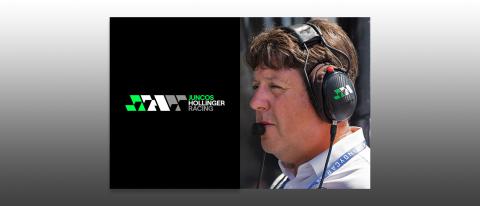
The new Juncos Hollinger Racing IndyCar team principal brings decades of open wheel racing experience to this exclusively created role.
Dave O’Neill has been working in the world of open wheel racing since his teen years, and more recently building up Formula 1 teams Manor and Haas F1. In early 2024, he joined Juncos Hollinger Racing (JHR) as team principal, which fields two cars in the NTT INDYCAR Series and one in the INDY NXT by Firestone series. O’Neill brings four decades of race car building and management experience to JHR, which began as a Formula Renault operation in Argentina and moved to the US to join IndyCar.
After college, O’Neill’s career took him to Formula 3 teams and F3 manufacturer Ralt, followed by nine years at Jordan Grand Prix, which is now Aston Martin F1. In 2009, he set up Manor Racing’s F1 effort over a span of just six months.
Five years later, Haas F1 hired O’Neill to do the same as sporting director and team manager for its Kannapolis, North Carolina-based team. Haas F1 placed 8th in the Manufacturer’s Championship two years in a row, an admirable achievement for a new team. Tired of the globetrotting F1 requires and wanting to be closer to home in Austin, Texas, O’Neill left Haas at the end of 2018 and became a partner in Esses Racing in Austin, which services GT3 race teams.
A call from Romain Grosjean, who had driven for Haas F1 and was now driving for JHR, brought O’Neill to visit JHR to consider a new role there. O’Neill then became team principal in early 2024.
PRI: You’ve been involved in racing for 40 years. How did that start? O’Neill: When I was 14, I used to ride my bicycle past a race team in a village called Faygate in West Sussex, England. One day I stopped in and asked, “Do you mind if I have a look at the race cars?” The cars turned out to be Ray Racing Formula Fords. They let me clean the bodywork, and I started doing that in the evenings and on weekends. They invited me to Brands Hatch for Formula Ford Racing and Snetterton, Oulton Park, and a few other tracks. PRI: At JHR, do you have any top priority plans in place? O’Neill: The main project is to stabilize what we have. We compete against the likes of Penske, Andretti, McLaren, and Ganassi. Those teams do the same thing time and time again, which breeds consistency. So, my main target is to get the budget into the correct place, put a structure in place, and get the SOPs running properly to achieve that consistency. PRI: What are some key differences in doing that for IndyCar versus Formula 1? O’Neill: The technology is more advanced in Formula 1, and there are lots more moving parts. Typically, if you’re on a smaller F1 team, you’d have 300 to 400 people. On a larger team, you’d have 1,000 to 1,200. At JHR, there are 47 people on the books. There are not as many components on an Indy car that need servicing, and the parts are made a little bit stronger, so you don’t need as many people or as many parts. The IndyCar parts are not life’d-out as quickly. For example, a Formula 1 wheel has a life of four or five races, while an IndyCar wheel will do a couple of seasons. The crack checking and other procedures to get it to that point are far less compared to Formula 1.
Dave O’Neill, left, joined Juncos Hollinger Racing (JHR) as team principal this season, bringing decades of motorsports experience, including F1. Photos courtesy of Action Sports Photography, Inc.
PRI: The team’s media materials talk about doing things differently. Can you explain what that means? O’Neill: It means we basically do things with what we’ve got. For example, the same people that work on the car at the factory also work on it in testing and put it back together for the race. The bigger teams have more of an advantage, because they have more people and resources to draw on. PRI: Is there something you’ve learned in your varied career that you still rely on every day? O’Neill: Every day is a school day in my book. But I guess the quick answer would be to go with your gut sooner. My gut instinct has typically been the right way for me. I’ve found that when there’s too much worrying about things and too much deliberating, you dig more into something that doesn’t really matter. PRI: You’ve crossed paths with a lot of top people in racing. Are there a few people that you would point to as having a strong influence on you? O’Neill: For non-technical people, there’s a couple. I never had a father, he died when I was one. So, I have listened to people that I thought talked sense. One was Stuart Bennett. He has sadly passed. The other is Roy Baker. They offered me good advice and were solid people from the motor racing industry. When it comes to a technical guy, it’s probably Gary Anderson, who designed the Jordan F1 car. He was very solid and true to his words. He explained everything and made sense. He was also fun. Learning should be fun.
Follow this advice from the PRI Team for a smooth show experience this December in Indianapolis.
As the PRI Show quickly approaches, now is the time to finalize your plans. The PRI team is ready to share helpful tips that answer some of attendees’ most common questions.
Offering expert advice about how attendees can have a smooth registration process, PRI Show Manager Nicole Harless offered this helpful reminder: “The big one for registration is to make sure after you renew or buy your PRI membership you must register also. It is a two-step process.” Harless added, “Don’t stand in line to pick up your Show credentials onsite at the Indiana Convention Center (ICC). Instead, register before November 21 and get your badge in the mail.”
Many people who attend the PRI Show prefer to stay close to the ICC and Lucas Oil Stadium in downtown Indianapolis. However, those hotels are already booked. So PRI Senior Show Specialist Michelle Gallegos offered another option. “If you haven’t finalized your travel and housing plans, make that a priority. While downtown hotels are already reserved, plenty of rooms are still available near the Indianapolis International Airport and in Plainfield. Plus, guests of those hotels in the PRI hotel block can take advantage of complimentary shuttle service on Show days, December 12–14.”
To answer some more of these common questions, we have put together this Q&A for your reference. If you need additional information, visit bit.ly/PRI2024.
Q: I’m a race fan. Can I attend the Show? A: The PRI Show is open to qualified PRI Members only. Those who qualify must be involved in racing businesses, such as retailers, engine builders, fabricators, sanctioning organizations, track management, warehouse distributors, manufacturers’ representatives, and professional race team members. Q: Should I register in advance or register onsite in Indianapolis? A: It only takes a few short steps, especially if you have attended the PRI Show previously, to register online for this year’s event. Visit bit.ly/PRI2024 and enter the email address used to previously register. Please note that PRI membership is required to attend the Show. The annual $40 membership includes a host of benefits—including a digital subscription to PRI Magazine, subscription to the PRI eNewsletter, Save Our Racecars Advocacy, posting access on the PRI Jobs Board, and a variety of discounts—with PRI Show admittance just one of those benefits.
Register online by November 21, 2024, to receive your badges in the mail. Otherwise, badges will need to be picked up at Express Badge Pick Up at the Maryland Street entrance of the Indiana Convention Center. Q: How can I get the best hotel rate? A: PRI works closely with our 40-plus Indianapolis downtown and airport area hotel partners to guarantee the best hotel rates during Show week. A variety of hotel packages are available from affordable to upscale to suit different budgets. Downtown hotel options fill up quickly as soon as housing opens each year in June. Additional hotel options are available near the airport and in Plainfield, which include complimentary Show shuttle service, free airport courtesy shuttle, and free guest parking. Hotel reservations can be made online at bit.ly/PRIhotel or directly with Visit Indy Housing via email at prihousing@visitindy.com, or by calling 317-262-8191. Q: Should I download the PRI Show App? A: Yes! The app can be easily downloaded to your cell phone via the App Store or Google Play. View the floorplan, a list of exhibitors, all the events happening during the week, and customize a planner to schedule meetings with exhibitors and attend various sessions and events you don’t want to miss. Q: What should I wear? A: We recommend business casual when conducting business at the Show. Several downtown hotels are connected to the ICC via skywalks, but for those planning to head outside, keep in mind the average December Indianapolis temperatures range from a high of 39 degrees F to a low of 23 degrees F, so bring your warm weather gear. Rain and snow can occur during the event, so be prepared for inclement weather. A coat check is available in the Green Hall of the ICC and just inside the entrance to Lucas Oil Stadium from the adjacent parking lot.
And the most important component: wear comfortable shoes. Some PRI staff recommend changing socks during the day to avoid blisters, while others wear different shoes from one day to the next. Q: Where do I park? A: The Indiana Convention Center is located in downtown Indianapolis. For those driving into town for the PRI Show and staying at a downtown-area hotel, we recommend parking at your hotel and walking to the ICC. Those driving to the Show each day can park at the Lucas Oil Stadium lot or various lots near the ICC. View a list at downtownindy.org/explore/parking.
Complimentary shuttle service is available at official PRI hotels near the Indianapolis International Airport and in Plainfield. View shuttle routes and times at bit.ly/PRIshuttles. Q: Where can I go for dinner? Is it too late to book St. Elmo Steak House? A: For a complete list of restaurants near the ICC, view the current list at visitindy.com/restaurants/. Also, reference the Indianapolis City Guide, which will be included in the November issue of PRI Magazine.
St. Elmo Steak House fills up early with reservations. However, reservations may still be available for non-peak dinner hours. Adjacent to St. Elmo is Harry & Izzy’s, which has the same menu. So if you have a craving for St. Elmo’s world-famous shrimp cocktail and can’t nab a reservation, head over to Harry & Izzy’s. Q: Do I need to sign up for the Grand Opening Breakfast, PRI Happy Hour, or PRI Education sessions? A: No. All PRI attendees and exhibitors are welcome to attend these complimentary PRI-sponsored events. The Grand Opening Breakfast will take place in the Sagamore Ballroom, which is located on the second floor of the ICC on Thursday, December 12. Doors open at 7:00 a.m., with a complimentary hot breakfast served upon seating, and the program begins at 7:30 a.m. Speed Sport’s Ralph Sheheen will return to have a conversation with racing personality Travis Pastrana. Arrive early when doors open to grab your seat.
The PRI Happy Hour begins at 5 p.m., after the Show floor closes on Thursday, December 12. Head over to the lobby of Lucas Oil Stadium for free appetizers, drinks, and plenty of games and activities as you reconnect with industry friends.
PRI Education seminars are open to all who attend the PRI Show. No sign-ups are required. Topics include pricing policies, online advertising, customizing sponsorship decks, improving social media performance, tuning techniques, and more. For an Education list and schedule, visit https://bit.ly/PRIeducation.
Some quick tips of what to do:
Register before 11/21/24 to receive your badges in the mail.
• Go to bit.ly/PRI2024 to purchase or renew your membership and register for the Show.
• Wear comfortable shoes.
• Pick up your lanyard at the Show.
• Download the PRI App.
and don’t:
• Register after 11/21/24 or you will have to wait in line onsite.
• Forget registration is a two-step process. You must renew or buy a membership and then register.
• Leave your badge at the bar.
• Hesitate to call for help at 949-373-9230.
PRI Show Basics:
Indiana Convention Center,
100 S. Capitol Ave.,
Indianapolis, IN 46225
The PRI Show will take place
Thursday, December 12, and
Friday, December 13,
from 9 a.m.– 5 p.m.,
and Saturday, December 14,
from 9 a.m. – 4 p.m.
What do you value? And how is that value determined?
Needing to close out summer on a high note before my son returned to college and the PRI team mashes the accelerator preparing for the PRI Show, our family decided to head to the ultimate car lover’s dream at Monterey Car Week. Once we arrived, we traveled to a variety of events in Monterey, Carmel-by-the-Sea, and Seaside to view absolutely amazing cars. We were surrounded by the likes of Koenigsegg, Pagani, Ferrari, Porsche, Lamborghini, Bugatti, and even some obscure hypercar brands that were new to us. We even attended the Gooding & Company Pebble Beach Auction. While many of those same brands crossed the auction block, a few other cars piqued my interest. PRI readers would want to raise their bid card and hear that glorious “Sold!” about the following vehicles: 1960 Lotus Type 18 Formula 1 car (sold for $379,000), 1961 Chaparral Mk 1 (didn’t meet the reserve), 1976 Porsche 935 ($4,295,000), and a 1995 Ferrari 333 SP Evoluzione ($5,120,000).
No trip to Monterey Car Week would be complete without a stop at WeatherTech Raceway Laguna Seca for the Rolex Monterey Motorsports Reunion. After entering the complex, we headed straight for the Corkscrew, found a shady spot underneath a tree, and enjoyed the sights and sounds of vintage race cars, which included historic F1 cars plus IMSA, SCCA, Trans Am, Formula Ford, and more.
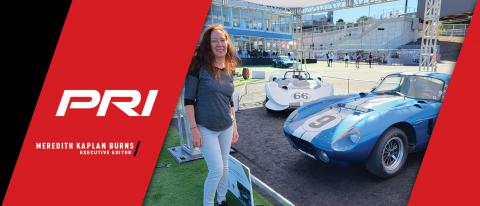
To our delight, this year marked the 50th anniversary of the event, and even more rare race cars were on display. We were greeted by the 1965 Shelby Cobra Daytona Coupe (chassis: CSX 2286), below, which is one of six coupes and the last constructed since it was used as a template. We were informed that the car has an eight-figure value!
So, how exactly is that value determined? Of course, it comes down to what someone is willing to pay for it. But not everything of value has a price tag. Something that I truly value are the relationships I have made in this industry over the years. I was happy to catch up with Hemmings’ Evan Perkins at Laguna Seca. Another relationship I cherish is with PR phenom Dean Case.
Have you ever played the game “Six Degrees of Kevin Bacon?” For those unfamiliar, the game centers around actor Kevin Bacon and how close he is—up to just six degrees of separation—with many other people in the entertainment industry who have worked with him. In the world of motorsports, the game should be retitled the “Six Degrees of Dean Case,” or actually, “Two Degrees of Dean Case.” If you are not familiar with Dean, you no doubt know someone in our industry who is. Dean is absolutely passionate about all things motorsports. His goal is to help people in our industry connect and further advance and prolong our sport. For more on how he is bettering racing, and those of us in it, turn to page 20.
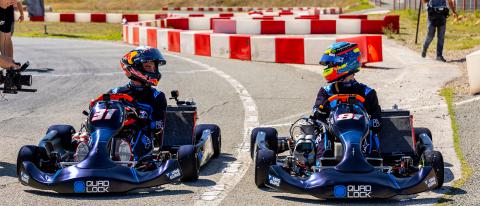
Quad Lock, a smartphone and action camera mounting solutions provider, recently hosted a karting showdown between Formula 1 star Oscar Piastri and MotoGP rookie Pedro Acosta.
Held at the Brignoles Karting circuit in France, the event saw Piastri mentor Acosta, who had never driven a kart before, as he tried to set a competitive lap time in a six-speed 125cc KZ2 shifter kart. The company used a variety of Quad Lock mounting solutions to document on-track action.
Speedway Partners, LLC, has entered into an agreement to operate Bloomington Speedway, Indiana, beginning with the 2025 season, according to published reports.
The speedway was first incorporated in 1923 and operated by the Mitchell-Priest family.
Additional information on the management team and plans for the 2025 season will be announced at a later date.
 MEMBERSHIP LOGIN