Tracking Safety

Submitted by johnc on Wed, 10/23/2024 - 09:25
image 1


Upgrading a race track to a safer facility takes commitment, planning, and no small amount of ingenuity.

As anyone involved in racing knows, safety is a constantly moving target. There is never a time when a track owner or promoter can sit back, relax, and put safety issues on the back burner. Cars get faster, new technology is introduced, new racing series are launched, and older facilities come due for upgrades. Every year seems to bring that one spectacular crash splashed across the internet that reveals a safety vulnerability nobody had considered previously.
Safety improvements are generally handled in one of two ways—hardware and training. For race promoters, that can mean investments in fencing, barriers, fire trucks, ambulances, and more. It also means specialized training and regular drills to ensure everyone knows what to do when bad things happen.
We spoke with a sampling of track operators for a paddock-level view of how they stay on top of safety concerns. Our sources had differing needs and approached the problem from different angles, but all had made recent safety updates aimed at protecting drivers, trackside workers, and fans.

image 2
The staff at No Problem Raceway runs through safety drills once a month, said Nelson Hoyos. The track owns two sets of Jaws of Life rescue tools, and Hoyos brings in broken-down race cars for the staff to practice with them.


Of course, many track owners and promoters have a racing background themselves, and safety isn’t just a technical issue, it’s deeply personal. “We take safety very, very seriously,” said Nelson Hoyos of No Problem Raceway, a drag strip and road course facility in Belle Rose, Louisiana. “I raced in the NHRA programs for many years and had the mishap of crashing three times. Let me tell you, I was very glad that the Safety Safari was there, and everybody had all the equipment and everything. Luckily, I never got hurt, it was never really bad, but it could have been. So we’ve taken the attitude here that safety is number one, and everything else comes secondary.”
“I was racing before I wound up getting a drag strip, and I still race,” said Terris Hicks of Capitol Raceway, a drag strip and drifting track in Crofton, Maryland. “I know you don’t have a whole bunch of time in those cars when something happens.”

Hammers and Nails

A major part of updating safety systems at a race track involves straightforward hardware like fencing, barriers, and fire suppression equipment. But many tracks in the US and Canada have decades of history behind them. Older tracks being put back into commission frequently have to take a top-to-bottom approach. What was good enough in 1984 doesn’t make the grade in 2024.
Millstream Speedway in Findlay, Ohio, is a 4/10-mile and 1/4-mile oval dirt track that first opened in 1952. It had sat unused for many years until purchased in 2023 by MS Properties and Matt and Beth Cogley. They reopened the track in June 2024.
“The track had sat idle for eight years, which didn’t help matters any,” said Beth Cogley. “All the bleachers had to be replaced. The pit-side bleachers boards were all completely bad, so we completely replaced the boards. We had to put in heel kicks on all bleachers. We had to put in other fall protection measures for both sides, grandstand and pitside. Also, for fan safety, particularly in the curves, and this is still ongoing, we are placing a chicken-wire fence on the fan side of the regular catch fence to prevent rocks and clods of dirt from flying up into the stands.

image 3
The inside wall at Beckley Motor Speedway was added “to keep the infield workers safer and give them some protection down there,” said Joseph Rush. The track’s guardrails were “old and rickety” when new owner Randy Kinder took it over, Rush said, so they were replaced as well. Photo courtesy of James Selleck.


“For the driver’s side, we completely replaced the surface. That was part safety and part just necessary,” Cogley continued. “We’re not going to a flagman-less system, but we have definitely upgraded the caution light system to the full LEDs with the remote controls that are available to both the flagman and up in the booth. We’ve put more around the track. There are now eight instead of just four. And with the brightness of those, the drivers have commented that they are much, much easier to see.”
Beckley Motor Speedway, a 3/8-mile dirt track in Mount Hope, West Virginia, also needed a substantial refresh after new ownership took over in 2022. “When the new owner Randy Kinder took over, he put a new catch fence in. That was before he ever opened,” said Beckley’s Joseph Rush. “In turns one and two it’s basically a straight opening to the pits from the outside of one and two, so the catch fence was added there. And then the guardrails that we had were old and rickety, so we added brand new guardrails before this season.”
Every track has different needs, with different safety vulnerabilities, which can sometimes result in tracks examining the same safety issue and coming to different conclusions. Such was the case with Millstream and Beckley Speedways regarding an inside wall for their oval tracks.
“Our track had an inside wall that made it difficult for cars to get off the track if they were having problems. One of the things we did to the great glee of many drivers—and our insurance company for that matter—was remove that inside wall,” Cogley said.

image 4
No Problem Raceway owns ATVs with Enforcer mobile fire suppression systems mounted on them. “That thing can outrun the fire truck to wherever we need to go,” Nelson Hoyos said. “The Enforcer will allow us to shoot foam from 50 feet out so we can put out a fire immediately.”


“There have been lots of drivers over the years who had hit that inside wall or bounced off the inside and hit the outside or hit other cars. From what I can tell, the fans are not as thrilled about that wall going away, but for a safety feature, the drivers are certainly glad it’s gone,” she added.
Beckley Motor Speedway took the opposite approach, adding an inside wall as a safety feature. “We’ve put in infield barrier walls,” Rush said. “That’s less for driver protection and more for infield worker protection because the infield had been totally open. That was something added to keep the infield workers safer and give them some protection down there.”
For No Problem Raceway, a heavy investment in safety gear gives the track a measure of independence from outside services. “We have our own ALS [Advanced Life Support] ambulance. I have a doctor who has underwritten our program so all my medics are ALS medics in-house. They are all state certified,” Hoyos said. “We have of course all the equipment and a fully equipped ambulance. We have two fire trucks. One is a small attack truck, and we have one large 35-foot multi-use vehicle that is a huge fire truck. We have ATVs with Enforcer systems on them, which are also mobile fire suppression systems. I have two sets of Jaws of Life that we own. I have a Safety Safari-type truck that has fire extinguishers and track cleanup and all the other things. All of our safety units have the safety clothes and the helmets and everything else. We’re pretty fully equipped. We want to chart our own course.”
At Capitol Raceway, Hicks reported that listening to racers’ concerns helped him upgrade the track’s safety features. “We have fire extinguishers all the way down both sides of the drag strip,” Hicks said. “What we’re doing now is putting stakes in the ground along the wall that say ‘Fire Extinguisher’ so that they don’t have to run to the wall and look around. They can look straight ahead and see the sign that says, ‘Fire Extinguisher.’

image 5A

image 5B
Before and after shots of Millstream Speedway show the old configuration, with the inside wall and light poles in the infield, and the new configuration, with the inside wall removed and all light poles moved to the outside of the track. The only permanent structure in the infield is the signboard wall, which also provides protection for the safety crews and wreckers. “Our motto is, if it’s not in the infield, no one can hit it,” Beth Cogley said.


“Most of the time when a racer has an incident, they panic. They’re running around their car trying to figure out how to put that fire out before you even get to them. If you get there in two minutes, it feels like two hours to them,” Hicks continued.
“One guy blew a transmission line, and his car didn’t catch fire, but it flamed up and went back out. He said, ‘I know y’all have fire extinguishers up top, but there are none down at the bottom.’ People give advice, and we listen to them to try to better things.”

Drill and Train

All the safety gear in the world is of little use if track personnel aren’t trained to use it. Our sources reported regular drills and training for staff. “We do it once a month,” Hoyos said. “We get the crew together and we’ve brought in several cars that we could cut up and use the Jaws of Life. We’ve had several broken-down race cars that we have been able to cut the cages out of.
“We have had AirMed [an air ambulance] here twice this year, going through their processes and what they do and what they need. We have our own set of lights that we put out for AirMed, so everyone knows exactly what they need to do. The gals upstairs in the control room have all the phone numbers to the hospitals, sheriff’s department, AirMed, to anybody and everybody that we need to make sure that we get in contact with those folks. And then luckily for me, my fire chief is the fire chief to the local community.”
That training and high standards pay off on race day. “Ninety percent of the people who we employ for the weekend races have some sort of medical training. Even my water box guys are medical, my ready line are medical, my staging people are medical,” Hoyos said. “We can get to wherever we need to go immediately. During big events when we have a large group of people in the grandstands, we have two guys on four-wheelers and a little ATV that are in charge of anything and everything happening in the grandstand area.
“I have a fairly easy entrance and exit to both of my grandstands,” he continued. “One of them is fully handicap available, the other one is not. Egress and ingress there is not an issue. We have two people on each side of the grandstands who are just roaming the grandstands to make sure that everybody is in good shape. And then I have another six medical people in the area in case something does go wrong, we can attend to it immediately.”
Capitol Raceway also charted an independent course after an experience with an outside company that overlooked a car that went down the track and caught fire, and track staff had to respond, Hicks said. “Instead of having an outside company, we have our own EMTs who are up-to-date licensed, and we have our own ambulance and fire truck,” he said. The track has defibrillators, oxygen, and its own EMT bags so employees can respond as quickly as possible.
The staff also performs regular safety drills. “We designed a car that doesn’t have any windows in it, no nothing, no motor or anything. We take that car and flip it upside down on the track and have our rescue team go out there and unbuckle somebody and get them out of the car. We see how much time it takes for that to happen.”
Safety is always front and center for Capitol Raceway, Hicks said, since so many of the track’s customers are street-and-strip racers who aren’t always regulars at a track. “We have rental helmets. If you don’t have a helmet, you can come in and rent a helmet,” he said. “It’s like a wild horse. You’re trying to tame them when they come in off the street.”
Even for experienced first responders, the evolution in motorsports safety procedures has been eye-opening. “We are extremely lucky that the three volunteer fire departments that surround our track are very interested and proactive in motorsports safety training,” Cogley said. “We’re also very near Bowling Green, which has the big tractor pulls every year, so there’s an element of that as well. All three of the fire departments in our area have been trained in multiple ways.
“My husband and I were both volunteer firefighters years ago and had taken the motorsports safety training for the Bowling Green tractor pulls,” Cogley added. “It’s neat to see how that training has been upgraded since we took it.”

SOURCES

Beckley Motor Speedway
beckleymotorspeedway.com
Capitol Raceway
thecapitolraceway.com
Millstream Speedway
millstreamspeedway.net
No Problem Raceway
racenpr.com
 

November 2024
By
Steve Statham

PRI: The Next Generation

Submitted by johnc on Wed, 10/23/2024 - 09:11
image 1


Student attendance at the PRI Show is growing—and that’s a good thing.

It’s long been said the PRI Show is about the business of racing. Yet there’s another element of the Show that is receiving renewed attention: encouraging the involvement of high school and college students who are interested in a motorsports career.
The reason is simple. As Michael Conley, PRI’s customer care specialist, succinctly put it: “Students are our future, the future of racing.”
Jose Escobar, SEMA’s manager of recognition programs, agreed. “Kids are our future. The industry needs to keep living and growing. Twenty years from now, the kids who came to the Show will be the ones exhibiting. They’ll be the ones we’re bringing into the professional world.”
Conley, Escobar, and other members of the PRI and SEMA staffs, along with educators and others affiliated with student groups, are working on programs and incentives to not only get students through the doors of the Indiana Convention Center (ICC) and Lucas Oil Stadium, but also provide added value to their PRI Show experience. The benefits to those students, Escobar said, “are endless.”

Student Membership

Those who want to attend the PRI Show must be a PRI Member. To qualify for membership, “you must be involved in the racing industry in some capacity—own a shop or be an employee at a shop, own a race team or be a part of a race team, or be a manufacturer for the racing industry,” Conley said.
Several years ago, acquiring that membership was made easier for students by introducing a Student membership for $20, half the cost of the Pro membership.
“The Student membership is essentially the exact same as the Pro level,” Conley explained. “It’s just discounted to a rate that helps students attend the Show on a college or high school budget. They get the exact same membership benefits that they would as a Pro member.”
To qualify for Student membership, the student must be 16 years or older and enrolled in an automotive performance-oriented curriculum. Students must also have an email address that ends with the “.edu” domain name. PRI can verify the student’s status in other ways, Conley said, which is helpful for those high school students who don’t have an email address affiliated with their school.
Access to the Show and all the events associated with it (more on that below) is the biggest draw for students, but there are benefits to membership beyond the ICC, Conley added. “A lot of performance retailers offer discounts that students can use on a personal vehicle.” Those discounts aren’t just on parts. Pit Weld U, for example, offers student members a “trial course for a welding seminar and a discount on welding workshops.”

Personal Impact

The Student membership level had a soft launch in 2021. At that year’s PRI Show, approximately 400 student members signed up, Conley said, a majority of whom came from the University of Northwestern Ohio (UNOH) in Lima, Ohio.
Trey Becker, a UNOH alum who is now vice president of business development, remembered “sitting down with a couple of my close friends from PRI at the SEMA Show a few years ago, and that’s where we hatched the idea of a Student membership. It’s a passion project for me, because I understand how much PRI did for my career, and how much PRI has done for me personally.”

image 2
Students who attend the PRI Show “have a chance to attend the largest racing trade show in the world and get to interact with the exact brands and movers and makers and faces that they’ve been looking up to their entire lives,” said Trey Becker of University of Northwest Ohio.


Becker said it was “amazing to see the energy behind it from the industry, and then to see the eagerness and excitement of the students signing up. When I got the report from the membership team that we had more than 300 students attend, I was just blown away.”
“Last year, at the end of the Show, we saw an increase up to roughly 800-plus student members,” Conley said. “So we doubled Student membership. We’re hoping to project on that same path moving into this year.”
At UNOH, PRI membership and attendance at the Show is voluntary, Becker said, but he encourages his students to sign up. “I want to make sure they understand, not only do you have a chance to sign up to be a year-long member of the performance racing industry, but you also have a chance to attend the largest racing trade show in the world and get to interact with the exact brands and movers and makers and faces that you’ve been looking up to your entire life. Before you know it, you’re going to be one of those faces on the Show floor that other people are looking up to.”

The Show Experience

Attending the PRI Show has multiple layers of benefits for students interested in motorsports.
“The most common feedback I get from students is that they had no idea how big our industry was and how many different avenues you could take in it,” said Becker. “It’s easy for them to get overwhelmed by the thousands of companies, all the different products and new releases, and all the things that are going on. But for students to pause, take all that in, and understand that they’ve aligned with a career path that has an infinite amount of opportunities that are all passion-driven, that’s incredible.”
At the PRI Show, “students get to see many different types of real-life opportunities and jobs that they would want to take on. They actually get to see a career path,” said Jerry Yang of Jerry Yang Racing, a professional drift team that also operates a race car fabrication shop in Atlanta, Georgia.
For the students who attend the Show from the School of Automotive Machinists & Technology (SAM Tech) in Houston, Texas, the PRI Show “serves as kind of a job fair,” said Brian Massingill. “Our students wear their SAM Tech shirts, and as they’re walking down the aisles people say, ‘Hey, I need you to come work for me.’ If you’re a SAM Tech student, that will open many doors.

image 3
The Hot Rodders of Tomorrow National Competition tests high school students’ ability to tear down and rebuild engines while under scrutiny and on the clock. It’s also “a way for students to get access to this industry,” said Brian Massingill. “By opening up the Show to them, they can see that there are some great careers available here.”


“The PRI Show has been great for our students,” Massingill added. “They really get to see and talk to a lot of industry leaders about what they’re planning for next year, what they’re going to roll out. Our students are having one-on-one conversations with people that they’re not going to be able to get on the phone.”


The Benefits of Networking

Massingill’s point about one-on-one conversations was echoed by a number of our other sources.
“The students can talk to marketing people, owners, people involved in all aspects of racing,” said Yang. “They’re talking to the industry leaders of where they want to be, and I think they draw a lot of inspiration from people who have done what they’re looking to do.”
“Students may understand the engineering on their car, but they may not understand the business of the sport,” said Dean Case, who works with the 18 student groups affiliated with the SAE’s Southern California section. “You go to events like the PRI Show because that’s where the business is discussed. You’re going to meet people at the PRI Show that you’d never meet at a race track. And you get to have those conversations without having to shout over all the engines.”

image 4
“Speed networking” at the Gear Up Girl Lunch is “designed for students and women new to the industry to talk to women already in the industry,” said SEMA’s Nicole Bradle. “The structured networking makes it easier for the students to connect with other women.”


“Our students love to attend the different networking sessions, whether it’s the Grand Opening Breakfast or the different breakout groups that happen through some of the organizations during the week,” Becker said. “A lot of them also really enjoy the education seminars, being able to learn from current industry professionals about a topic that they know inside and out.”
Becker worked with the PRI staff last year to “volunteer our students to help scan people into those sessions,” and “all who were involved absolutely enjoyed it,” he said. “They got to sit in on the classes they were involved with, and they got to interact with the makers and movers of our industry as people were coming to those sessions. You should have heard the excitement in their voices when they said, ‘I got to meet this drag racer, or this drifter, or this guy from this company I’ve been looking up to my whole life.’ Where else can you do that besides PRI?”

Student Programs

To facilitate networking, PRI has set up events at the Show specifically for students. One is the aptly named PRI Student Program Industry Networking Breakfast, to be held Friday, December 13 from 7:45–9 a.m. in Sagamore Ballroom 6 and 7. “Students interested in the automotive industry can network with companies, potential employers, or just people that they’re interested in to learn more about potential career options,” Escobar said. “For the older students who may be close to graduating, they can get information about job openings that may be available at these companies. It’s a really good opportunity for students to get a behind-the-scenes look at potential careers they’re exploring after they’re done with school.”
Escobar said the Breakfast currently draws between 200–300 students, and he would like to see that number grow. “We are encouraging instructors to bring out their entire class. It’s a pretty big thing.”
Another networking opportunity, for women only, is the Gear Up Girl Lunch, put on by the SEMA Businesswomen’s Network (SBN). This event takes place on Friday, December 13, from 11:45 a.m. to 1 p.m. in Meeting Room 208.
“The Gear Up Girl Lunch is designed for students and women new to the industry to talk to women already in the industry, creating a network for women to connect,” said Nicole Bradle, SBN Council Director.

image 5
The PRI Student Program Industry Networking Breakfast provides an opportunity for students interested in the automotive industry to “network with companies, potential employers, or just people that they’re interested in to learn more about potential career options,” said SEMA’s Jose Escobar.


“It’s a speed networking event,” Bradle explained, “designed to give attendees the opportunity to meet many different women.” Following lunch, “half of the attendees get up and move to the next table. They go round-robin, so they have the chance to meet, at least, half of the room.” Facilitating the networking experience is a list of questions already on the table for attendees to answer.
“The structured networking makes it easier for the students to connect with other women,” Bradle said. “They don’t have to ask the questions. They can just connect and start talking.”
Not all the questions are performance-related, by design. “They might find out about mentors, or about how these women got into the industry,” Bradle said. “They also learn about career pathways and other professional findings, to help make other connections. Some women are passionate about the industry, and some are in the industry, but aren’t necessarily car racing enthusiasts. That’s why there’s a variety of questions.”
The Hot Rodders of Tomorrow National Competition that takes place at the PRI Show is not about networking, at least on the face of it, but it is a way for high school students “to get access to this industry,” Massingill said. The four-day event involves student teams from around the country tearing down and rebuilding engines in timed competition.
For more than a decade, SAM Tech has offered scholarships of up to $10,000 for the competition winners, but all the teams that make it to PRI leave with something, Massingill said. “We do this to help ease the financial burden for these students who show they have a real passion for the performance industry. These are the kids who aren’t necessarily going to play football or join the orchestra after graduating high school. They want to use their hands-on skills to find a lifelong career. By opening up the Show to them, they can come and ask intelligent questions and get intelligent answers. They can see that there are some great careers available here, and that will drive them to a school like SAM Tech that can train them to get out there.
“One of the big things that we have to do is show young people, yes, you have to work,” he added. “But there is so much money to be made in our industry. And look at all the fun you get to have.”

Focus on the Future

From Massingill’s perspective, there is a “massive need” for new, technically skilled employees in the automotive industry and beyond. “There’s more work to be done, and seemingly fewer people. It’s not just NASCAR, it’s Monster Jam, SpaceX, Boeing, Blue Origin, all these companies need help with everything. Our CNC, our block, our cylinder head, and our EFI graduates are getting hired all across the world. We have more employers than we do graduates, and the number of jobs that needs filling is higher than we’ve ever seen. If we can close that up, we can start fixing a lot of problems. I think that starts at PRI.”
The PRI staff is keenly aware of that role, and the organization’s student programs are about to get more attention.
“We have a new president in the office, Michael Good, who is very high on the future of the racing industry, and he knows that starts with our college and high school programs and institutions,” Conley said.
Good, who joined PRI as president earlier this year, believes that “the students of today are the future employees of the companies that are associated with PRI tomorrow. We need to continually invest in these students and introduce them to the innovations of our industry, where the industry is, and where the industry is going.”
“I think students should be excited for what is to come,” Conley added. “There are a lot of changes that will be taking place, all for the better, going into the 2025 Show. So it’s only up from here. It’s a really good time for a student to be getting into PRI, because they’re the future, and we know that.”
“I encourage every other school out there to get involved,” Becker said. “Whether they send three students or 30 students or 300 students, they’re all going to have an incredible time at the PRI Show.”

SOURCES

Hot Rodders of Tomorrow
hotroddersoftomorrow.com
PRI
performanceracing.com
SAE SoCal
saesocal.org
School of Automotive Machinists & Technology (SAM Tech)
samtech.edu
SEMA
sema.org
University of Northwestern Ohio (UNOH)
unoh.edu
Jerry Yang Racing
jerryyangracing.com


November 2024
By
Drew Hardin

Creating A Brighter Buzz

Submitted by johnc on Wed, 10/23/2024 - 09:00
image 1


Recent advances in battery technology are reducing costs and making EV racing accessible to more people in the motorsports community.

When it comes to electric vehicle (EV) motorsports, the conversations around opportunities and limitations are generally centered around one critical component: the battery.
“The battery system is probably the most expensive part of building a high-level EV drag race car, and probably in most forms of racing,” said Jeff Lane, co-founder of MLe Racecars, Seattle, Washington. “However, the battery technology keeps getting more powerful, less expensive, and lighter weight.”

image 2
MLe Racecars worked with Ford to develop the Super Cobra Jet 1800, the fastest full-bodied EV drag car in the quarter mile. Recent improvements to the car’s battery increased the motor’s output. “Now it’s the Super Cobra Jet 1800, because we’re getting 1,800 crankshaft horsepower out of this car,” said MLe’s Pat McCue.

Low Maintenance Pays Dividends

EV battery technology is continuously improving, with the rate of change growing exponentially. However, the initial cost of batteries is still high. Pat McCue, Lane’s business partner and fellow co-founder of MLe Racecars, explained that while the initial cost of EV drag cars is significantly more because of the battery and powertrain, racers can make up the cost difference due to easier maintenance.
“If you take care of your batteries, they last a long time and have zero maintenance,” explained McCue. “The cost of operation is significantly lower, so after about three years, you are breaking even, and then you are going to start recouping money.”
Competitors in the Las Vegas, Nevada-based Nitrocross series are seeing similar results. Nitrocross introduced its fully electric FC1-X rallycross car in 2022, and, according to Chip Pankow, team owners were initially skeptical about the costs associated with switching to EV. But those attitudes are changing.
“About halfway through the [2022] season, the team owner from our largest team that had the most cars came to me and said, ‘I can’t believe how low our running costs are,’” said Pankow. “The running costs have been significantly less than half of what it costs to run an internal combustion vehicle at that level, because they need less staff and don’t need a whole team on the engine.”
To put the cost of EV batteries in perspective, the team at AEM Electronics, a Hawthorne, California-based company that specializes in performance electronics and EV conversion products, drew comparisons between the cost of an EV battery and that of a fuel system in an ICE-powered vehicle.
An AEM company source supplied the following example: Using the average of $350/kWh rate, a moderate 60kWh pack could cost upwards of $20,000–$25,000, once you consider the cost of raw cell/modules and time to design and build the custom pack. Although this is a steep cost on top of buying motors, inverters, charging hardware, and more, consider the battery pack purchase similar to buying the entire fuel system when building an ICE engine, plus all of the fuel for the next five years in one shot.
In the world of motorsports, cost is relative. While new adopters of EV racing technology are paying a premium for batteries and other components, the good news is that technological advancements are already reducing costs and making EV racing accessible to more people.

The Race to Keep Pace

With increased attention shifting toward EV vehicles—both on the track and on the road—the race to keep pace with battery technology is ramping up.
Development of a better battery is likely being driven by consumer EV demands, reported a source from AEM, who predicted these developments have the potential to be realized in the next five to 10 years. Some of these new battery technologies include Graphene and Solid State batteries, which promise up to 60-times the performance of current lithium cells in terms of power density for use in high-performance applications. Sodium-ion and lithium-sulfur batteries are other emerging technologies that aim at reducing costs and have the potential to bring consumer EV prices down by a significant amount, the source added.

image 3
Hypercraft’s modular HyperPack EV batteries can be used individually or in series to create custom packaging and output solutions. Their ruggedized enclosures are “built for harsh environments and demanding applications,” said a company source.


While EV is a relatively niche discipline in today’s motorsports landscape, unlocking new battery performance is one of the major keys to increasing adoption and interest in EV motorsports.
“The technology is doubling every two to three years in battery technology, battery weight, and battery performance,” said McCue. “So as that progresses and batteries get cheaper, you’re going to see more opportunities to make lighter weight cars that more closely mimic SFI chassis specs. Then we can fit these cars into more and more opportunities to race.”
MLe Racecars has been working hand-in-hand with Ford to develop the Super Cobra Jet 1800—the fastest full-bodied EV drag car in the quarter mile—which clocked a time of 7.759 seconds at 180.14 mph at the 2024 NHRA Winternationals. This impressive run was made possible by their ability to develop a lighter and higher performance battery.
“Our new battery is what people refer to as stiffer,” said McCue. “When you draw energy out of a battery, the battery voltage sags. So the stronger your batteries, the more performance your batteries can produce. The stiffer that sag gets, the voltage doesn’t sag as much by employing the same amount of current out of them.”
After upgrading their Super Cobra Jet 1800, McCue and Lane credited the increased power and performance to this “stiffening” of the battery. “That alone is really the performance gain,” said McCue. “The battery systems allowed us to pull the same amount of current out of the batteries and maintain the voltage to a higher level. When you do volts and amps, you get watts, and watts are directly tied to horsepower. So that’s where we got the additional 400 horsepower in this car. Now it’s the Super Cobra Jet 1800, because we’re getting 1,800 crankshaft horsepower out of this car.”
Kirk Miller at Hypercraft, an EV powertrain manufacturer in Provo, Utah, was also optimistic about the opportunity to see battery costs fall. He cited the primary driver as being a continual reduction in the costs of anodes and cathodes, the two electrodes found in a battery that facilitate the flow of an electric charge.
“It seems like every day someone invented a new anode and cathode that has a different material that’s more readily available, whether it’s sodium or iron,” said Miller. “If you can integrate that into a battery pack, versus having to use precious metals that reside in different parts of the world, that’s going to bring the cost down dramatically. I think over the past year, there’s been another 50% reduction in anode and cathode costs.”

Controlling Thermal Runaway

While driving down the costs of EV batteries will give the sector a boost, one of the most critical areas of development revolves around battery safety.
Specific statistics on passenger vehicle fires are murky, but an Edmunds.com report found that EV fires—known as thermal runaway events—are significantly less common than vehicle fires involving ICE-powered vehicles. While that may be the reality, EV fires tend to garner outsized media attention—particularly in the motorsports space—which underscores the importance of developing additional safety measures for EV batteries.
“I think it’s really important that motorsport does it right, because if you have a battery fire in motorsport, that gets amplified around the world,” said Pankow. “If you look at the number of EV fires versus the number of internal combustion car fires, there’s a pretty big delta there, and it’s to the EVs’ advantage. They’re quite rare.”
Nevertheless, EV fires are dangerous. Without proper precautions in place, they pose a significant safety risk. In Pankow’s view, this creates a massive responsibility for sanctioning bodies.
“The only thing that concerns me is if you get a group that comes in, and they start running EVs, and the right procedures aren’t in place,” said Pankow. “That’s always a concern because that can look bad for everyone. It’s a matter of being smart and having the right processes in place for whatever you use.”

image 4
AEM Electronics’ Battery Management System is made up of a Vehicle Control Unit (VCU), the BMS Master, and BMS Satellites. The VCU communicates with the BMS via the Master, and the Satellites can expand the capability of the Master as needed for custom battery pack configurations.


As for the right processes, those begin with a high-quality battery management system (BMS). “The battery management system is the most important system on an electric car these days. It’s actually more important than the battery itself, or the motor system,” said McCue. “A battery management system looks at every single cell. It is the brain. While there’s a whole different system that controls the motor, the BMS is what tells the motor controller that it’s okay to go. So if the BMS senses something, it can shut the whole car down, and it can turn the chargers off and not let you overcharge the battery.”
While BMS is now standard on all electric vehicles, the motorsports industry has introduced additional safety measures to reduce risk. In fact, coordination between the racing industry and OEMs is leading to enhanced battery safety.
“There’s so much happening in the OEM world that is transferring to the race world and vice versa,” said McCue. “For instance, in the last couple of years, there are now sensors that you put inside your battery box that can identify when a battery starts to vent gases, and that alerts the BMS system to turn the car off to stop you from taxing that cell.”
Another big safety development in EV batteries involves a distributed battery system. “There’s fused separate boxes, so if there was ever a problem, the fuse would open and shut things off, so you don’t have a whole pack that’s going to burn,” said Lane. “Usually when you see [EV fires], say with a Tesla for example, that’s because the [batteries] are all linked together. When one starts burning, they aren’t going to stop burning until every single battery is burned. There’s way better technology in the racing world to prevent that from happening.”
Adding flood ports to batteries is another way to limit the spread of a potential thermal runaway event. In fact, Hypercraft has gone a step further by integrating flame retardant materials between the battery cells.

image 5
The reach of EV technology is expanding beyond Formula E, drag racing, and Nitrocross. At the 2023 PRI Show, MRE Racing displayed this TQ Midget converted to electric power.


“In some of the motorsports [sanctioning body] rulebooks, they have flood ports,” said Miller. “So now you’re not spraying on the outside of the battery, you actually penetrate the battery and extinguish the flame propagation from cell to cell. In our case, we have flame-retardant material in between all the cells. So if you puncture a cell, it is self-mitigating. It won’t expand and won’t do a full runaway. It might make a few cells, but the tight closure with all the flame-retardant material will prevent full propagation.”
Just as in any form of motorsports, fire prevention begins with preparation and communication. “The best way to mitigate a thermal runaway situation is it being prevented,” said Miller.
Fortunately, the continual emergence of new EV battery technology is paving the way for a safer, faster, and more affordable future for EV racing.

SOURCES

AEM Electronics
aemelectronics.com
Hypercraft
hypercraftusa.com
MLe Racecars
mleracecars.com
Nitrocross
nitrocrossracing.com


November 2024
By
Jack Haworth

PRI SHOW: On The Grid

Submitted by johnc on Wed, 10/23/2024 - 08:41
image 1


New products, new exhibitors, advanced technology, education, networking opportunities—can you afford not to attend the PRI Show this year?

“Do you really need to attend?”

In the world of business trade shows, the answer to this critical question comes down to a simple distinction—whether exhibitors and attendees find value by attending that show. In the case of the PRI Show, the answer to that question is clear.
According to a post-Show survey conducted earlier this year, more than 80% of exhibitors describe the PRI Show as a “must-attend event.”
The PRI Show—now in its 36th year—will feature thousands of highly motivated motorsports industry consumers walking the aisles of the Indiana Convention Center (ICC) and Lucas Oil Stadium on December 12–14. Each year, racing entrepreneurs flock to Indianapolis, Indiana, from all 50 states and more than 70 countries.
The Show will feature more than 1,000 companies and well over 3,500 booths exhibiting across 750,000 gross square feet of space. Buyers will have access to the newest race products, services, machinery, simulation and testing technologies, trailer exhibits, and much more.
The biggest business event in motorsports is a can’t-miss opportunity for anyone involved in a serious motorsports business, whether it’s for meeting connections, discovering innovative technology, introducing new products, or simply mingling with the best minds in the industry.

Power of Connection

For many attendees, the value begins with the opportunity for in-person interaction on the Show floor.
“Face-to-face is always better,” said Andrew Johnson, a custom engine builder at LSX Swap Solutions, East Orange, New Jersey. “Even over the phone, it’s difficult to explain something or point something out because you’re basically just going off the description. At PRI, the parts are here, the people are here.”
Featuring a wide variety of products and consumers from all corners of the motorsports industry, the PRI Show also provides a rare opportunity for businesses to reach new customers from different disciplines.
“We have more variety of booths, manufacturing, distributors, and products,” said Karin Davidson, PRI Show director. “You can search the internet all you want, but you should see it, touch it, feel it, hear about it, and talk about the products with experts at the Show. That’s how you get that industry knowledge to go faster. The proof is in the pudding.”

Timing is Everything

December is offseason for nearly all forms of motorsports, which means the entire industry is able to gather in Indy at the PRI Show.
This optimal timing turns the PRI Show into an annual gathering and celebration of the entire motorsports industry. In turn, this provides exhibitors and attendees direct access to the entire motorsports distribution pipeline. It’s no secret that business moves made within the aisles of the Indiana Convention Center and Lucas Oil Stadium will have a direct impact on the moves made on-track during the 2025 season.

image 2
Discover new products and services at the PRI Show. You never know what you will find until you walk the aisles and seek solutions for problems you may have encountered this season.


“The PRI Show is really important, especially in Q4 when decision-makers are looking at the upcoming year,” said Derek Yoder at Frontstretch.com, Mount Joy, Pennsylvania. “They’re seeing where they can really start applying where their dollars are going and what trends they’re seeing going into the next year.”

New Opportunities

Whether it’s the optimal timing or the valuable in-person connections, the PRI Show is to refuel and recharge racing businesses as they prepare for the next season. One of the best strategies for accomplishing that goal is finding new customers, even if they race something different than current customers.
“Maybe a team is specifically going to the PRI Show for meetings or looking for a new transmission partner for the next race season,” said Jim Liaw, PRI general manager. “But they also have a driveshaft issue, and there’s somebody else at the Show that they can talk to about that. There’s some intent, but really the variable and the valuable parts of coming to the Show are the unintentional opportunities.”

image 3
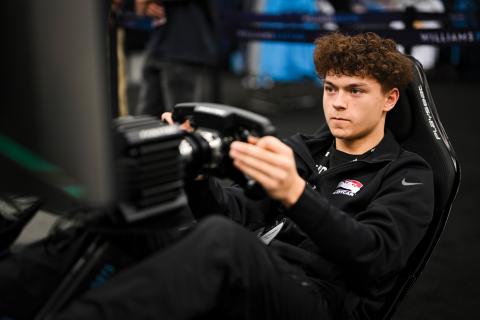
Sim racing returns to the PRI Show due to its rising popularity and a critical entry point into motorsports for Generation Z.


While PRI Show attendees benefit from having access to a wide range of exhibiting companies, the same can be said for the exhibitors. Connecting with existing customers will always be important, but those three days in Indianapolis are many companies’ best opportunity to expand their customer base into new motorsports segments.
“That’s the whole point of being an exhibitor at the Show,” said Liaw. “That company will have a product, but even though they may not be releasing a new product line at the Show, they can discover a whole new group of people that can help them grow and expand their business, without having to come out with a whole different line of products.”

Learn, Grow, Win

Beyond business opportunities, the PRI Show also presents industry members with a prime opportunity to gain valuable knowledge from education sessions, seminars, and more. Education is one of the key missions of PRI, making sure that our industry is at the cutting edge at the track, at the shop, and in the boardroom.
“PRI is proud to be in a leadership space to help lead our industry into topics, conversations, racing disciplines, and new fields—offering that first look to people,” said Liaw.
Twelve seminars are part of the PRI Education lineup (see page 76), while additional presentations from PRI exhibitors are also available with even more learning opportunities (see page 82), so you can return home armed with up-to-date information to apply right away and share with customers.
The final checkered flags of the 2024 season are waving, but now it’s almost time for the green flag to fly on the race to win the offseason. A race that kicks off at the 2024 PRI Show in Indy—will you be on the grid?


November 2024
By
Jack Haworth

Kenny Nowling Appointed President of IHRA

Submitted by ajh on Tue, 10/22/2024 - 15:48
IHRA Motorsports Logo


The International Hot Rod Association (IHRA), based in House Springs, Missouri, has appointed Kenny Nowling as its new president, effective immediately.

With a career spanning more than three decades, Nowling has served in various capacities within the drag racing community, including as a promoter and organizer of drag racing events.

In his new role, Nowling will oversee several aspects of IHRA's operations, including track partner relations, racer relations, event management and strategic marketing partnerships. He will also spearhead initiatives to expand the association's reach and increase participation at all levels of drag racing, the organization said.

"I am thrilled to welcome Kenny Nowling as president of the IHRA," said Larry Jeffers, IHRA owner and CEO. "His extensive background in drag racing, innovative approach and dedication to the sport make him the perfect choice to lead the IHRA. I am confident that under his leadership, the IHRA will continue to grow and thrive."

For more information, visit ihra.com.

October 2024

Gold Eagle Company Launches New Content Creation Division

Submitted by ajh on Tue, 10/22/2024 - 15:45
Halsted Creative


Gold Eagle Company, the Chicago-based manufacturer of STA-BIL, 303 and Hot Shot’s Secret performance lubricants, announces a new company division, Halsted Creative.

Halsted Creative is the marketing creative division of Gold Eagle Company’s TV, radio, digital and print assets for the company’s chemical-based brands. The new division will now make these services available for contract by outside clients, including SEMA member companies.

Halsted Creative’s capabilities include product and lifestyle photography, TV commercials, documentaries, product videos, digital ads and more.

For more information, visit halstedcreative.tv.

October 2024

Lucas Oil Late Model Dirt Series Reveals 2025 Schedule, New Presenting Sponsor

Submitted by ajh on Tue, 10/22/2024 - 15:30
Lucas Oil Late Model Dirt Series logo


The Lucas Oil Late Model Dirt Series has announced new details regarding the 2025 season, including the schedule, an expanded partnership with FloRacing and new details regarding points and prize funds.

The expanded partnership with FloRacing includes an extension of the network's role as the exclusive streaming partner of the series. FloRacing will also now serve as the Lucas Oil Late Model Dirt Series presenting sponsor.

Additionally, the series has increased investments in its total season-long points fund and winner's circle program. The points fund will increase to $1.3 million, with the champion receiving $250,000, and the winner's circle program will now support 15 full-time drivers, up from 12 in previous years.

The series also released its full 2025 schedule, which includes 25 different venues across 16 states. The 58-race season will begin on January 14, 2025, at Golden Isles Speedway in Brunswick, Georgia, and concludes on October 18, 2025 at Eldora Speedway in Rossburg, Ohio.

For more information, including the 2025 schedule, visit lucasdirt.com.

October 2024

Registration Opens for RPM Promoter Workshops in Reno, Daytona

Submitted by ajh on Tue, 10/22/2024 - 15:27
RPM Promoters Workshops


Registration is now open for the 52nd annual RPM @ Reno Western Workshops and RPM @ Daytona Race Promotion Monthly workshops.

The workshops include a lineup of speakers and presenters, as well as networking and socializing opportunities, and are designed to help promoters garner ideas, grow their businesses and connect with colleagues and industry professionals.

The RPM @ Reno Western Workshops are scheduled for December 3-5 in downtown Reno, Nevada, at the Silver Legacy.

The Daytona workshops return to The Shores Spa & Resort in Daytona Beach Shores, Florida, and are scheduled for February 9-11, 2025.

For more information or to register for either event, visit promotersnewsletter.com.

October 2024

Los Angeles-Based Forest Road Acquires ERT Formula E Team

Submitted by ajh on Tue, 10/22/2024 - 15:25
Kiro Race Co


The Forest Road Company--a Los Angeles-based investment firm--has acquired the ERT Formula E Team and rebranded to Kiro Race Co. ahead of Season 11 of the Formula E World Championship.

The team has also formed a technical partnership with Porsche Motorsport. The collaboration will see Kiro Race Co. equipped with Porsche's powertrain technology.

With the backing of Forest Road--as well as David Kaplan and Bennett Rosenthal, co-founders of Ares Management--Kiro Race Co. is strategically placed for the long term and will be focused on driving sustained growth. Kaplan, who provided capital for the acquisition along with Rosenthal, will act as managing partner of the team.

For more information, visit fiaformulae.com.

October 2024

Mustang Week Texas VIP Registration Opens

Submitted by ajh on Tue, 10/22/2024 - 15:23
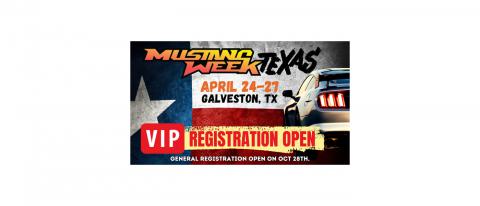
Mustang Week Texas


VIP registration for the first-ever Mustang Week Texas, a multi-day celebration for Ford and Mustang enthusiasts, is now open.

Organized by Power Automotive Media, the event is scheduled for April 24-27, 2025, in Galveston and Houston, Texas.

Event highlights include road racing, karting and autocross at Mustang Week Track Attack at MSR Houston; drag racing, spectator drags and drifting at the Mustang Week All-Ford Drag Day at Houston Motorsports Park; an all-Mustang Car Show and an all-Ford Cruise-in at Moody Gardens. Saturday's events include Mustang Week MAYHEM! at Moody Gardens, a festival-style event featuring music, food trucks, drifting, a burnout show, dyno competition, carnival games, a mechanical bull and fireworks show.

For more information or to purchase tickets, visit mustangweek.com.

October 2024