The 2012 PRI Show Exhibitor Service Manual Is Live Online!

Submitted by Anonymous (not verified) on Mon, 07/02/2012 - 12:01
Everything you need to exhibit for the upcoming Performance Racing Industry Trade Show is now available online with the launch of the 2012 Exhibitor Service Manual.

This invaluable resource has been updated and is more user-friendly than ever. Go to http://www.performanceracing.com/tradeshow/service-manual/ to begin making all of your exhibit and Trade Show arrangements–everything from exhibitor forms to information on booth guidelines, utility services, catering and much more.

Request complimentary printed promotional materials. Apply for exhibitor and guest credentials. Secure access to reserved trailer and rig parking.

Don't wait–take advantage of these services and more. Plan for a successful 2012 PRI Trade Show today.
July 2012

Everything EFI

Submitted by Anonymous (not verified) on Tue, 06/19/2012 - 11:01
I recently had the opportunity to sit in on an ACP (Accelerated Certification Program) course at EFI University in Temecula, California. While there, I chatted with Ben Strader, founder and owner, about what sets EFI University apart and makes it different from other models of its kind. He explained that facilities, equipment and structure are the distinguishing elements his EFI learning center provides.

“This is a place where someone can come who really wants to learn how to do this but doesn’t want to experiment on his own car and blow it up,” Strader said. “So where else can you go and have access to different types of ECUs and different vehicles and different dynamometers in a structured environment with an actual professional tuner to look over your shoulder and say, ‘Hey, I’ve made that mistake you’re about to make so don’t do that, and here’s why.’”

Another strong point is its diversity. “We’ve specifically taken this class on the road and have taught in about nine different countries. But every class that we have here, we’ll have people from all over the 50 states, from Canada, Mexico, all over the Middle East and Asia, Australia,” Strader stated. “That is kind of challenging for us, but I also feel like that’s our strong point. We are really good with our communication skills and making sure nobody leaves here not knowing what we were talking about.”

In addition, students leave with multiple avenues of follow-up support, including the instructor’s contact information, online student forums and the ability to contact manufacturers reps for specific types of ECUs.

I attended one of the more advanced classes, but EFI University caters to all skill levels—novice, advanced and everything in between—by offering a variety of classes, including EFI 101, EFI 102, EFI Advanced, ACP and more. “The instructor will stand up there and talk about fairly complex material at a level that, if you have an engineer in the class he’s not getting bored, but if you have a guy who’s just out of high school, he’s not totally blown away and lost and doesn’t get any value out of it,” Strader explained.

In the novice courses or weekend seminars, there may be 20–30 students in a class, but the amount of information they get is slightly less because there’s less time with more people. But in the advanced classes, “we really want to maximize the amount of time that each student could spend with the instructor, both in the classroom and on the vehicle.” So in my ACP class, for example, six students was the limit (two per dyno).

I observed the class figuring out which numbers to put into the engine map on the computer to get the highest performance out of the vehicle, and also how they came up with those numbers through mathematical equations and calculations.

Afterward, students got to apply the skills they learned in the classroom by tuning different types of cars in the shop that were set up on a variety of dynos. I even got into the driver’s seat to participate in the engine tuning process as well.

Strader also explained, “I think a lot of people walk in the door thinking that engine calibration/engine mapping/engine tuning is a black magic, that it’s some secretive art form that only a few racers get to know, and a lot of racers do try to propagate that myth. But I think what they’re coming here for is that search for the truth, and what they find out is that everything that we do and everything that we teach here is based on math and science. You can explain it, you can prove it on a calculator, and then we take it out of the classroom and into the shop with a car on the dyno, and the math works.

“Part of it is the classroom and getting the information and notes and studying and doing the homework, but if you can’t actually take that out and do practical application and physically use it, then the learning curve isn’t as strong.

“So what’s different about us are the facilities and the structure—the ability to have an actual predetermined learning environment so you don’t get yourself in trouble—and it’s an actual learning institution set up specifically for you to be hands-on. If you look at what we have to offer, you can’t get that anywhere else.”


June 2012

Photos From PRI's North Carolina Reception

Submitted by Anonymous (not verified) on Mon, 06/04/2012 - 09:51
The PRI team had a great time catching up with everybody at the PRI Reception in North Carolina. About 200 members of the racing industry attended the Reception in Huntersville, North Carolina, at the Red Rocks Café. The reception is held annually by PRI in the Charlotte region, during the week between the NASCAR Sprint Cup All-Star Race and Coca-Cola 600.


Hot appetizers and cold refreshments were served, as local racing business people met with racing business people in town for the big race week.

It was great fun, and we want to thank everybody for coming to the Red Rocks Café to join us. It's always a valuable experience for us to catch up with so many of our industry friends and colleagues. And there were bits and pieces of news and insights that will make their way into the pages of PRI magazine.

Eight members of the PRI team were on hand to greet guests, while the North Carolina Motorsports Association also helped in manning the reception. Several members of the PRI team spent time during the week driving throughout the Charlotte/Concord/Mooresville region to visit with local racing businesses.

 
June 2012

Decisive Inclusion

Submitted by Anonymous (not verified) on Sun, 05/27/2012 - 11:58
Racing crew chiefs sign up for pressure-packed decision making and relish the opportunity to make important choices with split second efficiency. With all the distraction and activity found during racing action, crew chiefs analyze available information and act with the authority creating a teamwork model that applies in business.

Crew chiefs sit atop their pit box perches and look forward to the challenge of hundreds of crunch time decisions. Like crew chiefs, great managers  relish making important decisions. During the race battle there is little time to consult others. Prior planning identifies the specific roles of each team member and with no more than a single word, or hand signal, eager team members perform their individual duties in a well choreographed team performance. Teammates that are included perform based on their own integrity. Individual contributions are made even in an unsupervised fashion.  Quality people make good choices based on their own values and always do the right thing even when others aren’t looking.

Clear direction and role identification allows team members to complete tasks in a nearly automatic fashion. Repetitions and rehearsal during the week results in great work on race day.  These same team members are a wealth of information. The people that are on the floor, and at the center of activity, know the strengths and weaknesses of the entire organization. Information at the point of attack should be regularly cultivated by leaders.

Wise crew chiefs consult their teams during the week when there is ample time for discussion. Trial and error outside of the pressure of crunch time increases the odds of producing profitable decisions. The best information comes from the people that actually perform the work.

In business, the crew chief role can be interchanged with president, foreman or any team leader position.  The common theme is that effective leaders consult their teams when there is time to collect and debate the information. As managers, we can mimic a race team that prepares in the shop for optimal race day performance.  Storing gathered team information for future reference is a sound best practice.

Effective managers will improve decision outcomes if they learn to differentiate situations that fit the committee approach from when to make independent management choices. Employees that are included in the committee approach are content when independent command choices (direct orders) are made. Regular involvement allows team members to clearly see why command decisions are needed. During pit stops, everyone listens to one message and discussion is saved for another time.  The result is clean execution of processes improved through a group forum. Defining when the chain of command is needed, balanced by team participation and ROI, leads to better choices and a energized team.

When time is short, intimate knowledge of your collective team resources allows the successful manager to make independent decisions with the best chance of group approval. We as managers need to prepare for situations where group consultation is not possible. Independent decisions that are born with the collective team data stored in memory result in independent decisions that instinctively reflect the needs of the group. Managers that reach a high level of quality decision making have learned that regular inclusion and communications with their team produces an efficient and loyal operation. Successful leaders have the insight to make independent crunch time decisions based on the combined historical knowledge of their team.

Role identification and clear instruction provides the framework for a productive group. Content co-workers identify and discover a never ending supply of great ideas. Leading and following are replaced by guidance and participation.

Race day decisions made by crew chiefs are contrasted by the group inclusion found weekly in their race shops. Comparing your company decision making process to that of a crew chief will help you form the mental vision to make efficient decisions. The crew member making their contribution to a 12 second pit stop is very much like what we see in business.

The race day analogy clearly depicts how our decisions can’t always be supported by the committee approach, yet we know we make better choices if we include the appropriate team members often. We can vividly see how during a pit stop every member of the team has a clear and identifiable role. A pit stop dramatically points out the need for a time frame and a good deadline!

The crew chief comparison shows that game time success is dependent on contributions from the entire team. The collective knowledge of a group creates the decisiveness required for ongoing success. Effective teams have clear direction, identified roles and a time frame to complete their tasks.

If we as managers are respectfully confident in our decisions, then the groups that we lead will cover our shortcomings.  A sound decision making process that allows employees an active voice, results in actions that evolve into the wellbeing of all involved. Sound leadership is followed by personal and financial prosperity. Racing crew chiefs know how to motivate and how to create the ultimate team environment. Managers will be well served to emulate the teamwork model created by professional race team crew chiefs. Inclusion is contagious. Winning on the track or in business includes the entire organization.

Go Forward – Move Ahead
Jeff Butcher
JOES Racing Products, Inc
May 2012

PRI Trade Show New Exhibitor Spotlight: Cosworth Racing

Submitted by Anonymous (not verified) on Sun, 05/27/2012 - 10:08
A fixture in the motorsports market since the late 1950s, Cosworth Racing is always looking for ways to extend its international reach and expand its customer base. For 2012, that means a high-profile exhibit at the PRI Trade Show in Orlando.

"Our involvement in PRI is to increase brand awareness and educate the market about our ongoing developments in data acquisition, displays and engine control units," explained Nicole Armbrustmacher, director of marketing at Cosworth Americas, Torrance, California. Cosworth last exhibited in the PRI Trade Show in 2007, and has exhibited a total of 13 times in previous years. "PRI will allow us to continue to communicate and demonstrate our motorsports pedigree and engineering excellence."

Founded in 1958 by Mike Costin and Keith Duckworth, Cosworth is headquarted in North Hampton, United Kingdom, where it specializes in high-performance engines and electronics. Over the decades, Cosworth has established an enviable record in elite auto racing.

"The Cosworth name is synonymous with high-performance, having achieved 176 Formula 1 race wins and 20 Indy 500 victories," said Armbrustmacher. "We've also had winning programs in GrandAm sports car racing, the World Rally Championship, the American LeMans Series, and have assisted NASCAR teams."

At PRI, Cosworth will be featuring its custom engine programs, which include crate engine development, race-spec packages and performance parts, according to Armbrustmacher. "In addition to our engine programs, we will be showcasing our extensive line of high-performance electronics, which includes control systems, data loggers, displays, switches, sensors, PC software, telemetry and video systems," she said.

"These products were designed to replace standard analog instrumentation and display all crucial information in digital clarity," continued Armbrustmacher. "The dash incorporates a multi-color back-lit LCD that displays detailed performance information from the on-engine sensors, OE CAN buses and ECU parameters from many popular stand-alone ECUs. These performance statistics include map/calibration/gear position, boost temperature, and pressures. These lightweight dashes eliminate the need for additional gauges and allow true track vehicles to remove the inaccurate factory gauge cluster."    

Acknowledging that a PRI presence provides access to 38,000 industry buyers, Armbrustmacher said, "We are looking to forge new and strengthen existing relationships with all levels of motorsports professionals at the show. These folks can leverage our extensive electronic and mechanical solutions for time attack, rally and sports car, up to the highest levels, including NASCAR, IndyCar and prototype."

Extending an invitation to PRI attendees to explore the latest innovation from this ground-breaking company, Armbrustmacher said, "As one of the leaders in motorsports, it's crucial that Cosworth delivers cutting-edge technology for teams that are pushing for championships. Come and learn how we can support your engineering and electronics needs and check out the latest in high-performance engine development, parts and electronics that will allow you to take your racing to the next level."     
May 2012

IndyCar Announces Latest Aero Kit Regulations

Submitted by Anonymous (not verified) on Thu, 05/24/2012 - 12:14
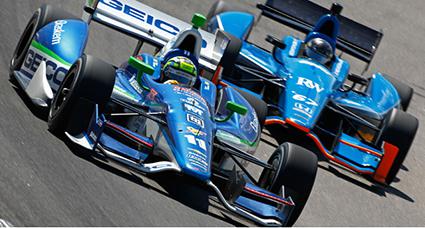
IndyCar has re-introduced engine manufacturer competition for the 2012 IZOD IndyCar Series season, and chassis competition will debut in 2013.

A May 25 deadline has been set for prospective aerodynamic kit suppliers to commit to the program for 2013 and 2014. Series officials released final regulations to interested companies May 14.

The aero kit concept was announced along with the introduction of the 2012 Dallara chassis in July 2010 to allow visible bodywork diversity. Cars will be differentiated by their shape, with the car name incorporating the supplier for brand identity.

“We’ve had great interest from multiple companies,” said Will Phillips, vice president of technology, IndyCar. “Some companies may see this as exciting training for their engineers or as a means to showcase their hardware for aerodynamic development. Others, such as automotive companies, may see this as a way to enhance their North American brand presence.”

Approved suppliers will design and develop the aero kits, and, upon IndyCar approval, may charge teams a maximum of $75,000 per complete kit.

Areas open for development for road/street/short ovals include sidepods, front- and rear-wing endplates, flaps and the engine cover. The Speedway configuration includes sidepods, front- and rear-wing endplates, and the engine cover.

No IZOD IndyCar Series entrant may run more than three homologated aero kits within the two-year period, with one being the 2012 Dallara road/street/short oval and superspeedway aero kit.

A list of approved suppliers will be announced in June by IndyCar, with on-track testing tentatively scheduled for January 2013.
May 2012

PRI Trade Show New Exhibitor Spotlight: Maxima Racing Oils

Submitted by Anonymous (not verified) on Wed, 05/16/2012 - 03:18
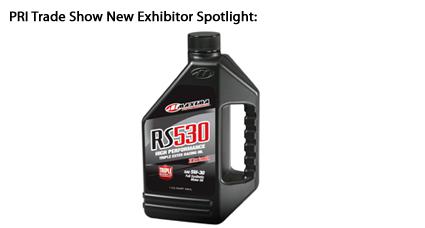
No stranger to the winner's circle in international motorcycle competition since 1979, Maxima Racing Oils, Santee, California, is ready to take on the automotive racing market with the launch of a new line of high-performance racing fluids at the upcoming Performance Racing Industry Trade Show in Orlando.

This will be Maxima's first time as a PRI exhibitor, but President Danny Massie has visited the show for a number of years, sizing things up, in preparation for the company's foray into four-wheeled racing with its full synthetic, triple ester-based race-grade oils.

"We feel that the PRI Trade Show, as opposed to some of the other automotive shows, is pretty core in what it does, drawing engine-builders and other attendees who are a really good fit for our line of new-technology, high-performance oils and fluids," he said. "It's more of a nuts-and-bolts, performance-oriented, trade-only show whose clientele is a perfect audience for our product. We've been very impressed by the show and the quantity and quality of attendees it attracts."

While PRI marks the official debut of Maxima's new lineup of more than a dozen RS (Race Series) engine, transmission/gear and suspension oils, as well as other lubricants such as brake fluid and greases, Massie told us the company has been working on the development of automotive products for some time, and is now prepared to offer them in a range of viscosities to cover the entire gamut of motorsports, from oval track, drag and road racing, to the brutal off-road arena, where Maxima has just partnered with the TrophyLite Race Series to become its official racing oil.

"We have been very successful in the motorcycle racing arena, and we're seeing a lot more crossover now between those two markets," Massie told us. "As a result, a lot of our technologies were brought into Indy, NASCAR and other forms of auto racing, which was really what pulled us into that market. We've been operating for at least six or seven years now as a kind of behind-the-scenes supplier to auto racing, without a single product that has been offered for sale in a traditional four-wheel outlet. We've used those opportunities to develop a new line, establish distribution, and get to the place where we're able to preview these products to the retailers, engine builders, race teams and other racing businesspeople who attend PRI."

Aside from unveiling its entire performance automotive line, Maxima will showcase its array of P.O.P. and dealer support materials. "We're looking to fill some distribution holes, as well as take on new dealers," said Massie, who told us the company's high-end, race-bred products offer excellent profit margins.

Inviting attendees to visit the new Maxima exhibit at the show, Massie said, "Our company history is pretty rich and we've got a great story to tell. We're not just oil marketers; we develop everything in-house, all of our formulas are owned by Maxima, and we do all of the testing, blending and packaging right here in our facility. Some of the technology that we're bringing to this market from other types of racing, such as Superbike, is different from what has traditionally been seen in the four-wheeled racing world. I think we have something new that we can help educate them about, not only to better inform them about what our product is, but what it may bring to the table for their particular racing platform."

The PRI Trade Show is being held November 29 - December 1, 2012, in the North/South Building of the Orange County Convention Center, in Orlando. 1,100 companies exhibit, and 38,000 buyers attend. There are more race-winning new products, racing professionals, tech/business seminars and solutions to motorsports challenges than you can find anywhere.

Click here to register for your credentials online. It takes only minutes.

Click here to make your room reservations online. It's fast and easy. PRI's contracted room rates start at $69 per night.
May 2012

Your Retail Business is A Brand

Submitted by Anonymous (not verified) on Tue, 05/15/2012 - 03:16
Racing retailers that are in business for the long haul have more to gain from taking care of business than just the margin made on the brand named racing products they sell. In addition to growing your clientele at some point you may want to expand your operation, open more locations or sell the business and move on.

It’s common for small retail businesses to start up without much thought given to the importance of registering, marketing and protecting their business name, eventually many go on to develop or market private label products under their company name with considerable investment.

Your business identity is your brand, and you need to protect and promote it like the valuable brands you represent and sell. Your brand is “IP” (intellectual property) and it has value like any other business asset. Take stock in your business name and logo, not only do these properties help customers remember you, but they can also instill pride and confidence in their relationship with your business. Perhaps most important of all, a properly registered brand identity is the key to transferring “goodwill”.

Goodwill = Brand Equity

The longstanding vendor relationships, loyal client following and reputation that continues to help generate new customers and sales for your business, is what is known legally as “goodwill”. Goodwill sounds like a simple concept, but it can quickly become complex if you find yourself considering selling your business, licensing or franchising stores or fighting off a competitor that is using a confusingly similar business identity.

Example: Let’s say you built your company up over the past 10 years and in the last three years you have had gross annual sales of around $3 million with average net profits around 10%. And now you find yourself with a serious potential buyer, but it is discovered through the due-diligence (research) process that your business name is not properly registered, and therefore the identity that customers have come to know, trust, recommend and associate with the brands you sell cannot be sold along with your business operation and assets. This means that the proverbial shingle you have hung and the path you have blazed to establish your book of business cannot be legally transferred as a securable asset, reducing your business value down to what the real property assets and inventories are worth and not much more; whereas under proper circumstances you could’ve sold for around one to two times the amount of your annual sales.

How do you register and protect your brand?

If you’re reading this chances are you’re already engaged in your own retail business and have been investing in your brand’s identity for a while.

The English language only has so many combinations of words, letters and numbers so over time entrepreneurs have registered trademarks comprised of family names, initials, acronyms, popular words or cool sounding combinations to call their businesses, and some have gone on to become hugely successful brands and commercial icons.

With the advancements in ecommerce and global shipping few businesses focus solely on local markets anymore, which means more potential for running into someone else out there using a confusingly close, if not the same name as you. Whether or not your company name is registered, or if you’re looking to start a new brand or business here are some essential things to consider:

1. Acquiring a business license and tax ID at the city, county, state and federal levels does not provide you with any intellectual property rights for your business name. Though within the jurisdiction of these agencies they prevent conflicts with existing registered business names.

2. Names can be registered for trademark protection under state, federal and international law; and registrations can be sought for specific categories, with specific designated use, even though the name may already be registered in another non-conflicting category.

3. The United States Patent & Trademark Office (USPTO) establishes and governs much of the protocol and requirements for registration, compliance and enforcement around the world, with reciprocal arrangements with most countries and unions.

4. Trademark registration can be done without the assistance of an attorney, but the process can be complex and in most cases better left to seasoned professionals; and the costs of basic registration and additional categories is fairly inexpensive.

5. Trademarks can be made from a word or words, abstract shapes or a combination of words, shapes and colors. They can only contain common or generic terms e.g. “racing”, under grant of exception, which excludes the applicant from the right to claim the generic word itself, apart from the combination of words granted for registration.

6. A Trademark registration for the same word or words can be granted to different parties in a number of officially recognized categories. The basic legal rule applied to grant or disallow registration comprised of similar words, is based on whether or not the registration would “likely cause confusion among the public”.

7. By registering your brand name under trademark protection you establish and gain a legally recognized and sellable Intellectual property asset.

8. Once registered, it is the responsibility of the Trademark’s owner to discover, combat and bring suit for infringements against their intellectual property.

Cross-promote your brand with the brands you sell:

Many of the brands you sell have become popular because of their reputations, which are based on the quality, performance, reliability and the marketing of those attributes. Presenting your brand name alongside these popular brands every chance you get will help strengthen your brand image through association. This is called cross-promotion, and it has reciprocal value to your vendor too, if you are effectively advertising and working hard to build equity in your own identity and reputation. The better your reputation, the better your customers will feel about the brands you represent. Many vendors offer cross-promotion incentives in the form of matching funds or product discounts that can be applied toward advertising or promotional activities. Cross-promotion should be an integral and calculated part of your marketing program; you may be surprised at the ROI and savings that can come from well executed cross-promotion. The best way to take advantage of cross-promotion opportunities is to ask your vendors what they offer and create a plan that puts it to good use.

Your brand identity is how people find you, remember you and ultimately recommend you. Of course there is a lot that goes into making customers want to do business with you, but ultimately it is your business identity that represents the experience that you create for your customer.

Take the steps to ensure new customers find you and come back to you. There is more to attracting buyers then having the most inventory and the best prices. Register and protect your brand identity, because you may want to sell your business someday and your brand helps wrap what you’ve built into a sellable asset.


Performance Branding Team: Paet Hidalgo is the Managing Director and chief marketing strategist for Performance Branding (www.performance-branding.com), also known as the Haro Design Group, founded by Bob Haro. Haro manages the agency’s creative design.

Bob Haro and Paet Hidalgo


Bob Haro and Paet Hidalgo.

About Performance Branding: For over a decade Performance Branding has been helping motor sports, action sports and aftermarket businesses connect and communicate with their target customers to increase sales, customer retention and profitability. The company has helped companies including Toyota, RCR, Red Bull, Nike, Cobra and Axio win customers by helping their retailers implement programs that work. Performance Branding teach retailers how to use the brands they sell to attract buyers and to keep them coming back. It also helps them understand how to put co-op, social media and other confusing tools and incentive programs to work for them, to better leverage the marketing efforts of the brands they sell. “If your business sells products and relies on reoccurring sales, then you have a “brand” of your own, which is your business identity and the key to consumers finding you, buying from you and coming back to you,” said Haro.

May 2012

Solutions

Submitted by Anonymous (not verified) on Mon, 05/14/2012 - 01:39
This will be the 25th year that the PRI Trade Show has been delivering business opportunities for racing entrepreneurs. And right now, from the Art and Editorial Departments on the first floor, through the Expo Department on the second floor, to the Sales offices on the third floor, the building housing PRI is buzzing with activities that will result in a 2012 PRI Trade Show guaranteed to offer you, the racing professional, more solutions to your motorsports challenges than you can find anywhere.

As we’ve heard over and over these past couple of years, “It’s not 2007 any more.” The world has changed. Distribution has changed. Media has changed. Racing has changed. Most racing entrepreneurs have successfully left the past behind, and are taking this new world on, as it is, right here, right now. There are new challenges. And, as with virtually every field, the industry trade show is the one place to go to get solutions from around the US, and the world.

The PRI sales team is working with the all the great brand names in racing so there’ll be more hardcore racing products on display than you can find anywhere. For retailers, this means re-energizing the retail showroom with the hot new trick parts discovered among the hundreds of thousands of square feet of displays in Orlando by over 1,000 racing companies. For race engine builders, it may mean a new horsepower part for a race engine, or new shop equipment to add another revenue stream. When the challenge is sales and profit for a racing business, the new hardcore racing products and shop machinery on display at the PRI Trade Show can offer immediate solutions.

For professional race teams, the PRI Trade Show offers the chance to put the racing aftermarket on your side. Especially for the teams that don’t have the biggest budgets in a series, the PRI Trade Show offers a level playing field in the chance to explore the parts that will be winning races in 2013…solutions to your technical challenges.

The Editorial, Art and Expo teams are creating an advertising campaign that will take the PRI Trade Show message far beyond the readership of PRI magazine to get an additional 300,000+ impressions, hitting several target markets—open wheel, dirt late model, drag racing, tuner, sports car, off-road, vintage and more. Together, with digital marketing, public relations, advertising and the strength in the readership of PRI magazine, there will be more racing professionals gathered together in one place than you can find anywhere.

The PRI Trade Show offers an incredible opportunity to bring your challenges to other people in your industry—to strategize with another race engine builder in another part of the country or ask for help from a technical rep in a company’s exhibit. The volume of racing professionals in Orlando all bring solutions to your challenges.

Finally, what’s become known as Race Industry Week 2012 offers more technical and business seminars, conferences and other events than you can find anywhere. It’s not uncommon to sit in one seminar at the PRI Trade Show and walk out with five or more ‘nuggets of insight’ regarding new strategies you can implement immediately to increase sales, lower overhead or solve a technical challenge.

More race-winning parts, more racing professionals, more technical/business seminars…more solutions than you can find anywhere. That’s the unbeatable value of an industry’s trade show. You can’t find it anywhere else. And that’s what we’re working on right now at the PRI offices in every floor of the building. Stay tuned.
May 2012