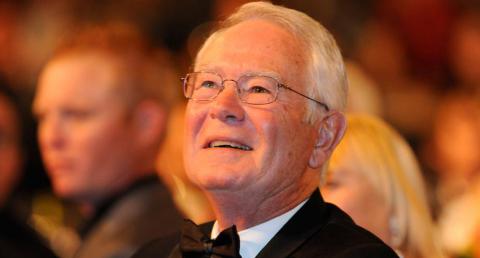
After 46 years of dedicated service to NHRA and the sport of drag racing, Dallas Gardner, NHRA’s board chairman, recently announced his retirement and will hand over the reins to current NHRA chief executive officer Peter Clifford effective immediately. Gardner will continue to work with the NHRA as a consultant.
Gardner joined NHRA as treasurer in 1973 and was promoted to vice president and general manager in 1978. On January 1, 1984, he was promoted to NHRA president, becoming just the second president in NHRA history.
Gardner spent 15 years as president, pushing forward a wide range of initiatives including the modernization of racing facilities, improved television programming, and cornerstone programs such as NHRA’s Youth and Education Services and the Jr. Drag Racing League, before becoming chairman of the board in January 2000.
Brian Tooley Racing (BTR) has announced a new partnership with The Tuning School based in Odessa, Florida.
"We're very excited to be partnering with The Tuning School. With our combined resources, we will be able to accomplish some very exciting things in the future,” Brian Tooley Racing Founder and President Brian Tooley said.
The collaboration will allow students of The Tuning School to tune vehicles using BTR’s camshaft and valve kit components.
“We always get excited to work with great partners in the performance industry but working with Brian Tooley Racing is especially exciting. Why? Because this is a great way for shop owners and enthusiasts participating in our hands-on courses to get first-hand experience [on] how BTR products perform on our own class cars and how well these cars tune. Just having that knowledge alone makes their jobs so much easier when they get back home,” The Tuning School President and Founder Bob Morreale said.
BTR is a provider of high-performance components and is based in Bardstown, Kentucky. The Tuning School teaches the basics of EFI systems with hands-on experience using leading software and tuning products available to the industry.
FUELAB, the provider of high-performance fuel delivery components, is now available through Turn 14 Distribution.
“FUELAB products are a top choice of late-model domestic performance shops, and the company has invested into the development of products for the diesel truck market with its Velocity lift pumps and fuel system components, which include fuel pressure regulators, fuel filters, and other accessories,” Turn 14 Distribution Director of Sales Kyle Shelley said, according to published sources.
FUELAB offers a lineup of fuel delivery components for the automotive aftermarket, including its line of Prodigy speed controllable DC brushless fuel pumps, the patented 529 series electronic fuel pressure regulator and over 1600 different fuel products.
NASCAR and ARCA announced a new championship format for 2020 that will see a total of four championships under the ARCA Menards Series banner.
The series will continue three of its longest-running, high-level regional stock car series in the US, along with the addition of a new fourth champion.
The four championships include:
· ARCA Menards Series East and ARCA Menards Series West – Both series will continue the traditions established by the Busch North Series (founded in 1987) and Pacific Coast Late Model Series/Winston West (1954) and currently competing as the NASCAR K&N Pro Series East and West. The series will feature an annual schedule of six to eight races and the crowning of separate regional champions.
· ARCA Menards Series – The 20-race ARCA Menards Series, founded in 1953, will continue a mix of national-series combination events at venues such as Daytona International Speedway and Charlotte Motor Speedway, as well as short tracks like Madison International Speedway in Wisconsin and the Illinois and DuQuoin State Fairgrounds mile dirt tracks.
· ARCA Racing Series Showdown – Ten races within the larger ARCA Menards Series championship will feature the best of the three series coming together to crown a Showdown champion.
“What first started as a friendship between Bill France Sr. and John Marcum nearly 70 years ago took a momentous step forward today,” said ARCA President Ron Drager. “The amount of history and tradition these series are bringing together to form four elite championships for drivers is an amazing testament to the strength of this sport.
“We are proud and honored to be able to bring the ARCA sanction to the East and West Series; and we are looking forward to working with the race teams, tracks, media partners, fans, and sponsors that have helped those series achieve their long term success.”
NASCAR also announced if an East, West or current ARCA Menards Series car owner has a car that meets the 2019 rulebook, there will be a rules package that will allow them to compete in 2020.
ARCA and MAVTV also announced today an extension of its telecast rights agreement for select ARCA Menards Series races.
The 2020 ARCA Menards Series will officially begin on Saturday, February 8, at Daytona with the Lucas Oil 200 Driven by General Tire. Complete schedules for all four championships will be announced shortly.
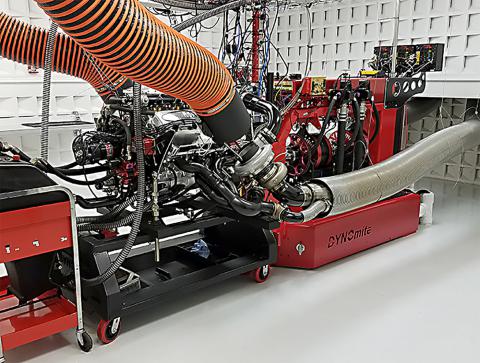
Dyno testing provides critical data that allows you to fine-tune your drive line for optimum performance. The ability to achieve the highest level of performance from your vehicle is only as good as the dyno system and its components. Some of the most important components of a water brake dyno system are its pumps. Properly specifying the right intake and return pumps will allow you to reliably test over a wide horsepower range, with long service life and minimal maintenance downtime.
In a water brake system, water flow, proportional to the load under test, creates the resistance to the engine. The dyno’s intake pump creates a controlled water flow through the inlet manifold, which is then directed to the center of the rotor in each absorption section. This water is then propelled by centrifugal force to the outer dynamometer body, accelerating into pockets on the stationary stator plates, where the water then decelerates.
The power generated by this pattern of acceleration and deceleration is absorbed by the dynamometer to determine engine torque. The water, now heated by this transfer of energy, is then discharged and pumped back into the top of the storage tank, away from the system intake.
Properly sizing the dyno system’s pumps is the first step in ensuring efficient, reliable performance and long service life. Poor pump selection can result in wasted energy on the system, and increased wear and tear on the pump.
A general rule of thumb for sizing the intake pump is that 10 gallons per minute (gpm) of capacity is needed for every 100 horsepower that will be under test. So if you will routinely be testing 800 hp engines, you will want to specify a pump with a capacity of at least 80 gpm. Operating pressure (expressed as psi) is determined by the dyno system manufacturer and is generally in the 65-70 psi range.
A Gusher 7550 Series Vertical Pump is installed on an engine dyno system at Moran Motorsports. This dyno setup is capable of testing engines of up to 6000 hp. Visit Gusher.com for more information.
A smaller return pump is needed on the discharge side for pumping water back to the reservoir, as the flow is lower and not holding any back pressure. A below-ground well reservoir will take a smaller pump, letting gravity do the work. A larger pump may be needed on an above-ground tank, working against gravity to return the water to the top of the reservoir.
Additional parameters that factor into pump selection include voltage (single-phase or three-phase), inlet and outlet diameter, pipe size and reservoir size.
Once you’ve determined the basic pump performance parameters, the next factor to consider is whether a horizontal or vertical pump will best suit your dyno setup. Horizontal pumps are the most prevalent and are best suited to installations where overall equipment footprint is not an issue. Systems with an above-ground reservoir typically use a horizontal pump.
In higher horsepower dynos, or shops where floor space is at a premium, vertical pumps can bring higher capacity with a more compact size. Vertical pumps are well suited to below-ground reservoirs, where the pump can be dropped into the tank at ground level (see Moran Motorsports example in the slideshow). Vertical pumps also have the added advantage of seal-less pump design–an option that eliminates the risk of leaks and reduces overall maintenance.
Now that you know the size and type of pump you want, you will want to consider the performance curves of your pump options. The performance curve indicates how a pump will perform in regards to pressure head and flow. In general, you should look for a more rounded pump curve, which is indicative of a pump’s ability to maintain the required pressure through variations in the flow rate.
A pump with a rounded curve is more capable of adjusting the pressure to compensate for the load on the system, and is more forgiving of variations in performance. A pump with a flatter curve is less forgiving. If flow becomes restricted, the risk of wear and tear to the pump and its components is significantly increased.
Beyond pump performance, features that affect lifetime maintenance should also be considered. For dyno systems using vertical pumps, a seal-less design eliminates the mechanical seal and associated maintenance. Another feature to look for on both horizontal and vertical models is renewable sleeves and bushings. This means that routine replacement of these parts can be done in the shop, rather than sent out, minimizing dyno downtime
Pumps are at the heart of any water brake engine or chassis dyno. With careful selection, your dyno will run smoothly, allowing you to focus on maximizing your vehicle’s performance.
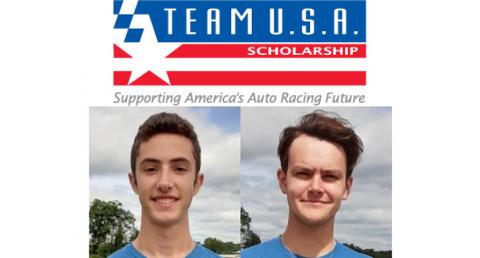
Josh Green, 16, from Mount Kisco, New York, and Scott Huffaker, 19, from Menlo Park, California, have been confirmed as the recent winners of prestigious Team USA Scholarships.
The pair will follow in the footsteps of former scholarship winners, including Josef Newgarden (2008), Oliver Askew and Kyle Kirkwood (2016) and Braden Eves (2018).
Green and Huffaker will travel to England next week to begin preparations with Cliff Dempsey Racing for entry into the annual Formula Ford Festival at Brands Hatch and the Walter Hayes Trophy event at Silverstone. They will gain experience with identically prepared Ray GR18/19 cars, then continue an extensive test program at Donington Park and Silverstone prior to making their initial foray to Brands Hatch.
The two young Americans were selected following a comprehensive two-day shootout among six drivers at Road America, in Elkhart Lake, Wisconsin, in conjunction with the Lucas Oil School of Racing and Cooper Tires.
“The quality of the drivers this year was truly impressive,” Team USA Scholarship founder and noted auto racing writer and broadcaster Jeremy Shaw said. “All of them undoubtedly have the potential to ensure strong careers in the sport, and the final decision really came down to the two drivers whom we thought were best prepared to take advantage of this opportunity.”
Team USA Scholarship has been providing opportunities for talented American race car drivers at an early stage in their careers since 1990.
VP Racing Fuels, Inc. has announced it has signed a new distribution agreement with California Fuels & Lubricants of Garden Grove, California to service the Los Angeles and Orange Counties.
“California Fuels & Lubricants is a first-class, professional organization, known throughout Southern California for the best service in the region,” VP’s Vice President, North American Sales of Race Fuel and Consumer Products Bruce Hendel said. “We’ve been looking for a distributor organization that embraces our full line of VP Racing products. CFL will carry not only our popular championship proven race fuels but our fast-growing line of racing and performance lubricants as well as our additives and small engine fuels.”
California Fuels & Lubricants will distribute the full line of VP products, including VP race fuels and VP racing lubricants, servicing tracks and drivers throughout Southern California.
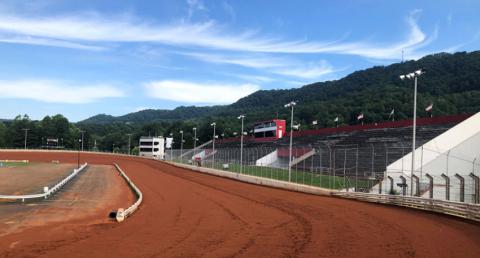
Clay Valley Speedway, formerly known as Lonesome Pine Raceway, will go up for auction on Saturday, October 19.
The Coeburn, Virginia-based track features a 3/8-mile track with a steeped, banked clay surface that is race-ready.
Track amenities include grandstands located on the full length of the front stretch, a three-story suite tower and acres of lighted parking. Also included with the facility is a NASCAR-approved computerized scoring system, a modern scoreboard and LED warning lights, all installed less than a year ago.
A sound system, four-bay garage, office areas and more are also included. Ron Ramsey & Associates will oversee the auction which is set for 10:30 a.m. For more information, visit ronramsetauctions.com.
NASCAR officials have announced rule changes for the 2020 Cup Series season, which features a “handful” of rule tweaks intended to contain costs.
The rule tweaks come ahead of the more comprehensive modifications expected for 2021, which is when the next-generation Cup Series stock car will make its competition debut.
“The 2019 season has produced great racing and we anticipate the level of competition to continue to rise as teams build off this rules package in 2020,” NASCAR Senior Vice President, Innovation and Racing Development John Probst said to NASCAR.com. “Collectively, we continue to work closely as an industry to put on the best racing possible for our fans, while working diligently on the Next Gen car, scheduled to make its debut in 2021.”
Among the new regulations released to teams for 2020, as published by NASCAR, include:
• Each car number will be allowed a maximum of 12 certified chassis designated as “active” at any given time. There was previously no limit. Each vehicle number will also be allowed to retain four chassis designated as “inactive,” set aside for future use.
Chassis can be decertified or retired only after use in a minimum of three races or if damage from a crash is deemed irreparable. Each organization will be permitted a maximum of 10 unique chassis designs.
• Organizations will be limited to a total of 150 hours of wind-tunnel testing per year. There was previously no limit. Testing is only permitted at four approved wind-tunnel facilities: Aerodyn Wind Tunnel in Mooresville, North Carolina; Auto Research Center (ARC) in Indianapolis; Penske Technology Group Wind Tunnel in Mooresville, North Carolina; and Windshear Wind Tunnel in Concord, North Carolina.
Manufacturers, however, are not permitted to conduct wind-tunnel tests on current-generation cars. There is no restriction on the amount of wind-tunnel testing and development for the Next Gen car model slated for 2021.
• Officials have introduced new at-track roster limits for the 2020 season, reducing the maximum number of “road crew” personnel (engineers, mechanics, crew/car chief, spotters) from 12 to 10 during race weekends.
Additionally, the new structure will limit the amount of “organizational staff” for each organization to three. Previously, three- or four-car teams were allowed to carry a fourth rostered member at the organizational level (i.e., technical director, competition manager).
• Teams must compete in a minimum of eight events with a full long-block sealed engine and at least eight events with a short-block sealed engine. Previous rules dictated three full long-block seals and 13 short-block sealed engines.
Cup Series officials and teams recently began the post-race procedure of sealing engines — either fully (long block) or just the bottom portion (short block) — as a measure to prevent costly and time-consuming rebuilds. The practice originated in other NASCAR national series.
• The extended parts freeze for the NASCAR Cup Series will remain in place through 2020, as development continues to shift toward the Next Gen stock car.
RaceTec Pistons, the provider of precision manufactured pistons based in Huntington Beach, California, has announced the addition of sales veteran Stacey Stone to the company.
“Stacey and I have worked together many times over the last 20 years and he is one of the best that there is,” RaceTec Pistons Sales Manager Randy Gillis said.
In his new position, Stone’s primary focus will be on professional motorsports sales to help bring in new customers and better serve existing clients.
RaceTec has also announced the addition of Tyler Piersant to the company’s sales department. Piersant previously worked for CP Pistons.
 MEMBERSHIP LOGIN