Performance Racing Industry (PRI) has announced plans to increase engagement and support for the racing industry through new tools and initiatives specifically for the motorsports community. These programs will be designed to support race-related businesses and racers, and to further protect the motorsports community.
“For more than 30 years, PRI has served as a partner to the racing community, evolving alongside the industry,” said Tim Martin, SEMA Chairman of the Board. “As we prepare for the future, PRI will continue to provide the racing industry’s world-class trade event and publications, and will now add enhanced resources, advocacy and representation for the motorsports industry.”
Created in response to feedback from the industry through surveys, town hall gatherings and meetings at various industry events, these initiatives are outlined in PRI’s newly created Mission Statement:
Performance Racing Industry Mission Statement
PRI fuels the passion for motorsports.
We build, promote and protect the racing community.
We will do this by …
- Representing the interests of the PRI community: racers, enthusiasts, builders, tracks, sanctioning bodies and businesses.
- Protecting motorsports through legislative action, legal support and advocacy.
- Producing world-class trade events and media.
- Providing market research, education, and best practices in motorsport business and racing technology.
- Encouraging and recruiting new racers and professionals in motorsports.
In the coming months, PRI will create a new executive leadership position and office in Indianapolis to better serve and engage the racing community. Industry resources will also be expanded to connect industry professionals throughout the year. Longtime readers of PRI Magazine can also expect to see new features and an updated design in 2020.
“Over the years, industry professionals have identified opportunities to help the race industry thrive,” said Chris Kersting, SEMA President and CEO. “We listened, and the enhanced PRI team will be providing additional programs, support and investment back into the future of the community.”
PRI welcomes feedback from the racing community as we continue to evolve to meet the industry’s needs. Individuals are welcome and encouraged to send comments, questions or ways PRI can help to: Mission@PerformanceRacing.com.
AEM Performance Electronics has announced the launch of AEM EV, its new Performance EV Controls brand, and initial suite of performance electric vehicle control solutions.
The AEM EV mission is to deliver products that simplify the EV conversion process and provide powerful control for EV motorsports applications that are intuitive and simple to use, according to a statement from Hawthorne, California-based AEM. The AEM EV brand allows the company to differentiate its EV performance products from its existing and future performance products for internal combustion race engines, it added.
“I speak on behalf of everyone at AEM when I say we are incredibly excited to develop and launch AEM EV,” said AEM President Greg Neuwirth. “The EV segment is growing rapidly, from OEM development to conversions and of course, in motorsports. We recognize the challenges that builders and tuners have incorporating this new technology, and we believe our motorsports background combined with our experience in vehicle control systems will allow us to deliver EV products that make integration easier for builders and enthusiasts, without any compromise in safety, regardless of application.”
Under the AEM EV brand, the initial rollout includes two Vehicle Control Units (VCUs) that will deliver motorsports-ready EV tuning capabilities through a simplified, user-friendly interface, a powerful 8-Channel Power Distribution Unit (PDU) module that provides mounting flexibility through the ability to daisy-chain up to eight units together over a CAN bus network, and a CAN-based switch panel. Working versions of these systems will be on display at the 2019 PRI Trade Show in Indianapolis, Indiana, December 12-14, in booth #2101. AEM EV will reveal additional products in the near future.
AEM has partnered with several key players in the EV segment upon its decision to enter the EV market, including Cascadia Motion, EV West, Hancock and Lane, Pat McCue and MLe Racecars, and Napoleon Motorsports. Release of AEM EV’s first round of products is scheduled for the first quarter of 2020.
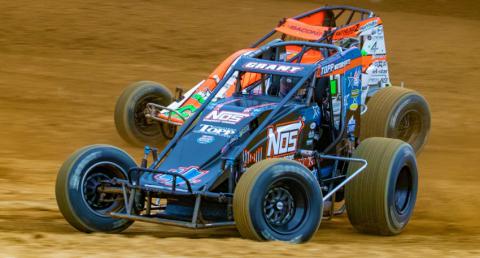
The 33rd annual Indiana Sprint Week schedule will feature seven races in a nine-night span between July 24 and August 1 at seven familiar Hoosier-state venues on the USAC AMSOIL National Sprint Car trail.
The 2020 ISW schedule includes seven distinct tracks, ranging from quarter-miles to three-eighths to half-miles, with degrees of banking both flat and high throughout the mini-series.
For the eighth time overall, and first time since 2016, Gas City I-69 Speedway will host the ISW opener on Friday, July 24. The quarter-mile has previously hosted the ISW opener in 2002, and each year between 2011-16. From there, the series travels due west the following day, Saturday, July 25, to the quarter-mile Kokomo Speedway, whose ISW origins date to the inaugural year of 1988. The first weekend concludes Sunday, July 26. in the southeastern part of the state at the high-banked, 3/8-mile of Lawrenceburg Speedway.
After a two-day hiatus, the series returns for a final four-day stretch beginning at the famed half-mile Terre Haute Action Track on Wednesday, July 29. Then, it’s off to the 5/16-mile Lincoln Park Speedway in Putnamville on Thursday, July 30. Working southbound and down, the quarter-mile red clay of Bloomington Speedway hosts ISW for the 33rd consecutive year on Friday, July 31, and concludes with the ISW finale Saturday, August 1, at Tri-State Speedway in Haubstadt, the first time ISW will have reached into the month of August since 1993.
Indiana Sprint Week debuted in 1988, but first became USAC-sanctioned in 1996. Since then, the event has grown from a single weekend to seven races over a week-and-a-half span, and has become one of the marquee events on the USAC AMSOIL National Sprint Car schedule.
2020 INDIANA SPRINT WEEK SCHEDULE:
Fri., July 24: Gas City I-69 Speedway – Gas City, Indiana
Sat., July 25: Kokomo Speedway – Kokomo, Indiana
Sun., July 26: Lawrenceburg Speedway – Lawrenceburg, Indiana
Formula E has been granted world championship status by the FIA in a vote that will see the series recognized as the ABB FIA Formula E World Championship from the start of the 2020-21 season.
The Federation Internationale de l’Automobile, the governing and sanctioning body for world motorsports, and sitting members of the FIA World Motor Sport Council (WMSC) recently voted upon and agreed to move forward with certifying Formula E as an FIA world championship.
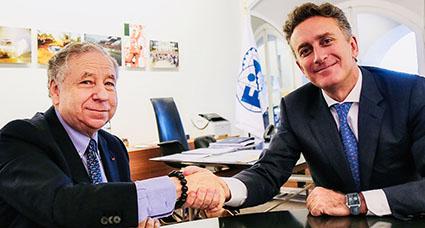
Founder & Chairman of Formula E Alejandro Agag—alongside FIA President Jean Todt—signed the agreement together at FIA headquarters at Place de la Concorde in Paris to officially confirm world championship status for season seven.
Transitioning to the highest level in the FIA sanctioned single-seater hierarchy means that teams and drivers will compete for the newly named ABB FIA Formula E World Championship title next season.
To learn more about the ABB FIA Formula E Championship, visit FIAFormulaE.com.
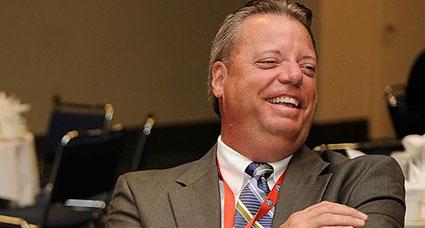
After more than four decades of service to the NASCAR industry, including the last 27 years at Atlanta Motor Speedway, facility President Ed Clark will retire following the 2020 Folds of Honor QuikTrip 500.
Clark joined Speedway Motorsports in 1981 as a member of the public relations department at Charlotte Motor Speedway. He was quickly promoted to Director of Public Relations, and in 1987 was named the Vice President of Events at America’s Home for Racing. In 1992, Speedway Motorsports Executive Chairman Bruton Smith tapped Clark to be the General Manager of Atlanta Motor Speedway. He added the title of AMS President in 1995.
Clark, 64, is the second-longest tenured employee at Speedway Motorsports, trailing only Smith, the company founder.
“Ed has been a pillar in the motorsports industry for more than 40 years, and the full effect of his work at Atlanta Motor Speedway is impossible to measure,” said Marcus Smith, president and CEO of Speedway Motorsports. “His tireless leadership and focus on creating unmatched fan experiences at each of his events sets him apart from his peers and has a direct impact on the success of Atlanta Motor Speedway and Speedway Motorsports.”
During his early career at Charlotte Motor Speedway, Clark was a member of the leadership team that created the first NASCAR All-Star Race and NASCAR Media Tour. At Atlanta Motor Speedway, Clark supervised the expansive growth and modernization of the facility with the addition of luxury suites, condominiums and Club One hospitality, as well as a rebuild of the complex after much of it was destroyed by a tornado in 2005.
Most recently, Clark has spearheaded efforts to add more major events like the Imagine Music Festival, Georgia State Fair and U.S. Legend Car racing to the speedway’s annual calendar, increasing Atlanta Motor Speedway’s track rental business, brand awareness and regional economic impact.
In addition to his work at Atlanta Motor Speedway, Clark serves on the board of directors of Speedway Children’s Charities and the Flint River Scout Council.
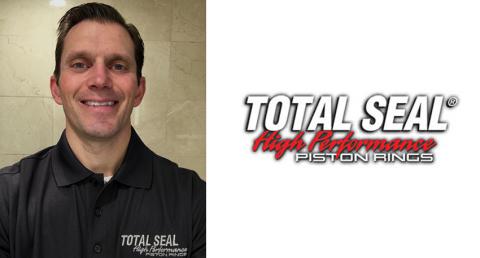
Total Seal Piston Rings, the provider of piston ring technology and manufacturing, has announced that Lake Speed Jr. has joined the company as the new Vice President of Sales & Marketing. Speed is known as a certified lubricant specialist and previously worked with Driven Racing Oil.
“Joining Total Seal is the next step in my journey of Tribology, which is the science of friction, wear, and lubrication. The piston ring is the motor oil’s best friend, so it only makes sense to join Total Seal. I have first-hand experience gaining horsepower with their great line of products at Joe Gibbs Racing, and Total Seal has been a Driven Racing Oil customer for seven years. Together we have learned a lot about piston ring seal, so I’m enthusiastic about this great new opportunity to explore and improve engine efficiency together,” Speed said.
“We welcome Lake to Total Seal. There [is] a multitude of sales and marketing opportunities we want to take advantage of, and we feel Lake is the right person to direct our advancement. His years of experience in racing, technology development in all types of engines, ability to see opportunities in various industries, and his dedication to the sport and industry are important to us going forward,” Total Seal President and CEO Matt Hartford said.
Total Seal manufacturers piston rings for several applications, including racing, high-performance street, diesel, marine, and more. Its product lines include Gapless, Diamond Finish, Advanced Profiling Steel, Advantage, TNT, and Conventional piston rings, as well as a line of ring tools and specialty lubricants.
Speed will present a seminar focusing on oils and fuels at the 2019 PRI Trade Show in Indianapolis. For more information, visit here.
The International Hot Rod Association (IHRA) has announced a new Junior ELITE license for the 2020 season.
“Our goal in creating this new license is to safely advance the junior program for the older kids in an effort to keep them interested in the program a little longer. We know that not every 16-year-old junior racer has a big car ride waiting for them, so we wanted to give the older kids an avenue to advance while giving the IHRA sanctioned tracks something unique to offer their customers,” IHRA Vice President Skooter Peaco said. “While this is not a new ‘class’ but a new license level, we hope that ultimately the junior competitors will work towards this new license and the tracks will have enough of these license holders to separate the 16-and-up drivers into their own group.
“Any 16- or 17-year-old driver who does not meet the new vehicle safety requirements can continue to run with and dial within the Advanced or Master’s license levels as they are currently allowed to do. The new ELITE license is simply a new option for competitors and our member tracks.”
The ELITE license will be exclusive to drivers ages 16-17 with elapsed time restrictions between 7.50 and 7.90 seconds and speeds up to 90 mph. ELITE license holders that dial between 7.50 and 7.89 must have vehicles meeting all the requirements for Master’s level licensing in addition to the following safety measure:
· The chassis must be constructed of chromoly tubing and incorporate helmet bars with SFI 45.1 or 45.2 padding on the roll cage.
· All competitors must utilize an SFI 38.1 head and neck restraint system
· All ELITE license holders dialing quicker than 7.90 must have a rear wing.
· A driver MUST HAVE a valid state driver’s license in addition to making the required passes prior to being issued an ELITE license.
An official with the IHRA or an IHRA member-track will issue the ELITE license after three approved runs between 7.50 and 7.89 seconds. One warning will be issued if a competitor runs an elapsed time of 7.40 seconds or quicker or 90 mph or faster. If a competitor does this a second time at the same event, they will be disqualified from the event.
If a competitor runs 7.30 or quicker or 95 mph or faster, they will be disqualified for the remainder of the event and their license will be suspended for six months from the date of the infraction.
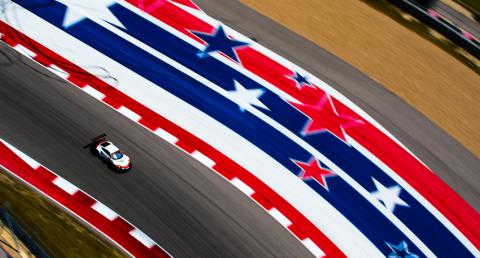
The FIA World Endurance Championship (WEC) will return to Circuit of The Americas in Austin, Texas, next February, to replace the 6 Hours of São Paulo as the fifth round of the 2019-2020 WEC season.
Series organizers said in a recent statement that the local Brazilian promoter “has been unable to meet its contractual obligations,” which brought the WEC organization to look for a replacement venue.
“The WEC wishes to make clear that it has not experienced any problems with the city of São Paulo or the Autodromo José Carlos Pace (Interlagos). It is strictly a major issue with the local promoter,” the series statement said.
COTA will play host to the 30 prototypes and GT cars one month before they travel to Florida for the Super Sebring event organized by IMSA.
The date of the COTA race has been set for February 22-23, 2020, in order not to clash with the NFL Super Bowl 2020 which takes place on the first weekend of February, and to avoid a clash with the Formula E race on February 14-15.
“Firstly we must thank Bobby Epstein and the Circuit of The Americas for accommodating us at relatively short notice. It is an excellent venue, and our fans, competitors and media are now assured of excellent racing in North America not once, but twice in two months,” FIA WEC CEO Gérard Neveu said. “Of course, it is very unfortunate to find ourselves in this position. The WEC very much regrets this situation and feels very sad for the City of São Paulo and the many thousands of Brazilian motorsport fans. Our main concern was our competitors and partners, and we have worked very hard to find a solution [that] offered the least disruption possible.”
More details on the race, which is still subject to approval by the FIA World Motor Sport Council, will be announced at a later date.
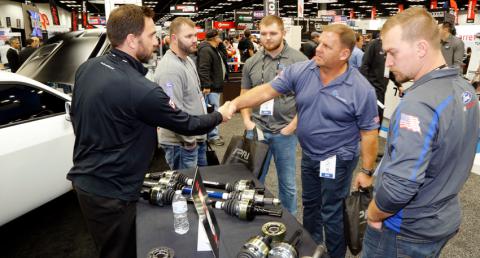
Racing industry professionals who attend the 2019 Performance Racing Industry (PRI) Trade Show can take advantage of special discounts offered by exhibitors exclusively at the world's premier auto racing trade event. A record number of PRI Show Specials have already been announced online at pri2019.mapyourshow.com/8_0/explore/specials.cfm, and more are expected before the official start of the Show.
“The PRI Show is the perfect venue for buyers to connect with exhibitors and enjoy special deals on the industry's latest products, services and technology," said PRI Trade Show Director Karin Davidson. “Attendees will want to download the official PRI Show mobile app to keep up with the latest deals offered by exhibitors."
More than 40 PRI Show Specials, among them special pricing, extensive discounts and free products and shipping, are currently offered by exhibitors for the Three Biggest Business Days in Racing, taking place December 12-14, 2019, at the Indiana Convention Center in downtown Indianapolis.
Attendees can connect with company reps onsite to make an informed decision, and can see some of the products in action at company booths. Featured areas like Machinery Row is where the world’s top precision automotive machining equipment can be found side by side, wired for live demonstrations on actual race parts. Located in the Yellow Hall, Machinery Row is a must-see for any professional race team, race engine builder, or race fabricator, interested in the latest in CNC machining centers, fabrication and welding equipment, parts cleaning systems, dynamometers and more.
“The PRI Show is the only event where you can see live demonstrations of equipment, talk to industry experts about the latest technology and products in the industry, and take advantage of special pricing and discounts in a single location,” said Davidson. “Combined with our exclusive PRI Education program and other unique features, including the popular Featured Products Showcase and trailer exhibits on the field of Lucas Oil Stadium, the 2019 PRI Show is truly a unique and special business opportunity.”
The 2019 PRI Trade Show will feature over 1,100 companies exhibiting in more than 3,300 booths and showcasing the latest products, services, machinery, simulation, and testing technologies, and trailers for the racing industry in a single location. Now in its 32nd year, the PRI Show encompasses all forms of racing and attracts attendees from all 50 states and all over the world, including professional race teams, retail shops, warehouse distributors, engine builders, fabricators, dealers, installers, jobbers and media.
Known as Race Industry Week, the days leading up to and including the Show will offer a range of motorsports-related activities in and around the Indiana Convention Center beginning on Monday, December 9. Numerous conferences and seminars, among them the Race Track Business Conference and International Council of Motorsport Sciences’ Annual Congress, offer unlimited business opportunities and provide invaluable insight on the latest technologies and how to apply them throughout the racing world.
To register for the 2019 PRI Trade Show, secure hotel reservations, and sign up for free business seminars, log on to pri2019.com/register.
Learn about common mistakes when TIG welding, as well as basic tips on how to prevent these errors.
Poor Gas Coverage Leads to Contamination
This weld shows contamination caused by lack of shielding gas, which can happen when the gas isn’t turned on, there is too little or too much gas shielding, or the gas is blown away.
To troubleshoot gas contamination issues, check the cylinder label to ensure you’re using the right gas for TIG welding, generally 100% argon. Attempting to weld with an argon/carbon dioxide mix (common for MIG welding) will cause contamination.
Set the proper gas flow rate, recommended at 15 to 20 cubic feet per hour (cfh). Welders commonly assume higher gas flow provides greater protection. In fact, excessive gas flow creates turbulence that pulls in unwanted contaminants (and can cause arc wandering).
Check all fittings and hoses for leaks that can cause weld contamination. Rub soapy water over the hose and fittings. If bubbles form, you have a leak and should replace the defective components.
If you have a full cylinder, the right type of gas, and no leaks, you may have a tank contaminated with moisture. Shielding gas cylinder contamination is infrequent but possible.
Welding aluminum in the wrong polarity/adjusting balance
This TIG weld (Figure 2A) was created with the machine’s polarity set on direct current electrode negative (DCEN). The weld did not break through the aluminum oxide layer. To defeat this, always TIG weld aluminum with the polarity set to alternating current (AC).
TIG welding in AC allows the electrode positive (EP) portion of the cycle to blast away the aluminum oxide while the electrode negative (EN) portion melts the base metal. A feature called AC balance control allows operators to tailor the EP/EN ratio. If you notice brownish oxidation or flakes that look like black pepper in your weld puddle (Figure 2B), increase the cleaning action. However, note that too much EP causes the tungsten to ball excessively (Figure 2C) and provides too much etching. Lastly, when TIG welding aluminum, do not start welding until the puddle has the appearance of a shiny dot. This indicates the oxide has been removed, and it’s safe to add filler.
Figure 2AFigure 2BFigure 2C
Weld Graininess
Figure 3 shows a bead with a grainy appearance, typically caused by filler metal problems. For instance, a 4043-aluminum filler rod from one manufacturer may have different properties than a 4043 rod from another manufacturer. The welder may need to adjust filler brand accordingly. The rod may also be defective (too much of a certain ingredient). The welder may even have the wrong type of rod, such as 4043 filler instead of 5356 filler.
Before welding, always check the filler metal type and remove all grease, oil, and moisture to prevent contamination.
FIgure 3
Lack of fusion at the root of a T-joint or a fillet weld can be caused by several factors, including improper fit-up, holding the torch too far from the joint, and improperly feeding the filler rod. This issue may be more common with a transformer-based machine, as the arc tends to wander between the sides of the joint as it seeks the path of least resistance. In this case, reducing arc length provides better directional control and helps increase penetration. It’s also important to avoid under-filling the joint or welding too quickly.
Inverter-based machines (especially those with advanced output controls such as adjustable frequency and pulsing controls) offer more arc control. A more focused arc cone provides better directional control over the weld puddle and deeper penetration.
Craters
Craters, such as the one in Figure 4A, typically occur at the end of the weld and often lead to cracking. Causes include instantly reducing the welding power (which results in the puddle cooling too quickly) and removing the filler rod too quickly at the end of the weld. You can easily fix crater cracking by continuing to feed filler rod while slowly reducing current at the end of a weld to produce a good-looking weld bead, as seen in Figure 4B.
Figure 4AFigure 4B
Dirty Base and/or Filler Metal
Cleaning the materials before welding is important. Figure 5 shows what happens when you don’t clean mill scale off hot-rolled mild steel. All base and filler metals should be cleaned, whether the contaminant is mill scale, aluminum oxide, or dirt and grease. Grind, brush, and wipe away all potential contaminants. For cleaning aluminum, use a stainless steel brush dedicated to the task to prevent contamination from other metals.
Figure 5
Poor Color on Stainless
Figure 6 shows discoloration on a stainless-steel weld caused by overheating, which affects a material’s color and degrades its corrosion resistance and strength. Unfortunately, nothing can be done to fix this error once it’s made. To prevent overheating, reduce amperage, increase travel speed slightly or shorten the arc length. If your welding equipment features a pulser, learn how to use it. Pulsing reduces heat input and offers excellent puddle control.
Figure 6
Sugaring on Stainless Steel
Figure 7 shows sugaring on the backside of a stainless-steel weld. Sugaring occurs when the weld is exposed to oxygen in the air. The best way to prevent sugaring is back purging the weld with argon shielding gas or reducing welding amperage.
Figure 7
Too Much Amperage on Aluminum
Figure 8 shows an aluminum weld with the amperage too high. This creates a wider profile and an ill-defined bead and can potentially lead to burn-through. To solve this, reduce amperage and/or increase travel speed.
Figure 8
Proper Arc Length Control
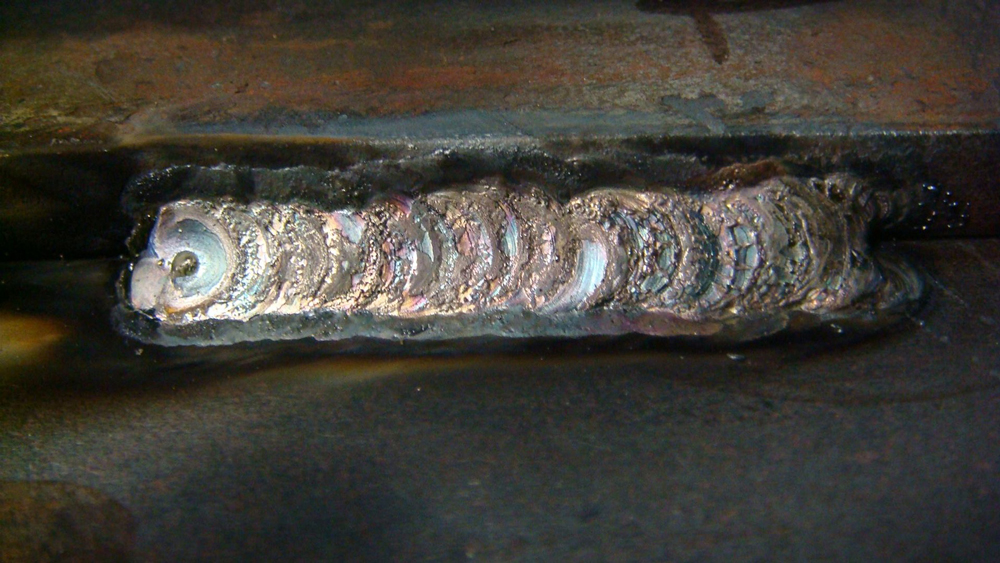
The color change in the middle of this aluminum weld bead (Figure 9) resulted from an increase in arc length (the distance between the electrode and the base metal). Holding too long of an arc increases heat input and the potential for distortion and widens the weld bead while decreasing penetration and bead appearance. Practice holding a consistent arc length to improve heat input control and weld bead quality.