PRI Education: Logo vs. Brand for Motorsports Businesses
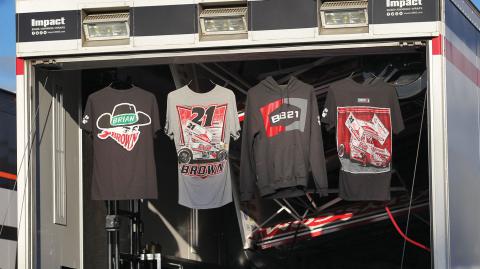
Submitted by laurap on Tue, 05/20/2025 - 14:22
Logo vs. Brand for Motorsports Businesses


What is the difference between a logo and a brand, and how does that translate into meaningful connections with your fans?

In the fast-paced world of motorsports, branding is everything. And branding is most often on display with merchandise, specifically apparel. You've taken the plunge into the world of merchandise, selecting garment colors, designing a logo, and stocking up on inventory. But before you start selling, there's one crucial question to answer: "Why would someone buy a T-shirt with my logo on it?" Let's explore the importance of branding, consistency, and building a strong connection with your audience, ensuring that your merchandise becomes a symbol of your identity and values.

Favorite Shirt

One of my favorite T-shirts is from Exedy Racing Clutch and has an exploded view of a clutch setup on it. Sure, the design looks cool, but more than that, I like the way I feel when I wear it. In my mind, Exedy stands for sporty, high-quality, technical components, and when I'm wearing it, I'm basically wearing a sign that says, "I know my stuff about motorsports." Without knowing me, it's immediately clear to others that I'm a gearhead, and someone walking up to me is more likely to ask me about racing than to ask me about the football game. So sure, it's a shirt with a clutch on it, but it's also a way for me to tell everyone around me that I'm into motorsports and high-quality, technical race components.

Why do you buy T-shirts with logos on them? Take a peek into your closet and think about why you bought each of your branded shirts. Which ones do you wear the most? Why? How do you feel when you're wearing them, and what do other people think of you or your company because of them? What do you want people to feel or think about your logo on a T-shirt?

Building A Brand

I feel great in my Exedy shirt because I relate to the brand and what it means. But what is a brand and what makes it different from a logo? A brand is much more than a logo. It's the overall impression that people have of you as a racer or your racing company. It's how they feel, how they think of, and what they expect from you or the business. And here's a tough pill to swallow: 

It's not enough to be really good at racing. That's not a brand.

Your brand is a culmination of how everything you do, say, and post is perceived by your audience. Your audience is going to feel, think, and expect different things about your brand based on every interaction they have with you or your team, either directly or indirectly. A post on Facebook, a speech, and a one-on-one chat at the track are all opportunities to show your fans, customers, and partners what you want them to think, feel, and expect from you or the business. What you say, how you act, and how that made them feel in these moments is what your fans or customers will think about when they see your logo on a shirt. Are they going to pick it up and put it on?

What doesn't create a strong brand is a lack of consistency. What does a customer or fan think when they meet you at the track and you're optimistic, excited, and full of hope for the race. They're probably feeling amped up and ready to root you on. What happens to that feeling when they log onto your social media accounts and see negative messages bashing a competitor, event organizer, or sanctioning organization? That's contrary to the positive brand experience you are trying to build. Your logo just lost meaning, and they're going to toss that T-shirt back into the laundry pile.

Intentional Branding

Your brand exists whether you're working on it intentionally or not. Your audience is observing, forming judgments, and predicting your next action based entirely from their perceptions of you or your company.

In the book, "This is Marketing," Seth Godin introduces the concept of creating a matrix to help define a brand and find the target audience. The concept is simple: Think about your audience and choose two aspects that could be important to them. This often translates into two important components to you.

For this example, let's say you run a business that sells a particular racing component. You want to position your product as a premium quality component, and you'd like to incorporate humor when sharing memes or videos on your social media channels and website. You'd draw a quadrant with two axes—one vertical and one horizontal—labeled with those two values. Picture something like this:

PRI Education graph

Now, put yourself in the top right corner. That's going to be your brand. You're making a promise to your audience to consistently provide a quality, albeit more expensive product, while making them laugh. Some consumers will like it, others won't, but the ones who do so are going to lean in and make real connections with you. There are going to be other racing businesses that sell premium race parts, and there will be other business representatives who are funny, but how many of them will intentionally and consistently connect with customers who care about both aspects? That's where you come in.

So, think about it: What are the labels on your axes? What are the values that you and your target audience both find important? Your brand is more than just a logo; it's a promise to your audience. By consistently delivering on the values that matter to you and your fans or customers, you create a lasting impression that goes beyond the race track. Every interaction, whether it's a social media post, a podium speech, or a one-on-one chat, should reflect the essence of your brand.

When your audience sees your logo on a T-shirt, they should feel a connection to the values you represent. So, take the time to define your brand, stay true to it, and watch as your fans buy a T-shirt with your logo on it, knowing exactly what it stands for.

Amanda Van Den Elzen is the founder of Racer on Demand, the one-stop online racer merch marketplace. Amanda races a Class 11 VW Beetle with VDE Racing, a professional short-course off-road race team based in Wisconsin, and works as a learning and development manager. Amanda brings her experience with off-road racing and her passion for empowering racers together to revolutionize the way racers and fans interact and modernize motorsports marketing through Racer on Demand. You can find blog posts, racer discounts and resources, and more information about selling on the Racer on Demand Merch Marketplace at racerondemand.us.


To read more, sign up for a digital subscription to PRI Magazine on Zinio here.    

Once you download the Zinio mobile app or are logged into Zinio on a desktop browser, you will gain immediate access to more than a year's worth of content, including "PRI Education" here and more open wheel coverage in the May/June 2025 issue here. 
May 2025
By
Amanda Van Den Elzen

Power Masters: Motorsports Driveline Components

Submitted by laurap on Tue, 05/20/2025 - 14:09
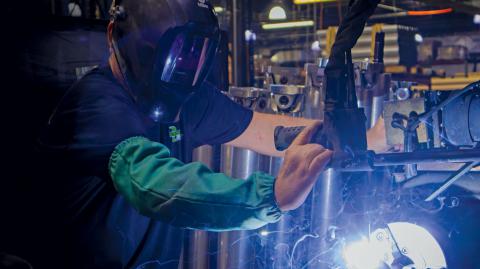
Photo courtesy of the Driveshaft Shop for PRI Magazine


How today's race driveline components are designed and manufactured to endure ever-increasing levels of horsepower and torque. 

The light flashes green, and in an instant, a shattering amount of pure kinetic energy slams through a vehicle's driveline. Failing to handle it could be disastrous to the point of a wreck. Harnessing it, amid ever-rising power levels for everything from race cars to hot street machines, is the mission of aftermarket firms that specialize in performance powertrain management.

Increasingly, these firms have their work cut out for them. There was a time when a street-legal vehicle making 1,000 horsepower was all but unthinkable. Now, advances in engine technology—particularly turbocharging, supercharging, and nitrous oxide systems—mean heavily modified street cars and light trucks routinely pound out 3,000 hp at the wheels, or more. The specialty firms that address this reality now rely on ultra-hardened components, evaluated with input from customers, that allow these outrageous outputs to be reached on the street, drag strip, and road courses.

One such firm, Quick Performance in Ames, Iowa, markets axle and driveline components from a number of prominent producers and uses them to come up with high-horsepower solutions for customers in a variety of competition disciplines. 

"We've been here since 1987, and we've got quite a few different avenues for circle track, drag racing, and autocrossing pretty much every day," Ashton Thompson said. "We've also got pulling tractors, rock climbers, and hot rodders. We have our name on nearly everything from the guy with 400 hp going to a Friday test-and-tune night, right up to 3,000-hp drag cars."

Quick Performance sells driveline gear from some two-dozen suppliers, including Eaton, Spicer, and Strange. The inventory is backed up by inhouse work that provides a particular driveline for a specific customer's needs. 

As Thompson explained, "When it gets to the real high-horsepower stuff, Strange Engineering is going to be our go-to for most of those applications. Strange has a really nice floater kit with 40-spline axles. It also has a really nice billet case, which is good, because distortion is the big problem with high horsepower. Here, we do chromoly housings, quarter-inch tubes, 3.5-inch axle tubes, 40 splines inhouse, gun-drilled axles plus either 31 or 35 splines, depending on the horsepower needs."

S&S Truck Parts of Crown Point, Indiana, supplies various driveline components. For severe-service use, Jeff Belknap said that S&S focuses on an extremely durable ring-and-pinion assembly sourced from its brands Motive Gear or Richmond Gear, depending on the intended use. Motive Gear components are mainly used in off-road and Trophy Truck-type vehicles, while almost all drag racing uses involve Richmond Gear parts.

"We have ring-and-pinion sets for 9-, 9.5-, and 10-inch for high horsepower, basically ranging from 750 hp all the way up to 5,000 hp, and even more," Belknap said. "When we get into a couple of thousand horsepower, you've got to go to the bigger 10-inch diameter, and you go from 8620-rated steel material to 9310, which allows the tooth to flex a little so it's not as brittle. The drag guys get 50 to 60 passes on a ring-and-pinion set, and what they don't like is a lot of heat for a long period of time, because these gears would eventually melt down. With 9310, and Rockwell heating 57 to 59 range [the level of heat applied], you really have to watch Rockwell heat in the process because if it gets too high, the gear gets brittle and would want to break. You get the forging of the gear, a Gleason machine cut with five passes, then heat-treatment."

Specialized Components

Circle D Specialties in Houston, Texas, is well known for its performance torque converters, which are applicable for anything from hot street cars to drag use with outputs up to 5,000 hp. "Torque converters are our primary product, with transmission casings secondary," said Chris Sehorn. "We have 252-mm and 264-mm converters that are good for 5,000 hp, up from 3,000. We use software to do a lot of testing, computational fluid dynamics for internal-flow performance, and finite element analysis to develop the structural integrity we need to make sure it can hold that kind of power."

Circle D's Ronnie Combs added that manufacturing considerations include material choice and heat-treating. "We design everything using finite element analysis with stiffness in mind, because flex is the major problem. We look at a good strength-to-weight ratio and stiffness. When you look at the natural progression of power output over the years, 3,000 or 4,000 hp isn't that crazy anymore, so what we do here is mainly going to be drag racing."

Another highly specialized part is produced by 6XD Sequential Gearbox in Kannapolis, North Carolina. An inhouse sequential transmission rated at up to 1,800 lb.-ft. of torque is the firm's main product. Clay Stephens said the transmission is aimed at street cars, drifters, and increasingly, competitors in the Trans Am classes such as TA1, where Amy Ruman and Kerry Hitt both use the gearbox.

"When we started building these in America, most of the sequentials offered in America were for foreign cars, so you couldn't find a bellhousing for them," Stephens said. "We use a standard Muncie bolt pattern at the front, so there's tons of bellhousings out there for them, since all NASCAR transmissions and drag racing use that bolt pattern. Our transmission shifts faster, and you can slam it into the next gear because of positive engagement, where the driver just has to pull the shift handle back to upshift. Our standard is around the 2,200-hp mark, but we have people in the Dodge Viper community running the Texas 2K and Florida 2K that have 2,000 hp to 4,000 hp in street-legal cars. 

"What we do is very simple," Stephens explained. "The gears are larger, there's more bearing surface, and the bearings are bigger. We supply everything from the Vipers to some diesel, and we have a stronger gearbox for 3,000 hp. The transmission is longer because the casing is longer, with six forward speeds."

Hardened axles are the primary products from GForce Performance Engineering of Overland Park, Kansas. Many have CV joints and shafts, aimed at installation on modern domestic and imported performance cars with independent rear suspension. According to Jesse Powell, the firm's manufacturing philosophy is based on the fundamental understanding of vehicle physics between heavier street vehicles and all-out drag cars.

"One thing that's unique to us is that a lot of cars we deal with are 1,200- to 1,500-hp street cars. Is it the same as a 3,000-hp Pro Mod? The answer is 100%, and in some cases even more demanding," Powell explained. "We look at power-to-weight ratio. About 1,500 hp on a 5,000-pound street vehicle is a bigger demand on the driveline than a 3,000-hp vehicle that weighs 1,800 pounds. We focus mainly on IRS [independent rear suspension] later-model vehicles, which means the axles themselves; the halfshafts themselves. All new vehicles including BMW are now IRS, so performance vehicles are using halfshafts, even as the performance of these vehicles has just continued to climb. Twenty years ago, the first domestic vehicles with IRS made barely 300 hp. If it was 600, you were making a lot of power. Today, you can sneeze on these engines and make 1,000 hp."

Besides axle halfshafts, GForce also produces performance driveline bushings with premium metal cores that limit excess movement. "The rear cradle on a soft chassis bushing produces a comfortable ride," Powell said, "but once under load, those things start moving, things get out of alignment and you start breaking bolts, axles, and driveshafts. Our bushings hold all those things in place as power increases. 

"Our bushings are polyurethane based," he continued. "Not just a puck poured into a mold, but also engineered with steel or aluminum sleeves or cores. Additionally, these bushings feature different durometer polyurethane within the bushing to give you a more pleasant driving experience, but more rigid control when under load. With the axles, you only have so much material that you can work with because it has to fit into the differential and into the hub. The spline count does not change. The only way to make it stronger is to use better materials."

Transmissions and torque converters for extreme service are also the primary products at FTI Performance in DeLand, Florida, part of the Wharton Automotive Group founded by Funny Car racer Paul Lee. Another nitro racer on the company's staff, Krista Baldwin, said, "We make many high-end horsepower components meant to survive the abuse you give it on your weekend exploits. One of our most popular is the Turbo 400 transmission, which is listed as up to 2,000-hp capability. We put an aftermarket SFI-approved case on it. Then we go into its internals. We switch out to aluminum drums and use billet planetaries. We improve the internal and external dump valves. We also have the customer fill out a comprehensive build sheet. We want to know everything possible about your build: vehicle weight, rear ratio, tire size, engine dyno numbers, fuel delivery, intake manifold information, cam specs, and whether you're using nitrous, a turbo, or supercharger. You spent so much money to create this power, so we have to build a transmission or converter suitable for that power and for your application."

If a car is making 3,000 hp on the street, "you're most likely going to take it to the race track," Baldwin continued. "If your vehicle has any track time, it results in changes that we do for your combination. When we go through the build sheet, we want to know where you're taking this car, on what kind of track surface. Obviously, the converter is meant to multiply the torque. You don't just want to blow the tires off when you step on the gas. That's why every converter is custom built, with billet steel stator components, reinforced steel bolt-together rings, everything CNC-machined, plus we can add a billet aluminum torque converter cover. All the internals are TIG welded."

Durability Tested

The DriveShaft Shop in Salisbury, North Carolina, has produced stress-hardened axles and driveshafts for more than 30 years. The components are made inhouse and then sent out for destructive testing. Lee Mejia noted the company is highly involved with numerous Formula Drift teams who "run our CV axles and carbon driveshafts. So do a lot of hill climb vehicles, including Pikes Peak. We also do lot of road race applications. A lot of it is custom builds, big-horsepower street cars or modern drivetrains in older vehicles. We apply knowledge from what we know works and create solutions to problems they're having on the street."

The DriveShaft Shop uses "300M material for all CV axle bars, aerospace grade materials, not just for strength but also durability over repeated shock loadings," Mejia said. "We do all splining inhouse and thera-coat [apply thermal coating] a lot of products inhouse. We have a full engineering department where we model our own parts. The big thing that sets us apart is our ability to see a part and create it from scratch, inhouse, to deal with a race application."

Advanced Clutch Technology (ACT) in Lancaster, California, specializes in torture-tested clutches, another component that can be hammered in high-horsepower scenarios. The firm works extensively with sponsored racers during its R&D process.

"Advanced Clutch Technology is unique because inhouse engineering makes up 15% of our workforce," said Rich Barsamian. "Our engineers design and develop our diaphragm springs and faces from scratch. This allows us to maximize the clamp load increase exponentially and minimize the increase of travel and pedal effort. We approach the specs for each application differently. Therefore, the different engineering enhancements will vary depending on the vehicle. ACT chooses Cerametallic six-puck or sintered-iron friction material for our clutch for big-power racing applications. We also have a test vehicle, for which engineering built a quick release for the bellhousing, allowing us to change friction discs in 15 minutes. To meet these high-horsepower engines, we are constantly testing new friction materials looking for the best of the best."

Dyno testing at ACT applies a controlled load to the clutch assembly to ensure a proper torque capacity. ACT clutches are then heat-treated to limit premature wear and failure. Dyno testing also allows engineers to run the clutch through repeated heat cycles to determine its durability. Engagement and release characteristics are critical for racers needing precise launch characteristics and shift performance. The dyno can also simulate either street or track performance loadings. By running repeated engagement and disengagement cycles, friction wear rates for clutch facings can be determined. 

Up next, ACT is designing a...

To read more, sign up for a digital subscription to PRI Magazine on Zinio here.    

Once you download the Zinio mobile app or are logged into Zinio on a desktop browser, you will gain immediate access to more than a year's worth of content, including "Power Masters" here and more open wheel coverage in the May/June 2025 issue here. 
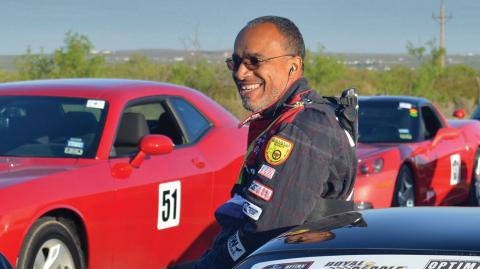
 

Photo courtesy of The Driveshaft Shop

May 2025
By
Jim Donnelly

Industry Insights: Felton 'Blue' Offutt of the Silver State Classic

Submitted by laurap on Tue, 05/20/2025 - 13:28
Felton 'Blue' Offutt of the Silver State Classic for PRI Magazine


Ordinary cars and drivers have extraordinary adventures in open road racing, which also serves as a creative entry point into motorsports.
 

Nevada's Silver State Classic Challenge is held on public roads, and competitors can bring just about anything and go as fast as they want. In fact, the last few world records for the fastest speed ever driven on a public road have been set at this event. The current record is an average of 219.643 mph, set in 2017 by Robert Allyn and David Bauer. Yet most participants in the Silver State Classic are driving street-legal cars with a goal of averaging between 90 and 125 mph across more than 90 miles of state highway.

The Silver State Classic is one of a small group of similar events taking place in Nevada, Texas, and Nebraska. But the sport of open road racing, as they call it, has the potential to spread and expand as enthusiasts from coast to coast are exposed to the appeal of these grassroots events. They attract hundreds of entrants every year.

Organizing an event where the rulebook is thin and the variety of cars entered is wide can be a challenge in itself. It takes a real enthusiast like Felton "Blue" Offutt to chair an event like this and bring it to reality every year. We met Offutt at the Sandhills Open Road Challenge in Nebraska, and he later took the time to explain open road racing for the PRI audience.

PRI: What is open road racing? Can you give us a definition and tell us how it's different from other motorsports?

Offutt: Open road racing is technically a time-speed-distance event. You're not competing against another car, per se. You're competing against the clock. It's all about covering a specified distance at a specified average speed in a certain amount of time. For example, we have the 90-mile challenge. If I'm in the 150-mile-per-hour class, that means if I average a perfect 150 mph over the 90 miles of road, I'll finish in exactly 36 minutes. So that is my objective: to finish in 36 minutes or finish in the specified time for whatever average speed we selected. Then, we have a speed window. That speed window we call our upper and lower tech limits. You are clocked at various points on the course, and you can't go slower or faster than the tech limits for your average speed group.

PRI: This racing takes place on ordinary roads closed down for the event?

Offutt: Yes, county roads or, in the case of Silver State, on a state highway. The Texas event also uses a state highway.

PRI: How do you get approval for these events?

Offutt: All of the open road races in America initially started in Nevada in 1988. While I can't speak to the very first one, the reason the state would let us shut down the highway was on the charter of bringing tourism and tourist dollars to the area. That was the original charter. That's why they allow this, because the events bring hundreds of thousands of dollars into the community.

On the other hand, a group of us tried to get an event started here in Arizona, and the political red tape at the end of the day just shut it down. I know some folks that have tried it in another state out on the East Coast, and they got shut down by the state and various organizations. For example, here in Arizona, the government department that kept the race from happening was the Arizona Department of Risk Management. They were at the meeting. They said they loved it, and they probably would come to Nevada to do it. But in their official role, director of risk management, there was no way they could allow it in Arizona.

PRI: Who competes in open road racing? What kind of cars and drivers do you see?

Offutt: I know greater than 50% of participants are Corvette owners, but as far as who does this, I would say all kinds of people, from professional racing drivers to ordinary car enthusiasts. I've been doing this for 22 years; and I have seen NASCAR drivers, and I have seen grandmas in their daily drivers and everything in between. I would say though, the biggest majority are people who have nice cars, be it a Corvette or an AMG sedan like me, or whatever. They want to run the car at speed comfortably without risking going to jail or risking getting spun out by some hot shot on a track. This is a place where people can bring their cars, sign up, listen to a little safety talk, and drive that car at speed for a while and enjoy it without all the risks associated with putting it on a track or speeding illegally down a highway.

PRI: How did you personally become involved with the Silver State Classic?

Offutt: A long time ago, long before I did Silver State, I did some...


To read more, sign up for a digital subscription to PRI Magazine on Zinio here.    

Once you download the Zinio mobile app or are logged into Zinio on a desktop browser, you will gain immediate access to more than a year's worth of content, including "Industry Insights" here and more open wheel coverage in the May/June 2025 issue here. 
May 2025
By
Jeff Zurschmeide

Small But Mighty: Micro and Mini Sprints

Submitted by laurap on Tue, 05/20/2025 - 13:18
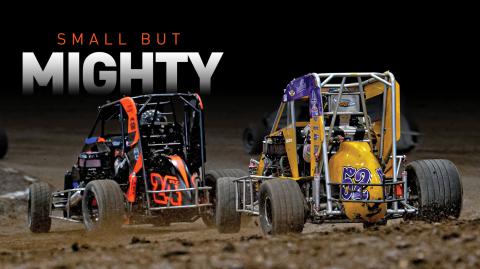
Small But Mighty Micro and Mini Sprints for PRI Magazine


Micro sprints and mini sprints make the case to be the ultimate entry-level segue into open wheel racing.

In racing, everybody has to start somewhere. Increasingly, the launching pad for young talent is the ranks of micro sprints and mini sprints.

The reasons for that aren't hard to figure out. Micros and minis, along with junior sprints, are among the most economical paths into the driver's seat. Add in a competitive, accessible racing scene, and a few big-name stars like Kyle Larson and Christopher Bell, who came up through the ranks and still race there to stay sharp, and all of a sudden micros and minis have sprinted to the front of the pack in recent years.

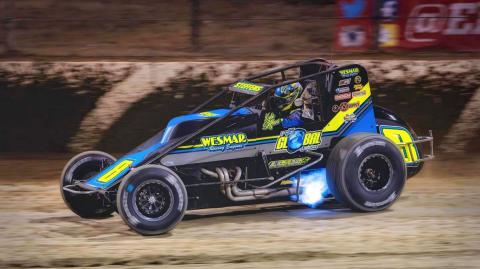
"With my junior sprint class and my restrictor class, it continues to grow each year," said Shane Stewart of Port City Raceway, an eighth-mile clay oval in Tulsa, Oklahoma. "It used to be quarter midgets, quarter midgets, quarter midgets, but now it seems that people are starting to look at the micros to get their kids started. It's definitely a great spot to teach your kid how to race."

One look at spec sheets for these classes reveals why these scaled-down sprint cars have carved out an economical niche for beginning racers. Junior sprints, aimed at 5- to 12-year-olds, are powered by simple, 204cc Briggs & Stratton World Formula engines. Micro sprints typically run side-mounted 600cc four-stroke motorcycle engines, either with or without wings. Outlaw micros are allowed up to 640cc of displacement. Mini sprints, also known as Lightning sprints, are larger and powered by front mounted 1,000cc four-stroke motorcycle engines with 200-plus horsepower. The cars race on banked dirt or clay ovals, sometimes on asphalt tracks.

There are regional variations in classes and terminology, but taken together, the micro and mini scene is vibrant and growing, known for being family friendly. Mike Dicely of Hyper Racing, a chassis builder and parts manufacturer in Lewisberry, Pennsylvania, that specializes in micro sprints, Lightning sprints, and junior sprints, has watched firsthand the enthusiasm for the sport. "The junior sprints are booming in popularity, too. They're a direct steppingstone into the 600s," he said. "The junior sprints race at the same tracks as the 600s. So you have two kids, one old enough to run the 600s, the other one is just coming through, you can race the same track with both kids on the same night. It really makes a lot of sense that way."

Money's Worth

Money is always a factor in racing, so classes that are relatively affordable are going to catch people's attention. Micro sprints and mini sprints have earned a reputation for affordability that has helped propel their popularity. "The cost isn't terrible," Stewart said. "It's an easy way for a family to get involved in racing to see if their boy or girl is even going to enjoy it. It's not like you need to go spend a ton of money to figure that out. I think that's one of the reasons why it keeps growing."

Exact numbers are a moving target, but according to Kevin Bayer of the Midwest Mini Sprint Association (MMSA) in Jasper, Indiana, it's possible to find used race cars for as little as $5,000. Spending in the mid-teens will land a very competitive car.

"It all depends on how much you want to spend on it. You spend $5,000, you know what you're getting for $5,000," Bayer said. "You can get a very good competitive car from $8,000 to $10,000. You spend $15,000 to $17,000, you're still going to be running with the guy who's running a $5,000 car. I've always said you can put a top-notch driver in a low-budget car, and that car is going to look like a hero. But if you put a driver that's not able to drive in a high-budget car, he's going to look like a monkey on top of a football.

"Some of these people start their kids out in a high-dollar car, and after a couple of races they wish they wouldn't have," Bayer continued.

The affordability of micros and minis isn't just a matter of the up-front price tag. "When you do wreck in a 600 it doesn't cost you nearly as much to repair the car," Dicely said. "Their speeds aren't as high and the cars aren't as heavy, so you don't total a frame pretty much every time you wreck like you do in a 410.

"You can run engines 20 to 40 races and a rebuild is only like $800 to $2,000, depending on what you get," he continued. "Engine rebuilds are a lot cheaper. The engines are pretty darn reliable these days. You don't go through bearings. You don't wear out tires as much. Most of these races, we run spec tires, so the tires are really hard. You can run them five to 20 nights depending on how long you want to run it. So it's not like you're putting on new tires every race or anything like that."

Affordability is relative, of course, but micro sprints and minis usually come off well when compared to other racing classes. "I think when you try to do a modified deal it's so expensive. The motors are so expensive, shocks are so expensive. Where do you go from modified?" Bayer said. "Well, you have sprint car. So Lightning sprint is the good one where a lot of kids get involved. Their parents have raced in the past or their grandparents have raced in the past and want to put their kids in it. So you have 14-year-old kids running it, and you have a 60-year-old guy running some mini sprints. It's a good form to get in."

Quality of Racing

Besides the dollars and cents involved, there are other factors that have made micros and minis a premier training ground for young talent. "The racing is really good. On the small tracks we put on really good racing," Dicely said. "That's one of the reasons the class is growing so much and gets so much attention. It's as tough a car to drive and it's real racing just like you have in the midgets and the 410 sprint cars. As far as driver development goes, it's the best platform out there to hone your skills and stay on top of your game. For a young kid growing up, it's the best place to start learning how to drive."

Micro sprint and mini sprint fields aren't entirely filled with school-age drivers, but the classes are set up to start drivers at a very young age...

To read more, sign up for a digital subscription to PRI Magazine on Zinio here.    

Once you download the Zinio mobile app or are logged into Zinio on a desktop browser, you will gain immediate access to more than a year's worth of content, including "Small But Mighty" here and more open wheel coverage in the May/June 2025 issue here. 
 

May 2025
By
Steve Statham

PRI Individual Member Benefit: Save 15% on Spectre Products 

Submitted by ajh on Tue, 05/20/2025 - 10:39
Spectre


Looking to boost your ride’s performance and style? Spectre Performance has you covered with high-quality air intake systems, filters and engine accessories that don’t just look great—they deliver serious horsepower, too!

PRI Member Portal

Not yet a PRI member? There's a tier for you! Learn more at performanceracing.com/membership.

PRI is not affiliated with, nor does it sell or thoroughly evaluate the products, services, and companies listed. PRI provides this information to PRI members for their evaluation and consideration and does not endorse or sponsor any company, product, or service. PRI takes no responsibility for, and makes no representation, warranty, or assurance as to the accuracy, quality, reliability, or completeness of the products or services offered.

May 2025

The PRI Show Is the Global Motorsports Marketplace

Submitted by ajh on Tue, 05/20/2025 - 09:45
PRI Show


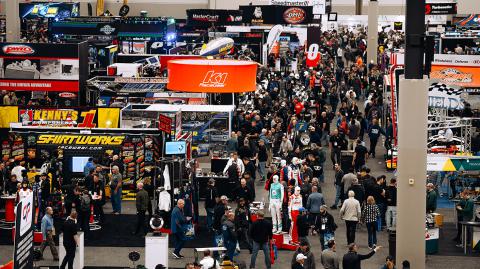
The PRI Show, December 11-13, downtown Indianapolis, is where the global motorsports marketplace gathers, offering top industry brands a platform to showcase the latest racing products and innovations to tens of thousands of qualified buyers. Ensure your brand has a presence at this one-of-a-kind industry event by securing a booth now.

Register to Exhibit


Securing your booth space is the first step toward success at the PRI Show, which presents an unrivaled opportunity for racing industry professionals to drive sales, meet new clients and increase brand awareness, December 11-13, in downtown Indianapolis.

Exhibiting at the PRI Show offers a myriad of benefits to your brand:

  • Increase Your Brand Awareness: Whether you are an established brand or looking to break into the motorsports market, exhibiting at PRI is the best investment to advance your brand goals.
  • Connect With Your Customers: See existing customers and connect with them on the Show floor. Determine their business needs and use this opportunity to strengthen relationships.
  • Expand Your Sales Channels: Take your products to new markets, whether through retailers, distributors or other sales channels, expanding your brand's reach domestically and internationally.
  • Introduce New Products: Ensure your latest and greatest products are seen by a large audience of potential customers at the PRI Show.


To reserve a booth at the 2025 PRI Show, visit here. For more information on why to exhibit, visit performanceracing.com/trade-show/exhibit.

May 2025

Cut Freight Costs With These 7 Pro Tips from PPLUS Global

Submitted by laurap on Mon, 05/19/2025 - 18:03
PPlus Global sponsored open wheel vehicle


Trade shows require a serious investment of time and money. Make the most of both with Performance Plus Global Logistics (PPLUS).

Trade shows require a serious investment of time and money—make the most of both with Performance Plus Global Logistics (PPLUS). Our PPLUS trade show team specializes in domestic and international shows, managing delivery timelines, approved carriers and return shipping to help you avoid costly show handling fees. Whether you're a hobbyist or a major manufacturer, PPLUS has a solution. From expedited freight and international shipping to dedicated performance logistics teams, we're here to support your success—on and off the track. Find out about the PPLUSAdvantage. Contact PPLUS at 866-966-7587 or pri@pplusglobal.com.

🔧 1. Confirm Show-Specific Requirements

Every show has strict guidelines—target move-in dates, approved carriers and specific labels. Confirm these early to avoid penalties or delays.
 

📦 2. Use Durable, Custom Packaging

Trade show freight takes a beating. Invest in custom crates for heavy items (like engines or transmissions) and reinforce pallets with plywood tops. Label everything clearly and waterproof labels if possible. These small steps lead to big savings—and fewer headaches.

PPlus Global crate engines


⏰ 3. Allow Extra Transit Time

Delays happen—traffic, weather or carrier backups. Build in a buffer of 1–2 days so your freight hits the show floor on time, even if something goes wrong.
 

🚚 4. Choose a Carrier with Trade Show Experience

Not all carriers are equipped for shows. Use a provider familiar with marshaling yards, advance warehouses and show-site procedures. Our team can help!

PPlus Global shipping box


📍5. Ship to the Advance Warehouse When Possible

Shipping to the show's advance warehouse (vs. direct to site) gives your freight more time to be checked in, staged, and ready for your team when you arrive.


🔄 6. Plan Your Return Freight Upfront

Return shipping is often overlooked. Pre-arrange it with your carrier to avoid paying premium on-site return fees or storage costs.


Pplus Global


📞 7. Partner With a 24/7 Logistics Team

Trade shows don't run on a 9–5 schedule—neither should your logistics partner. Choose a team that offers round-the-clock support and real-time shipment tracking. 


Why PPLUS?

PPLUS GLOBAL open wheel racing


Our team isn't just in logistics—we live and breathe the performance industry. Family owned and operated, we have racers on staff and decades of shipping expertise, and we understand the urgency of getting parts, engines and transmissions delivered on time. Contact PPlus Global at 866-966-7587 or pri@pplusglobal.com.

PPLUS offers:

  • 24/7 support for pickups and trackside delivery.
  • Customized carrier and service selection.
  • Proactive solutions for weather or carrier delays.


Always pack properly and build in extra time—PPLUS will handle the rest so your parts arrive ready to perform.
 

Find out about the PPLUSAdvantage. Contact PPLUS at 866-966-7587 or pri@pplusglobal.com.

June 2025
By
PPlus Global

Indy Autonomous Challenge to Join INDYCAR Weekend at WeatherTech Raceway Laguna Seca

Submitted by ajh on Fri, 05/16/2025 - 10:57
Indy Autonomous Challenge


The Indy Autonomous Challenge is joining the schedule for the NTT INDYCAR SERIES Grand Prix of Monterey at WeatherTech Raceway Laguna Seca in Monterey, California, on Thursday, July 24.

The event will include a time trial competition of the autonomous race cars piloted by AI driver software developed by university teams from North America, Europe and Asia.

“Running an autonomous race as part of the Grand Prix of Monterey, on the same track and the same weekend as an NTT INDYCAR SERIES event, is a powerful testament to how far the IAC and our university teams have advanced the field of AI and autonomy,” said Paul Mitchell, CEO of Indy Autonomous Challenge and its parent company Aidoptation BV. “Bringing this race and AI summit to the doorstep of Silicon Valley creates a high-impact moment to showcase the world’s fastest racecars to industry leaders in AI and robotics.”

Eight IAC university teams will participate in the IAC race during the Grand Prix of Monterey weekend, including:

  • AI Racing Tech - University of California, Berkeley (California), with University of Hawai'i (Hawai’i), University of California, San Diego (California), Carnegie Mellon University (Pennsylvania)
  • Autonomous Tiger Racing - Auburn University (Alabama)
  • CAST Racer - California Institute of Technology (California)
  • Cavalier Autonomous Racing - University of Virginia (Virginia)
  • IU Luddy - Indiana University (Indiana)
  • KAIST - Korea Advanced Institute of Science and Technology (South Korea)
  • PoliMOVE-MSU - Politecnico di Milano (Italy), Michigan State University (Michigan), University of Alabama (Alabama)
  • Purdue AI Racing - Purdue University (Indiana)
     

For more information, visit indyautonomouschallenge.com.

May 2025

Holley Performance Brands to Expand Ford Fest

Submitted by laurap on Wed, 05/14/2025 - 17:54
Holley Ford Festival


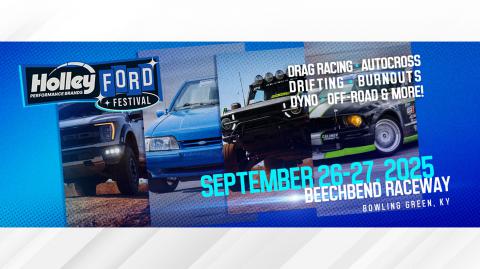
Holley Performance Brands has announced the expansion of its annual Ford Fest from a Mustang-centric event into a full-throttle celebration of all things Ford--with expanded truck and off-road experiences that tap into the surging growth of enthusiasts for Bronco and F-150 platforms.

The 7th annual Ford Fest is an action-packed weekend of drag racing, off-road adventures and high-energy motorsports competitions. As the grand finale in Holley’s nationwide series of flagship events, the highly anticipated festival will take place from September 26-27, 2025, at Beech Bend Raceway Park in Holley’s hometown of Bowling Green, Kentucky.

The announcement of the expansion comes after news that Holley Performance Brands would take full ownership of Ford Fest, after several years of hosting the event in partnership with the NMRA World Finals.

“Modern truck and off-road event experiences have become some of our most popular, so we’re pushing the limits this year with new off-road Bronco challenges and bigger truck competitions. If you’re passionate about Ford performance, this is the ultimate weekend to experience it firsthand,” said Matthew Stevenson, president and CEO of Holley Performance Brands.

Ford Fest 2025 will introduce an array of new experiences for the truck and off-road enthusiast audience, including off-road skill training, obstacle courses and expert-led sessions on off-road driving and vehicle recovery for Bronco owners. Additionally, an all-new drag racing class called Truck Warz will provide even more competitive excitement for truck enthusiasts.

Attendees can also explore a wide range of product offerings tailored specifically for Ford performance and customization.

For more information, visit the Holley Performance announcement here or holley.com/event.

May 2025

Delaware Vows to Block EV Mandate, Defends Consumer Choice

Submitted by laurap on Wed, 05/14/2025 - 16:59
Delaware Vows to Block EV Mandate, Defends Consumer Choice


In a major victory for consumer rights and automotive freedom, Delaware Governor Matt Meyer has announced the state will not implement a controversial electric-vehicle (EV) mandate established by his predecessor. Delaware is one of 11 states that previously adopted California's Advanced Clean Cars (ACC) II rule, which would have forced nearly half of all new vehicles sold in Delaware to be electric or plug-in hybrid by 2027, rising to over 80% by 2032. 

Governor Meyer's decision marks a critical win for technology neutrality and market-driven innovation. Delawareans deserve the freedom to choose vehicles that meet their needs, not face government-imposed restrictions on internal-combustion engine (ICE) vehicles. The move ensures continued access to a full range of vehicle options, including gasoline, diesel, biofuel, hydrogen, hybrid and electric. 

This rollback also safeguards the specialty automotive aftermarket, which depends on a diverse vehicle landscape to design, build and sell performance and emissions-related products. Delaware now joins a growing coalition of states, including Maine, Maryland, Virginia and Connecticut, opposing top-down EV mandates in favor of policies prioritizing consumer choice and industry ingenuity. 

PRI and SEMA will continue urging the federal government to step in and protect vehicle choice nationwide by preventing restrictive EV mandates in all 50 states. We urge drivers, enthusiasts and industry leaders to contact their United States Senators to support policies that foster innovation and safeguard automotive freedom by revoking California's waiver for its EV mandate. 

For more information, contact Tierra Hubbard, SEMA's senior manager of state government affairs, at tierrah@sema.org. 


Image courtesy of Shutterstock

May 2025