 MEMBERSHIP LOGIN
Setting Up Your Cooling System: Expansion vs. Recovery Tanks
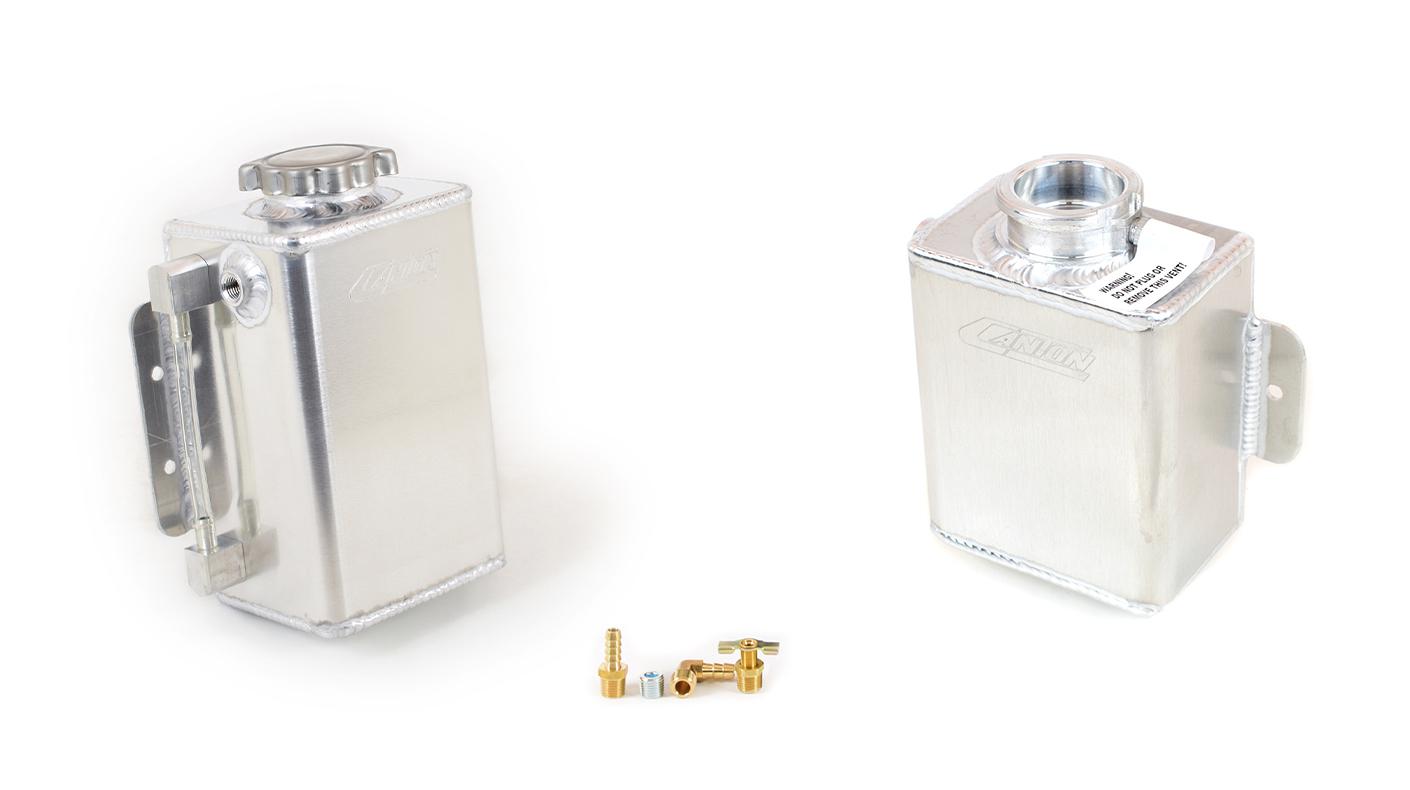
Sponsored by Canton Racing Products
Cooling systems are one of the most important systems in an engine. Running an engine too hot can cause fluids and parts to break down and can ultimately lead to a catastrophic failure. At the same time, an engine that is running too cold can be inefficient and perform poorly.
There are two ways that engines have traditionally been cooled: by air and by water. Many older cars, and even some newer motorcycles, feature air-cooled engines. However, most modern cars require liquid-cooled systems.
A liquid-cooled system typically features a radiator, fan, thermostat, water pump, a coolant tank and a fill point. The type of coolant tank and the fill point location can vary depending on the system. In many modern cars, the radiator is mounted lower than the engine. Since the radiator is lower than the engine, a pressure relief and fill point that is higher than the engine is needed. This is accomplished with an expansion tank. When the radiator is high enough to act as a fill point and pressure relief, an expansion tank is not necessarily required. In those applications, a recovery-style tank may be used instead.
Liquid-cooled systems are pressurized in order to raise the boiling point of the coolant. The boiling point of a 50/50 coolant-water mix is 226 degrees F at 0 psi. At 16 psi, the boiling point of a 50/50 mix is 267 degrees F. One of the easiest ways to differentiate between an expansion tank and a recovery tank is whether the tank is part of the pressurized part of the coolant system or not.
Expansion Tank Set Up
An expansion tank is part of the pressurized section of the coolant system. An expansion tank can easily be recognized by the neck and cap used. Since the tank is under pressure, it will require a pressure-rated cap and neck. The pressure relief in the expansion tank should be the highest point in your coolant system.
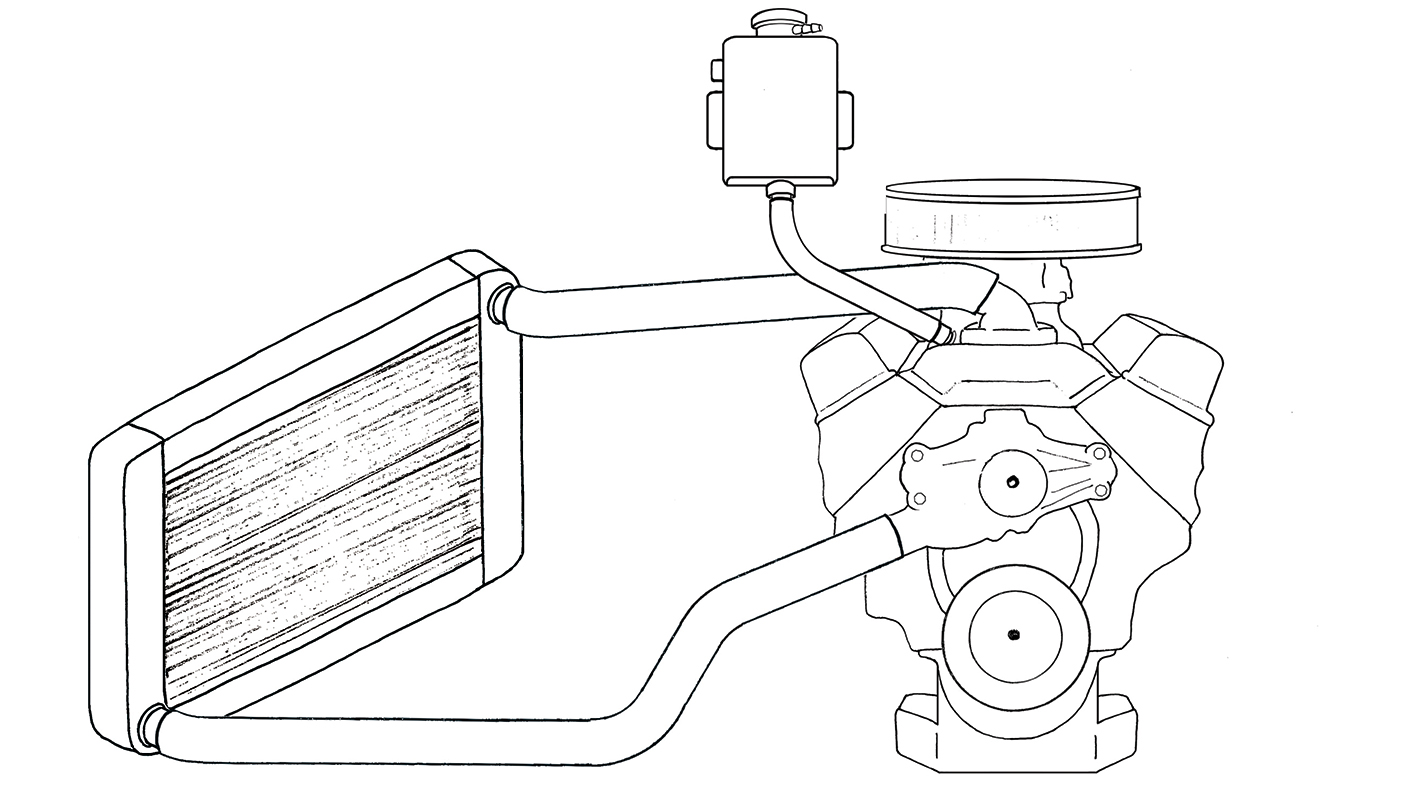
An expansion tank is designed so there is space in the tank for the coolant to expand. If an expansion tank is overfilled, it will discharge coolant when the system is at operating temperature.
An expansion tank can also be used as a fill point for the system. When an expansion tank is used, the radiator doesn't require a pressure-relieving cap. The expansion tank cap will perform the duties that the cap on the radiator traditionally performed. Increasing the capacity of the system and providing a more convenient fill point are among the benefits of an expansion tank.
Recovery/Reservoir Tank Set Up
In contrast, a recovery/reservoir tank typically features a vented cap and is not required to be above the cylinder heads. The job of the recovery/reservoir tank is to hold the coolant that is discharged from the system's pressure relief when the coolant is hot and expanding. When the system cools, the cooling effect creates a vacuum that pulls this coolant back into the system.
A coolant recovery/reservoir tank gives the system the ability to discharge and recharge coolant when needed to maintain the appropriate pressure. This allows the system to maintain full coolant capacity at all times.
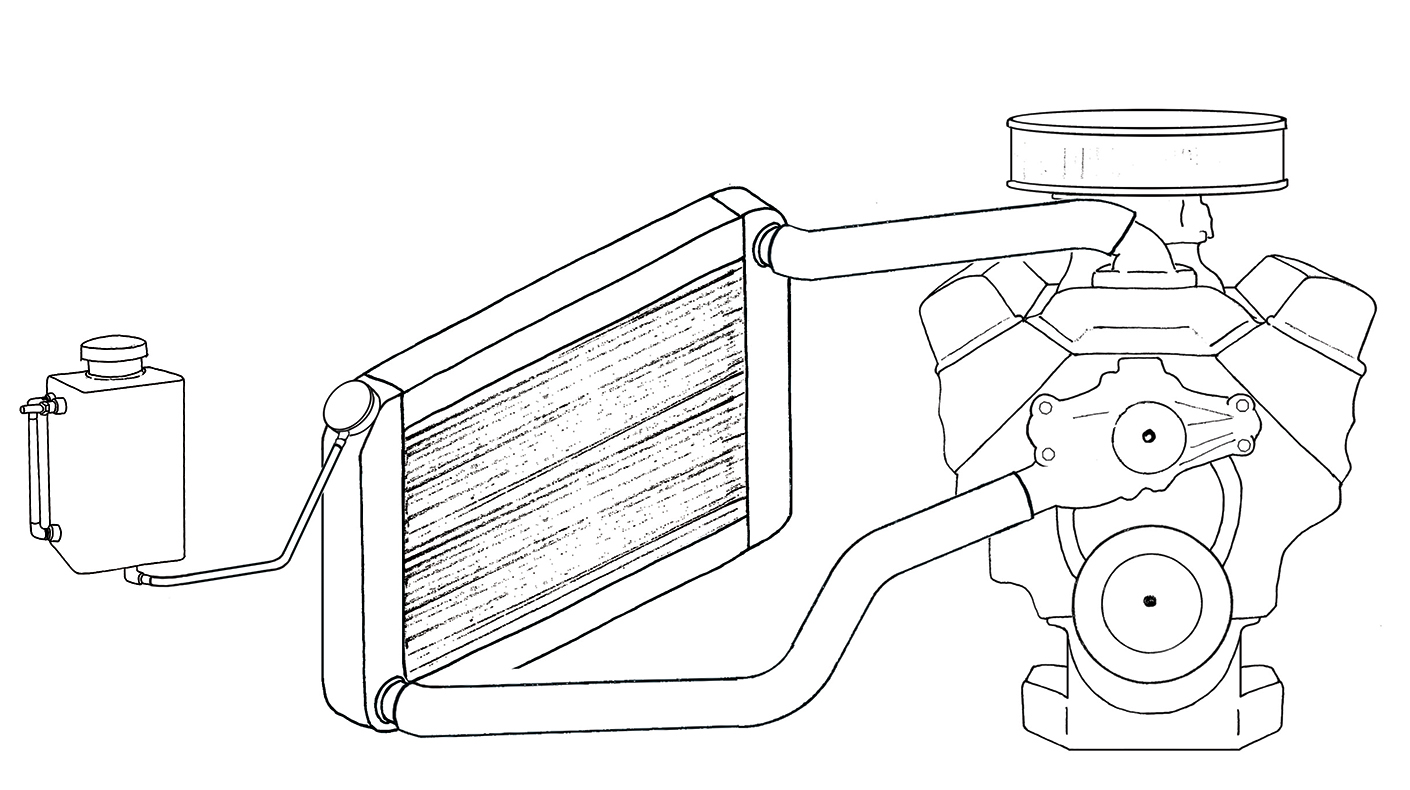
A recovery/reservoir tank can be used in conjunction with an expansion tank or can be plumbed off a radiator that features a pressure relief.
A recovery/reservoir tank should not be confused with a catch tank, however. A recovery/reservoir tank will either be plumbed at the bottom of the tank or have a hose internally that runs to the bottom so coolant can be drawn back into the system. A catch tank, on the other hand, usually features plumbing into the top of the tank and does not have a hose that goes to the bottom. A catch tank serves to collect expelled coolant to be drained from that tank at a later point. While both a recovery/reservoir tank and a catch tank hold excess coolant, a recovery/reservoir will automatically put the coolant back in the system, whereas a catch tank will hold the coolant until it can be emptied.
For more information, visit the Canton Racing Products website at cantonracingproducts.com. Questions for Canton Racing Products? Fill out the online contact form here or call (203)481-9460.