 MEMBERSHIP LOGIN
National Sprint Car Hall of Fame Inducts Class of 2026
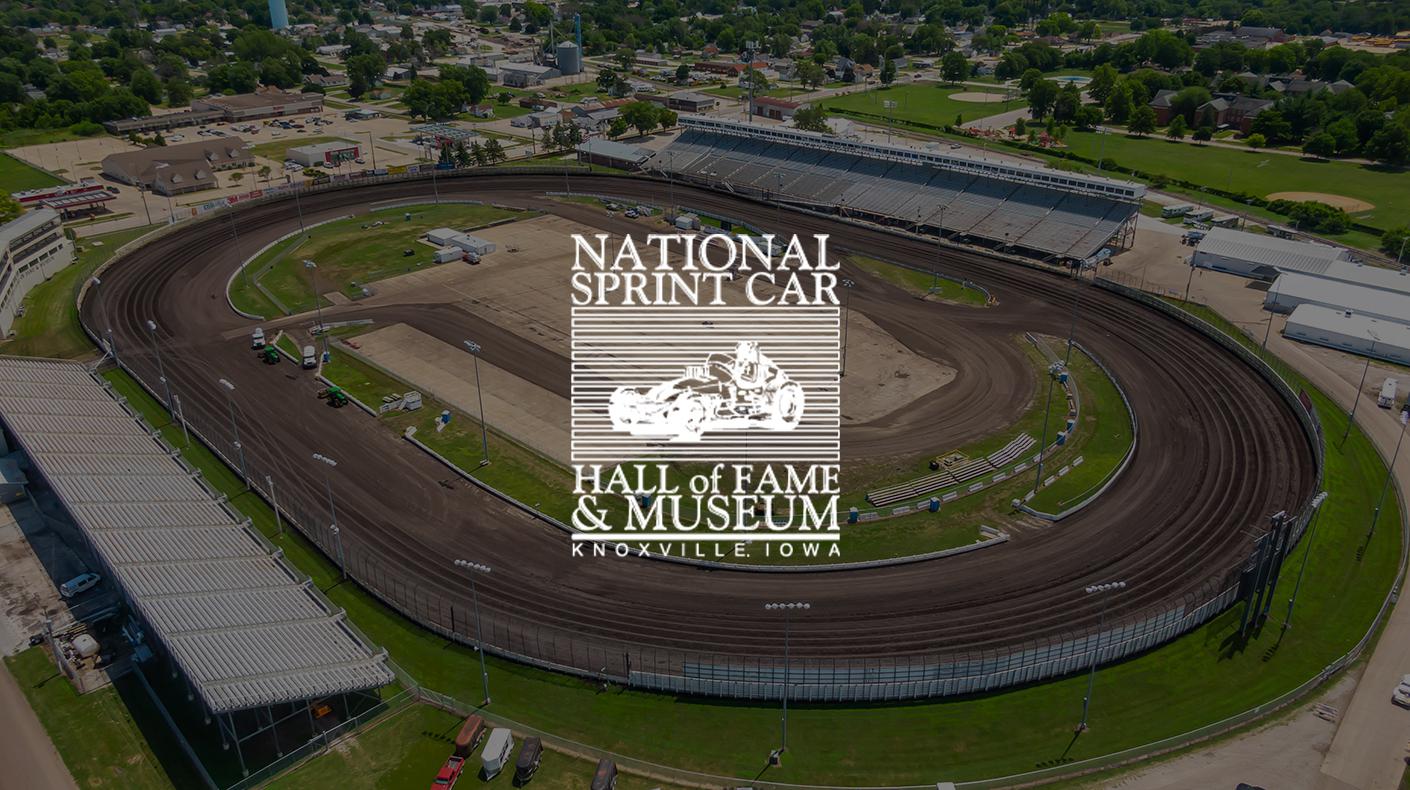
The National Sprint Car Hall of Fame in Knoxville, Iowa, inducted nine new members as part of its Class of 2026 last week.
The late Bob Gregg, Eloy Gutierrez, Ed Iskenderian and Bob Westphal, as well as Jimmy Carr, Steve Chassey, Allan Holland, Jerry McClung and Jerry Stone were enshrined as inductees in the National Sprint Car Hall of Fame Class of 2026.
Learn more about the National Sprint Car Hall of Fame Class of 2026 below:
Drivers
Steve Chassey
The native of Massachusetts returned after fighting with honors in Vietnam to win the California Racing Association's (CRA) Rookie of the Year title in 1969. He continued racing sprints, midgets, dirt champ and Indy cars across the country after relocating to Indianapolis. He won 15 times with USAC, including the USAC Silver Crown "Hoosier Hundred" in 1994. He was prolific on the high banks with USAC and is the only driver in series history to win five times at one track in one year (Winchester Speedway, 1979). Chassey was his own mechanic and engineer and, after driving, moved into race broadcasting for ESPN's "Thursday Night Thunder."
Jerry McClung
"Termite" Jerry McClung won his first race in 1962 at Manzanita Speedway in his native Phoenix. He followed that season with nine wins and a track championship at "Manzy" in 1963. Championships followed in 1967 and 1968. That began a career in Super-modifieds and sprint cars that saw 105 wins at Manzanita Speedway alone. McClung scored six wins with CRA, including a track record at El Centro. In 1970 and 1971, he raced USAC National Midgets, recording ten wins and two top five finishes in points. He returned to success in the sprint car, registering more wins, including one at the Knoxville Raceway, where he qualified for the Knoxville Nationals finale three times.
Jerry Stone
Stone's career began around his native Wichita and ranged from super-modifieds to 100-in. dirt cars to 410 sprint cars across the Midwest and as far east as central Pennsylvania, where he was a regular for a time. Stone made a name for himself, winning in many forms of racing, but his career became focused when the NCRA was formed. He won the 1976 prestigious Hutchinson (KS) Nationals and later would befriend Lloyd K. Stephens and drive for the OFIXCO team. He won four NCRA championships before 1984. The following year, he moved to central Pennsylvania, racing there for a time and picking up wins at Williams Grove, Selinsgrove and Hagerstown, to name a few tracks. Upon returning to the Midwest, he picked up where he left off, capturing a fifth NCRA title and the Tulsa Speedway championship in 1990. He picked up more than 125 wins in his sprint car/super-modified career and is already a member of four different Halls of Fame.
Owners, Mechanics, Builders, Manufacturers
Jimmy Carr
A British Columbia native, Carr's career began behind the wheel. Over 14 years, he raced at Skagit (WA) Speedway, was the 1991 World of Outlaws Rookie of the Year, and picked up some regional wins from Illinois to California. His life changed when he joined forces with Danny Lasoski as crew chief on the Roth Beef Packers No. 86 in 1998. His experience as a driver translated when watching the car on the track. The car won 32 times with the WoO and took the Knoxville Nationals in 1998. Carr and Lasoski would build Tony Stewart Racing from the ground up, winning more than 100 races over the next several seasons. Included was three more Knoxville Nationals titles, and a WoO championship in 2001, a year Carr was named the WoO "Mechanic of the Year." After Lasoski parted with TSR, Carr stayed on as crew chief for several drivers (including Donny Schatz, who garnered 222 wins in that time), and eventually taking over as team manager. In five years with Dominic Scelzi's team from 2020 to 2025, they amassed 48 wins and two NARC titles. In total, Carr's involvement as a driver, crew chief and team manager resulted in more than 400 wins entering 2025.
Ed Iskenderian
The son of Armenian immigrants in the central valley of California, Iskenderian moved with his family south to Los Angeles when the grape vines went dry in the 1920s. L.A. had become the racing capital of the world. Iskenderian built his own Model T Roadster, but wasn't satisfied with the reliability, so he shifted his attention to Ford's new V-8 engine. After flying supply missions in World War II, he worked as a tool and die maker. Frustrated by having to wait five months for camshafts, he began grinding his own with fellow Hall-of-Famer Ed Winfield. Word spread about the "Isky" cams, and in combination with local hot rods forming the California Racing Association (CRA) on oval tracks, business boomed. His one-man shop in Culver City, California, has moved to currently employ more than 100 in a 75,000-sq.-ft. facility in Gardena, California. Iskenderian was the first president of SEMA and is a member of both the SEMA Hall of Fame and PRI Hall of Fame. Sprint cars across the country still rely on Isky cams. Iskenderian passed away earlier this year at the age of 104.
Bob Westphal
A native of Fremont, Nebraska, Westphal would eventually move his operation to Oklahoma. He built engines that were successful in NHRA and NASCAR, but the self-taught mechanic made his mark with sprint cars through his Wesmar Racing Engines, including twenty-three drivers in the National Sprint Car Hall of Fame, starting with Bobby Marshall in 1981. In 1982, Sammy Swindell grabbed the first of more than 200 World of Outlaws wins for Wesmar. Westphal's engines also won in Australia and New Zealand, and at least one was in the Knoxville Nationals championship from 1982 through 2013, with two wins. Wesmar also won 11 360 Nationals titles at Knoxville. Championships came with WoO, ASCS, USCS, URC, IRA, USAC, OCRS, NCRA and the All Stars, as well as local and regional championships and other crown jewel events across the country. He collaborated with fellow engine builder Ron Shaver in the creation of Shaver-Wesmar Gear Drives, which are used by many builders today. Westphal passed away in 2013.
Promoters, Officials, Media Members, Event/Series Sponsors
Eloy Gutierrez
A native of Albuquerque, New Mexico, Gutierrez began as an official and flagman with the New Mexico Motor Racing Association in 1968. His involvement in racing would span over 55 years. Gutierrez's biggest contribution may have come in the early 1990s, when, with partner BD Schafer, they introduced electronic timing and scoring to sprint car racing. Initially, it made things much easier for scorers, but it has become a technology that is taken for granted across racing. Their technology took some convincing, but the World of Outlaws agreed to take the plunge in 1998. Gutierrez and Schafer often footed the bill for technology and proper gear to get the job done. They were also responsible for the labor at the track, including installing scoring loops. It made its television debut with TNN in 1998 and has become a staple that is taken for granted on broadcasts on TV or PPV. Gutierrez passed away in 2024.
Allan Holland
A native of Drums, Pennsylvania, and a plumber by trade, Holland utilized technology to bring results to anyone online in a matter of hours, changing the way sprint car news was distributed and written. In 1997, shortly after the internet became mainstream, he created Hoseheads.com. After almost 30 years, "Hoseheads" still brings timely news, columns and photos to sprint car fans around the world. Holland's efforts brought some of the greatest writers and photographers to the computer for all to see. Several Hall of Famers have contributed to Hoseheads over the years, and it sparked the careers of several media members. In addition to the website, which Holland still updates--often 365 days a year--he penned a column for Sprint Car & Midget for its run from 2002 to 2022. Holland was also a producer with the Sprint Car Network (SCN), broadcasting World of Outlaws events over the internet for several seasons before PPV. When PPV came in, Holland has produced several events for DirtVision, and is currently producing the shows at Williams Grove Speedway in his native Pennsylvania. For many years, Holland has spearheaded the Central Pennsylvania point fund and has been generous in sponsorship of many sprint car-related events. The "Hosehead" name has been used for many charitable organizations, a message board and much more over the years.
Pre-1970
Bob Gregg
Gregg's driving career began in 1938 in the Pacific Northwest. He raced for almost 50 years, with his last event in 1986. He scored wins in every decade. The Golden Wheels Vintage Racing Club, based in western Washington, named him "Driver of the Century." He was one of the most decorated drivers in that region of the country. Much of his early success came in midgets, in which he won 13 season titles in Oregon and Washington. He was also winning in sprint cars, super-modifieds and roadsters during this time. In 1951, he won the ARA-sanctioned 100-mile sprint car race in Reno, and won the eight-race US/Canada Gold Cup for sprints/super-modifieds in 1962, to name a couple of his accomplishments. Gregg's career included 22 championships. He passed away in 2002.
For more information, visit sprintcarhof.com.
Image courtesy of Shutterstock | Grindstone Media Group