 MEMBERSHIP LOGIN
Get a Head Start: New Considerations for Today's Motorsports Cylinder Heads
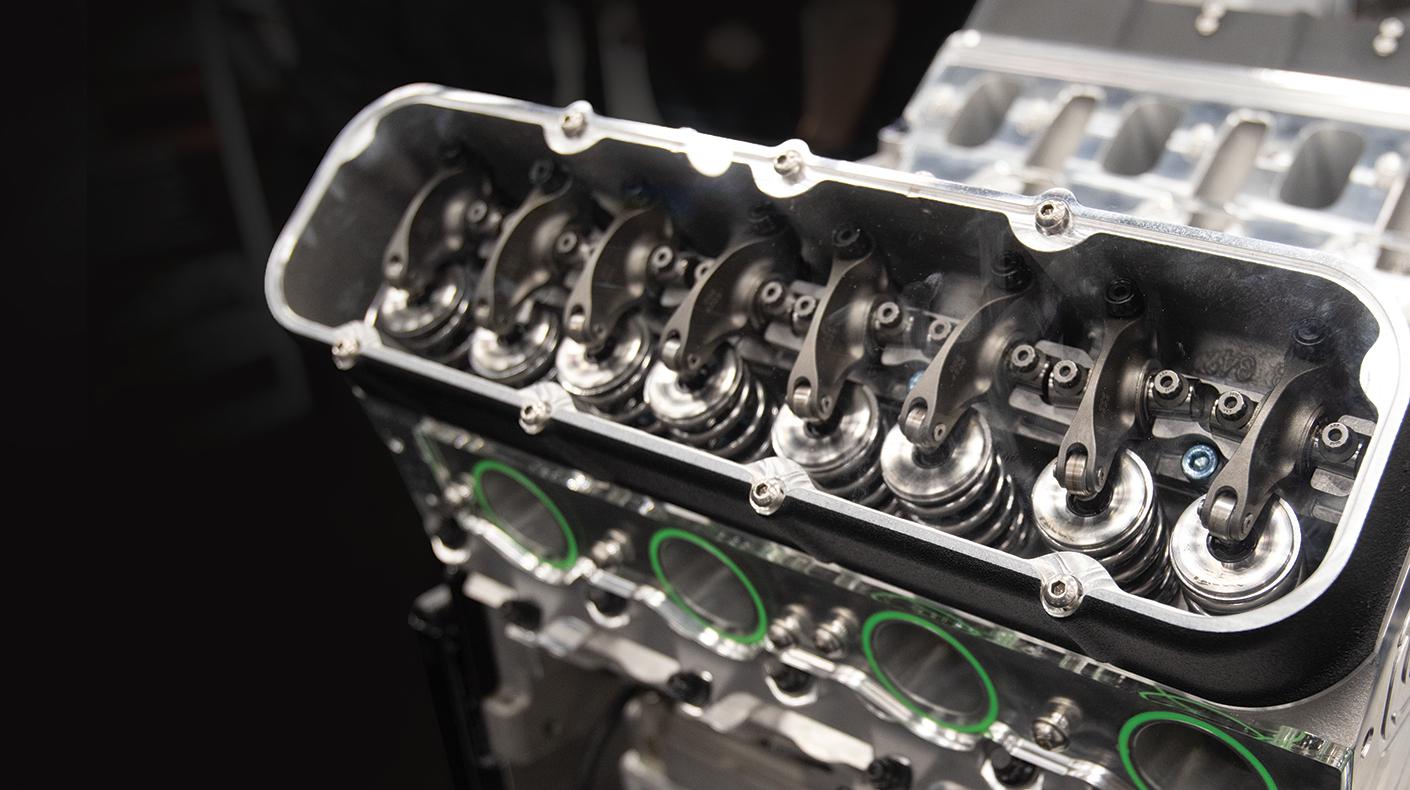
Racers are notorious for seeking out the latest trick of the trade. Whether it's a product that adds more horsepower or a specific setup that allows the car to grip better on the track, racers are all ears when it comes to anything that will benefit their car's performance. That information can come from a variety of sources: websites, forums, friends, what competitors are running, social media, and more. But those sources aren't always accurate for the competitor's specific engine or racecar.
"They read stuff on the internet where guys are talking about different applications than what they have," explained Mark Fretz of Brodix, Mena, Arkansas. "So when they call us, we pretty much just erase everything that they've started with, and we ask them a series of questions to determine what best fits their application."
Our sources provided details about the common misconceptions the racing community has when it comes to cylinder heads and how they guide racers to the optimal products for their applications.
Correcting Misinformation
Racers collect their information from multiple sources, according to Fretz, including "from what they see at the racetrack to what they read on chat boards to what they see other engine builders doing—including national engine builders. They may see a 365cc head on a 540 [cubic-inch engine] and think that's what they need, but their application is totally different. We assess what they're doing and then guide them in the direction that they need to go. Then we give them the pluses and minuses of each size of cylinder head."
As an example, Fretz pointed out, "A larger cylinder head is going to make less torque. If it's for a heavier car, it's going to be harder to get it moving; it's going be a little bit lazier. The smaller volume is going to make more low-end and mid-range power, what we call in-the-seat horsepower—what you feel in your butt. A smaller cylinder head is going to make you feel like you have more power, definitely on a street car or a real heavy car."
Each customer who calls Brodix is handled on a case-by-case basis. "When a customer calls here, we pride ourselves on trying to be the best customer service-oriented company that we can be," said Fretz. "We'll spend the time with them, go over the complete setup that they're doing, and then guide them to that point so we end up with the happiest customer possible."
As the branch manager who also fields tech and sales calls at World Products in Louisville, Kentucky, Dan Bolling has direct access to customers. He believes one of the most common misconceptions faced by the racing industry is about flow figures. Many customers "think flow figures mean everything," he said, "and that's not exactly the whole story."
In fact, Bolling explained how flow numbers don't clarify how a racecar will react on the track or how it will react in specific situations. Instead, "we try to base things more on a customer's individual combination and what they're trying to achieve. It's easy to get high flow numbers and peak numbers and kill the whole bottom end trying to get there. If a guy's never going to see that high rpm or that much lift, then those high numbers really don't help him. A lot of times, you've got to focus on the mid-range numbers and things like that. Those peak numbers are really just for show a lot of times."
Aluminum versus iron is another area where racers often need to be educated. Bolling noted how each has its benefits, but that depends on the combination. Iron is more durable and resists warping and cracking better than aluminum, he said, adding that it holds more heat in the chamber, which can be beneficial. However, it may not be optimal in certain situations, which is why the team at World Products can prove their worth to the customer by helping to tailor that head to the combination."
Jeff Jones of 1 Way Technologies in Washington, Indiana, said that to determine the optimal cylinder head, "We will ask a lot of questions as far as their cubic inch size, obviously what type of racing they're going to be doing, whether it's pavement or dirt, because that will come into play about what we do as far as cylinder head selection." The company offers cylinder heads for dirt and pavement oval track racing, truck pulling to boat racing, and a growing segment in drag racing, especially the nostalgia market.
To read the full article, plus hundreds of other articles like it for free, sign up for a digital subscription to PRI Magazine on Zinio here.
Once you download the Zinio mobile app or are logged into Zinio on a desktop browser, you will gain immediate access to more than a year's worth of content, including "Get a Head Start: New Considerations for Today's Motorsports Cylinder Heads" here and additional coverage in the August 2026 issue here.